Review · OSAKA TOURS
Osaka: Private Japanese Traditional Ceramics Experience
Clay, tea, and a quiet pocket of Osaka. This private pottery workshop in south Osaka is interesting because you get personal, hands-on guidance while working in a century-old two-storey house. You choose what you make from three food-themed options, and you go home with a Japan souvenir to remember the day. One catch to plan for: your actual pottery needs firing time, and shipping back home takes about 1.5 months, so you will not have everything in hand immediately.
I also like that you can take the class in English, Spanish, Catalan, or Japanese, so communication is a lot easier than most craft workshops. The session is only about 2 hours, and it includes materials and firing fees, plus tea, coffee, or water. If you are hoping for a quick, all-same-day souvenir pickup, this is better for people who can wait for the finished pieces.
In This Review
- Key things to know before you go
- Picking Your Clay Project, and Why It Matters
- South Osaka Studio Time in a Century-Old House
- Anna and Ryo’s Private Instruction (and Multilingual Classes)
- What Happens During the 2-Hour Workshop
- Included Souvenirs, Plus What You Actually Take Home
- The Firing and Shipping Timeline You Must Plan For
- Price and Value: Why $94.13 Can Be Fair
- Getting There and Making the Most of the Walk
- Who This Osaka Pottery Workshop Is Perfect For
- Should You Book Ceramics Tocoton in Osaka?
- FAQ
- Where do I meet for the workshop?
- What can I make during the ceramics workshop?
- How long does the workshop take?
- Is this a private experience?
- What languages are offered for the class?
- What is included in the price of $94.13 per person?
- Does the price include shipping for the pottery?
- How long does it take for pottery to be shipped after the workshop?
- What happens if I cancel or the workshop is affected by weather?
Key things to know before you go
- Choose your set: sake set, sushi set, or a tea bowl (chawan)
- Private coaching with Anna and Ryo, not a rushed group class
- Language options: English, Spanish, Catalan, or Japanese
- A real south Osaka walk near local food shops, with Showa-era vibes
- Souvenirs included: a small sushi dish and a sakura-shaped chopstick rest
- Your fired pottery ships later and shipping fees are not included
Picking Your Clay Project, and Why It Matters
The workshop is built around Japanese food culture, and that shapes what you make. You can choose one project using clay: a sake set (small bottle and glass), a sushi set (sushi plate and chopstick holder), or a chawan tea bowl. I like this approach because it gives you a clear end goal from the start, not an open-ended craft with lots of uncertainty.
For your decision, think about what you want on your shelf later. If you want something practical for daily use, the sushi set elements and the chopstick rest are designed to be handled often. If you want a more classic Japanese craft object, the tea bowl is the most timeless choice. If your trip has a drink theme, the sake set feels like a natural memory marker.
Also note this: even though you pick one item to make, you will receive additional small souvenir pieces from the workshop. That means you are not starting from zero just to get something finished.
A few more Osaka days to weigh up
- Osaka Go Karting Tour with Funny Costume
★ 5.0 · 2,658 reviews - Osaka Castle: Museum and Tower Entry Ticket
★ 4.5 · 2,380 reviews - Osaka: Shinsekai Food Tour with 13-15 Dishes at 5 Eateries
★ 4.8 · 2,204 reviews
South Osaka Studio Time in a Century-Old House
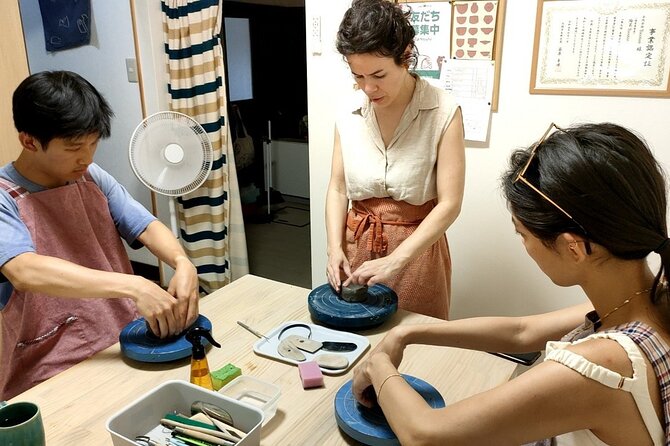
What makes this class more than a hobby session is the setting. The workshop is held in a historic, century-old two-storey house in south Osaka, in an area you will likely find quieter than the usual tourist routes.
From the meeting point near Teradachō Station, you get that first sense of real neighborhood Osaka, with streets lined by shops selling local food. Several details point to the same vibe: it feels like Showa-era everyday life rather than a staged “experience district.” You get a short walk component, and it helps the pottery class feel grounded in place, not floating in a commercial mall.
The studio itself matters too. A house workshop tends to keep things warm, personal, and low-pressure. You can ask questions, slow down, and focus on the clay without feeling like you are sharing time with a big crowd.
Anna and Ryo’s Private Instruction (and Multilingual Classes)
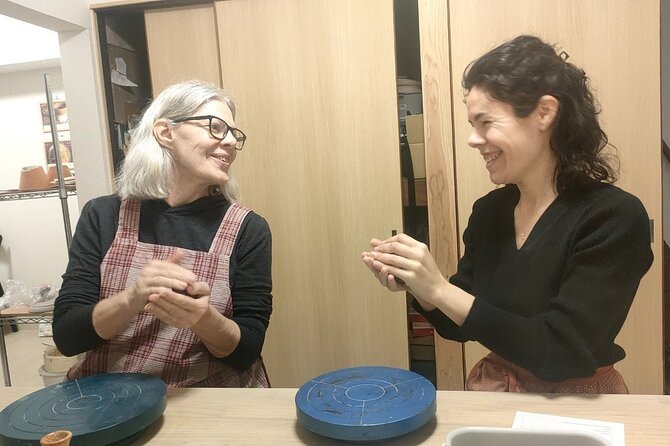
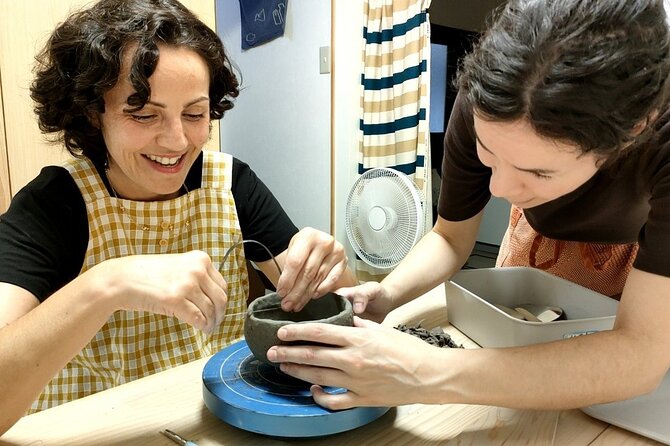
The class is private, so your group works with the instructors directly. Anna and Ryo are central to the experience, and the tone that comes through is patient and friendly. In the reviews, people consistently mention how Anna explains not just technique, but the meaning behind the ceramic items, and how she makes beginners feel capable fast.
Language support is a big deal here. The workshop is offered in English, Spanish, Catalan, and Japanese. If you have ever tried to do a craft activity in a language you do not fully speak, you know how frustrating it can be. Here, you can choose the language that fits you, which makes the instructions and the cultural talk much easier to absorb.
Also, because it is private, you get room for personal questions. That is where the experience can turn from fun to genuinely useful. People talk about wanting to keep making ceramics after the workshop, like they start thinking about where to find a kiln back home.
What Happens During the 2-Hour Workshop
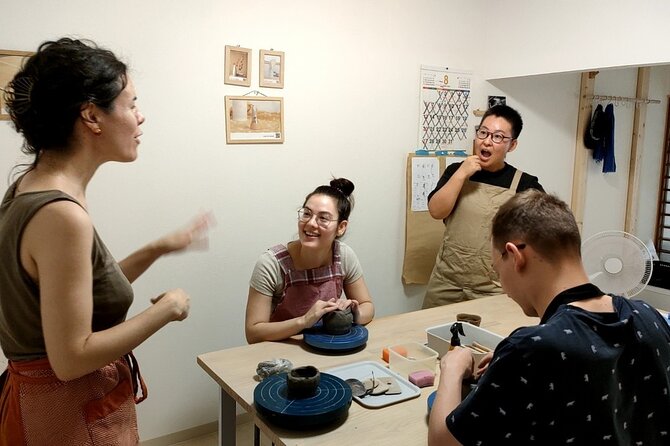
The experience runs about 2 hours. That is long enough to shape clay properly, but short enough that you still have room to enjoy the rest of your Osaka day.
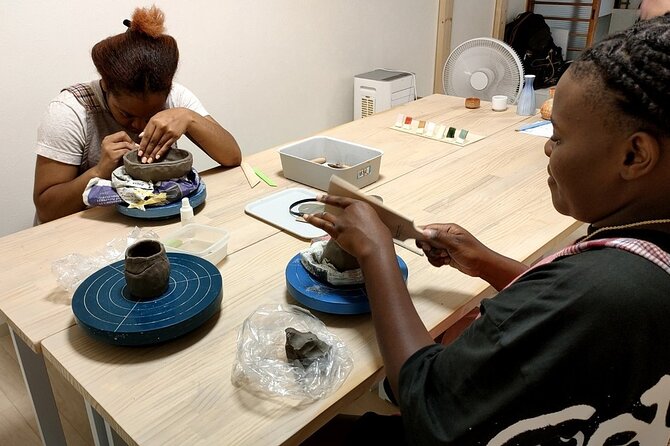
Here is the practical flow you should expect. You work with clay to create your chosen piece, using Japanese-style hand building. Unlike wheel throwing, hand building is slower and more deliberate. You shape parts, refine forms, and pay attention to details that affect how the object looks after firing.
Throughout the session, Anna, Ryo, and the team talk about Japanese culture connected to what you are making. In other words, you are not only learning how to form clay, you are learning how these food-related objects fit into everyday life and tradition. People mention that this context makes the workshop feel richer, without turning it into a lecture.
You will also be offered a drink during the workshop, with Japanese green tea, coffee, or water included. That little touch makes the studio time feel human. It also helps you slow down and treat the class like a real morning or evening activity, not a quick production line.
A different sort of day in Japan:
- Osaka Food Tour: 13 Dishes at 5 Local Eateries
★ 5.0 · 2,149 reviews - Hungry Osaka Street Food Tour:15 Tastings & 3 Drinks with a Local
★ 5.0 · 1,727 reviews - Osaka: teamLab Botanical Garden Entry Ticket
★ 4.5 · 1,710 reviews - Osaka: Tea Ceremony Experience
★ 4.9 · 1,426 reviews
Included Souvenirs, Plus What You Actually Take Home
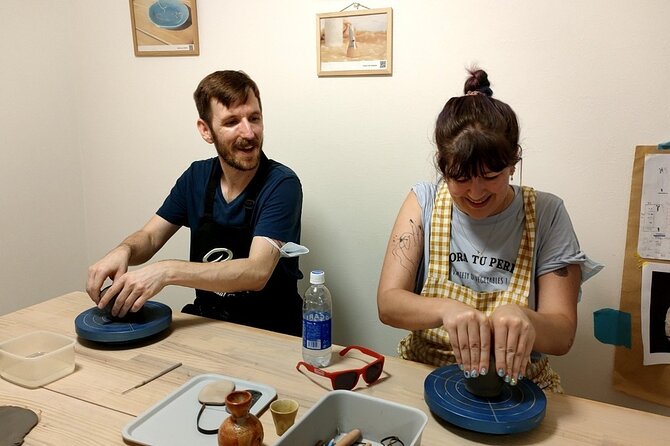
This is where many craft classes either shine or disappoint, and this one handles it well.
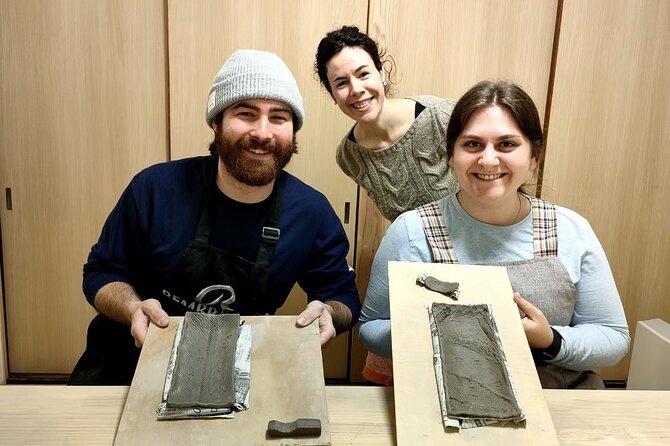
In addition to the ceramic you make, the workshop includes a traditional small dish decorated with glaze (described as a sushi plate souvenir) and a chopstick rest shaped like a sakura flower made by Anna. That means even if you plan to ship your main piece later, you still end the session with a meaningful object tied to your chosen theme.
If you are selecting the sushi set option, you are basically building your project around familiar dining rituals. If you choose a sake set, you get to create forms connected to Japanese drinking culture. If you choose the tea bowl, you are working toward a classic ceramic shape that people recognize across Japan.
The key consideration is this timing mismatch. Your finished pottery is fired, and the shipping timeline is about 1 month and a half. Shipping is not included, so you will need to decide whether you want the pieces shipped and pay the separate shipping fee.
The Firing and Shipping Timeline You Must Plan For
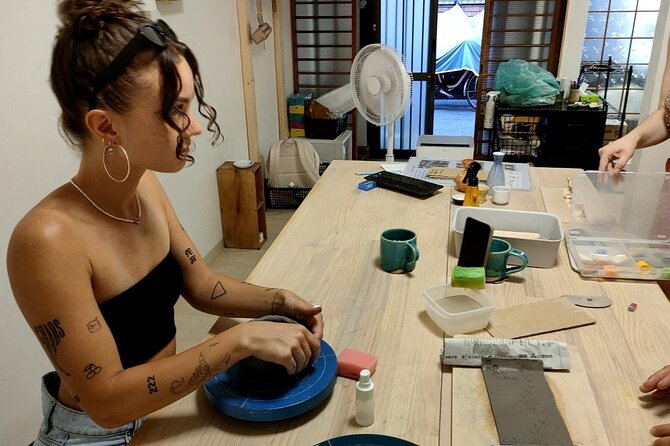
Plan for waiting. The pieces take about 1 month and a half to ship after the workshop. That delay is normal for fired ceramics, but it changes how you experience the activity.
You have two practical options:
- You can enjoy the session, get the included souvenir pieces, and then wait for your crafted items to arrive at home.
- Or you can decide based on your comfort level with handling clay souvenirs right away versus storing the memory until they ship.
Shipping costs are not included, so treat that as part of your real budget. Also, because it takes time to fire and ship, this is not a good “last day in Osaka” activity if you need all souvenirs before you leave Japan.
On the upside, the shipping setup turns the workshop into a long-term keepsake. You will remember the session every time you use the object later, and if you are the type who likes to bring home something personal, waiting can feel worth it.
Price and Value: Why $94.13 Can Be Fair
At $94.13 per person, the price is not just for sitting in a chair. The workshop includes instructor time, material costs, and a firing fee, plus the included souvenir items. It also includes tax.
That matters, because in many craft experiences, the base price is just the instruction and you end up paying extra for firing or consumables. Here, the firing fee is included, which is a major cost driver for ceramics.
You are also paying for a private setting. A private class usually means less efficiency for the host, so the price is more likely to reflect individualized coaching. If you have ever been stuck in a crowded class where one person gets attention and everyone else waits, you will understand why private time can feel like better value.
Two more value points are easy to overlook:
- You get a drink included during the workshop.
- You are guided in a quieter Osaka neighborhood, which can make the cultural side of the experience feel more authentic than the typical tourist bubble.
Where you should adjust expectations is shipping. Since shipping is not included, your total cost is closer to the price plus whatever shipping fee applies to your destination.
Getting There and Making the Most of the Walk
The meeting point is near Teradachō Station, at 2 Chome-3 Tennojichokita, Abeno Ward, Osaka, 545-0001. The activity ends back at the meeting point.
This matters because you are not signing up for a pickup that leaves you stuck across town afterward. It is easier to fit into your day plan. The nearby station makes it accessible with public transportation, and the workshop is listed as suitable for most travelers.
The walk to the studio is part of the charm. You pass streets lined with local food shops, and in some cases you may be guided through a nearby covered market route that feels more lived-in than the famous tourist markets. Even if you are short on time, that short neighborhood segment gives you a different picture of Osaka than the usual sightseeing checklist.
Who This Osaka Pottery Workshop Is Perfect For
This experience fits people who want hands-on culture, not just photos.
I think it is especially good for:
- Beginners who want patient instruction and a supportive private setting
- Couples looking for a shared activity that is more memorable than another meal stop
- Anyone who likes Japanese food culture and wants to craft a themed souvenir
- People who want a quiet, local-feeling part of Osaka, in south Osaka specifically
It may be less ideal if:
- You need souvenirs in your hands right away, because your main pieces ship after about 1.5 months
- You dislike planning around shipping costs, since shipping fees are not included
If you are traveling with teens, it can still work well because the class is structured and guided. Just keep in mind that ceramics requires patience and careful handling, which is part of the fun for many families.
Should You Book Ceramics Tocoton in Osaka?
If you are deciding between a quick tourist stop and a real craft activity with personal instruction, I would lean yes. The reasons are practical: you get to choose what you make, the class is private, and materials and firing are included. Add in a multicultural language option and a century-old house setting, and the workshop feels like you are paying for an experience that actually gives you time and attention.
Book it if you can handle the waiting period for firing and shipping. You also should book it if you want a souvenir with meaning, not just something pretty. The included sushi dish and sakura chopstick rest are a nice bonus, but the real payoff is having a chosen ceramic piece that connects back to the culture you learned during the session.
If you are risk-sensitive about timing, pick a date earlier in your Osaka stay. You can also take advantage of the fact that weather can affect scheduling, and if the workshop is canceled due to poor weather you are offered a different date or a full refund. And if plans change, free cancellation is available up to 24 hours before the start time for a full refund.
If you want my simple rule: book this when you want to slow down, learn something real, and bring home food-themed craft objects that will outlast the trip.
FAQ
Where do I meet for the workshop?
You meet at Teradachō Station, 2 Chome-3 Tennojichokita, Abeno Ward, Osaka, 545-0001, Japan. The activity ends back at the meeting point.
What can I make during the ceramics workshop?
You can choose one option: a sake set (small bottle and glass), a sushi set (sushi plate and chopstick holder), or a chawan for tea.
How long does the workshop take?
The experience is about 2 hours.
Is this a private experience?
Yes. It is a private tour or activity, and only your group participates.
What languages are offered for the class?
The workshop is offered in Spanish, Catalan, English, and Japanese.
What is included in the price of $94.13 per person?
Included items are the instructor, material costs, a firing fee, a Japanese traditional small dish and a sakura-shaped chopsticks rest, Japanese green tea or coffee or water, and tax.
Does the price include shipping for the pottery?
No. Shipping fees are not included. If you want the pieces sent home, the shipping fee is extra.
How long does it take for pottery to be shipped after the workshop?
It takes about 1 month and a half to ship the pottery. The shipping fee is not included.
What happens if I cancel or the workshop is affected by weather?
You can cancel for a full refund up to 24 hours before the experience’s start time. The workshop requires good weather, and if it is canceled due to poor weather, you are offered a different date or a full refund.
Newly listed around Osaka
- 2 Hours of Bar Hopping in Osaka Style★ 5.0 · 22 reviews
- Osaka Authentic Local Izakaya Hopping Experience: Food & Drinks★ 5.0 · 99 reviews
- Same-Day Osaka Food Crawl with local food and Hidden gems★ 5.0 · 114 reviews
- Well-balanced BENTO (lunch box) Cooking Class★ 5.0 · 35 reviews
- Anime Cosplay Photshoot-50 Digital Photos Provided★ 5.0 · 8 reviews
- OSAKA:Feel the Power! Learn Taiko Drum from Professionals★ 5.0 · 28 reviews
- Three Types of Ramen Cooking Class in Osaka★ 5.0 · 119 reviews
- Urban Canvas: Osaka Street Art Bike Tour★ 5.0 · 47 reviews
Osaka Tours, compared.

Shinsekai Food Tour with 13-15 Dishes at 5 Eateries
Read our review →
Osaka Food Tour: 13 Dishes at 5 Local Eateries
Read our review →
Hungry Osaka Street Food Tour:15 Tastings & 3 Drinks with a Local
Read our review →