
Review · SHIBUYA & SHINJUKU NIGHTLIFE
Shibuya: Pachinko Gaming Experience
Pachinko is loud, fast, and totally learnable. I like how this tour gives you the basics of how pachinko works and helps you keep your moves smooth instead of awkward. I also appreciate the small-group setup, which means you can ask questions without feeling rushed. One caution, the $19 price covers the guided lesson, but the pachinko gaming fee is not included, so you should expect to spend a bit more once you’re inside.
Shibuya is the perfect place to try it, because pachinko is part game, part performance, and part people-watching. You’ll start at the Hachiko Memorial Statue, then your guide walks you into the world of pachinko machines where lights and sounds do the talking, and you learn what to do with the balls. The 1-hour format is tight, so bring your curiosity, not high expectations of walking out with jackpot-size winnings.
If you go in with the right mindset, this is a fun cultural detour. You’ll get translation and interpretation support, plus a clear explanation of the rules so you’re not guessing. If you hate crowds or want a slow, sit-down lesson, you might find the experience a bit intense for your comfort level.
In This Review
- Key Highlights Worth Your Time
- Why Pachinko in Shibuya Feels Like a Japanese Culture Crash Course
- Finding Your Guide by Hachiko, Right by the Lottery Booth
- The 1-Hour Flow: History, Rules, and What to Watch for in the Streets
- Entering the Pachinko Parlor: Lights, Sounds, and Your First Launch
- Playing Without Looking Clueless: How the Guide Helps You Avoid Awkward Moments
- Price and Value: What $19 Really Buys You
- How to Plan Your Day Around This 1-Hour Stop
- Who This Tour Suits Best
- Should You Book the Shibuya Pachinko Experience?
Key Highlights Worth Your Time
- Start right at Hachiko: your guide meets you near the statue, by the lottery ticket booth, holding a blue tablet.
- Small group, real attention: limited to 3 participants, so the guide can correct your technique.
- Rules explained in English: you get translation and interpretation, not just a quick overview.
- Inside a traditional parlor: you learn how pachinko machines work and how to launch the metal balls.
- Tips aimed at better play: you’ll hear practical suggestions on aiming and maximizing your chances.
Why Pachinko in Shibuya Feels Like a Japanese Culture Crash Course
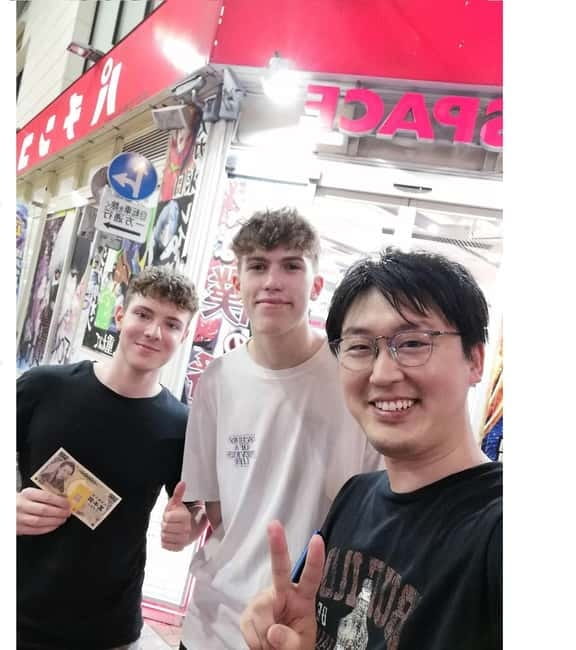
Shibuya is one of those places where you instantly get the message that Japan is good at turning everyday entertainment into a social ritual. Pachinko is a big part of that. It’s been around since the early 20th century, starting as a mechanical game inspired by Western pinball, then evolving into the bright, high-tech parlor world you see today. In an hour, you won’t memorize every machine rule, but you will understand the game’s core logic and why people treat it like a real hangout.
What I like most is that the tour doesn’t treat pachinko like some mysterious gambling maze. Instead, it gives you a guided path: history context first, then the rules, then the practical moment where you actually play. That sequencing matters. When you understand the machine’s purpose, you stop thinking it’s random noise and start noticing patterns like ball flow and how your launches line up with the playfield.
You also get a cultural translation layer. Pachinko parlors are sensory overload if you arrive clueless, especially with the lights, bells, and constant motion around you. With an English live guide, you can focus on learning rather than trying to decode what’s happening.
A few more Shibuya and Shinjuku Nightlife around Tokyo:
- Tokyo: Shinjuku Food Tour (13 Dishes at 4 Local Eateries)
★ 5.0 · 6,603 reviews - Tokyo Bar Hopping Tour in Shinjuku (All-You-Can-Drink + Dinner)
★ 5.0 · 3,587 reviews - Official Street Go-Kart in Shibuya
★ 5.0 · 3,435 reviews
Finding Your Guide by Hachiko, Right by the Lottery Booth
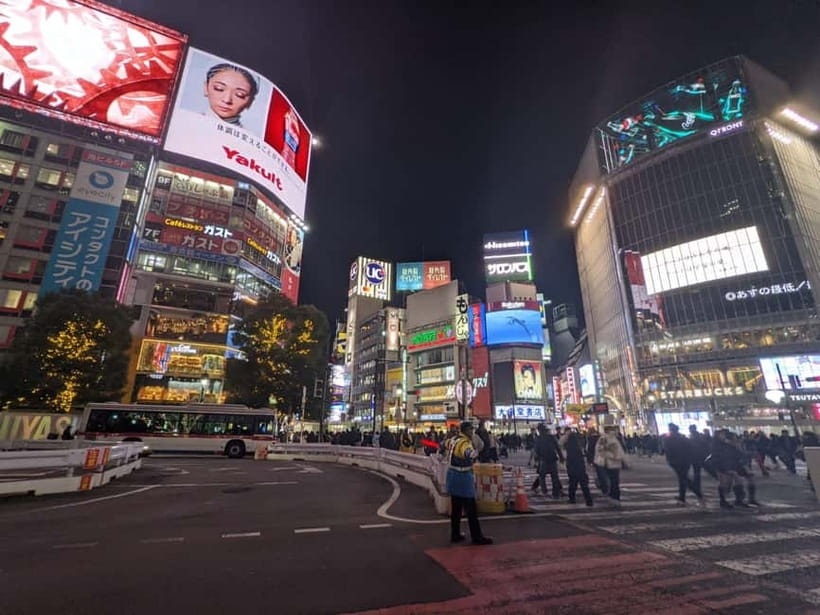
Logistics are not the fun part, but they make or break this kind of tour. The meeting point is near the Hachiko Memorial Statue in Shibuya, and the key detail is that you should be on the right side of Hachiko. You will see a lottery ticket booth there, and the guide waits in front of it.
The guide will be holding a blue tablet, so you can confirm quickly. Arrive about 5 minutes early. If no guide appears after 20 minutes, it’s treated as a no-show, so don’t play the waiting game for an hour. If you get turned around, you should contact the provider directly.
This matters because Shibuya is busy, and it’s easy to lose track of landmarks when you’re watching street signs and trying to find the exact booth. Getting the meeting step right means you start the tour calm, which makes the whole pachinko lesson easier.
The 1-Hour Flow: History, Rules, and What to Watch for in the Streets
This tour is built to fit into a short window, about 1 hour total. You’ll spend time outside and then step into the parlor. That pacing is smart for first-timers. You don’t get stuck in a long lecture, and you also don’t get shoved into playing before you understand the basics.
Before you enter the parlor, you’ll learn how pachinko became part of Japanese entertainment culture. The big story is that it started as a mechanical game inspired by pinball, then grew into the modern setup with flashy machines and louder feedback. In real life, that evolution shows up in the machines themselves, which feel designed to keep you engaged even when you are still learning.
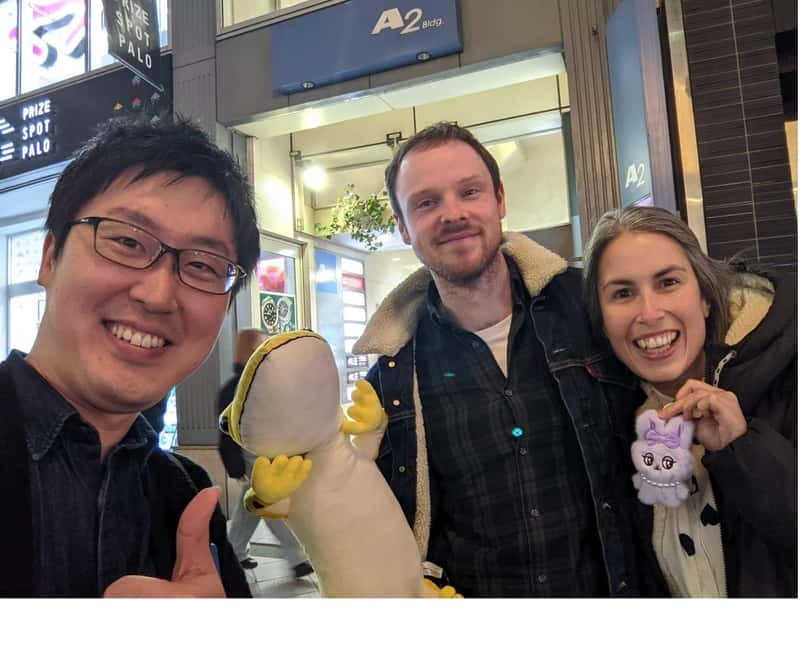
Next comes the practical teaching. Your guide explains the rules in a way you can actually use. And because it’s a small group capped at 3 participants, you can ask questions about what you’re seeing while you’re seeing it. One review-style comment called out that the tour had enough time for questions, which is exactly what you want when you have no idea what to do with the balls.
Entering the Pachinko Parlor: Lights, Sounds, and Your First Launch
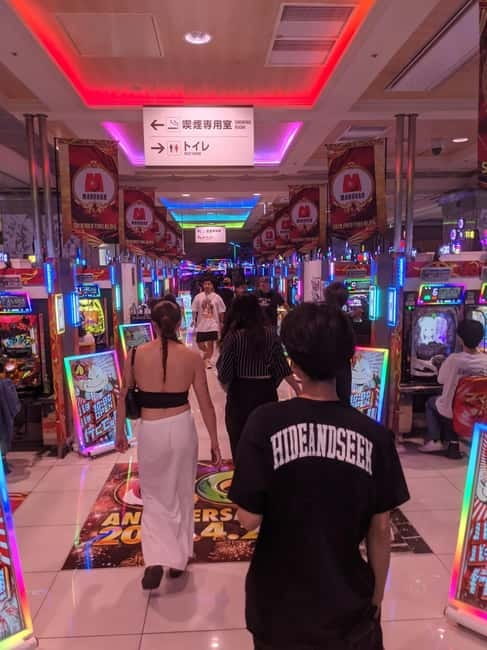
Stepping into a traditional pachinko parlor is a different world. The lights and sounds are part of the game’s rhythm, and the visual chaos can be intimidating at first. Your guide helps you make sense of the environment so you can focus on actions that matter.
Here’s what you’ll learn, in plain terms:
- How to start the process, starting with purchasing your set of metal balls.
- How to launch the balls into the machine correctly.
- What you should pay attention to while the balls move through the playfield.
- The idea of aiming strategically to improve your chances.
The tour’s goal is not to promise a jackpot. In fact, if you go in expecting guaranteed wins, you’ll feel disappointed. The real value is that you learn the “mechanics language” of pachinko, so you can play with confidence instead of panic-pressing buttons and hoping for the best.
You’ll also get practical tips. The tour description specifically mentions help with aiming for the jackpot and maximizing your winnings. What that means in practice is your guide focuses on technique and decision points you can control, like how you set up each throw rather than trying to understand every machine feature.
One of the strongest signals from the experience is guidance that keeps you positive when you’re new. One guide was called out for being super optimistic when someone started winning. That’s not just encouragement. In a place where the environment is intense, a calm, supportive guide helps you avoid overthinking and makes your practice time more effective.
A few more Tokyo days to weigh up
- Mt Fuji and Hakone 1-Day Bus Tour Return by Bullet Train
★ 5.0 · 26,383 reviews - 1-Day Tokyo Bus Tour
★ 5.0 · 14,250 reviews - Tokyo: TOKYO SKYTREE® Admission ticket
★ 4.5 · 11,192 reviews - Tokyo: teamLab Planets TOKYO Digital Art Museum Entry Ticket
★ 4.6 · 9,779 reviews
Playing Without Looking Clueless: How the Guide Helps You Avoid Awkward Moments
Pachinko has a reputation for looking easy until you’re standing there with a handful of metal balls and a machine full of moving targets. The tour is built for exactly that moment, because learning the rules from a distance is not the same as doing the motions yourself.
In a small group, you’re more likely to get individualized coaching. That’s important because your “first try” will likely be imperfect. You might throw too hard or too soft, or you might not position your launch the way the machine expects. A patient guide can correct those details quickly, which is how you avoid the classic new-player awkwardness.
A big plus here is translation and interpretation. When you don’t have to guess what your guide is telling you, your practice time becomes actual learning time. It also means you can ask for clarification without stopping the whole group. In short, you spend less effort trying to communicate, and more effort improving your play.
The tour also frames pachinko as a subculture, not just a game. When you understand that people come to these parlors to socialize, compete lightly, and share the emotional ups and downs of the machine, you stop feeling like you are intruding. You’re not. You’re participating.
Price and Value: What $19 Really Buys You
At $19 per person for about an hour, this is one of those pricing models where the value is in the instruction, not the gameplay fee. The pachinko gaming fee is not included, so you’ll need to plan for additional spending once you purchase balls at the parlor.
That said, the price still makes sense because you’re paying for:
- A live English guide
- A clear explanation of the rules
- Translation and interpretation support
- Help so you don’t waste your limited first session fumbling through how the machine works
If you tried this alone, you could probably find a parlor and figure things out by trial and error, but you would spend that same hour confused. Confusion is expensive in pachinko, because buying balls is part of the learning curve. A guide compresses that curve. You get to practice with feedback, which is why people describe it as worth the money.
Also consider the small-group angle. Limited to 3 participants, you’re not getting a scripted group talk that ignores individuals. You get attention, which is where the value lives.
How to Plan Your Day Around This 1-Hour Stop
Because the tour is only 1 hour, treat it as a planned activity rather than something you tack on randomly. Start from the Hachiko Memorial Statue area, and plan to stay in the Shibuya zone afterward if you’re enjoying the city energy.
If you’re hungry, plan dinner later. Drinks are not included, so if you want water or a snack you’ll need to buy it yourself nearby or when you’re done. One reason this helps is that you can concentrate during the machine time without worrying about ordering.
If you want to take photos, do it thoughtfully. Pachinko parlors are busy and bright, and you’ll likely be near other players. Focus on learning and keep your phone use minimal while your guide is explaining technique.
Who This Tour Suits Best
This is a strong fit if you:
- Want a guided first attempt at pachinko
- Like short, focused cultural activities
- Prefer small-group attention with translation support
- Are comfortable with the intense sound and light environment inside a parlor
It’s not suitable for children under 18. If you’re traveling with someone who needs a slower pace, you might want to consider whether the parlor environment will feel overwhelming.
Should You Book the Shibuya Pachinko Experience?
I think you should book it if your goal is to play pachinko with less guessing and more confidence. The biggest reason is the combination of English instruction, interpretation, and the small-group size. You are paying to learn the rules fast, get technique tips, and avoid the new-player “what am I supposed to do?” moment.
Skip it if you are only interested in guaranteed winnings, or if you strongly dislike loud, fast environments where people are actively playing. Also remember your total cost will be higher than $19 because the pachinko gaming fee is separate.
If you want a real sense of Shibuya beyond shopping and street scenes, this is a practical way to do it in one hour. Show up at Hachiko on time, bring patience for the sensory overload, and let the guide help you get your throws working.
Newly listed around Tokyo
- Tokyo private transfer for Yokohama Port★ 4.5 · 63 reviews
- Luxury Kimono Photoshoot at Ginza Tokyo★ 5.0 · 7 reviews
- Tokyo Allstar Food Tour★ 4.5 · 206 reviews
- Tokyo Art Aquarium Museum E-Ticket with optional Tokyo Metro Pass★ 5.0 · 17 reviews
- Tokyo: Best Ginza Food Tour at 3 Local Eateries★ 5.0 · 83 reviews
- Private One Day Nikko Tour with Bilingual driver★ 3.5 · 11 reviews
- Kabuki Talk★ 5.0 · 10 reviews
- Japanese Whisky Tasting Experience at Local Bar in Tokyo★ 5.0 · 59 reviews
Shibuya & Shinjuku Nightlife, compared.
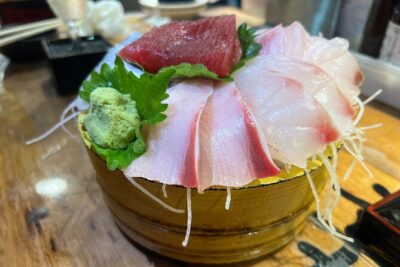
Shinjuku Food Tour (13 Dishes at 4 Local Eateries)
Read our review →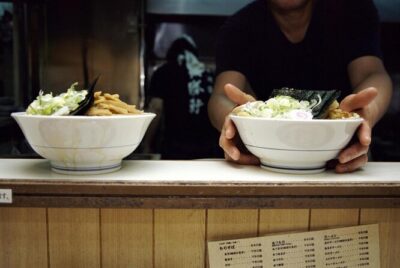
Tokyo Bar Hopping Tour in Shinjuku (All-You-Can-Drink + Dinner)
Read our review →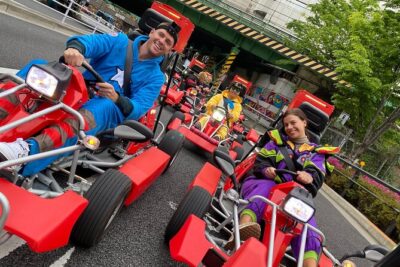
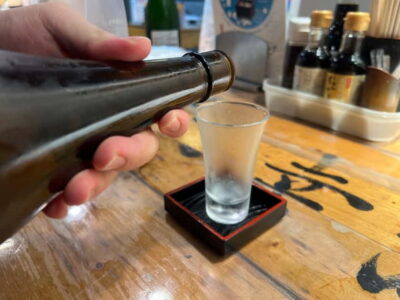
Shinjuku Food Tour (15 Dishes and 4 Eateries)
Read our review →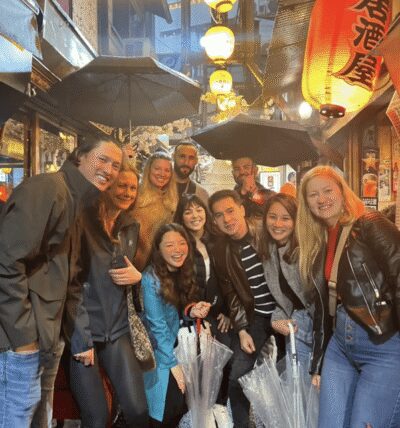
Shinjuku Local Bar and Izakaya Guided Walking Tour
Read our review →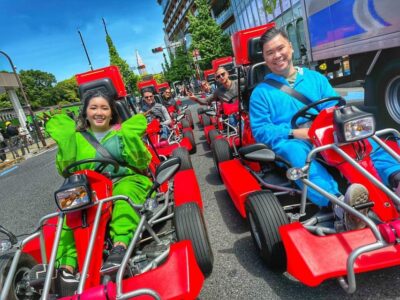
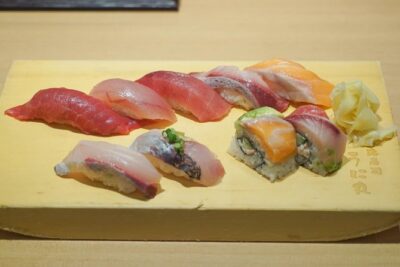
Tokyo Night Foodie Tour in Shinjuku – Seasonal Sushi, Wagyu Beef
Read our review →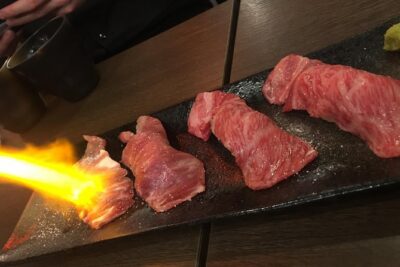
Shibuya Meltdown Nightlife Tour: All-You-Can-Drink Bar Hopping
Read our review →Browse the lists this tour appears in