
Review · SUMO STABLE VISITS
Sumo Training Watching Experience in Tokyo
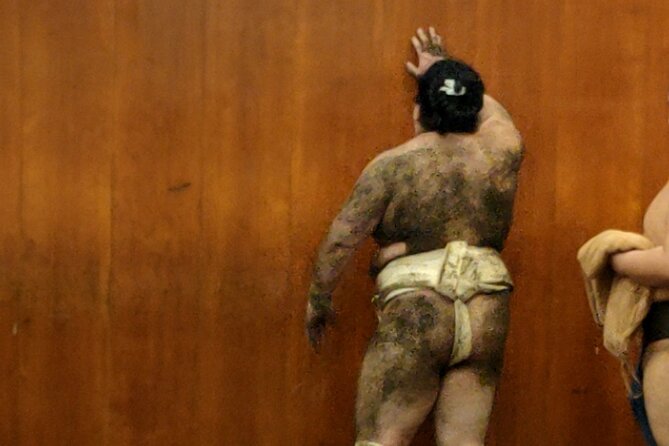
Watching sumo practice beats watching highlights. This is a real training session by active wrestlers, not a staged comedy show, and it lets you feel the heat and hear the impact right from the floor. I especially like the small-group size, which keeps you close enough to see what the wrestlers are actually doing, and the live commentary that helps you follow the moves beyond just watching bodies collide.
One thing to consider first: you sit directly on the floor on cushions, with limited time to be casual. If you have bad knees or a back issue, or you are pregnant, you’ll want to take the floor-sitting rules seriously before you book.
In This Review
- A Serious, Sacred Experience With Rules
- Key Points You’ll Care About Before Booking
- Why This Sumo Training Session Feels Different From Match Day
- Getting There: Ryogoku Station Meeting Point and the Walk to the Stable
- What Happens During Practice: The 4-Part Training Flow
- 1) Stretching and Strength Training: Where Discipline Starts
- 2) Basic Training: Technique, Timing, and Repetition
- 3) Match-Style Training: More Impact, More Intensity
- 4) Photos After Training: A Short Moment, Big Atmosphere
- The Etiquette That Keeps This From Becoming a Zoo
- Photo Moment: How to Get It Without Getting in the Way
- Small Group Value: Why Up to 8 People Changes Everything
- Price and Timing: Is $84.70 Worth It?
- Who Should Book This Sumo Training Session
- Should You Book This Sumo Training Session in Tokyo?
- FAQ
- Where do I meet for the Sumo training experience?
- How long does the training last?
- What time do I need to arrive to see the full program?
- Can I eat or drink inside the stable?
- Can I take photos, and how should I handle my phone?
- Is this tour suitable for children?
- What happens if I’m late or sick on the day?
A Serious, Sacred Experience With Rules
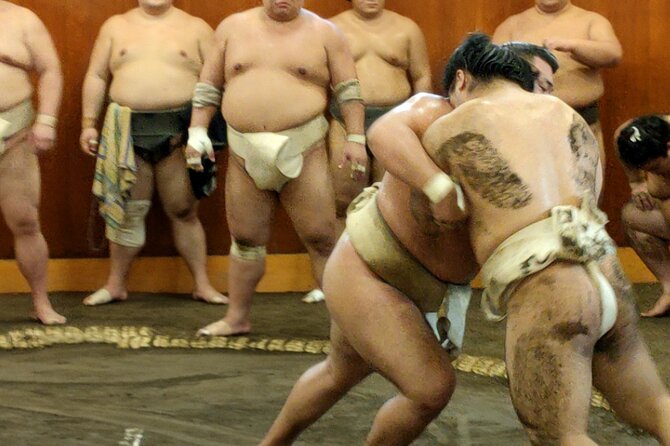
Sumo training happens in a sacred environment, and the stable has clear expectations. You’ll be asked to keep your phone quiet, avoid eating or drinking inside, and follow dress and behavior guidelines so you do not disrupt the room. The experience also runs on time, so plan for a little extra buffer when you head to the meeting spot.
Key Points You’ll Care About Before Booking
- Real wrestlers training in an actual stable, not a themed performance
- Small group up to 8, which makes it easier to see closely
- Live commentary using original materials, so you understand what you are seeing
- No eating or drinking inside the stable, and quiet behavior is expected
- Photo opportunity after training, with rules about how to behave and what to wear
Compare these Sumo Stable visits in Tokyo:
- Tokyo: Sumo Show Experience with Chicken Hot Pot and a Photo
★ 4.8 · 6,678 reviews - Tokyo: Sumo Show and Dining Experience
★ 4.8 · 2,742 reviews - the SUMO show
★ 5.0 · 1,960 reviews
Why This Sumo Training Session Feels Different From Match Day
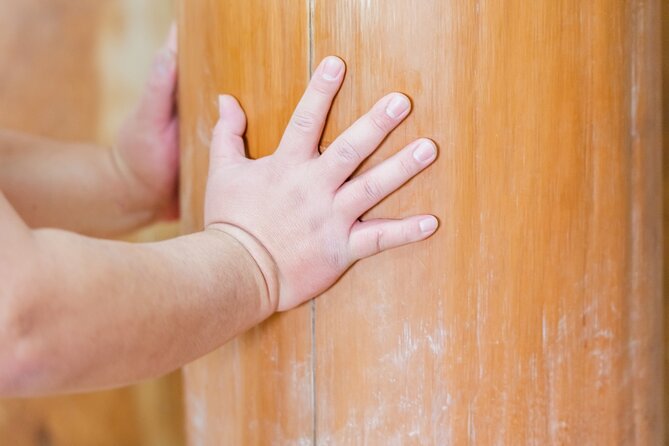
Sumo is Japan’s national sport, and it carries a seriousness you can feel the moment you step near a stable. At a tournament, you mostly watch from seats and focus on the result. Here, you watch wrestlers prepare, condition their bodies, and sharpen technique in front of you. That changes the whole vibe.
I like that this experience is built around process, not spectacle. You’ll see stretching and strength work, then basic drills, then training that looks more like bout-style intensity. It’s the kind of order that makes sense when you understand that sumo is built on routine and discipline.
Another plus is the closeness. The format is designed so you are near the training area, not across a stadium. You get a better sense of rhythm, breathing, and the physical sound of contact. Even when you do not speak Japanese, the commentary and visual explanations help you connect the dots.
The experience is also described as something that is not easy to access, even for Japanese people. That matters, because it signals you are stepping into a real daily world, not a tourist bubble.
Getting There: Ryogoku Station Meeting Point and the Walk to the Stable
This tour meets at Ryogoku Station 1-chōme-4-29 Yokoami, Sumida City, Tokyo 130-0015 and returns to the same point afterward. Plan for a walk of about 10 minutes on foot to reach the stable.
One practical note worth taking seriously: the stable is not immediately next to the Kokugikan area, so do not assume you can walk there in two minutes from any random sumo landmark. If you aim for the meeting point and then give yourself time for the walk, you’ll be fine.
The tour also leaves on time, and they do not wait for late guests. That’s not being difficult, it’s how stable schedules work. If you are arriving from another part of Tokyo, I’d give yourself buffer time so you are not rushing and stressed when you meet the group.
What Happens During Practice: The 4-Part Training Flow
The program is set up in a clear sequence, and the order changes a bit depending on your arrival time.
If you arrive at 7:45, you can generally experience the full program, which includes:
1) Stretching and strength training
2) Basic training
3) Match-style training
4) A photo segment after practice
If you arrive at 8:20, you’ll generally start from basic training (the second part), so the total experience runs shorter.
A few more Tokyo days to weigh up
- Mt Fuji and Hakone 1-Day Bus Tour Return by Bullet Train
★ 5.0 · 26,383 reviews - 1-Day Tokyo Bus Tour
★ 5.0 · 14,250 reviews - Tokyo: TOKYO SKYTREE® Admission ticket
★ 4.5 · 11,192 reviews - Tokyo: teamLab Planets TOKYO Digital Art Museum Entry Ticket
★ 4.6 · 9,779 reviews
1) Stretching and Strength Training: Where Discipline Starts
This opening phase is where you see how seriously wrestlers treat preparation. Stretching is not just warm-up fluff. You’ll watch bodies loosen up, then move into strength-focused work. Even if you only know sumo from TV, this part helps you understand that the visible bouts are the end result of a long routine.
Because the group is small and you are close, you can see how controlled the warm-up is. That control is the first clue that sumo is not random hitting, it’s technique, balance, and power management.
2) Basic Training: Technique, Timing, and Repetition
Next comes basic training. This is where the body skills get practiced again and again. You are not just watching strength. You’re watching form, footwork, positioning, and how wrestlers reset themselves between attempts.
The tour’s live commentary is most helpful here, because it gives you language for what your eyes are catching. One of the guides connected with the experience, Alisa from NicoTour Japan, is specifically praised for adding easy-to-follow explanations, including diagrams, so you can make sense of the drills instead of guessing.
3) Match-Style Training: More Impact, More Intensity
Then the session shifts toward training that looks more like what you’d recognize from competition. This is often when you’ll feel the sound and impact most. If you care about the raw physical side of sumo, this section is the reason you booked.
It’s also the part where the stable rules matter most. With no eating or drinking, and with everyone expected to behave calmly, you can actually focus on what’s happening rather than what’s going on around you.
4) Photos After Training: A Short Moment, Big Atmosphere
After the main practice, you may get a chance to take photos with the wrestlers. This is not a free-for-all. You’ll be guided on where to stand and how to behave, and there are expectations about clothing and respectful conduct.
It’s smart to treat this photo moment like a quick handshake, not an extended event. If you go in thinking it will be quick, you’ll enjoy it more.
The Etiquette That Keeps This From Becoming a Zoo
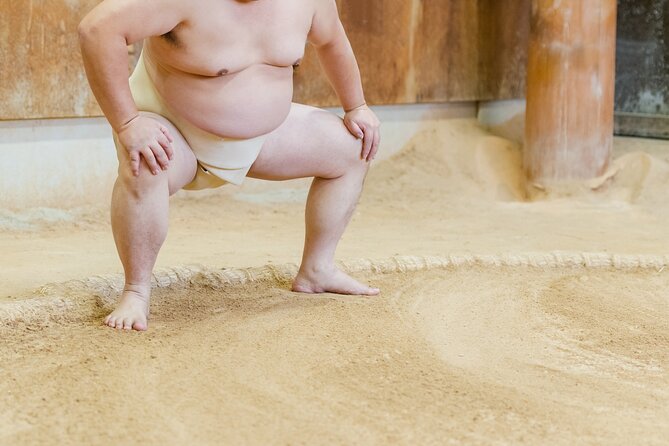
This tour is run in a traditional setting, and the stable expects visitors to act like visitors, not spectators who forget the setting is sacred.
Here are the key rules that affect your comfort and the group dynamic:
- No eating or drinking in the stable. This is a big one. Plan snacks outside before you meet, because once you are inside, you’ll need to wait.
- Quiet behavior. The tour notes that they basically do not talk during the session. You should expect observation time, with commentary at the right moments.
- Phone on silent. The guide asks you to set your cell phone to silent mode.
- Use a silent camera option. They specifically mention installing a silent camera on your smartphone so shutter sound does not interrupt training.
- Avoid revealing clothing. This is about respectful dress in a place with strict traditions.
- Follow instructions immediately. If you do not follow the rules, you may be asked to go outside temporarily.
Also, seating is not on chairs. It is the Japanese style, sitting directly on cushions on the floor. If you have bad knees or a back issue, or you are pregnant, you should take this seriously. Even if you can sit, you may not want to sit low for extended periods, especially if you arrive for the full session.
For kids, it gets even more strict. Children must be 6 years old or older, and even children over 8 who cannot sit still are not allowed.
Photo Moment: How to Get It Without Getting in the Way
Photos are part of the package, and that’s a nice bonus. But the stable environment means you should approach photo time with patience and restraint.
You can take photos, but you should keep your phone silent and be ready to follow directions. Dress matters too, because you are close to wrestlers and to other visitors.
If you are planning what to wear, pick something modest and easy to manage while sitting on the floor. If you are sensitive to heat and noise, remember you are in the middle of a training room. The atmosphere can feel intense, even though it is controlled.
Small Group Value: Why Up to 8 People Changes Everything
A max group size of 8 travelers sounds like a small detail, but it changes the entire experience. With fewer people, you get closer, and the guide can manage behavior and attention better.
That closeness is one of the most praised aspects of the experience. People also highlight that the guide is helpful and that the experience is interesting because it stays near the training area. When you are not fighting for angles, you actually see the body mechanics.
This also affects your comfort. If you are sitting on cushions and trying to stay quiet for a while, having a smaller group makes it easier to settle into the space.
Price and Timing: Is $84.70 Worth It?
At $84.70 per person for about 2 hours 20 minutes (approx.), you are paying for access and for instruction. This is not an open, public gym workout where you can just show up. It’s a training session in a stable that takes discipline and rules seriously, and that access is the value.
The timing structure also affects how much you get. If you arrive early enough, you see the full sequence from stretching through match-style training plus photos. If you arrive later, the session starts partway through, so your time inside is shorter.
Given the schedule and the fact that date requests are not accepted, I’d treat this as one of those Tokyo bookings you either plan well or accept you might miss out on. The price feels more reasonable when you think of it as a guided, respectful pass into a private world, plus commentary you can’t recreate on your own.
Also note that it is run with a mobile ticket, so you should expect to present your ticket on your phone at the meeting point.
Who Should Book This Sumo Training Session
This experience is a strong fit if you want real culture, not performance. You’ll likely enjoy it if you care about how sports are made, not just how they end. The training flow and the commentary help you move beyond surface watching.
It is also a good pick for first-time sumo fans who want context. Seeing stretching, drills, and match-style practice in one structured session makes the sport feel less mysterious.
It might be a tough fit if you need lots of comfort breaks, because you cannot eat or drink inside and you may need to sit on the floor. If you have mobility limitations, or if you struggle with extended still sitting, you should think carefully.
Families can go, but the age and behavior rules are clear: 6+ is the minimum, and kids who cannot sit still are not allowed. This is not a drop-in activity where kids can roam.
Should You Book This Sumo Training Session in Tokyo?
I’d book it if you want something that feels authentic and structured. The main reasons are simple: real wrestlers, close viewing, and live commentary that helps you interpret what you are seeing. The small group size also makes it feel like you are being folded into the training rhythm, not watching from the outside.
I would think twice if floor sitting is a problem for you, or if you strongly prefer eating or talking during activities. This is quiet, rule-based, and designed for respect.
If you do book, plan your arrival early and keep your phone set up for silent photos. Do that, and you’ll get the best version of what this experience offers.
FAQ
Where do I meet for the Sumo training experience?
You meet at Ryogoku Station, specifically Ryogoku Sta.1-chōme-4-29 Yokoami, Sumida City, Tokyo 130-0015, Japan. The tour ends back at the same meeting point.
How long does the training last?
The practice is about 1.5 to 2 hours. The overall tour length depends on your arrival time, with early arrivals experiencing the full program and later arrivals joining from a later part of the training.
What time do I need to arrive to see the full program?
If you arrive at 7:45, you generally experience the entire program. If you arrive at 8:20, you generally start with the later portion of the training, so the session is shorter.
Can I eat or drink inside the stable?
No. You cannot eat or drink in the stable.
Can I take photos, and how should I handle my phone?
Yes, you can take photos. You should set your cell phone to silent mode, and the tour suggests installing a silent camera option on your smartphone.
Is this tour suitable for children?
Children must be 6 years old or older. Also, even children over 8 who cannot sit still are not allowed.
What happens if I’m late or sick on the day?
The tour leaves on time and cannot wait for late guests. If you have a cold or infectious disease on the day, you should cancel your participation. If rules are not followed, you may be asked to go outside temporarily.
Newly listed around Tokyo
- Tokyo private transfer from/to Tokyo Ports★ 4.5 · 26 reviews
- Yanaka and Asakusa Walk around DOWNTOWN TOKYO like a local★ 5.0 · 36 reviews
- Yokohama Private Arrival Transfer : Tokyo Hotels to Yokohama Port or Hotels★ 4.5 · 12 reviews
- Yanaka Historical Walking Tour in Tokyo’s Old Town★ 5.0 · 182 reviews
- Official Japan Go-Kart Through Shibuya / Shinjuku (IDP Required)★ 5.0 · 92 reviews
- Private homevisit for whole cultual experience, 20min from Tokyo★ 5.0 · 20 reviews
- Exclusive Sumo Morning Practice in Tokyo with Photo Opportunity★ 5.0 · 68 reviews
- 3-Hour Tokyo Pub Crawl Nightlife Welcome Guided Tour in Shibuya★ 5.0 · 209 reviews
Sumo Stable Visits, compared.
Sumo Show Experience with Chicken Hot Pot and a Photo
Read our review →
Tokyo Sumo Entertainment Show with Chicken Hot Pot and Photo
Read our review →
Tokyo Grand Sumo Tournament Viewing Tour with Tickets
Read our review →
Sumo Show & Experience w/ Optional Kimono & Hot Pot
Read our review →Browse the lists this tour appears in