
Review · SHRINE & TEMPLE VISITS
Tokyo: Asakusa Walking Tour -Sumida River to Senso-ji Temple
A day in Asakusa can feel like a lot, fast. This small-group tour strings together two smart stops, a Sumida River cruise and a guided Senso-ji visit, so you get context without getting lost in logistics. I particularly like that it’s built for culture and religion, not just photos. You also get a bonus that costs extra on your own, a fortune telling stop at Senso-ji.
What I like most is the pacing. You spend about 30 minutes on the river for landmark views like Tokyo Skytree and Kaminarimon Gate, then you switch to a guided walk through the temple grounds and the shopping street atmosphere around Nakamise-dori. The other big plus is the guide interaction, with real personality showing up in the experience, including guide names Nori and Naoko in the feedback.
One possible drawback to plan for: you’re going to cover two areas in about 1.5 hours total, so if you want a super slow stroll, this may feel a bit scheduled. Also, good weather matters for the river portion.
In This Review
- Key points to know before you go
- From Kuramae to Asakusa fast, with a river view first
- The Sumida River cruise: Skytree views without the traffic stress
- Crossing into temple culture: what your guide will help you notice
- Senso-ji Temple tour: gates, the main hall area, and Nakamise-dori
- Fortune telling at Senso-ji, included in the price
- Guides Nori and Naoko: why small-group talk matters here
- Timing and your day plan: 1.5 hours that still feel complete
- Price and value: is $43 fair for what you get?
- Who should book this Asakusa cruise plus Senso-ji walk
- Should you book this tour?
- FAQ
- What is the duration of the Tokyo Asakusa walking tour and river cruise?
- How much does the tour cost?
- Is there a small group limit?
- What does the tour include at Senso-ji?
- Where does the tour start and end?
- Do I need good weather for this experience?
Key points to know before you go
- Sumida River cruise timing: about 30 minutes for landmark views, including Tokyo Skytree and Kaminarimon Gate
- Senso-ji guided walk: you see Kaminarimon Gate, Nakamise-dori shopping street, and the main hall area
- Fortune telling included: you get it as part of the experience price
- Small group size: maximum 10 travelers, which makes questions and photo breaks easier
- Ends at Asakusa Station: you finish in a convenient place to continue your day
- Mobile ticket: less hassle when you arrive
From Kuramae to Asakusa fast, with a river view first
The meeting point is at the Kuramae 2-Chōme Police box, address 2-chome-15-8 Kuramae, Taito City. The tour ends near Asakusa Station, address 1-chōme-1-3 Asakusa, Taito City. That setup is practical because Asakusa is a great neighborhood to keep exploring after you finish, especially if you plan to hop on trains to your next stop.
I like starting with the river because it changes how you see the area. You look at Tokyo from the water, then you land on the streets and temples with a better sense of where everything sits. And when you’re short on time, that first perspective shift is exactly what you want.
In the feedback, guides also helped set expectations for temple etiquette and shrine behavior. That means you are not just looking at sights, you know what to do when you’re inside a space where people take rituals seriously.
More Shrine & Temple Visits in Tokyo
- Tokyo: Meiji Shrine, Asakusa, Skytree Bus Tour and Cruise
★ 4.7 · 1,986 reviews - Tokyo: Asakusa Walking Tour with Sensoji Temple Visit
★ 4.8 · 1,583 reviews - Nikko: Kegon Falls, Lake Chuzenji & Toshogu Temple
★ 4.6 · 1,577 reviews
The Sumida River cruise: Skytree views without the traffic stress
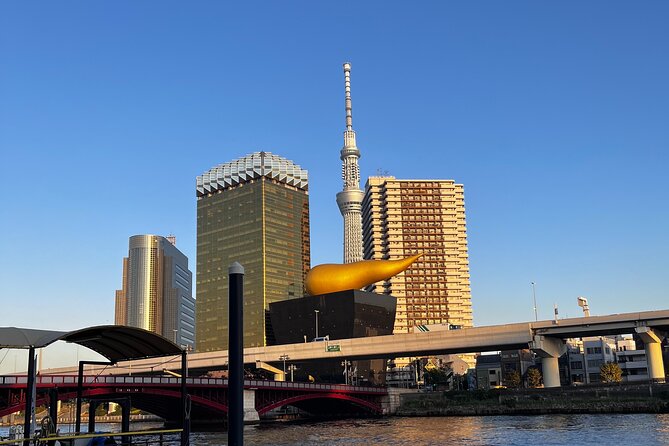
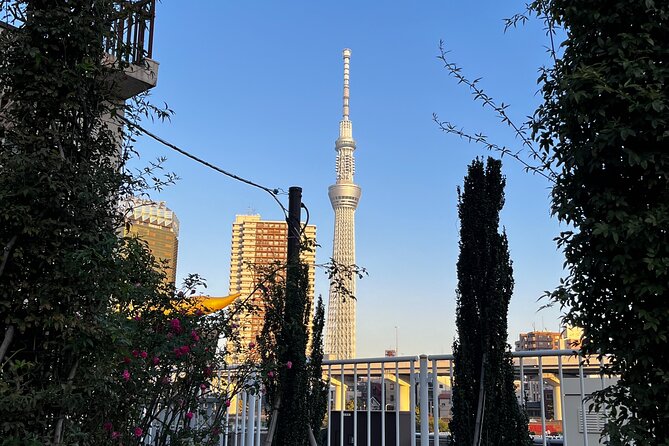
The first stop is a cruise along Tokyo’s Sumida River, and it lasts about 30 minutes. The viewing focus is landmarks, including Tokyo Skytree and Kaminarimon Gate. Even if you’ve seen photos online, the river angle makes the skyline feel different because you’re floating across the city’s layers rather than standing on a single street corner.
Admission is listed as free for this stop, and you are not paying extra on top of the tour price. That matters because river sightseeing can add up quickly if you piece it together yourself.
A cruise is also a sneaky form of sightseeing recovery. Walking in Asakusa can be crowded, and the shopping street energy can be a lot. On the water, you get a calmer break where you can take photos, look for landmarks, and reset your eyes for the next stop.
What to watch for, though: the experience requires good weather. If the forecast looks iffy, build in flexibility. The tour may be offered on a different date or refunded if it gets canceled due to poor weather.
Crossing into temple culture: what your guide will help you notice
After the river, the tour heads into Asakusa, where the Senso-ji area is famous for both spirituality and street life. You’ll have a guided segment that focuses on Japan’s traditions and spiritual culture, with a clear emphasis on what you’re supposed to do and why.
One of the most useful parts of this kind of guided visit is etiquette. You might see people bowing, washing, offering prayers, or following small routines around shrine and temple spaces. A guide can explain what you’re looking at in plain terms, so you don’t feel like you’re guessing. In the feedback, there was specific praise for learning about etiquette at shrines and temples, plus a sense of historical context, including Edo period explanations.
If you’ve never visited Senso-ji before, this is the ideal time to get your bearings fast. You’re not just wandering a busy area, you’re learning what to look for as you move between sights. That helps you slow down at the right moments later, even after the tour ends.
Senso-ji Temple tour: gates, the main hall area, and Nakamise-dori
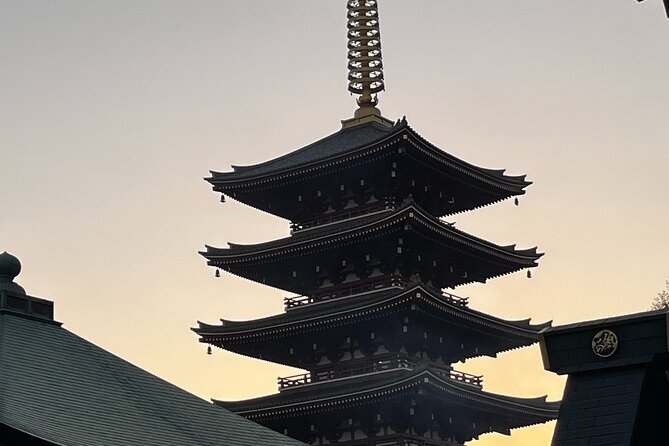
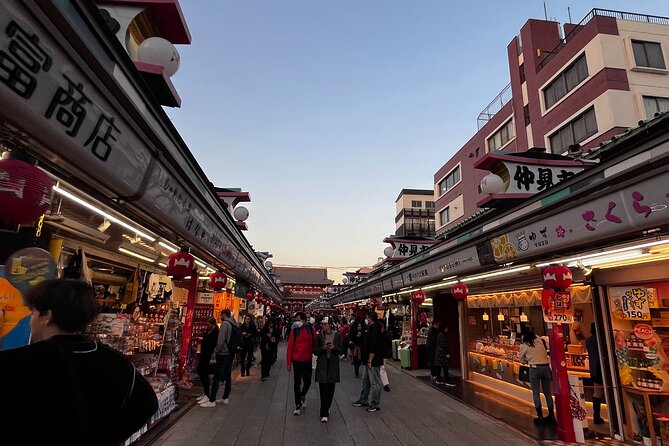
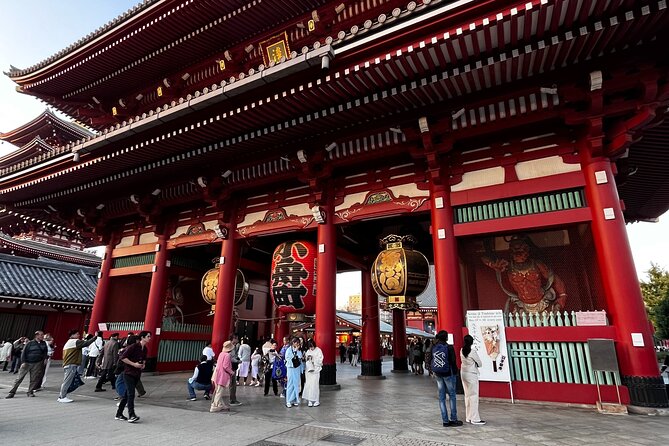
The main temple stop lasts about 1 hour. Your route includes Kaminarimon Gate, Nakamise-dori shopping street, and the temple complex including the majestic main hall area.
Kaminarimon Gate is the big moment most people picture, and seeing it with a guide helps because it’s not only a photo backdrop. It also anchors how people transition from street bustle into a sacred space. You’ll get a guided explanation of what’s happening around the gate and why this place became such a major center for worship.
Then comes Nakamise-dori, the shopping street that runs toward the temple. This is one of those places where it’s easy to lose time because there are so many tempting snacks and souvenirs. With a guide, you still get to experience the street energy, but you keep your rhythm. You know what you’re doing, what to prioritize, and where the next key viewpoint is.
The temple main hall area is where you’ll slow down. The guide leads you through the key sights, and you have a chance to absorb the atmosphere rather than sprinting through it. In the feedback, guides were praised for being engaging and personable, answering questions, and giving time to stop for exploring and pictures. That balance is exactly what makes a temple visit feel meaningful without dragging.
More Walking Tours in Tokyo
- Tokyo Tsukiji Fish Market Food and Culture Walking Tour
★ 5.0 · 3,184 reviews - Tokyo: Shinjuku Local Bar and Izakaya Guided Walking Tour
★ 4.9 · 1,794 reviews - Tokyo: Tsukiji Fish Market Food and Walking tour
★ 5.0 · 1,724 reviews - Tokyo: Tsukiji Fish Market Guided Walking Tour
★ 4.9 · 1,397 reviews
Fortune telling at Senso-ji, included in the price
Here’s the practical reason I’d consider booking this tour even if you plan to visit Senso-ji anyway: fortune telling is included.
You can always do fortune telling on your own, but adding it in as part of the planned visit saves decision time and usually reduces friction. It’s also a memorable activity because it’s rooted in the place, not a random add-on. If you want a cultural ritual you can participate in without planning details, this is one of the better built-in experiences in Asakusa.
Do expect it to be a short, focused activity within the larger visit. The point is to let you experience the ritual without turning your visit into a long detour.
Guides Nori and Naoko: why small-group talk matters here
This is a small-group experience, with a maximum of 10 travelers. That small size shows up in how you can ask questions. It also means the guide can control pacing better, especially around the busier parts of Asakusa.
In the feedback, Nori was singled out for an ability to connect what you were seeing to Edo period context. Naoko was praised for being smart, funny, and informative, plus highly engaging and personable. The common thread in the praise is not just knowledge, it’s conversation and timing: time to explore, take pictures, and ask what things mean.
That matters because Senso-ji is iconic, but also visually busy. Without someone to help you notice the right cues, you can end up with hundreds of photos and no clear sense of what you just experienced. With a good guide, you leave with a mental map and a few solid explanations.
If you care about getting cultural context, not just checking boxes, this is a real advantage.
Timing and your day plan: 1.5 hours that still feel complete

The duration is listed at about 1 hour 30 minutes. That’s a tight window for two major attractions, but the structure makes sense.
- The river gives you landmark views in roughly 30 minutes.
- The temple segment gets about an hour.
- The rest of the time is movement and guided transitions.
This kind of scheduling works best when you treat it as your “orientation” to Asakusa. You get the river framing, you see the big gate, you walk the key street, you understand basic etiquette, and you try the fortune telling. Then you can return on your own with more confidence for anything you want to linger on.
A tip if you’re planning the rest of your day: build in buffer time afterward. You’ll finish at Asakusa Station, but the neighborhood around Senso-ji is popular, so your next choices might take a little longer than you expect.
Price and value: is $43 fair for what you get?
The tour price is $43.00 per person. At face value, it’s not the cheapest option. But for Tokyo, it’s in the category of “worth it when it saves you time and adds structured meaning.”
Here’s why the value works:
- You’re paying for a two-part experience rather than one attraction.
- The cruise and the temple visit are both included, and admission is listed as free for both stops.
- Fortune telling is included, which is the kind of activity that often adds extra cost if you do it separately.
- The small-group cap (10 travelers) helps keep it personal rather than rushed.
If you were to do these separately, you’d likely spend time figuring out how to combine transit, arrival timing, and which moments are easiest for sightseeing. This tour hands that coordination to someone else, so you can focus on enjoying the day.
If you’re the kind of traveler who likes strict self-guided pacing and doesn’t care about explanations, you might not feel the value as strongly. But if you want context and a guided flow through a crowded area, the price starts to make sense.
Who should book this Asakusa cruise plus Senso-ji walk
This is a strong fit if you want:
- A culture-and-religion oriented introduction to Asakusa
- A guided visit where you learn what you’re seeing and how to behave appropriately
- A mix of views plus temple atmosphere
- The shortcut of getting fortune telling included
It also suits you if you like the idea of a small group. Being under 10 travelers makes it easier for a guide to pause when questions pop up, and easier for you to step out of the main flow for pictures.
Who might skip it:
- If you want lots of free time to shop on Nakamise-dori without any schedule pressure.
- If you’re traveling at a time when weather reliability is low and you hate the idea of plan changes.
Should you book this tour?
I’d book it if you want an efficient, well-organized Asakusa experience that gives you more than just snapshots. The Sumida River cruise gives you landmark views with less effort, then the Senso-ji guided walk adds explanation and structure where it matters. The fortune telling included part is a real perk, especially if you know you want to do it anyway.
Skip it only if you prefer fully self-guided exploring, or if you’re uncomfortable with the idea that the river portion depends on good weather. If you can handle that, this tour is a smart way to get a high-impact first look at one of Tokyo’s most meaningful areas.
FAQ
What is the duration of the Tokyo Asakusa walking tour and river cruise?
The tour lasts about 1 hour 30 minutes.
How much does the tour cost?
The price is $43.00 per person.
Is there a small group limit?
Yes. The tour has a maximum of 10 travelers.
What does the tour include at Senso-ji?
You get a guided visit that covers Kaminarimon Gate, Nakamise-dori shopping street, and the temple’s main hall area. Fortune telling at Senso-ji is included in the price.
Where does the tour start and end?
It starts at the Kuramae 2-Chōme Police box (2-chome-15-8 Kuramae) and ends at Asakusa Station (1-chōme-1-3 Asakusa). The tour notes that the guide can help you figure out how to get home from there.
Do I need good weather for this experience?
Yes. The experience requires good weather. If it is canceled due to poor weather, you will be offered a different date or a full refund.
Newly listed around Tokyo
- Private Tokyo Food Tour – A Journey Through Time Through Food★ 5.0 · 36 reviews
- Private Tokyo Tour with Licensed Guide & Vehicle (Max 15 persons)★ 5.0 · 107 reviews
- Private Tokyo Custom Full-Day Tour by Chartered Vehicle★ 5.0 · 16 reviews
- Private Tokyo Custom Half-Day Tour by Chartered Vehicle★ 4.5 · 13 reviews
- Private Outstanding Nikko Tour with English Speaking Driver★ 4.0 · 11 reviews
- Private Sightseeing to Mt Fuji and Hakone with English Driver★ 5.0 · 51 reviews
- Private Snow Monkeys park Day Trip From Tokyo or Nagano★ 4.5 · 26 reviews
- 4 Day Tour – Mount. Fuji, Tokyo, Hakone, Kamakura and Yokohama★ 5.0 · 19 reviews
Shrine & Temple Visits, compared.
Fushimi Inari, Kinkakuji, Bamboo Grove 1 Day Bus Tour
Read our review →
Meiji Shrine, Asakusa, Skytree Bus Tour and Cruise
Read our review →
Fushimi Inari Hidden Hiking Tour (Private Option Available)
Read our review →
Osaka/Kyoto:Kinkakuji,Arashiyama,FushimiInariShrine,NaraPark
Read our review →
Asakusa Walking Tour with Sensoji Temple Visit
Read our review →
Nikko: Kegon Falls, Lake Chuzenji & Toshogu Temple
Read our review →
Kamakura & Enoshima Day Trip including Temple Tickets
Read our review →Browse the lists this tour appears in