
Review · MOUNT FUJI DAY TRIPS
Tokyo: Full-Day Tour of the Six Majestic Spots of Mt Fuji
Fuji looks different when you chase it early. This full-day Tokyo tour strings together several of the most photogenic Mt Fuji stops, including Lake Yamanaka’s morning mirror shots. You also get cinematic roadside moments like the Higashikawa Clock Shop road that seems to run straight into the mountain.
I especially love how the day is built around timing and light. Hirano Beach is all about that early-day reflection, plus the swans give you something calm and unexpected besides just photos.
My main consideration is simple: weather controls what you see. Even with a great guide and smooth routing, one cloudy day can soften or erase the classic Mt Fuji views.
In This Review
- Key highlights worth getting up for
- A fast Mt Fuji reset from Tokyo
- Hirano Beach at Lake Yamanaka, the morning reflection priority
- Higashikawa Clock Shop and the Lawson selfie-window moment
- Arakurayama Sengen Park, pagoda frames with cherry blossoms or autumn color
- Oshino Hakkai springs, eight pools of Mt Fuji snowmelt
- Oishi Park at Kawaguchiko, a Fuji backdrop in every season
- Comfort on the bus, and how to handle timing reality
- Guides who make the day feel smooth (and the small hiccups)
- Who should book this Mt Fuji day tour, and who should pause
- Should you book this tour from Tokyo?
- FAQ
- How much does the Tokyo Mt Fuji tour cost?
- What’s included in the price?
- Is hotel pickup or drop-off included?
- Are food and drinks included?
- What time of day is best for Lake Yamanaka reflections?
- Can the itinerary change during the day?
- Is Mount Fuji guaranteed to be visible?
- Is the tour accessible for wheelchair users?
- Who might want to avoid this tour?
- What should I wear and bring?
Key highlights worth getting up for
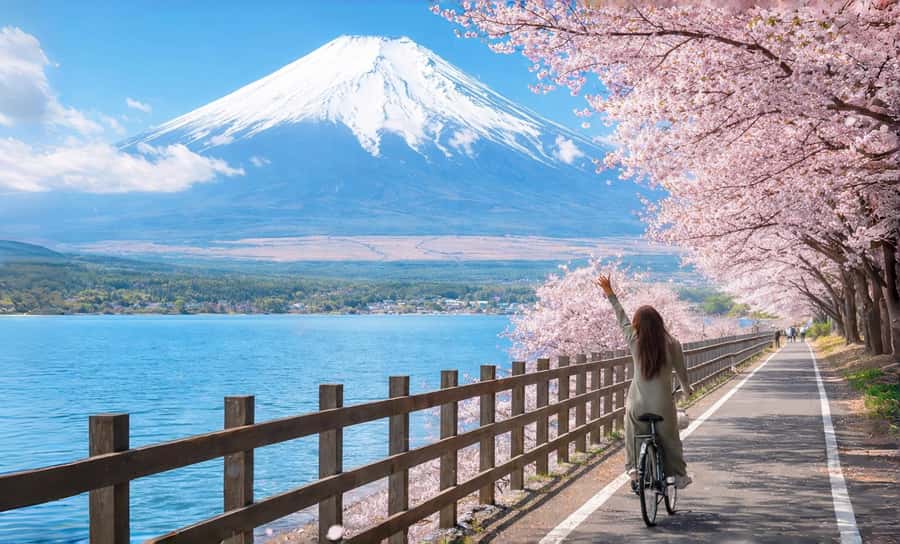
- Hirano Beach morning reflections at Lake Yamanaka, plus resident swans
- Higashikawa Clock Shop road illusion, a straight shot that makes Fuji feel close
- Arakurayama Sengen Park pagoda views, framed by cherry blossoms or autumn color
- UNESCO Oshino Hakkai springs, eight crystal-clear pools from Mt Fuji snowmelt
- Oishi Park seasonal flower fields at Kawaguchiko, matched to the season
- Lawson selfie window in Higashikawa, minimalist storefront and instant photo backdrop
A fast Mt Fuji reset from Tokyo
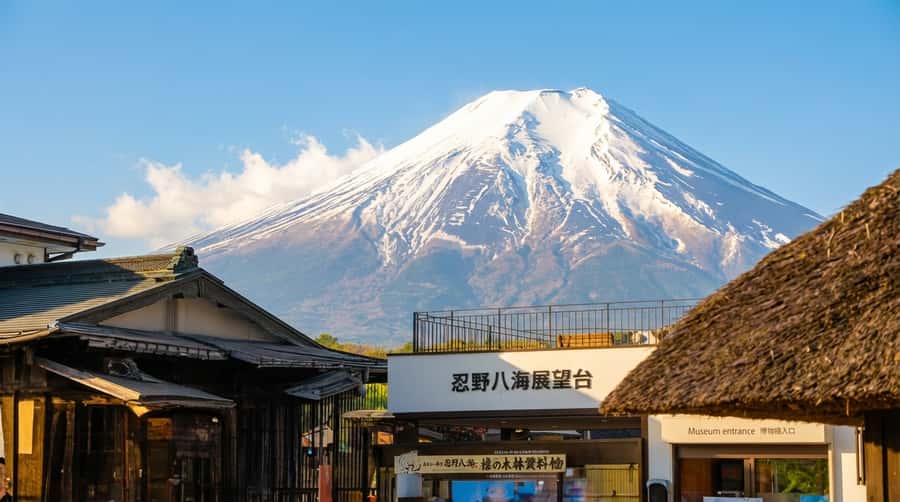
This is one of those day trips that makes the long trip time feel worth it. For about $45 per person, you’re paying mainly for transportation plus a guide, then spending your day at a cluster of Fuji-focused places around the lakes and nearby towns. That value matters if you want multiple iconic stops without coordinating trains, transfers, and separate tickets all day.
The tour is designed to be efficient: you travel in an air-conditioned vehicle with a driver, and you’ll have tour guidance in English or Chinese. In small daily groups, the driver may also handle limited English commentary, and the guide explanation may be restricted during driving. Practically speaking, that means you should use the stop time well, ask questions early, and don’t wait until you’re already out of the bus to get your bearings.
Two quick reality checks to keep expectations grounded. First, Mt Fuji visibility is weather dependent, and the itinerary can adjust if closures happen early or roads get delayed on holidays. Second, this is a full day, so comfortable shoes are not optional.
More Mount Fuji Day trips in Tokyo:
- Mt Fuji and Hakone 1-Day Bus Tour Return by Bullet Train
★ 5.0 · 26,383 reviews - Mt Fuji & Hakone Cruise, Drum Show Bullet Train 1 Day from Tokyo
★ 4.0 · 7,413 reviews - Tokyo Mt Fuji 5th St & Hakone Cruise Bus Tour w/Bullet Train
★ 4.4 · 5,024 reviews
Hirano Beach at Lake Yamanaka, the morning reflection priority
If you only remember one thing from this day, make it Hirano Beach. Located in the northeastern part of Lake Yamanaka, this gravel shoreline is known for two things: mirror-like reflections and swans.
The reflection part is the big deal. The water can behave like polished glass when the morning conditions line up, giving you those dual shots where Mt Fuji sits above the lake image like it’s printed twice. The tour specifically recommends a morning departure for this reason, and once you’re there, you’ll understand why. Late in the day, the lake can get choppier and the “Fuji postcard” effect fades fast.
Swans add a nice layer to the experience. You’re not just photographing scenery from far away. You can watch the birds in a quieter natural setting, and that makes the early wake-up feel more human and less like a photoshoot assignment.
A practical note: it’s a shoreline stop, so plan for uneven gravel underfoot. Comfortable shoes help you focus on framing rather than worrying about footing.
Higashikawa Clock Shop and the Lawson selfie-window moment
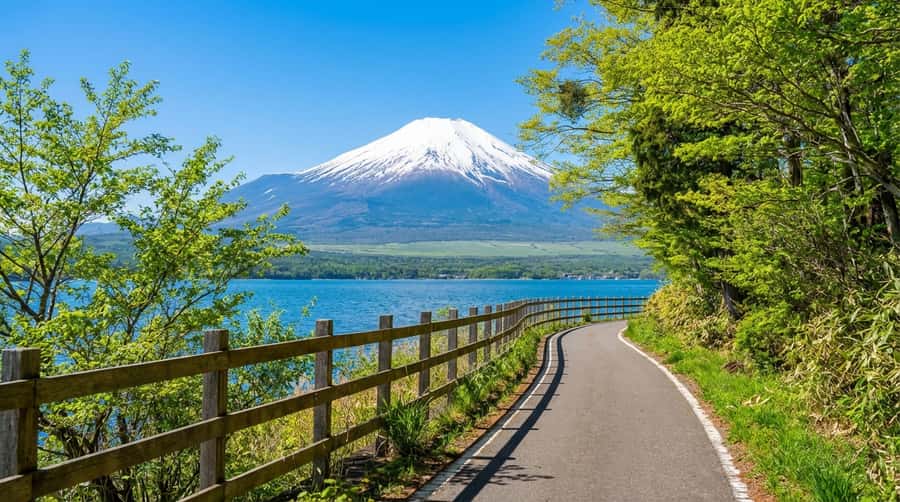
This is where the tour becomes cinematic in a very “Japanese sightseeing” way. Higashikawa Clock Shop is part of a small streetscape you can walk through easily, and the standout trick is perspective. The road leading to the shop feels like it stretches endlessly toward Mt Fuji, creating an illusion that the mountain is closer than it really is.
I like stops like this because they’re not only about the view. They’re about composition. A straight road gives you depth. The shop gives you a focal point. When Fuji appears in the background, the whole scene clicks into place fast, so you’re not wasting time hunting for the angle.
Then comes the Lawson stop, the one that often surprises people. This isn’t just a place to buy snacks. The storefront’s minimalist look plus Fuji-facing windows make it popular as a quick selfie backdrop, the kind of photo you can snap and share without overthinking it. You’ll likely want a fast bite, because this is a working-photo kind of stop, not a long lunch break.
If you’re the type who likes simple, repeatable photo moments, this section of the day is a win. It’s also a nice mental reset between lake photography and pagoda steps later on.
Arakurayama Sengen Park, pagoda frames with cherry blossoms or autumn color
Arakurayama Sengen Park is the classic Fuji viewpoint that’s instantly recognizable once you see it. It’s near Shimoyoshida Station, and the focal point is the red, five-story pagoda. The composition is the attraction: Fuji framed around seasonal color.
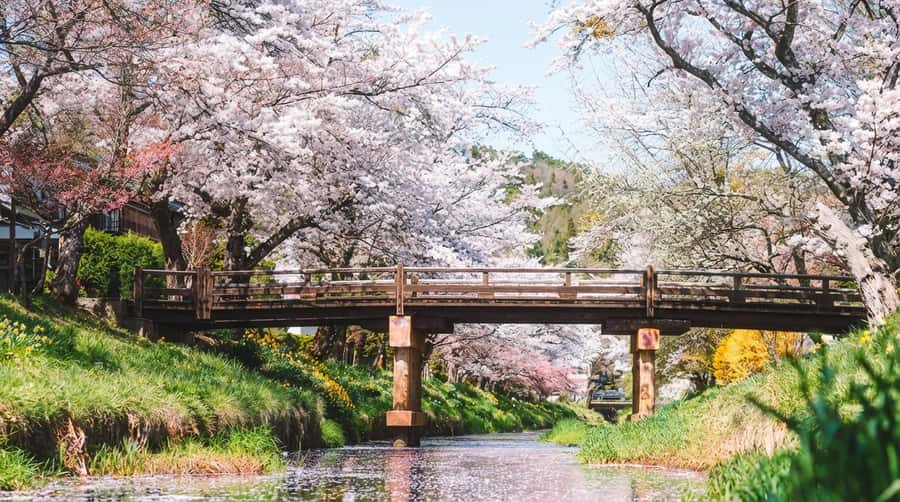
In spring, you’ll see cherry blossoms around the viewpoint areas. In autumn, you’ll get vibrant foliage. That matters because the pagoda helps you “anchor” the background. Even when Fuji isn’t perfectly clear, the seasonal foreground still gives you depth and color.
The climb is real, though. The tour notes that it’s wheelchair-accessible except for the pagoda steps, and separate suitability notes say it’s not suitable for wheelchair users. If you have mobility concerns, think carefully about steps before booking. For everyone else, the stone stairs are part of the experience. Slow down, pause at the best sightlines, and remember you’re building a layered photo: pagoda plus mountain plus seasonal elements.
Afterward, there’s also a small village feel below the viewpoint where you can take a breather and grab coffee if you want. It’s a good place to regroup before the natural monument and lake flowers later.
A few more Tokyo days to weigh up
- 1-Day Tokyo Bus Tour
★ 5.0 · 14,250 reviews - Tokyo: TOKYO SKYTREE® Admission ticket
★ 4.5 · 11,192 reviews - Tokyo: teamLab Planets TOKYO Digital Art Museum Entry Ticket
★ 4.6 · 9,779 reviews - Tokyo: Sumo Show Experience with Chicken Hot Pot and a Photo
★ 4.8 · 6,678 reviews
Oshino Hakkai springs, eight pools of Mt Fuji snowmelt
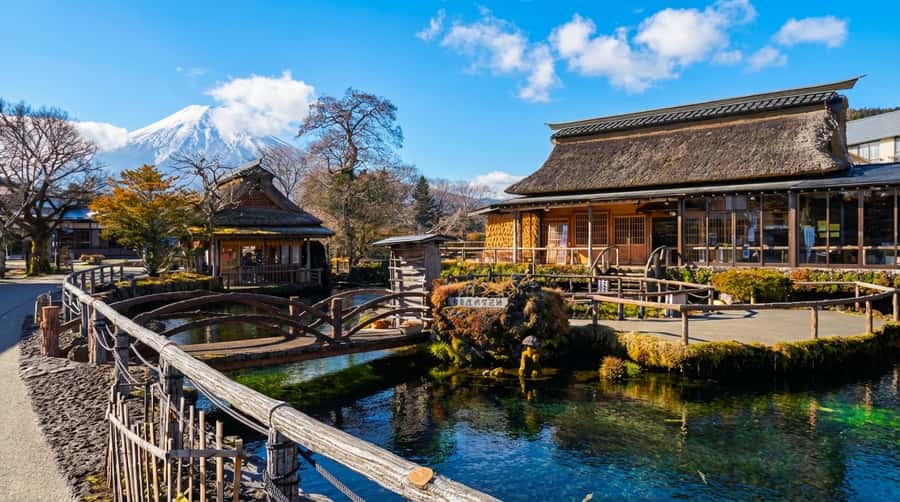
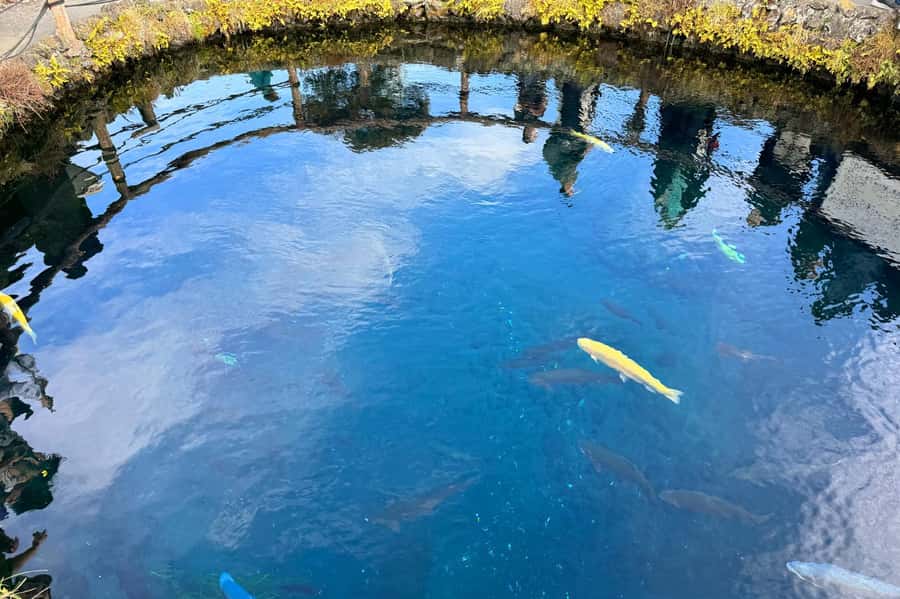
Oshino Hakkai is one of Japan’s most photogenic nature stops, and it gives you a different kind of Fuji experience. Instead of chasing reflections on broad water, you’re looking at spring-fed pools and a traditional village scene.
Oshino Hakkai is UNESCO designated, and the story is straightforward and cool: the springs are fed by melted snow from Mt Fuji. You walk through a traditional thatched-roof village, cross wooden bridges, and see turquoise water in eight distinct pools. That “eight” detail is useful when you’re planning your viewing route. You’ll want to slow down enough to notice each pool’s water color and how the mountain light hits it.
What I like here is the pacing. This section doesn’t demand sprinting between perfect angles. You can stroll, stop, and let your eyes rest. It’s a great counterbalance after the sharper photo energy of earlier stops.
It also works well for people who prefer “scenery you experience” over scenery you just photograph. The sound of water and the walk through the village make the whole place feel calmer than a typical roadside attraction.
Oishi Park at Kawaguchiko, a Fuji backdrop in every season
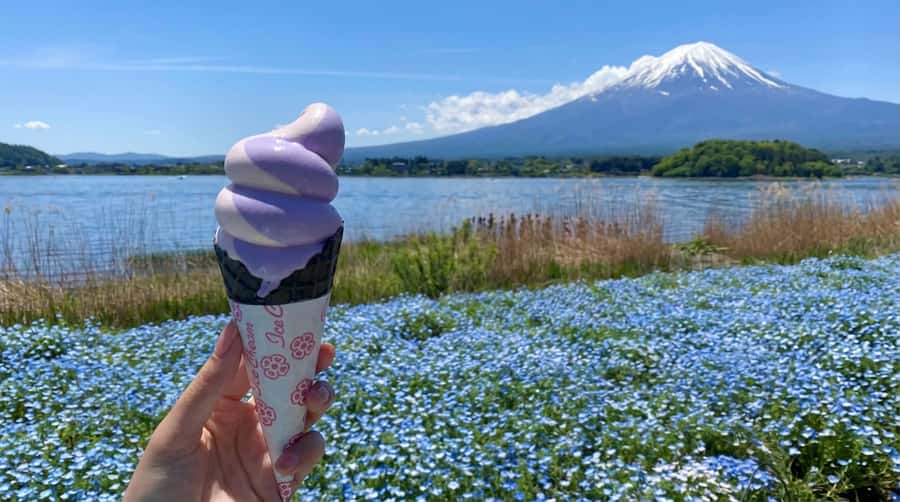
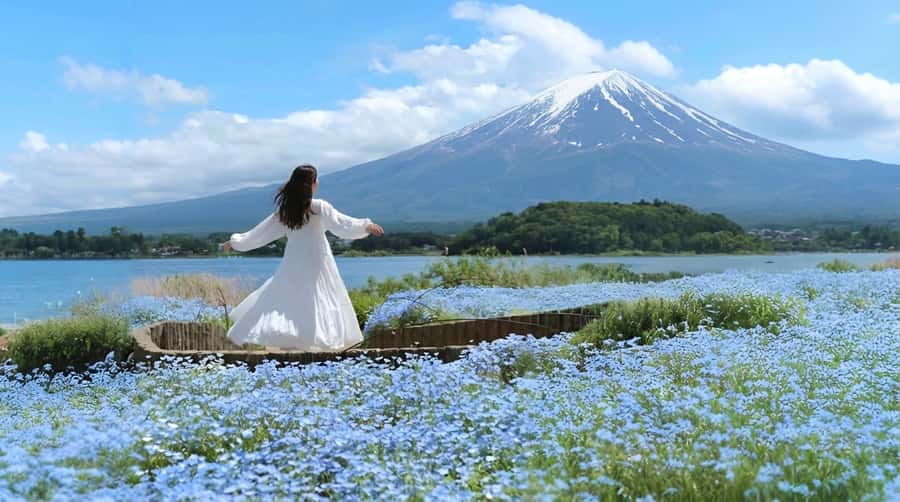
Later in the day, the tour shifts from springs and pagoda viewpoints to flower fields at Kawaguchiko’s Oishi Park. This stop is all about seasonal variety. The flowers change through the year, but the goal stays the same: Fuji with a color palette in the foreground.
Here’s what you might see depending on the season:
- April: tulips, daffodils, and rapeseed flowers
- May: carpet-like moss phlox
- June to July: lavender fields, with the Kawaguchiko Herb Festival timing in this window
- August to October: begonias
- November: scarlet maple leaves
This is a smart stop for travelers who don’t want one single look. If you’re returning to Japan later or you’ve seen one Fuji viewpoint already, flowers can make the whole scene feel new again.
Two practical tips. First, flower fields can mean more walking than you expect, so wear shoes you trust. Second, give yourself time to step back from the closest blooms. The best photos usually come from a spot that balances foreground and the mountain background, and that takes a few steps, not a long hike.
Comfort on the bus, and how to handle timing reality
The tour includes transportation in an air-conditioned vehicle, with a driver and a guide. That’s a big deal because Fuji lake areas are spread out, and the day would be a pain to DIY from Tokyo.
In real life, expect a mix of guided explanation and self-guided wandering. In small groups, commentary may be limited, and you may not get narration while the bus is moving. If you want photo tips, ask while you’re at stops, or right before you get out.
Also pay attention to how the day flows around crowds. Some stops can get crowded in peak season, and weekends or holidays can mean itinerary adjustments due to traffic jams or early attraction closures. If closures happen because of weather, the plan may switch to other spots with no refunds for force majeure changes or cancellations. That’s not something you control, but you can control how flexible you feel.
Finally, a small rule that matters more than it sounds: no eating or drinking in the vehicle. Plan to snack at stops, not during transit.
Guides who make the day feel smooth (and the small hiccups)
A recurring strength across guide experiences is how they help you get the right shot and stay on track. You’ll see names like Will, Tim, Agnes, and Sakuragi connected to positive moments, including giving key site information and helping with photos. One guide experience also included recommending an authentic lunch and a kimono experience, which is the kind of local tip that can make the day feel more than just a checklist.
That said, I don’t want to oversell it. One person noted that the bus air conditioning didn’t work, and another mentioned the speaker volume was too loud. These are the kinds of small issues that can happen on any group day trip, and they’re not dealbreakers, but they are worth knowing.
So here’s how to get the best version of this tour:
- Bring a light layer, even in summer, because buses can swing between hot and cold
- Use the guide time at each stop for the most important framing tips
- If you care about audio narration, sit where you can hear clearly
Who should book this Mt Fuji day tour, and who should pause

This is a strong pick if you want a one-day Fuji sampler: reflections at Lake Yamanaka, a famous perspective shot at Higashikawa Clock Shop, a pagoda viewpoint with seasonal framing, UNESCO springs at Oshino Hakkai, and flower fields at Oishi Park.
It’s also a good match for photographers, especially if you understand that the most dramatic reflection moments happen early. The swans at Hirano Beach are an extra bonus for people who like nature details, not just skyline icons.
But pause before booking if any of these apply:
- Pregnant women
- Wheelchair users, since the tour is not suitable and there are step limitations at the pagoda area
- People with high blood pressure
- People over 70 years
Also keep in mind that Arakurayama’s pagoda area involves steps. Even if you’re fine with walking, you’ll want to pace yourself.
Should you book this tour from Tokyo?
I’d book it if you want an organized, value-focused day that hits several top Fuji locations without you building a logistics puzzle. The price is low enough that you’re paying for access and transport rather than luxury, and that’s the right trade for this kind of sightseeing day.
I would not book it if your trip depends on seeing crisp, unobstructed Mt Fuji at every stop. Weather can change the outcome fast, and on cloudy days you may enjoy the places but not get the full mountain effect. Still, even then, the springs and flower fields are beautiful in their own right.
If you do book, go in with a simple plan: prioritize the morning for Hirano Beach reflections, wear comfortable walking shoes, and be flexible. That mindset turns a day trip into a memorable Fuji day, even when the mountain plays hard to photograph.
FAQ
How much does the Tokyo Mt Fuji tour cost?
It costs $45 per person.
What’s included in the price?
The price includes transportation in an air-conditioned vehicle, a tour guide, and a driver.
Is hotel pickup or drop-off included?
No, hotel pickup and drop-off are not included.
Are food and drinks included?
No, food and drinks are not included.
What time of day is best for Lake Yamanaka reflections?
A morning departure is recommended for Hirano Beach morning reflections.
Can the itinerary change during the day?
Yes. On weekends and holidays, the itinerary may adjust due to traffic jams or early attraction closures. If attractions close due to weather, the itinerary may switch to other spots.
Is Mount Fuji guaranteed to be visible?
The tour depends on conditions like weather. If conditions are cloudy, you might not get strong Fuji views.
Is the tour accessible for wheelchair users?
The tour is noted as not suitable for wheelchair users, and it also notes that Arakurayama Sengen Park’s pagoda steps are the exception for wheelchair access. If you use a wheelchair, consider this carefully.
Who might want to avoid this tour?
The tour is noted as not suitable for pregnant women, people with high blood pressure, and people over 70 years.
What should I wear and bring?
Bring comfortable shoes and comfortable clothes.
Newly listed around Tokyo
- Tokyo private transfer for Yokohama Port★ 4.5 · 63 reviews
- Luxury Kimono Photoshoot at Ginza Tokyo★ 5.0 · 7 reviews
- Tokyo Allstar Food Tour★ 4.5 · 206 reviews
- Tokyo Art Aquarium Museum E-Ticket with optional Tokyo Metro Pass★ 5.0 · 17 reviews
- Tokyo: Best Ginza Food Tour at 3 Local Eateries★ 5.0 · 83 reviews
- Private One Day Nikko Tour with Bilingual driver★ 3.5 · 11 reviews
- Kabuki Talk★ 5.0 · 10 reviews
- Japanese Whisky Tasting Experience at Local Bar in Tokyo★ 5.0 · 59 reviews
Mount Fuji Day Trips, compared.
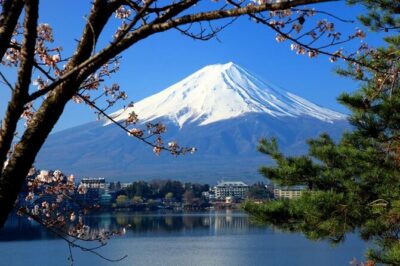
Mt Fuji and Hakone 1-Day Bus Tour Return by Bullet Train
Read our review →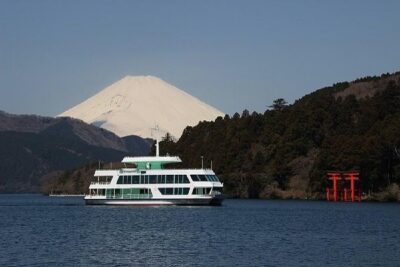
Mt Fuji & Hakone Cruise, Drum Show Bullet Train 1 Day from Tokyo
Read our review →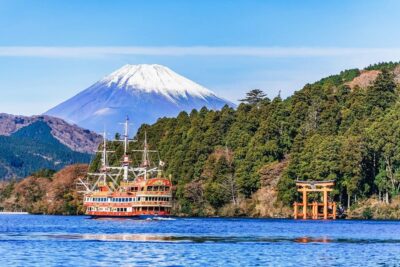
Tokyo Mt Fuji 5th St & Hakone Cruise Bus Tour w/Bullet Train
Read our review →
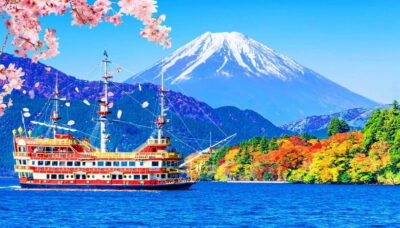
Mt. Fuji Tour, Hakone Ropeway, Owakudani, Lake Ashi
Read our review →
Mt.Fuji,Kawaguchiko Oishi Park,Arakurayama Sengen Park
Read our review →
Mt. Fuji 5th Station & Hakone Cruise 1-Day Bus Tour
Read our review →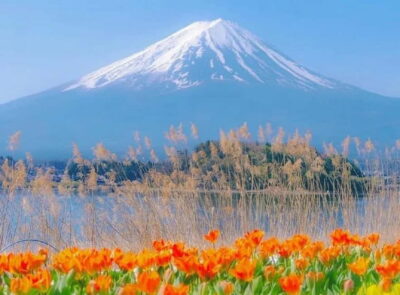
Mt Fuji Top 5 Spots Day Tour: Arakurayama Park,Oshino Hakkai
Read our review →Browse the lists this tour appears in