Review · TOKYO TOURS
Tokyo: Karate Experience with Former All-Japan Champion
Bow first, then train. This Tokyo karate session with Ryo turns the usual tourist stop into a real workout, with a former All-Japan champion teaching non-contact kumite principles. I like that it starts with the etiquette stuff, not just kicks, so you learn why karate begins and ends with respect. You also get clear coaching through step-by-step technique breakdowns, so the class stays understandable even if you are new to martial arts.
Two things I really like: the focus on proper basics (stance, punches, blocks, kicks) and the way the session builds fitness through stretching and repeated practice, not random drills. In the middle of the lesson, you hit pads with an instructor who watches your form and corrects you, and several families have said the pacing works well for kids and teens too.
One consideration before you book: the karate uniform is included only if you choose the private 90-minute option that mentions Karate gi. If you are counting on having a gi provided automatically, double-check the option you select.
In This Review
- Key highlights you should care about
- Karate in Asakusa With a Former All-Japan Champion
- What Happens When You Arrive, Bowing to Breathing
- Warm-Up Stretching That Preps Your Hips, Shoulders, and Legs
- Punches, Blocks, Kicks, and Stances, Built Like a Skill Stack
- Non-Contact Kumite, Learning Defense Without Getting Hurt
- Kata Demonstration, Patterns That Explain the Why
- Where You Train in Tokyo, and What the Setting Feels Like
- Who This Karate Experience Suits Best
- Price Value: What $58 Buys You in Real Training Time
- Booking Tips So You Don’t Trip Over the Gi Option
- Should You Book This Tokyo Karate Lesson?
- FAQ
- How long is the Tokyo karate experience?
- Where is the meeting point?
- What language is the instructor?
- Is the class beginner-friendly?
- Does this experience include sparring?
- What is included in the price?
- What is the cancellation policy?
Key highlights you should care about
- Ryo’s competition background in Kyokushin Karate adds serious credibility, not just a casual class vibe
- Bowing and belly breathing set the tone, teaching manners and focus from minute one
- Stretching that targets hips, shoulders, and legs so you are ready for kicks without feeling stiff
- Pad work plus non-contact kumite for a safe way to learn timing and defense
- Bunkai-style defense tips for punches, front kicks, and low kicks, aimed at precision
- Private or small-group options mean you can match the lesson to your comfort level
Karate in Asakusa With a Former All-Japan Champion
Tokyo has plenty of martial-arts-themed activities. This one works because it is built like training, not a performance. You are practicing Kyokushin Karate basics under Ryo, an instructor with decades in the sport, including competition results and Dan-level promotion.
Ryo has dedicated 20 years to Kyokushin Karate, a full-contact style. He also has a track record that you can feel in the discipline of the lesson, not just in a bio. He placed 3rd at the KWU (Kyokushin World Union) World Karate Championship in Bulgaria in 2013 (in the -75kg category). He also became the All-Japan champion of Kyokushinkan International (in the -80kg category). Those are impressive details, but the practical value is simpler: you get instruction that is organized, methodical, and safety-aware.
The session itself lasts 1 hour to 90 minutes, and the class format can be private or a small group. That matters in Tokyo. You want time that actually feels personal, not a crowded activity where you just copy moves from the back.
A few more Tokyo days to weigh up
- Mt Fuji and Hakone 1-Day Bus Tour Return by Bullet Train
★ 5.0 · 26,383 reviews - 1-Day Tokyo Bus Tour
★ 5.0 · 14,250 reviews - Tokyo: TOKYO SKYTREE® Admission ticket
★ 4.5 · 11,192 reviews
What Happens When You Arrive, Bowing to Breathing
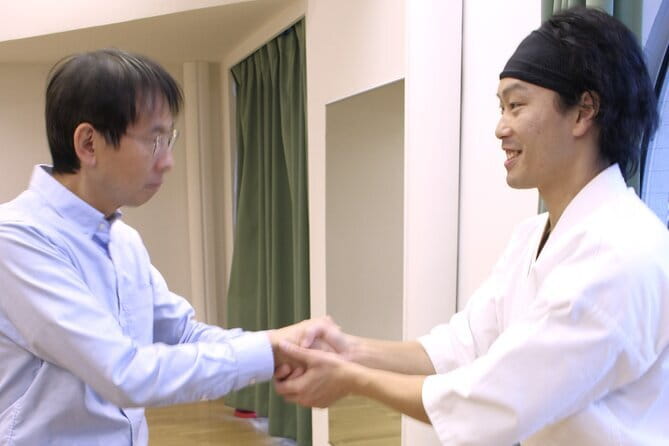
The lesson starts with something many visitors skip in other experiences: manners. In karate, you start with a bow and you end with a bow, and the session makes that a real part of learning. Before any kicks, you will be guided on how to bow properly, and you will do it in a way that helps you understand the purpose, not just the motions.
Right after that, you practice deep breathing from your belly. The goal is focus and a calmer mind. It sounds simple, but it changes the whole training rhythm. When your breathing is steadier, your stance and technique tend to get more consistent, and your brain stops treating every movement like a new problem.
Then comes the warm-up stretching. The lesson covers major body parts used in karate, including leg muscles, hip joints, shoulder blade area, and chest. This is not just “stretch because we are supposed to.” It is the setup that helps you move better when you start punching and kicking.
If you are worried you will show up tense, stiff, or out of shape, this is a smart way to start. Several bookings highlight that the instructor adjusts pace and that you work step-by-step, so you are not thrown into hard intensity too soon.
Warm-Up Stretching That Preps Your Hips, Shoulders, and Legs
The warm-up is practical. You are preparing for stances, kicks, and block positions. That means your hips and legs need to move freely, and your shoulders and upper body need to be stable enough to generate power without wobbling.
The lesson specifically stretches things like:
- leg muscles used for kicking and returning to stance
- hip joints for controlled turns and balance
- shoulder blade and chest areas for stronger blocking and punching alignment
This type of prep helps beginners because it reduces the “my body feels wrong” moment when you try your first side kick or front kick. It also helps experienced martial artists, because stretching in a karate lesson tends to be tied directly to technique, not generic mobility.
One small tip from experience with martial-arts classes: wear clothes that let you stretch comfortably. Even if you train in a gi option later, you are still likely to do flexibility work right away.
Punches, Blocks, Kicks, and Stances, Built Like a Skill Stack
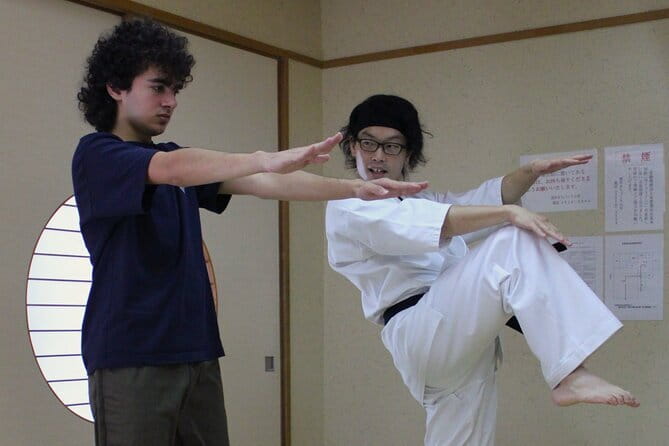
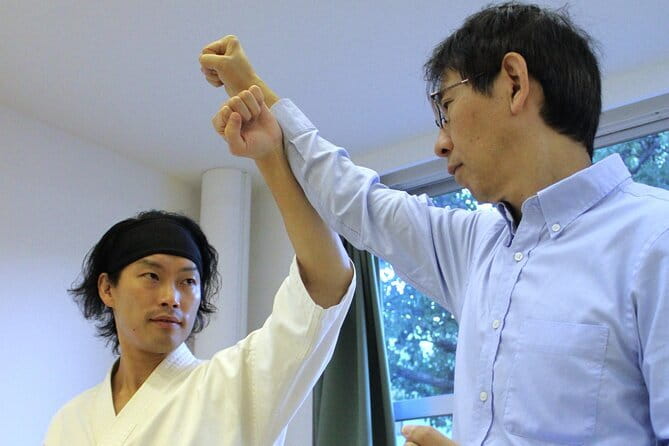
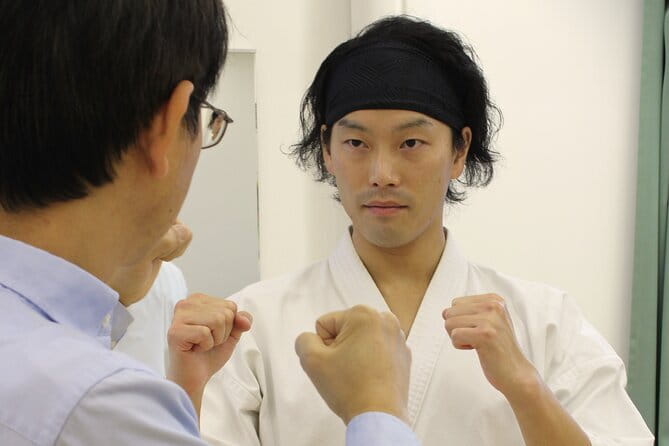
After warm-up, you move into the core technique block. Expect basic punches, blocks, and kicks with proper stance work. The instructor breaks each technique into a series of moves so you can learn it step-by-step, not as one complicated combo.
This is where the class feels like training. You are not just copying shapes. You get tips on body position and precision, and you practice enough times for your muscles to start understanding the patterns.
If you have any martial arts background, you will probably notice something else: Kyokushin Karate training tends to emphasize strong fundamentals and realistic application. That shows up when you are corrected for things like:
- stance alignment and weight distribution
- how your block meets an incoming line
- how your kick returns to stance cleanly, instead of collapsing out of balance
Reviews repeatedly mention that Ryo pays close attention to movement and corrects you when needed. That matters because form fixes are what turn a fun souvenir experience into something you can keep using back home.
A different sort of day in Japan:
- Tokyo: teamLab Planets TOKYO Digital Art Museum Entry Ticket
★ 4.6 · 9,779 reviews - Mt Fuji & Hakone Cruise, Drum Show Bullet Train 1 Day from Tokyo
★ 4.0 · 7,413 reviews - Tokyo: Sumo Show Experience with Chicken Hot Pot and a Photo
★ 4.8 · 6,678 reviews - Tokyo: Shinjuku Food Tour (13 Dishes at 4 Local Eateries)
★ 5.0 · 6,603 reviews
Non-Contact Kumite, Learning Defense Without Getting Hurt
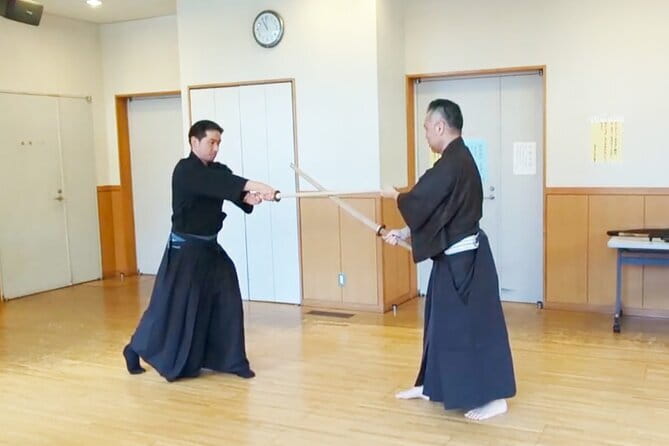
The lesson ends with the part most visitors are curious about: kumite, or sparring training. Here, it is designed for safety. You will learn the essence of kumite training without physical contact, so everyone can practice without the risk of injury.
You will work defense from common attacks, including punches, front kicks, and low kicks. Even without contact, the focus is on accurate positioning and efficient defense, meaning:
- reacting with the right body mechanics
- keeping your stance stable under pressure
- placing blocks and movements so they match the attack line
This is one of the most valuable parts for visitors who want something practical. You get the idea of how to defend, not just how to throw a punch in a mirror. And because it is non-contact, you can try without the adrenaline of a real fight, which helps you learn faster.
If you are a beginner, this format is confidence-building. If you already train martial arts, it is a chance to refine timing and fundamentals in a controlled way.
Kata Demonstration, Patterns That Explain the Why
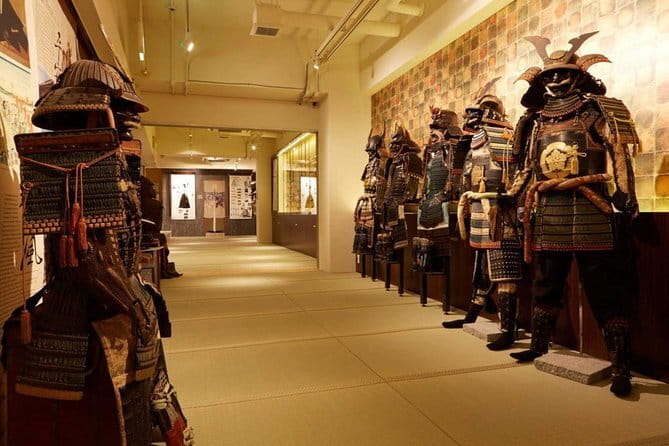
You also get a kata demonstration. Kata are patterns that express technique, timing, and movement structure. In practical terms, kata teach how your body should move through sequences with purpose, even when you are not sparring.
A kata demonstration at the start or end of a session can feel like a bonus, but it is more than a show-and-tell. It connects the basics you practiced, punches, blocks, and kicks, to a bigger system. It also reinforces the idea that karate is not only about brute strength. It is about discipline, structure, and controlled technique.
For people comparing styles, this can be especially interesting. One booking mentions being a black belt in Shotokan Karate and really enjoying the differences between styles. Even if you are not coming from another style, you will likely appreciate seeing how the same human movements can look different depending on style priorities.
Where You Train in Tokyo, and What the Setting Feels Like
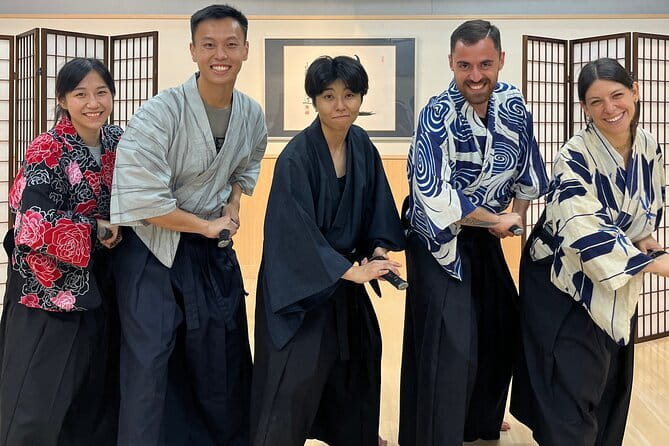
This session happens in Honshu, Japan, and the meeting point can vary based on the option you book. In the center of Asakusa, the location is described as very accessible.
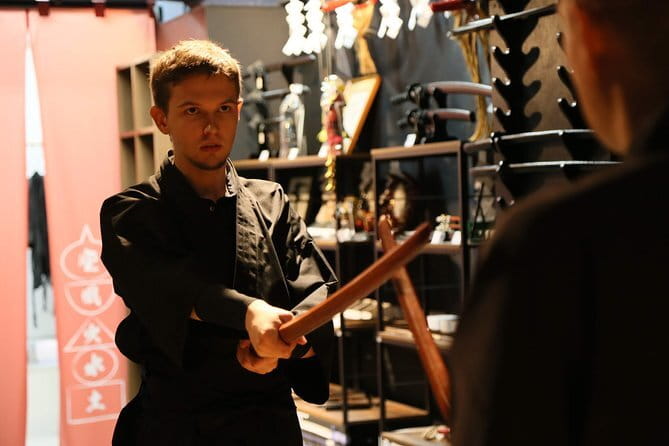
The environment is also real. One review notes the class took place in the middle of a martial arts store, which tells you the lesson is happening in a training space, not a rented stage. That kind of setting usually helps you relax, because there is less “tour event” energy and more normal dojo energy.
Still, because meeting points can vary, I recommend you message ahead once you book and confirm the exact start location for your selected option. In Tokyo, this prevents the usual scramble after you arrive.
Who This Karate Experience Suits Best
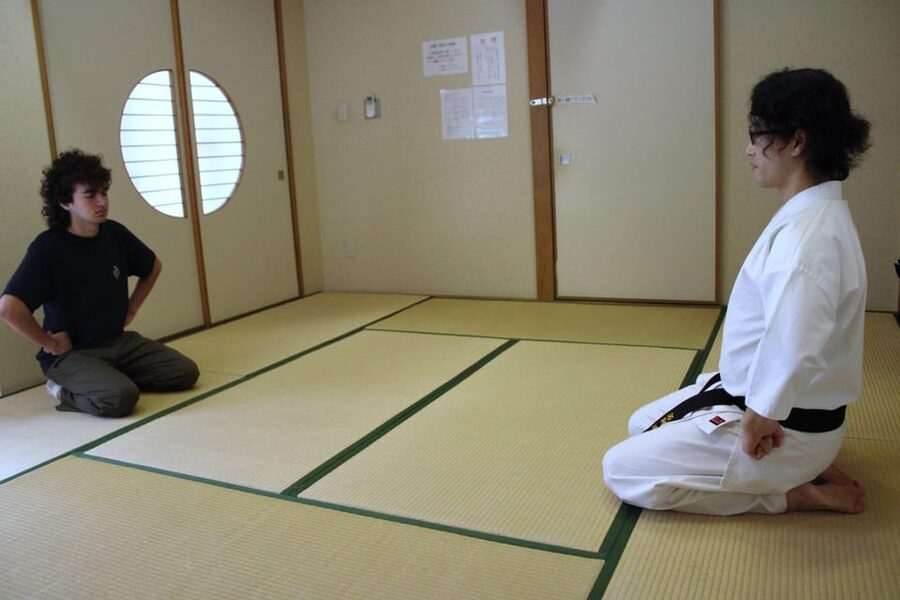
This is a strong fit for a wide range of people, mainly because the structure is beginner-friendly while still respecting technique. Ryo designed the lesson to work for both newcomers and people who have karate experience.
It is especially good if:
- you want a legit martial-arts class in Tokyo, not a quick demo
- you want a safe way to try sparring concepts (non-contact kumite)
- you like instructors who explain and demonstrate rather than only saying do this
- you are visiting with kids or teens who will benefit from clear step-by-step teaching
Reviews include families with children as young as 8, plus teens. Several parents also mention that the pacing calms nerves and that explanations land well, even for kids who are not comfortable with English. Ryo teaches in English and Japanese, and that bilingual support can help keep the experience clear.
If you are an advanced martial artist looking for high-intensity conditioning or advanced combinations, this is likely more of a fundamentals and technique refinement session than a full camp. It can still be useful, but you should expect a focused one-session lesson, not an entire training plan.
Price Value: What $58 Buys You in Real Training Time
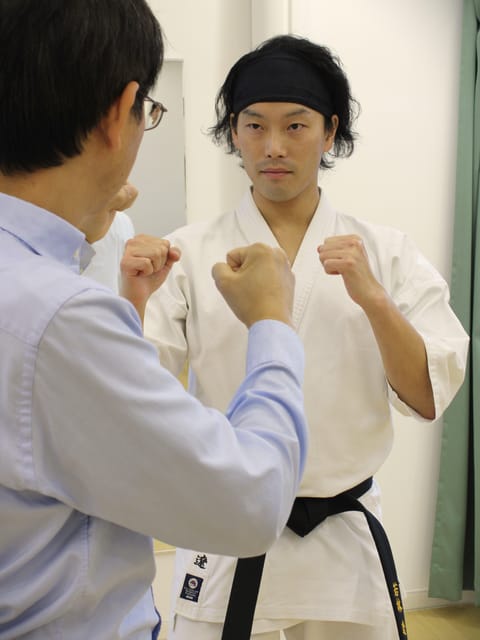
At $58 per person for 1 hour to 90 minutes, the value comes from what you actually get: instruction quality plus training materials, not just an activity ticket.
Included items you can expect include:
- karate uniform if you select the private 90-minute option for Karate gi
- kata demonstration
- interactive karate lesson with the instructor
- punching and kicking pads
- a bottle of water
Pads and a guided lesson are the difference between “trying karate” and getting feedback. The instructor is correcting form, guiding basics, and coaching non-contact defense, which is where most people learn something meaningful fast.
You are also paying for the credibility behind the teaching. Ryo is not a random hobbyist instructor. He is a competition athlete and certified instructor. Even if you ignore the medals and focus only on results in the room, that sort of experience tends to show up as better structure, better safety awareness, and clearer teaching.
If you want value in Tokyo, aim for experiences that replace time spent guessing. This lesson gives you a clear training flow, so you leave feeling like you learned real things, not just watched a class.
Booking Tips So You Don’t Trip Over the Gi Option
The biggest practical detail is the gi. The karate uniform is included only if you choose the option Private/90min Session with Karate Gi when booking. One review mentions confusion about gi provided for a longer class, so you do not want to repeat that mistake.
If you book the shorter session, you might not automatically get a gi depending on the option. If you care about wearing a uniform for authenticity and comfort, pick the gi option deliberately.
Also think about what you want from the lesson length:
- 1 hour can be a great first taste of karate basics
- 90 minutes gives more time for repetition, feedback, and moving deeper into technique and defense work
Finally, if you are traveling with language needs, note the instructor speaks English and Japanese. That is helpful for beginners and for families managing kids’ nerves.
Should You Book This Tokyo Karate Lesson?
Yes, you should book it if you want a real karate practice in Tokyo that takes manners and fundamentals seriously, not just a photo opportunity. The best reasons to go are the structured coaching, the emphasis on correct technique, and the safe way to learn kumite through non-contact defense.
Skip it only if you need advanced, full-contact sparring or a long multi-session training course. This is a focused one-session lesson. It is not a replacement for weeks in a dojo, but it can be a great way to learn the basics with a top-level instructor.
If you do book, choose the gi option if you want the full training feel. And go in with a simple mindset: listen, breathe, follow the step-by-step cues, and expect the class to be both challenging and calm.
FAQ
How long is the Tokyo karate experience?
It runs for 1 hour to 90 minutes. Starting times depend on availability.
Where is the meeting point?
The meeting point may vary depending on the option you book.
What language is the instructor?
The instructor speaks English and Japanese.
Is the class beginner-friendly?
Yes. The lesson is designed for both beginners and people with karate experience.
Does this experience include sparring?
You will learn kumite training without physical contact, so there is no contact sparring.
What is included in the price?
It includes a karate lesson with the instructor, kata demonstration, punching and kicking pads, and a bottle of water. Karate uniform (gi) is included if you choose the private 90-minute option with Karate gi when booking.
What is the cancellation policy?
You can cancel up to 24 hours in advance for a full refund.
Newly listed around Tokyo
- Tokyo private transfer for Yokohama Port★ 4.5 · 63 reviews
- Tokyo Allstar Food Tour★ 4.5 · 206 reviews
- Luxury Kimono Photoshoot at Ginza Tokyo★ 5.0 · 7 reviews
- Tokyo Art Aquarium Museum E-Ticket with optional Tokyo Metro Pass★ 5.0 · 17 reviews
- Tokyo: Best Ginza Food Tour at 3 Local Eateries★ 5.0 · 83 reviews
- Private One Day Nikko Tour with Bilingual driver★ 3.5 · 11 reviews
- PRIVATE tour in 180SX to Daikoku+++++★ 5.0 · 6 reviews
- Kabuki Talk★ 5.0 · 10 reviews
Tokyo Tours, compared.

Mt Fuji and Hakone 1-Day Bus Tour Return by Bullet Train
Read our review →


teamLab Planets TOKYO Digital Art Museum Entry Ticket
Read our review →
Mt Fuji & Hakone Cruise, Drum Show Bullet Train 1 Day from Tokyo
Read our review →
Sumo Show Experience with Chicken Hot Pot and a Photo
Read our review →
Shinjuku Food Tour (13 Dishes at 4 Local Eateries)
Read our review →