
Review · FISH MARKET WALKS
Tsukiji Fish Market: Street Food & Culture Walking Tour
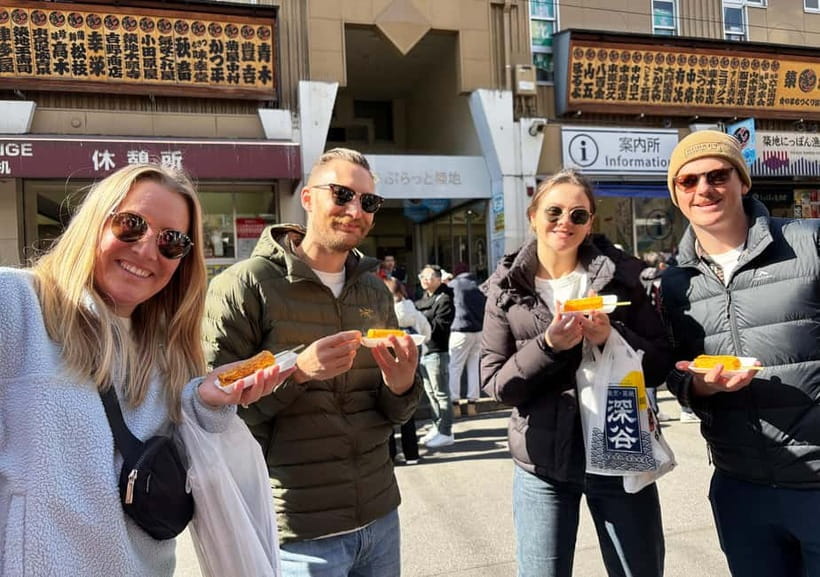
Knife skills and street snacks in Tsukiji. This tour pairs Tsukiji Jogai Market street-food browsing with a fish-cutting show that explains the why behind the technique, not just the spectacle. I also like that guides such as George and Tomo are praised for steering you to genuinely good places to eat. One thing to consider: Tsukiji can get crowded, and some past guests have flagged pacing, waiting, or hearing issues in busy conditions.
You’ll cover the main sights in about two hours, with a small group capped at 30 and a mobile ticket for easy entry. It’s also listed as wheelchair and stroller accessible, which matters in a market area where crowd flow can be tough.
In This Review
- Key points to know before you go
- What Youre Paying For at Tsukiji (and Why It Can Be Worth It)
- Meeting Point at Tsukiji Hongwanji, Then Straight Into Food Mode
- Tsukiji Jogai Market: Street Food With a Guide in the Lead
- The Fish-Cutting Show: Technique, Not Just Drama
- Tsukiji Fish Market: Seeing the Working Side
- Tsukiji Hongwanji Temple: Buddhism Context in 15 Minutes
- Crowds, Heat, and Timing: How to Have a Better Day
- Price and Logistics: Is $33.16 Good Value?
- Who This Tsukiji Tour Fits Best
- Should You Book This Tsukiji Street Food & Culture Walking Tour?
- FAQ
- How long is the Tsukiji Fish Market street food and culture walking tour?
- What is the price per person?
- Where does the tour start?
- How many people are in the group?
- Is the tour wheelchair and stroller accessible?
- What parts of Tsukiji do you visit?
- Do you see a fish-cutting show?
- Are meals included?
- Is admission included for the stops?
- What happens if the weather is bad?
- Can I cancel for free?
Key points to know before you go
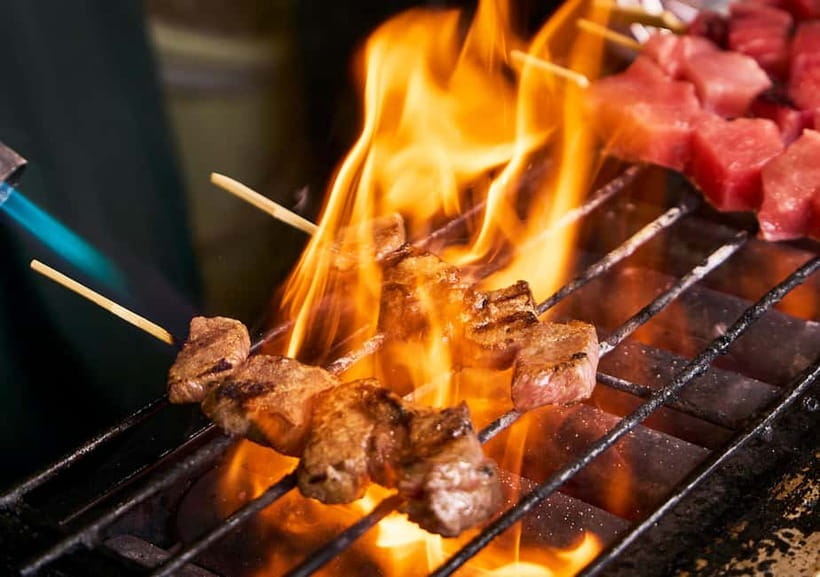
- Street food start at Tsukiji Jogai Market with a guide calling out what to try
- A live fish-cutting show focused on traditional filleting technique
- Time in the working fish market where professional traders operate
- A short, guided stop at Tsukiji Hongwanji Temple with Buddhist context
- Small-group format (up to 30) with support for accessibility needs
What Youre Paying For at Tsukiji (and Why It Can Be Worth It)
At $33.16 per person for about 2 hours, you’re paying for two things: a local guide and guided access to key moments in the Tsukiji area. The value is less about luxury and more about saving time. If you’ve ever wandered a food market and felt unsure where to look or what to order first, a guide can fix that fast.
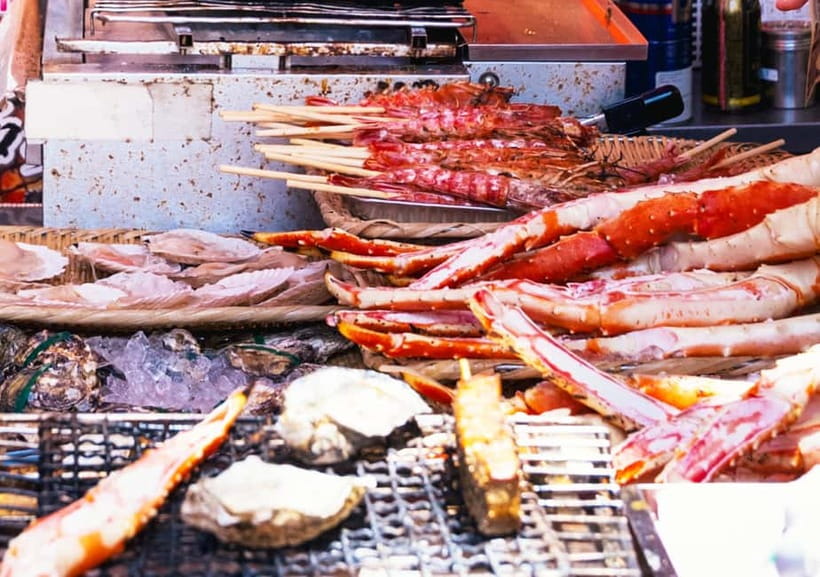
You do not get meals included as a stated item, but the experience is built around food. You’ll see street-food options early, then follow that with a fish-cutting show and seafood afterward. In other words, it’s a food-focused tour where you’re expected to buy or eat food items on site.
The other value piece is context. A fish market is visually loud. Without explanations, it can turn into a quick photo loop. Here, the guide’s job is to translate what you’re seeing, especially during the filleting segment.
More Food Tours in Tokyo
- Tokyo: Shinjuku Food Tour (13 Dishes at 4 Local Eateries)
★ 5.0 · 6,603 reviews - Tokyo Tsukiji Fish Market Food and Culture Walking Tour
★ 5.0 · 3,184 reviews - Tokyo: Shinjuku Food Tour (15 Dishes and 4 Eateries)
★ 4.9 · 2,033 reviews
Meeting Point at Tsukiji Hongwanji, Then Straight Into Food Mode
The tour meets at 築地本願寺本堂3-chōme-15-1 Tsukiji, Chuo City, Tokyo 104-0045, Japan. You’ll also end back at the same place, which is handy in a neighborhood where it’s easy to get turned around.
From the start, the timing is built to get you moving through multiple micro-scenes. First you shift from a more structured place (the Hongwanji area) into street-food rhythm at Tsukiji Jogai Market, then into a working-market atmosphere, and finally into a temple stop. If you like a day plan that stitches different aspects of the same area together, this format works.
Also note the pace of movement matters. This is a walking tour, and Tsukiji is one of those places where crowds and narrow corridors can affect how long you wait for the group to regroup.
Tsukiji Jogai Market: Street Food With a Guide in the Lead
Your first real taste of the day is Tsukiji Jogai Market, with about 45 minutes dedicated to street food culture. The guide’s role here is practical: show you where people eat, what’s common, and how to make your choices in a market setting where menus and signs might not be straightforward.
This is also where you benefit from small-group attention. The tour is described as allowing the guide to focus more time on you, which can mean you get clearer recommendations and less guesswork. That matters with Japanese street food because the difference between a good choice and a great one can be one question you didn’t know you should ask.
What I’d watch for: market food tours can turn into rapid hopping from one stand to the next. If you want slow browsing or you get tired easily in crowds, plan your expectations. You’ll still get value, but it helps to mentally shift from leisurely to “guided sampling and learning.”
The Fish-Cutting Show: Technique, Not Just Drama
The centerpiece stop is the exclusive fish-cutting show, about 30 minutes. A skilled chef fillets a whole fish using traditional techniques, and the point is understanding why the cuts matter.
This kind of demonstration is one of the best ways to understand Japanese seafood culture in a short time. When someone shows you the process step by step, you start noticing details you’d otherwise miss at the market stalls: the shape of cuts, how parts are separated, and how the final pieces are suited for different uses.
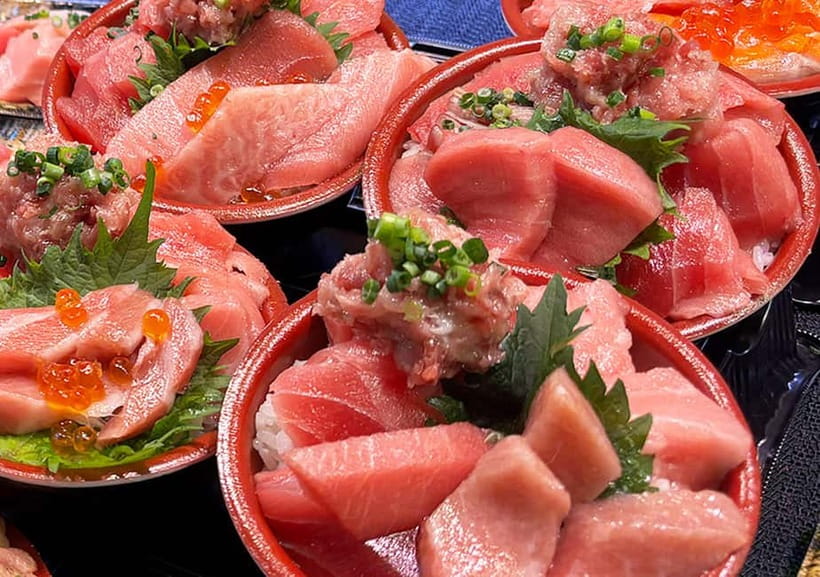
After the show, you’ll have a chance to enjoy a fresh seafood bowl. While meals are not listed as included, this portion is clearly food-forward. If you’re the type who likes to see the ingredient story before you eat it, this stop is the strongest match.
From a planning angle, this is also a “watchable” segment. Even if you’re not the biggest seafood fan, you can learn a lot from how the chef works and how the fish is handled. It’s a good pause in the day’s walking and crowd navigation.
More Food Walks in Tokyo
- Tokyo Night Foodie Tour in Shinjuku – Seasonal Sushi, Wagyu Beef
★ 5.0 · 1,161 reviews - Shinjuku Izakaya Food Tour
★ 5.0 · 1,041 reviews - Eat and Drink Like a Local: Tokyo Ueno Food Tour-Taverns&Ramen
★ 5.0 · 957 reviews - Tokyo: Shibuya Food Tour (13 dishes and 4 Eateries)
★ 5.0 · 770 reviews
Tsukiji Fish Market: Seeing the Working Side
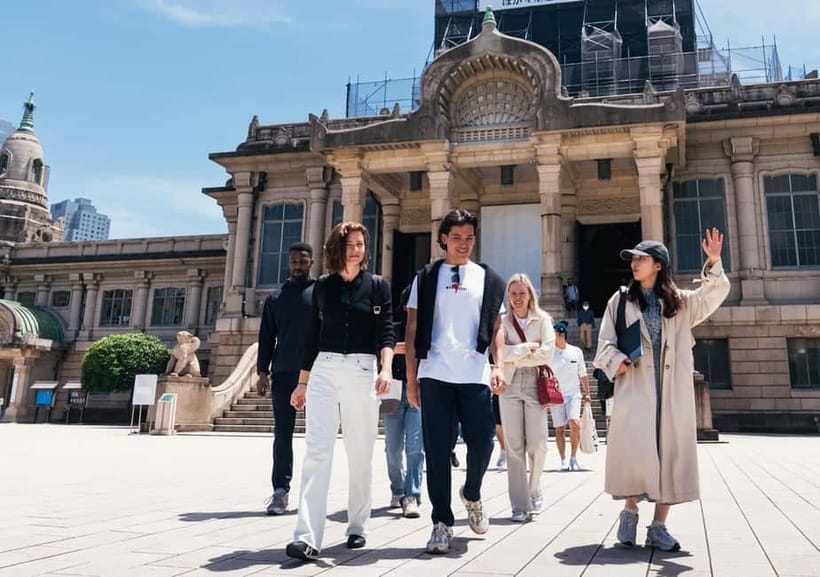
Next is time at the Tsukiji Fish Market itself for about 30 minutes, focused on the authentic atmosphere where professional traders operate. This part is less about shopping and more about observation with guidance. The guide helps you make sense of what you’re seeing so it feels like more than a camera stop.
This is where the crowd factor comes into play. The market is an active workplace, and busy times can make it harder to move as a group smoothly. Some past guests noted that on very crowded days, the experience can feel hectic and that the guide may not always be able to wait for everyone in the tightest areas.
So, here’s the practical advice: stick close to the guide, and be ready to follow the pace. If you tend to drift when you see something interesting, set a personal rule for yourself. Tsukiji is fascinating, but it’s also easy to fall out of sync in a crowd.
If you want a calmer experience, consider visiting on a day that is not peak holiday busy. The tour also requires good weather, so a clear day can help with overall flow and comfort.
Tsukiji Hongwanji Temple: Buddhism Context in 15 Minutes
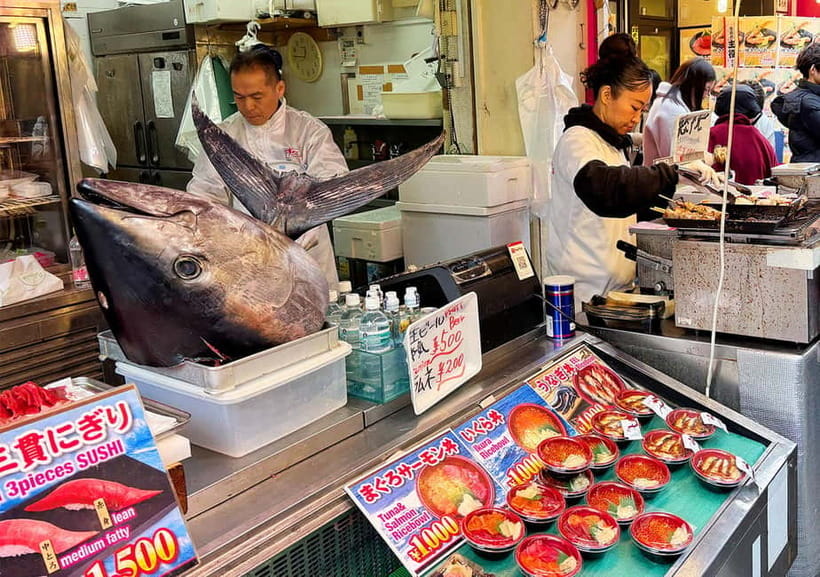
The final stop is Tsukiji Hongwanji Temple, about 15 minutes. You enter with a local guide and learn about Japanese culture and Buddhism, with a focus on the temple’s charm and history.
This is a short segment, so it’s more of a guided primer than a long sit-down visit. That’s a plus if you want to keep moving and if you like compact cultural context. It’s also a possible drawback if you’re expecting more time or a deeper guided temple tour. Some guests felt the temple stop added less value than they hoped for.
Still, it works as a contrast: you go from seafood technique and market life into a quieter cultural space. Even in 15 minutes, it can help balance the day. And the fact that this stop is guided means you’ll likely notice things you’d otherwise skip.
Crowds, Heat, and Timing: How to Have a Better Day
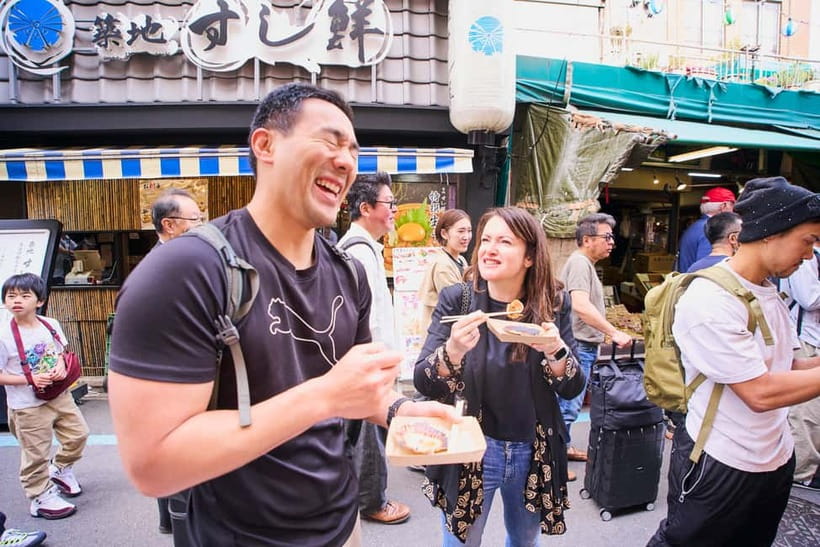
Tsukiji is not a quiet stroll. Even with a guided route, you’re dealing with real market conditions. A few things can make or break your experience:
- Listening in noise: If you’re easily distracted by crowd sound, bring attention to the guide during key moments, especially during the show and any briefing stops.
- Group waiting: In very busy conditions, it can take longer to regroup. Plan to stay with the group rather than wander off to get a better photo angle.
- Sun and comfort: One guest mentioned issues with stops taking place under strong sun after they indicated sun limits. If you know heat is a problem for you, bring sun protection and be prepared to speak up early if needed.
The tour is also described as requiring good weather. If it gets canceled because of poor weather, you’ll be offered a different date or a full refund. That’s the kind of protection you want for a walking-style market experience.
Price and Logistics: Is $33.16 Good Value?
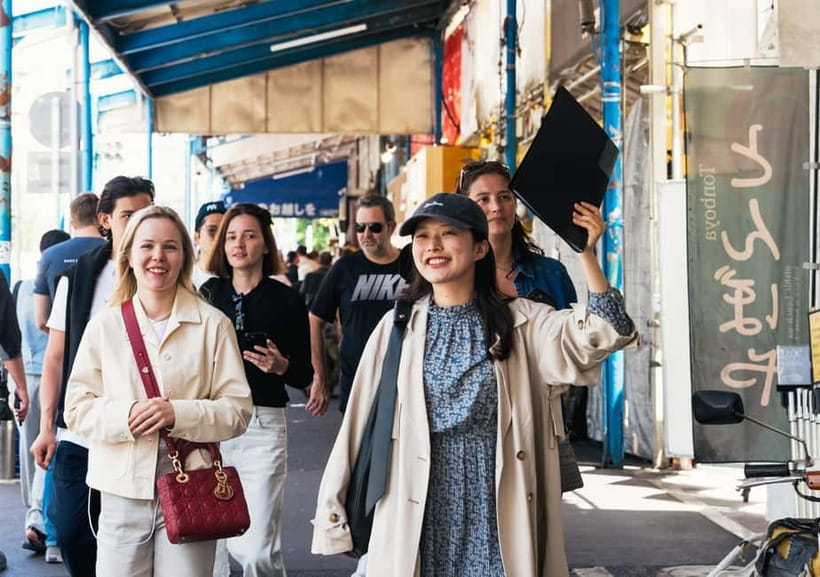
Here’s how I judge value for tours like this: do you save time, get better information, and avoid frustration?
This one has clear value hooks:
- A guide connects you to multiple high-interest areas without you having to plan the flow.
- The fish-cutting show is a standout. Live technique explanations are harder to recreate on your own.
- The tour format supports accessibility, and the group size limit helps keep things from turning into a mega-tour.
What might make you hesitate:
- If you hate crowds or prefer slow exploration, a guided market loop may feel too structured.
- Some segments are short, and that includes the temple stop. If you’re mainly chasing the best market walking experience, you may wonder if you could do it solo with more freedom.
A smart compromise if you’re on the fence: plan to arrive hungry, accept that you’ll be sampling along the way, and treat the guide as your translator. If you want a self-guided day with no waiting or no regrouping, you might do better skipping the tour and just wandering with a short list of what to try.
Who This Tsukiji Tour Fits Best
Book this tour if:
- You want street food guidance rather than random wandering.
- You care about learning the “why” behind fish preparation.
- You’d rather have a short, structured plan than handle logistics in a busy market area.
Skip it or reconsider if:
- You need lots of space to move and hate dense crowds.
- You’re expecting a long, museum-style cultural lesson at the temple.
- You want a highly flexible schedule where you can pause or move at your own speed constantly.
It’s also a good choice if you’re traveling with mobility needs, because it’s listed as wheelchair and stroller accessible and designed around being a guided walk rather than a maze you solve alone.
Should You Book This Tsukiji Street Food & Culture Walking Tour?
If you’re coming to Tsukiji for both food and understanding, this tour is a solid pick. The fish-cutting show is the moment that gives the experience a spine, and the street-food start at Tsukiji Jogai Market helps you get your bearings fast. The small-group setup is another plus, especially if you want the guide to notice you and keep the day moving.
I’d book it when:
- you’re comfortable with crowded walking conditions,
- you want a guided path through several key spots,
- and you like the idea of learning while you eat.
I’d think twice if you’re heat-sensitive, noise-sensitive, or you prefer independent market time over a fixed route. In that case, you can still enjoy Tsukiji on your own, but you’ll lose the built-in explanations that make the fish-cutting technique and market atmosphere easier to appreciate.
FAQ
How long is the Tsukiji Fish Market street food and culture walking tour?
The tour is about 2 hours in total.
What is the price per person?
The price is $33.16 per person.
Where does the tour start?
The meeting point is 築地本願寺本堂3-chōme-15-1 Tsukiji, Chuo City, Tokyo 104-0045, Japan.
How many people are in the group?
This activity has a maximum of 30 travelers.
Is the tour wheelchair and stroller accessible?
Yes, it is listed as wheelchair and stroller accessible.
What parts of Tsukiji do you visit?
You spend time at Tsukiji Jogai Market, see a fish-cutting show, visit Tsukiji Fish Market, and enter Tsukiji Hongwanji Temple with a local guide.
Do you see a fish-cutting show?
Yes. You’ll see an exclusive fish-cutting show where a chef fillets a whole fish using traditional techniques.
Are meals included?
Meals are not listed as included. The tour does include street food experiences, and after the fish-cutting show you’ll enjoy a fresh seafood bowl afterward.
Is admission included for the stops?
Admission is free for some stops and included for the fish-cutting show segment, based on the tour’s stop details.
What happens if the weather is bad?
This experience requires good weather. If it’s canceled due to poor weather, you’ll be offered a different date or a full refund.
Can I cancel for free?
Yes, you can cancel for free up to 24 hours in advance for a full refund.
More Market Walks in Tokyo
- Tokyo Sushi Making Class in Tsukiji with Professional Chef
★ 5.0 · 1,177 reviews - Tsukiji Fish Market Small-Group Food Walking Tour
★ 5.0 · 621 reviews - Tokyo: Tsukiji Fish Market Sushi Making Class with Pro Chef
★ 4.9 · 506 reviews - Tokyo Food Tour Taste Fresh Delights at Tsukiji Market
★ 5.0 · 429 reviews
More Market Tours in Tokyo
- Tokyo: Tsukiji Fish Market Food and Walking tour
★ 5.0 · 1,724 reviews - Tokyo: Tsukiji Fish Market Guided Walking Tour
★ 4.9 · 1,397 reviews - Tsukiji Fish Market Guided Tour and Sushi Making with Pro Chef
★ 5.0 · 775 reviews - Tokyo: Tsukiji Fish Market Food and Culture Walking Tour
★ 4.7 · 757 reviews
Newly listed around Tokyo
- Tokyo private transfer for Yokohama Port★ 4.5 · 63 reviews
- Luxury Kimono Photoshoot at Ginza Tokyo★ 5.0 · 7 reviews
- Tokyo Allstar Food Tour★ 4.5 · 206 reviews
- Tokyo Art Aquarium Museum E-Ticket with optional Tokyo Metro Pass★ 5.0 · 17 reviews
- Tokyo: Best Ginza Food Tour at 3 Local Eateries★ 5.0 · 83 reviews
- Private One Day Nikko Tour with Bilingual driver★ 3.5 · 11 reviews
- PRIVATE tour in 180SX to Daikoku+++++★ 5.0 · 6 reviews
- Kabuki Talk★ 5.0 · 10 reviews
Fish Market Walks, compared.
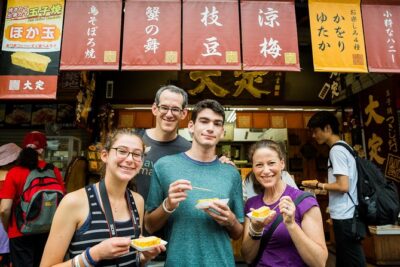
Tokyo Tsukiji Fish Market Food and Culture Walking Tour
Read our review →
Nishiki Market Brunch Walking Tour (7 Tastings + Brunch)
Read our review →
Tokyo Sushi Making Class in Tsukiji with Professional Chef
Read our review →
Tsukiji Fish Market Guided Tour and Sushi Making with Pro Chef
Read our review →