Review · TICKETS
Akiyoshido Cave: Entrance Ticket
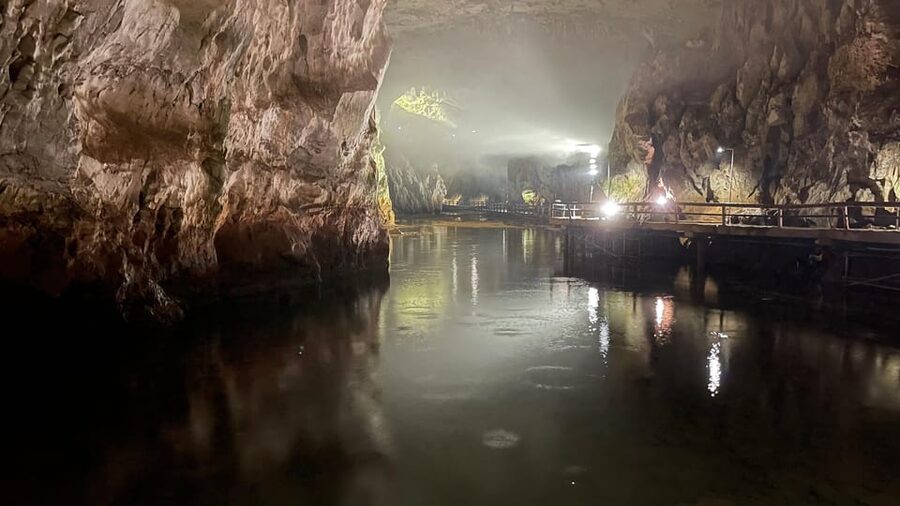
If you want a cave visit that feels easy, this is it. Akiyoshidō Cave is one of Japan’s largest limestone caves, and the experience is built around a comfortable walk and big visual payoffs.
I especially like the constant 17°C inside year-round, so you can dress once and forget about the weather. I also like that the visit comes with a multilingual audio guide in Japanese, English, Chinese, and Korean. One consideration: it’s not suitable if you have claustrophobia or respiratory issues, even though the route is described as comfortable.
In This Review
- Key things to know before you go
- Getting to Akiyoshidō Cave from Shin-Yamaguchi or Yamaguchi
- The 17°C cave walk, what you will actually feel
- Elevator to Akiyoshidai Plateau: the route design that saves your legs
- Gigantic stalagmites and rimstones that look like terraced rice fields
- Audio guide in 4 languages: history of the cave and the earth
- Photography rules and how to plan your best moments
- Who this is for, and who should skip it
- Price and value: is an $8 entrance ticket worth it?
- Practical tips that make the visit smoother
- Should you book the Akiyoshidō Cave entrance ticket?
- FAQ
- How much is the Akiyoshidō Cave entrance ticket?
- Where do I meet for the bus transfer?
- How long does the experience take?
- What languages are available for the audio guide?
- What is the temperature inside the cave?
- Is flash photography allowed?
- Is the cave wheelchair accessible?
- Who should not join this cave visit?
- Is the ticket valid for more than one day?
Key things to know before you go
- 17°C year-round inside, so bring a light layer even on warm days
- Elevator access in the middle of the cave to reach Akiyoshidai Plateau
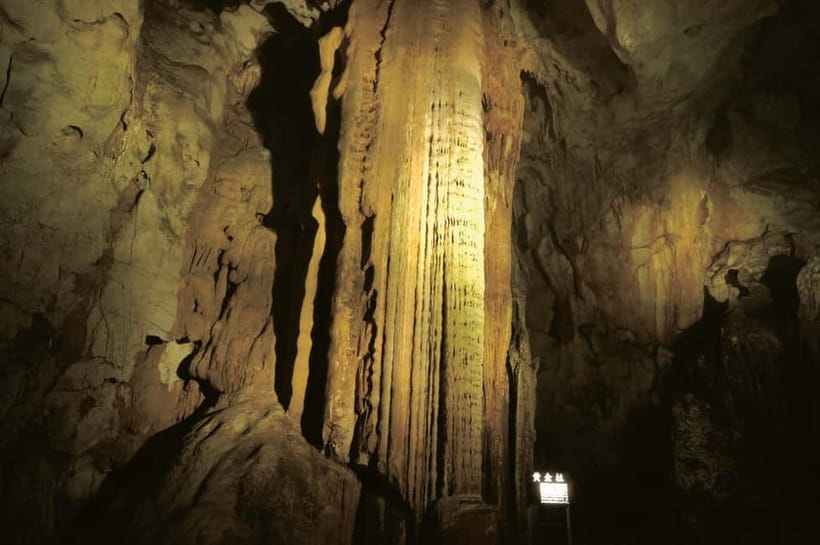
- Gigantic stalagmites plus rimstones that resemble terraced rice fields
- Photography allowed, but no flash, which helps protect the cave
- Audio guide in 4 languages, making the cave easier to understand on your own
- Wheelchair accessible, but claustrophobia and respiratory issues are a no
Getting to Akiyoshidō Cave from Shin-Yamaguchi or Yamaguchi
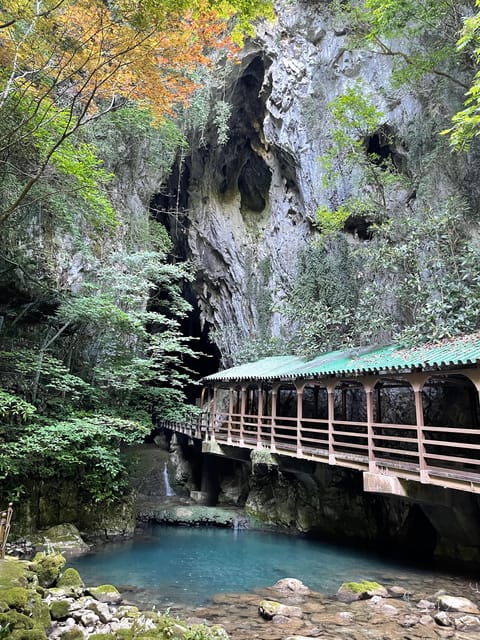
Akiyoshidō Cave is in the Chugoku region, run through Mine city. The easiest public-transit setup is a bus departure from JR Shin-Yamaguchi Station or JR Yamaguchi Station (plus other options), with the ride taking about 45 minutes.
Your bus ride ends at Akiyoshidō Bus Terminal, which is the practical starting point for the cave visit. If you are driving, the car access point is around Akiyoshidai IC via the expressway connections, and the listed coordinates are 34.2269667, 131.3045194.
This matters because a cave trip can feel like logistics homework. Here, the transfer is straightforward, so you can spend your energy on what matters, the formations and the quiet underground atmosphere.
A few more Japan days to weigh up
- Tokyo: TOKYO SKYTREE® Admission ticket
★ 4.5 · 11,192 reviews - Tokyo: teamLab Planets TOKYO Digital Art Museum Entry Ticket
★ 4.6 · 9,779 reviews - Tokyo: Hop-On Hop-Off Sightseeing Bus Ticket
★ 3.9 · 4,207 reviews
The 17°C cave walk, what you will actually feel
The biggest comfort detail is simple: the cave temperature stays at 17°C throughout the year. That means you do not need to worry about freezing cold winters or humid summers. You do still want a layer, because 17°C is refreshing, and caves are typically not warm.
What makes that 17°C number valuable is how it changes your visit tempo. You can walk without constantly adjusting your jacket, and you can slow down to look closely at details like the edges of formations and the way water has shaped surfaces over time.
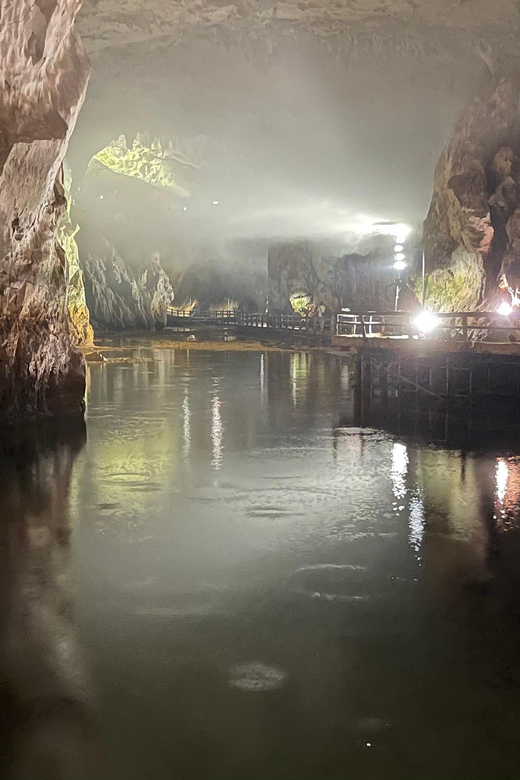
The walk is described as comfortable, and the route is set up to let you experience a lot of the cave without a steep, punishing feel. Still, keep in mind that this is inside a cave, so it is enclosed. If you are sensitive to tight spaces, plan carefully.
Elevator to Akiyoshidai Plateau: the route design that saves your legs
One smart feature is the elevator in the middle of the cave. From there, you can go directly up to Akiyoshidai Plateau.
Why this is worth mentioning: it changes the vibe from hike-to-reward into walk-to-discovery. Instead of spending the whole day managing climb and descent, you spend more time watching how the cave changes as you move from one area to another.
The plateau stop also helps you orient your experience. Once you are up, the cave’s scale reads differently. You start to see how massive limestone formations can look, not as small “rocks,” but as big geological structures. And because the cave is only 17°C, you can take your time without overheating.
Gigantic stalagmites and rimstones that look like terraced rice fields
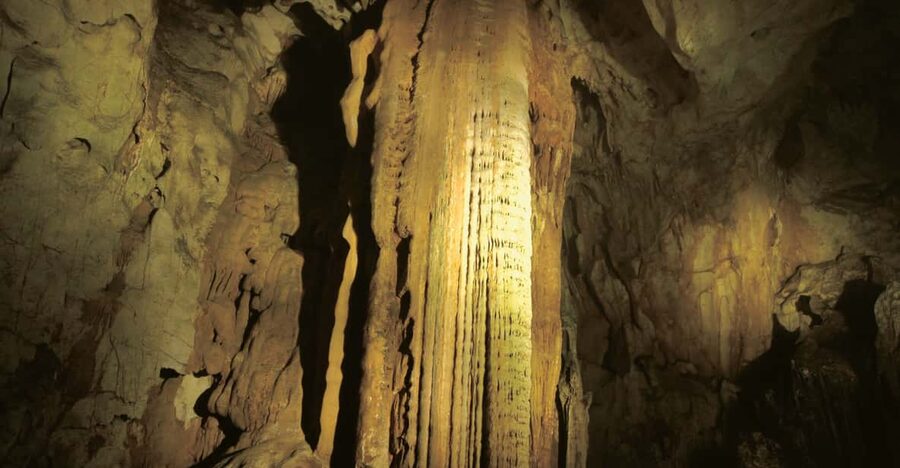
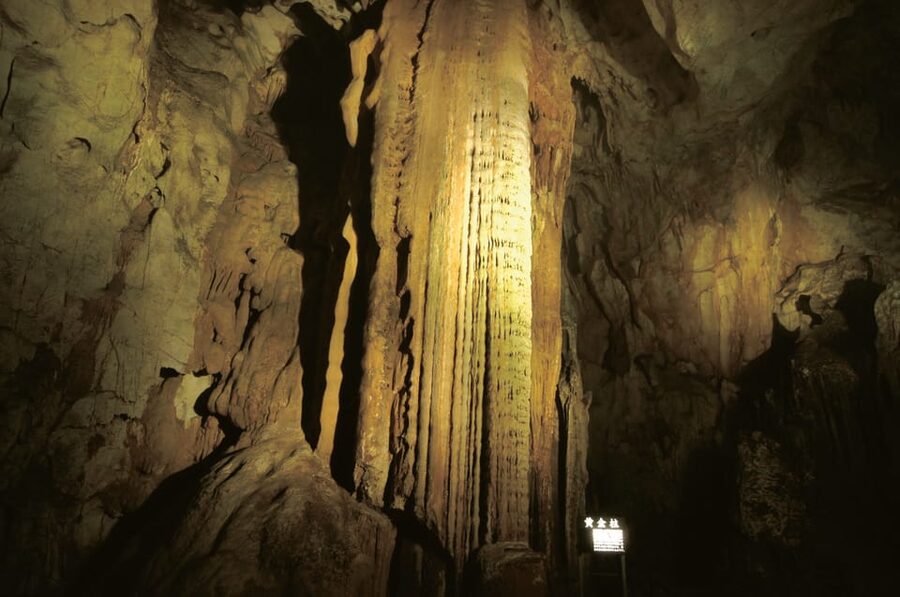
This is where Akiyoshidō Cave earns its reputation. The highlights focus on two signature formation types:
First are the gigantic stalagmites. In a lot of caves, stalagmites can feel like scattered pointy shapes. Here, the “gigantic” part is the point. They are visually impressive and help you grasp that limestone caves are not static, they are slow, ongoing systems shaped by mineral-rich water.
Second are the rimstones, described as looking like terraced rice fields. That visual comparison is more than a poetic detail. Rimstones form when mineral deposits build up along edges, and the terraced look helps your brain “map” the shape. Instead of only seeing height, you start seeing levels.
Practical tip: treat this section like a photo and a learning stop. Since flash is not allowed, your best shots will come from steady lighting and your own pacing. Walk a little, then stop. Look back at what you just passed. That helps you notice patterns in the formations.
A different sort of day in Japan:
- Mt Fuji and Hakone 1-Day Bus Tour Return by Bullet Train
★ 5.0 · 26,383 reviews - 1-Day Tokyo Bus Tour
★ 5.0 · 14,250 reviews - PERFECT KYOTO 1-Day Bus Tour
★ 5.0 · 13,518 reviews - Mt Fuji & Hakone Cruise, Drum Show Bullet Train 1 Day from Tokyo
★ 4.0 · 7,413 reviews
Audio guide in 4 languages: history of the cave and the earth
A big part of making a cave visit feel meaningful is understanding what you are looking at. This experience includes a multilingual audio guide available in Japanese, English, Chinese, and Korean.
Here is why that matters in real terms. Caves are visual, but they are also confusing unless someone puts the process into words. The audio guide is designed to explain the cave’s history and the earth behind these formations, so you can connect the stalagmites and rimstones to how limestone landscapes form over time.
If you prefer to go at your own pace, an audio guide helps you do that. You can pause when a formation catches your eye, then let the narration catch up. And if you want a quick overview, you can just listen through without taking notes.
One more thing: the experience includes clear “know before you go” details like the no-flash rule, which shows the cave is being cared for. That makes the audio moments more respectful, not just entertainment.
Photography rules and how to plan your best moments
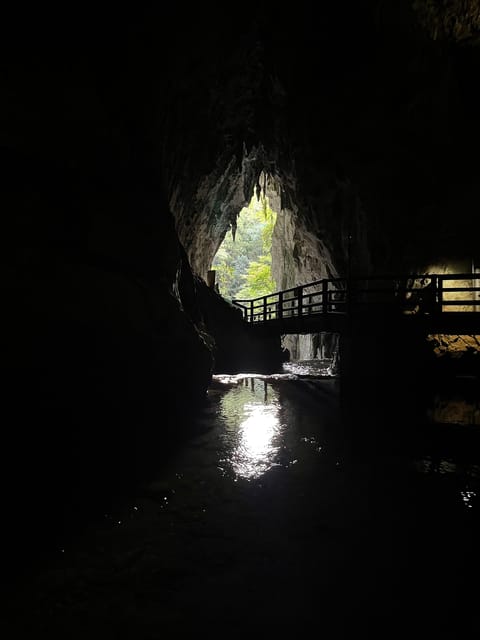
Photography is allowed, but flash photography is not permitted. That is important for two reasons.
One, flash can damage cave environments and disrupt wildlife. Two, it is usually the wrong technique inside caves anyway. Without flash, your photos will depend on ambient lighting and how you position yourself.
What you can do:
- Use a steady stance and shoot in short bursts
- Focus on textures and edges, not just wide shots
- Plan on taking your time at the biggest formation areas, since you will want multiple angles
Also, because the cave stays 17°C, you will not have to fight cold fingers as much as you might in winter outdoor spots. Still, keep your camera accessible, because stopping to fumble with bags can break your momentum.
Who this is for, and who should skip it
This cave is a good match if you want a classic limestone-cave experience with real structure: impressive formations, an easy-to-follow route, and an explanation delivered through a multilingual audio guide.
It is also described as wheelchair accessible, which is a strong point if you need better mobility support. That said, access needs can vary a lot from place to place, even when a venue is wheelchair accessible. So if mobility is your main concern, it is worth being ready for enclosed walking conditions.
On the other side, it is explicitly not suitable for:
- People with claustrophobia
- People with respiratory issues
Even if the walk is comfortable, it is still underground. The air, the enclosed environment, and the cave layout can be challenging. If you are in doubt, treat those warnings as your decision guide.
Price and value: is an $8 entrance ticket worth it?
At $8 per person, the entrance ticket is priced for access, not for extra perks. That is usually a good sign for value, because caves are mostly about the physical experience itself: walking the space, seeing formations, and learning the story behind the geology.
What you get here supports that value:
- Access to one of Japan’s largest limestone caves
- The most important formations people travel for, including stalagmites and rimstones
- A cave-education layer through the audio guide in four languages
- A comfortable environment with 17°C year-round
In other words, you are paying for the “real thing,” not for a complicated add-on schedule. If you are already in the area around Mine city or you are doing a Chugoku-region route, this entrance ticket can be an easy win because it does not require a full-day commitment in the way some day tours do.
Practical tips that make the visit smoother
A few details can make a big difference once you are underground.
- Dress for 17°C, not for the weather outside. A light layer is enough for most people.
- Skip flash and plan for natural cave lighting. If photography matters to you, you will get better results by pacing yourself than by relying on flash.
- Listen to the audio guide at least for the main formation areas. The cave is visually stunning, but the explanation turns it from scenery into understanding.
- Expect enclosed spaces even on an easy walk. If you know you struggle in tight environments, take the suitability warning seriously.
- If you are using public transport, give yourself time for the bus transfer. The bus ride from JR Shin-Yamaguchi Station is about 45 minutes, and that affects your whole day plan.
Should you book the Akiyoshidō Cave entrance ticket?
I think you should book this ticket if you want a straightforward, high-value cave experience with strong practical support: a comfortable 17°C interior, elevator access toward Akiyoshidai Plateau, and an audio guide that you can follow in Japanese, English, Chinese, and Korean.
I would not book it if you are sensitive to enclosed spaces or if you have respiratory issues, because the cave environment can be hard even when the walking is comfortable.
If you are traveling through the Chugoku region and want a memorable stop that is easy to understand and physically manageable, this is an excellent pick.
FAQ
How much is the Akiyoshidō Cave entrance ticket?
The price is $8 per person.
Where do I meet for the bus transfer?
The bus departs from JR Shin-Yamaguchi Station, JR Yamaguchi Station, or other listed locations, and arrives at Akiyoshidō Bus Terminal.
How long does the experience take?
The activity is listed as 1 day.
What languages are available for the audio guide?
The audio guide is available in Japanese, English, Chinese, and Korean.
What is the temperature inside the cave?
The cave temperature stays at 17°C throughout the year.
Is flash photography allowed?
No. Flash photography is not permitted, but photography is allowed.
Is the cave wheelchair accessible?
Yes, it is listed as wheelchair accessible.
Who should not join this cave visit?
It is not suitable for people with claustrophobia or respiratory issues.
Is the ticket valid for more than one day?
The ticket is listed as valid 1 day, from the first activation.
Newly listed around Japan
- Hiroshima and Miyajima 1 Day Walking Tour★ 5.0 · 43 reviews
- Hiroshima and Miyajima 1 Day Cruise Tour★ 5.0 · 24 reviews
- Hiroshima & Miyajima: UNESCO A-Bomb Dome & Itsukushima with Local★ 5.0 · 25 reviews
- Hiroshima & Miyajima: Private Full-Day Tour with a Local Guide★ 5.0 · 39 reviews
- Hiroshima 5k Running Tour of Hijiyama Park★ 5.0 · 7 reviews
- Hiroshima and Miyajima Bus Tour with Indian Lunch★ 5.0 · 10 reviews
- Hiroshima and Miyajima 1 Day Bus Tour★ 4.5 · 145 reviews
- Hiroshima History Tour : A-Bomb Dome, Peace Memorial & City★ 5.0 · 26 reviews
Tickets, compared.


teamLab Planets TOKYO Digital Art Museum Entry Ticket
Read our review →

Japanese Dance Cabaret Theater Asakusa-Kaguwa Ticket
Read our review →