Review · TICKETS
Kyoto: Hop-on Hop-off Sightseeing Bus Ticket
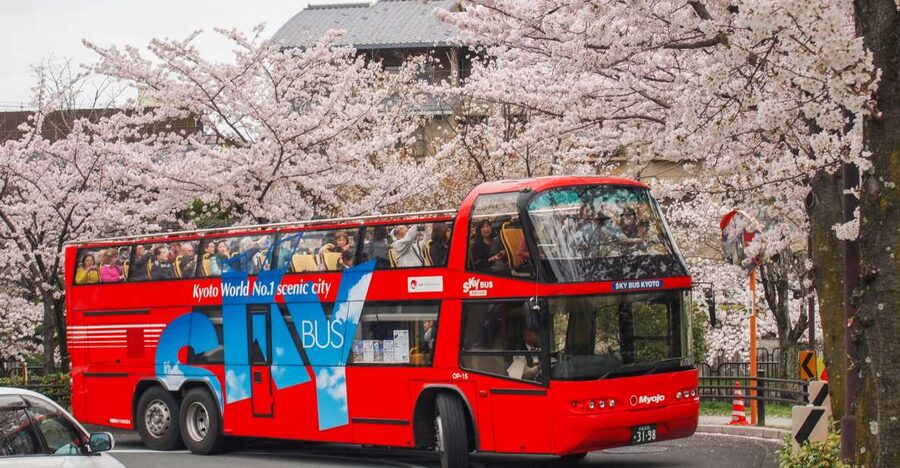
Kyoto feels spread out, so this bus helps you breathe. It is an easy way to hit the big sights with hop-on hop-off freedom and open-top panoramic views, without needing to decode the train maze.
Two things I really like: you can ride at your own pace with unlimited hops during your 1 or 2-day ticket, and the onboard audio guide covers the stops in 7 languages. One drawback to plan around is that the top deck is directly exposed to sun, so mid-day heat and glare can be intense, and you will want sunscreen and a hat.
In This Review
- Key things to know before you board
- Kyoto Station as your launch pad
- Hop-on, hop-off freedom on an open-top double-decker
- Audio in 7 languages, plus the reality of loud buses
- Route stops: what each one is good for
- Kyoto Station, Nishihonganji, and Shijo Karasuma to start your day
- Nijo Castle and the Kitano area for classic Kyoto stops
- Kinkakuji, Daitokuji, and the temple stretch you can pace
- Kyoto Imperial Palace and Doshisha University area for a change of tempo
- Ginkakuji, Heian-jingu, and Okazaki Park for an East-side rhythm
- Gion and Kotowa-Kyoto Yasaka for Kyoto after dark energy
- Gojozaka for Kiyomizu-dera and a classic viewpoint approach
- Sanjusangendo and Kyoto National Museum via Hyatt Regency Kyoto
- Timing tips: using the 1-day vs 2-day ticket like a pro
- Comfort, rules, and small things that can ruin a day (or not)
- Price and value: is $27 a smart move?
- Who this bus fits best
- Should you book this Kyoto hop-on hop-off bus?
- FAQ
- How long is the ticket valid?
- Where is the first place I can board?
- What languages are available for the audio commentary?
- Is Wi-Fi available on board?
- Are umbrellas allowed on the bus?
- What items are not allowed on the vehicle?
Key things to know before you board
- Hop on with your mobile voucher at any stop on the route, no paper ticket wrestling
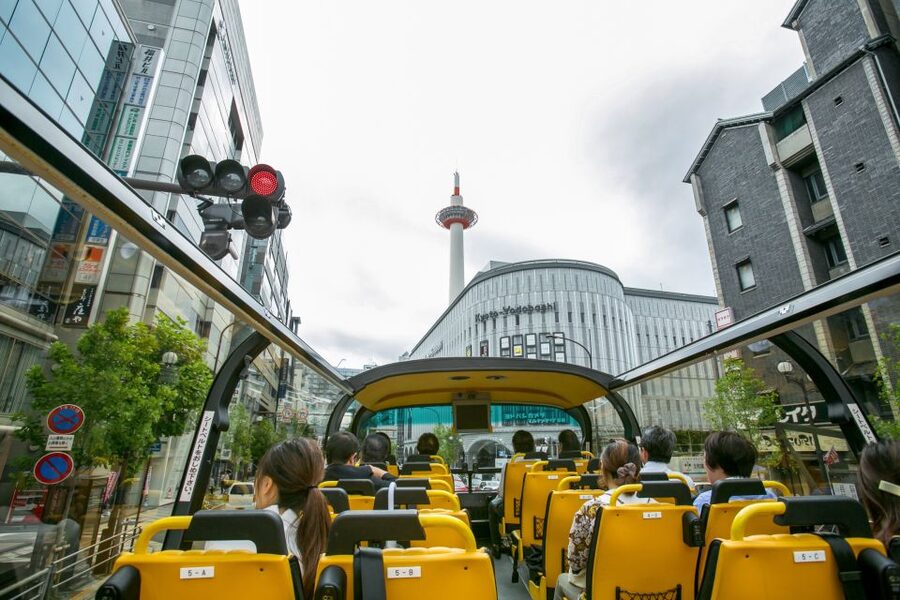
- Open-top double-decker views are great for first-time orientation, even when you skip the perfect photo
- Audio guidance in 7 languages gives quick stop-by-stop context, not a long museum lecture
- Major Kyoto landmarks on one loop, including UNESCO sites like Nijo Castle, Kinkakuji, and Kiyomizu-dera
- Staff are consistently praised for friendly help and clear direction when things get busy
- Golden Pavilion cash warning: Kinkakuji is noted as cash-only, with no ATM on site
Kyoto Station as your launch pad
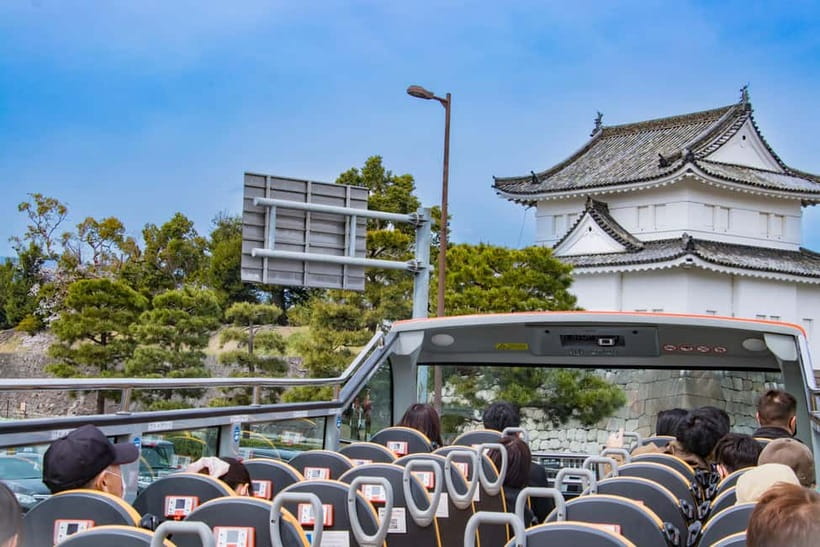
If you are starting from the main rail hub, you are already in the right mood. The first stop is at Kyoto Station, at the north central exit, in front of the Isetan department store. That makes it simple for arrival days, especially if you are carrying bags or just want a stress-free first move.
I like that the bus is designed for convenience. You do not need to figure out which train line goes where before you even start seeing Kyoto. You can just get on, ride, and decide what you want to explore more on foot.
One practical thing: the Kyoto Station area is busy, so give yourself extra time to find your stop and get seated before the bus fills up. The better your timing, the less you will feel rushed later at the temples and markets.
A few more Kyoto days to weigh up
- PERFECT KYOTO 1-Day Bus Tour
★ 5.0 · 13,518 reviews - Kyoto: Fushimi Inari, Kinkakuji, Bamboo Grove 1 Day Bus Tour
★ 4.8 · 4,316 reviews - Kyoto: Tea Ceremony in a Traditional Tea House in Kiyomizu
★ 4.9 · 3,519 reviews
Hop-on, hop-off freedom on an open-top double-decker
This is the kind of sightseeing that fits real travel days. You ride when you want, then you hop off when a stop looks right for your pace. The buses pass many of Kyoto’s top attractions, so you can use the ride as your “orientation scan,” then go deeper where you want.
The open-top part matters. From the upper deck, you get broad views over streets and neighborhoods as you move across the city, which helps you understand where things sit relative to each other. Reviews also mention a rain-covered area on the top deck, which can make a wet day more bearable, even though it is still not the same as a fully enclosed tour bus.
Two rules of thumb keep things smooth:
- If the top deck is crowded, do not panic. Switch sides, move toward the front, or hop down and re-board later. The whole point is flexibility.
- If visibility is your priority on a rainy or cold day, be aware that downstairs can limit your sightlines compared to being up top.
Audio in 7 languages, plus the reality of loud buses
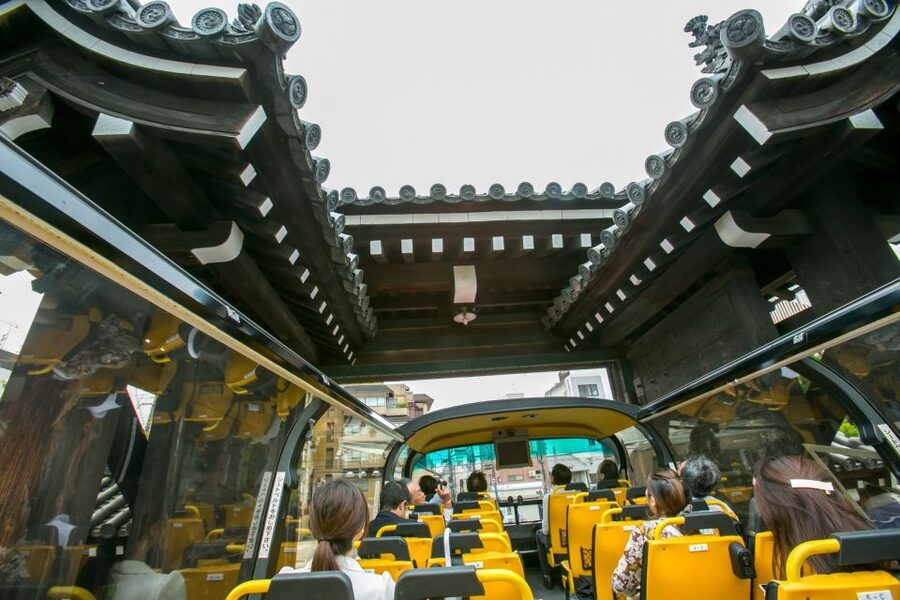
The onboard audio guide is a big part of the value. You get commentary in English, French, Japanese, Korean, Chinese, Spanish, and German, so you can follow along without needing to pull out your phone every five minutes.
Just know what kind of audio you are getting. Some comments point out that the narration can cut short as you approach a stop, then switch to a right-side announcement. So treat it like a helpful overview, not a deep history lesson. If you want deep detail, you will likely spend time reading at the site or using a guidebook later.
Sound mix also matters. One report says the music can be louder than the voice, which may mean you need a little extra attention to catch names and key facts. If you want clarity, sit where you can hear comfortably.
Also, a small note on onboard tech: Wi-Fi is temporarily suspended, so do not build your day around loading maps or updates from the bus.
Route stops: what each one is good for
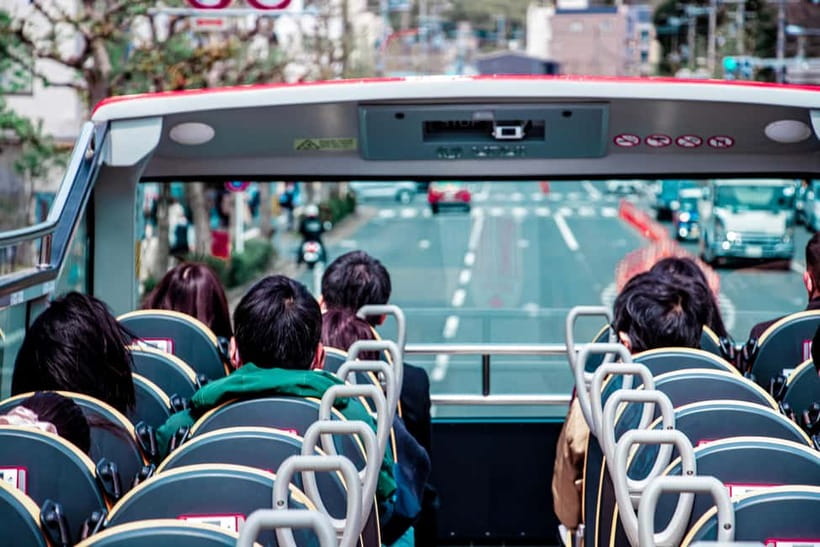
The route is built to cover a lot of Kyoto in a way that feels logical. You have stops tied to markets, castles, shrines, major temples, and popular walking areas. In practical terms, the bus is especially handy when you want to avoid transferring trains while also keeping the option to stay longer at a place that grabs you.
A recurring theme in feedback is that drop-offs are close to the temples, so you can get from bus to shoes-on-the-ground without a long trek. That is a big deal when the crowd flow is already doing its own thing.
A different sort of day in Japan:
- Kyoto Geisha Walking Tour: Gion District & Hidden Gems
★ 4.7 · 3,273 reviews - Kyoto: Tea Ceremony Ju-An at Jotokuji Temple
★ 4.9 · 3,207 reviews - Kyoto: 45-Minute Tea Ceremony Lesson Experience
★ 4.3 · 2,378 reviews - Kyoto: Gion Geisha District Walking Tour – Stories of Geisha
★ 4.7 · 2,187 reviews
Kyoto Station, Nishihonganji, and Shijo Karasuma to start your day
- Kyoto Station: Your entry point. This is where the tour starts and where returning at the end of the day is straightforward.
- Nishihonganji (Kyoto Tokyu Hotel): A nearby landmark stop that helps you get out of the station area and into neighborhoods quickly.
- Shijo Karasuma / Nishiki-ichiba Market: This is a smart lunch-or-snack anchor. Nishiki-ichiba is one of those areas where wandering for food and browsing takes time, and the bus gives you a clean way to reach it and then move on when you are ready.
If you are using a 2-day strategy, I like using this part on day one. It gives you a feel for the central streets and where you want to return on a slower walk.
Nijo Castle and the Kitano area for classic Kyoto stops
- Nijo-jo Castle (Nijo Castle): This one is called out as a UNESCO World Heritage site. It is a strong early or mid-day pick because it is a clear “Kyoto landmark” moment that is hard to replicate on your own without planning.
- Kitano-tenmangu Shrine / Kamishichiken: A useful stop when you want a mix of shrine atmosphere and historic neighborhood texture. Kamishichiken is part of what makes this area interesting to wander.
One practical advantage here is how the bus reduces decision fatigue. You do not have to guess whether your next temple is “worth it.” The route simply takes you there, and you can judge on arrival how long you want to linger.
Kinkakuji, Daitokuji, and the temple stretch you can pace
- Kinkakuji Temple (Golden Pavilion): Another UNESCO World Heritage site and a top reason people book this bus. It is also flagged in a tip as cash-only, and the note says there is no ATM on the premises, so come prepared.
- Daitokuji Temple: A temple stop that supports the idea of “temple time” without you needing to spend precious energy on transport connections.
Kinkakuji is popular, so plan for crowds and time spent waiting your turn. The bus helps because you can adjust. If you see it is packed, you can still hop to another stop nearby or return later on your second ride.
Kyoto Imperial Palace and Doshisha University area for a change of tempo
- Kyoto Imperial Palace (Doshisha University): This stop gives you a more official, campus-adjacent feel compared to the pure temple and shrine circuit. Even if you do not go inside many sites, the stop is useful for breaking up the day.
This is also a good spot for a reset. A short break here can make the next cluster of shrines and pavilion areas feel less like a checklist.
Ginkakuji, Heian-jingu, and Okazaki Park for an East-side rhythm
- Ginkakuji Temple (Silver Pavilion): The route includes the Silver Pavilion, giving you both major pavilion icons in the same overall day plan.
- Heian-jingu Shrine / Okazaki Park: This pairing matters. Okazaki Park is often a place where walking feels easier between stops, and the bus positions you for that kind of stretch.
A practical tip: this is where you may notice the time gap between buses more. Some reports mention instances where services can be spaced out, and if you miss one, waiting can feel long. If you are targeting specific photo times, build in buffer between stops rather than trying to race the schedule.
Gion and Kotowa-Kyoto Yasaka for Kyoto after dark energy
- Gion (Kotowa-Kyoto Yasaka): This stop is a great entry point for the famous Gion atmosphere. It is also a logical move if you want the vibe of Kyoto’s traditional streets without committing to a long trek from a distant station.
Gion tends to attract crowds, especially later in the day. The hop-off flexibility is your friend. You can get off, wander a bit, then re-board when you want to change neighborhoods.
Gojozaka for Kiyomizu-dera and a classic viewpoint approach
- Gojozaka (Kiyomizu-dera Temple / Gion): This is your bus stop for Kiyomizu-dera Temple, another UNESCO World Heritage site. Gojozaka is included specifically to link you to the Kiyomizu-dera area and back toward the Gion zone.
If Kiyomizu-dera is on your personal Kyoto list, aim to treat it as a time investment stop. Popular sights here usually mean lines, moving crowds, and the need to adjust your expectations for photos.
Sanjusangendo and Kyoto National Museum via Hyatt Regency Kyoto
- Sanjusangendo / Kyoto National Museum (Hyatt Regency Kyoto): This is a smart late-day option if you want a calmer shift into museums or a strong cultural stop that is still connected to the bus route.
The Hyatt Regency Kyoto reference is useful. It can make the stop easier to spot in the city flow, especially when signs and streets are crowded with visitors.
Timing tips: using the 1-day vs 2-day ticket like a pro
You have two durations: a 1-day or 2-day ticket, and your ride count is unlimited during validity. That alone can change how you plan. With just one day, you will likely rush, even if you tell yourself you will not. With two days, you can take the pressure off.
Here is how I would structure it:
- Day one as scouting: Ride the loop and pick where you actually want to stand, walk, and photograph. This is ideal for first-timers who need to understand how far stops really are from each other.
- Day two as do-it-properly: Return to your top 2 or 3 stops and spend real time on them. You will enjoy the sights more when you are not trying to squeeze everything into one hurried circuit.
Even within a single day, the bus is not meant to replace walking. Use the ride to move efficiently, then spend your energy at a few places instead of trying to sprint between ten.
One more timing reality: some comments mention that bus frequency can be limited at certain times, and waits can run up to an hour if you miss your ride. So if you are switching between routes or making a long stop, give yourself a buffer.
Comfort, rules, and small things that can ruin a day (or not)
A few rules make a difference once you are out there in Kyoto weather and crowds.
On the vehicle, you cannot smoke, use selfie sticks, eat food, put umbrellas up, or bring alcoholic drinks. Soft drinks are allowed as long as they have lids (like bottled drinks or coffee). That means bring water you can manage, but keep it simple.
Weather planning also helps:
- The bus has an open top, so expect direct sun.
- If severe weather hits, buses may not operate.
- Raincoats are provided in wet weather.
If you are sensitive to sun, think about when you plan to ride up top. Midday glare can be real, and sunlight can make it tough to enjoy the view instead of squinting at it.
Finally, consider seating. Reports mention that the top deck can be covered during rain, but if conditions push you downstairs, visibility can drop. Choose based on comfort versus sightlines.
Price and value: is $27 a smart move?
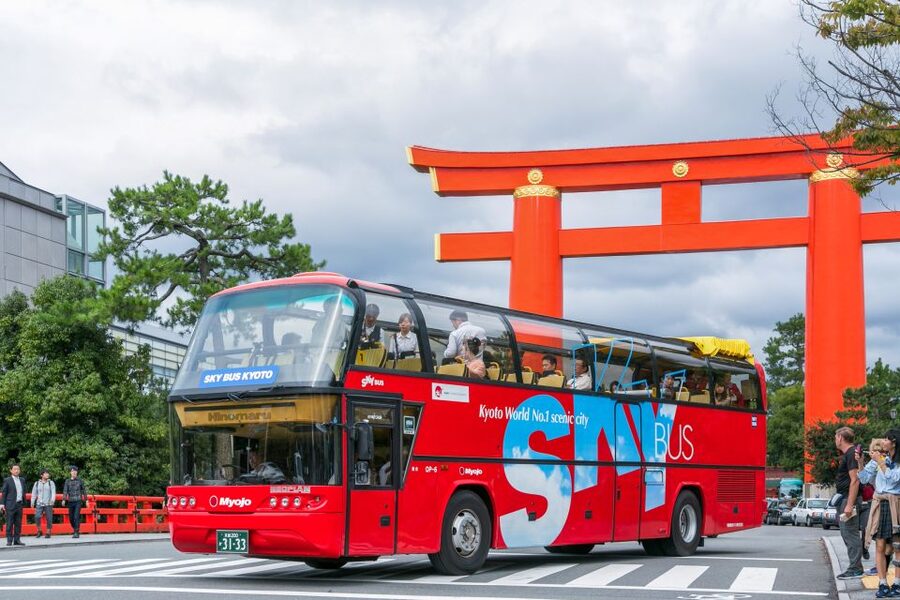
At $27 per person, this ticket usually works best when you value time and simplicity more than you value squeezing in the absolute cheapest transport option.
Here is the practical value angle:
- Hop-on hop-off means you are paying for flexibility, not just one transfer.
- Unlimited rides across your 1 or 2 days can replace multiple taxi rides and can reduce the mental load of train planning.
- The audio guide in 7 languages adds something you would otherwise have to research or download.
And it pairs well with how Kyoto actually feels. The distance between top sights can be more than you expect. A bus route like this can help you connect UNESCO landmarks and key neighborhoods without spending your energy on transit logistics.
One note: a cash-only warning at Kinkakuji matters for value. If you show up without cash, the trip can get snagged right where you were excited most. Bring cash for that stop, even if your day is planned smoothly.
Who this bus fits best
This is a strong fit if:
- You are short on time and want to cover major Kyoto sights without train transfers.
- You like the idea of exploring at your own pace.
- You want a simple “plan on wheels” for your first day.
It is also useful if you want a structured way to move between neighborhoods like the central market area (Shijo Karasuma / Nishiki-ichiba) and the temple side of town.
If you are the kind of traveler who only wants deep, site-by-site storytelling, the audio is probably not going to satisfy you by itself. The best use is as an organizer for your day, plus a prompt for what to look up once you are on the ground.
Should you book this Kyoto hop-on hop-off bus?
Book it if you want an efficient Kyoto overview with major landmarks, audio in 7 languages, and easy stop access. For many first-timers, a 2-day ticket is the sweet spot because it lets you slow down instead of rushing.
Skip or rethink if you hate crowds, you need guaranteed quiet time, or you are traveling on a tight schedule where long waits between buses would be stressful. Also, if cash is not part of your typical travel routine, remember the reminder about Kinkakuji cash-only.
If you do book, I would plan one morning loop for orientation, then choose 2 or 3 priority stops for deeper time. With that approach, the bus turns into more than transport. It becomes your Kyoto roadmap.
FAQ
How long is the ticket valid?
Your ticket is valid for 1 or 2 days, depending on the option you choose. You can use it for unlimited rides during that validity period.
Where is the first place I can board?
The first stop is at Kyoto Station, near the north central exit. The bus stop is located directly in front of the Isetan department store.
What languages are available for the audio commentary?
The audio guide includes English, French, Japanese, Korean, Chinese, Spanish, and German.
Is Wi-Fi available on board?
Wi-Fi is listed as available on board, but it is temporarily suspended.
Are umbrellas allowed on the bus?
No, umbrellas are not allowed in the vehicle. Raincoats are provided in wet weather.
What items are not allowed on the vehicle?
You cannot bring selfie sticks, food, or alcoholic drinks, and smoking is not allowed. Soft drinks with lids are allowed, like bottled drinks or coffee.
Newly listed around Kyoto
- Taste of Nishiki Market Walking Food Tour with Local guide★ 5.0 · 17 reviews
- Kyoto: Sushi Making Class with Sushi Chef★ 4.8 · 64 reviews
- Simple Plan with Maiko★ 4.4 · 10 reviews
- Shibori Furoshiki Course at Kyoto Shibori Museum★ 5.0 · 21 reviews
- Kyoto: City Secrets eBike Tour★ 4.9 · 196 reviews
- Sacred Pathways: Discover the Philosopher’s Path of Kyoto★ 4.9 · 20 reviews
- Private Tour to Monkey Park and Arashiyama Highlights★ 5.0 · 22 reviews
- Private Nara Tour from Osaka – Meet at Your Hotel★ 5.0 · 22 reviews
Tickets, compared.

teamLab Planets TOKYO Digital Art Museum Entry Ticket
Read our review →
Japanese Dance Cabaret Theater Asakusa-Kaguwa Ticket
Read our review →