
Review · FISH MARKET WALKS
All Inclusive Kuromon Markets Tour: Flavors Of Osaka
Food tastes better when someone else orders.
I love how this short visit drops you straight into Kuromon Market, with a real sense of how Osaka shops and eats. You get to try a stack of local favorites and specialty bites, including hot items and snackable sweets. One thing to keep in mind though, this tour is not vegan-friendly, and it’s very seafood-forward.
The biggest win for me is the hands-on tasting flow. In about 2 hours, you’ll work through multiple market stalls and sample everything from scallops to okonomiyaki, plus sweet stops like cherry blossom red bean mochi. Another big plus is the human part, the English guide who can read the room, help you order from vendor calligraphy, and explain what you’re actually eating.
The only real drawback is how tight the schedule feels. The tour starts at exactly 2pm at Nipponbashi Station exit 6, and if you show up late you can’t catch up, so plan your arrival with some breathing room.
In This Review
- Quick reasons this Kuromon Market tasting is worth your time
- Nipponbashi Station to Kuromon: the part that matters for first-timers
- Inside Kuromon Market: ordering help you will really use
- The 2-hour taste route: scallops, tuna, okonomiyaki, and sweet mochi
- Included food volume: how 5 to 7 dishes plus 3 to 4 tastings add up
- English guides make the market feel easy, not stressful
- Small group limits guesswork and improves your food choices
- What to know about suitability, especially for diets and comfort
- After your tour: how to keep the Osaka food momentum going
- Price and logistics: when $61 feels like a deal
- Should you book the Flavors Of Osaka Kuromon Market tour?
- FAQ
- Where is the meeting point and when does the tour start?
- How long is the Kuromon Markets food tour?
- What is included in the price?
- Is hotel pickup included?
- Does the tour work for vegans or pregnant women?
- Do you need to read Japanese menus to order?
Quick reasons this Kuromon Market tasting is worth your time
- Small group (up to 9) keeps the ordering and questions manageable.
- English guide + vendor ordering help means you are not stuck guessing from handwritten menu signs.
- A real 2-hour food hit list (5 to 7 dishes, plus 3 to 4 tastings) is designed to leave you comfortably full.
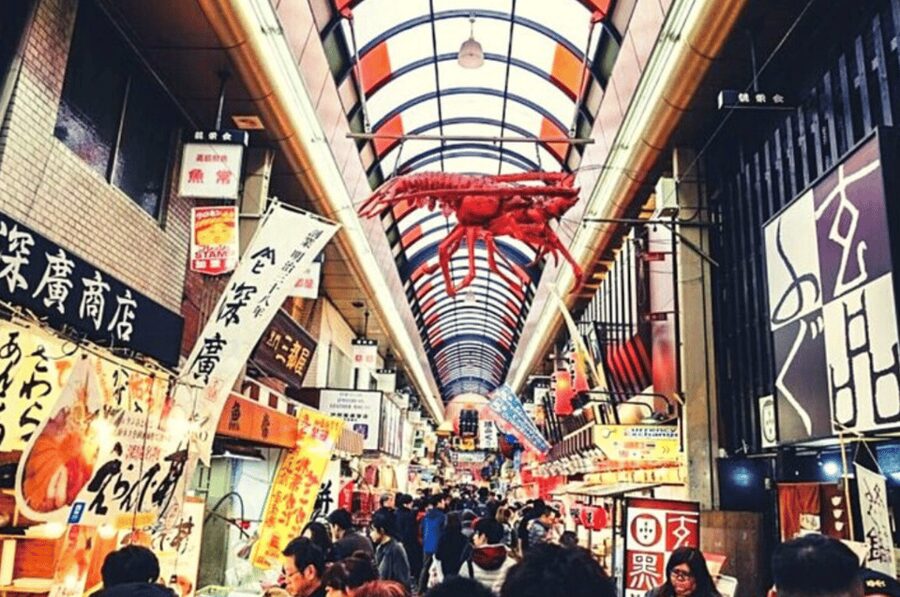
- Market atmosphere, not just photos. You’re walking and eating inside an active Osaka food district.
- Knife and tableware browsing adds a practical souvenir angle beyond food.
- Seafood-focused sampling gives you a clear theme, even if it narrows choices for some diets.
Nipponbashi Station to Kuromon: the part that matters for first-timers
I like tours that take the guesswork out of the first day in a new city. This one starts at a very practical spot: Nipponbashi Station, exit 6, at the top of the stairs, with a sharp 2pm start. If you arrive around 1:45 to 1:50pm, you can get oriented, use the bathroom if you need, and still be ready to go when the group gathers.
You’ll want to treat the meeting time like a real reservation, not a suggestion. On a short 2-hour tour, there’s no slack. The tour guide needs everyone present, because you’re about to move into stalls where you’ll be ordering food right away.
Also note the “no hotel pickup” setup. That’s not a bad thing, it actually keeps the logistics simple. Just make sure you can get yourself to the station on time and you’ll be fine.
More Market Walks in Osaka
- Kuromon Market Food Walking Tour in Osaka (6 stops, 6 tastes)
★ 5.0 · 550 reviews - Osaka: Kuromon Market Food Walking Tour (6 stops, 6 tastes)
★ 4.6 · 272 reviews - Kuromon Market Tour: All inclusive 6~8 Dishes & 3~4 samplings
★ 5.0 · 103 reviews
Inside Kuromon Market: ordering help you will really use
Kuromon Market is known for food stalls, not English menus. Even if you can read Japanese, the written menu style here can be hard to decode quickly, especially when you’re staring at calligraphy-style signage while hungry.
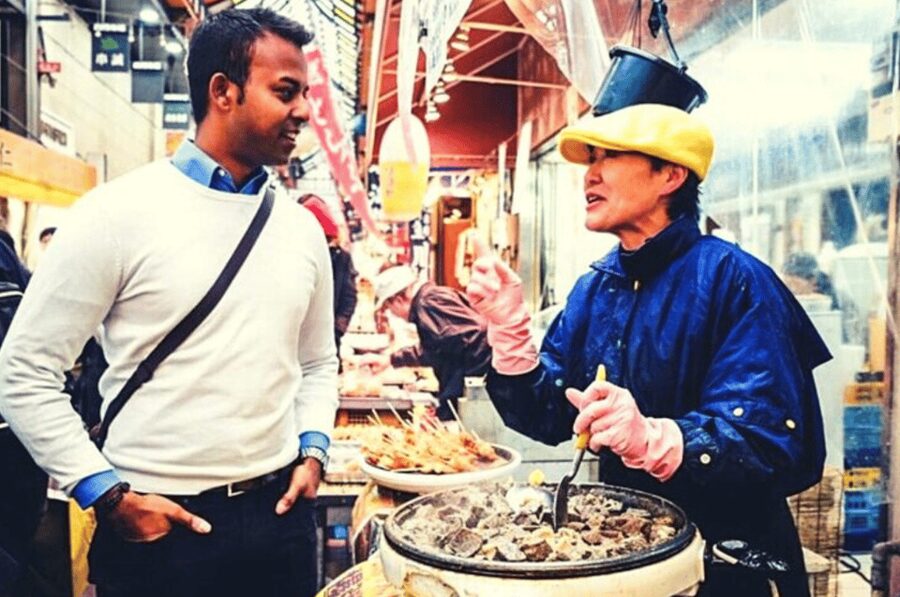
That’s where this tour earns its value. Your English guide is there to translate what you want, help you order, and explain the dishes as you go. You don’t have to play guessing games with ingredients or cooking methods. You’ll also learn what makes Osaka market food taste the way it does, so your bite connects to the bigger picture.
I also appreciate the market pace. You’re not just wandering for an hour and hoping something looks good. The guide is taking you from vendor to vendor in a way that balances savory and sweet, and it keeps you moving before things get too crowded or the best items sell out.
The 2-hour taste route: scallops, tuna, okonomiyaki, and sweet mochi
This is not a “one plate, done” style tour. It’s built around multiple tastings and dishes, so you get variety without the full sit-down meal cost.
Here’s the kind of food you should expect to sample during the 2 hours:
- Scallops (a classic Kuromon market item, usually served in a way that highlights freshness)
- Gobo tempura (a local-feeling vegetable choice that keeps the tour from being only seafood)
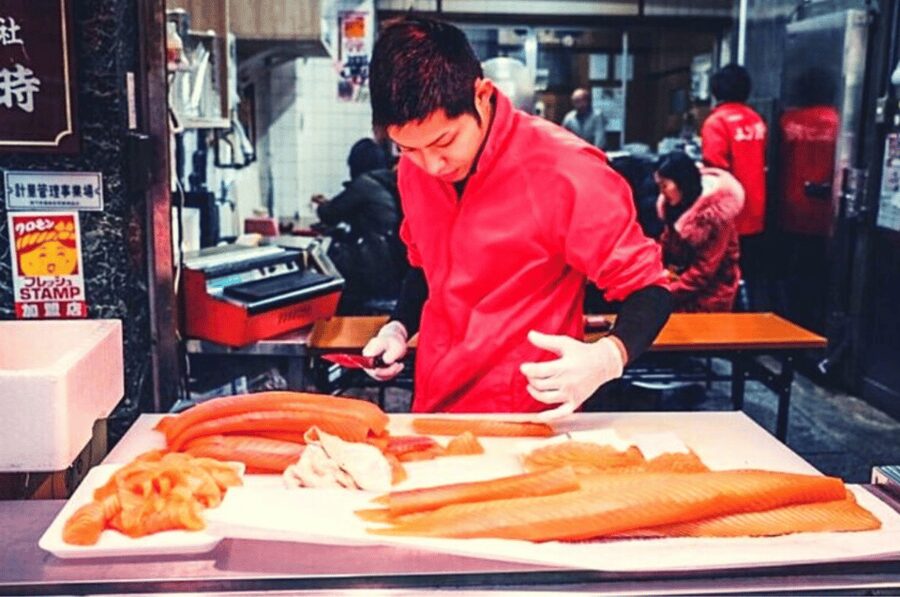
- Tuna sashimi
- Okonomiyaki (Osaka’s famous savory pancake, great for understanding how the city does comfort food)
- Cherry blossom red bean mochi (the sweet reset that keeps the tour balanced)
- Plus samplings like green tea, pickled vegetables, dried fish, and wasabi beans
One useful heads-up: the tour is seafood-focused. Some people may come expecting a wide variety of non-seafood bites, but the reality here is that most items you try (except for the sweets) tend to be fish or shellfish. If you love seafood, this is a strong match. If you don’t, you may find your choices feel narrower than you’d like.
Still, the tour doesn’t feel like a single-note experience. You’ll get texture and cooking variety, from raw-style bites like sashimi to warm, crunchy tempura, to the grilled or griddled warmth of okonomiyaki. And ending with mochi plus tea-style sweetness helps you finish satisfied instead of stuffed in an unplanned way.
Included food volume: how 5 to 7 dishes plus 3 to 4 tastings add up
Price is always the big question, so I look at what you actually get. This tour is priced at $61 per person and includes:
- 5 to 7 dishes plus 3 to 4 tastings
- Market culture context from the guide while you eat
- Discovering knives and tableware souvenirs
That “inclusive” part matters because market food adds up fast if you’re buying multiple stalls on your own. The guide helps you order efficiently, so you don’t waste money on the wrong portion size or duplicate items that you already tried elsewhere. And because the plan is designed for a short 2-hour window, you avoid the common problem of arriving at a market and realizing you’re still hungry at the end.
Also, you should expect this to function like lunch. One reason the feedback is so strong is that people start without having eaten much, and the tastings land as a genuinely filling meal by the end.
A different sort of day in Japan:
- Osaka Go Karting Tour with Funny Costume
★ 5.0 · 2,658 reviews - Osaka Castle: Museum and Tower Entry Ticket
★ 4.5 · 2,380 reviews - Osaka: Shinsekai Food Tour with 13-15 Dishes at 5 Eateries
★ 4.8 · 2,204 reviews - Osaka Food Tour: 13 Dishes at 5 Local Eateries
★ 5.0 · 2,149 reviews
English guides make the market feel easy, not stressful
This tour consistently shines because of the guides. You’ll see English-speaking hosts like Hakuri, Hikaru, Anna, Taka, Mico, and Michael in the guide roster people describe in their experiences. Across names, the pattern is the same: they help you navigate the market confidently and they make sure the food makes sense.
Here’s what that looks like in real life:
- They explain what you’re eating and why it’s made the way it is
- They answer questions about food culture and vendor specialties
- They guide you through ordering when menus are not easy to read
I also like that the guides bring personality, not just facts. Several people mention warmth and vendor rapport, which changes the vibe. You’re not just passing by stalls, you’re interacting with the market in a way that feels respectful and low-pressure.
Small group limits guesswork and improves your food choices
A big practical advantage is the small group size, limited to 9 participants. That keeps the pace from becoming chaotic, and it gives the guide time to manage everyone’s questions and preferences.
It also means you’re more likely to get a guided path rather than a one-size-fits-all walk. When someone is unsure about a flavor profile or has a question about what’s in a bite, a small group makes it easier for the guide to respond.
For a first-time Osaka visitor, that matters. You want “I can handle this” confidence, not “why is everyone waiting” stress.
What to know about suitability, especially for diets and comfort

If you follow a vegan diet, you should know this isn’t built for you. The tour is listed as not suitable for vegans. Food in a fish market can easily include fish stock, bonito-style ingredients, or seafood crossovers, and that’s exactly the kind of thing this tour is focused on.
It’s also listed as not suitable for pregnant women. That likely relates to the environment and food style in a market setting, so respect that guidance and choose a different activity that fits your needs.
If you eat seafood, you’re in a good spot. If seafood is a struggle for you, go in with the expectation that the “theme” is fish and shellfish, then decide whether the savory-sweet balance still sounds appealing.
After your tour: how to keep the Osaka food momentum going
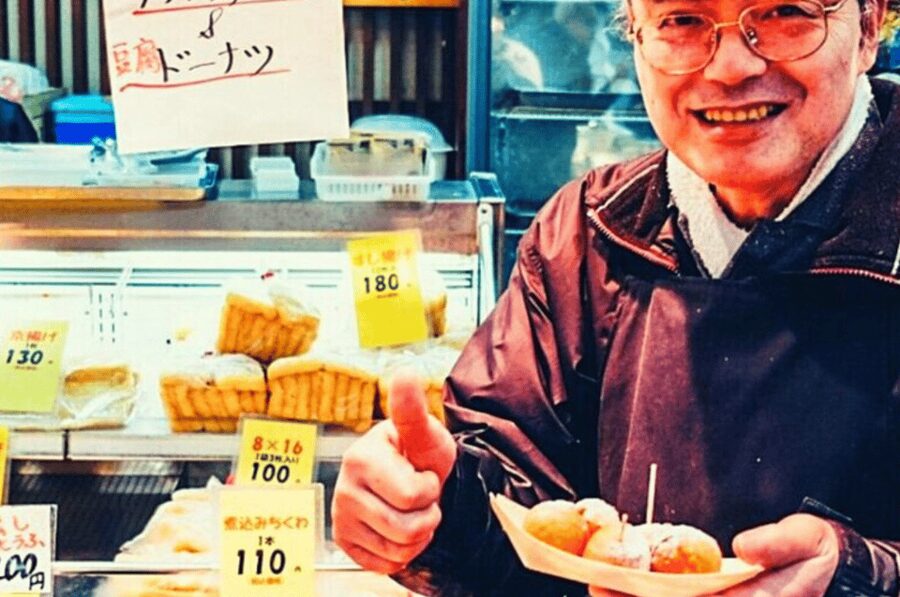
A market tour ends too fast by design, but it can set you up to eat well afterward. One guide experience also notes that when there was extra time, Dotonbori got worked into the plan as a nearby follow-up.
You might not get extra time, so don’t count on it. But do use the tour as your learning stage. You’ll leave with a clearer sense of what Osaka food should taste like, how to spot the types of vendors you want, and how to read the mood of a stall before ordering.
If you want to keep things light afterward, consider heading toward street food areas where you can choose smaller items. If you want a sit-down meal, you’ll now know which flavors to lean into.
Price and logistics: when $61 feels like a deal

For a 2-hour, English-guided market experience, $61 is positioned as a solid value, mostly because your costs are bundled into the structure:
- Multiple ordered tastings and dishes
- Guide help to overcome menu language and ordering friction
- Cultural context while you eat, not after you’re done
- A small group size that makes the guide time more effective
The main logistics consideration is that there is no hotel pickup. That means you are responsible for getting to Nipponbashi Station exit 6 on time. If you’re staying near a subway line, that’s easy. If you’re farther out, plan your transit so you arrive early enough to avoid a late start.
Should you book the Flavors Of Osaka Kuromon Market tour?
Book it if you want a short, high-impact food experience in Osaka’s most famous market area, and you’re comfortable with seafood being a major part of the lineup. I think it’s especially smart for first-timers who want structure, ordering help, and a guide who makes the food choices feel deliberate instead of random.
Skip it if you’re vegan, if you need to avoid market-style environments during pregnancy, or if you dislike seafood enough that the theme will ruin the experience. Also skip if you’re the type who always runs late, because the 2pm start is strict and you cannot catch up.
If you fit the target audience, this is one of those tours where the guide is not an add-on. It’s the reason you come out feeling like you actually understood the market, not just ate a few bites.
FAQ
Where is the meeting point and when does the tour start?
You meet at Nipponbashi Station, exit 6, at the top of the stairs. The tour starts exactly at 2pm, so arriving around 1:45 to 1:50pm is recommended.
How long is the Kuromon Markets food tour?
The tour duration is 2 hours.
What is included in the price?
The tour includes 5 to 7 dishes and 3 to 4 tastings, along with market culture context from the guide and time to discover Japanese knives and tableware souvenirs.
Is hotel pickup included?
No. There is no hotel pickup.
Does the tour work for vegans or pregnant women?
No. The tour is listed as not suitable for vegans and not suitable for pregnant women.
Do you need to read Japanese menus to order?
No. The vendors mostly do not speak English, and menus may be hard to decipher, but your English guide will help you order and explain ingredients and cooking methods.
Newly listed around Osaka
- (Ticket Included) Explore Osaka Castle & Museum of History★ 4.8 · 21 reviews
- Hidden Osaka – Yukaku Red Light Tour & Culinary Adventure★ 4.8 · 96 reviews
- Osaka: Walking Tour and Top Highlights★ 4.8 · 104 reviews
- Same Day OK! Osaka: Local Food, Izakaya & Local Bites Tour!★ 4.8 · 17 reviews
- Osaka: Private Ceramic Painting Workshop★ 5.0 · 13 reviews
- Eat Like a Local in Osaka – Private Custom Street Food Tour★ 4.3 · 33 reviews
- Pickleball in Osaka & Kyoto with Locals!★ 4.6 · 64 reviews
- Osaka:SUMO BEATS SHOWCASE: Taiko Drum and Wagyu burger!★ 4.2 · 37 reviews
Fish Market Walks, compared.
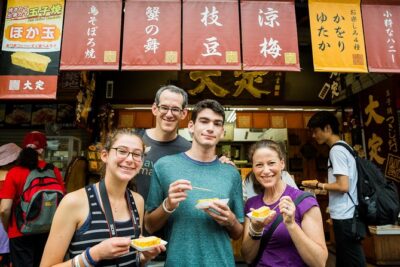
Tokyo Tsukiji Fish Market Food and Culture Walking Tour
Read our review →

Nishiki Market Brunch Walking Tour (7 Tastings + Brunch)
Read our review →
Tokyo Sushi Making Class in Tsukiji with Professional Chef
Read our review →
Tsukiji Fish Market Guided Tour and Sushi Making with Pro Chef
Read our review →Tsukiji Fish Market Food and Culture Walking Tour
Read our review →Browse the lists this tour appears in