
Review · LICENSED GUIDES & PRIVATE DRIVERS
All Must-Sees Tono Private Tour with Government-Licensed Guide
Tono has a way of making ordinary corners feel alive. This private, government-licensed tour in Iwate County is built around Japanese folklore, with a multilingual guide to connect the legends to the real places you visit, including shrines, riverside spots, reconstructed farmhouses, and storytelling halls. Private guide and folklore sites are the main draw here.
What I like most is the flexibility. You pick 2 to 3 sites from a fixed set, and your guide adapts the day in advance to match your interests and group. I also like that the guide is licensed and experienced enough to field real questions, not just read off a script.
The only drawback to plan for is cost creep. Entrance fees, lunch, and transportation are not included, and the guide’s entry coverage only applies to the sights in the planned list. If you add extra stops outside the set, you may pay more.
In This Review
- Key things to know before you go
- Where Tono folklore feels practical, not like a museum
- Your 6-hour flow, and how to choose your best 2 to 3 stops
- Kappabuchi and Unedorisama: the fun start to your folklore day
- Denshoen, Furusatomura, and Chiba House: rural life you can see and touch
- Tono Tale House: where stories become sound, not just text
- Tono Municipal Museum: your reset button for everything you saw
- Price and value: what $143.34 gets you, and what to budget
- Who this Tono private tour suits best
- Should you book this Tono private tour?
- FAQ
- What is included in the tour price?
- How long is the tour?
- Does the tour offer pickup?
- Are entrance fees included?
- What should I plan for besides the tour?
- Can I customize the itinerary before I arrive?
Key things to know before you go
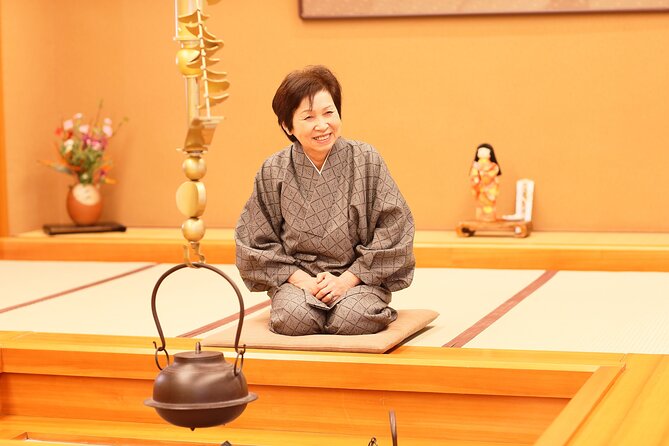
- Government-licensed English speaking guide who can explain the cultural meaning behind the legends
- Customizable route built around 2 to 3 must-see stops from the provided options
- Pickup and drop-off are on foot, so you are walking as the tour moves between sights
- Lots of folklore hits early, including a kappa spot and a love shrine with a simple ritual
- Mix of storytelling and place-based history, from folk museums to recreated rural buildings
- Some stops are free, but several key theme park style sites have separate admissions
Where Tono folklore feels practical, not like a museum
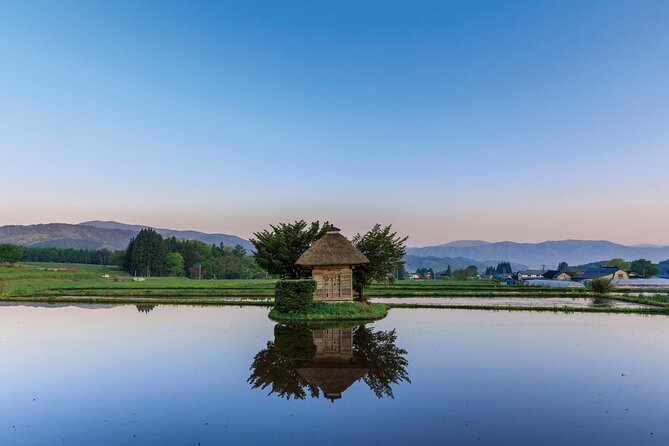
Tono is rural Iwate, with hills, farms, and the kind of small-town rhythm that makes stories feel believable. The big theme of this tour is that folklore is not just entertainment. It is a way people explained nature, animals, trouble, love, and community life long before there were books or internet searches to fact-check.
That is why a government-licensed guide matters. You get someone who understands the background well enough to translate both the legend and the cultural context. Instead of you guessing why a shrine has a particular ritual, you get the why from the person leading you there.
You also get a day that does not drag. The plan targets a tight set of stops that connect like links in a chain: mischievous river creatures, love charms, rural life reconstructions, the voices behind the stories, and then a museum that grounds it all in folk tradition.
More Private Guides in Japan:
- Tokyo 6hr Private Tour with Government-Licensed Guide
★ 5.0 · 3,902 reviews - Kyoto Early Morning Tour with English-Speaking Guide
★ 5.0 · 1,427 reviews - Tokyo 4hr Private Tour with Government-Licensed Guide
★ 5.0 · 1,394 reviews
Your 6-hour flow, and how to choose your best 2 to 3 stops
This tour runs about 6 hours, and the pacing is built around short stays plus a couple of longer stops where you can watch, listen, and take your time. Most stops are around 30 to 60 minutes, so it is easy to match the day to your energy level.
Because it is a private tour, you only travel with your group. There is no mixing with strangers, and you can ask for adjustments during the planning stage. The organizer specifically notes that you can share special requests, and the itinerary is customized in advance.
Here’s how I’d choose if you want the most value. If you love the supernatural side, prioritize the kappa-related stop and the storytelling experiences. If you prefer everyday history and how people actually lived, lean toward the reconstructed rural village and the 200-year-old farmhouse style home. If you are there mainly for stories as stories, make sure you include the tale-focused stops.
One practical tip: since the pickups and drop-offs are on foot, wear comfortable shoes. You will likely move around town between stops, and you do not want to spend the day thinking about your feet instead of the places.
Kappabuchi and Unedorisama: the fun start to your folklore day
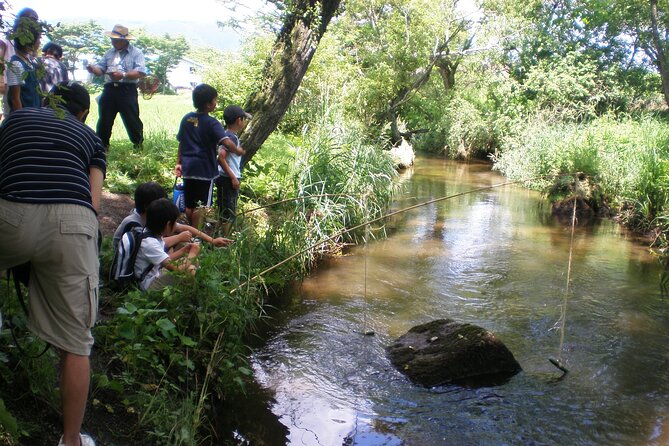
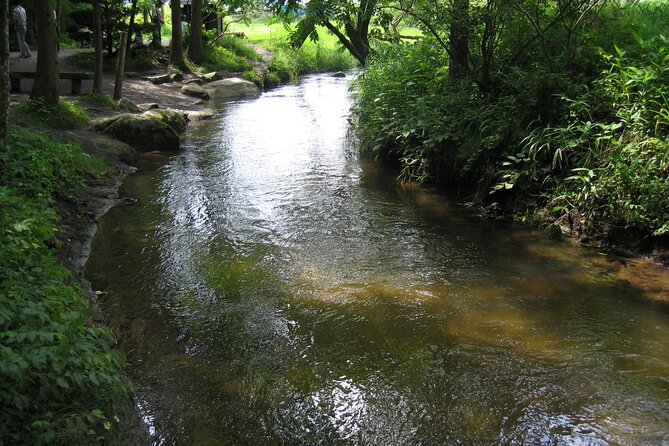
Your first stop is Kappabuchi, tied to the legend of kappa river sprites. The story says a group of mischievous kappa live in a small stream behind Joken-ji Temple in Tsuchibuchi-cho, where they threaten people and play tricks on passersby.
I like this opening because it tells you what this tour is really about: folklore that is tied to specific locations. You are not just learning a name like kappa. You are walking into a place that the stories claim as their territory.
Next comes Unedorisama Shrine, a small wayside shrine known as the home of a god of love. The ritual here is delightfully simple: buy a small red cloth from the unmanned shop in the shrine grounds, then tie it to a tree using just your left hand so that you are tied with the one you love.
This is one of those moments where the guide’s translation is genuinely useful. Even if you have done shrine rituals before, you want to understand what you are doing and why. You also get to keep it grounded, since the shrine itself is right there, not something recreated later.
Both of these stops list admission as free, so they are also a smart way to start without worrying about extra tickets early in the day.
Denshoen, Furusatomura, and Chiba House: rural life you can see and touch
Tono is famous for stories, but the legends make more sense when you also see the farming culture behind them. That is where the theme park style stops help.
First up is Denshoen, a theme park experience of rustic Tono lifestyle. You can see the Kikuchi Residence, listed as an important cultural asset, plus a memorial museum connected to Kizen Sasaki. Even if you do not know who he was before, a guide can help connect the museum pieces to the broader idea of Tono as a place where local culture was recorded and passed along.
Then you move to Tono Furusatomura, which recreates a nostalgic rural village. Here you can experience local folk craft, try regional cuisine, and listen to folk tales. This is the most hands-on-feeling stop on the list, because it is not only about looking. You get to participate in activities that connect everyday skills to the stories people told.
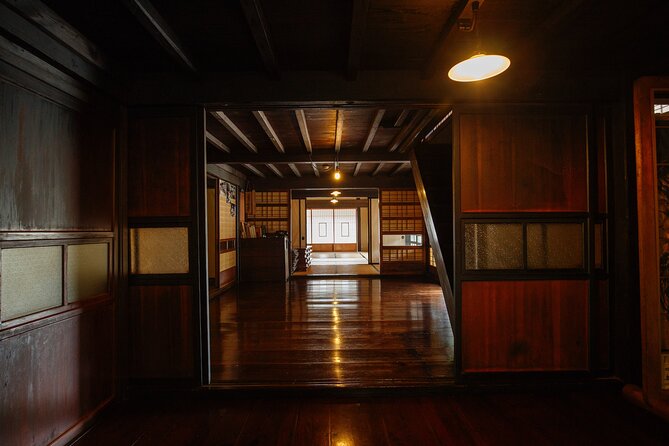
Finally, there is Chiba House, a farmer’s private residence built about 200 years ago. The layout is an L-shaped Nanbu Magariya, a regional style where people and horses lived under the same roof. This detail is important. It turns folklore into something that sits next to real architecture and real routines, not something floating in the air.
Two cautions to keep in mind. First, the admissions for Denshoen and Furusatomura are listed as not included, so budget for tickets. Second, theme park style stops can vary in how much you actually do versus how much you watch. If you want more participation, tell your guide that ahead of time so the day includes the activities you care about.
A few more Japan days to weigh up
- Private Tour to Mt. Fuji and Hakone (Fully Licenced Operator)
★ 5.0 · 1,910 reviews - Fushimi Inari Hidden Hiking Tour (Private Option Available)
★ 5.0 · 1,750 reviews - Private Kyoto Tour with a Local, Highlights & Hidden Gems, Personalised
★ 5.0 · 1,543 reviews - Tokyo Customized Private Tour (Must See Places in 1 Day)
★ 5.0 · 1,499 reviews
Tono Tale House: where stories become sound, not just text
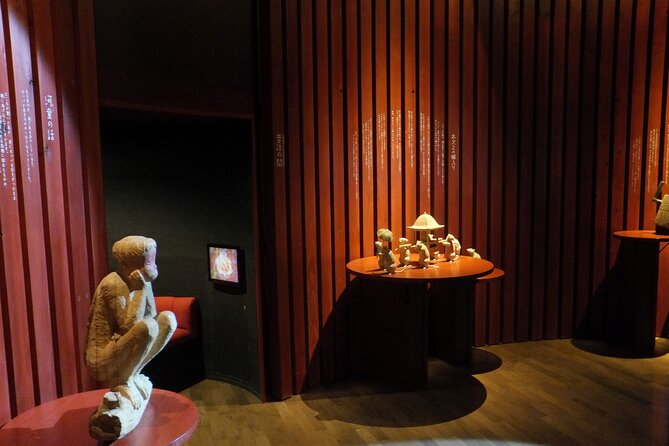
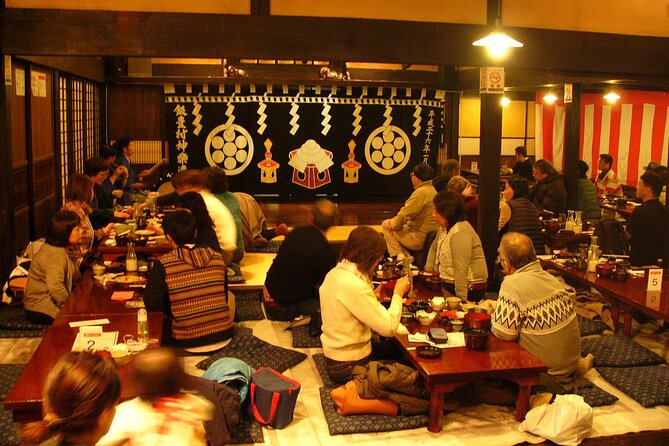
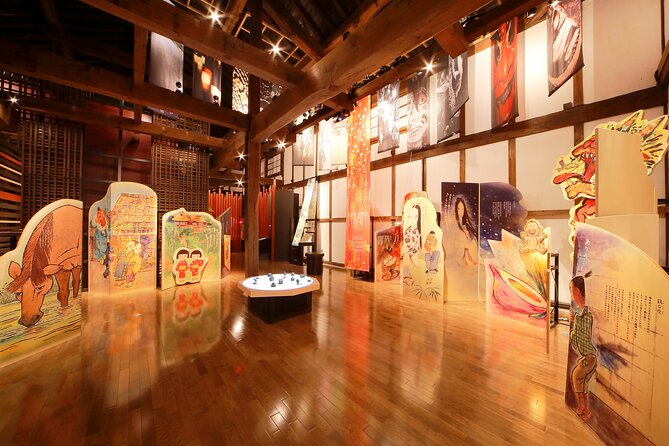
If folklore is why you came, Tono Tale House is one of your anchors. This stop is structured around the Hall of Stories, with images and recordings of folklore. There is also the chance to listen live to stories from an official storyteller at the Tono Theatre.
This is a key difference. A lot of folklore tours turn legends into neat summaries. Here, you are encouraged to experience the stories the way people traditionally did, through spoken narration. That matters, because tone, pacing, and emphasis carry meaning.
You also get a display related to Kunio Yanagita, known for The Legends of Tono. Having that name pointed out in the actual storytelling environment helps you connect the oral tradition to the later act of recording and publishing it.
One practical note: the tale-focused stop lists admission as not included. So even though it sounds like the heart of the tour, you should plan for an extra ticket here.
Tono Municipal Museum: your reset button for everything you saw
After the theme parks and the storytelling stops, Tono Municipal Museum grounds the whole experience. It was opened in 1980 and is described as the first museum in Japan devoted to folk customs.
The focus is explicitly around The Legends of Tono, with displays and videos about the nature, life, culture, and history of Tono and its people. For me, this museum stop is the place where you understand the pattern behind the day.
You might start the tour thinking, okay, kappa tricksters and love charms. But by the time you see museum content that links environment, daily life, and tradition, the stories stop feeling random. They start to feel like how a community organized its knowledge.
Since museum admission is not listed as included, treat this as a ticketed payoff rather than a free add-on. If you are trying to keep costs down, you can still get value by picking museum time only if it aligns with your interests.
Price and value: what $143.34 gets you, and what to budget
The price is $143.34 per person, for a tour that runs about 6 hours. That sounds fair if what you want is a private, government-licensed guide and a structured route through multiple stops.
Here is what you are paying for, in practical terms:
- a licensed local English speaking guide
- a customized plan built around 2 to 3 chosen sites
- a format that saves you from guessing which legends connect where
Now the parts that are not included:
- transportation fees
- entrance fees
- lunch
- other personal expenses
- and the tour indicates guide entry fees are only covered for sights listed under what to expect
The value-smart move is to notice which stops are marked free. Kappabuchi and Unedorisama list free admission, and Chiba House is also listed as free. The paid stops are the ones like Denshoen, Tono Tale House, Tono Furusatomura, and the Tono Municipal Museum, based on the notes provided.
So, if you choose your 2 to 3 stops carefully, you can control your total spend. For example, you could pick the free shrine plus one or two ticketed story or rural-life experiences depending on your priorities.
Also, this tour offers a pickup option, but pickup and drop-off are on foot. That means you are not likely hiring a vehicle for each transfer. Budget time for walking between the meeting area and nearby sights, and keep your schedule flexible if weather is rough.
Who this Tono private tour suits best
This is a great fit if you:
- want folklore tied to real places, not just a lecture
- appreciate a guide who can explain cultural context and answer questions
- want a private pace, especially if you are traveling as a family or group with different interests
- plan to choose 2 to 3 highlights rather than trying to see everything
It might be less ideal if you:
- hate buying tickets throughout the day, since entrance fees for several major stops are not included
- prefer a driving tour with minimal walking, because the tour emphasizes on-foot pickup and movement
- want to stack multiple tour groups or mix routes, since combining group formats is not allowed
Should you book this Tono private tour?
I’d book it if you want a guided day where legends make sense in context. The best part is the way the day is built like a story arc: kappa mischief, love rituals, rural life you can observe, storytellers and recordings that bring the past to your ears, and then a museum that helps everything click.
If you are price sensitive, choose your 2 to 3 stops with the free admissions in mind, then add only one or two ticketed experiences that match your top interest. Do that, and this becomes one of the more value-smart folklore days you can take in northern Japan.
FAQ
What is included in the tour price?
You get a licensed local English speaking guide and a customizable route where you choose 2 to 3 sites from the listed options. The tour also includes meeting up with the guide on foot within the designated area of Tono.
How long is the tour?
The duration is about 6 hours.
Does the tour offer pickup?
Yes, pickup is offered. However, pickup and drop-off are on foot, meaning you meet and move within a designated area rather than using a private vehicle.
Are entrance fees included?
No. Entrance fees are not included, and guide entry fees are only covered for sights listed under what to expect.
What should I plan for besides the tour?
Plan for transportation fees, lunch, and other personal expenses since these are not included.
Can I customize the itinerary before I arrive?
Yes. You can submit special requests, and you select your must-see spots from the provided list to create a customized itinerary in advance.
Newly listed around Japan
- Private Tokyo Food Tour – A Journey Through Time Through Food★ 5.0 · 36 reviews
- Private Tokyo Tour with Licensed Guide & Vehicle (Max 15 persons)★ 5.0 · 107 reviews
- Private Tokyo Custom Full-Day Tour by Chartered Vehicle★ 5.0 · 16 reviews
- Private Tokyo Custom Half-Day Tour by Chartered Vehicle★ 4.5 · 13 reviews
- Private Outstanding Nikko Tour with English Speaking Driver★ 4.0 · 11 reviews
- Private Sightseeing to Mt Fuji and Hakone with English Driver★ 5.0 · 51 reviews
- Private Snow Monkeys park Day Trip From Tokyo or Nagano★ 4.5 · 26 reviews
- 4 Day Tour – Mount. Fuji, Tokyo, Hakone, Kamakura and Yokohama★ 5.0 · 19 reviews
Licensed Guides & Private Drivers, compared.
Tokyo 6hr Private Tour with Government-Licensed Guide
Read our review →
Kyoto Early Morning Tour with English-Speaking Guide
Read our review →
Tokyo 4hr Private Tour with Government-Licensed Guide
Read our review →
Kyoto 6hr Private Tour with Government-Licensed Guide
Read our review →
Hiroshima / Miyajima Full-day Private Tour with Government Licensed Guide
Read our review →Early Morning Tour with English-Speaking Guide
Read our review →
Tokyo Private Sightseeing Tour by Car- English speaking chauffeur
Read our review →
Mt Fuji Private Tour with English Speaking Driver
Read our review →Browse the lists this tour appears in