Review · TOKYO TOURS
Discover Japan Tour: 15-day Small Group
Japan, organized but never boxed in. In this 15-day small-group trip (max 8 people), Becki and Shawn link Tokyo temples, a Nikko day trip, and Hiroshima peace sites into a practical rail rhythm, with built-in time to eat like a local. I especially like the balance of famous sights plus day-to-day streets, like Asakusa’s lanes and Kyoto’s older neighborhoods. You’ll also get a standout ryokan onsen and kaiseki dinner near Mount Fuji, not just a photo stop.
The one drawback to plan around is pace. The schedule is packed with major regions, so you’ll spend real hours on trains and ferries, and there are temple and shrine grounds that ask for steady walking. If you have moderate physical fitness, you’ll be fine, but if you prefer slow travel and lots of downtime, this one may feel busy.
In This Review
- Key highlights at a glance
- Small-Group Japan That Actually Feels Manageable
- Meet Becki and Shawn, the Guides Who Handle the Moving Parts
- The Real Route, Tokyo to Narita, With No Major “Dead Days”
- Tokyo Station to Senso-ji and Sumo at Ryogoku
- Nikko’s Toshogu Shrine Day Trip, Sacred Bridge to Woodcarvings
- Fuji-Area Ryokan, Onsen Soak, and Kaiseki Dinner
- Matsumoto Castle and Nakamachi: Old Streets, Real Craft
- Zenko-ji, Then Kanazawa’s Garden and Historic Districts
- Kiso Valley Tsumago Post Town and Tokoname Ceramics
- Nagoya Dome Baseball, When Japan Lets Loose
- Hiroshima Peace Museum, Atomic Bomb Dome, and Streetcar Views
- Miyajima Ferry and the Floating Torii at Itsukushima Shrine
- Kyoto’s Sacred Circuit: Fushimi Inari to Kiyomizu-dera and Kinkaku-ji
- Tokyo National Museum and One Last City Day
- The Finish: Narita Airport Transfer
- Price and Value: Is $10,898 Actually Reasonable?
- Who This Tour Fits Best, and Who Might Prefer Something Else
- Should You Book the Discover Japan 15-Day Small Group Tour?
- FAQ
- How long is the Discover Japan Tour?
- What is the group size?
- Where does the tour start and end?
- Are any admissions included?
- Is the trip suitable for people with limited physical fitness?
- How will I receive tickets?
- Is this tour refundable if I cancel?
Key highlights at a glance
- Max 8 travelers keeps the trip calm, question-friendly, and easy to navigate in transit.
- Becki and Shawn tailor the route to the group’s interests while still hitting the big markers.
- Tokyo has variety fast, from Senso-ji to sumo wrestling at Ryogoku Kokugikan.
- A Fuji-area ryokan day includes onsen soaking and an authentic kaiseki dinner.
- Kyoto hits multiple styles of sacred sites, from Fushimi Inari gates to Zen rock gardens.
Small-Group Japan That Actually Feels Manageable
There’s a reason Japan can feel overwhelming. Trains, lines, customs rules, and etiquette differences add up fast, even for confident travelers. This tour aims to remove the stress and give you a clear plan, without turning Japan into a factory conveyor belt.
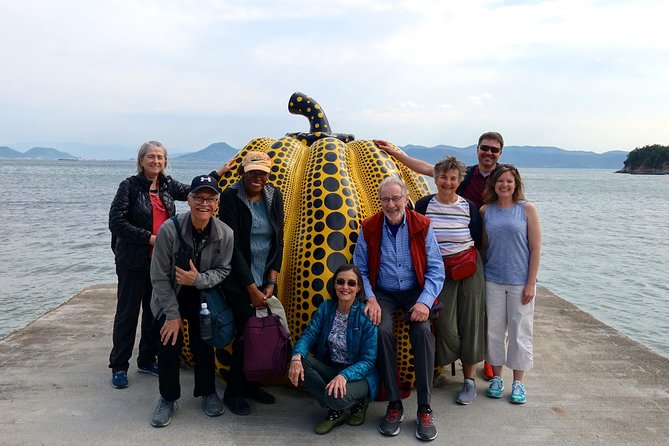
With a group capped at 8, you get something most big-bus tours can’t: breathing room. You can ask a question without waiting for a microphone moment, and you can move as a unit through stations and crowded temple areas. I like that the tour is explicitly designed for small-group comfort, and that the schedule still leaves room to roam nearby streets.
A few more Tokyo days to weigh up
- Mt Fuji and Hakone 1-Day Bus Tour Return by Bullet Train
★ 5.0 · 26,383 reviews - 1-Day Tokyo Bus Tour
★ 5.0 · 14,250 reviews - Tokyo: TOKYO SKYTREE® Admission ticket
★ 4.5 · 11,192 reviews
Meet Becki and Shawn, the Guides Who Handle the Moving Parts
Becki and Shawn come through in the way they structure your days. The tour leans on their planning skills so you spend less time figuring things out and more time noticing details on the ground.
One thing I see as a major value here is rail confidence. Japan’s train system is excellent, but it can still be confusing when you’re juggling connections, platform changes, and timing. Guests have specifically praised how Becki and Shawn guide rail travel with ease, so you’re not stuck speed-walking while staring at a transit map.
They also tailor the itinerary to the group’s interests. That matters because two people can both love Japan, but one wants shrines and crafts while the other wants food, history, and a little chaos. Here, the plan is flexible enough to respond.
The Real Route, Tokyo to Narita, With No Major “Dead Days”
This is a point-to-point journey across several iconic regions: Tokyo, Nikko, Fuji area, Matsumoto, Kanazawa, Kiso Valley, Tokoname, Nagoya, Hiroshima, Miyajima, Kyoto, then back to Tokyo.
That means you’ll trade some leisure time for depth across regions. If your dream trip includes multiple cultural worlds, this is the right trade. If you want a single-city vacation, you’ll likely feel like you’re always packing.
The tour also requires moderate physical fitness. That is not code for anything dramatic, but it does mean you should expect walking on temple grounds, older streets with steps, and transport days where you’re on your feet more than you’d be at a resort.
Tokyo Station to Senso-ji and Sumo at Ryogoku
Day 1: Tokyo Station Marunouchi Ekimae Hiroba
Day 1 starts with a simple, smart move: get your bearings at Tokyo Station’s Marunouchi area. You get free time to explore and take in the architecture of the station itself, which is a good way to understand the scale of Tokyo before you dive into neighborhoods. It’s also a low-pressure start that helps jet-lag travelers settle in.
Practical tip: treat this as orientation. Look for where you’ll likely emerge, and use the free time to grab the kind of snacks you like, since convenience saves energy later.
Day 2: Asakusa and Senso-ji, then sumo at Ryogoku Kokugikan
The next day is classic Tokyo in the best sense: Senso-ji Temple in Asakusa. It’s Tokyo’s oldest Buddhist temple, built in 645 AD, and you’ll spend about two hours there, with admission marked free. This isn’t just history on a plaque. It’s the kind of place where you can watch daily ritual and street life blend together.
Then you shift gears hard, in a good way. You head to Ryogoku Kokugikan, with the Tokyo Grand Sumo Tournament experience included. Sumo is Japan’s spectacle sport, and seeing it live is the difference between reading about sumo and understanding the intensity.
Possible downside: sumo events and temple areas can be crowded. If you’re sensitive to tight spaces, plan to arrive calmly and keep your patience ready.
A different sort of day in Japan:
- Tokyo: teamLab Planets TOKYO Digital Art Museum Entry Ticket
★ 4.6 · 9,779 reviews - Mt Fuji & Hakone Cruise, Drum Show Bullet Train 1 Day from Tokyo
★ 4.0 · 7,413 reviews - Tokyo: Sumo Show Experience with Chicken Hot Pot and a Photo
★ 4.8 · 6,678 reviews - Tokyo: Shinjuku Food Tour (13 Dishes at 4 Local Eateries)
★ 5.0 · 6,603 reviews
Nikko’s Toshogu Shrine Day Trip, Sacred Bridge to Woodcarvings
On Day 3, you take a day trip to Nikko for Toshogu Shrine, where you’ll see the elaborately decorated tomb of Tokugawa Ieyasu, the founder of the Tokugawa Shogunate. World Heritage status here is no marketing fluff. You’re surrounded by wood carvings and gold leaf work, plus the vermillion-painted Sacred Bridge.
This day works because it compresses a lot of Japanese political and religious imagery into one visit. You leave with a clearer sense of how the Tokugawa era used art and sacred spaces to project authority.
What to watch: this is a day trip, so it will feel long. If you prefer a slower tempo, treat it like one big focused outing rather than a second vacation within your vacation.
Fuji-Area Ryokan, Onsen Soak, and Kaiseki Dinner
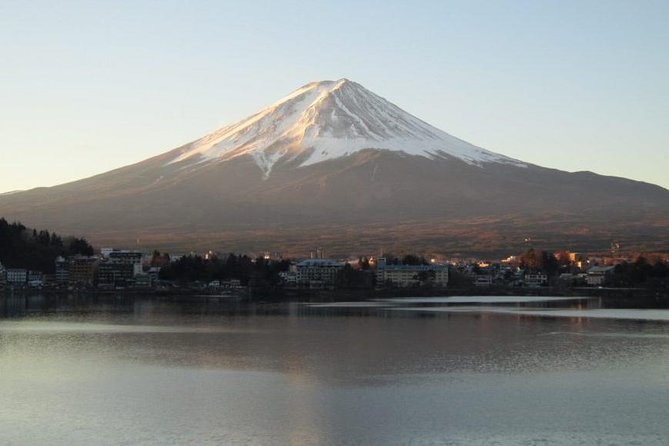
Day 4: Lake Kawaguchiko and Mount Fuji views, plus ryokan life
This is the trip’s emotional peak for a lot of people, and it makes sense. You travel to Lake Kawaguchiko to view Mount Fuji, then you stay in a traditional ryokan. You’ll soak in a mineral-rich onsen, and you’ll have an authentic kaiseki dinner.
Why this matters: after days in cities and temples, this is where Japan slows down in the most practical way. You’re not just sightseeing. You’re resting in a different rhythm, and you’re eating a meal that’s designed as an experience, not just fuel.
A realistic note: Mount Fuji views depend on conditions, so keep expectations flexible. Even without a perfect sightline, the ryokan and onsen portion is still the kind of memory that stays.
Matsumoto Castle and Nakamachi: Old Streets, Real Craft
Day 5: Matsumoto Castle and Nakamachi District
Day 5 includes Matsumoto Castle, one of only five original castles in Japan and designated a National Treasure. You also walk the preserved shopping streets of the Nakamachi District.
I like this mix because it balances fortress history with daily commerce. You get the power and design of the castle, then you step into a neighborhood where you can slow down and browse at an unhurried pace.
Consideration: castle visits involve walking and stairs. If your legs are tired from trains, you’ll still want to go, but wear shoes you trust.
Zenko-ji, Then Kanazawa’s Garden and Historic Districts
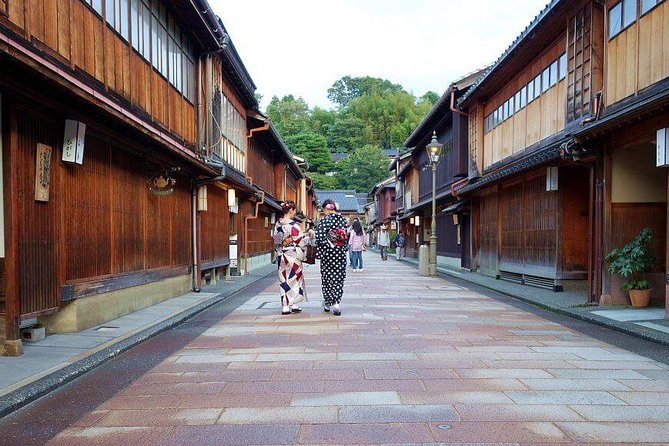
Day 6: Zenko-ji Temple and Kenrokuen Garden
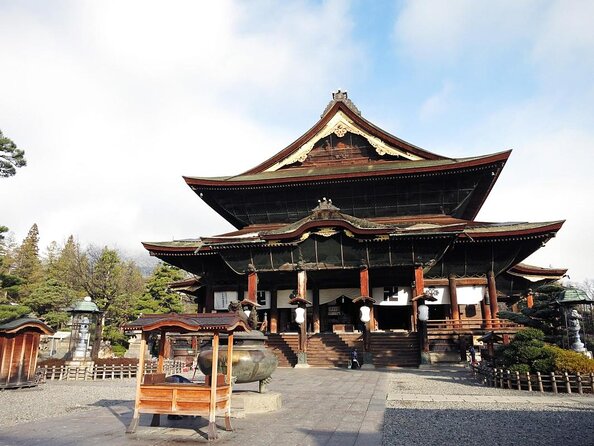
The morning starts at Zenko-ji Temple, founded in the 7th century, with a Buddhist morning service experience included. That’s a rare type of cultural contact on a tour like this, because it’s not only about seeing buildings. It’s about seeing what devotion looks like at an early hour.
Later, you travel to Kanazawa and spend a full day that includes Kenrokuen Garden (described as one of three most beautiful landscape gardens in Japan), plus areas connected to Higashi Chaya, the Nagamachi Samurai district, and Onomichi Market.
Why the Kanazawa day hits: it offers variety in one region. Gardens give you peace. Historic districts give you texture. Markets give you practical local life.
Practical note: a long day in Kanazawa means you’ll want water and snacks. Even if you’re not told meal details, you’ll benefit from planning to keep energy steady.
Kiso Valley Tsumago Post Town and Tokoname Ceramics
Day 7: Tsumago in the Kiso Valley
You return to an earlier time with Tsumago, a preserved post town in the Kiso Valley that once served travelers on the Nakasendo Trail connecting Tokyo and Kyoto during the Edo Period.
This is the part of the tour that feels like walking inside a story. You can connect the dots between major cities without feeling like you only saw modern Japan.
A tip: take your time with side streets. Post towns are made for drifting, not rushing.
Day 8: Tokoname Pottery Footpath
Day 8 starts in Tokoname, an ancient kiln town dating back to the 12th century. You explore the hillside community along the Tokoname City Pottery Footpath, tied to ceramics production during the Edo period. Even if you don’t buy anything, watching how craft traditions live on in the town layout is valuable.
Nagoya Dome Baseball, When Japan Lets Loose
Day 8 also includes a Nagoya Dome baseball game
Later that day, you catch the Chunichi Dragons at the Vantelin Dome Nagoya.
This is one of the best “culture beyond temples” moves in the entire tour. Japan isn’t only shrines and gardens. A baseball game gives you sound, rhythm, crowd behavior, and the kind of shared excitement that’s hard to replicate in any museum.
Possible downside: if you’re not a sports fan, you might still enjoy it for the atmosphere, but keep expectations light. Think of it as a local event you get dragged into, in the best way.
Hiroshima Peace Museum, Atomic Bomb Dome, and Streetcar Views
Day 9: Hiroshima Peace Memorial Museum and Peace Park
Day 9 is heavy and important. You visit the Hiroshima Peace Memorial Museum, plus Peace Memorial Park, and you see the Atomic Bomb Dome. You also ride a streetcar and visit key sights within the city.
This day matters because it gives you context you can’t get from a quick stop. It’s the kind of visit that stays with you long after the photos are uploaded.
Practical note: if you’re sensitive to emotional topics, give yourself a little buffer after the museum, and don’t cram extra activities that evening.
Miyajima Ferry and the Floating Torii at Itsukushima Shrine
Day 10: Itsukushima Shrine on Miyajima
You take a ferry to Miyajima and see the world famous floating torii gate at Itsukushima Shrine. Then you stroll Miyajima’s streets and paths and visit the World Heritage Site.
This day is where “Japan postcard” becomes “Japan in motion.” You’ll feel the island pace, and the torii feels like it belongs to the water, not just to the shore.
Consideration: ferry schedules and crowds can add stress. I suggest keeping your plan flexible, and leaving extra minutes if you want calmer walking.
Kyoto’s Sacred Circuit: Fushimi Inari to Kiyomizu-dera and Kinkaku-ji
Kyoto takes over from Days 11 to 13, and it’s packed. The good news is that each stop offers a different kind of sacred space.
Day 11: Fushimi Inari-taisha and Gekkeikan Okura Sake Museum
You start with Fushimi Inari-taisha Shrine, built in 711 AD, with thousands of red torii gates. It’s iconic for a reason. Even if you’ve seen photos, the scale changes when you’re walking through the corridor of gates.
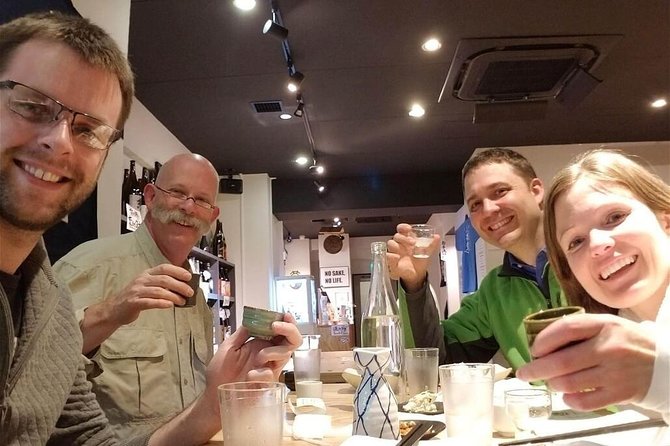
Then you visit the Gekkeikan Okura Sake Museum, founded in 1637. You learn about traditional sake-making techniques and taste several blends.
This pairing is smart. Shrines and sake belong together in Japan’s cultural system, and the taste portion gives you a concrete memory.
Day 12: Kiyomizu-dera and Higashiyama District
You visit Kiyomizu-dera Temple, a World Heritage Site, then you walk the Higashiyama District with older wooden houses and small shops for about four hours.
This is where you slow down just enough. It’s not only a viewpoint. It’s a neighborhood feel.
Day 13: Kinkaku-ji and Ryoanji
Day 13 adds two temple styles in a tight window: Kinkaku-ji (the Golden Temple) and Ryoanji for the famous zen rock garden.
If you’re temple’d out by day 13, take a moment and just sit where you can. Zen gardens reward quiet attention more than ticking items off.
Tokyo National Museum and One Last City Day
Day 14: Tokyo National Museum
You head back to Tokyo for the Tokyo National Museum, described as the oldest national museum in Japan with over 110,000 items, including 87 Japanese National Treasures. You’ll have about two hours.
This is a good final cultural anchor after days of shrines and gardens. It helps you zoom out and see objects and art traditions in context.
Practical note: two hours goes quickly in a museum this size. If you have specific interests, prioritize a few galleries and don’t try to see everything.
The Finish: Narita Airport Transfer
Day 15: Narita International Airport
Your trip ends back at the meeting point area, and the final day includes travel to Narita International Airport for your departure. It’s a clean wrap-up after a full 15 days.
If you’re prone to rushing, build in buffer time at the airport. Your energy may be lower on departure day, even if everything is well organized.
Price and Value: Is $10,898 Actually Reasonable?
At $10,898 per person, this tour is not cheap. The question is what you’re buying.
From the details provided, you’re paying for a multi-region routing with major included experiences: sumo at Ryogoku Kokugikan, admission for Nikko’s Toshogu Shrine, a Fuji-area ryokan with onsen and Kaiseki, castle access, Zenko-ji and Kanazawa’s major garden and districts, plus Hiroshima and Miyajima. You’re also getting the small-group structure, with a cap of 8 travelers, and the guide team of Becki and Shawn handling moving parts.
A big reason this price can feel worthwhile is reduction of travel friction. Japan is a joy once you understand the system, and this type of guided structure helps you get there faster, especially if you’re not traveling in your own research mode.
That said, you should be honest with yourself about your travel style. If you love independent roaming, you might find better value planning your own rail and hotel path. If you’d rather focus on experiences and not logistics, the tour’s bundled approach can be a strong deal.
Who This Tour Fits Best, and Who Might Prefer Something Else
This is a great match if:
- You want a lot of Japan in one trip, not one region repeated.
- You like famous sights but also appreciate neighborhood streets and local culture markers.
- You value a guided plan, especially for train and timing.
- You enjoy structured days but still want small-group attention.
It might not be your best fit if:
- You prefer slow travel with long free blocks in one city.
- You need lots of downtime between big days.
- You’re very sensitive to crowds and walking volume.
Should You Book the Discover Japan 15-Day Small Group Tour?
If you want Japan across Tokyo, Nikko, Fuji area, Matsumoto, Kanazawa, Kiso Valley, Tokoname, Nagoya, Hiroshima, Miyajima, and Kyoto, and you want help handling the transport, I think this is a solid option. The standout is how the tour mixes major landmarks with lived-in Japan moments, like sumo, onsen ryokan time, a sake museum, and a baseball game.
Before booking, ask yourself one thing: can you handle a trip where you are moving between regions often? If yes, you’ll likely find the structure liberating. If no, you may want a shorter, single-region itinerary.
FAQ
How long is the Discover Japan Tour?
It’s about 15 days.
What is the group size?
The tour has a maximum of 8 travelers.
Where does the tour start and end?
It starts in Tokyo, Japan, and on the final day it includes heading to Narita International Airport.
Are any admissions included?
Yes. Some stops list admission as included (for example, Ryogoku Kokugikan for sumo, Nikko Toshogu, the Fuji-area ryokan day, and multiple temple and museum visits), while some areas are marked as free.
Is the trip suitable for people with limited physical fitness?
It’s recommended for travelers with moderate physical fitness.
How will I receive tickets?
The tour includes a mobile ticket.
Is this tour refundable if I cancel?
No. This experience is non-refundable and cannot be changed for any reason.
Newly listed around Tokyo
- 【NEW】Matcha Making Experience and Matcha Comparison in Tokyo★ 5.0 · 7 reviews
- Customized 10-Day Golden Route of Japan Family Tour★ 5.0 · 13 reviews
- Tokyo Private SightSeeing Day Tour With Guide★ 5.0 · 16 reviews
- Mt.Fuji view Hakone Private tour with English speaking driver★ 5.0 · 33 reviews
- Tokyo 6hr Private Guided Tour & Japanese Sweets Making Experience★ 5.0 · 7 reviews
- Kyoto Uncovered: One Full-Day Private Experience for First-Timers★ 4.5 · 7 reviews
- Tokyo to Kyoto 1-Full Day Private Guided Tour★ 4.5 · 41 reviews
- Mt.Fuji Private SightSeeing Day Tour (From Tokyo)★ 5.0 · 10 reviews
Tokyo Tours, compared.
Mt Fuji and Hakone 1-Day Bus Tour Return by Bullet Train
Read our review →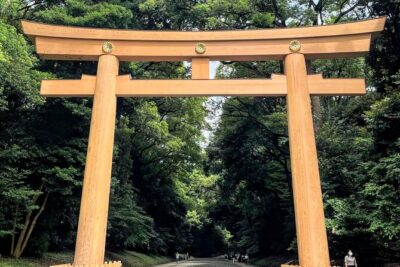

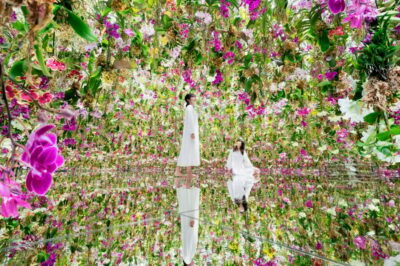
teamLab Planets TOKYO Digital Art Museum Entry Ticket
Read our review →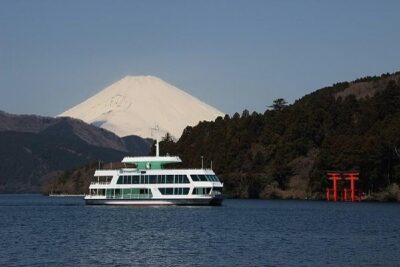
Mt Fuji & Hakone Cruise, Drum Show Bullet Train 1 Day from Tokyo
Read our review →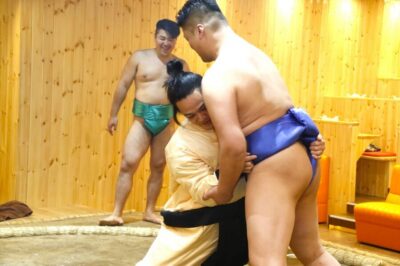
Sumo Show Experience with Chicken Hot Pot and a Photo
Read our review →
Shinjuku Food Tour (13 Dishes at 4 Local Eateries)
Read our review →