
Review · EVENING TOURS IN KYOTO
Experience Japan’s Traditional Culture Night Tour in Kyoto
Kyoto turns romantic at dusk. In a tight 4-hour block, you’ll catch classic arts at Gion Corner, then end with a candlelit tea ceremony and a Zen-style dinner in Gion. I like that the evening is built around easy-to-follow cultural highlights, not a long, rushed checklist. You get to see traditional performing arts (and in season, bunraku or noh), plus you walk under paper lanterns through preserved streets.
Two things I especially like: the Gion Corner program bundles multiple art forms into one sitting, and the stop at Ryokan Yoshi-Ima feels truly different from a standard restaurant dinner. The tour also keeps group size small, with a maximum of 24 people, so the night stays organized. One drawback to consider is logistics, since the tour starts at Good Nature Hotel Kyoto and the transfer to the first venue matters, especially during busy rush hour.
In This Review
- Key highlights you should know
- A 5:05 pm evening plan that fits Kyoto perfectly
- Gion Corner: traditional arts in a single, easy-to-follow show
- Hanamikoji Street and Gion Shimbashi: the lantern walk part you’ll remember
- Ryokan Yoshi-Ima and Kurenaitei: candlelit tea with a private feel
- Zen-style vegetarian dinner: Buddhist traditions, plus one ingredient caveat
- Price and what $175.60 actually covers
- Logistics that matter: meeting point, group size, and transfers
- Who this tour is best for, and who should rethink it
- Should you book this traditional culture night tour?
- FAQ
- What is the tour duration?
- What time does the tour start in Kyoto?
- Where is the meeting point?
- Where does the tour end?
- What is included in the price?
- Is dinner vegetarian?
- Can the tour accommodate Muslim-friendly, Indian thali, or allergy-friendly meals?
- What performances are shown at Gion Corner?
Key highlights you should know
- Gion Corner mixes multiple arts in one seated program, with season-based choices for bunraku or noh.
- A lantern-lit walk through Hanamikoji and Gion Shimbashi connects the show to real neighborhood atmosphere.
- Candlelight tea ceremony at Ryokan Yoshi-Ima (Kurenaitei) gives you a quieter, more intimate Kyoto moment.
- Zen-style vegetarian dinner follows Buddhist culinary traditions, with one ingredient note you should read first.
- Small-group evening tour (up to 24) helps the pacing feel controlled instead of chaotic.
A 5:05 pm evening plan that fits Kyoto perfectly
This tour is timed for Kyoto’s most comfortable hour, starting at 5:05 pm and running about 4 hours total. That means you see the transition from daylight to lantern light, when Gion feels like a different place than it does in the morning.
I also like the pacing on paper: you start with Gion Corner (about 50 minutes), then move on to a neighborhood walk (about 30 minutes), and finish with about 1.5 hours at Ryokan Yoshi-Ima for tea and dinner. There is a note that the itinerary time shown is shorter than the true total duration, because the remaining time is for travel and waiting for the Gion Corner performance. In real life, that waiting is normal for show-based experiences, so build in patience rather than expecting a nonstop parade.
More Evening Tours in Kyoto
- Night Walk in Gion: Kyoto’s Geisha District
★ 4.5 · 2,003 reviews - Kyoto Night Foodie Tour in Gion (9+ dishes + 6 Sake tastings)
★ 5.0 · 1,762 reviews - Kyoto: Gion Magical Night Walking Tour with Geisha Insights
★ 4.9 · 1,286 reviews
Gion Corner: traditional arts in a single, easy-to-follow show
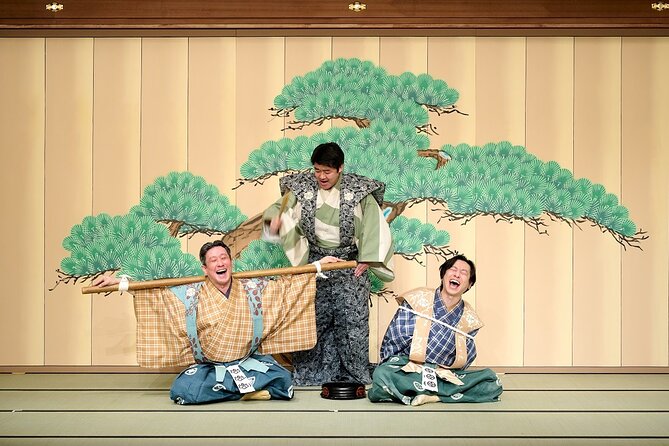
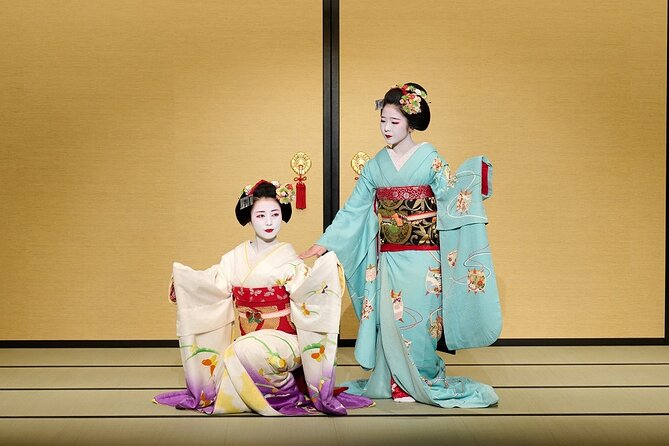
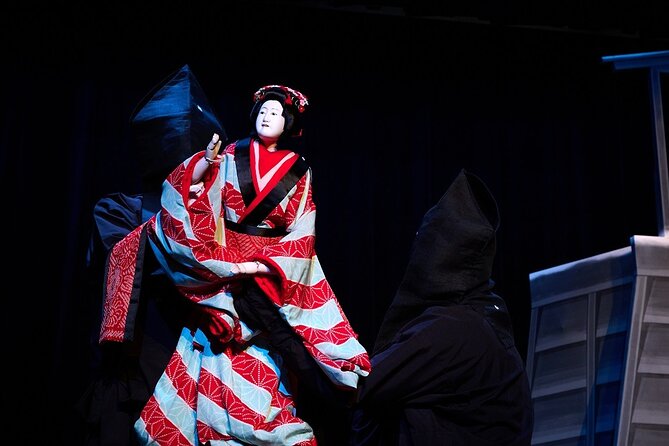
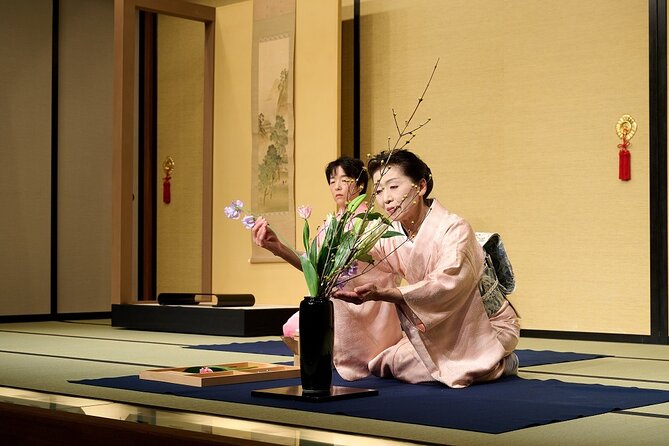
Your first real cultural hit is Gion Corner, where you settle in and watch a curated mix of Kyoto arts and performance traditions. The program includes things like a traditional Kyoto dance, tea ceremony demonstrations, flower arrangement, koto music, and court arts such as bugaku. You may also see kyogen (comic theatre), and depending on the season, either bunraku (Japanese puppet theatre) or a noh play.
Here’s the key detail for planning: the show changes by date.
- From Mar. 15 to Nov. 30, the program includes bunraku or noh, with the exact choice depending on the season.
- From Dec. 1 to Mar. 14, the program focuses on dance, tea, flower arrangement, koto music, bugaku, and kyogen, and the bunraku or noh segment is not listed for that winter program.
You’ll also get the chance to take a commemorative photo with a maiko during the Gion Corner experience. That’s the kind of small, memorable moment that makes this feel like more than just an evening walk.
The drawback? Because performances and segments can change, you should treat this as a guided overview of traditional arts, not a guarantee of one specific theatre format on your exact night. If you’re a hardcore fan of one specific art type, you’ll still enjoy the breadth, but you might want to double-check your dates for bunraku versus noh.
Hanamikoji Street and Gion Shimbashi: the lantern walk part you’ll remember
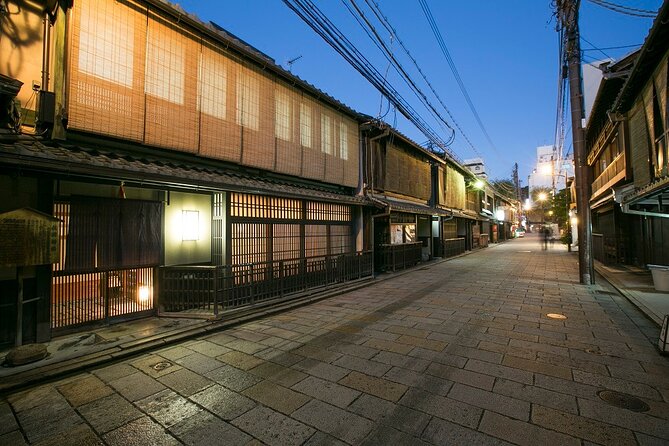
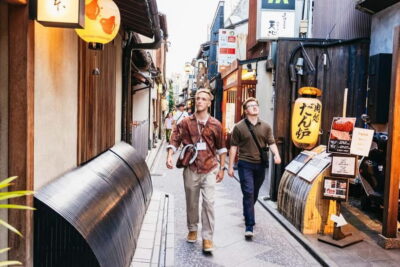
After the show, you shift from inside-theatre learning to outside-street atmosphere. You walk from Hanamikoji-dori toward Gion Shimbashi, which is designated as an Important Preservation District for Groups of Traditional Buildings.
This is where the evening starts to feel cinematic. The streets are the real thing, lined with older teahouse-style buildings, and you’re moving at a human pace rather than trying to fight crowds on your own. The tour time for this stop is about 30 minutes, so it’s not an all-night wandering session. It’s just enough to get your bearings and appreciate why people come back to Gion after dark.
One practical thought: Gion is a busy neighborhood. Even with a guide, you’ll want good walking shoes and an easy-going mindset. The value here is guidance, not speed.
Ryokan Yoshi-Ima and Kurenaitei: candlelit tea with a private feel
The most special “only-in-Kyoto” moment comes at Ryokan Yoshi-Ima, specifically in the tea ceremony room called Kurenaitei. You’re scheduled for an exclusive private evening tea ceremony with candlelight, which changes the vibe instantly compared with the theatre-style start.
Tea ceremonies in popular tourist areas can sometimes feel scripted and fast. This one is framed as a private evening experience, and it pairs nicely with the day’s earlier cultural arts program. You’re not just watching traditions, you’re doing one part of the ritual in a calm setting.
The tea stop is about 1 hour 30 minutes total for this final segment, and that block also includes dinner. The guide is there to interpret what you’re seeing and help you connect the ritual to the wider cultural context.
This is also where you get a little bonus value: the tour ends in central Gion after dinner, at Ryokan Yoshi-Ima. That means you’re not stuck back at the start point, and you can keep walking on your own while the street life is still settling into evening rhythm.
A few more Kyoto days to weigh up
- Kyoto Gion Night Walk & Geisha District Guided Tour
★ 5.0 · 786 reviews - Kyoto Ghost Tour: Dark Tales, Urban Legends, Bamboo Forest Night
★ 5.0 · 625 reviews - Kyoto Bar Hopping Night Tour
★ 5.0 · 613 reviews - Kyoto Night All-Inclusive Eats and Streets, Gion and Beyond
★ 4.7 · 601 reviews
Zen-style vegetarian dinner: Buddhist traditions, plus one ingredient caveat
Dinner at Ryokan Yoshi-Ima is described as a Zen-style vegetarian meal based on Buddhist culinary traditions. That’s a strong fit if you want something more thoughtful than a standard group meal.
However, there’s one ingredient detail you need to take seriously. While it’s vegetarian, the notes say that bonito stock is used in the tempura dipping sauce. There is a workaround: salt can be used instead of the tempura dipping sauce. So if you avoid fish-based flavors, ask about the salt option right away, and treat it as essential.
Also, the meal plan supports vegetarian participants, but it does not accept custom requests for Muslim-friendly meals, Indian thali meals, or allergy-friendly meals. That is important if you have dietary restrictions beyond vegetarian. If you are traveling with someone who needs strict allergy handling, you’ll want to plan another dinner option outside this tour rather than assume substitutions are possible.
On the positive side, this menu is not just “no meat.” It includes miso soup and rice, and the tempura uses tofu, yuba tofu skin, namafu (wheat gluten), and seasonal vegetables like eggplant, lotus root, ginger, and shiitake mushrooms. That mix gives you something genuinely Kyoto in feel, even if you’ve had vegetarian meals in other countries.
Price and what $175.60 actually covers
At $175.60 per person, this is not a budget evening tour. So the question is simple: does it stack up?
From what’s included, the price feels more reasonable than it first appears because several costly pieces are already paid for. The tour includes admission fees in the two main activity stops, plus the Japanese-style dinner and the interpreter fee for a National Government Licensed English guide. You’re also using a mobile ticket, which keeps friction low.
You should also note that the experience is fairly compact and scheduled, not a long self-guided day. You’re paying for convenience and cultural context, including time to wait for the performance and time to move between venues with a guide.
Where it might feel expensive is if you don’t care about multiple traditional art forms, or if you mainly wanted the lantern walk. The tour’s value is the pairing: show plus neighborhood atmosphere plus private tea plus dinner. Skip one of those pillars and the price becomes harder to justify.
Logistics that matter: meeting point, group size, and transfers
You meet at Good Nature Hotel Kyoto, located at 2-318 Inaricho, Shimogyo Ward, Kyoto 600-8022. The start time is 5:05 pm. Your tour ends at Ryokan Yoshi-Ima at 229 Nishinocho, Higashiyama Ward, Kyoto 605-0088.
The tour is near public transportation, which helps if you need to reposition yourself quickly. Group size is capped at 24 travelers, which is a sweet spot for a show and tea dinner combination.
One more logistics note that you’ll actually feel: the first stop involves getting from the meeting area to Gion Corner. The operator has been adjusting this, shifting from taxi to walking starting in December 2024. Even if the exact transport method you get depends on your date, you should expect a short transfer at the beginning and plan to arrive a few minutes early. Rush hour can turn “a few blocks” into a delay.
If you’re the kind of traveler who dislikes uncertainty, this is your reminder to keep your evening flexible and wear comfortable shoes.
Who this tour is best for, and who should rethink it
This is a good fit if you want an evening that feels cultural without requiring you to read a lot beforehand. You’ll like it if you enjoy traditional performing arts, appreciate guided interpretation, and want a dinner setting that’s tied to the larger Zen and Buddhist food context.
It’s also a smart choice if you prefer not to plan four separate reservations yourself: Gion Corner timing, tea ceremony availability, and dinner arrangements in one evening.
Who might not love it? If you need strict allergy guarantees or a non-fish vegetarian setup beyond the tempura sauce issue, the tour does not offer allergy-friendly meal requests. If you want to explore Gion entirely on your own schedule after dinner, you’ll still have time to walk, but the core experience is scheduled and structured.
Kids under 7 may not participate, and there are specific rules for participants under 18 that require written parental permission, with stricter requirements if the participant is under 15 or not yet enrolled in middle school. So it’s best for adult travelers and older teens.
Should you book this traditional culture night tour?
I think it’s worth booking if you want a high-quality “Kyoto evening package” that strings together four meaningful experiences: Gion Corner performances, a lantern-lit Gion walk, a candlelight tea ceremony at Kurenaitei, and a Zen-style vegetarian dinner in a ryokan setting.
Book it if you care about context. A licensed English guide is the difference between watching a show and understanding what you’re seeing, and the tea and dinner pairing makes the evening feel coherent.
I’d hesitate if your dietary needs are complex, especially allergy-related, or if the thought of waiting for a performance block will make you impatient. Also, if you only want one or two elements, consider building your own evening, since this package prices in the convenience of having it all arranged.
If you’re flexible, this is the kind of evening that makes Kyoto feel close, not just photographed. You’ll leave with memories that are sensory, warm, and quietly traditional, not just a checklist.
FAQ
What is the tour duration?
The tour is listed as about 4 hours total.
What time does the tour start in Kyoto?
The start time is 5:05 pm.
Where is the meeting point?
You meet at Good Nature Hotel Kyoto, 2-318 Inaricho, Shimogyo Ward, Kyoto 600-8022, Japan.
Where does the tour end?
After dinner, the tour ends at Ryokan Yoshi-Ima in central Gion, at 229 Nishinocho, Higashiyama Ward, Kyoto 605-0088, Japan.
What is included in the price?
Admission fees are included for the tour stops, plus the Japanese-style dinner and the interpreter fee for a National Government Licensed English guide.
Is dinner vegetarian?
The dinner is Buddhist vegetarian cuisine, and it includes miso soup and rice. However, bonito stock is used in the tempura dipping sauce, and salt can be used instead of the tempura dipping sauce.
Can the tour accommodate Muslim-friendly, Indian thali, or allergy-friendly meals?
No. Requests for Muslim-friendly meals, Indian thali meals, and allergy-friendly meals are not accepted.
What performances are shown at Gion Corner?
The program includes traditional arts such as Kyoto dance, tea ceremony, flower arrangement, koto music, bugaku, and kyogen. Depending on the season, either bunraku or noh is performed, and the exact lineup can change. You may also take a commemorative photo with a maiko.
Newly listed around Kyoto
- Zen Meditation for Life in Kyoto★ 5.0 · 10 reviews
- Kyoto: Zen Meditation at a Private Temple with a Monk★ 5.0 · 25 reviews
- Kyoto Private Customizable Day Tour with Guide and Vehicle★ 5.0 · 52 reviews
- Private Wagyu Beef Tour with a Local Guide★ 5.0 · 6 reviews
- Kyoto: Gion Geisha District & Sake-in-Hand Walking Tour★ 5.0 · 37 reviews
- Your Private Vacation Photography Session In Kyoto★ 5.0 · 110 reviews
- Private Guided Traditional Buddhist Cooking in Japan★ 5.0 · 16 reviews
- Private Pewter Sake Cup Experience with a Kyoto Artisan★ 5.0 · 31 reviews
Evening Tours in Kyoto, compared.

Kyoto Night Foodie Tour in Gion (9+ dishes + 6 Sake tastings)
Read our review →
Gion Magical Night Walking Tour with Geisha Insights
Read our review →
Kyoto Gion Night Walk & Geisha District Guided Tour
Read our review →
Kyoto Ghost Tour: Dark Tales, Urban Legends, Bamboo Forest Night
Read our review →
Kyoto Night All-Inclusive Eats and Streets, Gion and Beyond
Read our review →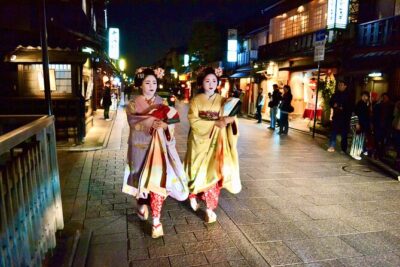
Browse the lists this tour appears in