
Review · SHRINE & TEMPLE VISITS
Kyoto: Zen Meditation at a Private Temple with a Monk
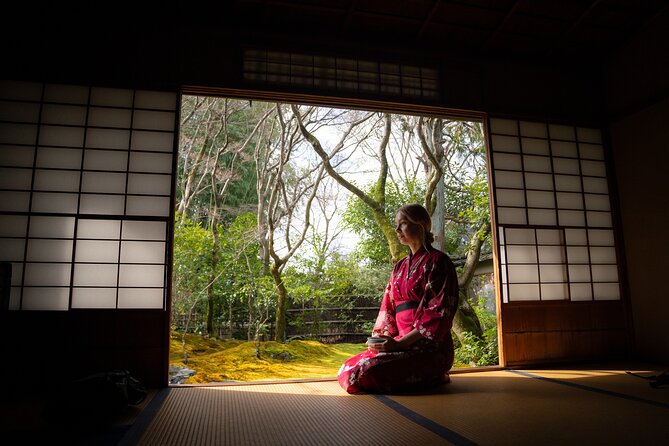
Quiet starts the moment you meet the monk. I love the private temple atmosphere and the chance to get Zen meditation tips straight from a monk, and I also like how personal the session feels thanks to the small group. One possible drawback is the format is short, about 90 minutes, so it is a great introduction, not a full retreat.
You start near Kodaiji Park and head to a temple that is usually closed to the public, which makes the whole thing feel more like a behind-the-scenes cultural moment. I also like that you get practical guidance, including how to sit upright correctly, plus translation support so the meaning lands, not just the motions.
After the meditation instruction and practice, you get a calm reset with matcha tea and traditional snacks. If you want a hands-on Zen experience in Kyoto without spending the whole day on it, this fits well.
In This Review
- Key Things That Make This Monk-Led Zen Session Special
- From Kodaiji Park to a Temple Most People Never See
- What Happens During the Zen Meditation (And What You’ll Actually Learn)
- The Ceremony Part: Why the Setting Feels Beautiful, Not Performative
- Matcha and Traditional Snacks: The Calm Landing After Practice
- Price and Value: What You’re Really Paying For
- Who This Experience Fits Best (And Who Might Skip It)
- Practical Tips Before You Go (So You Can Focus)
- Final Call: Should You Book This Kyoto Monk-Led Zen Session?
- FAQ
- How long is the Zen meditation session?
- Where do I meet for the tour?
- Where does the tour end?
- How large is the group?
- What’s included in the experience?
- Do I get a ticket on my phone?
- Is it suitable for most people?
- What is the cancellation policy?
Key Things That Make This Monk-Led Zen Session Special
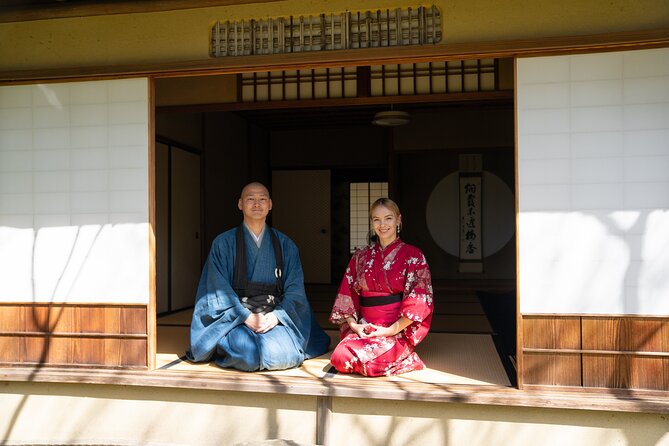
- Monk guidance that’s practical, including posture and core Zen principles
- A private Kyoto temple that is typically closed to the public
- Small-group size (up to 9) for a quieter pace and more attention
- Matcha tea and traditional snacks after you practice
- A mobile ticket so you can keep things simple the day of your visit
From Kodaiji Park to a Temple Most People Never See
Kyoto is full of temples you can reach easily. This one works differently because you are not just walking into a famous spot and moving on. You meet at Kodaiji Park (463-28 Shimokawarachō, Higashiyama Ward, Kyoto) and then you’re taken to a hidden temple nearby.
That one change matters. When a temple is usually closed to the public, it tends to feel less like a sightseeing stop and more like a real place with rules, rhythm, and quiet. The setting also helps you slow down fast, because you are not competing with crowds or rushing to “see the highlights.”
You’ll finish at Nene-no-michi in the same Shimokawarachō area. That end point is handy, because it keeps you in the Higashiyama zone where you can continue at your own pace after the session.
More Shrine & Temple Visits in Kyoto
- Kyoto: Fushimi Inari, Kinkakuji, Bamboo Grove 1 Day Bus Tour
★ 4.8 · 4,316 reviews - Kyoto: Tea Ceremony Ju-An at Jotokuji Temple
★ 4.9 · 3,207 reviews - Fushimi Inari Hidden Hiking Tour (Private Option Available)
★ 5.0 · 1,750 reviews
What Happens During the Zen Meditation (And What You’ll Actually Learn)
This is a monk-led, small-group Zen meditation session designed to be approachable. The flow is straightforward: you get an introduction to the core ideas of Zen, the monk shares insights about how to think about practice, and then you get time to try meditating in that calm setting.
What I like here is that this is not just “sit and hope.” In the feedback, people specifically call out that the teaching includes how to sit upright correctly, which is one of those topics that can feel vague in guidebooks but matters a lot when you try it. Good posture is not about looking formal. It is about giving your body a stable base so your mind can settle.
There is also emphasis on understanding the practice, not only performing it. One review mentioned a metaphor that helped connect the meditation practice to something you can grasp. That kind of explanation is exactly what you want, especially if you are new to Zen. It turns a quiet act into something you can carry home.
And because this is a guided experience, there is translation support. People highlight that the translation made the session educational, not just ceremonial. If you’re traveling without Japanese language skills, this is a big value point.
The Ceremony Part: Why the Setting Feels Beautiful, Not Performative
Zen in Kyoto can feel either deeply grounded or overly staged, depending on what you’re doing. This experience aims for the grounded side, because you are in a private temple environment and led by a monk in a format that feels like a real practice session.
The feedback calls out the ceremony as beautiful. You can think of this as the structure that holds the meditation. The order of events matters because it creates a container for focus. Even if you only understand parts of what is being said, the overall pacing tends to guide you toward stillness.
Also, small group size helps. With a maximum of 9 travelers, you are less likely to feel like you are interrupting a practice or being pulled along with a crowd. It is the difference between watching from the outside and participating in a calm, shared moment.
If you’re the kind of person who likes cultural experiences but hates feeling like you’re watching a show, this style usually works well.
Matcha and Traditional Snacks: The Calm Landing After Practice
A lot of meditation experiences stop when the sitting ends. Here, you get a quiet landing: matcha tea and traditional snacks after the guided portion.
That might sound like a small add-on, but it changes how the experience sticks with you. Tea is not just a snack break in Japan. It is a simple way to slow down after focused attention, so you don’t bounce immediately back into noise.
In the comments, people describe the overall experience as relaxing and educational, and the tea timing likely contributes. It gives you a moment to breathe, settle your body, and reflect without needing to rush off.
From a practical angle, you are also less likely to feel hungry right after. For a 90-minute session, a light food and drink component makes the whole thing feel complete.
More Shrine and Temple visits in Kyoto:
- Osaka/Kyoto:Kinkakuji,Arashiyama,FushimiInariShrine,NaraPark
★ 4.1 · 1,596 reviews - Kyoto/Osaka: Nara, Fushimi Inari Taisha, Arashiyama Bus Tour
★ 4.7 · 1,275 reviews - Arashiyama Bamboo, Temple, Monkeys, or Secret Sake Brewery
★ 4.8 · 886 reviews - Osaka/Kyoto: Arashiyama, Nara & Fushimi Inari Shrine w/Lunch
★ 4.4 · 754 reviews
Price and Value: What You’re Really Paying For
At $98.83 per person, this is not a free temple stroll. So the real question is: does the price match what you get?
Here’s what you’re paying for, and it adds up:
- Private access to a temple that’s typically closed to the public
- A monk-led session, including an introduction and guided practice
- Translation support, so the teaching stays understandable
- Matcha tea and traditional snacks, so you finish the experience comfortably
Time-wise, you’re looking at about 1 hour 30 minutes. That short duration can be a drawback if you want lots of time. But it can also be a strength if you want a meaningful cultural moment that doesn’t eat your entire day.
For the money, this experience feels most valuable when you want more than sightseeing. If your goal is to learn a skill, get cultural context, and leave with something you can try again, the cost makes more sense than it does for a casual temple visit.
Who This Experience Fits Best (And Who Might Skip It)
This tour suits you if:
- You want a hands-on introduction to Zen meditation, including posture and practical guidance
- You prefer a small-group cultural experience
- You like the idea of visiting a temple that is not normally open to everyone
- You want an experience that includes calm learning plus a tea-and-snack finish
You might skip it if:
- You expect a long, retreat-style meditation day
- You mostly want photos and landmark coverage, rather than instruction
- You need a flexible itinerary with many different stops, since this is centered around one temple setting
In other words, it is best for people who want quiet value, not tourist volume.
Practical Tips Before You Go (So You Can Focus)
You do not need special gear. What you do need is readiness for sitting. Because the session includes guidance on how to sit upright correctly, wear something you can sit in comfortably for the duration.
Since the meeting point is at Kodaiji Park and you finish at Nene-no-michi, plan your day so you can arrive on time and not be stressed. Even with a short tour length, the calm matters. If you show up rushed, you lose part of the point.
Also, bring a simple expectation: this is structured learning. The monk will explain core principles, then you will try meditating in the temple setting. If you come thinking only ceremony, you may miss the practical teaching. If you come thinking only technique, you may miss the cultural context.
Final Call: Should You Book This Kyoto Monk-Led Zen Session?
I think you should book it if you want a Zen meditation experience that is both approachable and genuinely cultural, with rare temple access and a teacher who guides your posture and understanding. The combination of monk-led instruction, translation support, and the calm finish with matcha and snacks makes it feel like more than a one-time photo stop.
Skip it if you want hours of meditation or a full day of temple hopping. This is short on purpose, and it works best when you treat it like an introduction you can carry forward.
If you’re in Kyoto and you want one experience that slows your day down fast, this one does the job.
FAQ
How long is the Zen meditation session?
The experience runs for about 1 hour 30 minutes.
Where do I meet for the tour?
You meet at Kodaiji Park, 463-28 Shimokawarachō, Higashiyama Ward, Kyoto.
Where does the tour end?
The tour ends in Nene-no-michi, Shimokawarachō, Higashiyama Ward, Kyoto.
How large is the group?
This activity has a maximum of 9 travelers, so it stays small-group friendly.
What’s included in the experience?
You get monk-led Zen meditation, tips on meditation principles, and you also enjoy matcha tea and traditional snacks.
Do I get a ticket on my phone?
Yes, you receive a mobile ticket.
Is it suitable for most people?
The tour says most travelers can participate.
What is the cancellation policy?
Free cancellation is available. You can cancel up to 24 hours in advance for a full refund, and cancellations within 24 hours do not receive a refund.
Newly listed around Kyoto
- Zen Meditation for Life in Kyoto★ 5.0 · 10 reviews
- Kyoto Private Customizable Day Tour with Guide and Vehicle★ 5.0 · 52 reviews
- Private Wagyu Beef Tour with a Local Guide★ 5.0 · 6 reviews
- Kyoto: Gion Geisha District & Sake-in-Hand Walking Tour★ 5.0 · 37 reviews
- Your Private Vacation Photography Session In Kyoto★ 5.0 · 110 reviews
- Private Guided Traditional Buddhist Cooking in Japan★ 5.0 · 16 reviews
- Private Pewter Sake Cup Experience with a Kyoto Artisan★ 5.0 · 31 reviews
- Private Cooking Class Udon in Kyoto Japan★ 5.0 · 23 reviews
Shrine & Temple Visits, compared.
Fushimi Inari, Kinkakuji, Bamboo Grove 1 Day Bus Tour
Read our review →

Meiji Shrine, Asakusa, Skytree Bus Tour and Cruise
Read our review →
Fushimi Inari Hidden Hiking Tour (Private Option Available)
Read our review →
Osaka/Kyoto:Kinkakuji,Arashiyama,FushimiInariShrine,NaraPark
Read our review →
Asakusa Walking Tour with Sensoji Temple Visit
Read our review →
Nikko: Kegon Falls, Lake Chuzenji & Toshogu Temple
Read our review →
Kamakura & Enoshima Day Trip including Temple Tickets
Read our review →Browse the lists this tour appears in