
Review · SAKE BREWERY VISITS
Private Pewter Sake Cup Experience with a Kyoto Artisan
Kyoto has a lot of crafts, but this one is hands-on. In a quiet studio run by Kanako at Craft Gallery SALUK, you’ll make a handmade pewter sake cup from scratch. You pick your tools, strike the metal, and end up with a real drink cup that feels great in the hand.
What I like most is the feeling of working closely with the process, not watching it from a distance. Kanako keeps things friendly and easy for first-timers, with clear guidance that lets you finish with something you’re genuinely proud of. I also love the chance to personalize the base with letters and numbers, so the cup becomes more than a generic souvenir.
One thing to consider: the workshop is outside central Kyoto. Reviews mention a scenic train ride and a calmer, more rural setting, so plan extra travel time and don’t book this as your last-minute rush activity.
In This Review
- Key things I think you’ll enjoy
- A Kyoto craft workshop that slows time
- What you make: the pewter sake cup, with real size and function
- Step-by-step: hammering patterns into pewter
- Personalization: letters, numbers, initials, and dates
- Rim shaping and the feel of a finished cup
- What you might sip afterward
- Getting there from Kyoto Station without stress
- Price and value: $144.96 for a real craft keepsake
- Who should book this (and who might not)
- The big win: this feels like artisan life, not a show
- Should you book this pewter sake cup workshop?
- FAQ
- How long is the Private Pewter Sake Cup Experience?
- What do I need to bring?
- Can I personalize the pewter cup?
- Where does the experience meet?
- Is this experience private?
- What is the cancellation policy?
Key things I think you’ll enjoy
- Hammer choice matters: different hammers create different surface patterns when you strike and rotate the pewter.
- No need to bring gear: materials are provided, including the blank cup and all tools used in the process.
- Personal stamping: add letters, numbers, initials, or a date to the base for a custom keepsake.
- Practical finishing: you shape the rim with hand tools, and safety polishing is handled by the craftsman.
- Made to drink from: the finished cup works for sake and also other drinks like whiskey and green tea.
- A calmer Kyoto setting: the studio is in a peaceful area beyond the downtown rush, which helps the class feel relaxed.
A Kyoto craft workshop that slows time
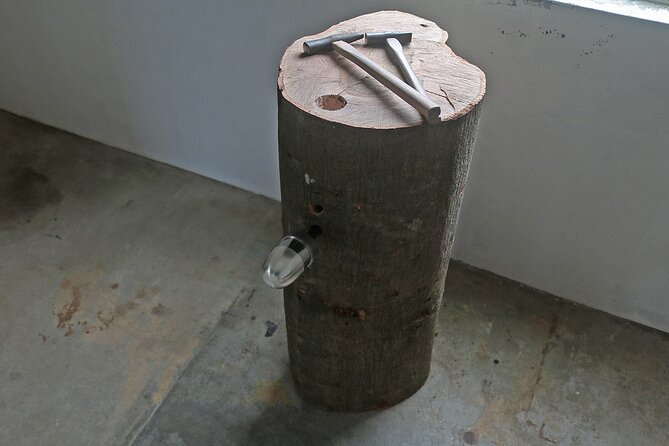
This experience is built around a simple idea: take metalwork that looks complicated on Instagram, then turn it into a calm, learnable skill. The setting helps. Your class happens at Craft Gallery SALUK, in Kyoto’s Sakyo Ward area, and the vibe is much quieter than central tourist zones.
Kanako, the artisan behind Saluk, runs the workshop like a host. That matters because pewter work is tactile. You need room to focus on your hands, your rhythm, and the small adjustments that make the cup look right. Multiple reviews describe the same theme: clear instruction, patience with beginners, and a welcoming atmosphere where you don’t feel rushed.
The tour is also listed as a private activity, meaning only your group participates. That makes a big difference if you want to ask questions, go a bit slower, or enjoy the class without feeling like you’re waiting behind strangers.
More Drinking Tours in Kyoto
- Kyoto Night Foodie Tour in Gion (9+ dishes + 6 Sake tastings)
★ 5.0 · 1,762 reviews - 3-Hour Kyoto Insider Sake Brewery Tour with Tastings & Pairings
★ 5.0 · 917 reviews - Arashiyama Bamboo, Temple, Monkeys, or Secret Sake Brewery
★ 4.8 · 886 reviews
What you make: the pewter sake cup, with real size and function
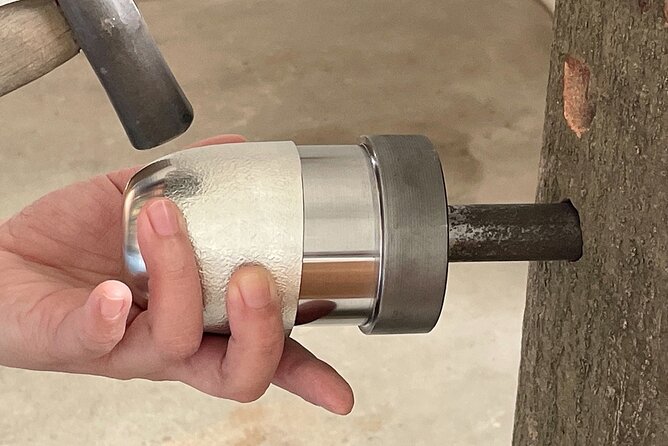
This is not a craft where you leave with a decorative object that sits in a cabinet. You make a drink cup meant for daily use, with real dimensions and capacity.
The finished pewter cup is about:
- 64 mm diameter
- 53 mm height
- about 90 ml capacity, or 115 ml when filled to the rim
That size is small enough to feel traditional, and practical enough to use for tastings or even casual drinks at home. And the cup is not just for sake. The experience notes it can also be used for whiskey, chilled green tea, and other occasions.
There’s also a practical angle to pewter itself. In responses connected to the workshop, Kanako explains that pewter can help keep water clean, which can help flowers last longer when used in ikebana arrangements. Even if you never plan to do ikebana, it’s a nice reminder that this is a material people chose for practical reasons, not just looks.
Step-by-step: hammering patterns into pewter
The main action is hammering. And yes, it feels good.
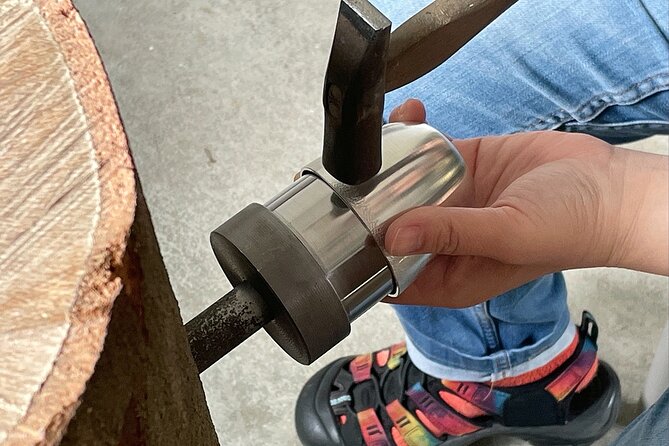
You start by choosing your favorite hammer from several types. Then you place the pewter cup on the anvil and begin striking while rotating the piece to build patterns across the surface. You can use just one hammer, or mix hammers to change texture and visual effect.
Here’s the important part for first-timers: the cup’s shape is designed to fit comfortably in your hand. That means your control improves fast. You aren’t fighting the object. You’re learning how metal responds to impact, and how your rotation changes the pattern spacing and flow.
Different hammers create different expressions. So even if two people choose the same general approach, they won’t end up with identical cups. That uniqueness is exactly why this makes a memorable souvenir. You aren’t buying a stamped-and-packaged item. You’re making a surface that only your hands produced.
You’ll also hear explanations along the way about what you’re seeing. Reviews repeatedly mention Kanako’s clear English instruction and her way of translating craft technique into something you can actually do. If you’ve only done crafts where you follow a template, this workshop is a more human kind of art. It rewards small adjustments.
Personalization: letters, numbers, initials, and dates
Once you’ve created the hammered pattern, you can personalize the cup with stamps. The workshop allows you to stamp letters, numbers, initials, or a date on the base.
This is a smart detail because it keeps the personality of your cup grounded and useful. If you stamp the base, the design stays neat, and the patterns on the body remain the visual star. It’s also easy to include a meaningful message without overcomplicating the metalwork.
In reviews, people describe leaving with custom souvenirs they couldn’t get anywhere else. That’s the point here. A pewter cup with your initials and a date becomes a story object, not just a decorative one.
More Food Tours in Kyoto
- Kyoto: Insider Sake Brewery Tour with Sake and Food Pairing
★ 5.0 · 704 reviews - Kyoto Sake Brewery & Tasting Walking Tour
★ 5.0 · 623 reviews - Kyoto Nishiki Market Food and Culture Walking Tour
★ 5.0 · 412 reviews - 1.5-Hour Kyoto Insider Sake Experience with 7 Tastings & Pairings
★ 5.0 · 297 reviews
Rim shaping and the feel of a finished cup
Hammering creates the texture and character, but the rim is what makes the cup comfortable to drink from.
After the main pattern work, you use a file to adjust the height and bevel the rim at an angle. This step is about feel. A good rim matters. It changes how the cup sits when you lift it, and it affects how pleasant it is when you actually use it.
Safety is handled thoughtfully too. For the final polishing, the workshop notes that the craftsman completes that step using a rotary machine. That means you get to do the shaping work yourself, while the last safety and finish details are completed by a professional.
When you finish, you’re not just holding a hammered piece of metal. You’re holding a functional cup you can use, with a rim meant for drinking.
What you might sip afterward
Many craft workshops end with the workbench clean-up. This one often ends with a small moment of use.
The experience notes that the finished cup can be enjoyed not only for sake, but also for whiskey, chilled green tea, and many other occasions. Reviews add a practical detail: people sometimes get to enjoy sake tasting from their cups, and if someone isn’t drinking sake, the host may offer alternatives like green tea.
So plan on at least a taste or a sip experience tied to the final product. Even if you don’t drink alcohol, green tea works well with a handmade cup, and it helps you feel the point of all that effort.
Getting there from Kyoto Station without stress
This workshop is not in the thick of downtown Kyoto. The address is:
Craft Gallery SALUK, 35-2 Shizuichinonakachō, Sakyo Ward, Kyoto, 601-1122, Japan
It’s also listed as near public transportation, which is reassuring. One review describes the ride as about an hour by scenic train from Kyoto Station and mentions the pleasant feel of traveling into a calmer area. Another review mentions the host’s help getting people back to a more convenient station, shortening the return journey to around 20 minutes.
So treat this as a half-day commitment, even though the class itself is about 2 hours 30 minutes. You’re not just attending a workshop. You’re going to a quieter part of Kyoto, and the travel time is part of why the experience feels different.
Practical tip: don’t schedule a tight connection right after the workshop. Build in buffer time so you can leave the studio without sprinting.
Price and value: $144.96 for a real craft keepsake
At $144.96 per person, you’re paying for more than a souvenir. This price includes instruction from a working artisan, tools and materials, and time devoted to making a functional, personalized object.
A few value drivers matter here:
- You’re making a durable pewter cup, not a paper craft.
- The process is hands-on and guided, with help when you make mistakes.
- Materials are provided, so you aren’t buying extra supplies.
- You’re creating something personal with stamping.
- The workshop access is described as exclusive, usually closed to the public.
Is it cheap? No. But it’s also not overpriced in the way that some tourist craft experiences can be. You’re paying for the skill and the fact that your work becomes a keepsake you’ll actually use. If you’re the type of traveler who likes to buy fewer items, but buy meaningful ones, this fits that style well.
Who should book this (and who might not)
This workshop is a great match if you:
- want a hands-on activity that feels relaxing, not hectic
- like Japanese crafts you can use, not just hang on a wall
- enjoy small-group learning and personal attention
- want a souvenir with initials, numbers, or a date
It may be less ideal if you:
- hate travel outside downtown Kyoto and prefer to stay central
- want something that is purely sightseeing with minimal work
- have very limited mobility or coordination, since hammering and filing are hands-on tasks (the experience says most travelers can participate, but this is still a working metal craft)
Also, if you dislike noise, hammering might not be your thing. Pewter metalwork is physical and loud enough to be memorable. People who enjoy that tactile energy tend to rate the experience extremely high.
The big win: this feels like artisan life, not a show
What keeps showing up in the way people describe the workshop is not just the final cup. It’s how Kanako teaches it.
Multiple reviews mention:
- clear instruction in English
- patience with beginners
- a calm studio away from downtown crowd energy
- a host who welcomes you with care, sometimes with tea and snacks
- the feeling that your mistakes become part of the craft journey
That combination is why the class works as a travel memory. You leave with an object, yes. But you also leave with a story about learning technique, choosing hammers, shaping a rim, and putting your own mark on the bottom.
Should you book this pewter sake cup workshop?
If your trip has space for one meaningful activity and you want a souvenir that’s both personal and functional, I’d book it. The value comes from materials included, real instruction from an artisan, and the chance to stamp your own letters and numbers. It’s also a strong option if you want a break from temple crowds and shopping loops.
If you only want low-effort sightseeing, or you hate commuting out of the center, you might prefer another Kyoto activity that stays closer to your hotel. But if you’re open to a hands-on craft class in a peaceful part of Kyoto, this is one of the most satisfying things you can do for the money.
FAQ
How long is the Private Pewter Sake Cup Experience?
It lasts about 2 hours 30 minutes.
What do I need to bring?
You do not need to bring anything. Materials are provided.
Can I personalize the pewter cup?
Yes. You can stamp letters, numbers, initials, or a date on the base.
Where does the experience meet?
The start location is Craft Gallery SALUK, 35-2 Shizuichinonakachō, Sakyo Ward, Kyoto, 601-1122, Japan.
Is this experience private?
Yes. It is a private tour or activity, and only your group will participate.
What is the cancellation policy?
You can cancel for a full refund up to 24 hours before the experience’s start time. If you cancel less than 24 hours before, the amount paid is not refunded.
More Food & Drink in Kyoto
- Kyoto: Gion & Pontocho Food Tour with 13 Dishes
★ 4.9 · 235 reviews - Kyoto: Local Food Tasting Tour at the Nishiki Market
★ 4.7 · 135 reviews - The Award-Winning PRIVATE Food Tour of Kyoto: The 10 Tastings
★ 4.5 · 100 reviews - Kyoto Food Tour of 10 Tastings with Wagyu, Mochi & More Surprises
★ 5.0 · 85 reviews
More Sake Tastings in Kyoto
- Kyoto: Insider Sake Experience with 7 Tastings and Snacks
★ 5.0 · 266 reviews - Private Tea Ceremony and Sake Tasting in Kyoto Samurai House
★ 5.0 · 163 reviews - Kyoto: Sake Brewery and Tasting Tour in Fushimi
★ 4.8 · 55 reviews - Advanced Kyoto Insider Sake Tasting Experience
★ 5.0 · 44 reviews
Newly listed around Kyoto
- Zen Meditation for Life in Kyoto★ 5.0 · 10 reviews
- Kyoto: Zen Meditation at a Private Temple with a Monk★ 5.0 · 25 reviews
- Kyoto Private Customizable Day Tour with Guide and Vehicle★ 5.0 · 52 reviews
- Your Private Vacation Photography Session In Kyoto★ 5.0 · 110 reviews
- Private Wagyu Beef Tour with a Local Guide★ 5.0 · 6 reviews
- Kyoto: Gion Geisha District & Sake-in-Hand Walking Tour★ 5.0 · 37 reviews
- Private Guided Traditional Buddhist Cooking in Japan★ 5.0 · 16 reviews
- Private Cooking Class Udon in Kyoto Japan★ 5.0 · 23 reviews
Sake Brewery Visits, compared.

Kyoto Night Foodie Tour in Gion (9+ dishes + 6 Sake tastings)
Read our review →
1-Day Snow Monkeys, Zenko-ji Temple & Sake in Nagano
Read our review →
3-Hour Kyoto Insider Sake Brewery Tour with Tastings & Pairings
Read our review →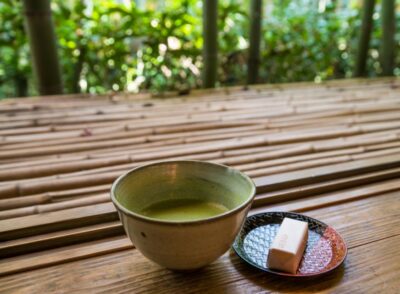
Arashiyama Bamboo, Temple, Monkeys, or Secret Sake Brewery
Read our review →
Nagano: Snow Monkeys, Zenkoji Temple & Sake Day Trip
Read our review →
Insider Sake Brewery Tour with Sake and Food Pairing
Read our review →

1.5-Hour Kyoto Insider Sake Experience with 7 Tastings & Pairings
Read our review →Browse the lists this tour appears in