
Review · SUMO STABLE VISITS
Experience the Sumo World in Tokyo
Sumo, up close, with real access.
What I love most is the behind-the-scenes stable practice you rarely see as a regular visitor, plus the chance to get involved at the end, including photos after training. The main drawback to consider is timing, this is a very early start at 7:45 AM, and being late can cut into the session.
You’ll meet your guide at Ueno Station and then ride local trains to the stable area, with the tour running about 4 hours total. Lunch is included, and there are vegetarian options if you give notice at least 3 days ahead.
This tour is a strong fit if you want something more authentic than sumo posters and souvenir shops. Just be ready for a morning that’s part sightseeing, part sports training, and part etiquette lesson.
In This Review
- Key things to know before you go
- Why This Asahiyama Sumo Practice Feels Special
- The 7:45 AM Ueno Station Start, Plus Train Legs You Can Actually Plan
- At the Asahiyama Beya Stable: What the 2-Hour Training Visit Looks Like
- Chanko Nabe Lunch: Real Sumo Food, With Vegetarian Options
- The Hands-On Part: Trying to Push a Rikishi (and Learning How It Works)
- Guides, Explanations, and the Train-Ride Bonus
- Price and Value: What $105.71 Covers, and What You Still Pay
- Practical Considerations That Can Make or Break Your Morning
- Who Should Book This Sumo World Tour?
- Should You Book This Sumo World Experience in Tokyo?
- FAQ
- What time does the tour start and where do I meet?
- How long is the experience?
- Does lunch come with the tour?
- Are train tickets included in the price?
- Is admission to the sumo training stable included?
- Can I take photos during the training visit?
- Is this tour okay for children and families?
- Is the tour group size limited?
Key things to know before you go
- Exclusive stable access for a front-row view of morning practice
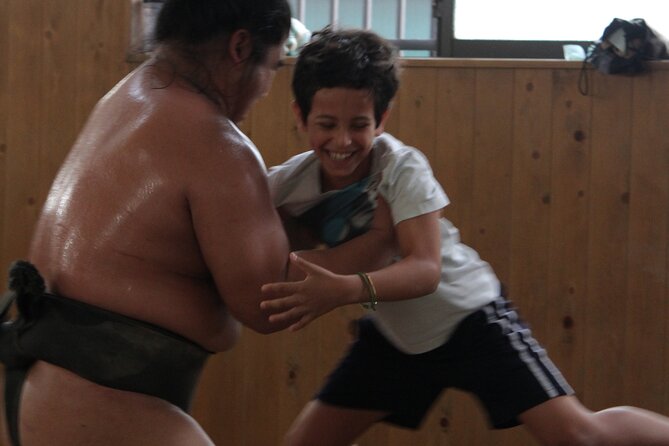
- Hands-on interaction near the end, including trying to push and test strength
- Chanko nabe lunch included, with vegetarian service available by advance notice
- Early meetup at Ueno Station (7:45 AM) and a train-to-stable schedule
- Small group size, max 26 people, which helps keep it friendly and orderly
- Photography is allowed at the end of the training session
Why This Asahiyama Sumo Practice Feels Special
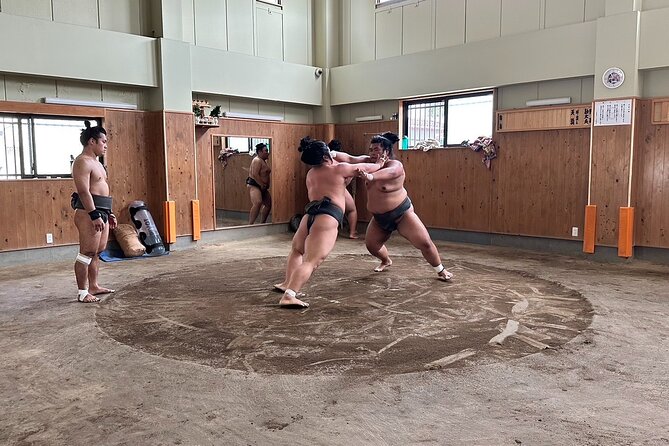
If you like sports, this will hit different. Sumo in Tokyo can be a little distant unless you’re watching a tournament or catching a highlight reel. Here, the point is proximity to the training itself, not just a performance.
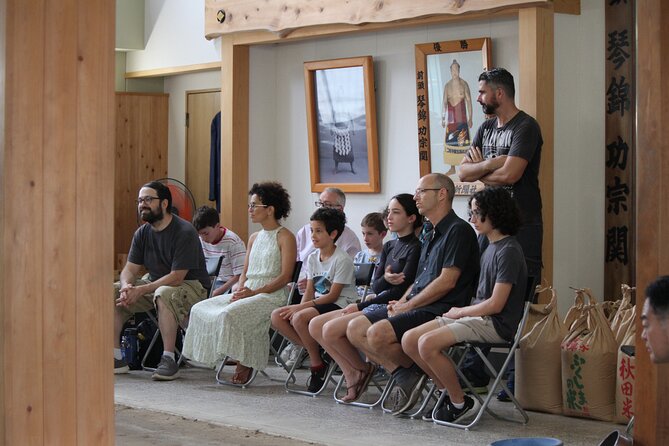
You get a front-row seat style setup, watching rikishi practice from chairs right next to the action. Then you get a structured moment to interact at the end and take photos. That combo matters because you go home with two things: understanding and a memory you can actually picture.
It also feels authentic in the way the day is arranged. You’re not just standing around listening. You’re moving through the morning like the people who live nearby do, riding trains out from central Tokyo and arriving at a stable where routine is the star.
Compare these Sumo Stable visits in Tokyo:
- Tokyo: Sumo Show Experience with Chicken Hot Pot and a Photo
★ 4.8 · 6,678 reviews - Tokyo: Sumo Show and Dining Experience
★ 4.8 · 2,742 reviews - the SUMO show
★ 5.0 · 1,960 reviews
The 7:45 AM Ueno Station Start, Plus Train Legs You Can Actually Plan
The day begins at 7:45 AM at Ueno Station. The meeting point is at 7 Chome-1 Ueno, Taito City, Tokyo 110-0005. From there, you’ll take JR trains as the tour proceeds.
Here’s the simple rhythm of the itinerary:
- Short ride to Matsudo Station (about 19 minutes)
- Then another ride to Kunugiyama Station (about 15 minutes)
- Then you head to the stable area for the main training session
A practical note: the JR round trip isn’t included. The tour lists an estimated total of ¥1060 (about $7) for round trip trains. If you’re trying to budget tightly, add that in. The good part is that the route is straightforward and built into the experience, so you aren’t left guessing once you’ve met your guide.
Because you start early, plan your day around getting to Ueno Station calmly. This is not the kind of tour where you can stroll in late and hope everything works out. One traveler had a tough time because the stable schedule moved faster than expected, and it affected how much practice they saw.
At the Asahiyama Beya Stable: What the 2-Hour Training Visit Looks Like
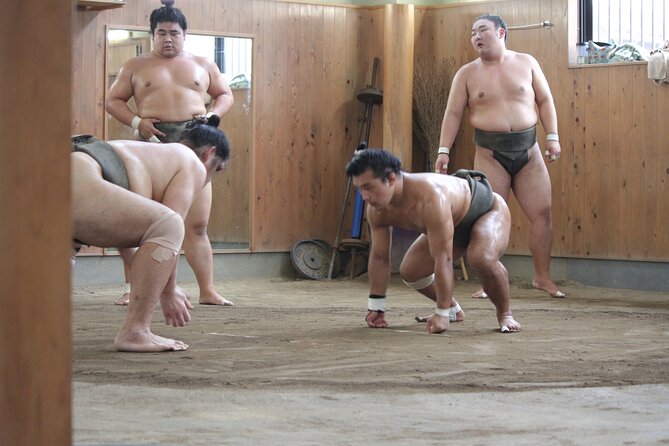
The heart of the tour is the time at 朝日山部屋 (Asahiyama beya). You get about 2 hours here, with the stable practice as the main show.
From what you can expect in practice, the session includes:
- Up-close training observation, comfortably seated on chairs
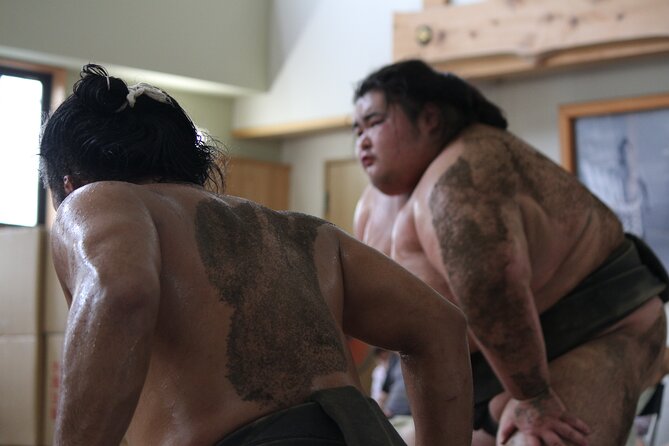
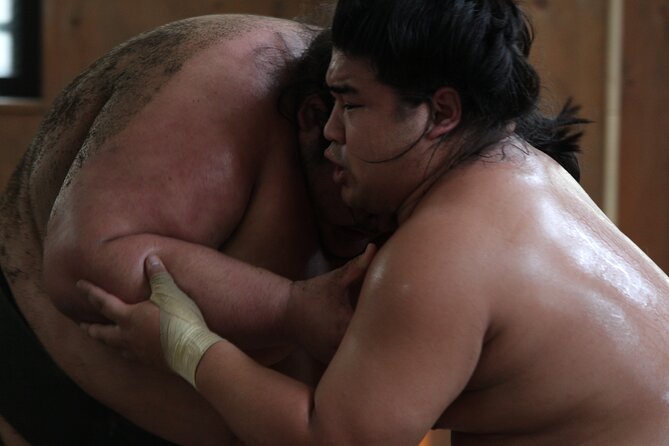
- Intense moments where you see technique and strength in real time
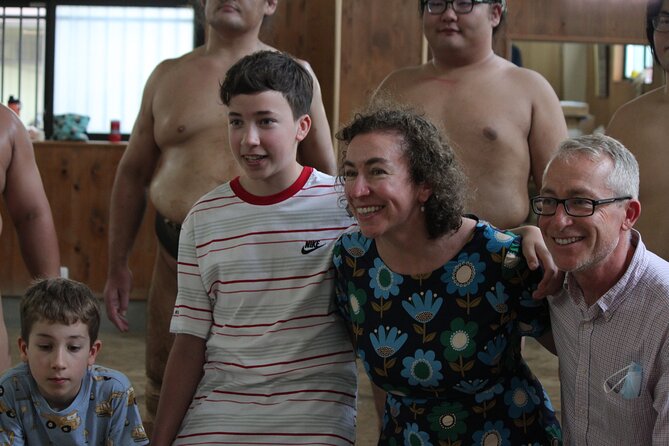
- A photo moment at the end
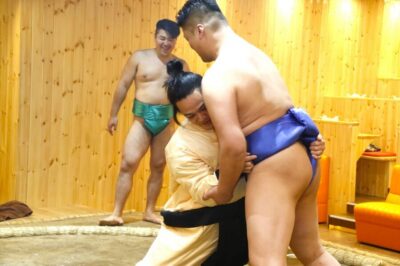
- Interactive participation where you can try sumo wrestling firsthand against the wrestlers
Why those details matter: seeing the training from chairs next to the practice area makes a difference. The movements are fast, and the power is obvious even without understanding every term. You notice footwork, balance, and how much effort goes into what looks simple.
Also, photography at the end is a big help for capturing the day. You’re not constantly worrying about getting shots mid-training. You focus on watching, then you capture the moment when it works best.
Chanko Nabe Lunch: Real Sumo Food, With Vegetarian Options
Lunch is included, and this is one of the reasons the tour feels like more than a quick photo stop. Sumo athletes eat chanko nabe, a traditional hot dish meant to fuel training.
You’ll get lunch after the training, and vegetarian service is available if you notify the operator at least 3 days in advance. That advance notice is important because the tour specifically calls out vegetarian options with that timeline.
In one family-style account, the meal described was a light broth with vegetables and chicken. Your exact plate may vary, but the takeaway is consistent: you’re not getting a generic “tour lunch.” You’re getting sumo food culture as part of the day.
A few more Tokyo days to weigh up
- Mt Fuji and Hakone 1-Day Bus Tour Return by Bullet Train
★ 5.0 · 26,383 reviews - 1-Day Tokyo Bus Tour
★ 5.0 · 14,250 reviews - Tokyo: TOKYO SKYTREE® Admission ticket
★ 4.5 · 11,192 reviews - Tokyo: teamLab Planets TOKYO Digital Art Museum Entry Ticket
★ 4.6 · 9,779 reviews
The Hands-On Part: Trying to Push a Rikishi (and Learning How It Works)
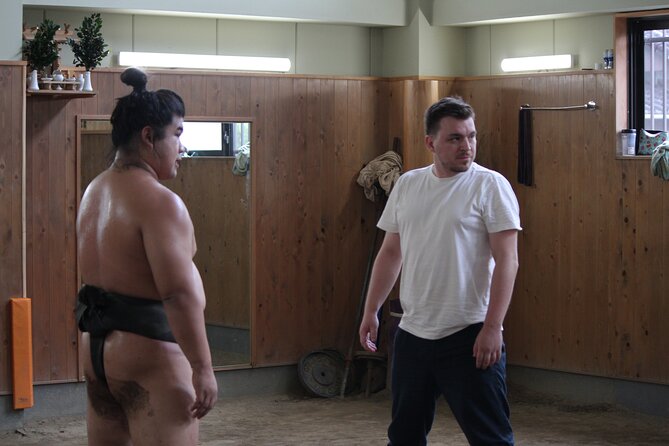
This is the part I think most people remember, even if they don’t plan to. The tour includes interactive participation, and multiple guides and multiple groups describe the interaction as both fun and surprisingly instructive.
You can try pushing and moving wrestlers during a dedicated end-of-session moment. One person even joked about winning the push, with the implication that the wrestlers can be playful and accommodating. Another family mentioned kids trying the interaction too, with the experience staying friendly.
Just keep expectations grounded:
- These are athletes with real technique and strength.
- Your job is to participate, listen, and follow the guide’s direction.
- You might not be the one who wins, but you’ll understand quickly why sumo is more than size.
This is also where the day’s cultural lesson clicks. Sumo may look intimidating, but the experience you’re offered is structured around hospitality. You see the athletes as people, not just competitors.
Guides, Explanations, and the Train-Ride Bonus
A big reason this tour earns a strong rating is how the guide connects the stable visit to the bigger picture. Guides named in the experience include Ryoko, Haruko, Haru, Tomer, Tammy, and Yassmine. They each help make sumo feel understandable, not mysterious.
What the guides do during the day:
- Explain sumo history and culture
- Clarify rules and common terms
- Translate or interpret what’s happening at the stable when needed
- Help you connect what you see in training to what you hear
One small but useful perk: guides often help with navigating trains after the tour. If you plan to continue exploring the same day, that kind of help saves time and stress.
If you’re a first-timer to sumo, that guide context helps you watch with purpose. You notice differences between drills and you start picking up what matters in bouts, even though you’re seeing practice rather than tournament competition.
Price and Value: What $105.71 Covers, and What You Still Pay
The listed price is $105.71 per person for a half-day experience, about 4 hours, with a mobile ticket. Value comes from what’s included versus what isn’t.
Included:
- Lunch (with vegetarian service available with notice)
- Sumo wrestling experience
- Seating for comfortable viewing of practice
- Photography allowed at the end
Not included:
- Round trip JR train cost, estimated total ¥1060 (about $7)
When I think about value for Tokyo tours, I look for the “real access” factor. This tour’s access is the big piece. Stable visits are not common for casual sightseers, and you’re also getting a structured interaction plus lunch. Even if you add the train cost, you’re still paying for a full morning built around an experience you can’t easily recreate on your own.
One more practical point: this tour is commonly booked about 23 days in advance on average. If you travel in peak seasons or on weekends, book earlier rather than waiting for last-minute convenience.
Practical Considerations That Can Make or Break Your Morning
This tour is smooth when everything clicks, but mornings are fragile. Two things matter most.
1) Be early, not just on time.
The start is 7:45 AM at Ueno Station, and you’ll ride trains out to the stable. If anything delays you, it can compress the time you spend watching practice.
2) Communication tools matter.
One lower-rated experience described stress due to missing messages because the traveler did not use WhatsApp and did not receive updates about where to meet and the stable location. The operator response indicates they used WhatsApp for updates for that day. So, if WhatsApp is part of their communication flow, make sure you’re reachable on whatever channel the operator uses.
Finally, the tour notes that the itinerary may undergo minor changes due to weather, transportation, or scheduling reasons. That’s normal for any morning schedule outside the city center, so keep a little flexibility in your plan.
Who Should Book This Sumo World Tour?
This is best for you if:
- You’re interested in Japanese sport and culture, not just a quick attraction
- You want a morning experience that feels local and real
- You like hands-on participation, even if it’s mostly playful pushing and photos
- You travel with teens or kids, since the experience is described as fun for families and suitable for all ages in at least one account
- You’re an early-riser type who doesn’t mind a train ride before breakfast
You might think twice if:
- You hate early mornings
- Your schedule is too tight to handle train timing
- You rely on communication apps that are not the ones the operator might use for updates
Should You Book This Sumo World Experience in Tokyo?
I’d recommend booking if you want a sumo morning that actually shows you how the sport lives day to day. The combination of stable practice viewing, a chance to try sumo interaction, and chanko nabe lunch is what makes it feel worth the money.
Do book with a plan:
- Arrive at Ueno Station early enough to feel relaxed.
- If you need vegetarian lunch, make sure you give the advance notice they require, at least 3 days ahead.
- Confirm you can receive updates on the communication method the operator uses, especially if you want to avoid the kind of stress that comes from missing last-minute details.
If you want a Tokyo experience that feels like you stepped into the routine of a real stable, this is one of the stronger bets.
FAQ
What time does the tour start and where do I meet?
The tour starts at 7:45 AM at Ueno Station (7 Chome-1 Ueno, Taito City, Tokyo 110-0005).
How long is the experience?
It runs about 4 hours (approximately).
Does lunch come with the tour?
Yes. Lunch is included, and vegetarian options are available if you notify the operator at least 3 days in advance.
Are train tickets included in the price?
No. Round trip JR train cost is estimated at ¥1060 (about $7) and is not included.
Is admission to the sumo training stable included?
Yes. The stable practice portion lists admission ticket included.
Can I take photos during the training visit?
Yes. Photography is allowed at the end of the session.
Is this tour okay for children and families?
Most travelers can participate, and at least one family account describes it as suitable for all ages, including kids under 15.
Is the tour group size limited?
Yes. The experience has a maximum of 26 travelers.
Newly listed around Tokyo
- Tokyo JDM Experience: Daikoku PA & Fast & Furious Night Drive★ 5.0 · 40 reviews
- Fast & Furious Tokyo Drift 3 (Kaila Yu-SP) : Experience Ride JDM★ 4.5 · 189 reviews
- Flavors of Japan Food Tour in Tokyo★ 5.0 · 39 reviews
- Tsukiji Fish Market Food Tour: Seafood, Street Food & Hidden Gems★ 5.0 · 85 reviews
- Akihabara: Go-Kart Experience with Local Guide in Tokyo★ 4.5 · 57 reviews
- Tokyo Bike Tour: Shibuya & Hidden Tokyo★ 5.0 · 53 reviews
- Explore Unique Tokyo Streets / Learn with a Pro Photographer★ 5.0 · 19 reviews
- Tokyo City 1-Day Private Tour with Bilingual Driver★ 4.5 · 78 reviews
Sumo Stable Visits, compared.
Sumo Show Experience with Chicken Hot Pot and a Photo
Read our review →

Tokyo Sumo Entertainment Show with Chicken Hot Pot and Photo
Read our review →
Tokyo Grand Sumo Tournament Viewing Tour with Tickets
Read our review →
Sumo Show & Experience w/ Optional Kimono & Hot Pot
Read our review →Browse the lists this tour appears in