
Review · BIKE TOURS IN KYOTO
GEMS of WEST KYOTO on a BIKE!
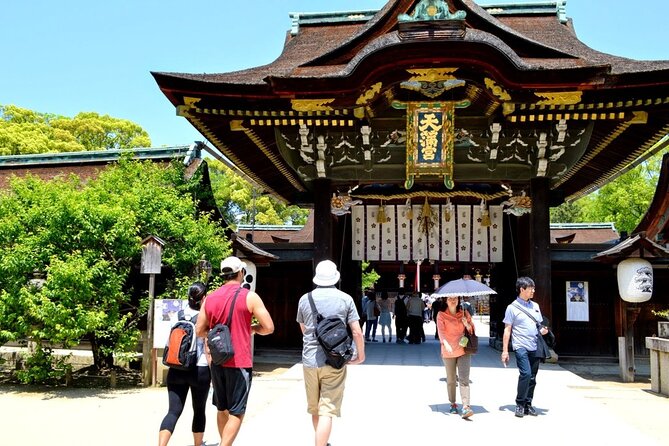
Four hours on two wheels, Kyoto by bike. You glide between three major sights with helpful cultural context and time to actually look, not just pose. I especially like how the route ends in calm at Ryoanji, after seeing the shrine and the gold-leaf shine of Kinkakuji.
Two things make this tour a good use of your day. First, you get a real guide, not just a map, so places like Kitano Tenmangu land with meaning. Second, you spend real time at each stop, with admission tickets included for the first three sites. The only catch: you’ll be cycling, so you’ll want moderate physical fitness and you should be comfortable with an easy pace for about an hour at a time.
I also like that the group stays small, up to 8 people, which keeps the ride smooth and the questions coming. And because the bike rental is standard and included, you can travel lighter and worry less about logistics. If you’re hoping for a mostly walking tour with zero bike time, this may feel a bit active.
In This Review
- Key highlights to know before you go
- Why West Kyoto by bike feels faster (and calmer)
- The 1:00 pm start point that makes meeting easy
- Kitano Tenmangu Shrine: exams, exile, and real Shinto atmosphere
- Kinkakuji Golden Pavilion: why gold leaf hits differently in person
- Ryoanji’s rock-and-sand garden: Zen quiet you can actually feel
- The last hour cycling through everyday west Kyoto streets
- Price and what $106.52 buys you (and what it does not)
- Guides you might meet, and how their style changes the day
- Who this bike tour suits best (and who should skip it)
- Should you book this tour?
- FAQ
- How long is the tour?
- What are the main stops on the tour?
- Are admission tickets included?
- Is bike rental included?
- Where does the tour start and where does it end?
- What time does the tour begin?
- Is lunch included?
- What is the cancellation policy for a full refund?
- What happens if weather is bad or the minimum number of travelers is not met?
Key highlights to know before you go
- Kitano Tenmangu Shrine connects Kyoto’s Shinto traditions to school exam prayers and stories of exile
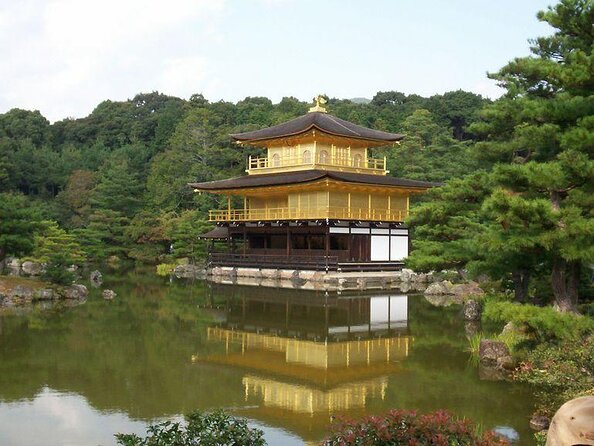
- Kinkakuji Golden Pavilion gives you gold-leaf views plus garden time you can pace at your own speed
- Ryoanji’s rock-and-sand garden is perfect for slow, quiet looking from the veranda
- A local west Kyoto ride adds everyday street life beyond the headline monuments
- Small group size (max 8) helps keep the tour personal and manageable on the road
- Admission tickets included for the first three sights means fewer extras to track
Why West Kyoto by bike feels faster (and calmer)
A bike tour in Kyoto is one of those rare plans that can feel both efficient and relaxed. You are moving, but you are also stopping often enough to soak up the details. On foot, you can burn time weaving through crowds, then lose your focus once you finally reach the landmark. On a bike, you keep your momentum, and the guide helps you make sense of what you are seeing.
This route in particular works well because it mixes three very different vibes in a short span. You start with a shrine tied to prayer and learning. You move to Kinkakuji, Kyoto at its most iconic, shiny, and photogenic. Then you land at Ryoanji, where the point is not seeing everything, it’s seeing less, and noticing more.
You’ll also like the way the tour balances structure and breathing room. You’re not rushing like a checklist. Each stop runs about an hour, which is enough time to explore at a human pace, without turning the experience into a sprint.
More Bike Tours in Kyoto
- Hidden Kyoto E-Biking tour
★ 5.0 · 1,843 reviews - Bike Tour Exploring North Kyoto plus Lunch
★ 5.0 · 1,087 reviews - Arashiyama Bamboo Forest & Hidden Gems Bike Tour (Early Bird)
★ 5.0 · 613 reviews
The 1:00 pm start point that makes meeting easy
You meet at McDonald’s – Higashiyama Sanjo in Kyoto’s Higashiyama area (Kyoto, Japan, 605-0012). It’s a practical choice, because it gives you a clear, easy-to-find landmark to anchor on. The tour starts at 1:00 pm, and it runs about 4 hours total, ending back at the meeting point.
Because it’s near public transportation, you can keep your morning flexible. If your plans the day before run late, you still have a solid window to regroup before the ride. You also get a mobile ticket, which saves time when you arrive.
The tour is designed for people with moderate physical fitness. That means you do not need to be an athlete, but you should be comfortable riding and handling a couple of steady stretches. If you have knee or stamina issues, it’s worth thinking about whether an hour of cycling on city streets will be comfortable for you.
Kitano Tenmangu Shrine: exams, exile, and real Shinto atmosphere
Kitano Tenmangu is the kind of place that rewards slowing down. You visit it as your first stop, and it’s built to appease the spirit of an exiled scholar. That detail matters, because it changes how you read the shrine. You’re not just looking at pretty buildings, you’re witnessing a long-running tradition of fear, respect, and prayer that became part of Kyoto’s education culture.
One of the most practical ways this shrine feels alive is the exam connection. Students from all over Japan come here to pray before national examinations. Even if you’re not there for exams, you can feel the focus in the atmosphere. It’s a different kind of sightseeing than the usual temple circuit.
What I’d watch for while you’re there: look for small signs of visitors’ intentions. Shrine visits in Japan often have a purpose, and at Kitano Tenmangu that purpose is famously tied to school goals. Give yourself the full hour. If you try to power through, you’ll miss the quiet meaning that makes this stop more than a photo break.
Kinkakuji Golden Pavilion: why gold leaf hits differently in person
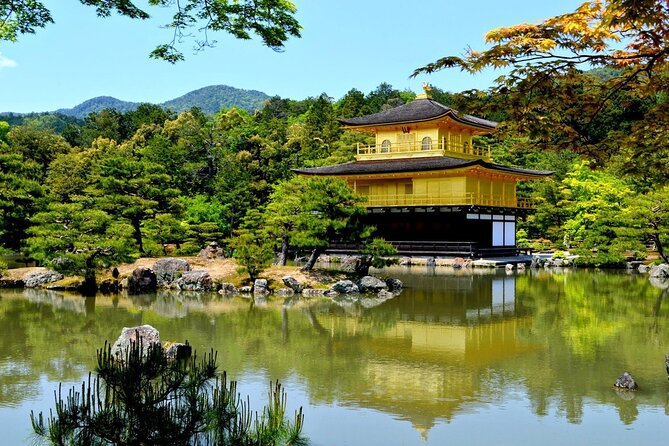
Then the tour shifts gears to Kinkakuji, the Golden Pavilion. This isn’t just a temple that happens to look nice. The site was once a villa of a shogun from the 14th century, and that background explains why the place feels crafted like a residence as much as a sacred space.
The nickname comes from the gold leaf that covers two floors. Up close, gold leaf is not just bright. It has texture and catches light in a way that can look different minute to minute. If the sky is cooperating, you’ll also notice the strong visual connection to the surrounding pond, including the classic reflection effect.
The garden stroll is part of the value here. Your hour at Kinkakuji is long enough to walk, stop, and re-check the view rather than rushing straight through. One practical tip: wear comfortable shoes and plan to pause. This is the kind of place where standing still is the winning move.
Potential drawback to consider: this is one of Kyoto’s headline sights, so the area can be busy. A guide helps you move smartly, but you still need to expect some crowd energy. If you hate crowds, go with the mindset that you are here for the special sightline and the atmosphere, not for solitude.
A few more Kyoto days to weigh up
- 5 Top Highlights of Kyoto Full Day Bike Tour (E-bike option)
★ 5.0 · 511 reviews - Full Day Biking Tour Exploring the Best of Kyoto
★ 5.0 · 498 reviews - Kyoto: Memory Kyoto E-Bike Tour
★ 4.8 · 297 reviews - E-Bike Tours of the highlights of Kyoto!!!
★ 5.0 · 291 reviews
Ryoanji’s rock-and-sand garden: Zen quiet you can actually feel
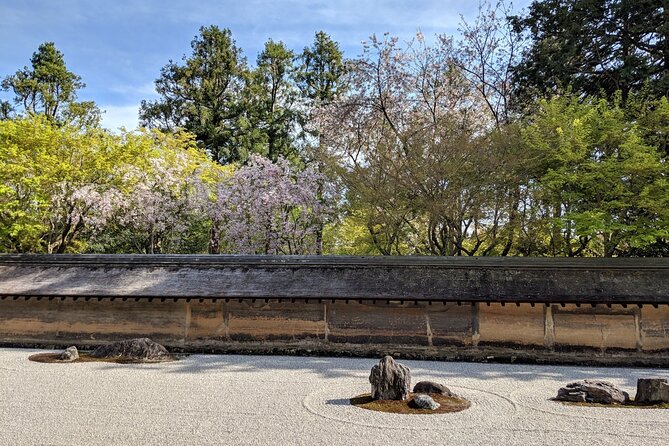
Ryoanji is where the tour turns quiet. This is one of Japan’s best-known rock-and-sand gardens, built around Zen simplicity and contemplation. The main pleasure is not walking endlessly inside. It’s sitting, looking, and letting the garden do its work.
Your time here is about an hour, and the experience is at its best when you slow down at the veranda. People often think they need to “see everything,” but with a garden like this, the point is repeated looking. From the veranda, you can enjoy the garden’s arrangement and let your eyes rest rather than chase details.
What makes this stop especially valuable in a bike tour is the contrast. After the shimmer of the Golden Pavilion, your brain needs a reset. Ryoanji gives you that. It’s also a great place for questions, because a good guide can explain how Zen gardens invite observation without being heavy-handed.
If you’re the type who likes structure, this might feel simple. That’s the charm. Don’t treat it like a museum gallery. Treat it like a place to pause and be present.
The last hour cycling through everyday west Kyoto streets
After your temple time, you shift to motion again. You cycle through streets of west Kyoto city and stop along the way to admire quaint streets and watch locals going about their day. This part is easy to underestimate, but it’s often the most memorable for first-time bike riders in Kyoto.
Here’s why: the big monuments teach you what Kyoto is famous for. The residential streets show you what Kyoto is like day-to-day. You’ll get the sense of scale, rhythm, and neighborhood life that you just don’t get when you only bounce between ticketed attractions.
This segment also helps you decompress after concentrated sightseeing. The pace is practical, and it feels like a guided stroll, just with wheels. Your guide keeps things safe and organized, which matters because Kyoto streets can be busy and full of turns.
One consideration: you still need attention here. Enjoy the views, but keep your eyes on the road. The best photos come after you’ve safely rolled past the key spots, not while you are riding.
Price and what $106.52 buys you (and what it does not)
At $106.52 per person, this tour can look pricey at first glance, until you break down what is included. You get a guide, standard bike rental, and landing and facility fees. On top of that, admission tickets are included for the first three major sites. The final cycling segment in Kyoto is free, so you’re not paying extra to move between the pieces of the day.
That matters because Kyoto admission costs can add up quickly, especially when you stack three big names into one afternoon. For a half-day style plan, you’re basically paying for organization, access, and interpretation, not just transport.
What you should plan for: lunch is not included. That’s the one line item that can sneak up on you if you assume food is part of the tour. If you arrive hungry or forget to pack a snack, you’ll lose time figuring something out mid-day.
Also, you’re paying for comfort and safety. A bike tour works best when someone is helping you navigate without stress. If you’re the type who likes to read signs and understand context, you’ll feel like the guide is doing real work, not just walking alongside you.
Guides you might meet, and how their style changes the day
One reason this tour earns strong marks is that the guides bring real personality and teaching energy. You might encounter guides like Craig, an English professor raised in Australia and now a Kyoto resident for 15 years. You could also meet Philippe, who brings an approach that mixes history with fun in a way that makes the ride feel light. Another guide you may see is Niall, known for making Zen garden time feel like a true highlight, not a rushed stop.
The practical takeaway for you: if you like to ask questions, this format invites it. You are not just receiving facts on the fly. The guide helps you connect the dots between shrine tradition, shogun-era culture, and Zen contemplation.
And if you enjoy small comforts, pay attention to how your guide manages the pace. Some guides are the kind who think about more than just checking off sights, including how to keep the experience enjoyable from the first pedal stroke to the last look at the garden.
Who this bike tour suits best (and who should skip it)
This tour is a strong fit if you want a guided Kyoto bike tour with meaningful stops, not just a scenic ride. It’s also ideal when you like variety: shrine atmosphere, Golden Pavilion spectacle, then Zen quiet, capped with local streets.
It’s especially good for first-timers who feel overwhelmed by Kyoto’s geography. Cycling adds flexibility, and the guide keeps you from wasting energy on route planning. It also suits couples and small groups because the maximum group size is 8 travelers, which generally means more personal pacing and fewer bottlenecks at stops.
You might want to choose a different option if you are highly sensitive to crowds at Kinkakuji, or if you do not want any cycling at all. This isn’t a fully walking day, and it does involve moderate riding.
Should you book this tour?
If you want a straightforward way to see three of west Kyoto’s biggest names without turning your day into a frantic train-and-walk scramble, I’d book it. The value is solid because admission tickets and bike rental are included, and the timing gives you enough minutes to feel each site instead of just moving through it.
Book it especially if you like context. The experience is built around culture and history, and a good guide makes that difference. If you’re comfortable cycling and you’re okay spending time quietly at Ryoanji, this is a great afternoon plan.
If you hate bikes, have limited stamina, or expect complete solitude at the Golden Pavilion, you may feel more friction than delight. In that case, pick a slower, walking-focused plan. But for most people, this is a smart, memorable way to experience Kyoto with less stress and more meaning.
FAQ
How long is the tour?
It runs for about 4 hours.
What are the main stops on the tour?
You visit Kitano Tenmangu Shrine, Kinkakuji Temple, and Ryōan-ji, and you also cycle through west Kyoto streets afterward.
Are admission tickets included?
Admission tickets are included for Kitano Tenmangu Shrine, Kinkakuji Temple, and Ryōan-ji. The cycling segment in Kyoto is free.
Is bike rental included?
Yes. Standard bike rental is included, along with a guide and landing and facility fees.
Where does the tour start and where does it end?
It starts at McDonald’s – Higashiyama Sanjo, Kyoto, and it ends back at the meeting point.
What time does the tour begin?
The start time is 1:00 pm.
Is lunch included?
No, lunch is not included.
What is the cancellation policy for a full refund?
You can cancel for a full refund up to 24 hours in advance. If you cancel less than 24 hours before the start time, the amount you paid is not refunded.
What happens if weather is bad or the minimum number of travelers is not met?
The tour requires good weather. If it is canceled due to poor weather, you will be offered a different date or a full refund. If the minimum number of travelers is not met, you will be offered a different experience or a full refund.
Newly listed around Kyoto
- Let’s make Japanese accessories with Mizuhiki★ 5.0 · 11 reviews
- Let’s make only one original onigawara in the world★ 5.0 · 52 reviews
- Kyoto Hidden Treasures: Special Temple & Garden Access Tour★ 4.5 · 25 reviews
- Kendo and samurai experience in Kyoto★ 4.5 · 47 reviews
- Kyoto welcome tour★ 5.0 · 34 reviews
- Kyoto Early Bird English Tour: Fushimi Inari & Gion(Private opt)★ 5.0 · 139 reviews
- Kyoto Private Car Tour – Full Day with Local Guide & Nara Option★ 5.0 · 169 reviews
- Private Kyoto Customizable Tour With Guide and Luxury vehicle★ 4.5 · 29 reviews
Bike Tours in Kyoto, compared.
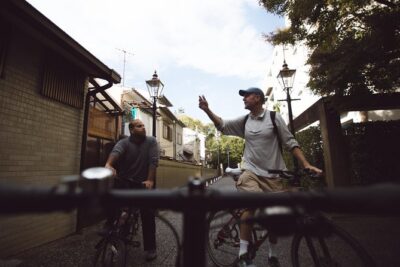
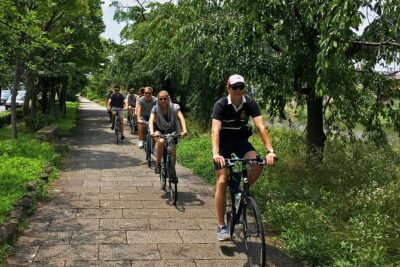
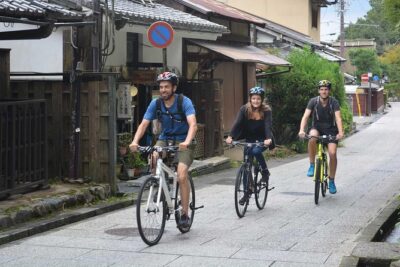
Arashiyama Bamboo Forest & Hidden Gems Bike Tour (Early Bird)
Read our review →
5 Top Highlights of Kyoto Full Day Bike Tour (E-bike option)
Read our review →
Full Day Biking Tour Exploring the Best of Kyoto
Read our review →
Afternoon Kyoto Bike Tour: Bamboo Forest, Monkeys & Hidden Spots
Read our review →Browse the lists this tour appears in