
Review · GEISHA DISTRICT WALKS
Kyoto Early Bird English Tour: Fushimi Inari & Gion(Private opt)
Sleep in, then beat the crowds. This early bird Kyoto walk-and-ride packs Fushimi Inari sights, Kiyomizu-dera views, and a Gion finish into one smooth half day, with an English-speaking local guide and photo help.
I like two things a lot. First, the guide quality, with stand-out storytelling and clear English that makes shrine and temple details click fast. Second, the tour includes professional photos, so you are not stuck doing awkward selfie math around red torii gates.
One thing to consider: the pacing is on the brisk side. Even though the tour is listed as about 4 to 5 hours, it can feel closer to a shorter morning depending on the flow, so you will want to treat each stop as a highlight hit, not a long deep sit.
In This Review
- Key highlights that make this tour worth your morning
- Early bird Kyoto route: how you actually dodge the worst crowds
- Fushimi Inari-taisha: red torii gates, plus what to look for
- Kiyomizu-dera Temple: the ticket cost, the views, and the time tradeoff
- Sannenzaka and Ninenzaka: what 15 minutes buys you (and how to spend it)
- Yasaka Pagoda (Hokanji) and Yasaka Koshindo: quick stops, big visuals
- Yasaka Pagoda (Hokanji)
- Yasaka Koshindo
- Gion and Yasaka Shrine finish: how to continue your day without backtracking
- The guide factor: English flow, photo help, and small details that matter
- Price and value check: what $99.10 really means for your budget
- Who this Kyoto early bird tour fits best
- Should you book this Kyoto early bird English tour?
Key highlights that make this tour worth your morning
- Fushimi Inari early start for calmer torii gate photos and an easier walk uphill
- English guide who explains the meaning, not just the location
- Photo service included so you get better angles without juggling a camera
- Classic Higashiyama route with Sannenzaka and Ninenzaka right after Kiyomizu-dera
- Bonus stop energy at Yasaka Pagoda and Yasaka Koshindo for quick, memorable details
- Finish in Gion at Yasaka Shrine so you can keep exploring right from the action
Early bird Kyoto route: how you actually dodge the worst crowds

Kyoto’s famous sights have one predictable problem, crowds. This is built around an early start logic: hit the biggest names while foot traffic is still manageable, then move through Higashiyama before the day fully warms up.
You will be using public transportation plus a lot of walking, so this is not a bus-only tour where you float from stop to stop. That’s part of the value. You get to walk the same streets people come to see, but with a bit more breathing room. You also get a guide steering you around the biggest friction points, like knowing where to stand for views and which streets are worth your time.
This is also private in the sense that only your group participates. That matters because it turns the morning from a scripted shuffle into a conversation. If your group likes to ask questions, you will get more back than you would on a larger shared tour.
More Shrine & Temple Visits in Kyoto
- Kyoto: Fushimi Inari, Kinkakuji, Bamboo Grove 1 Day Bus Tour
★ 4.8 · 4,316 reviews - Kyoto: Tea Ceremony Ju-An at Jotokuji Temple
★ 4.9 · 3,207 reviews - Fushimi Inari Hidden Hiking Tour (Private Option Available)
★ 5.0 · 1,750 reviews
Fushimi Inari-taisha: red torii gates, plus what to look for
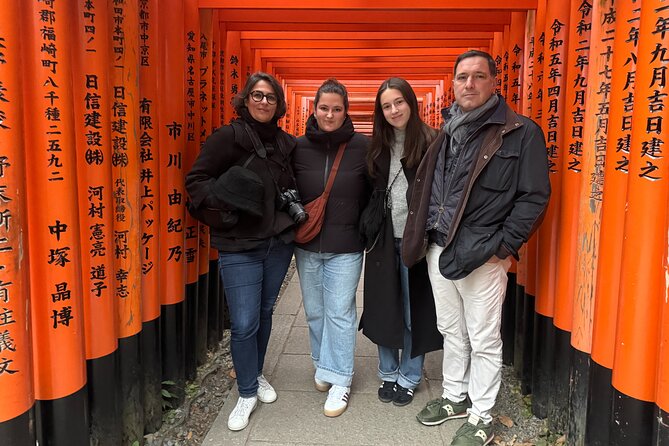
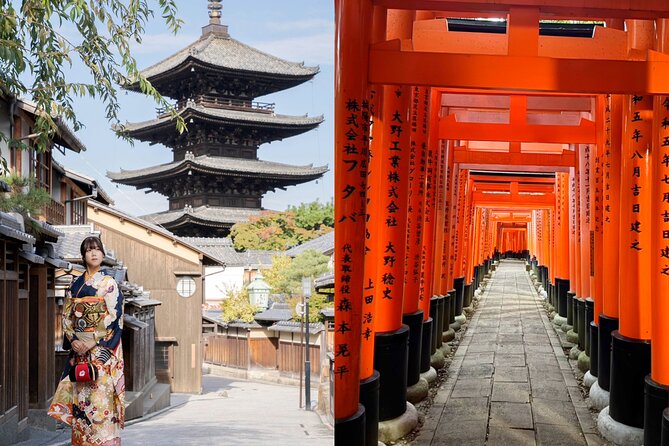
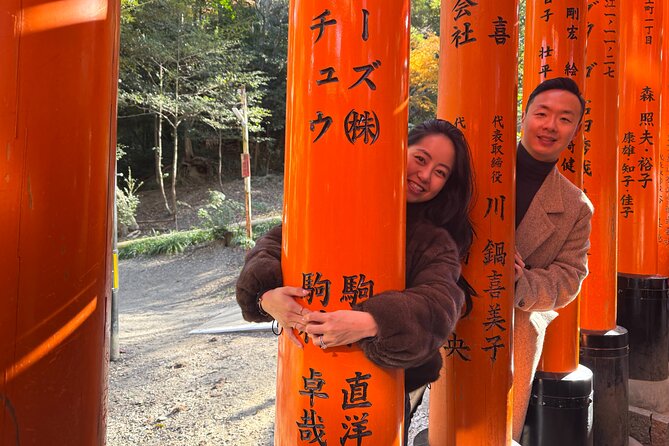
Fushimi Inari is the Kyoto icon that looks simple from postcards and feels magical in real life. You’ll spend about an hour here, and the real show is the long tunnel of vivid red torii gates running into the forested slope of Mount Inari.
The best way to enjoy it is to think in layers:
- the entry torii view for wide photos
- the mid-gate rhythm when the paths narrow and people spread out a bit
- the higher viewpoints for that “stepping into a shrine landscape” feeling
A strong guide helps you read what you are seeing. Inari is dedicated to Inari, the god associated with rice and prosperity, and that theme helps the whole place make sense beyond “pretty red gates.” If you are the kind of traveler who wants to understand why certain offerings and smaller shrines show up along the route, this stop is where that payoff starts.
Practical notes: wear shoes with grip. The path is uneven in places, and you will likely want your hands free for photos and small gestures like pausing to read plaques.
Kiyomizu-dera Temple: the ticket cost, the views, and the time tradeoff
Next up is Kiyomizu-dera, one of Kyoto’s top “must” sights. You get about an hour here, and the admission is not included, so budget for the Kiyomizu-dera fee (¥500 per person).
This temple is famous for a reason. Set on a hillside, it gives you sweeping panoramic views over Kyoto, especially when you pause in the right spots. The ticket fee is worth it if you care about the actual temple complex and the elevated viewpoints, not just the outer streets.
Here’s the honest tradeoff. With only around an hour, you will not be able to wander every side corridor slowly like you might on your own. Instead, this works best if you plan to do the highlights: move through the main areas, pause for the key view moments, then use the short time to absorb what makes this temple historically important and visually dramatic.
If your group wants extra time at the temple, you can use the tour finish location later to extend your day, since you will end near Yasaka Shrine in the Gion area.
Sannenzaka and Ninenzaka: what 15 minutes buys you (and how to spend it)
After the big-ticket temple, the tour shifts to Sannenzaka and Ninenzaka, the classic stone-paved streets lined with older wooden buildings. This is one of the easiest places to feel like you stepped into old Kyoto, because the street layout is the experience.
You only get about 15 minutes. That’s plenty if you treat it like a browse, not a shopping mission:
- pick one or two side streets to walk slowly
- stop for photos where the street curves and buildings frame the view
- grab a snack only if you see something you truly want, because time is tight
These lanes are packed later in the day, so getting there earlier is a big deal. Even in a short window, it feels less stressful. And it sets you up for the next temple stops, which are more compact but visually striking.
More Shrine and Temple visits in Kyoto:
- Osaka/Kyoto:Kinkakuji,Arashiyama,FushimiInariShrine,NaraPark
★ 4.1 · 1,596 reviews - Kyoto/Osaka: Nara, Fushimi Inari Taisha, Arashiyama Bus Tour
★ 4.7 · 1,275 reviews - Arashiyama Bamboo, Temple, Monkeys, or Secret Sake Brewery
★ 4.8 · 886 reviews - Osaka/Kyoto: Arashiyama, Nara & Fushimi Inari Shrine w/Lunch
★ 4.4 · 754 reviews
Yasaka Pagoda (Hokanji) and Yasaka Koshindo: quick stops, big visuals
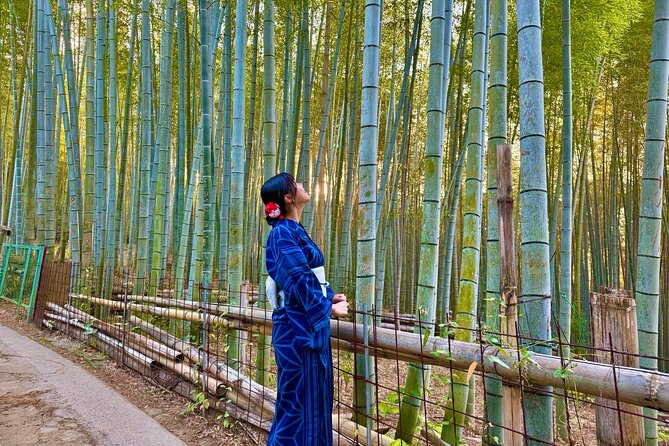
Then comes a pair of short, high-impact temple moments.
Yasaka Pagoda (Hokanji)
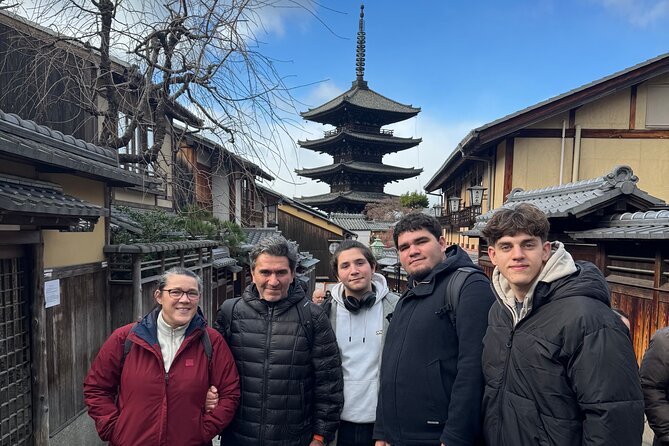
You’ll spend around 15 minutes here, and the highlight is the scale and the famous story of construction. It is described as one of the oldest wooden structures in Japan, built without using nails. That kind of detail changes how you look at the building. You stop thinking “nice pagoda” and start thinking “how is this standing?”
Yasaka Koshindo
Another 15 minutes at Yasaka Koshindo, a more mysterious temple with colorful decorations that are especially noticeable because many other temples you see in Kyoto are comparatively subdued. This is the kind of stop that works well in a short time because the visuals land immediately.
If you only have half a day, these two stops are a smart use of time. They add texture to the tour, so it isn’t just giant icons. You also get variety, from red torii gate rhythm to hillside views to street nostalgia and then back to temple architecture.
Gion and Yasaka Shrine finish: how to continue your day without backtracking
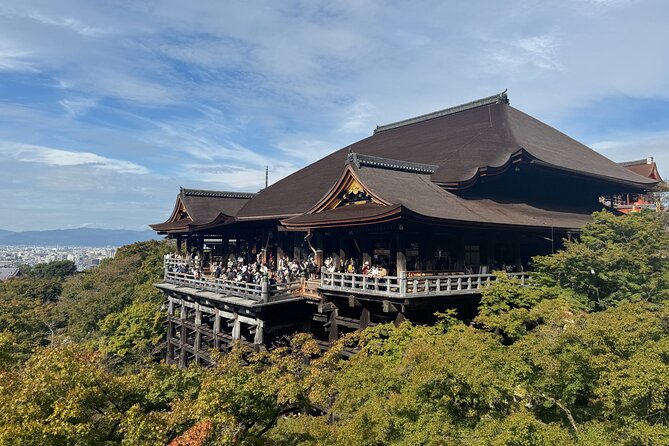
The tour ends in the Gion area at Yasaka Shrine, after a brief Gion stroll. Gion is Kyoto’s best-known geisha district, and even if you never see a performance, the atmosphere is part of why people come. You’ll walk through preserved old-street vibes, with traditional machiya houses and teahouse-style storefronts.
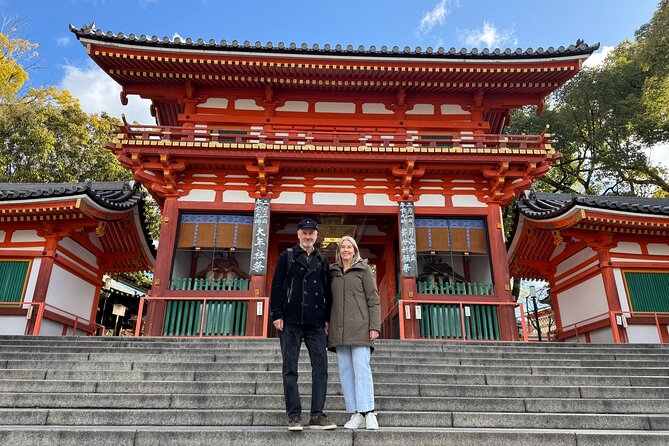
You then spend about 30 minutes at Yasaka Shrine, described as the headquarters of 2,300 related shrines across Japan. That scale matters. It is not just a pretty place to stop, it is a cultural anchor that connects to a wider network of local worship across the country.
This ending is practical. You finish near where you likely want to keep going anyway: dinner, evening strolls, and follow-on sightseeing in Higashiyama. You can also take buses or head back toward your lodging with less scrambling.
The guide factor: English flow, photo help, and small details that matter
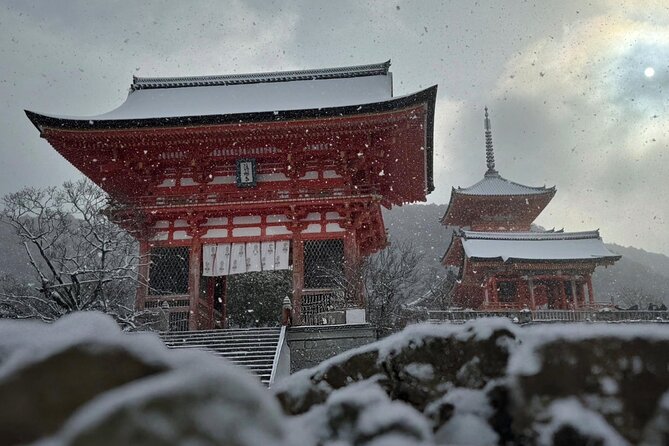
This tour lives or dies on the guide. You get a passionate local English-speaking guide, and the included professional photos are a major help. It means you get more keeper shots at Fushimi Inari and Kiyomizu-dera, places where standing in the right spot for the right light is half the battle.
One reason guests tend to rate this so highly is how the guide explains things in plain language while staying respectful of the religious setting. You do not feel like you are on a lecture tour. You feel like you are being shown how to notice what is actually there.
You also get support material. In real use, guides like Ikki have brought booklets and extra visuals to help with temple and shrine context, including language and how to participate in prayers. That kind of prep is surprisingly useful if you are the type who wants to do things correctly and understand the symbolism.
If your group cares about photography, the guide’s timing helps. You get picture moments without the classic problem of trying to herd people in the middle of busy stairways.
Price and value check: what $99.10 really means for your budget
The listed price is $99.10 per person, and it includes the guide, plus professional photos. Admission and some transport costs are separate.
Here’s what you should budget for based on the tour details:
- Public transportation fare: ¥390 per person (not included)
- Kiyomizu-dera admission: ¥500 per person (not included)
- Food and drinks: not included
Other stops like Fushimi Inari, Sannenzaka/Ninenzaka, Yasaka Pagoda, Yasaka Koshindo, and Yasaka Shrine are listed as free admissions.
So the value question is simple: does it save you effort and time versus going alone? For many first-time Kyoto visitors, yes. You are paying for logistics help, English interpretation that makes the sights mean something, and photo service so you get better results with less hassle.
One practical caution: because some guests report the tour can run shorter than the full stated window, you should see this as a “highlights sampler” with strong photo value, not a slow, take-every-detail tour.
Who this Kyoto early bird tour fits best
This is a good match if you:
- want a fast, organized introduction to Kyoto’s big-name sights
- like walking but do not want to map out every turn alone
- care about context, so you understand what you are looking at
- want photos taken for you, not just “try your luck” selfies
It may be less ideal if you:
- want lots of free time to wander inside each major site at a leisurely pace
- hate stairs or uneven stone paths, even though the tour is described as moderate fitness
Should you book this Kyoto early bird English tour?
I’d book it if your priority is getting the classic Kyoto highlights in a smart order, with early crowd relief, an English-speaking guide who explains the meaning, and photos included. It also makes a lot of sense if you want to start near Kyoto Station and finish near Gion, so you can keep your evening flexible.
Skip it only if you already plan to spend a full, slow day at Kiyomizu-dera and would rather control every step without a structured route. In that case, you might prefer a do-it-yourself day with more time per stop and no ticket budgeting beyond what you choose.
If you are visiting for the first time and want a strong half-day foundation, this tour is a solid, efficient way to do Kyoto right.
Popular Geisha District Walks in Kyoto
- Kyoto Geisha Walking Tour: Gion District & Hidden Gems
★ 4.7 · 3,273 reviews - Kyoto: Gion Geisha District Walking Tour – Stories of Geisha
★ 4.7 · 2,187 reviews - Best of Kyoto: Gion, Geisha, Pagodas & Cobblestones
★ 4.9 · 2,058 reviews - Night Walk in Gion: Kyoto’s Geisha District
★ 4.5 · 2,003 reviews
Newly listed around Kyoto
- Otagi Nenbutsu Temple and Arashiyama Bamboo Forest Tour★ 5.0 · 37 reviews
- Private Ramen or Gyoza Cooking Class in Kyoto with Chef Midori★ 5.0 · 18 reviews
- 2-Hour Oriental Body and Head Massage in Kyoto Japan★ 5.0 · 9 reviews
- Kyoto Private & Personalized Full-Day Tour with a Local Guide★ 4.5 · 31 reviews
- Exclusive Gion Kyoto Photoshoot: A Private Experience★ 5.0 · 11 reviews
- Nishiki Market, Private Sushi class & Sake Tasting in Townhouse★ 5.0 · 6 reviews
- Nishiki Market Lunch Tour★ 5.0 · 47 reviews
- One-Day Walking Tour : Enjoy Kyoto to the fullest!★ 5.0 · 78 reviews
Geisha District Walks, compared.
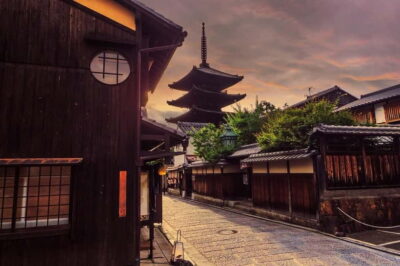
Kyoto Geisha Walking Tour: Gion District & Hidden Gems
Read our review →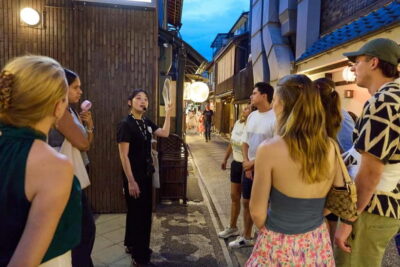
Gion Geisha District Walking Tour – Stories of Geisha
Read our review →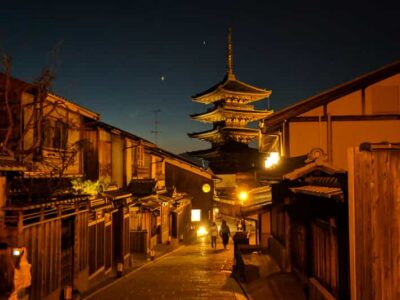
Best of Kyoto: Gion, Geisha, Pagodas & Cobblestones
Read our review →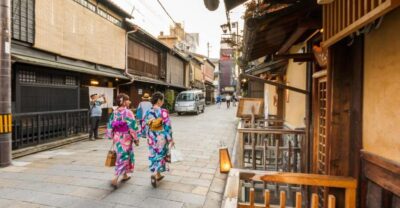
Kyoto Night Foodie Tour in Gion (9+ dishes + 6 Sake tastings)
Read our review →
Kyoto Gion Geisha District Walking Tour – The Stories of Geisha
Read our review →
Gion Magical Night Walking Tour with Geisha Insights
Read our review →
Kyoto Gion Night Walk & Geisha District Guided Tour
Read our review →Browse the lists this tour appears in