
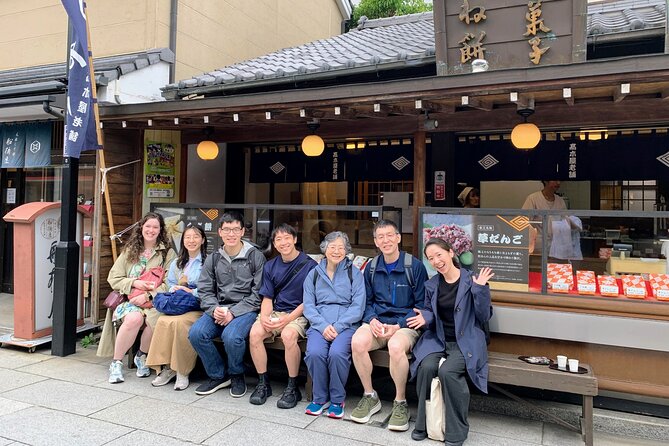
Review · SHOPPING TOURS
Half-Day Local Tokyo Tour in Adachi Market and Shibamata
If you want Tokyo without the usual push-and-shove, this tour fits. You’ll trade the crowds of Tsukiji-style fish sightseeing for Adachi Fish Market and then switch gears to Shibamata with Taishakuten and classic Edo-era streets. It is a good half-day mix of food culture and temple-town atmosphere.
I like how the market time is focused. You get a full hour walking stalls and seeing sashimi and sushi ingredients up close, with a guide to help you make sense of what you’re looking at. I also really enjoyed the temple stop, especially the carved storytelling around Taishakuten and the ikebana garden style details you can spot once you slow down.
One practical consideration: food and drinks are not included, so if you want snacks or a meal, you’ll need to budget for that on your own.
In This Review
- Key points before you go
- Adachi Fish Market: a calmer way to see Tokyo seafood
- Riding from Senju Ohashi to Shibamata without the stress
- Shibamata’s old-town feel: more than just a quick temple visit
- Taishakuten-Sando: sweets, buckwheat noodles, and slow strolling
- Taishakuten Daikyoji Temple: wood carvings and the Lotus Sutra story
- Yamamototei: a Japanese-Western styled shrine building
- Guides make the difference, and the reviews back it up
- Price and value: what $91.96 includes, and what it does not
- Timing: how this half-day will feel in real life
- Who should book this Adachi and Shibamata tour
- Should you book this tour?
- FAQ
- Where does the tour start and when?
- How long is the tour?
- What is the group size?
- What stops are included in the tour?
- Is the train fare included?
- Are entrance fees included?
- Is food and drinks included?
- Is hotel pickup or drop-off included?
- What is the cancellation policy?
- Is this tour suitable for most travelers?
Key points before you go
- Small group size (max 8) means more time for questions and calmer strolling
- Adachi Fish Market is the marine-products specialist option, and it avoids the worst tourist crushes
- Shibamata Taishakuten includes time to see wood carvings tied to the Lotus Sutra story
- Taishakuten-Sando walk (about 200 meters) is perfect for sweets and buckwheat noodle shop browsing
- Futen No Tora bronze statue gives a pop-culture moment right by Shibamata Station
- Train fare from Senju Ohashi to Shibamata Station is included, so you can focus on the day
Adachi Fish Market: a calmer way to see Tokyo seafood
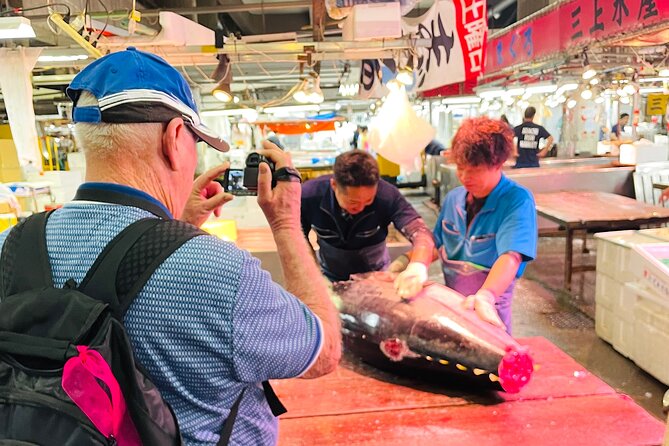
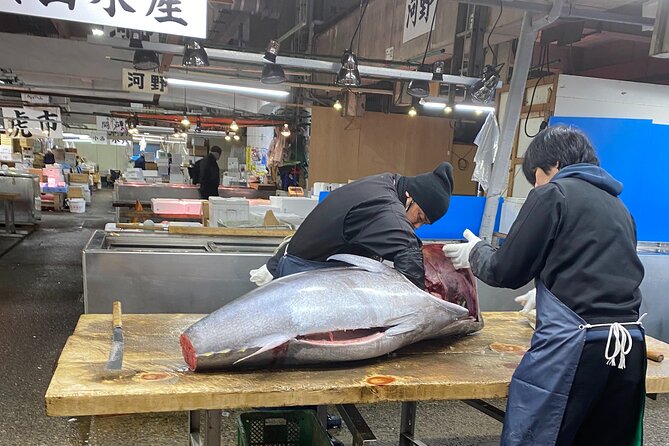
Tokyo has plenty of famous fish stops, but most of the “famous” ones come with lines, timing pressure, and a lot of camera-hunting. This tour instead starts in Adachi, at a central market area called Adachi Shijo, where you can slow down and actually look.
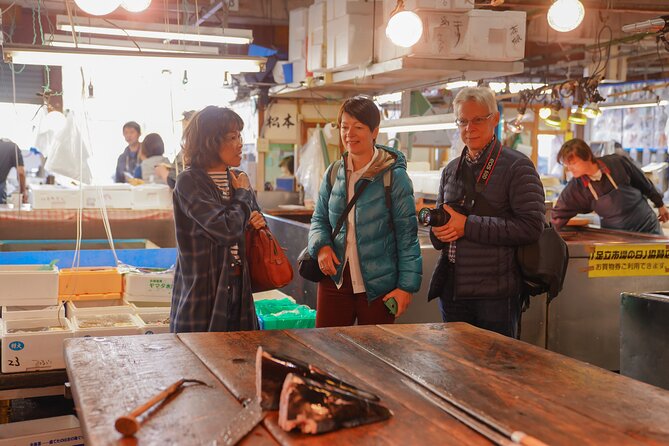
What I appreciate is the specialty angle. Adachi Fish Market is described as the only specialized marine products market in Tokyo, which matters because you are not bouncing between unrelated stalls. You are in a seafood-focused environment, where sashimi and sushi are the natural center of gravity. A guide helps you connect the dots so you are not just reading labels with your best guess.
The pacing also feels realistic. The market stop is an hour, which is long enough to wander, spot variety, and ask questions. It is also short enough that you are not trapped in one location if you get sensory overload. If you are the kind of person who wants to experience food culture rather than just eat something, this is a great format.
Possible drawback: markets can be busy and active even without tourists. If you are sensitive to strong smells or tight aisles, wear comfortable shoes and keep your expectations simple: this is a working market experience first.
More Market Tours in Tokyo
- Tokyo Tsukiji Fish Market Food and Culture Walking Tour
★ 5.0 · 3,184 reviews - Tokyo: Tsukiji Fish Market Food and Walking tour
★ 5.0 · 1,724 reviews - Tokyo: Tsukiji Fish Market Guided Walking Tour
★ 4.9 · 1,397 reviews
Riding from Senju Ohashi to Shibamata without the stress
The meeting point is Senju Ohashi area, Senjuhashidocho (Adachi City), with a start time of 8:00 am. You then take a one-way train ride to Shibamata Station, and that rail fare is included.
For me, this “included rail” piece is a big value driver. Tokyo public transit is easy once you know your route, but on a tight half-day, route planning can steal time you would rather spend looking around. Having the train component handled keeps the tour rhythm intact, so you arrive in Shibamata ready to walk.
Also, the timing matters. An early start generally means you can see how local life begins before the day gets fully crowded. Shibamata is not “just a temple stop.” It is a whole neighborhood vibe, and the tour’s schedule gives you enough time to feel that.
You’ll end at Shibamata Station, so you can either continue exploring on your own afterward or head back when you feel ready.
Shibamata’s old-town feel: more than just a quick temple visit
After the train, you spend time simply getting oriented in Shibamata. The tour includes a short Shibamata walk area stop (about 30 minutes) so you can pick up the town’s rhythm before you go deeper into the main sights.
This is the part I think is hardest to recreate on your own, because it is not only about where to go, it is about the order you see things. A guided flow helps you notice details you would likely miss if you were hopping between points from a map.
You also get a classic “movie-and-mood” moment with the Futen No Tora bronze statue, a short walk just outside Shibamata Station. The tour ties Shibamata to the fictional Mr. Tora from the Otoko wa Tsuraiyo movie series. Even if you do not know the films, it gives the town an extra layer of identity beyond architecture and shopping streets.
Then you move into Taishakuten-Sando, the main-street approach that runs about 200 meters from the station area to the temple.
Taishakuten-Sando: sweets, buckwheat noodles, and slow strolling
Taishakuten-Sando is one of those places where Tokyo suddenly feels much older in the best way. You get about 20 minutes to walk the street toward the temple, and the tour setup makes this practical. You are there long enough to read storefronts, spot snack types, and decide what you want to buy later (if anything), but not so long that you feel stuck waiting.
The street is described as having Japanese sweets shops and buckwheat noodle shops, which is a nice combo for a food-minded traveler. Even if you do not plan to eat, you can still use this time to get the local “what people actually do” vibe: people browsing, chatting, and taking short breaks rather than sprinting between landmarks.
One consideration: the tour does not include food and drinks. So if your plan is to graze your way through the street, treat it as your chance to pick up something small. The tour format still works even if you skip snacks, but knowing this upfront helps you avoid that post-market surprise when you realize you have to pay on your own.
More Shopping Tours in Tokyo
- Tsukiji Fish Market Guided Tour and Sushi Making with Pro Chef
★ 5.0 · 775 reviews - Tokyo: Tsukiji Fish Market Food and Culture Walking Tour
★ 4.7 · 757 reviews - Tsukiji Fish Market: Street Food & Culture Walking Tour
★ 5.0 · 669 reviews - Tsukiji Fish Market Small-Group Food Walking Tour
★ 5.0 · 621 reviews
Taishakuten Daikyoji Temple: wood carvings and the Lotus Sutra story
The main temple stop is Taishakuten Taishakuten Daikyoji Temple, with about 40 minutes on site. This is your “slow down and look up” portion of the day.
The highlight here is the wood-carved sculptural work installed around the main hall, tied to the Lotus Sutra story. These are not the kind of carvings you appreciate in a five-second photo. The guide time makes a difference because you are more likely to understand what you are seeing rather than just noting that it looks intricate.
There’s also mention of an ikebana-style garden, described as a stunning garden of ikebana. Even if you are not an ikebana expert, you can still enjoy it as a quiet pause after the street walk and the more kinetic market segment. It gives your day a more balanced emotional rhythm.
If you are traveling with anyone who loves art or religious symbolism, this is the strongest “wow” block of the tour. It is also a great place to take a breath and reset before you move on to the last stop.
Yamamototei: a Japanese-Western styled shrine building
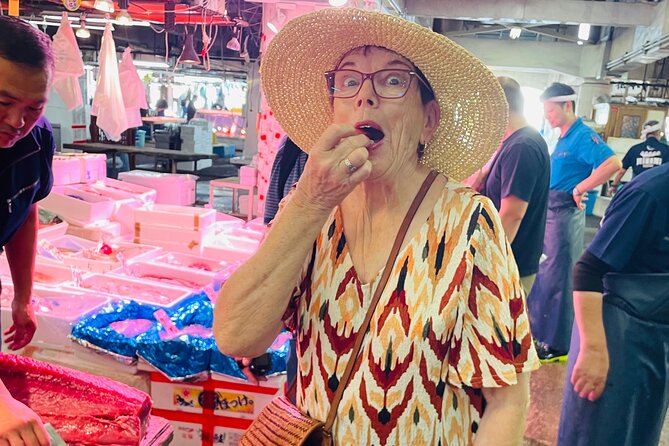
The final stop is Yamamototei, included in the tour. You get about 30 minutes here, and it is the kind of stop that surprises people who think all of Tokyo’s temple architecture looks the same.
Yamamototei is described as a two-story building that combines Japanese and Western architectural elements into a shrine setting. A specific feature mentioned is the Nagayamon, described as having a unique Western-style aspect.
This stop may not be the biggest crowd magnet, but that is exactly why I like it. It keeps the day from becoming a checklist. You leave with a more rounded sense of how Japan’s built environment has absorbed outside influence while keeping its own spiritual and design priorities.
Because the tour wraps around Shibamata Station, you can use your last minutes however you want. Some people stay near the station longer for photos. Others head off before they get tired.
Guides make the difference, and the reviews back it up
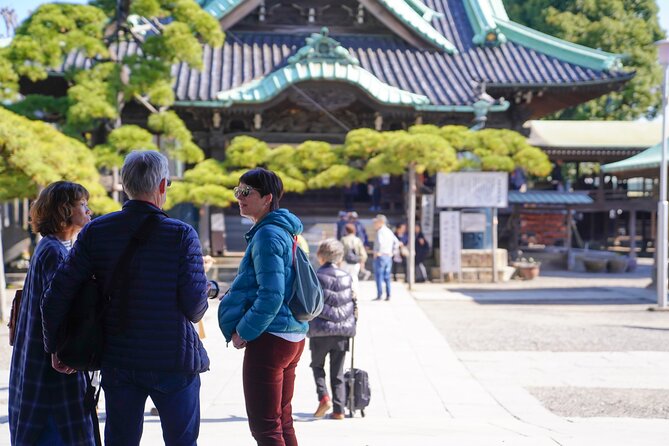
A huge part of why this tour works is the guide. The reviews you provided repeatedly mention guides who were friendly, professional, and clear with their explanations.
I saw names like Kaori, Mutsuko, Megumi, Masayo, Yumi, Mana, Yoshimi, and Fumiko showing up across tour experiences. That is a good sign you are not only getting a “someone with a badge” guide. You’re getting actual interpretation, like what to look for in the market and how to understand the cultural connections in Shibamata.
In particular, Kaori is praised for clear language and making it feel personal by the end of the day. Another review highlights Mana leading an English-speaking tour, with an emphasis on seeing enormous tuna and a variety of seafood at the Adachi market. That tells me you can expect the guide to keep the focus on what you are seeing, not just where you are walking.
If you like asking questions, small group size helps. With a maximum of eight, you are less likely to be stuck watching and more likely to get your own moment of attention.
Price and value: what $91.96 includes, and what it does not
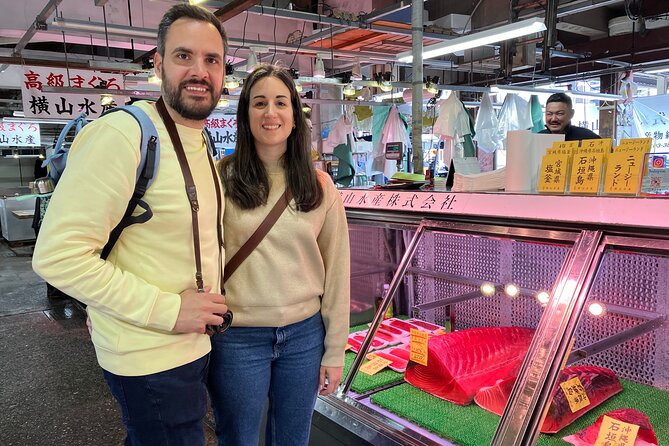
The listed price is $91.96 per person for about 4 hours 30 minutes. That sounds like a lot until you break down what you are paying for.
Included items:
- professional guide
- small-group walking tour
- one-way train fare from Senju Ohashi to Shibamata Station
- local taxes
- entrance fees (and the Yamamototei stop is included)
Not included:
- food and drinks
- hotel pickup and drop-off
- private transportation by taxi or car or bus (extra fee if you want it)
Here’s how I think about value. You are paying for time that is hard to assemble on your own: the market navigation, the interpretation, the guided pacing, and the transit connection. If you tried to DIY it, you would still have to figure out where to walk in Adachi, how to time your Shibamata temple visits, and where to find the small “in-between” points like Taishakuten-Sando and the Futen No Tora statue.
Also, the tour uses a mobile ticket, which is a small but real convenience in Japan. Less paperwork, fewer chances to forget something at home.
If you are the type who only wants the photos and not the context, you might feel like the cost is high. If you enjoy learning what you are looking at, the price starts to feel fair fast.
Timing: how this half-day will feel in real life
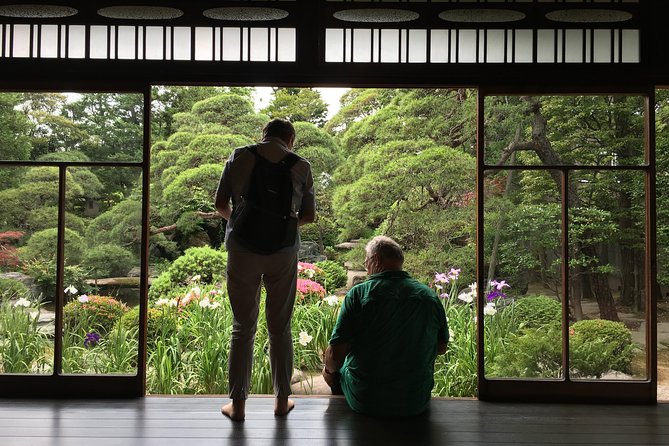
You will be on your feet. The tour is about 4.5 hours, and the schedule includes:
- around 1 hour at Adachi Fish Market
- about 30 minutes in the Shibamata area
- short stop at Futen No Tora statue
- about 20 minutes walking Taishakuten-Sando
- about 40 minutes at Taishakuten
- about 30 minutes at Yamamototei
That is a lot of different environments in one day: market aisles, street browsing, temple interior viewing, then architectural sightseeing. I like this structure because it makes the day feel like a mini Tokyo sampler rather than a single-spot visit.
Wear comfortable shoes and plan to take breaks as needed. Also, since food and drinks are not included, keep a small budget for snacks or consider having a light breakfast before the 8:00 am start so you are not making choices when you are already hungry.
Best use of the rest of your day: after the tour ends at Shibamata Station, you can continue exploring the area at your own pace. If you want a calmer follow-up, Shibamata lends itself to a slower second walk.
Who should book this Adachi and Shibamata tour
This is a great match if you want:
- a local-feeling Tokyo day that skips the most famous tourist bottlenecks
- seafood market atmosphere without needing to plan every detail
- a balanced day mixing market culture with temple-town walking
- small-group travel with room for questions
It is also a good pick if you already did other Tokyo icons and want something that feels more like how locals spend a morning.
You might want a different option if:
- you only want “sit and see” sightseeing, because this includes active walking
- you expect the tour to handle your lunch and drinks completely (it does not)
- you are visiting for extremely specific temple architecture topics and want longer time at one site only
Should you book this tour?
I think you should book this if your goal is to see a side of Tokyo that feels more like neighborhoods than attractions. The combination of Adachi Fish Market plus Shibamata is the real win, especially with a small group and a guide who helps you read what you see.
If your travel style is hands-on and you like meaning behind the sights, this half-day is a strong value. Just come ready to pay for your own snacks, and give the day enough energy to enjoy it at a walking pace.
FAQ
Where does the tour start and when?
The tour starts at Senju Ohashi Station area (Senjuhashidocho, Adachi City, Tokyo) with a start time of 8:00 am.
How long is the tour?
It is approximately 4 hours 30 minutes.
What is the group size?
The maximum group size is 8 travelers.
What stops are included in the tour?
You visit Adachi Fish Market (Adachi Shijo), Shibamata, the Futen No Tora statue area outside Shibamata Station, Taishakuten-Sando, Taishakuten (Taishakuten Daikyoji Temple), and Yamamototei.
Is the train fare included?
Yes. The one-way train fare from Senju Ohashi Station to Shibamata Station is included.
Are entrance fees included?
Entrance fees are included, and Yamamototei is listed as included.
Is food and drinks included?
No. Food and drinks are not included.
Is hotel pickup or drop-off included?
No. Hotel pickup and drop-off are not included.
What is the cancellation policy?
You can cancel for a full refund up to 24 hours before the experience starts.
Is this tour suitable for most travelers?
The tour notes that most travelers can participate.
More Markets in Tokyo
- Tokyo: Tsukiji Fish Market Sushi Making Class with Pro Chef
★ 4.9 · 506 reviews - Tokyo Food Tour Taste Fresh Delights at Tsukiji Market
★ 5.0 · 429 reviews - Tokyo Tsukiji Fish Market Tour and Sushi Making Lesson
★ 5.0 · 390 reviews - Tsukiji Fish Market: Street Food & Culture Walking Tour
★ 4.8 · 259 reviews
Newly listed around Tokyo
- Tokyo private transfer from/to Tokyo Ports★ 4.5 · 26 reviews
- Yanaka and Asakusa Walk around DOWNTOWN TOKYO like a local★ 5.0 · 36 reviews
- Yokohama Private Arrival Transfer : Tokyo Hotels to Yokohama Port or Hotels★ 4.5 · 12 reviews
- Yanaka Historical Walking Tour in Tokyo’s Old Town★ 5.0 · 182 reviews
- Official Japan Go-Kart Through Shibuya / Shinjuku (IDP Required)★ 5.0 · 92 reviews
- Private homevisit for whole cultual experience, 20min from Tokyo★ 5.0 · 20 reviews
- Exclusive Sumo Morning Practice in Tokyo with Photo Opportunity★ 5.0 · 68 reviews
- 3-Hour Tokyo Pub Crawl Nightlife Welcome Guided Tour in Shibuya★ 5.0 · 209 reviews
Shopping Tours, compared.
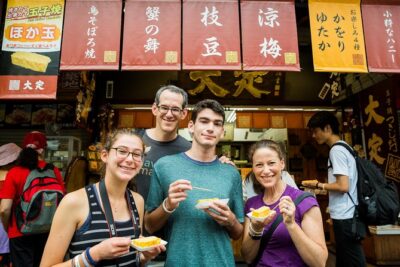
Tokyo Tsukiji Fish Market Food and Culture Walking Tour
Read our review →
Nishiki Market Brunch Walking Tour (7 Tastings + Brunch)
Read our review →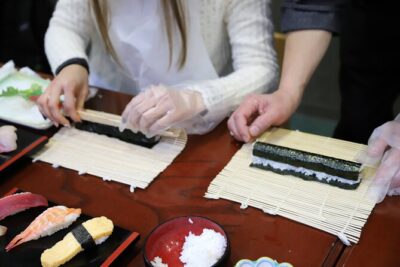
Tsukiji Fish Market Guided Tour and Sushi Making with Pro Chef
Read our review →Tsukiji Fish Market Food and Culture Walking Tour
Read our review →
Tsukiji Fish Market: Street Food & Culture Walking Tour
Read our review →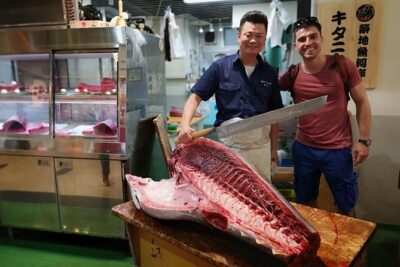
Tsukiji Fish Market Small-Group Food Walking Tour
Read our review →Browse the lists this tour appears in