Review · SUSHI COOKING WORKSHOPS
Tokyo: Tsukiji Fish Market Sushi Making Class with Pro Chef
Making sushi in Tsukiji feels like cheating the usual Tokyo tourist trail. You get instruction from a pro sushi master in the market area, using fresh ingredients and proper tools tied to how sushi is actually done. I like that you’re not just watching, you are making, and I especially like the hands-on rhythm of nigiri plus rolled sushi.
The best part for me is the focus on technique, starting with a fish disassembly demo and moving into how to shape nigiri and roll maki. The one catch to plan around is the class is on the third floor with stairs only, so it is not a great fit if mobility is an issue.
In This Review
- Key Things That Make This Class Worth Your Time
- Tsukiji at Sushi Speed: Why This Class Works in the Market
- Price and Value: What $63 Buys You at Tsukiji
- Meeting, Stairs, and the Classroom Above the Market
- The Fish Prep Show: Knives, Disassembly, and What to Look For
- Making Nigiri and Maki Like a Pro: Your Hands-On Station
- Sushi Master Performance, Then You Eat: Wasabi, Dashi, and Green Tea
- How to Plan Your Day Around the Class
- Who This Class Suits Best, and Who Should Skip It
- Should You Book This Tsukiji Sushi Making Class?
- FAQ
- How long is the sushi making class?
- Where does the class meet?
- What sushi will I make during the workshop?
- Are drinks and soup included?
- What about dietary restrictions like vegetarian or vegan?
- Is there any risk with allergies?
- Is the class accessible for wheelchair users or mobility impairments?
- What is the cancellation policy?
Key Things That Make This Class Worth Your Time
- Fish prep demo with knife talk, so sushi makes sense, not just looks good
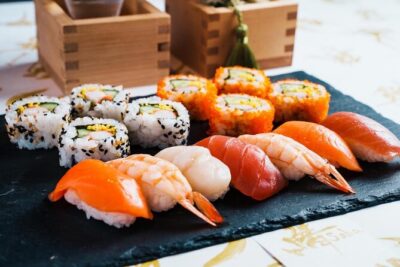
- You make 4 nigiri and 1 maki, using fresh Tsukiji ingredients
- A real sushi master teaches step by step, with help so beginners can keep up
- Tea and traditional dashi soup pairing, served alongside the sushi experience
- You eat your own sushi plus extra sushi made by the master, so you compare results
- Small, question-friendly feel, often mentioned in reviews, which helps you get fixes fast
Tsukiji at Sushi Speed: Why This Class Works in the Market
Tsukiji has a special energy that you do not get at a restaurant table. This class places you right in the middle of the action, at a traditional Japanese-style building located in the center of the outer fish market area. That means you can look around before or after your session, and your whole experience stays connected to where the ingredients come from.
The other smart piece is that you spend the time making sushi rather than only learning words about it. You get a chef-led flow that starts with fish preparation fundamentals, then shifts to rice handling and sushi building. It is a practical way to understand why good sushi tastes the way it does.
If you plan this day well, you can turn it into a two-part outing. You can do light exploring around the market area, then head upstairs for the class, and then return for more browsing afterward.
More Market Tours in Tokyo
- Tokyo Tsukiji Fish Market Food and Culture Walking Tour
★ 5.0 · 3,184 reviews - Tokyo: Tsukiji Fish Market Food and Walking tour
★ 5.0 · 1,724 reviews - Tokyo: Tsukiji Fish Market Guided Walking Tour
★ 4.9 · 1,397 reviews
Price and Value: What $63 Buys You at Tsukiji
At about $63 per person, this class is not “cheap,” but it also is not just a souvenir activity. You are paying for a real instructor setup: a professional sushi master, an English-speaking host, proper utensils, and ingredients sourced from Tsukiji. In other words, you are buying the full experience, not just a meal plus a photo.
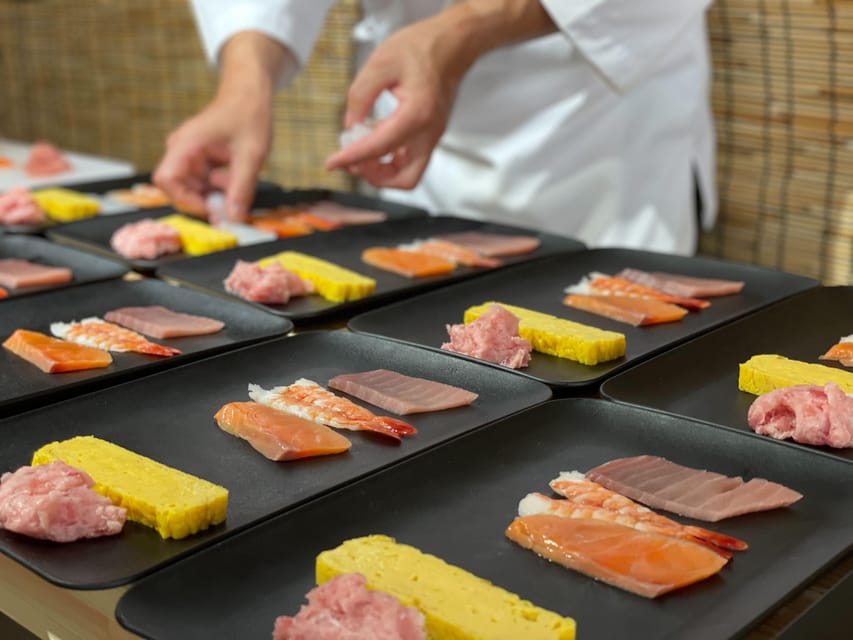
You also get a clear output. The class includes the sushi you make (4 different nigiri and 1 maki), plus additional sushi made by the master. That matters because it is easy to leave a cooking class with only a small portion of food, or with results that feel unfinished. Here, the setup is designed so you leave fed and also able to judge what different techniques taste like.
Finally, the tea and dashi soup are included. That pairing is not an afterthought. It gives you something warm and traditional to balance the flavor of raw fish and seasoned rice, which helps the whole meal feel complete.
Meeting, Stairs, and the Classroom Above the Market
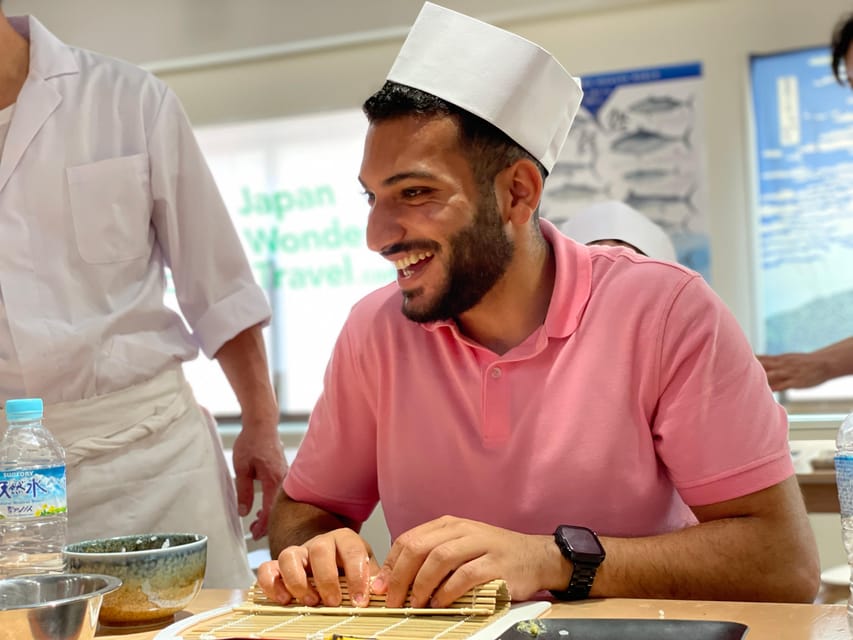
The meeting point can vary depending on which option you book, so check the confirmation details closely. You’ll be heading to a traditional classroom on the third floor, and that part is not subtle: stairs only.
Once you are there, the classroom setup is designed for working at your station. Reviews repeatedly mention friendly hosts like Satoko, Yuko, Shoko, and guides who speak clear English, and that can make a big difference if you are nervous about trying seafood or knives. The hosts interpret and guide the session the whole way, so you are not left guessing.
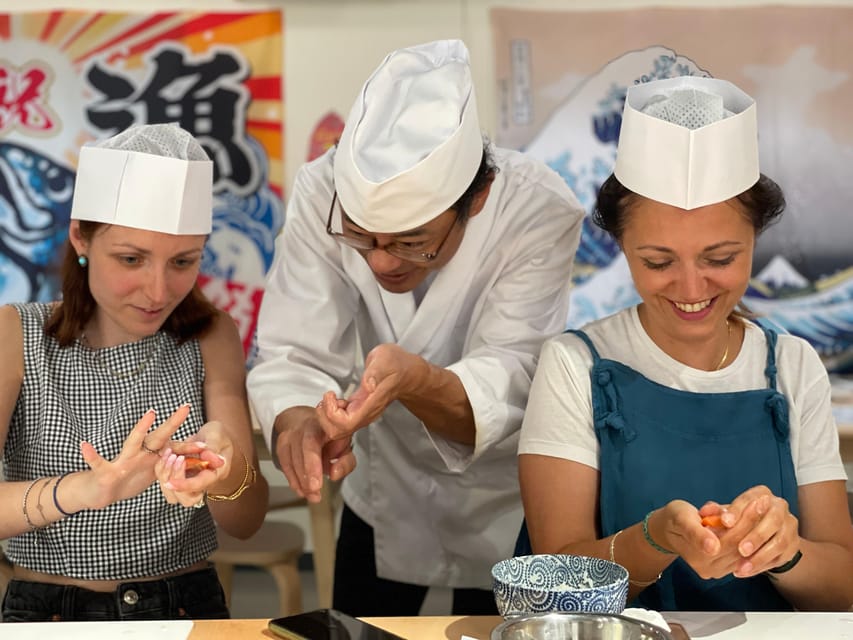
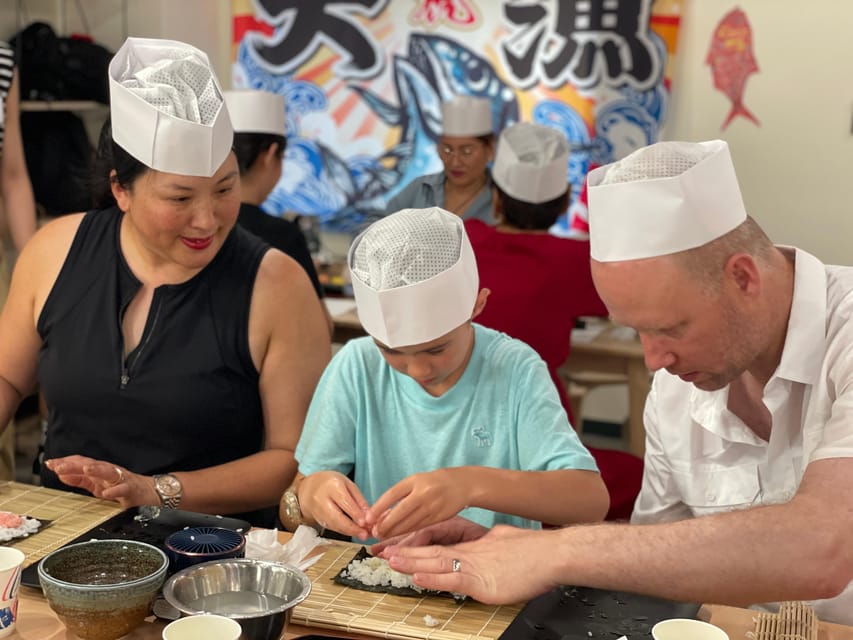
One small included item that people often smile about is the hat. It is practical in a kitchen-like setting and also adds to that “you are in the class” feeling, not just a casual demo.
The Fish Prep Show: Knives, Disassembly, and What to Look For
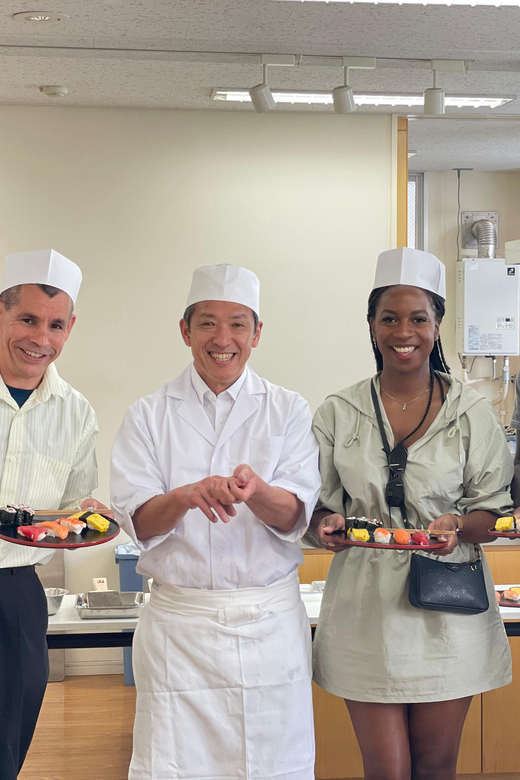
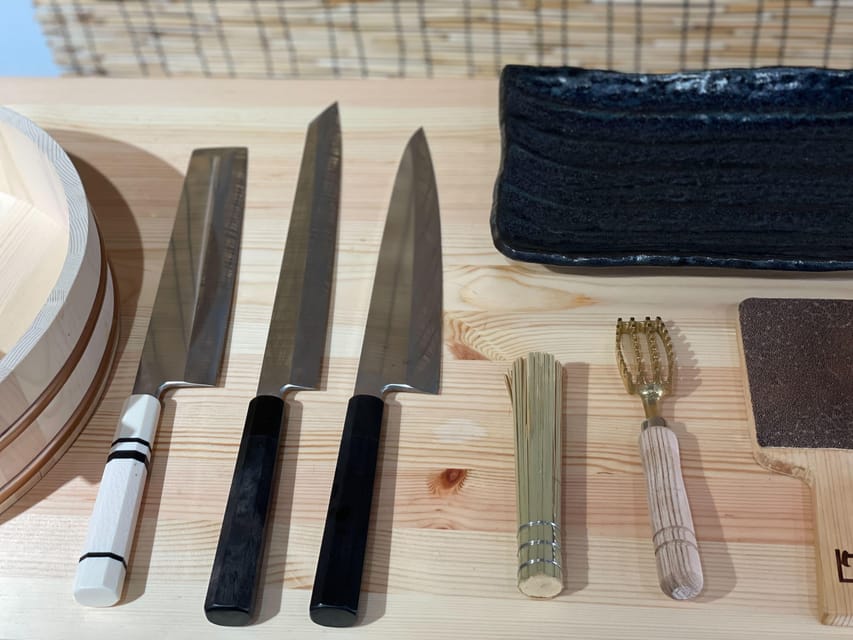
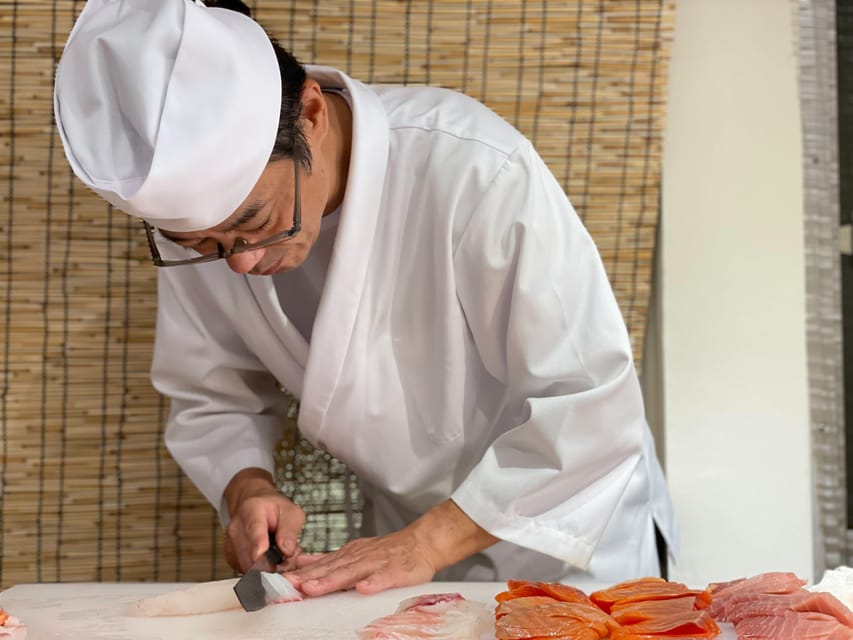
The session starts with a fish disassembly show by the sushi chef. This is not just drama, it is education. You learn the steps involved in preparing fish for sushi, and you get explanations about Japanese knives along the way.
That knife talk is useful even if you never plan to cut raw fish at home. It helps you understand what makes certain cuts work for sushi textures, and why speed plus control matters. You also start seeing why a sushi chef focuses on the smallest details, like thickness and how the cut holds its shape.
From the reviews, I also picked up that some chefs explain sashimi-related preparation as part of the broader fish discussion. So even if you are there to make nigiri and maki, you still walk away with a bigger picture of what the chef is thinking about.
More Market Walks in Tokyo
- Tokyo Sushi Making Class in Tsukiji with Professional Chef
★ 5.0 · 1,177 reviews - Tsukiji Fish Market Guided Tour and Sushi Making with Pro Chef
★ 5.0 · 775 reviews - Tokyo: Tsukiji Fish Market Food and Culture Walking Tour
★ 4.7 · 757 reviews - Tsukiji Fish Market: Street Food & Culture Walking Tour
★ 5.0 · 669 reviews
Making Nigiri and Maki Like a Pro: Your Hands-On Station
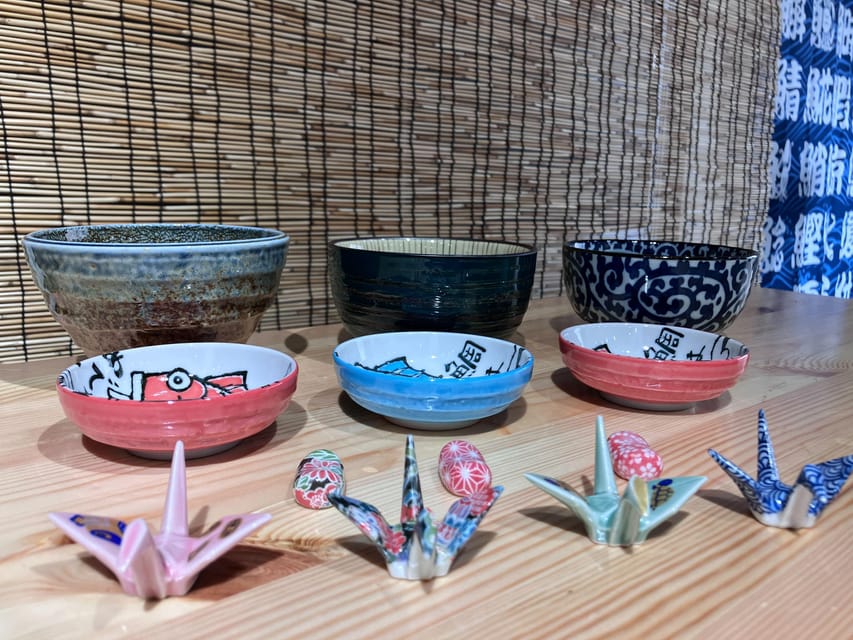
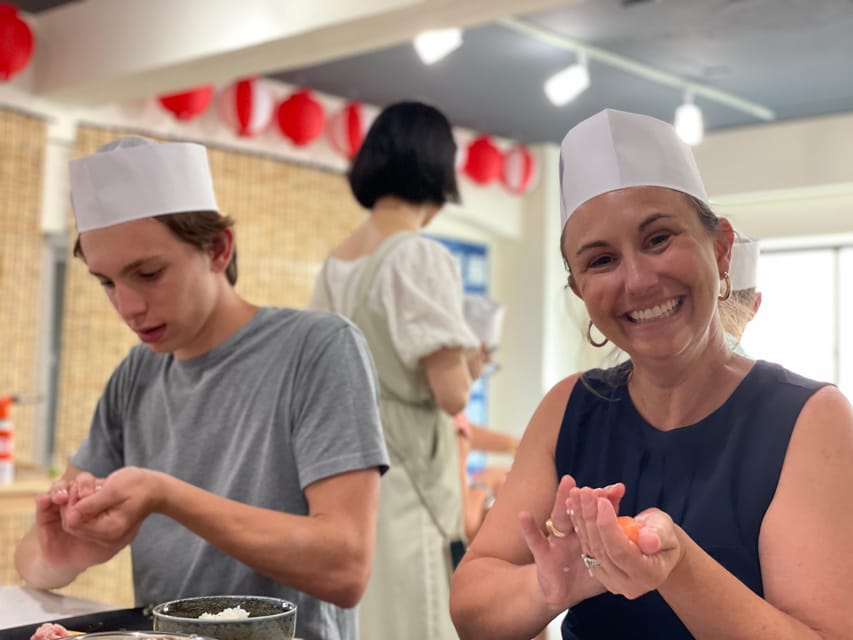
After the demo, the class shifts into the part you came for: making sushi. You learn what sushi is, then the proper steps for shaping nigiri and rolling maki. The chef teaches step by step, and the staff helps you get unstuck when you are forming rice or adjusting the fish placement.
The sushi you make is specific: 4 different nigiri sushi and 1 maki sushi. That variety is a smart design choice. You learn that nigiri is not just one technique, it is multiple ways of pairing rice and topping, and the flavor changes with each choice.
You also work with proper utensils and tableware, provided by local shops. That is another reason this class feels like more than a generic cooking workshop. When the tools match the technique, you can actually practice what professionals do instead of improvising with mismatched equipment.
Based on what I see in the reviews, many people love that the instruction includes tips for getting the look and the feel right, not just the final taste. If you want your sushi at home to resemble the real thing, those shaping and handling details matter.
Sushi Master Performance, Then You Eat: Wasabi, Dashi, and Green Tea
The class is not only about what you make. The sushi master also prepares extra sushi for you to eat, including expertly prepared wasabi. You then eat what you made, alongside what the chef makes, so you can compare your results with a true pro’s.
That comparison is a quiet learning tool. Even if you think you are doing everything right, tasting the chef’s version shows you where technique changes flavor, mouthfeel, and balance. Several reviews mention the master’s skill, including speed and accuracy, and it is impressive because you see it in real time.
You’ll also get traditional dashi soup and green tea. This pairing is especially helpful because sushi can be rich and salty from fish and rice seasoning. A warm, savory sip plus a clean tea reset makes the meal feel less heavy and more intentional.
One cultural touch you might experience is a short blessing before eating, which appears in reviews. If you see it, take it as part of the rhythm of the day, not as a performance. It fits the “sushi is craft and ritual” idea.
How to Plan Your Day Around the Class
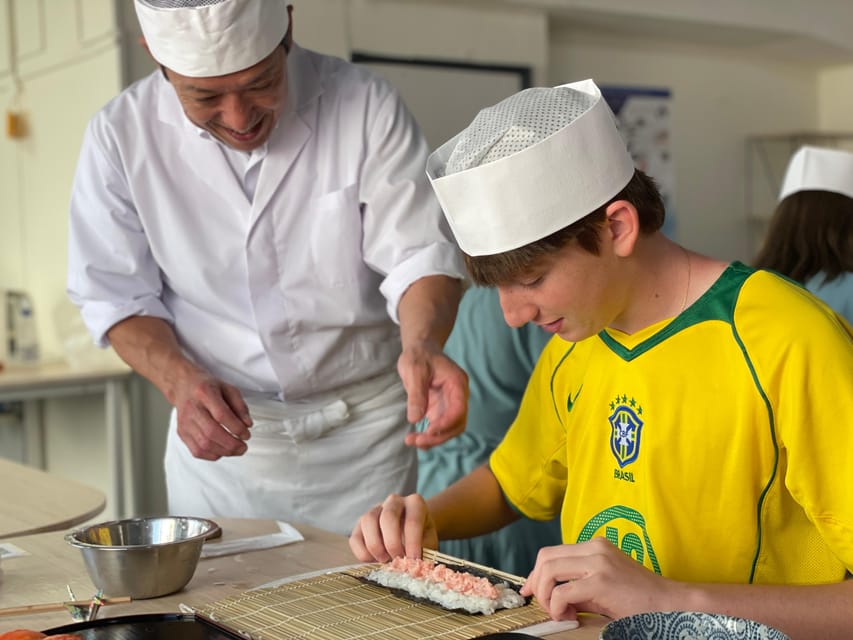
This experience runs from 90 minutes to 4 hours, depending on the option booked. So you’ll want to avoid rushing to the next commitment immediately afterward. The tour may run beyond the scheduled ending point, so if you have a reservation or timed plan, tell the operator in advance.
Timing also matters because this is a market-area activity. If you arrive early, you can do your own light exploring before class starts. The listing notes that guidance through the market is not included, so plan to browse on your own, then rely on your host for quick interpretation during the class itself.
If you want photos, your odds are good because you are handling real sushi tools and making complete pieces, not just tasting sauces. Just remember you are in a working classroom. Keep things respectful, move calmly, and let the chef lead the tempo.
Who This Class Suits Best, and Who Should Skip It
This workshop is family-friendly, and it has an age guideline of children 4 years and up. Some reviews also suggest it works well for older kids who can focus and sit through instruction. If your child tends to wiggle and interrupt, you might have a tougher time.
It is not a fit for everyone, though. The class does not accommodate vegetarian, vegan, or halal or kosher gluten-free requests. They may try to handle allergy-related requests, but you need to let them know at reservation time.
It also does not work for people with mobility impairments or wheelchair users because of the stairs and the classroom location. And if you are expecting a quiet, hands-off tasting only, this is not that. It is hands-on sushi making, which is the point, but it is worth knowing up front.
If you do like learning by doing, this is a great match. Reviews include people who do not normally eat raw fish, and the experience still clicked because the sushi is made with fresh ingredients and taught clearly.
Should You Book This Tsukiji Sushi Making Class?
If you want a Tokyo experience that feels connected to where the food actually comes from, this one is a strong choice. The value is in the full package: a pro chef, real market ingredients, proper tools, and sushi you make plus extra sushi to taste. It is not just entertainment, it is skill-building you can repeat at home.
Book it if you are comfortable climbing stairs and you eat fish, especially if you enjoy learning technique. Skip it if you need vegetarian or vegan options, or if you rely on step-free access.
Also, book early enough that you can keep your schedule flexible. With the possibility of timing running slightly long, you’ll enjoy the class more when you are not sprinting to your next stop.
FAQ
How long is the sushi making class?
The duration is listed as 90 minutes to 4 hours, depending on the option you book.
Where does the class meet?
The meeting point may vary depending on the option booked, so you should check your specific confirmation.
What sushi will I make during the workshop?
The included sushi you make is 4 different nigiri sushi and 1 maki sushi.
Are drinks and soup included?
Yes. Tea and soup are included.
What about dietary restrictions like vegetarian or vegan?
Vegetarian, vegan, and other specific dietary requests are not accommodated, based on the provided information.
Is there any risk with allergies?
Let the operator know about any allergies when you make a reservation. Allergy-related requests may be possible, but it may not be guaranteed.
Is the class accessible for wheelchair users or mobility impairments?
No. The classroom is on the third floor with stairs only, and it does not accommodate wheelchair users or people with mobility impairments.
What is the cancellation policy?
Free cancellation is available up to 24 hours in advance for a full refund.
More Sushi Workshops in Tokyo
- Sushi Making Tokyo Roll and Authentic Japanese Sushi Class
★ 5.0 · 3,971 reviews - Tokyo: Roll and Authentic Sushi Making Class in Asakusa
★ 4.9 · 1,957 reviews - Tokyo: Sushi Making Class in a Happi Coat near a Famous Spot
★ 4.9 · 1,377 reviews - Sushi Making Tokyo! Popular Maki Sushi & Japanese Sushi(+Recipe!)
★ 5.0 · 1,314 reviews
More Shopping Tours in Tokyo
- Tsukiji Fish Market Small-Group Food Walking Tour
★ 5.0 · 621 reviews - Tokyo Food Tour Taste Fresh Delights at Tsukiji Market
★ 5.0 · 429 reviews - Tokyo Tsukiji Fish Market Tour and Sushi Making Lesson
★ 5.0 · 390 reviews - Tsukiji Fish Market: Street Food & Culture Walking Tour
★ 4.8 · 259 reviews
Newly listed around Tokyo
- Tokyo private transfer for Yokohama Port★ 4.5 · 63 reviews
- Luxury Kimono Photoshoot at Ginza Tokyo★ 5.0 · 7 reviews
- Tokyo Allstar Food Tour★ 4.5 · 206 reviews
- Tokyo Art Aquarium Museum E-Ticket with optional Tokyo Metro Pass★ 5.0 · 17 reviews
- Tokyo: Best Ginza Food Tour at 3 Local Eateries★ 5.0 · 83 reviews
- Private One Day Nikko Tour with Bilingual driver★ 3.5 · 11 reviews
- PRIVATE tour in 180SX to Daikoku+++++★ 5.0 · 6 reviews
- Kabuki Talk★ 5.0 · 10 reviews
Sushi Cooking Workshops, compared.
Sushi Making Tokyo Roll and Authentic Japanese Sushi Class
Read our review →
Roll and Authentic Sushi Making Class in Asakusa
Read our review →
Sushi Making Class in a Happi Coat near a Famous Spot
Read our review →
Sushi Making Tokyo! Popular Maki Sushi & Japanese Sushi(+Recipe!)
Read our review →
Tokyo Sushi Making Class in Tsukiji with Professional Chef
Read our review →
Tokyo Night Foodie Tour in Shinjuku – Seasonal Sushi, Wagyu Beef
Read our review →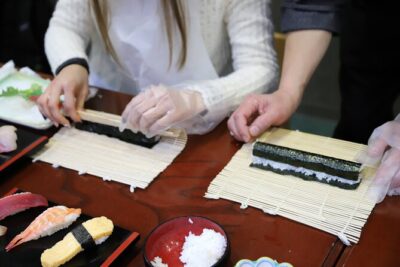
Tsukiji Fish Market Guided Tour and Sushi Making with Pro Chef
Read our review →