Review · TOKYO TOURS
Handmade Goshuin Book Experience Eco Friendly Upcycling in Tokyo
A shrine keepsake, made from scraps. In Asakusa, you create an original handmade goshuin stamp book from eco-minded materials, so your next visit feels personal, not generic. The result is a functional notebook for the shrine ritual, plus the story of how you made it.
I like two things a lot here: the class is designed for beginners, with staff guidance step by step, and you get to choose your own cover style from real textile and paper options. Patricia, and sometimes Karin depending on the day, keeps the pace friendly and the table stocked. One consideration: on days when there is extra activity happening around the area, staff attention can be a bit more split than you might want, so build in a relaxed mindset for the full hour.
In This Review
- Quick takeaways
- Asakusa and the Idea Behind a Handmade Goshuin Book
- What You Make in 50 Minutes: An Upcycled Stamp Book You Can Actually Use
- Picking Materials: Kimono Scraps, Paper Bags, and Wrapping Paper
- Inside the Class at Pink.Asakusa (The Room, Asakusa 4F)
- From Craft to Stamps: How to Use Your Goshuin Book Right Away
- Price and Value: Is $32.24 Worth It?
- Eco-Friendly Upcycling in Tokyo, Without the Extra Noise
- Practicalities: Timing, Group Size, and the Toilet Step-Down
- Who This Suits Best (And Who Might Want Another Option)
- When Attention Gets Split: A Small-Day Timing Reality
- Should You Book the Handmade Upcycled Goshuin Book Workshop?
- FAQ
- How long is the handmade goshuin book class?
- Where does the experience start, and what’s the exact meeting point?
- How much does it cost?
- Is it a small-group experience?
- Do I need a printout, or is the ticket mobile?
- What is included in the activity?
- Can beginners participate?
- Are there any accessibility concerns?
- How far in advance is it typically booked?
- What is the cancellation policy?
Quick takeaways
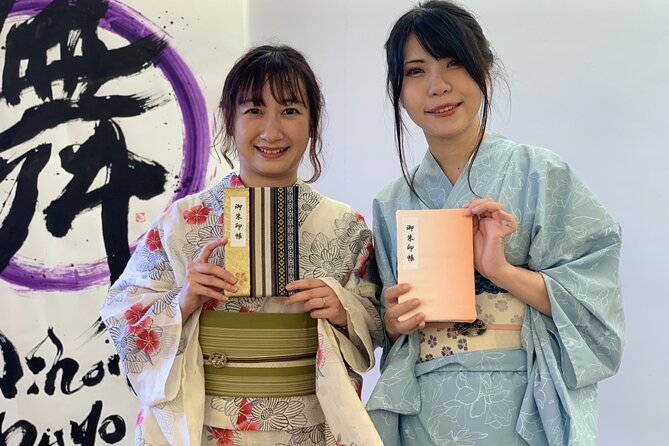
- You craft a real goshuin book, not just a decorative souvenir you never use again.
- Upcycled materials come from kimono production scraps plus used paper bags and wrapping paper.
- Small group size, up to 8 people, helps you actually work on your design.
- Beginner-friendly guidance means you can make something you feel proud to carry.
- A handy “start your stamp immediately” habit is easy, since Asakusa has shrines and temples nearby.
Asakusa and the Idea Behind a Handmade Goshuin Book
Tokyo can feel fast and shiny. This experience slows you down on purpose, right where old Tokyo shows up in the streets of Asakusa.
To get why a handmade goshuin book matters, you first need the basics. Goshuin are the red-seal-style proofs of visiting a shrine or temple. When you receive one, the shrine or temple name, the name of the principal image, and the date of your visit are written in ink. That means the book is more than an arts-and-crafts project. It is the container for your trip’s “I was here” proof.
The workshop turns that idea into something you can hold in your hands before you ever go stamping. You are not waiting for a souvenir. You are making the tool for the souvenir.
A few more Asakusa days to weigh up
- Tokyo Sumo Entertainment Show with Chicken Hot Pot and Photo
★ 5.0 · 1,205 reviews - Mt Fuji Private Day Trip from Tokyo with English speaking driver
★ 5.0 · 846 reviews - Kimono Tea Ceremony at Tokyo, Asakusa Maikoya
★ 5.0 · 638 reviews
What You Make in 50 Minutes: An Upcycled Stamp Book You Can Actually Use
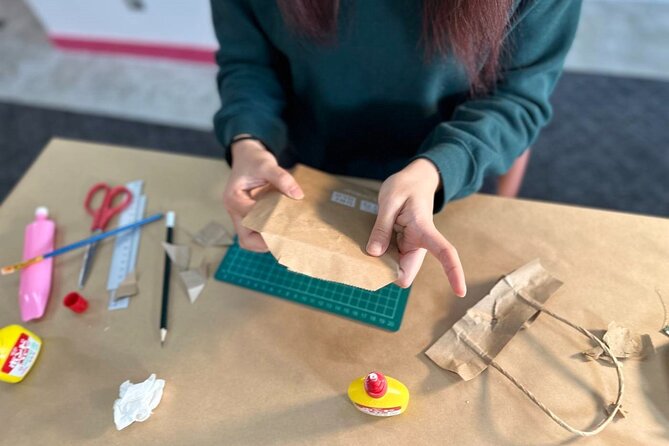
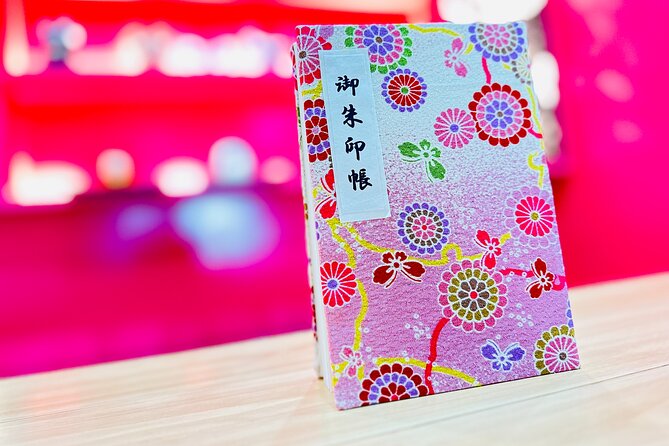
You are making a goshuin stamp book (also called a stamp book), built for repeated use when you visit shrines and temples. The process is structured, but the design is yours.
The making is broken into clear stages:
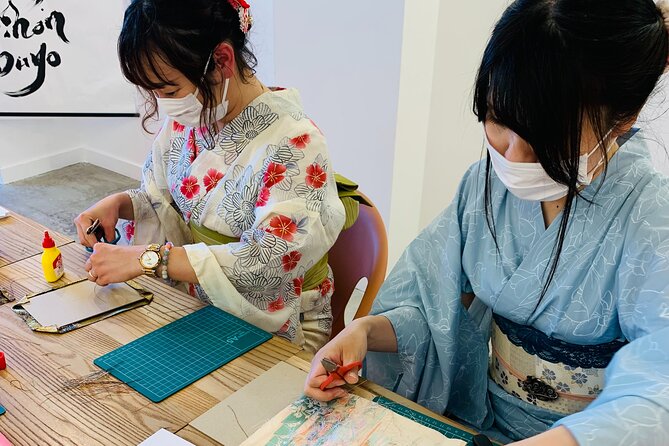
- Choose favorite materials for the cover.
- Cut and paste those materials on the cover with glue.
- Paste the cover and the bellows text together.
- Write a title on the cover.
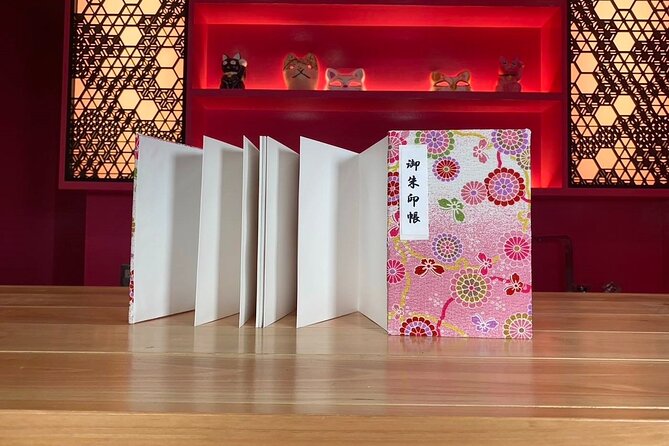
That bellows text step is important. It is what turns a flat cover into a usable book you can open, close, and keep. It is the difference between a “cool craft” and an actual item you can keep using during your Japan trip.
And because it is a handmade book, you get something practical and personal. When you later receive a goshuin, it sits in a book you chose and built, not one you bought last minute.
Picking Materials: Kimono Scraps, Paper Bags, and Wrapping Paper
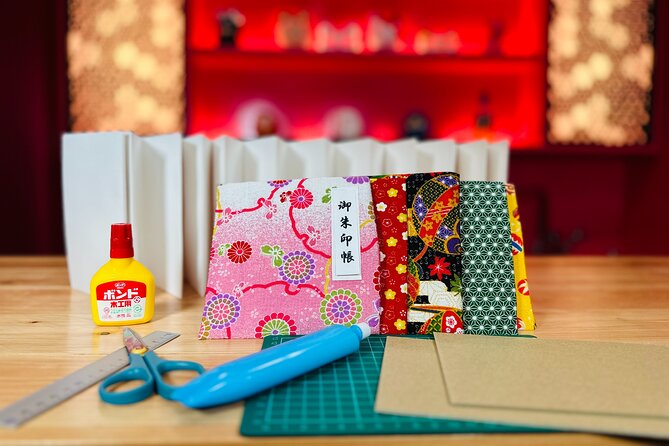
This class leans hard into eco-friendly upcycling, which is the idea of giving new life to items that would otherwise be discarded. In your case, the materials include:
- scraps generated in the kimono manufacturing process
- used paper bags
- wrapping paper
The nice part is that you are not just hearing a lecture about sustainability. You get to pick pieces and design your cover around them. That choice is where the experience becomes memorable. A kimono-shop scrap can look totally different from a paper-bag texture, and mixing them makes each book feel one-of-a-kind.
Also, since you choose the pattern, you can steer the style. Some people will go for bold contrasts. Others will prefer something quieter. Either way, the book becomes a small visual summary of your taste, not a template.
Inside the Class at Pink.Asakusa (The Room, Asakusa 4F)
The workshop takes place at Japanese Experience Cafe and BAR Pink.AsakusaJapan. The meeting point is The Room浅草 4F, at 1-chōme-16-11 in Asakusa.
A few practical things matter here:
- It is near public transportation, so you can plug this into a day without major detours.
- The session is about 50 minutes, which is a sweet spot. It feels like a real activity, not a quick photo stop.
- The max group size is 8 travelers, so you are not elbow-to-elbow.
During the class, staff support you through the steps. That is a big deal if you are not a craft person. The experience is set up so you are not guessing what to do next.
You also get an informal “design coaching” vibe. In particular, staff guidance helps you turn your material choices into something that looks intentional, even if you start with a pile of separate scraps.
A different sort of day in Japan:
- Asakusa Senso-ji Temple and Old Tokyo Walking Tour
★ 5.0 · 560 reviews - Skip the lines Basic Ticket at SAMURAI NINJA MUSEUM TOKYO
★ 5.0 · 470 reviews - Official Street Go-Kart Tour in Asakusa
★ 5.0 · 461 reviews - Private Craft Your Own Ring Handmade Experience in Asakusa, Tokyo
★ 5.0 · 358 reviews
From Craft to Stamps: How to Use Your Goshuin Book Right Away
This is where the “why” clicks.
After you make your book, you can head to a shrine or temple and use it to start collecting goshuin. The workshop experience is the preparation, and the shrine visits become the payoff.
Remember what goshuin represents: the shrine or temple name, the principal image, and the date in ink. That means each stamp becomes a dated chapter of your trip, not just pretty calligraphy in a random notebook.
A small practical tip: treat your new book like it is precious. Keep it protected as you move around Asakusa. Also, build a little time buffer into your next stop so you are not rushing through the first stamp moment.
If you enjoy making your own souvenirs, this gives you a double layer of value: you create the container, then you fill it with the official visit proof.
Price and Value: Is $32.24 Worth It?
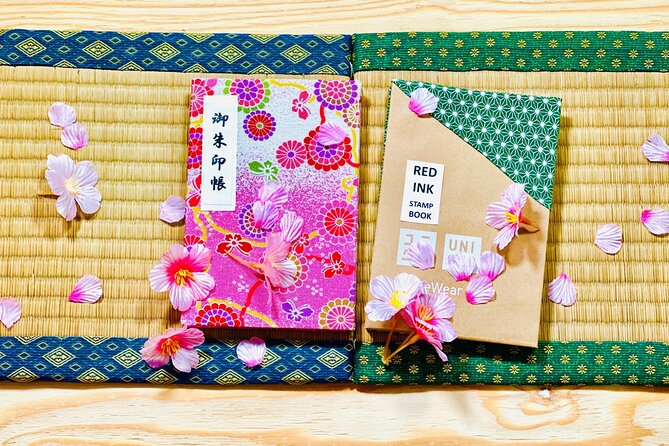
$32.24 for about 50 minutes sounds modest, especially in Tokyo. The best way to judge value here is by what is included and what you take home.
You are paying for:
- guided craft instruction
- materials (the cover scraps and paper options)
- the finished product, a usable goshuin stamp book
You could buy a standard stamp book, sure. But that is not the same experience. Here, you are investing time to create something that matches your material choices. That changes how you will use it later, and it changes how you will remember it.
In short, this is good value if you want:
- a calmer activity between sightseeing blocks
- a tactile souvenir you will actually carry and use
- a sustainability angle that is real, not performative
If you only want a quick shopping item, you might prefer something simpler. But if you want a “I did this” Tokyo memory, the price-to-experience ratio feels fair.
Eco-Friendly Upcycling in Tokyo, Without the Extra Noise
Tokyo has plenty of ways to shop your way through a trip. This experience goes in a different direction. Upcycling here is not just an environmental theme. It affects the story you bring home.
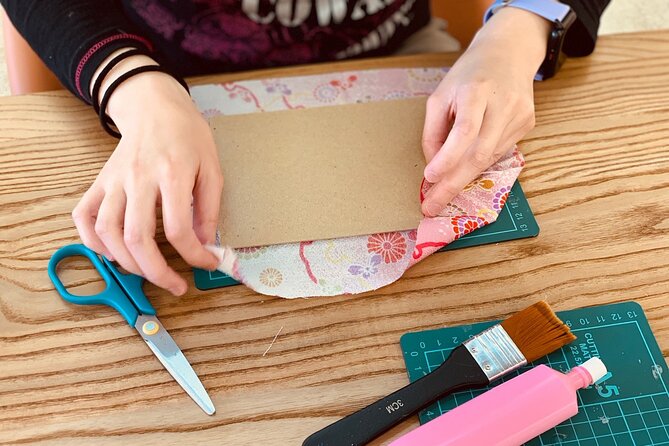
You start with scraps tied to kimono manufacturing. You add the textures of used paper bags and wrapping paper. Then you build a new object with glue, cutting, and layout decisions.
That is the practical point: you are transforming “stuff that would be thrown away” into an item you keep for years. That kind of reuse feels concrete.
And because you get to choose patterns, sustainability becomes personal. You end up caring about the materials because they helped create the book.
Practicalities: Timing, Group Size, and the Toilet Step-Down
You are looking at a roughly 50-minute session. It ends back at the meeting point, so you are not dealing with long transfers or a complicated route.
Group size is capped at 8, which helps with attention and workspace. It is also the reason the class stays relaxed even when people have different skill levels.
Two other practical notes from the experience details:
- The ticket is mobile, so you should be ready with your phone for check-in.
- There is a step down to the toilet.
That last one matters if mobility is a concern for you. If you know steps are tough, plan accordingly.
Who This Suits Best (And Who Might Want Another Option)
This workshop is a strong match for:
- couples and solo travelers who want a quieter, hands-on Tokyo moment
- families looking for a creative break, including rainy-day plans
- anyone who wants an authentic cultural souvenir that is tied to a real ritual visit
It is also a good fit if you want something you can repeat. The skill you learn is bookmaking, and the process can be brought home as a craft habit.
It may be less ideal if:
- you need high-touch 1:1 help the whole time
- your schedule is so tight that a slower start would stress you out
One more mindset note. This is a craft session. It is not a guided tour of temple art or a long explanation of Japanese religion. You come for making, then you go for the stamping.
When Attention Gets Split: A Small-Day Timing Reality
There is one possible drawback worth calling out: sometimes staff time can be split if there is extra activity happening around the area. That can mean you wait a moment for attention before you start gluing or cutting, especially if multiple groups are doing different tasks at once.
If you want the smoothest experience possible, pick a time when you are not rushing to your next stop. Give yourself slack so the creative flow stays fun.
Should You Book the Handmade Upcycled Goshuin Book Workshop?
Book it if you want a meaningful souvenir you made yourself, using eco-friendly upcycled materials. The small group size and the guided steps make it approachable, even if you do not consider yourself artsy.
Skip it if you only want a quick browse item, or if your schedule is too tight for a relaxed craft pace.
If you do book it, set your next plan around it. Make the stamp book first, then treat your first goshuin visit like part of the same story, because once you have the book in hand, the shrine and temple stops feel more like your own chapter.
FAQ
How long is the handmade goshuin book class?
The experience runs about 50 minutes (approx.).
Where does the experience start, and what’s the exact meeting point?
You meet at Japanese Experience Cafe and BAR Pink.AsakusaJapan, The Room浅草 4F, 1-chōme−16−11, Asakusa, Taito City, Tokyo.
How much does it cost?
The price is $32.24 per person.
Is it a small-group experience?
Yes. The class has a maximum of 8 travelers.
Do I need a printout, or is the ticket mobile?
It’s a mobile ticket.
What is included in the activity?
You make an eco-friendly upcycled goshuin stamp book by reusing materials such as kimono manufacturing scraps, used paper bags, and wrapping paper. Staff guide you through the steps.
Can beginners participate?
Yes. The staff provides support, so beginners can enjoy the experience.
Are there any accessibility concerns?
The toilet has a step down.
How far in advance is it typically booked?
On average, it is booked 15 days in advance.
What is the cancellation policy?
Free cancellation is available. You can cancel up to 24 hours in advance for a full refund. If you cancel less than 24 hours before, the amount paid is not refunded.
Newly listed around Asakusa
- Tokyo : Asakusa Food Tour – 12 Dishes & 3 Drinks★ 5.0 · 44 reviews
- Tokyo: Customized Private Tour with a Local Guide★ 5.0 · 16 reviews
- 【Tokyo/Asakusa】Traditional Japanese Washi Papermaking experience★ 5.0 · 146 reviews
- Tokyo Japanese Dance Cabaret Theater Asakusa-Kaguwa★ 5.0 · 170 reviews
- Asakusa Kimono Photography Tour (Private Option Available)★ 5.0 · 20 reviews
- Asakusa:Family-Friendly Kimono & Yukata Experience at WARGO★ 5.0 · 30 reviews
- Tokyo: Asakusa & Sensoji ー Oldest Temple Walking Tour (2hrs)★ 5.0 · 213 reviews
- Asakusa Rental Kimono in Tokyo★ 5.0 · 11 reviews
Tokyo Tours, compared.

Mt Fuji and Hakone 1-Day Bus Tour Return by Bullet Train
Read our review →


teamLab Planets TOKYO Digital Art Museum Entry Ticket
Read our review →
Mt Fuji & Hakone Cruise, Drum Show Bullet Train 1 Day from Tokyo
Read our review →
Sumo Show Experience with Chicken Hot Pot and a Photo
Read our review →
Shinjuku Food Tour (13 Dishes at 4 Local Eateries)
Read our review →