
Review · SOBA & UDON MAKING CLASSES
Japanese Noodle Making Class
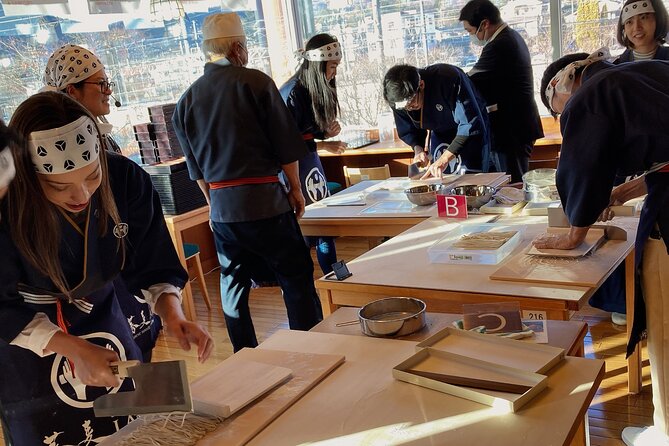
Stone-milled soba makes everything feel real. This class in Karuizawa has you go from scratch on Shinshu soba, including peeling the husk and grinding the flour on a millstone. I also like that you don’t just learn the technique, you eat your walnut soba the same day, served with tempura and walnut sauce at the restaurant.
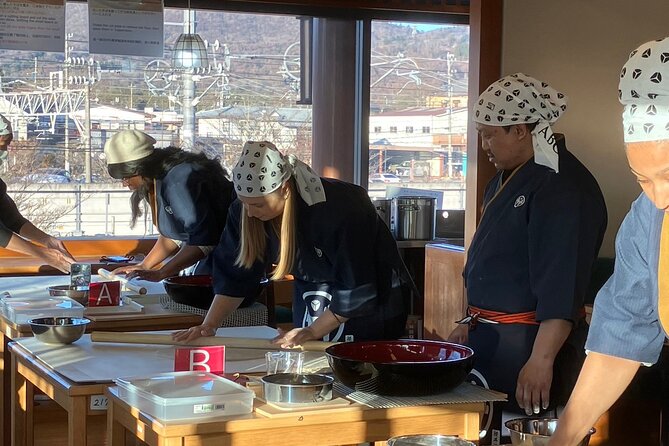
The heart of the experience is simple and satisfying: an instructor guides you through kneading, stretching, and cutting noodles while the setup stays friendly for both kids and foreign visitors. You’ll also get practical freebies, like rental work clothes and a tenugui towel to take home.
One thing to keep in mind, because the class maxes at 32 people, you may not get tons of one-on-one tweaking on every step, even though the teaching is meant to be clear and supportive.
In This Review
- Key things to know before you go
- Why Karuizawa’s walnut soba is worth your time
- Getting to Shinshu Soba Restaurant Yamahei with almost no hassle
- From husk peeling to stone-milled flour, the class starts with real work
- Knead, stretch, cut, and learn the soba rhythm
- The meal comes fast: tempura plus walnut soba soup
- Tenugui, samue, and maekake: the class feels like a cultural moment
- Price and value for 2 hours of soba from scratch
- Who should book this class
- Should you book? My quick call
- FAQ
- Where is the meeting point for the Japanese noodle making class in Karuizawa?
- How long does the soba noodle making class last?
- What is included in the meal after the class?
- Do I get a gift?
- What traditional clothing do I wear during the class?
- Are instructions available in English?
- Is free cancellation available?
Key things to know before you go
- Stone-milled soba flour starts the process: you grind flour using a millstone and water mill, not just pre-made dough.
- Nagano’s Shinshu soba is the focus: the class leans into why soba grows well in cold, mountainous Nagano.
- You make, you cut, you cook, you eat: your noodles are served on the spot with tempura and walnut sauce.
- Walnut soba comes with a mortar moment: you can try grinding walnuts yourself to add to your soup.
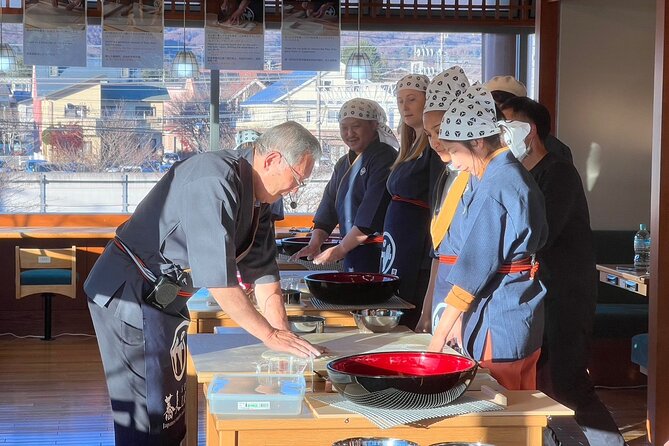
- Traditional attire is part of the fun: you’ll use rented samue and a maekake apron.
- English support is available: instruction is offered in English and Japanese.
Why Karuizawa’s walnut soba is worth your time
If you only know soba as a quick bowl at a shop, this experience helps you understand soba as craft, not just food. In Nagano Prefecture, the old Shinshu name comes up a lot, and for good reason: Nagano’s mountains create cold, high areas where soba does well. That matters because it shapes the quality and character of the noodles, and it gives the class a real sense of place.
Karuizawa is especially associated with walnut soba. The idea is straightforward and very satisfying: you take ground walnuts and incorporate them into the soup around the noodles. This class leans into that identity, and it goes one step further than most food demos. You can actually grind walnuts in a small mortar, then add them to your soba soup, turning the walnut part into an extra hands-on mini-task.
The result is that you leave knowing more than one flavor. You understand the logic behind how the noodles are made and why the topping works. You also get an edible souvenir, since you eat what you made, while it is fresh enough to feel like a proper meal.
Soba and Udon Making classes readers book most in Nagano:
- Matsumoto Castle Tour & Soba Noodle Experience
★ 4.5 · 20 reviews - 1-Day Togakushi Tour: Soba making, Ninja Town, and Hidden Shrines
★ 5.0 · 18 reviews - Matsumoto Castle Tour & Soba Noodle Making Workshop
★ 5.0 · 10 reviews
Getting to Shinshu Soba Restaurant Yamahei with almost no hassle
This class is based at Shinshu Soba Restaurant Yamahei in Karuizawa, and it’s a short walk from Karuizawa Shinkansen Station, about five minutes. That location is a big deal if you want your day to stay flexible, because you’re not tucked away in some out-of-the-way neighborhood where you need extra planning.
You’ll meet at 1178-161 Karuizawa, Kitasaku District, Nagano 389-0102, Japan. The experience also uses a mobile ticket, which helps you avoid paper chaos right before the class starts.
Timing matters here because the whole experience is about two hours. That’s long enough to learn kneading, stretching, and cutting, and still short enough that you can pair it with other Karuizawa plans, like shopping in the outlets area or taking a breather between train segments. The group size cap of 32 keeps it organized, but it also means you’ll likely follow a shared rhythm rather than waiting for your own private pace.
From husk peeling to stone-milled flour, the class starts with real work
Most noodle experiences begin after the hard part. This one doesn’t. You peel off the soba husk yourself, then you grind the soba flour using a millstone and water mill. That sequence gives you a new appreciation for why soba has a different feel than wheat noodles. It’s not just the taste, it’s the texture you create by how you handle the dough.
Peeling the husk is practical, not theatrical. You’re learning how to treat the material gently while still getting the job done. Then you move into grinding, where the millstone and water mill setup puts you in contact with how traditional soba starts its life. Even if you’ve never worked with grain before, it’s the kind of task that clicks quickly because it’s physical and visible.
In a class like this, your goal shouldn’t be perfect uniformity. Your goal is to learn the technique and feel what the dough responds to. When you knead and stretch later, you’ll understand why the earlier steps matter.
And if you’re worried about language, you should feel better. Instructions are available in English and Japanese, so you’re not left guessing at the critical moments. That support is especially helpful when you’re doing something hands-on, because you need quick clarity more than long lectures.
Knead, stretch, cut, and learn the soba rhythm
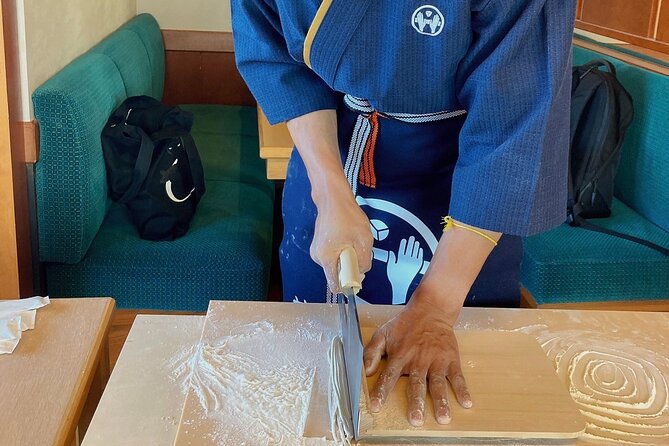
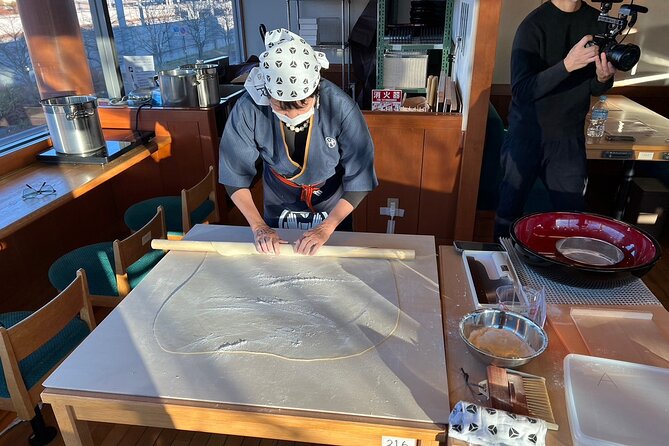
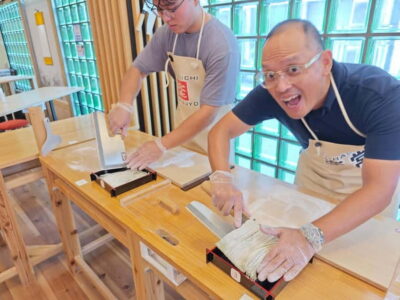
Once you’ve handled the ingredients, the instructor takes you through the core moves: kneading, stretching, and cutting soba noodles. This is where the experience turns into a real skill practice.
Kneading teaches you balance. Too firm and the dough can feel resistant. Too soft and it can be hard to stretch evenly. Stretching is where you get a feel for tension and thickness. Cutting is the final test, because it locks in the shape that will matter when the noodles hit hot water.
What I appreciate about this approach is that it’s structured. You’re not thrown into a chaotic kitchen with a big menu of tasks. The instructor guides you step by step, so each motion has a purpose. Then, when you see what your noodles look like after cooking, you connect the dots between handwork and outcome.
Also, don’t underestimate the value of doing it in a group. When you’re seated with others, you can compare your thickness and cut style in a helpful way, without it feeling like competition. You’ll likely get a lot of informal encouragement from the staff as people get their rhythm.
A few more Nagano days to weigh up
- 1-Day Snow Monkeys, Zenko-ji Temple & Sake in Nagano
★ 5.0 · 1,020 reviews - Nagano: Snow Monkeys, Zenkoji Temple & Sake Day Trip
★ 4.9 · 833 reviews - From Tokyo: Snow Monkey 1 Day Tour with Beef Sukiyaki Lunch
★ 4.6 · 295 reviews - Tokyo: Snow Monkey & Nagano Customiseable Private Day Tour
★ 4.8 · 138 reviews
The meal comes fast: tempura plus walnut soba soup
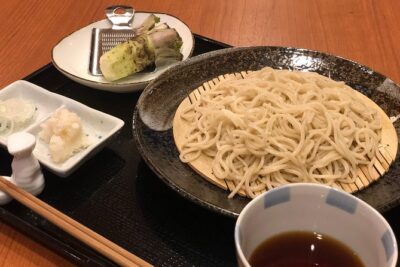
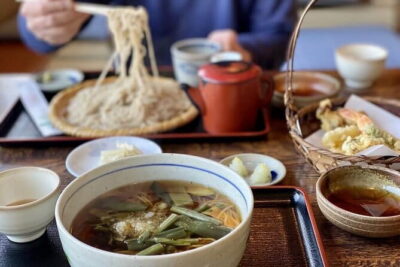
After you make the noodles, you eat them right away at the restaurant. That is part of the value you’re paying for. There’s something magical about tasting your own work while it’s at its best, and it also makes the whole process feel complete rather than like a snack-sized demo.
Your meal includes:
- Tempura, as a side that contrasts with the nutty soba experience
- Walnut soba soup, the local specialty tied to Karuizawa and Nagano’s Shinshu identity
- Your soba noodles made by you
One of the most fun touches here is the walnut element. You can grind walnuts in a small mortar and add them to your soba soup if you’re interested. If you do it, you’ll taste the difference between plain broth and walnut-enriched soup, and you’ll understand why this dish is so strongly associated with the region.
The tempura also matters because it gives you a full meal structure. You’re not just chasing noodles. You get a salty, crunchy counterpoint that makes the whole brunch feel like a proper break in your day.
Tenugui, samue, and maekake: the class feels like a cultural moment
Food classes can sometimes feel like a one-time activity. This one adds a cultural layer that makes the time more memorable.
You’ll rent tools for making noodles, and you’ll also wear original samue (traditional Japanese work clothes) and maekake (traditional apron). The clothes make you look the part, but they also serve a practical function. They help you work comfortably and keep your hands and sleeves where they belong.
Then you take home a tenugui, a traditional towel gift. It’s small, but it’s the kind of practical souvenir that actually gets used later. And it’s a nice way to bring the activity beyond just a photo at the table.
If you’re traveling with kids, the experience looks built for that too. The setup includes soba-making costumes and pedestals for elementary school students, so younger makers can participate in a way that feels age-appropriate rather than like adults holding them up.
Price and value for 2 hours of soba from scratch
At $91.21 per person for about two hours, this class isn’t the cheapest food experience in Japan. But it’s also not just a tasting. You’re paying for the full chain, from ingredient preparation to a meal you eat immediately.
Here’s why the value is stronger than it first appears:
- Your work becomes your lunch: soba noodles made by you, served at the restaurant.
- The meal is included: you also get tempura and walnut soba soup, not just a small bite.
- Tools and traditional clothing rentals are included: samue, maekake, and noodle-making tools are part of the package.
- You get a souvenir: the tenugui towel is included.
If you’re comparing against a cooking class that only teaches technique with pre-made components, the grinding and husk peeling stand out. And because the station is so close, you’re not losing time to transport or logistics, which is another hidden cost people forget to count.
The price also reflects the fact that the restaurant is set up for instruction, with staff ready to guide you in English and Japanese. That kind of coordination is not free, and it shows in how the class is paced.
Who should book this class
This is a great fit if you want a hands-on food experience that feels authentic without being overly complicated. You don’t need special cooking skills. You just need curiosity, patience for some sticky moments, and a willingness to follow directions for kneading, stretching, and cutting.
It also suits different travel styles:
- Food lovers who want to understand soba beyond the menu
- Culture-minded travelers who enjoy traditional clothing details like samue and maekake
- Families who want something structured and kid-friendly, with setups for elementary school participants
- Solo travelers who like guided group activities with clear instruction and a shared meal at the end
If you’re the type who hates being rushed, the two-hour timing may feel ideal because it’s long enough to complete the process, but short enough to keep your afternoon open.
Should you book? My quick call
Book it if you want soba you actually make, then eat while it’s still fresh and satisfying. I especially recommend it for walnut soba fans and anyone who likes the idea of starting with stone-milled flour and working through knead, stretch, cut, then tasting the results.
Skip it only if you’re looking for a long, slow cultural tour or a strictly seated lecture. This experience is practical and hands-on, and the value comes from doing the work, not from listening.
FAQ
Where is the meeting point for the Japanese noodle making class in Karuizawa?
The class starts at 1178-161 Karuizawa, Kitasaku District, Nagano 389-0102, Japan, and it ends back at the same meeting point.
How long does the soba noodle making class last?
The experience is about 2 hours.
What is included in the meal after the class?
You’ll eat brunch-style soba noodles made by you, served at the restaurant along with tempura and walnut soba soup.
Do I get a gift?
Yes, you receive a tenugui (a traditional Japanese towel) as a gift.
What traditional clothing do I wear during the class?
You’ll have rentals of soba noodle making tools plus traditional samue work clothes and a maekake apron.
Are instructions available in English?
Yes. Instruction is available in both English and Japanese.
Is free cancellation available?
Yes, you can cancel for a full refund up to 24 hours before the experience’s start time.
Newly listed around Nagano
- 1-Day Togakushi Tour: Soba making, Ninja Town, and Hidden Shrines★ 5.0 · 18 reviews
- Matsumoto Private One Day Tour from Nagano★ 5.0 · 6 reviews
- Half-Day Zenkoji Tour with Tea Experience★ 5.0 · 14 reviews
- 1-Day Snow Monkeys & Snow Fun in Shiga Kogen Tour★ 5.0 · 94 reviews
- 1-Day Winter Tour From Nozawa Onsen: Snow Monkeys, Zenko-ji Temple & Sake★ 5.0 · 32 reviews
- 1 Day Tour From Nagano to Matsumoto Castle and Narai-Juku★ 5.0 · 37 reviews
- (Spring Only) 1-Day Snow Walls of Tateyama-Kurobe Alpine Route Tour★ 5.0 · 75 reviews
- Explore Jigokudani Snow Monkey Park with a Local Guide★ 4.5 · 30 reviews
Soba & Udon Making Classes, compared.
Popular in SapporoExperience authentic hand-made soba at a real soba shop!
Read our review →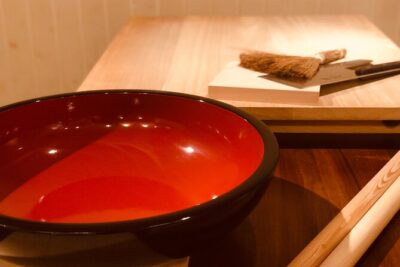
Mondo’s most popular plan! Experience making soba noodles and the king of Japanese cuisine, tempura, in Sapporo!
Read our review →
Experience Big soba knife Soba Making Class in Tokyo Kappabashi
Read our review →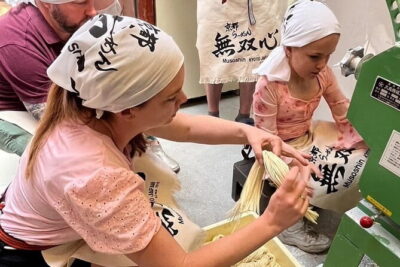
Made from flour in 30min! Ramen-noodle Making Experience!
Read our review →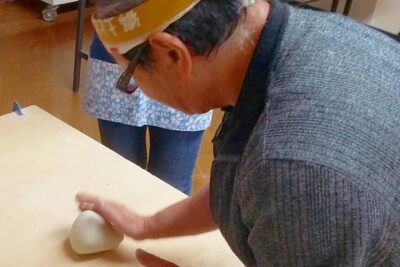
1-Day Togakushi Tour: Soba making, Ninja Town, and Hidden Shrines
Read our review →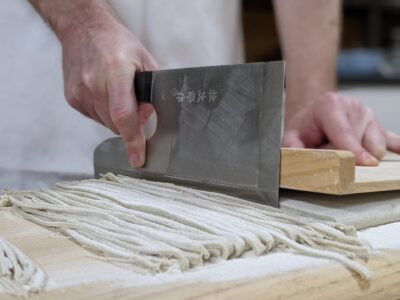
Matsumoto Castle Tour & Soba Noodle Making Workshop
Read our review →Browse the lists this tour appears in