
Review · SOBA & UDON MAKING CLASSES
Mondo’s most popular plan! Experience making soba noodles and the king of Japanese cuisine, tempura, in Sapporo!
Hands-on noodles in Sapporo sounds fun. This class at Mondo turns lunch into a mini food craft lesson, with guided soba and tempura tasting that focuses on how Japanese people actually eat the meal. You get hands-on noodle work, then a proper plate of tempura to go with it.
What I like most is how practical it feels from the first minute, mixing buckwheat dough and learning the rhythm of stretching and cutting. I also love that the meal part is built around real soba habits, with two dipping sauce options (cold and warm) and the finishing step with soba-yu.
One thing to keep in mind: you mainly make the soba, while the tempura is part of your meal but isn’t described as something you personally cook.
In This Review
- Key highlights
- A Soba-and-Tempura Workshop You Can Actually Use at Home
- Soba Making in Four Steps, Plus Two Sauce Styles
- Tempura on the Plate: What You Get and What You Might Skip
- How This Class Teaches the Japanese Way to Eat Soba
- Hokkaido Buckwheat Context: Why This Matters in Sapporo
- Getting There From Miyanosawa Station, and What to Watch for
- Who This Workshop Fits Best (Kids, Diets, and Small Groups)
- Value Check: Is $85.79 a Good Deal?
- My Advice: How to Choose This Class for Your Sapporo Day
- Should You Book This Soba and Tempura Workshop in Sapporo?
- FAQ
- Where is the experience located, and how do I get there?
- How long does the soba and tempura experience take?
- Is the class taught in English?
- Do I also learn how to make tempura, or is it served with the soba?
- What do I eat at the end of the activity?
- Can the shop accommodate halal or vegan diets, and are kids welcome?
- What is the cancellation policy?
Key highlights
- Buckwheat dough to noodles in a hands-on workshop format
- English instruction on site, with clear steps and a focused pace
- Two dipping sauces for your finished soba, plus soba-yu at the end
- Tempura included with seasonal ingredients like shrimp and vegetables
- Small, private-group feel, good for couples and families
- Near Miyanosawa Station, easy to reach without a long commute
A Soba-and-Tempura Workshop You Can Actually Use at Home
Sapporo is known for big food energy, but this experience goes smaller and more hands-on. You show up at a handmade soba shop, roll up your sleeves, and learn how buckwheat noodles are shaped. The best part is that the class does not stop at technique. It connects the noodles to the way you eat them, so you leave with both skills and a more confident sense of what to do with the bowl in front of you.
The workshop is run by the shop team, and in the way the class is described, you’ll be guided through the work in a friendly, professional way. In past groups, instructors like Taku (and his partner) came through in the tone and pacing, keeping things understandable even when the dough work gets a little messy. If you like cooking classes where you do real tasks, this fits.
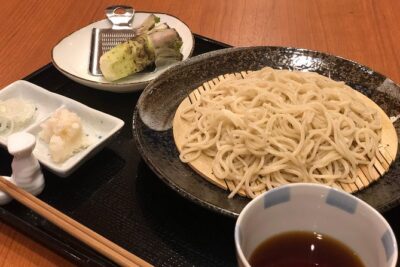
You’re also not just eating a souvenir meal. This is built around the classic Japanese pairing of soba with tempura. The tempura brings crunch from deep-frying, and the noodles bring chewy texture. Together, the meal feels balanced in a way that makes sense once you experience the combo on the same plate.
For a short trip day, the timing works too. You’re looking at about 1 hour 15 minutes total, with roughly 30 minutes of actual soba making, then eating and finishing your meal.
Soba and Udon Making classes readers book most in Sapporo:
- Popular in SapporoExperience authentic hand-made soba at a real soba shop!
★ 5.0 · 77 reviews - Top-rated experience Includes soba noodle making and tempura
★ 4.3 · 8 reviews - Experience Big soba knife Soba Making Class in Tokyo Kappabashi
★ 5.0 · 71 reviews
Soba Making in Four Steps, Plus Two Sauce Styles
The class follows a simple flow, and that is part of its charm. You start with buckwheat flour, then the instructor guides you through shaping and cutting noodles, ending with tasting.
Here’s what you can expect during the soba-making portion:
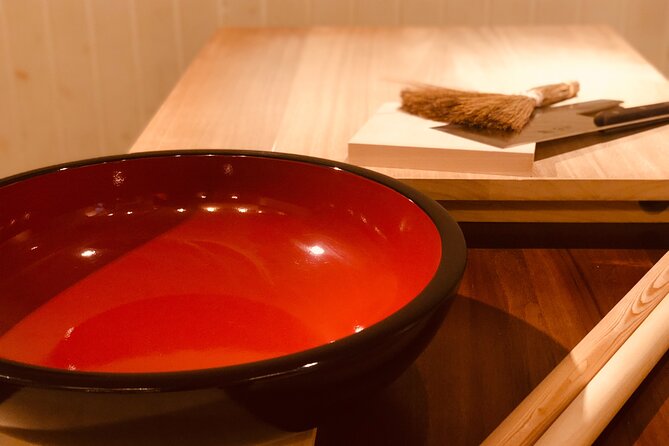
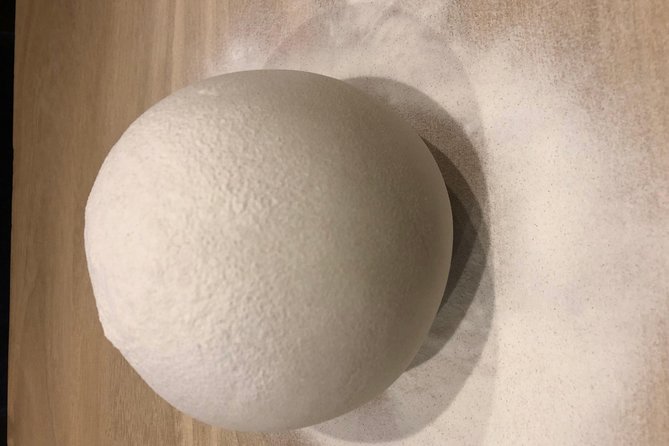
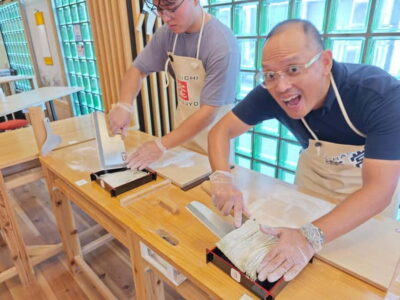
- Mix buckwheat flour (and water) to form the dough
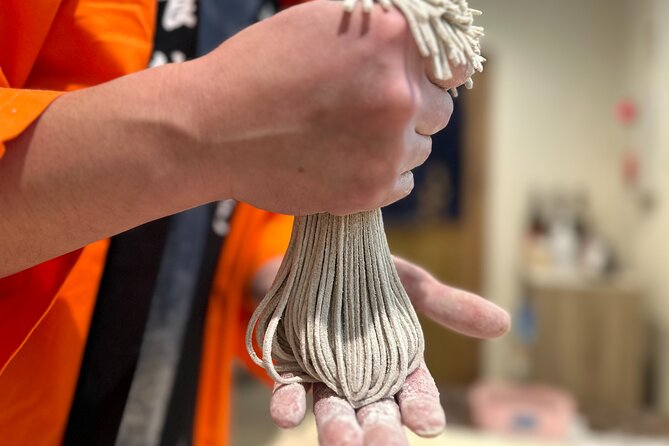
- Stretch the soba so it becomes noodle-ready
- Cut the soba noodles into your portions
- Sample what you made, paired with tempura and dipping sauces
Then comes the eating sequence, which matters because this shop explicitly teaches how to eat soba. You’ll get your noodles served with two types of soba sauce, one cold and one warm. That sounds small, but it changes the whole experience. Buckwheat noodles can taste different depending on sauce temperature, and you’ll get a chance to compare in real time.
After you finish, the meal closes with soba-yu, the final step mentioned in the workshop flow. Think of it as a traditional finishing pour you take at the end of your soba. It’s one of those details that makes the meal feel like a real routine, not just lunch.
A few practical notes from how the class is structured:
- You do not need to bring ingredients or tools. The shop handles everything for the activity.
- The pace is set for a short workshop, so you won’t spend hours troubleshooting. You’ll move step-by-step under guidance.
- The goal is to leave with noodles you made yourself and a sense of the full soba eating flow.
Also, the class runs after lunch time at a shop that is open during lunch hours. Translation: timing matters. If you are late, it may impact other scheduled starts, and late arrivals can be treated as a no-show.
Tempura on the Plate: What You Get and What You Might Skip
This is a soba-first experience. The activity highlights the soba noodle work, and the described flow focuses on mixing, stretching, and cutting. Tempura is included as part of the tasting, but the experience description does not frame tempura as something you learn to make step-by-step.
That distinction is important, because a couple of past expectations have been slightly off for some people. If you came hoping to learn battering and deep-frying techniques alongside the noodle craft, you might feel the tempura is more of a prepared pairing than a hands-on cooking segment.
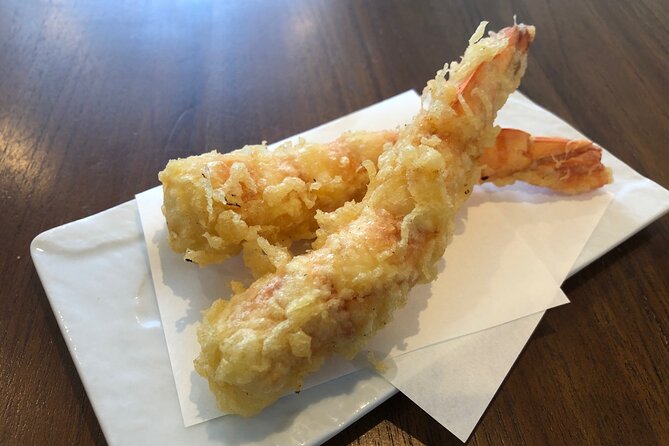
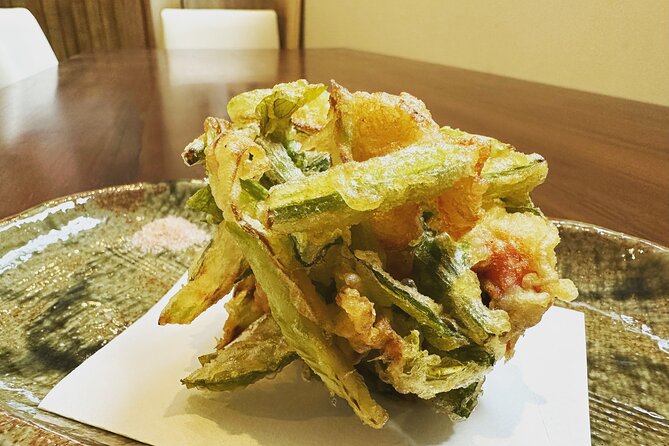
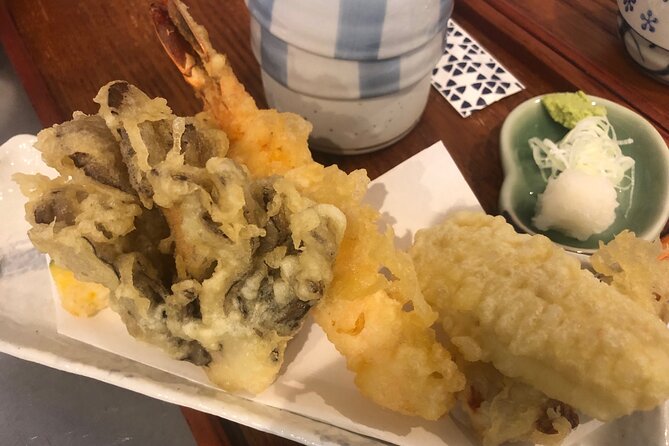
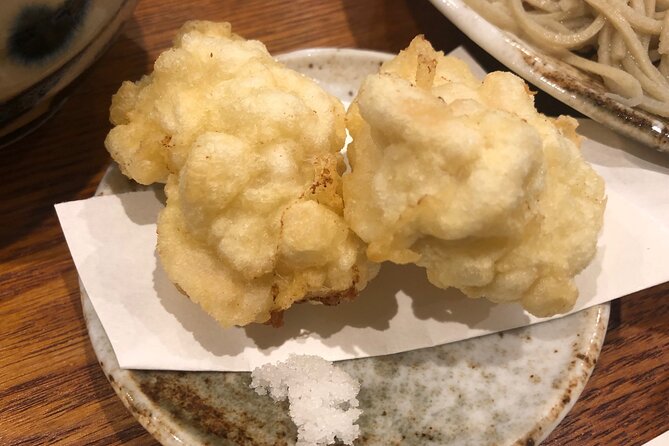
Still, the tempura itself sounds like it’s meant to be the real deal. In the class details, tempura is described as battered and deep-fried vegetables and seafood, and the typical list includes shrimp, eggplant, and seasonal vegetables. In example meals from groups, tempura commonly includes shrimp and vegetables, and sometimes items like scallops show up.
So here’s the balanced take:
- You’ll likely enjoy hands-on value from the soba-making part.
- You’ll enjoy the tempura as a matching dish designed to be eaten with soba.
- If your main goal is learning tempura technique, you may want to look for a different class that explicitly teaches tempura cooking.
In practice, though, the pairing is the point. Crunchy tempura against chewy soba is exactly why this duo became such a famous Japanese combo.
How This Class Teaches the Japanese Way to Eat Soba
A cooking class can be two things: hands-on work, or eating instructions. This one tries to do both.
The workshop is set up so you learn how Japanese people eat soba. You are not just handed a bowl and told to eat. You get a quick, understandable guide to what you’re doing and why. That’s especially useful if you’ve never ordered soba in Japan or you’ve only tried it once abroad.
The easiest way to appreciate the teaching is to pay attention to how the sauce options work:
- With cold sauce, you’ll notice how the buckwheat flavor reads differently when the temperature is lower.
- With warm sauce, the aroma and taste shift again, and the noodles can feel more comforting and rounded.
Then comes the pairing: tempura with soba. When you eat them together, you get a texture contrast that makes each bite feel more complete. Crispy batter brings snap and richness, while soba provides a chewy, buckwheat-forward base.
At the end, the soba-yu step gives the experience a finish. Even if you cannot explain every detail, you’ll feel the structure of a full meal.
A few more Sapporo days to weigh up
- Sapporo Bar Hopping Food Tour
★ 5.0 · 232 reviews - Hokkaido Seasonal: Lake Toya & Noboribetsu Jigokudani Valley
★ 4.7 · 173 reviews - Sapporo: Hokkaido, Noboribetsu and Lake Toya Day Tour
★ 4.1 · 88 reviews - Sapporo: Sumo Show Experience with Japanese food & Photo
★ 4.9 · 81 reviews
Hokkaido Buckwheat Context: Why This Matters in Sapporo
This class has a location advantage. Sapporo sits in Hokkaido, and Hokkaido is described as one of the most famous soba-producing regions in Japan. The workshop details point to climate and soil conditions that help produce high-quality buckwheat.
You’ll also hear about specific areas within Hokkaido that are known for delicious soba, such as Tokachi and Furano. The point is not trivia for its own sake. It’s why the noodles taste the way they do and why this region has such strong soba culture.
So when you make the noodles here, you are not just playing with ingredients. You’re participating in a food tradition supported by local production. That makes the work feel more meaningful, even if you’re only there for a short session.
Getting There From Miyanosawa Station, and What to Watch for
Logistics are refreshingly straightforward. The meeting point is a five-minute walk from Miyanosawa Station on the Sapporo Subway Tozai Line. If you’re using public transit, this is a nice setup. You do not need a rental car just to reach the shop.
If you drive, there are four parking spaces in front of the store. That is a small number, so it’s not something to assume will always be available.
Finding the place can still take a bit of effort. One of the common practical complaints in the feedback is that the location is not always easy to find at first. I’d plan to arrive early enough to get oriented, then check your route one more time before you head out.
Timing also matters because your start time is treated as a hard boundary. If you cannot come before the start time, it can cause inconvenience to other guests, and late arrivals may be treated as no-shows.
Who This Workshop Fits Best (Kids, Diets, and Small Groups)
This class is set up for a wide range of people. The experience notes say that even small children can enjoy soba making, and children under two are free.
For families, this is one of the clearer strengths. The session is short, the steps are guided, and kids can participate in shaping and cutting dough. It’s the kind of activity that gives children something concrete to do, rather than just watching.
For dietary needs, the shop says halal, vegan, and other accommodations may be possible if you contact them in advance. This is a key detail. It means you should not assume. Message ahead and confirm what can be adjusted for your group before you arrive.
Because the class is described as private, it is only your group participating. That usually improves comfort, especially with children or anyone who wants a less crowded setting while learning.
One more practical angle: the workshop is conducted in English. If you have questions before you go, you can email through the provided channel, but phone support in English is not offered. If you’re the type who likes to clarify every detail by phone, plan to use email instead.
Value Check: Is $85.79 a Good Deal?
At $85.79 per person, you are paying for three things: skill instruction, a hands-on activity, and a full meal pairing. The class lasts about 1 hour 15 minutes, with roughly 30 minutes spent actively making soba.
That might sound short, but the timing fits the reality of noodle craft. You are learning steps that are physical and specific: dough mixing, stretching, and cutting. Those steps do not take all day. They take focus.
Where the value feels strongest is in the combination:
- You make the noodles yourself
- You eat your own soba with tempura
- You get both cold and warm sauce, plus the finishing soba-yu
Also, the class has strong feedback signals. It averages a 4.8 out of 5 rating with 71 reviews, and 96% recommend it. That doesn’t replace checking if it fits your taste, but it is a good sign that the experience is landing for most people.
One caution on value is expectation-setting. If you are paying mainly to cook both soba and tempura with full hands-on technique, you might find it more soba-focused than you expected. If you want noodles plus a classic pairing, this price starts to make more sense.
Finally, the course is described as Mondo’s most popular plan and is often booked around a month in advance on average. That tells me it’s not something to leave last-minute.
My Advice: How to Choose This Class for Your Sapporo Day
If your ideal Hokkaido food day looks like this:
- learn one technique,
- make something,
- eat it immediately,
- and keep moving without a half-day commitment,
then this workshop fits.
Choose it if you want:
- hands-on soba dough work in a short session
- an easy-to-follow structure and clear eating instructions
- tempura as a proper pairing, not a random side dish
- a class near a subway stop, with a simple arrival plan
Skip it or look for another option if your main goal is:
- learning tempura frying step-by-step
- spending lots of time on cooking, not just making and eating
- expecting a long lecture on history and technique beyond what’s needed to enjoy the meal
Should You Book This Soba and Tempura Workshop in Sapporo?
I’d book it if you want a meaningful, compact food experience with a clear outcome: you make soba and you eat it with tempura. It’s a good choice for couples and families, and it’s also a solid pick if you care about learning the practical way Japanese people eat a meal, not just collecting food photos.
Book with one clear expectation: soba is the hands-on craft. Tempura is included as part of your tasting, but the workshop details do not present it as a taught cooking segment.
If you have dietary needs, message in advance and confirm. If you’re coming with kids, it’s set up for participation, and that alone can make it worth it.
FAQ
Where is the experience located, and how do I get there?
It’s a five-minute walk from Miyanosawa Station on the Sapporo Subway Tozai Line. The meeting point address is 9-chōme-17-28 Hassamu 6 Jō, Nishi Ward, Sapporo, Hokkaido 063-0826, Japan. If you drive, there are four parking spaces in front of the store.
How long does the soba and tempura experience take?
The soba-making activity is about 30 minutes. The full experience, including tasting, takes about 1 hour and 15 minutes.
Is the class taught in English?
Yes, the experience is conducted in English. Phone-based English support is not available, but you can ask questions by email via VIRTOR.
Do I also learn how to make tempura, or is it served with the soba?
The experience is centered on making soba noodles. Tempura is included with your tasting, but the described flow focuses on soba making rather than tempura instruction.
What do I eat at the end of the activity?
You taste the soba noodles you made along with tempura. Two types of soba sauce are available, one cold and one warm, and the meal ends with soba-yu.
Can the shop accommodate halal or vegan diets, and are kids welcome?
The shop says halal, vegan, and other dietary needs can be accommodated if you contact them in advance. The experience also notes that small children can enjoy soba making, and children under 2 are free.
What is the cancellation policy?
Cancellation is free up to 24 hours in advance for a full refund. If you cancel within 24 hours of the start time, you will not be refunded.
Newly listed around Sapporo
- Hakodate Exploration Tour with Private Guide★ 4.5 · 9 reviews
- Hakodate 4hr Private Tour with Government-Licensed Guide★ 5.0 · 7 reviews
- Hakodate Rickshaw Tour★ 5.0 · 18 reviews
- Chitose Airport to Niseko Private Transfer | Licensed Driver★ 5.0 · 19 reviews
- SkyExpress Private Transfer: New Chitose Airport – Niseko (8 Pax)★ 5.0 · 15 reviews
- Sopporo: Hokkaido Shrine and Atama Daibutsu Full-Day Tour★ 4.8 · 12 reviews
- Silver Ring Workshop – Smith at Keio Plaza Sapporo★ 5.0 · 7 reviews
- Sapporo Winter : Asahiyama Zoo (Penguin Fun & Snowmobile)★ 5.0 · 28 reviews
Soba & Udon Making Classes, compared.
Popular in SapporoExperience authentic hand-made soba at a real soba shop!
Read our review →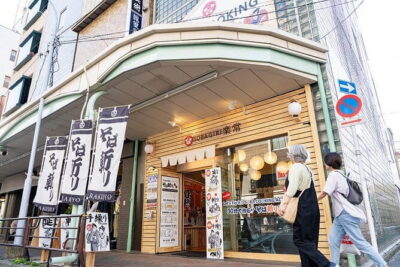
Experience Big soba knife Soba Making Class in Tokyo Kappabashi
Read our review →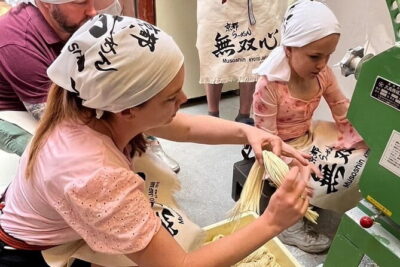
Made from flour in 30min! Ramen-noodle Making Experience!
Read our review →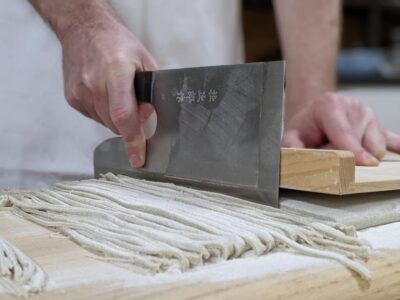
Matsumoto Castle Tour & Soba Noodle Making Workshop
Read our review →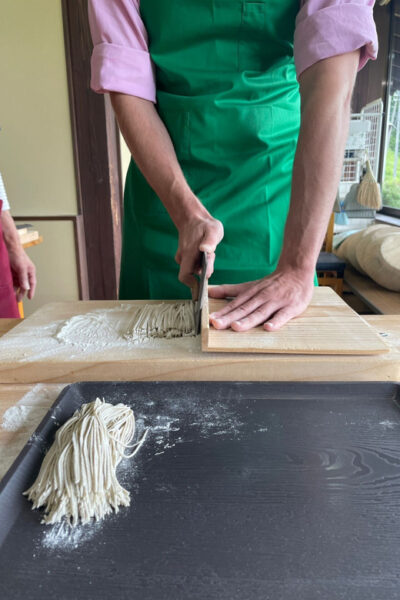
1-Day Togakushi: Soba making, Ninja Town and Hidden Shrines
Read our review →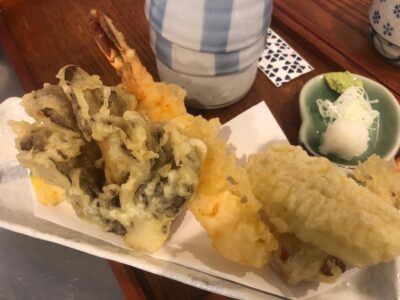
Top-rated experience Includes soba noodle making and tempura
Read our review →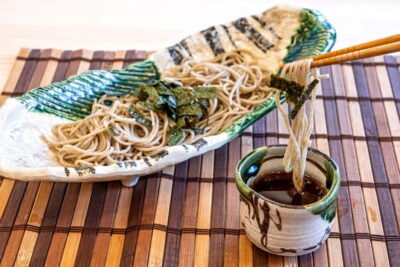
///Soba Making Experience///Use The BIG Soba-Knife!!
Read our review →Browse the lists this tour appears in