
Review · SOBA & UDON MAKING CLASSES
Experience Big soba knife Soba Making Class in Tokyo Kappabashi
Knife skills, but make it noodles. In Kappabashi, I love the hands-on way you learn buckwheat soba using a specially made soba knife, and I love that the small group keeps the experience focused and friendly in about 50 minutes.
One practical consideration: if you have a buckwheat allergy, you can’t enter the restaurant. Also, if you pick a vegan or no-pork option, there’s an additional 500 yen fee.
In This Review
- Key Things I’d Plan Around
- Why Soba Noodles Fit Perfectly Into an Asakusa Day
- Getting There: Matsugaya Meet-Up and the Kappabashi Tool Street Vibe
- Inside Open Kitchen Studio: Gear Up, Then Get to Work
- The 30-Minute Method: Water, Knead, Stretch, Cut
- Using a Soba Knife Like You Mean It
- Tasting Your Soba: No Hunger Pang Strategy
- Optional Upgrades: Matcha Soba and Sake on the Side
- Kappabashi Makes It Feel Real, Not Staged
- Price and Value: What $51.33 Really Buys You
- Who Should Book This Soba Knife Class in Tokyo
- Final Call: Should You Book It?
- FAQ
- How long is the soba making class?
- How much does the class cost?
- Is wheat flour used in the class?
- What’s included in the price?
- Are meals included?
- Can I choose vegan or no-pork options?
- Can I take the noodles home?
- Is the class limited to a small group?
- What dietary restrictions should I know before booking?
- Are there optional add-ons like matcha or sake?
Key Things I’d Plan Around
- Kappabashi kitchen town location near Asakusa, where cooks shop for real tools, not souvenirs
- Aprons and gloves provided in various sizes, so you can focus on the dough, not the mess
- No wheat flour approach, using buckwheat flour from Nagano Prefecture
- A 4-step method (water, kneading, stretching, cutting) taught for making long, thin noodles
- Eat what you make, plus you can take noodles out after the class
Why Soba Noodles Fit Perfectly Into an Asakusa Day
If you’re building an Asakusa itinerary, food classes can do two things at once. They give you something tangible to remember, and they help you slow down in a neighborhood that moves fast. This soba making experience is timed like a quick meal window, then it turns into something you can actually learn, not just watch.
I also like that it’s not treated like a performance. You get hands-on with the tools and the process. The class centers on buckwheat dough and cutting it properly, so you walk away understanding why soba feels different from other noodles.
And since it’s set in Kappabashi, you’re not stuck in a generic studio. Kappabashi is the Tokyo area people think of when they imagine chefs sourcing kitchen equipment, and that context makes the knife part of the lesson feel real.
Soba and Udon Making classes readers book most in Tokyo:
- Made from flour in 30min! Ramen-noodle Making Experience!
★ 4.8 · 24 reviews - ///Soba Making Experience///Use The BIG Soba-Knife!!
★ 5.0 · 7 reviews - Popular in SapporoExperience authentic hand-made soba at a real soba shop!
★ 5.0 · 77 reviews
Getting There: Matsugaya Meet-Up and the Kappabashi Tool Street Vibe
The start point is in Taito City, Matsugaya, at the Matsugaya Center Building address (111-0036, 3-chōme112). The activity runs back to the same place at the end, so you’re not solving transportation all day.
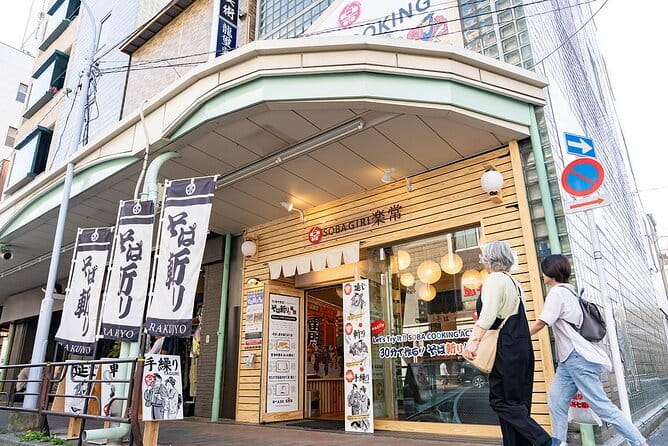
Once you’re in the Kappabashi area, the experience ties into the neighborhood’s identity. The class is based around Kappabashi Tool Specialty Store Street, with a stop that fits the classic Kappabashi rhythm: tools, cookware, and the feeling that food makers actually live nearby.
If you’re coming from the Sensoji Temple side, the studio is described as about 25 minutes from there in Asakusa. That’s long enough to feel like a real walk through the food streets, but short enough that you’re still fresh when it’s time to work with dough.
Inside Open Kitchen Studio: Gear Up, Then Get to Work
The class takes place at Open Kitchen Studio in Kappabashi, Asakusa. The space is described as a spacious, open ground floor restaurant that can accommodate up to 30 people. In practice, your class is capped at a maximum of 15 travelers, so you should still feel like you’re in a group small enough for clear attention.
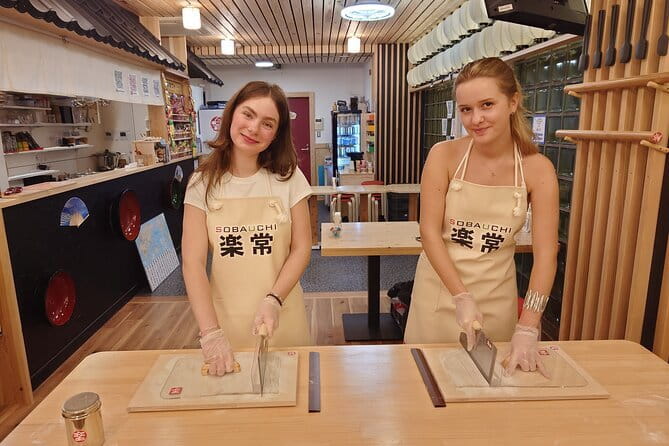
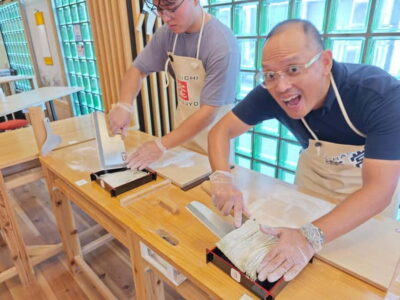
Before you touch anything, you’re provided with aprons and gloves in various sizes. That matters more than it sounds. Soba dough is sticky early on, and gloves help you keep control as you knead and stretch.
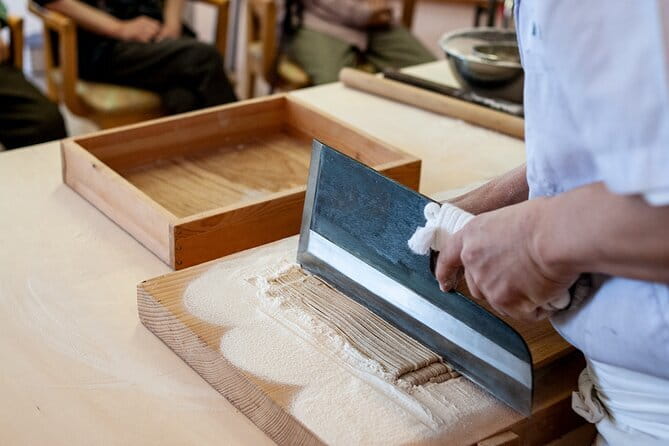
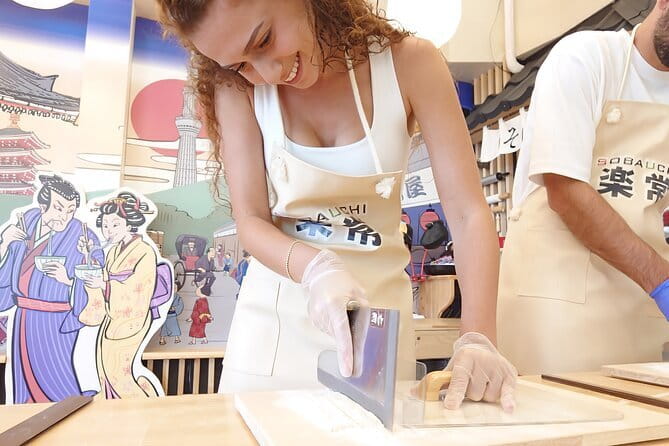
You’ll use a large knife specially designed for soba. This is one of the best parts of the class because it turns what could be abstract technique into something physical. Cutting soba well is hard to explain in words, but you get immediate feedback from the shape of your noodles.
The 30-Minute Method: Water, Knead, Stretch, Cut
The teaching is built around a clear 4-step process, described as smart and repeatable: adding water, kneading, stretching, and cutting. The goal is to make long, thin soba noodles without relying on wheat flour.
Here’s why that matters to you if you want real learning. A lot of noodle classes blur together. This one is structured like a method you can run again later at home. Even if you never make perfect restaurant soba, the sequence teaches you what changes when dough is hydrated enough, when it’s kneaded enough, and when stretching gets too thin or not thin enough.
Timing also helps. The process is taught to fit within about 30 minutes, with the overall experience clocking in around 50 minutes. That pacing keeps it from dragging, and it gives you time to taste and reset.
The class also uses buckwheat flour produced in Nagano Prefecture, which anchors it in a real ingredient story. Buckwheat isn’t just a label. It behaves differently from wheat flour, so starting with consistent flour is part of why the dough should feel manageable.
A few more Tokyo days to weigh up
- Mt Fuji and Hakone 1-Day Bus Tour Return by Bullet Train
★ 5.0 · 26,383 reviews - 1-Day Tokyo Bus Tour
★ 5.0 · 14,250 reviews - Tokyo: TOKYO SKYTREE® Admission ticket
★ 4.5 · 11,192 reviews - Tokyo: teamLab Planets TOKYO Digital Art Museum Entry Ticket
★ 4.6 · 9,779 reviews
Using a Soba Knife Like You Mean It
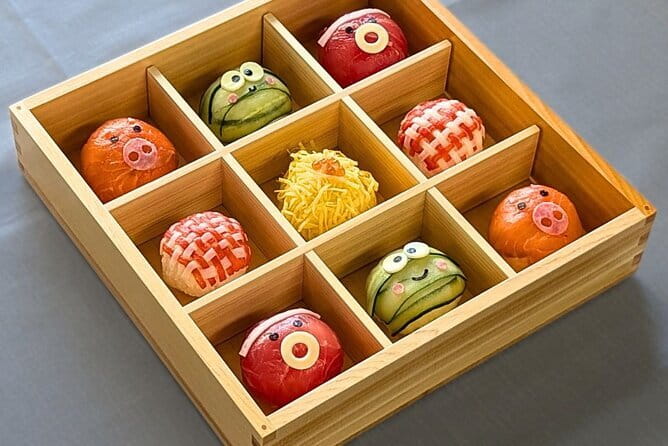
Cutting is where soba stops being dough and starts being noodles. Your class includes trying a specially designed soba knife, and you learn how to cut for long, thin strands.
In real terms, you’re practicing two skills at once. First, you’re learning the motion and how to keep cuts even. Second, you’re learning the dough handling so the sheet doesn’t tear or deform while you cut.
I’d call this the main reason the class feels memorable. Anyone can roll something once. Fewer people leave knowing how the knife, thickness, and dough tension connect.
There’s also a nice vibe shift during this part: the instructor’s guidance becomes less lecture and more rhythm. One of the consistent themes in the class experience is that the instructor can be funny and expressive even when English is not the first language. You can follow along through demonstrations and cues, and the humor keeps you from feeling awkward if your first attempt looks different.
Tasting Your Soba: No Hunger Pang Strategy
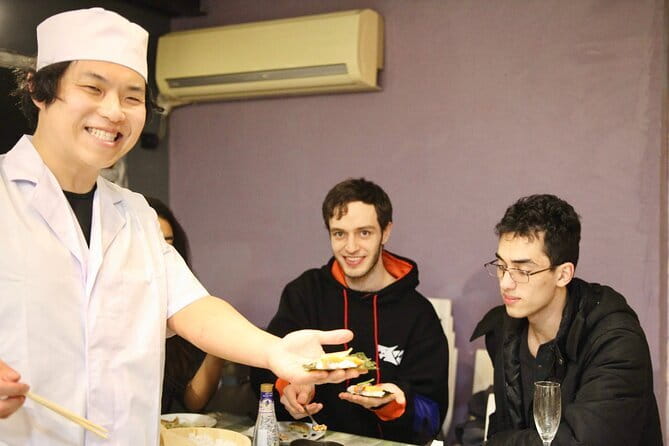
You don’t just make soba and walk away. The class is designed around eating what you produce.
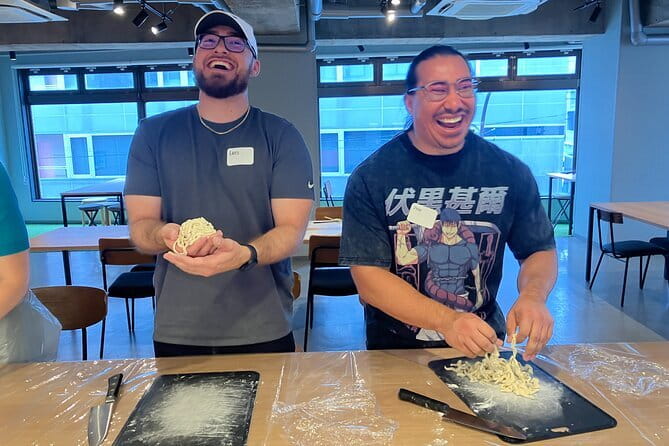
At the end, you taste your noodle creations as a snack or meal-like bite, with instructions to try them in a variety of flavors. The information also points out that you can taste what you cut yourself, which is a big deal because it closes the loop. You can compare your noodle shape and feel with how the final dish works.
The overall experience is described as no hunger pangs, and the tasting is the reason. You’re not waiting until dinner to feel like the class was worth it. You get immediate payoff, then you can take more home.
One more useful detail: you can take out the noodles you made. That’s great for travel days, because you can turn this into a pantry win later. Even if you don’t cook them immediately, you’ve got something real to bring back.
Optional Upgrades: Matcha Soba and Sake on the Side
If you want to make the class day a little more special, the studio offers optional add-ons.
There’s a matcha soba option that includes making soba with matcha green tea mixed into the flour. The price listed is 700 yen.
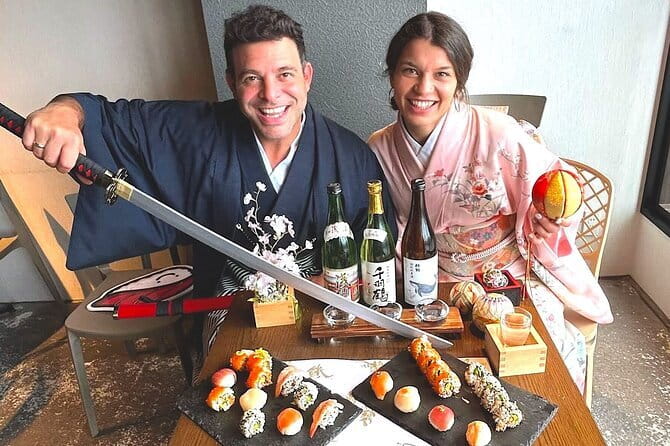
There’s also an option for sake, described as three types selected and compared by the owner, listed at 1500 yen. That’s not required, but it can be a fun way to pair flavors with what you’ve been making.
If you’re on a tighter budget, you can keep it simple. The core value is learning and tasting the plain soba you cut.
Kappabashi Makes It Feel Real, Not Staged
Plenty of cooking classes happen in generic spaces. Here, the setting leans into Tokyo’s real food culture.
Kappabashi is known as Tokyo’s kitchen town, where chefs source professional cooking equipment. Since this class happens in that sphere, the knife you use and the techniques you learn feel grounded in a place where food tools matter.
It also helps that the class is scheduled as part of your Asakusa-Kappabashi rhythm, with the experience starting in the Asakusa area, spending time at the Kappabashi tool street, then ending back toward Asakusa. That makes it easier to stitch into your day without losing an entire morning or afternoon.
And because the class is small, you’re not just one face in a crowd. The pace feels like it was built for people who actually want to learn.
Price and Value: What $51.33 Really Buys You
At $51.33 per person, the price is for a short, structured class with included gear and included tasting snacks.
What you get that justifies the cost:
- Hands-on soba making with a specially designed soba knife
- Aprons and gloves in different sizes
- Tasting of what you make, so the experience has a clear payoff
- Ability to take out noodles you produced
- A small group size limited to 15, which usually matters for coaching quality
What’s not included:
- Meals beyond what’s served as tasting snacks
- Vegan or no-pork option costs an extra 500 yen if you choose it
So the value comes from execution, not from a long drawn-out tour. If you want a quick, practical food skill, this fits. If you want a full day of sightseeing, it might feel like a small slice of your schedule.
Who Should Book This Soba Knife Class in Tokyo
This class is best for you if:
- You like hands-on cooking over watching from the sidelines
- You’re curious about soba as more than a restaurant dish
- You want a small group experience that feels manageable
- You enjoy tool-focused neighborhoods like Kappabashi
It’s a weaker fit if:
- You have a buckwheat allergy, since entry is not permitted
- You need a fully English-led lecture style, because instruction can rely on demonstrations and the instructor’s way of communicating
- You want a long, multi-course meal. The format is short, with snacks and tasting rather than a heavy sit-down dining experience
Final Call: Should You Book It?
Yes, if you want a Tokyo food memory you can recreate with your own hands. The class is short, focused, and it has a strong payoff because you taste what you make and can take noodles home. The small group size, the apron and glove support, and the soba knife focus make it practical, not just fun.
Before you book, double-check your dietary needs. Vegan or no-pork options have an extra 500 yen fee, and buckwheat allergies are a hard stop. If you’re good with buckwheat, this is a smart way to spend part of an Asakusa and Kappabashi day.
FAQ
How long is the soba making class?
It’s approximately 50 minutes.
How much does the class cost?
The price is $51.33 per person.
Is wheat flour used in the class?
The experience is described as soba noodle making without wheat flour.
What’s included in the price?
It includes all fees and taxes, snacks tasting the soba you cut yourself, and aprons and gloves available in various sizes.
Are meals included?
Meals are not included. You’ll have snacks/tasting as part of the class experience.
Can I choose vegan or no-pork options?
Yes, but there is an additional fee of 500 yen if you choose a vegan or no-pork flavor option.
Can I take the noodles home?
Yes, you can take out the noodles you made.
Is the class limited to a small group?
Yes. The class has a maximum of 15 travelers.
What dietary restrictions should I know before booking?
Those with buckwheat allergies are not permitted to enter the restaurant.
Are there optional add-ons like matcha or sake?
Yes. There’s an option for matcha soba (700 yen) and an option for three types of sake (1500 yen).
Newly listed around Tokyo
- Tokyo private transfer for Yokohama Port★ 4.5 · 63 reviews
- Luxury Kimono Photoshoot at Ginza Tokyo★ 5.0 · 7 reviews
- Tokyo Allstar Food Tour★ 4.5 · 206 reviews
- Tokyo: Best Ginza Food Tour at 3 Local Eateries★ 5.0 · 83 reviews
- Private One Day Nikko Tour with Bilingual driver★ 3.5 · 11 reviews
- Tokyo Art Aquarium Museum E-Ticket with optional Tokyo Metro Pass★ 5.0 · 17 reviews
- PRIVATE tour in 180SX to Daikoku+++++★ 5.0 · 6 reviews
- Kabuki Talk★ 5.0 · 10 reviews
Soba & Udon Making Classes, compared.
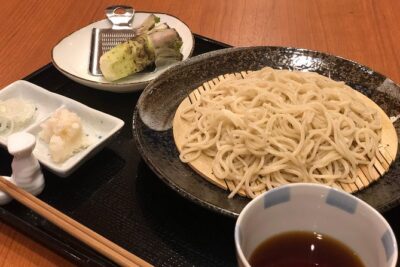
Popular in SapporoExperience authentic hand-made soba at a real soba shop!
Read our review →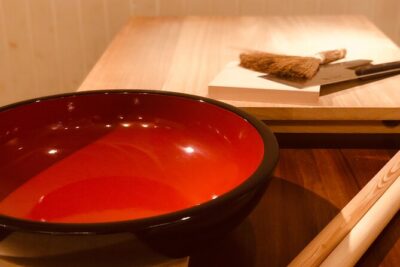
Mondo’s most popular plan! Experience making soba noodles and the king of Japanese cuisine, tempura, in Sapporo!
Read our review →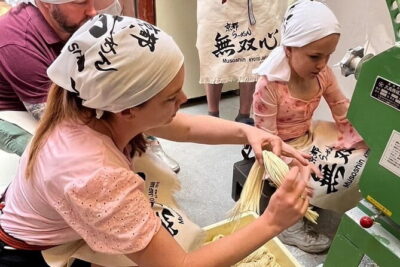
Made from flour in 30min! Ramen-noodle Making Experience!
Read our review →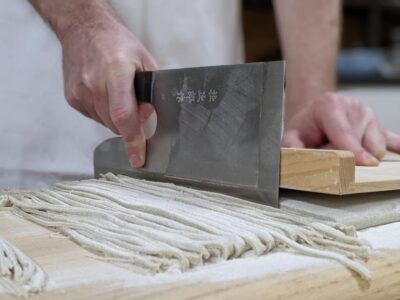
Matsumoto Castle Tour & Soba Noodle Making Workshop
Read our review →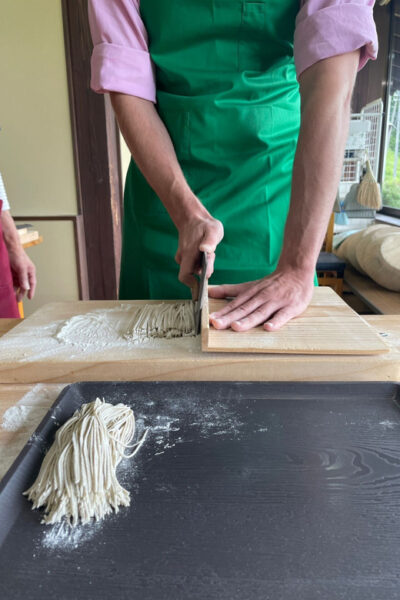
1-Day Togakushi: Soba making, Ninja Town and Hidden Shrines
Read our review →
Top-rated experience Includes soba noodle making and tempura
Read our review →
///Soba Making Experience///Use The BIG Soba-Knife!!
Read our review →Browse the lists this tour appears in