
Review · SOBA & UDON MAKING CLASSES
Kyoto Ramen Noodle Making Class
Ramen starts before the broth. In Kyoto’s Gion neighborhood, this noodle-making class has you making ramen noodles from scratch, then rewarding you with a bowl made by the chef. It is hands-on, short, and very Kyoto, centered at Musoshin’s flagship ramen restaurant.
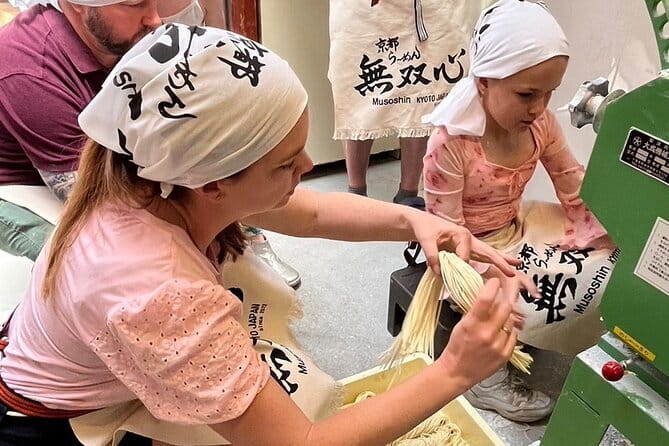
I love the active format, where you get to pour water, knead two-flour dough, and then roll and cut your own chewy noodles. I also like the meal side is handled professionally, with Musoshin’s chef making the chef-made broth (a vegetable blend) and serving it with quality add-ons like Kyotamba rice and local condiments.
One consideration: this is a 1-hour session focused on noodles, not a full ramen cooking class. Also, the noodles are made from wheat flour, so gluten needs to be thought through in advance, even though vegetarian, vegan, and pescetarian tasting options are available.
In This Review
- Key highlights you can count on
- Finding Musoshin in Gion, and what that means for your time
- The real point of this 1-hour ramen noodle workshop
- Dough, flour, and the noodle machine steps you’ll actually do
- Your chef-made ramen bowl, with Kyotamba rice and vegetable broth
- Dietary options that matter, and what you still need to watch
- Who this class suits best in Kyoto
- Pricing and value: what you get for $48.27
- How good teaching shows up in small details
- Should you book this Kyoto ramen noodle class?
- FAQ
- How long is the Kyoto ramen noodle making class?
- Where does the class meet in Kyoto?
- Is it limited to small groups?
- What is included in the price?
- Will I get to make the noodles myself?
- Can you accommodate vegetarian, vegan, or pescetarian diets?
- Are there options if I do not eat meat or fish?
- What are the ramen noodles made from?
- How will I receive ticket information?
- What is the cancellation policy?
Key highlights you can count on
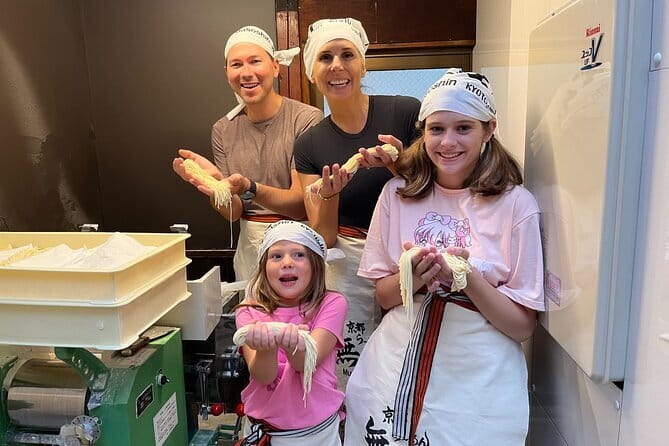
- Small group (max 6 travelers), so you are not lost in a crowd
- English support from instructors like Kaz, Azu, and Amiru, with friendly, hands-on teaching
- Two types of flour in the dough, plus a professional noodle-making machine you use directly
- You make noodles, then eat a full bowl made by Musoshin’s chef at the end
- Vegetarian, vegan, and pescetarian tasting options available when you inform them in advance
- Apron rental and a bandana souvenir, so you leave with more than just food memories
Finding Musoshin in Gion, and what that means for your time
This class meets at 558-2 Komatsuchō, Higashiyama Ward, Kyoto, 605-0811, and it ends back at the same spot. The location is Musoshin Gion in central Kyoto, not the Musoshin Ramen Academy, so double-check you are aiming for the right building once you open your maps.
It is also described as being near public transportation, which matters in Kyoto because you can spend the day hopping between neighborhoods. With a 1-hour experience, you want the commute to be easy, and this setup is designed for that.
You will receive a confirmation within 48 hours of booking (subject to availability), and you use a mobile ticket on the day.
More Ramen Trips in Kyoto
- Ramen Cooking Class at Ramen Factory in Kyoto
★ 5.0 · 1,937 reviews - Kyoto: Ramen Cooking Class at a Ramen Factory with Souvenir
★ 4.9 · 532 reviews - Kyoto: Ramen, Gyoza, and Onigiri Cooking Class
★ 5.0 · 445 reviews
The real point of this 1-hour ramen noodle workshop
The heart of the experience is ramen noodles. You are not just watching someone else make them, and you are not doing a long, multi-step cooking program. Instead, you learn the process step-by-step with an English-speaking instructor, working on dough and noodles yourself.
Based on how the class is described, the format is built around quick skill transfer:
- You start with the dough stage (water and kneading)
- You move into the machine stage (rolling and cutting)
- You end with the payoff meal, a bowl made by the chef
That “make, then taste” structure is why this is fun for people who want something more interactive than a standard food tour. It is also why it works well even if you are juggling a packed Kyoto day.
There is a small group limit, max 6 travelers, which usually means fewer bottlenecks during hands-on steps. If you want the instructor to explain things and check your progress, this size helps.
Dough, flour, and the noodle machine steps you’ll actually do
Here is what you should expect you will do during the workshop, in plain language.
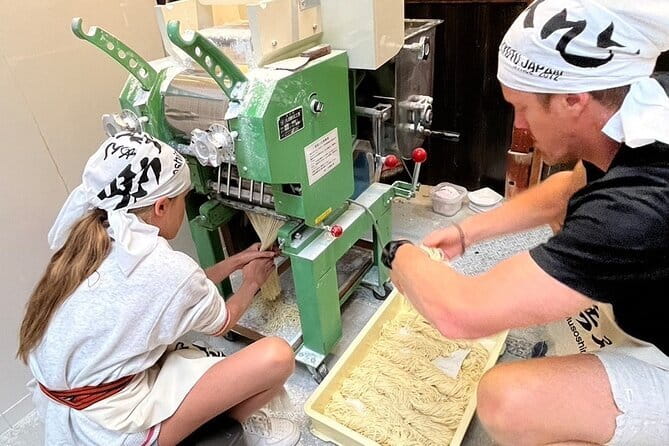
First, you will work with dough made using two types of flour. The instructor guides you as you pour the water and then knead the dough. Kneading is one of those skills where you can learn a lot just by feeling the texture and watching how your instructor handles it.
Then comes the part most people come for: using a professional noodle-making machine to roll and cut the noodles. You do the rolling and cutting yourself, with guidance in the moment. The goal is noodles that are chewy, which is the whole texture story of great ramen.
A couple of practical thoughts for you here:
- Expect some flour dust and a bit of mess. You do get a rental apron, but you still want to wear clothes you feel fine with.
- If you get nervous about machines, this is still designed for beginners. The class is short, and the teaching is meant to keep you moving.
And yes, the noodles are made from wheat flour, so gluten is a factor. If you are sensitive, plan around that before booking.
Your chef-made ramen bowl, with Kyotamba rice and vegetable broth
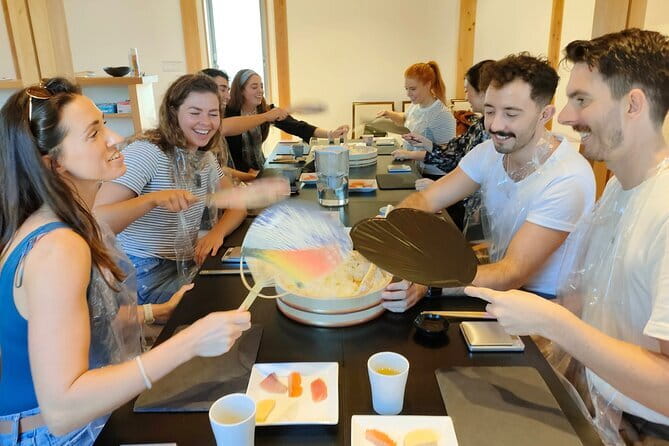
The workshop pays off with a bowl of ramen made by the chef. That matters because noodle-making skill and soup flavor are two different arts. Even if you make noodles perfectly, a strong broth is what turns noodles into a real bowl.
The broth is described as being a blend of vegetables, prepared by Musoshin’s ramen chef. You also get quality regional add-ons, including Kyotamba rice and condiments from local makers. Those details are the reason the tasting is not just a snack at the end. It is the intended tasting experience to connect what you made with what the restaurant does best.
Included with the meal is also one soft drink, which keeps the class feeling complete without you needing to find another stop nearby.
One more thing to keep expectations grounded: this is a noodle-focused experience. You learn noodle-making technique, and then you taste the ramen. You are not being promised a full lesson on cooking ramen broth at home.
A different sort of day in Japan:
- PERFECT KYOTO 1-Day Bus Tour
★ 5.0 · 13,518 reviews - Kyoto: Fushimi Inari, Kinkakuji, Bamboo Grove 1 Day Bus Tour
★ 4.8 · 4,316 reviews - Kyoto: Tea Ceremony in a Traditional Tea House in Kiyomizu
★ 4.9 · 3,519 reviews - Kyoto Geisha Walking Tour: Gion District & Hidden Gems
★ 4.7 · 3,273 reviews
Dietary options that matter, and what you still need to watch
If you eat vegetarian, vegan, or pescetarian, you are in good shape here. The information clearly states that vegetarian, vegan, and no meat or fish options are available for the tasting session, and the activity can accommodate vegetarian, vegan, and pescetarian diets if you inform them in advance of your dietary restrictions.
That advance notice is important for Japanese food experiences. Even when options exist, kitchens need time to prep. So message the provider with your exact needs during booking rather than waiting until the day of.
Here is the one point you cannot dodge: the noodles are made from wheat flour. That is a key ingredient detail stated for the class. If your issue is gluten, this class may not be a fit, even if your diet type is vegetarian or pescetarian.
Who this class suits best in Kyoto
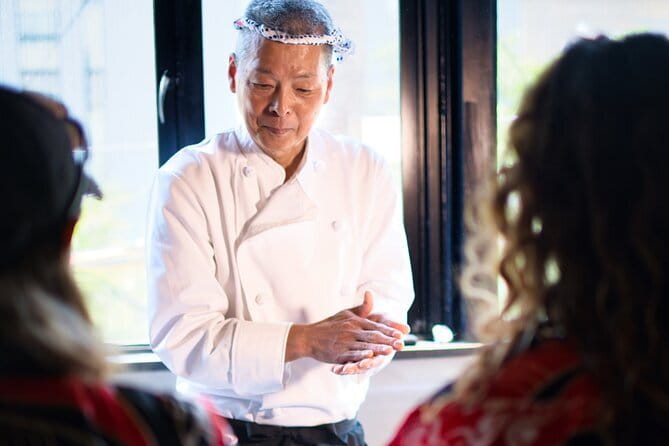
This is the kind of Kyoto experience that fits a few different traveler types.
You’ll likely love it if:
- You like hands-on food activities and want to make something real with your own hands
- You want a focused experience, roughly 1 hour, without a long cooking commitment
- You enjoy learning food technique, even if you are not a cooking expert
- You appreciate English-language guidance in a small group setting
It can also work well for families. Some of the most positive feedback mentions a fun, interactive experience and comfortable teaching. If you have kids who like hands-on steps, the short timing helps keep attention from dragging.
You might skip it if:
- You’re looking for a full ramen cooking class with broth building taught in detail
- You need gluten-free noodles. The class uses wheat flour, and no alternate flour type is stated
Pricing and value: what you get for $48.27
At $48.27 per person for about 1 hour, the value comes from what is included, not just the concept.
You get:
- An English-speaking noodle making instructor
- Ingredients and tools for noodle making
- Your rental apron
- A bowl of ramen plus one soft drink
- A bandana souvenir that you use during the workshop
That matters because many food experiences charge a similar amount but leave you doing less. Here, you are actively making noodles, then eating a chef-prepared bowl that connects to what you practiced. The fact it is capped at 6 travelers can also increase the instructional value per person.
The ramen itself is chef-made, and the broth is described as vegetable-based. So you are not only paying for the noodle machine experience. You are paying for the restaurant’s ramen execution at the end.
How good teaching shows up in small details
One reason people recommend this class so often is how the instructors run it. The feedback names instructors including Kaz, Azu, and Amiru, and the common thread is friendly, clear guidance.
You can also sense the structure from the described steps. You pour, knead, roll, and cut, which means you always have a concrete task. That reduces the awkwardness some classes have where you stand around watching for long stretches.
If you want to get the most out of it, do this:
- Pay attention when the instructor demonstrates the texture and motion, not just the final shape
- Ask questions early, before your hands are already in the dough
- Expect to learn the process more than you learn a recipe
Should you book this Kyoto ramen noodle class?
Book it if you want a hands-on Kyoto food experience that is short, guided, and ends with a real bowl of ramen. The combination of small group size, English-speaking instruction, and the chance to make noodles on a professional machine gives you a skill you can picture again later when you eat ramen elsewhere.
Skip it if you need gluten-free food, or if you are specifically chasing a detailed ramen broth cooking lesson. This is about noodle-making first, tasting second, and Musoshin does the broth part.
If you are planning your day around Gion and want something memorable that does not eat up half your schedule, this is a strong choice. You leave with noodles you made, ramen you ate, and a bandana souvenir that quietly reminds you it was all real work, not just watching.
FAQ
How long is the Kyoto ramen noodle making class?
It runs for about 1 hour.
Where does the class meet in Kyoto?
The meeting point is 558-2 Komatsuchō, Higashiyama Ward, Kyoto, 605-0811, Japan, and the experience ends back at the same meeting point.
Is it limited to small groups?
Yes. The maximum group size is 6 travelers.
What is included in the price?
The price includes an English-speaking noodle making instructor, ingredients and tools, a bowl of ramen and one soft drink, a rental apron, and the bandana used during the workshop is given as a souvenir.
Will I get to make the noodles myself?
Yes. You will be guided to pour the water, knead the dough, and then roll and cut it into noodles using a professional noodle-making machine.
Can you accommodate vegetarian, vegan, or pescetarian diets?
Yes. Vegetarian, vegan, and no meat or fish options are available for the tasting session. The activity can accommodate vegetarian, vegan, and pescetarian diets if you inform them in advance of your dietary restrictions.
Are there options if I do not eat meat or fish?
Yes. The tasting session can be prepared with no meat or fish options, and vegetarian, vegan, and pescetarian diets are supported.
What are the ramen noodles made from?
The noodles are made from wheat flour.
How will I receive ticket information?
You get a mobile ticket, and confirmation will be received within 48 hours of booking (subject to availability).
What is the cancellation policy?
You can cancel for free up to 24 hours in advance for a full refund. If you cancel less than 24 hours before the start time, the amount paid is not refunded. Changes within 24 hours are not accepted.
Soba & Udon Making Classes Worth Comparing in Kyoto
- Popular in SapporoExperience authentic hand-made soba at a real soba shop!
★ 5.0 · 77 reviews - Mondo’s most popular plan! Experience making soba noodles and the king of Japanese cuisine, tempura, in Sapporo!
★ 5.0 · 71 reviews - Experience Big soba knife Soba Making Class in Tokyo Kappabashi
★ 5.0 · 71 reviews - Made from flour in 30min! Ramen-noodle Making Experience!
★ 4.8 · 24 reviews
Newly listed around Kyoto
- Taste of Nishiki Market Walking Food Tour with Local guide★ 5.0 · 17 reviews
- Kyoto: Sushi Making Class with Sushi Chef★ 4.8 · 64 reviews
- Simple Plan with Maiko★ 4.4 · 10 reviews
- Shibori Furoshiki Course at Kyoto Shibori Museum★ 5.0 · 21 reviews
- Kyoto: City Secrets eBike Tour★ 4.9 · 196 reviews
- Sacred Pathways: Discover the Philosopher’s Path of Kyoto★ 4.9 · 20 reviews
- Private Tour to Monkey Park and Arashiyama Highlights★ 5.0 · 22 reviews
- Private Nara Tour from Osaka – Meet at Your Hotel★ 5.0 · 22 reviews
Soba & Udon Making Classes, compared.
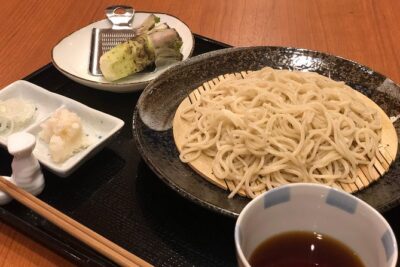
Popular in SapporoExperience authentic hand-made soba at a real soba shop!
Read our review →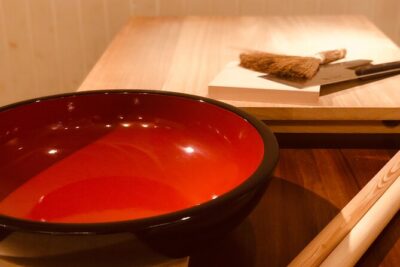
Mondo’s most popular plan! Experience making soba noodles and the king of Japanese cuisine, tempura, in Sapporo!
Read our review →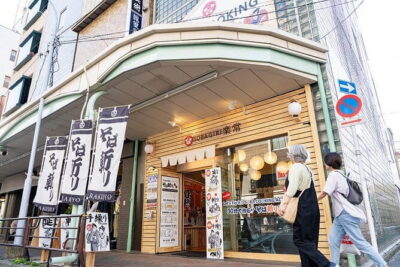
Experience Big soba knife Soba Making Class in Tokyo Kappabashi
Read our review →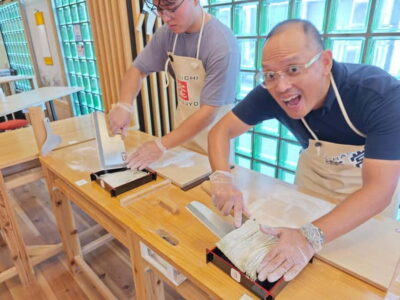
Made from flour in 30min! Ramen-noodle Making Experience!
Read our review →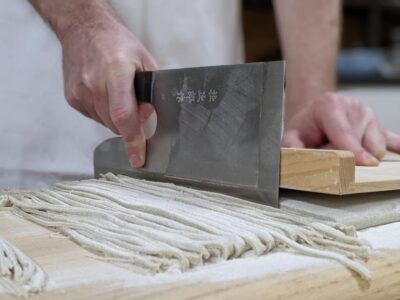
Matsumoto Castle Tour & Soba Noodle Making Workshop
Read our review →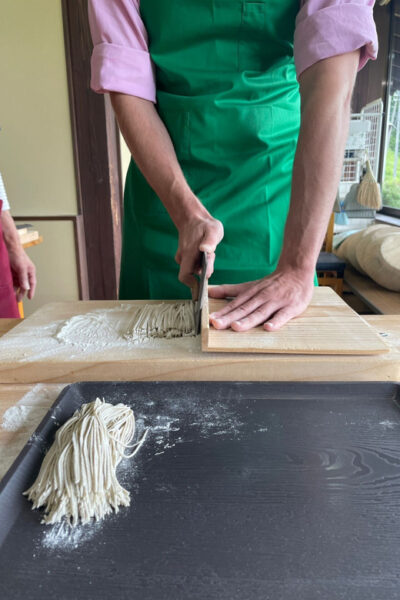
1-Day Togakushi: Soba making, Ninja Town and Hidden Shrines
Read our review →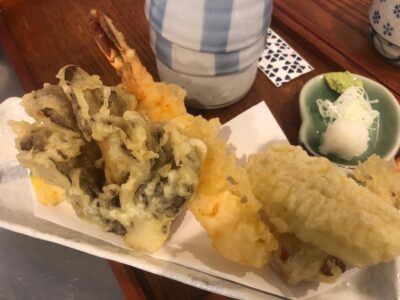
Top-rated experience Includes soba noodle making and tempura
Read our review →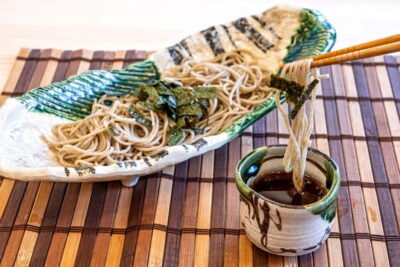
///Soba Making Experience///Use The BIG Soba-Knife!!
Read our review →Browse the lists this tour appears in