Review · TOKYO TOURS
Japanese Paper Washi Making Experience in Asakusa
Paper and light work well together in Asakusa. This Japanese washi workshop is a hands-on craft lesson where you create postcard-size paper and, depending on your plan, a full-size Rakusui water-drop patterned sheet that looks different as the light hits it.
I especially like two things about this experience. First, you get guided instruction from a washi master, not just a demo, so your final pieces feel genuinely made by your hands. Second, the options make it easy to tailor the project, from classic postcard washi to adding color and patterns with 100+ colored paper choices. One consideration: if you pick the shorter option, you are giving up the larger sheet experience, so check the plan details before booking.
In This Review
- Key highlights to know before you go
- Asakusa washi paper, and why the craft matters
- The Rakusui and ochimizu effect, small holes that change everything
- Your hour in the workshop: what happens step by step
- Plan A: postcards plus a full-size Rakusui sheet
- Plan B: color postcards with a pattern-building step
- Plan C: 4 postcard pieces without the colored Rakusui element
- What you actually leave with (and why it’s good value)
- Price in context: $47.03 for a hands-on craft hour
- Who this experience suits best in Tokyo
- Practical tips before you book
- Should you book the Asakusa washi making experience?
- FAQ
- How long is the Japanese paper washI making experience in Asakusa?
- Where does the workshop take place?
- How much does it cost?
- What options are available for making washi?
- What do I get to take home?
- Is instruction included?
- Are materials provided?
- Is there a dress code or protective clothing?
- Is there a group size limit?
- How does cancellation work?
Key highlights to know before you go
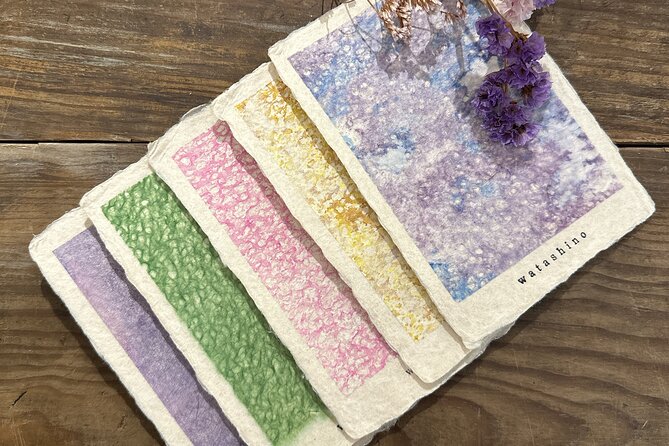
- Rakusui water-drop texture: the premium sheet has small holes created through the water step, so it catches light in a unique way
- Take-home set, not just a souvenir: you leave with multiple postcard pieces, plus a larger sheet on the premium plan
- Plan B adds a pattern-making step: you apply colored Japanese papers onto white washi you just made
- Small group size: the class caps at 6 people, which keeps the pace friendly and the instruction easier to follow
- Materials and instruction are included: you get what you need, plus a simple disposable apron if you request one
- Merch discount: you get 10% off store merchandise after the workshop
Asakusa washi paper, and why the craft matters
Washi is Japan’s paper, made with techniques that go back over 1,000 years. You’ll hear why it’s not treated like disposable paper: washi is thin and delicate, yet it’s also used for restoring valuable cultural artifacts because it holds up over time.
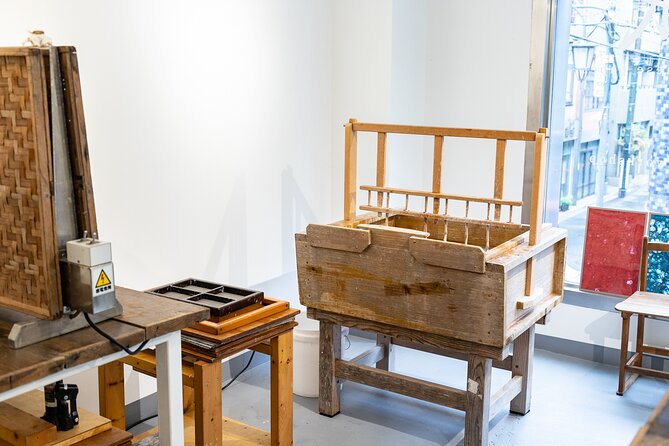
In this workshop, you get that context in plain terms, then you see it in the material itself. Even before you start pressing hands to paper, the shop display of washi products and artwork helps you understand what you’re making and why people care about it.
The craft is tied to regional style too. Tosa washi, from Kochi Prefecture in Shikoku, is one of the three renowned Yamato washi varieties, and it’s celebrated for its dyeing techniques and the range of colors, thicknesses, and manufacturing methods.
A few more Asakusa days to weigh up
- Tokyo Sumo Entertainment Show with Chicken Hot Pot and Photo
★ 5.0 · 1,205 reviews - Mt Fuji Private Day Trip from Tokyo with English speaking driver
★ 5.0 · 846 reviews - Kimono Tea Ceremony at Tokyo, Asakusa Maikoya
★ 5.0 · 638 reviews
The Rakusui and ochimizu effect, small holes that change everything
If you choose the premium track, you’re making a full-size sheet of Rakusui paper, sometimes described as water-dripping paper. The key visual feature is the small holes on the surface, created during the water application step.
Here’s why that matters for you. Those holes make the sheet react to light, so the finished piece is more than a flat texture. It can look subtle in one direction, then more graphic in another, especially when you tilt it or hold it near a window.
You’ll also see the related term ochimizu in what’s included. Ochimizu points to a water-drop pattern style, and the workshop provides the materials for it depending on your plan. So even if the exact naming varies by option, the theme stays consistent: water creates the pattern and the “life” in the paper.
Your hour in the workshop: what happens step by step
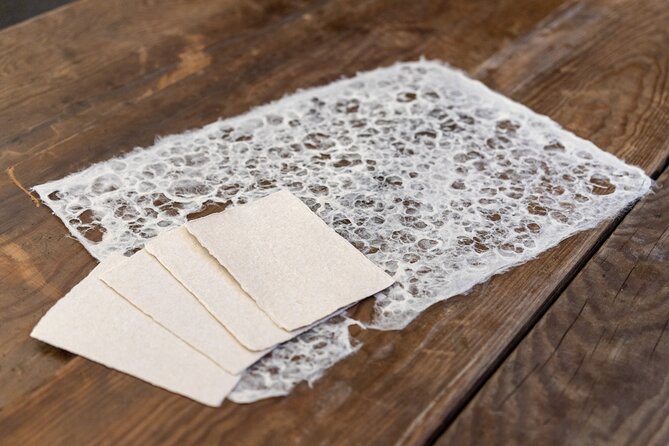
The class is about 1 hour for most options, and it runs from a meeting point in Asakusa near public transportation. You’ll finish back where you started, with your paper pieces ready to take home.
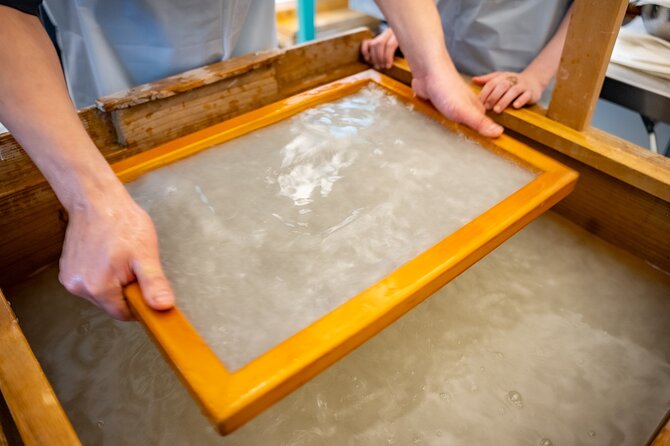
The flow is simple, which is a good thing in a short workshop. You’ll be welcomed, then you’ll learn the techniques from the washi master before you start producing your pieces. Because the group max is 6, you should expect the instructor to correct and guide you in real time, instead of rushing you through.
The workshop is set up around three different plan lengths, so the timing feels predictable. Plan A is the longer option, Plan B is middle length, and Plan C is the shortest. That makes it easier to fit into a packed Tokyo day around Senso-ji and the Asakusa streets.
Plan A: postcards plus a full-size Rakusui sheet
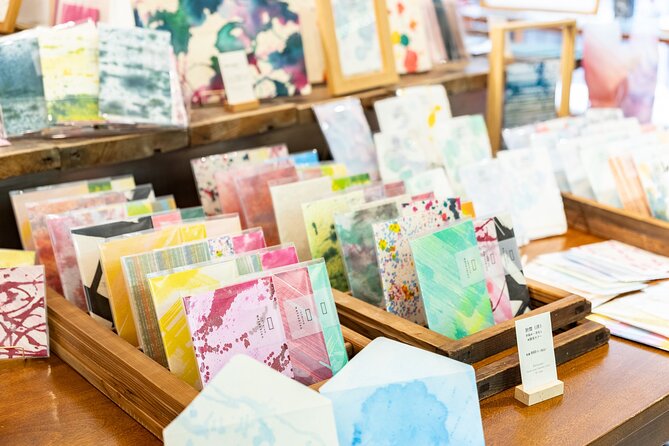
Plan A is the “premium” option, roughly 60 to 90 minutes. You make 4 washi postcards and also a full-size Rakusui paper sheet.
This is the choice I’d make if you want more than a small craft project. The postcards are great for sending, gift-giving, or framing, but the full-size sheet is the real conversation starter. You get a larger piece with the water-created holes and that light-catching surface quality.
It also helps if you like visual texture. If you’re the type who likes paper that looks different at different angles, Rakusui is a satisfying target. It’s also ideal as home décor, since the holes create a subtle pattern even when the sheet is plain-looking from far away.
A different sort of day in Japan:
- Asakusa Senso-ji Temple and Old Tokyo Walking Tour
★ 5.0 · 560 reviews - Skip the lines Basic Ticket at SAMURAI NINJA MUSEUM TOKYO
★ 5.0 · 470 reviews - Official Street Go-Kart Tour in Asakusa
★ 5.0 · 461 reviews - Private Craft Your Own Ring Handmade Experience in Asakusa, Tokyo
★ 5.0 · 358 reviews
Plan B: color postcards with a pattern-building step
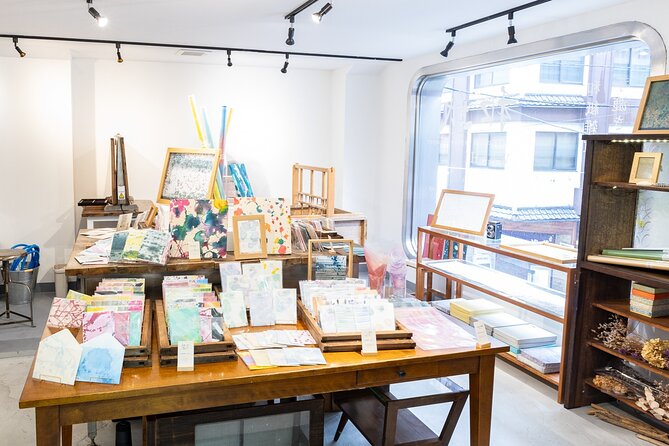
Plan B runs about 45 to 60 minutes and focuses on postcards plus an extra creative step. You make 4 washi postcards using colored papers you choose, then you add color and patterns by adhering colored Japanese papers to the white washi you made.
This plan is where the project shifts from paper-making into design-making. Instead of only choosing a color theme, you’re actively building a layered look with patterns that come from the paper pieces you pick.
One of the biggest practical advantages is selection size. You have over 100 variations of colored papers to choose from, so you’re not stuck with a small handful of pre-made combos. If you enjoy making choices and seeing how your selections change the final aesthetic, Plan B is the sweet spot.
Plan C: 4 postcard pieces without the colored Rakusui element
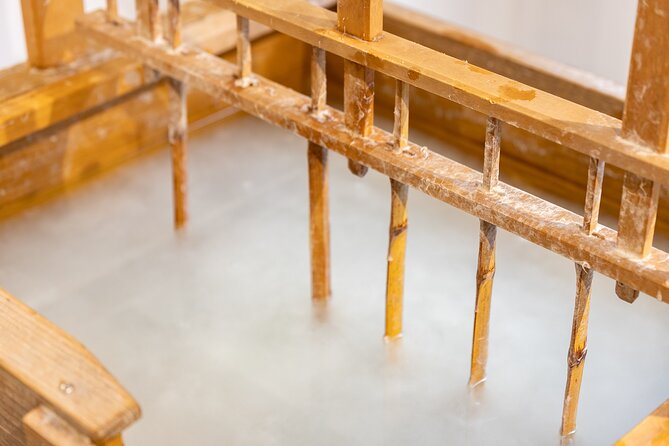
Plan C is the shortest option, about 30 to 40 minutes. It’s washi postcard-making without the colored Rakusui element, and you still end up with 4 pieces.
This is the smart pick if you mainly want the craft experience and a set of usable keepsakes, but you don’t have time for the larger sheet. You still get instruction, still work by your own hands, and still take home multiple finished postcards.
The tradeoff is simple. You miss the distinctive water-drop sheet experience that Plan A is built around, and the creative focus stays mostly on postcard production rather than the full-size textured paper.
What you actually leave with (and why it’s good value)
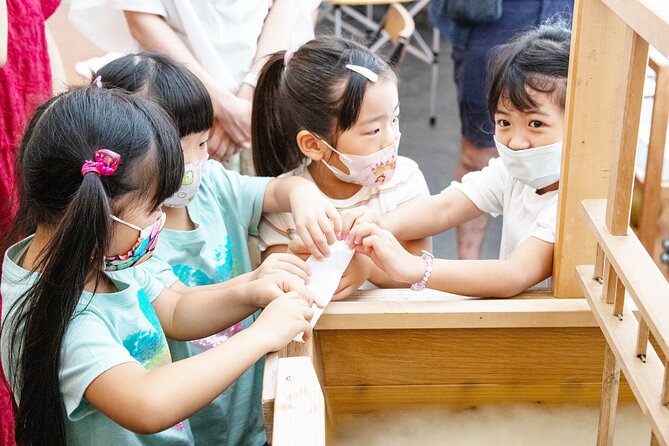
Across the options, you leave with postcard-size washi pieces, 4 total. On Plan A you also take home a full-size Rakusui sheet. The included materials cover what you need to produce these pieces, plus ochimizu paper where your plan includes it.
The value is strongest when you treat this as creating art you can display, not just a one-time photo opportunity. A set of postcards can be a gift, a journal insert, or a framed mini art set. If you’re the practical type, you’ll also like that postcards give you an easy use case: you know what to do with them once they’re dry.
You also get a simple disposable apron if you request it, which is a small comfort. And after the workshop, you get a 10% discount on store merchandise, which can help if you want a follow-up washi item that matches what you just made.
Price in context: $47.03 for a hands-on craft hour
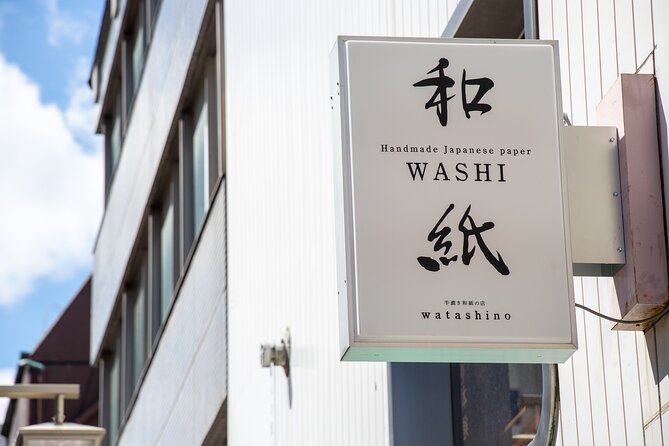
At $47.03 per person, this doesn’t feel like an impulse price, but it also doesn’t feel like a premium splurge, especially once you factor in materials and instruction.
Here’s the balance I’d use to decide: you’re paying for (1) teaching time with a washi master, (2) included materials for your postcards, and (3) the option to create a larger Rakusui sheet depending on your plan. That turns the workshop into more of a guided making session than a passive attraction.
Plan A will likely feel like the best “art haul” choice if you have the time, since you get both postcards and the full-size sheet. Plan B is the best choice if you want color and pattern experimentation with your own selections. Plan C is best value if you just want the essential craft and the finished postcards, fast.
Who this experience suits best in Tokyo
This workshop fits best when you like hands-on cultural activities and you enjoy making something you can keep.
It also suits you if you like small-group learning. With a class size of up to 6, you’re less likely to feel like you’re in a rush, and you’ll probably get clearer help when you need it. That matters a lot for crafts, because one tiny step can affect the look of the finished paper.
I’d also point out that it works well for different travel styles. If you’re a couple or a solo traveler, you get focused attention. If you’re planning a day around Asakusa, the timing can help you avoid the “too long in a showroom” problem that some workshops create.
Practical tips before you book
A few things will help you get the most out of the session without turning it into extra work.
First, pick your plan based on what you want to bring home. If you want the textured water-drop sheet, go Plan A. If you want the color and pattern process with lots of choices, go Plan B. If you want a short craft with finished postcards only, go Plan C.
Second, think about how you’ll use or display the paper afterward. Postcards are easy to package and give away. A full-size Rakusui or ochimizu sheet is best if you’re prepared to protect it on the way back to your hotel and store it flat.
Third, remember this is near public transportation and ends where it starts, which makes it easy to slot into a day. Having a mobile ticket is also one less thing to manage when you’re moving between Asakusa stops.
Should you book the Asakusa washi making experience?
You should book it if you want a short, high-satisfaction craft session with real instruction and take-home pieces you’ll actually value. It’s especially worth it for Plan A if you care about the water-created texture of Rakusui paper and want a bigger artwork, not just postcards.
Skip or reconsider if your schedule is extremely tight, because the craft does take focused time and you will not get the full premium output on the shorter plan. Also, if you only want a fast photo stop with no hands-on making, this may feel like more effort than you’re looking for.
For most people in Tokyo, though, this hits a sweet spot: meaningful cultural craft, small group pace, and a set of finished washi pieces that connect you to Japan in a very tangible way.
FAQ
How long is the Japanese paper washI making experience in Asakusa?
The experience is about 1 hour on average. Plan A runs about 60 to 90 minutes, Plan B runs about 45 to 60 minutes, and Plan C runs about 30 to 40 minutes.
Where does the workshop take place?
The meeting point is 1-chōme-32-11 Asakusa, Taito City, Tokyo 111-0032, Japan. The activity ends back at the meeting point.
How much does it cost?
It costs $47.03 per person.
What options are available for making washi?
There are three plans. Plan A includes 4 washi postcards plus a full-size Rakusui paper sheet. Plan B includes 4 washi postcards with colored papers and an additional step of adhering colored Japanese papers for patterns. Plan C includes making 4 washi postcards without the colored Rakusui element.
What do I get to take home?
You will make 4 postcard-sized washi pieces in all plans. Plan A also includes a full-size Rakusui paper sheet, and the experience includes ochimizu paper materials for options that include that component.
Is instruction included?
Yes. You get instruction by a washi master.
Are materials provided?
Yes. The included materials cover what you need for making postcard-sized papers and the ochimizu paper component where applicable.
Is there a dress code or protective clothing?
A simple disposable apron is provided if requested.
Is there a group size limit?
Yes. The maximum number of travelers is 6.
How does cancellation work?
Free cancellation is available. You can cancel up to 24 hours in advance for a full refund, with timing based on local start time.
Newly listed around Asakusa
- Tokyo : Asakusa Food Tour – 12 Dishes & 3 Drinks★ 5.0 · 44 reviews
- Tokyo: Customized Private Tour with a Local Guide★ 5.0 · 16 reviews
- 【Tokyo/Asakusa】Traditional Japanese Washi Papermaking experience★ 5.0 · 146 reviews
- Tokyo Japanese Dance Cabaret Theater Asakusa-Kaguwa★ 5.0 · 170 reviews
- Asakusa Kimono Photography Tour (Private Option Available)★ 5.0 · 20 reviews
- Tokyo: Asakusa & Sensoji ー Oldest Temple Walking Tour (2hrs)★ 5.0 · 213 reviews
- Asakusa Rental Kimono in Tokyo★ 5.0 · 11 reviews
- Asakusa:Family-Friendly Kimono & Yukata Experience at WARGO★ 5.0 · 30 reviews
Tokyo Tours, compared.
Mt Fuji and Hakone 1-Day Bus Tour Return by Bullet Train
Read our review →
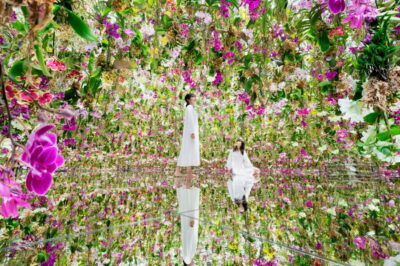
teamLab Planets TOKYO Digital Art Museum Entry Ticket
Read our review →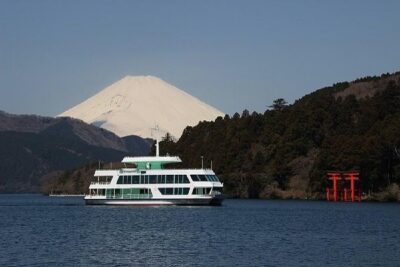
Mt Fuji & Hakone Cruise, Drum Show Bullet Train 1 Day from Tokyo
Read our review →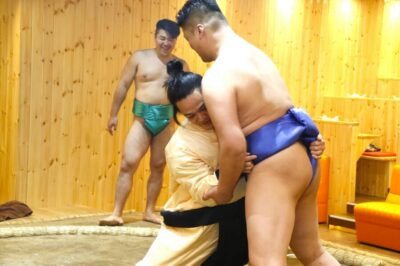
Sumo Show Experience with Chicken Hot Pot and a Photo
Read our review →
Shinjuku Food Tour (13 Dishes at 4 Local Eateries)
Read our review →