
Review · CYCLING & E-BIKE RIDES
Japan’s Rural Life & Nature: Private Half Day Cycling Near Kyoto
This private half-day cycling outing turns the Kyoto region into something quieter and slower, with Shiga Prefecture villages, temples, and farm roads. I like the way you get a short shinkansen hop to Maibara Station before you even start pedaling. I also love the structure, clear stop points, and the included drinks and snacks that keep you comfortable for a beginner-friendly 13 km ride.
The main consideration is physical comfort. It is described as beginner-friendly, but you should still be ready for some light walking and a short hike at the mountain temple stop.
If you want a break from the big-city temple circuit, this is a practical one. You get local culture, nature, and a real sense of how people live beyond the famous sights.
In This Review
- Key things that make this ride special
- Why Maibara feels like a real reset from Kyoto
- The short Shinkansen hop to start means less stress
- The 13 km route: how the pace stays beginner-friendly
- Stop 1: Maibara Station and the farming-area orientation
- Stop 2: Saienji, a Chinese-influenced Zen temple community
- Stop 3: Iwaya Zenkodo Temple, mountain views plus cave history
- Stop 4: 南世継外れ温泉, a community spring fed by the region
- The final farm-land stop: drained-inland-lake history made into rice fields
- Your guide makes the day, especially Tako-san’s style
- Included comfort: drinks, snacks, and how they shape your ride
- Price and value: $255 for a guided countryside day
- Weather reality: plan for good conditions
- Who should book this rural Kyoto-area cycling tour
- Should you book it?
- FAQ
- Where does the tour start and end?
- How long is the tour?
- How far will I cycle?
- Is the ride suitable for beginners?
- What stops are included during the half day?
- Is lunch included?
- What food and drinks are included?
- Can I add time near Lake Biwa or Hikone Castle?
- What fitness level do I need?
- What if the weather is bad?
- How long before the tour can I cancel for a full refund?
Key things that make this ride special
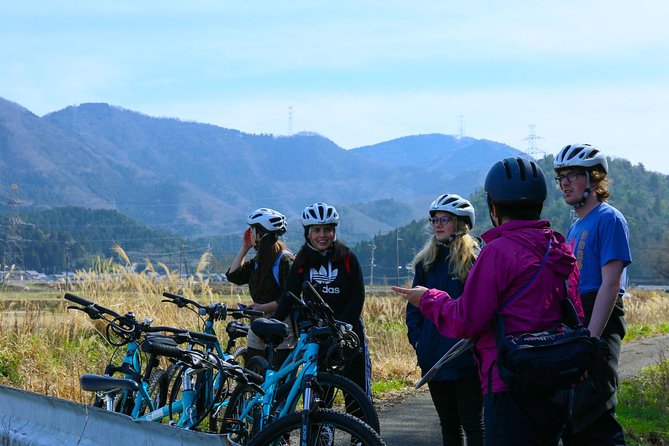
- Private tour with your own group means you can move at a calm pace and ask questions without a crowd crush.
- English-speaking guide with strong local history context, including a history binder mentioned by guests.
- Beginner-friendly 13 km route along farming areas and village roads around Maibara.
- Multiple meaningful stops like Saienji, Iwaya Zenkodo Temple, and a community spring.
- Included refreshment set: coffee or tea plus water and snacks for the ride.
- Optional extra time near water or a castle depending on what you want to add.
Why Maibara feels like a real reset from Kyoto
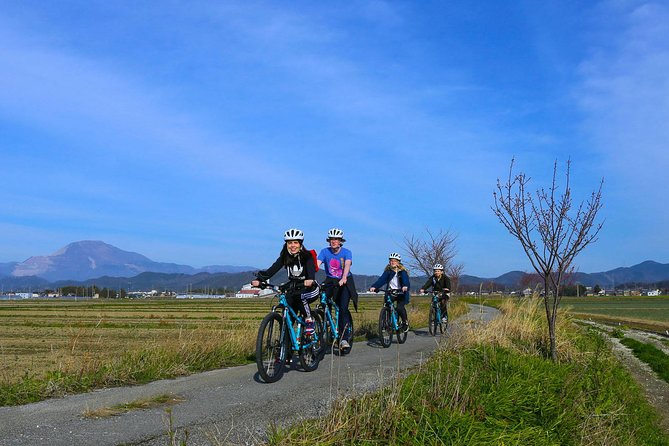
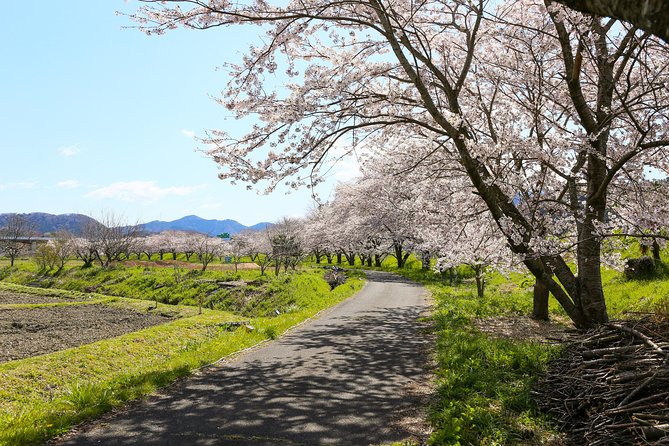
Maibara sits in Shiga Prefecture, and the vibe here is different from the Kyoto postcard rush. Instead of fighting crowds, you ride through working farmland, village streets, and quiet countryside roads. It feels like you are seeing the region as locals experience it, not as a slideshow.
The tour’s timing also helps. You get out for a short half day, then you are back at Maibara Station afterward. That makes it a smart choice if you want an authentic day without sacrificing the rest of your trip.
I also like that the route is built around a manageable cycling distance. Around 9 miles (13 km) is not a fitness challenge, and it is long enough to feel like a journey.
More Bike rides in Japan:
- Bike Tour Exploring North Kyoto plus Lunch
★ 5.0 · 1,087 reviews - Tokyo Great Cycling Tour
★ 5.0 · 811 reviews - Tokyo Top Highlights 3h Guided E-bike Tour
★ 5.0 · 714 reviews
The short Shinkansen hop to start means less stress
One reason this works so well is how it begins. You travel by shinkansen to Maibara Station, then your ride starts right there. That cuts down on the “how do we get there” headache and gets you into the countryside while your energy is still high.
The meeting point is Maibara Station, and the tour ends back at the same place. That simple start and finish matters because it keeps the logistics cleaner than routes that scatter you across multiple towns.
If you are coming from Kyoto, it is also described as an easy day trip route. You get the benefit of rail convenience without the feeling that the whole day is spent in transit.
The 13 km route: how the pace stays beginner-friendly
The cycling course is about 13 km, described as beginner-friendly. The route follows farming areas and villages around Maibara, including places that were historically separate but merged into Maibara’s governing area in recent decades. Translation: you get variety in a short distance, and you are not stuck in one repetitive loop.
You will make several stops, which helps your brain rest while your legs keep moving. Instead of “ride for hours, then look,” you get frequent context: temple moments, a small hike, refreshments, and scenery breaks.
Practical tip: bring a bit of patience for small uphill segments. The main physical lift is not a long climb, but the Iwaya Zenkodo Temple stop includes a short hike on a mountain. If you keep a steady pace and take the breaks when offered, it stays very doable.
Stop 1: Maibara Station and the farming-area orientation
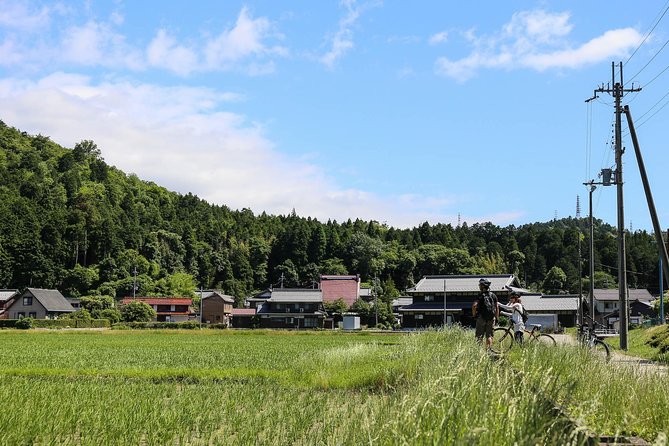
Your ride starts at Maibara Station. This first part is more than just a location. Your guide sets the stage by explaining how the surrounding area connects to the story of modern Shiga Prefecture, including how village communities and land use changed over time.
This is a good moment to get your bearings and settle in. You also learn how the stops fit together, which makes the temples and farmland feel connected instead of random.
A few more Japan days to weigh up
- Hidden Kyoto E-Biking tour
★ 5.0 · 1,843 reviews - Tokyo Guided Small-Group Biking Tour
★ 5.0 · 1,250 reviews - 3h Tokyo E-Bike Tour: Hidden Gems, and Local Life with guide
★ 5.0 · 670 reviews - Arashiyama Bamboo Forest & Hidden Gems Bike Tour (Early Bird)
★ 5.0 · 613 reviews
Stop 2: Saienji, a Chinese-influenced Zen temple community
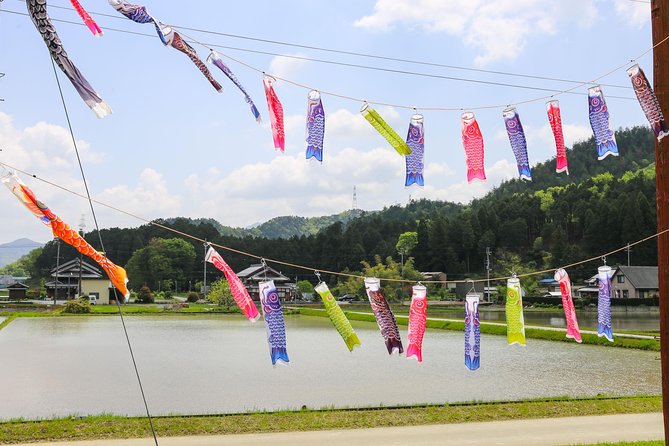
Next is Saienji, a Chinese-influenced Zen temple with an area that also gives its name to the surrounding small village community. You do not spend long here, but it is a meaningful pause.
You stop briefly to take in both the temple and the village setting. The point is to see how spiritual places and daily life sit side by side. Rural Japan does this better than almost anywhere else, and this stop gives you a quick taste without turning the day into a long temple marathon.
Best use of your time here: slow down. Take a few minutes to watch the rhythm of the area. Even if you do not know the details, the layout and everyday activity help you understand what the guide is pointing out.
Stop 3: Iwaya Zenkodo Temple, mountain views plus cave history
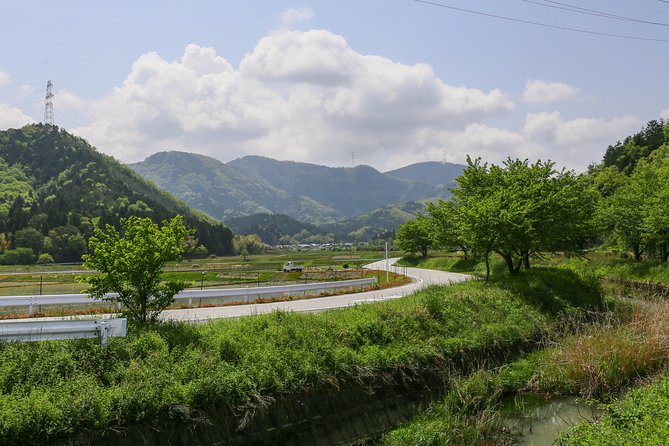
The Iwaya Zenkodo Temple stop is one of the highlights. You head to a mountain around 120 meters high, take a short hike, and then get refreshments.
This temple is built into the side of the mountain. There is also an Inari Shrine here, plus an old manmade cave with a unique history. That mix gives you multiple angles at once: religion, geography, and how people engineered spaces for worship.
A drawback to plan for: this is the stop with the most physical component. Even if you are a comfortable walker, wear shoes you trust on uneven ground. The rest of the ride is described as beginner-friendly, but this mountain segment is the place to be ready.
Stop 4: 南世継外れ温泉, a community spring fed by the region
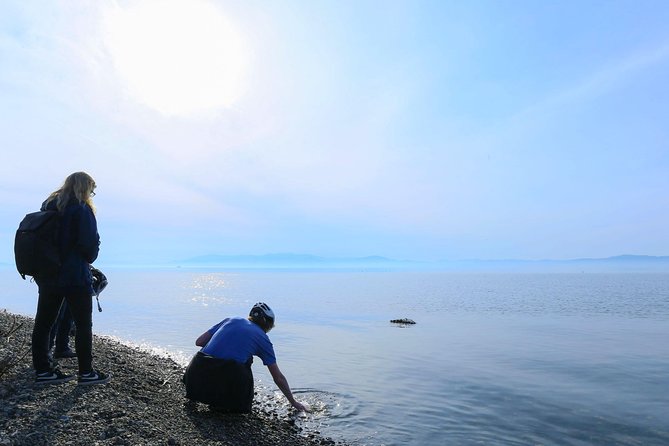
After the temple, you stop at 南世継外れ温泉, a natural spring well that has been shared by the local community since long ago. The water comes from an underground waterway between Mt. Ibuki and Lake Biwa.
Important practical detail: this water is untreated and not for drinking. Locals use it for washing, so treat it as a cultural stop, not a place to refill bottles for drinking.
Even with that limitation, this is a great moment to connect nature to daily life. It helps explain why “rural” here is not just scenery. Water access shapes how communities farm, maintain homes, and live.
The final farm-land stop: drained-inland-lake history made into rice fields
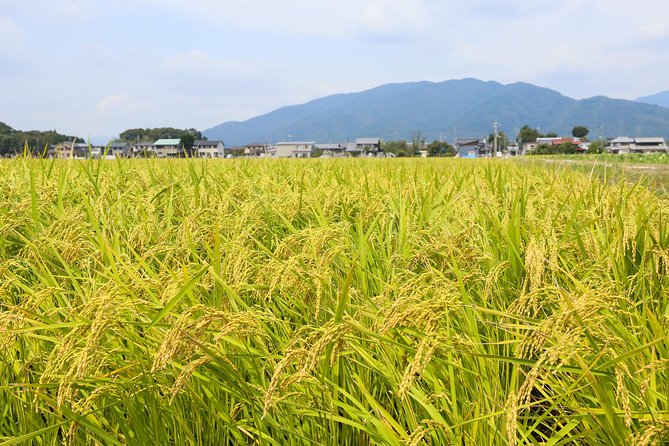
The last ride segment focuses on agricultural scenery in an area with a surprisingly specific backstory. In pre-war Japan, this farm area was described as a smaller inland lake near Lake Biwa. Later, it was drained and turned into farm land to provide rice for post-war recovery.
That history matters because it gives you a reason to look at what you see. When you ride past rice fields and farmland, you are not just admiring a view. You are seeing land that was reshaped to meet real needs.
This is also where the ride feels most like a countryside cycling day. You get open views, slower roads, and the kind of calm that makes a half day feel longer in the best way.
Your guide makes the day, especially Tako-san’s style
This tour’s biggest strength is the guide experience. One name that comes up strongly is Tako-san. Guests note her English is fluent, including that she lived in the States. That matters because rural history can get dense fast, and you want a guide who can explain without turning it into a lecture.
The guide also brings materials. A history binder is mentioned, which tells you the explanations are organized. You are not just getting comments from the roadside. You are building a mental map as you ride.
Another detail worth cheering for: the tour includes the human side of local welcome. One guest describes an old man coming out to greet the group, turning a brief moment into an extended conversation. That is not something you can plan, but it reflects the kind of relationships the tour operates with.
Also, the bikes are described as brand new. That is a small detail with big impact. A comfortable, reliable bike makes beginner-friendly cycling actually feel easy.
Included comfort: drinks, snacks, and how they shape your ride
This tour includes coffee and/or tea, plus coffee, tea, water, and snacks as part of the overall included refreshment set. That is a smart inclusion for a half day because it protects you from the usual countryside travel problem: you might not find a convenient café exactly when you need it.
It also means you can ride without budgeting every little stop. You can treat the ride stops as part of the experience, not as a scramble for fuel.
What is not included is lunch. Plan on eating before you go, or plan your next meal right after you return. Because it is only 3 to 4 hours, you usually can manage it if you are not expecting a full sit-down meal during the tour.
Price and value: $255 for a guided countryside day
At $255, this is not the cheapest option around Kyoto. But it is not priced like a basic group bus either. You are paying for a private experience, an English-speaking professional guide, bike use, and the added convenience of rail transfer to the start.
The value equation is simple. You get:
- a dedicated guide for culture and history
- a bike included
- refreshments during the ride
- a route designed around short stops instead of long travel blocks
If your main goal is to get out of the tourist center and into rural daily life, that package is easier to justify. You are buying time and translation, not just a ride.
If your priority is only sightseeing at big-ticket landmarks, you might decide this is too specialized. But if you want a countryside day with real context, it is strong value for a private guided format.
Weather reality: plan for good conditions
The experience requires good weather. If poor weather forces cancellation, you get offered another date or a full refund. That is fair.
Also, rain can happen in Japan. Even so, it is still described as a great day despite rain in at least one account. Still, because the operator flags weather as important, pack with the expectation that you might feel the day’s conditions more than you would in a fully indoor itinerary.
Who should book this rural Kyoto-area cycling tour
This tour is a great match if you want:
- a break from Kyoto crowds
- a beginner-friendly cycling day
- temple and nature stops without committing a whole day
- history explanations in English tied to place
It also works well for families with kids who can handle a moderate ride and short walking segments. One account mentions a daughter enjoying it, which points to the approachable pace.
If you are a hardcore cyclist looking for big mileage or steep climbs, this may feel too short. You are here for culture, villages, and countryside views, not for training.
Should you book it?
Yes, if you want an authentic Shiga day and you like your Japan with context, not just checklists. The combination of English guidance, a manageable 13 km route, and multiple meaningful stops makes it an easy win for most first-timers to rural Japan.
Book it especially if you are staying in Kyoto and want a calmer change of pace. You will spend less time planning routes, and more time watching how rural communities connect temples, water, and farmland.
If you prefer only major sightseeing sites with long photo time, you might find the shorter temple stops less satisfying. But if you want something quieter, guided, and genuinely different from the city, this is one of the most practical ways to do it.
FAQ
Where does the tour start and end?
It starts at Maibara Station in Shiga Prefecture and ends back at the same meeting point.
How long is the tour?
The tour runs about 3 to 4 hours.
How far will I cycle?
You will cycle about 9 miles (13 km).
Is the ride suitable for beginners?
Yes, it is described as a beginner-friendly ride.
What stops are included during the half day?
You visit Maibara, Saienji, Iwaya Zenkodo Temple, and a natural spring well at 南世継外れ温泉, with rural farming areas also part of the course.
Is lunch included?
No. Lunch is not included.
What food and drinks are included?
Coffee and/or tea are included, along with coffee, tea, water, and snacks during the tour.
Can I add time near Lake Biwa or Hikone Castle?
Yes. The tour description says you can stop off and spend more time at Lake Biwa or Hikone Castle if you like.
What fitness level do I need?
You should have a moderate physical fitness level.
What if the weather is bad?
The experience requires good weather. If it is canceled due to poor weather, you will be offered a different date or a full refund.
How long before the tour can I cancel for a full refund?
You can cancel for a full refund up to 24 hours before the experience’s start time. Free cancellation is allowed up to that window.
Newly listed around Japan
- Mt.Fuji area Tour from Shimizu Port / Van Taxi★ 5.0 · 41 reviews
- Port Pick-Up: Shizuoka Tour with Licensed Guide and Vehicle★ 5.0 · 15 reviews
- Hakone Full Day Tour with Guide and Vehicle★ 5.0 · 8 reviews
- Mt.Fuji area Tour from Shimizu Port /Small Bus★ 5.0 · 10 reviews
- West IZU Uncovered Tour Cave Cruise and Monkey Encounter★ 5.0 · 6 reviews
- Mount Fuji Full-Day Private Tour from Shimizu Port (Customizable)★ 5.0 · 23 reviews
- Small Group Japanese Green Tea Tasting in Shizuoka★ 5.0 · 7 reviews
- Rural Brewery Town Walk: Half-Day Private Tour Near Kyoto★ 5.0 · 7 reviews
Cycling & E-Bike Rides, compared.

3h Tokyo E-Bike Tour: Hidden Gems, and Local Life with guide
Read our review →
Arashiyama Bamboo Forest & Hidden Gems Bike Tour (Early Bird)
Read our review →
5 Top Highlights of Kyoto Full Day Bike Tour (E-bike option)
Read our review →

Hiroshima 2hr Peace Cycling Tour with Local Guide
Read our review →Browse the lists this tour appears in