
Review · CYCLING & E-BIKE RIDES
Hiroshima 2hr Peace Cycling Tour with Local Guide
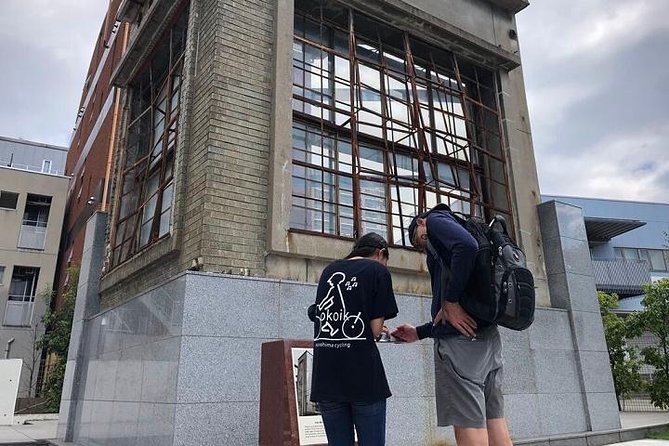
Pedal through peace, history, and Hiroshima’s everyday streets. This Hiroshima cycling tour is interesting because it mixes UNESCO-level memorial sights with real street-level Hiroshima, not just museum time. I especially like the electric bikes, which make the ride feel easy and lets you focus on the stories, not your legs. The local guides (often sharing family connections) help the meaning land in a way that plain sightseeing rarely does. The main drawback: it’s only about two hours, so you may leave wanting a longer look at the Peace Museum area.
The tour is built for a small group, capped at 10 people, so you get calmer pacing and more time to ask questions. It starts at the Hiroshima Peace Memorial Park Rest House, right where most first-timers want to be anyway. Do note it depends on weather and can shift to a rainy route or a walking option, which is smart for safety, but it can change the vibe of the day.
In This Review
- Key things to know before you ride
- Why cycling through the Peace Park hits differently
- Getting there and the timing that keeps you on track
- Stop at the Rest House: a quick setup before the serious part
- Inside Hiroshima Peace Memorial Park, how the landmarks connect
- Beyond the Park: city streets and the A-bombed streetcars detail
- Electric bikes and the height rules you should not ignore
- Small-group pacing with guides like Shin, Kana, and Bella
- What’s included, what’s not, and how to pack smart
- Rainy day rules that actually save the trip
- The 2-hour vs 3-hour choice, and how to decide
- Value check on the $59.69 price
- Who this tour is best for
- Should you book this Hiroshima Peace Cycling Tour?
Key things to know before you ride
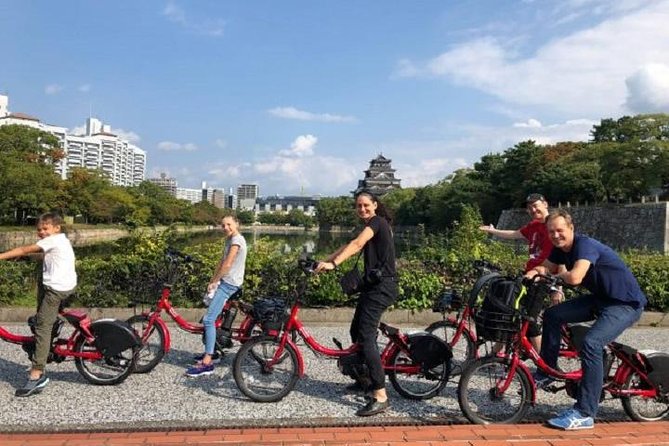
- Electric bikes keep the ride stress-free, especially on a mostly flat city route.
- Small-group size (up to 10) helps the guide adjust pace for mixed riding comfort.
- You cover more than the Peace Park core, including city viewpoints off the main paths.
- Guide stories matter here, with names like Shin and Kana showing up in feedback.
- Rainy day plan exists, including an option to switch to a walking route around the hypocenter area.
- Photo data is provided, so you are not stuck hunting for shots the whole time.
Why cycling through the Peace Park hits differently
A walk through the Peace Memorial Park is meaningful, but cycling changes your angle. You are not trapped in one loop or one viewing deck. You can glide between monuments, look up at skyline angles, then roll into adjacent neighborhoods where Hiroshima’s rebuilding is visible in real time.
This tour gives you that mix on purpose. You start in the Peace Memorial Park area, then the ride extends beyond it. That matters because the bombing is not just a moment in 1945. You see how Hiroshima chose to rebuild, remember, and keep moving.
Also, the electric bikes are a big deal. Hiroshima is flat, and the e-assist helps you keep a steady pace even if you are not a regular cyclist. It turns the experience into “slow travel with intention” instead of “fitness test with a schedule.”
More Bike Rides in Hiroshima
- Hiroshima: Peace Cycling Tour with Local Guide
★ 4.8 · 286 reviews - Hiroshima 3hr Peace Cycling Tour with Local Guide
★ 5.0 · 131 reviews - Hiroshima: Best of Hiroshima Guided Bike Tour
★ 4.9 · 89 reviews
Getting there and the timing that keeps you on track
You meet at the Hiroshima Peace Memorial Park Rest House (Japan, 730-0811, Hiroshima, Naka Ward, Nakajimachō). The tour runs twice daily, with a meeting window at 11:00 or 15:00.
The typical flow goes like this:
- You gather at the Rest House for a short meet-up.
- Then you move into the Peace Memorial Park for the main monument time.
- After that, the ride continues toward Hiroshima city sights outside the park loop.
- You finish back at the meeting point about two hours after departure.
Two practical notes. First, the Peace Memorial Park stop is listed as 55 minutes, and that’s where your concentration should be highest. Second, the timetable can change depending on the day’s conditions, so keep a little flexibility in your Hiroshima plans.
Stop at the Rest House: a quick setup before the serious part
You start at the Rest House of Hiroshima Peace Park, and the meet-up time is short. This matters because you are not wasting your limited two hours with long introductions. You get on the bikes, get oriented, and then you move into the Peace Park area quickly enough to keep the day feeling fresh, not rushed.
There’s also a realistic logistics angle. The Rest House area does not have luggage storage mentioned as available, so if you are coming from another site with a bag, plan to use nearby lockers. The tour info points you to coin lockers at:
- Hiroshima Peace Memorial Museum (about a 6-minute walk)
- International Conference Center Hiroshima
If you hate lugging a bag while riding, this is worth planning the morning of.
Inside Hiroshima Peace Memorial Park, how the landmarks connect
The Peace Memorial Park is UNESCO-listed, and this tour focuses on monuments plus perspective. You spend about 55 minutes in the park, and the guide explains what the memorials are meant to hold and what happened roughly 70 years ago.
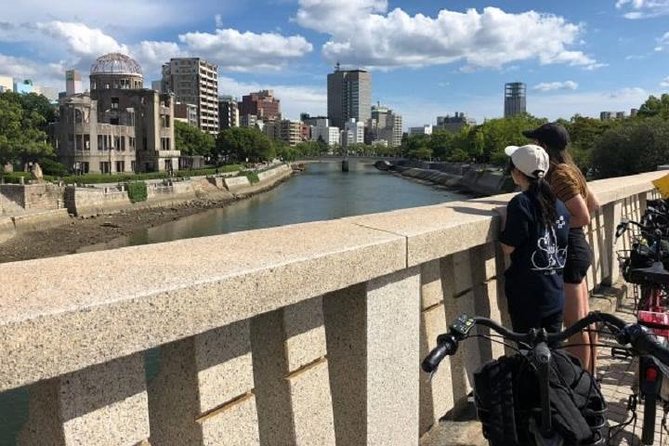
You’ll also spend time with the Atomic Bomb Dome as a central visual reference. Even if you already know where it is on a map, what you often miss is how it sits within the surrounding city angles. The tour’s approach includes viewpoints from the city side, not only a single front-facing view.
A key value here is the interpretation. The guide’s job is to connect the monument layout with meaning, so you can read the park like a guided story rather than a checklist. You get time to notice the memorial details, then you get moved forward before you overthink every symbol.
One small practical note: the Peace Memorial Park stop lists admission as not included. If you are planning around tickets, double-check what you need on the day.
More Bike Tours in Hiroshima
- Hiroshima in a Nutshell: Morning Bike Adventure
★ 5.0 · 524 reviews - Hiroshima: City and Miyajima Bike and Boat Tour
★ 5.0 · 20 reviews - Hiroshima Scenic Cycling Guided Tour
★ 5.0 · 19 reviews - Hiroshima: Peace Park, Castle, and Mitaki Temple E-Bike Tour
★ 4.8 · 11 reviews
Beyond the Park: city streets and the A-bombed streetcars detail
After the park loop, the tour shifts from memorial-only space to Hiroshima in motion. Stop 3 is described as Hiroshima for about one hour, and the guide shares things you might not catch on your own.
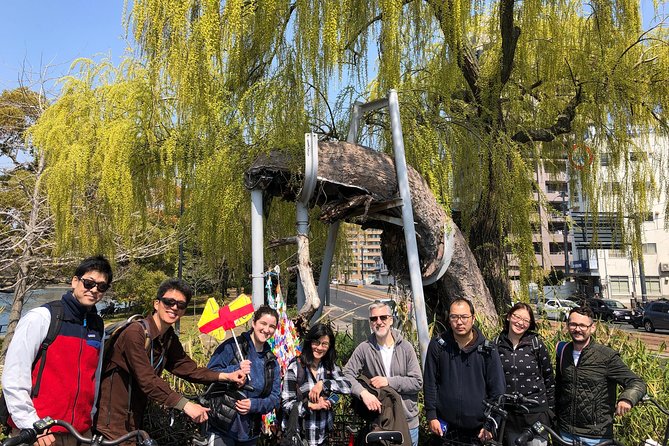
A standout detail: the guide points out that there is still a train running today that survived the atomic bombing, known as the A-bombed Streetcars. That kind of fact does not just add trivia. It helps you grasp time continuity. Hiroshima’s everyday life has layers, including wartime scars that did not vanish overnight.
The route also includes riding through townscapes in and around Hiroshima, with emphasis on the city’s reconstructed present. In plain terms, you do not just see where the bombing happened. You see how Hiroshima looks now, and the guide helps you connect that “now” to the memory work around it.
If you like photos, this is where they usually happen. You are moving, but still at a human pace, and you get photo data after the ride as a bonus.
Electric bikes and the height rules you should not ignore
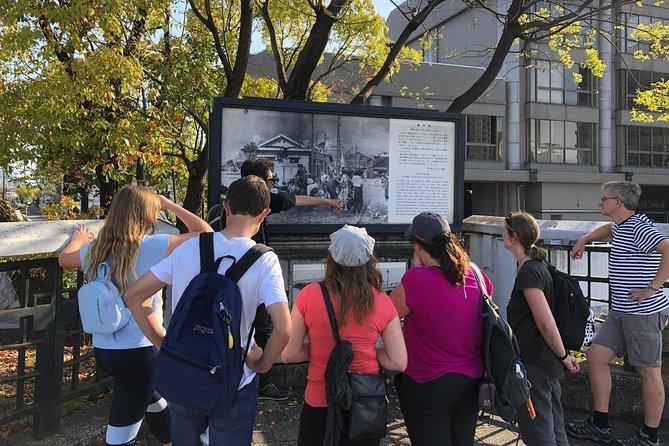
Electric bikes are the core comfort upgrade here. They make the ride manageable for many people, including those who are not regular cyclists. One review detail that matches the design of the tour: a 64-year-old rider found the pacing manageable because the e-bike assistance did the heavy work.
That said, the tour has clear requirements:
- Adult electric bike participation requires height 145 cm or more.
- For children, there are children’s bicycles (cross bike type) available, and children under 15 can use both children’s bicycles and adult bicycles at child rate if they meet the height guidance of 110 cm to 145 cm.
- Child e-bike seats are for children under 22 kg and under 115 cm.
If your group has mixed heights, confirm the bike types early. It’s also a good idea to wear comfortable shoes and light outerwear. Even in a pleasant season, the Peace Park area can feel cooler than you expect.
Small-group pacing with guides like Shin, Kana, and Bella
This is a mixed tour with a maximum group size of 10. That affects your experience more than you’d think. When the group is small, the guide can slow down for people who need it and keep a smooth flow so nobody gets left behind at monument stops.
The guide role is also where this tour earns its strong ratings. In feedback tied to the tour, guides such as Shin and Kana show up often, along with Tomas, Bella, Mimi, and Moet (spelling may vary). What I’d take from that is consistency in how the storytelling is delivered: clear English, steady timing, and personal perspective.
Some guides share family connections tied to Hiroshima’s wartime experience. For example, one guide named Shin is described as having grandparents who lived through the bombing, and that family link turns the explanations from historical facts into lived memory. The result is emotional, but also organized, because the guide keeps the facts moving in the right order.
Not every guide will tell the same kind of personal family story, and the tour still works perfectly well even if your guide focuses more on monuments and city recovery. But if you care about meaning, this is where the tour tends to hit hardest.
What’s included, what’s not, and how to pack smart
Here’s what you can count on from the tour setup:
- The tour includes the bike experience with local guidance.
- Bicycle accident insurance is included in the price.
- You’ll be given data of the photos taken during the day.
- You receive a mobile ticket.
What is not included or needs attention:
- No free Wi-Fi at the Rest House (though Hiroshima’s free Wi-Fi exists across the city).
- Luggage storage at the Rest House is not available, so lockers at nearby facilities are your best bet.
I’d also plan around the fact that you are riding outdoors in a memorial-focused area. Bring a light layer, water, and any rain protection if the forecast looks iffy. Since the route can shift, you want to be ready for either a ride or a walking alternative.
Rainy day rules that actually save the trip
This experience requires good weather. If rain cancels the planned cycling route, you are offered choices:
- Switch to a Rainy Day Limited Peace Route
- Or get a refund (you choose what works best)
The rainy route timing is still based on the same departures at 11:00 and 15:00, and it’s structured so you still cover major memorial context. The route listed for rainy days includes:
- Peace Memorial Park
- Atomic Bomb Dome
- Hypocenter
- Former Bank of Japan
- Fukuromachi Elementary School
- Main street
It ends earlier, around 13:00 or 17:00.
There’s also a walking fallback for rainy days. The plan can change to a walking tour only, visiting the hypocenter area that was reduced to scorched earth in an instant, walking around an area about 0.5 km to 1 km. If you do not want to switch, you can get a refund.
Practical takeaway: if you’re flexible and you pack for rain, the tour still has a strong chance of feeling like a full experience.
The 2-hour vs 3-hour choice, and how to decide
This tour is the 2-hour version. It focuses on the Peace Memorial Park and the city’s wartime and post-war recovery themes, with emphasis on the memorial significance and the reconstructed present.
You should consider the longer option if you want extra context and more time in other major sites. The 3-hour version adds guidance to places such as Hiroshima Castle, plus deeper insights about pre-war and post-war recovery, and it’s described as recommended if you want to communicate closely with your guide.
For most first-time Hiroshima trips, two hours is a strong balance. You get a meaningful overview plus city perspective without eating your whole afternoon. If you already plan to do the Peace Museum in depth, the cycling tour becomes the memory bridge that ties the exhibits to the streets you are walking later.
Value check on the $59.69 price
At $59.69 per person for about two hours, you’re paying for more than “just a bike.” You’re paying for:
- A local guide who interprets what you see
- A small-group setup capped at 10
- Electric bikes
- Included bicycle accident insurance
- Photo data delivery
If you compare that to piecing together a self-guided route, e-bike rental, and a museum-heavy schedule, this feels like money spent on clarity. The guide’s job is to prevent the common problem of seeing memorials and still not quite knowing what to focus on next.
The best value is for first-timers who want momentum. If you already know Hiroshima well and just need a quick ride between two fixed points, it might feel pricey. But if you’re standing at the Peace Park thinking, I want meaning and context, this price often starts to make sense fast.
Who this tour is best for
This tour fits especially well if you:
- Want a first visit to Hiroshima that balances solemn memorials with real city context
- Like moving at a human pace while still seeing more than a walk would cover
- Appreciate guides who can connect history to today
It also works well for families. The ride is described as manageable for non-cyclists because of the e-bikes, and children’s bike options are available with clear height and weight guidance.
Where it might not fit as well is for people who are extremely uncomfortable around bicycles or who need long stops at each monument. The Peace Park segment is about 55 minutes, and the whole experience is about two hours, so the structure is purposeful rather than open-ended.
Should you book this Hiroshima Peace Cycling Tour?
Book it if you want a 2-hour, small-group e-bike experience that connects Hiroshima’s Peace Park landmarks with the city’s reconstructed present, and you want a guide to do the hard work of explaining what to notice. If you are short on time in Hiroshima, this format is a smart use of it.
Skip it or consider the longer version if you know you need more time at each memorial site. Also, go in expecting that weather can change the route, but the tour is set up to handle that with an alternate plan.
If your goal is to leave Hiroshima with both moving perspective and practical “how the city lives now” context, this is a strong choice.
More Cycling Tours in Hiroshima
- Hiroshima Country Cycling: Explore Rural Life 1 HR from City
★ 5.0 · 8 reviews - Hidden Kyoto E-Biking tour
★ 5.0 · 1,843 reviews - Tokyo Guided Small-Group Biking Tour
★ 5.0 · 1,250 reviews - Bike Tour Exploring North Kyoto plus Lunch
★ 5.0 · 1,087 reviews
Newly listed around Hiroshima
- Hiroshima and Miyajima 1 Day Walking Tour★ 5.0 · 43 reviews
- Hiroshima and Miyajima 1 Day Cruise Tour★ 5.0 · 24 reviews
- Hiroshima & Miyajima: UNESCO A-Bomb Dome & Itsukushima with Local★ 5.0 · 25 reviews
- Hiroshima & Miyajima: Private Full-Day Tour with a Local Guide★ 5.0 · 39 reviews
- Hiroshima 5k Running Tour of Hijiyama Park★ 5.0 · 7 reviews
- Hiroshima and Miyajima Bus Tour with Indian Lunch★ 5.0 · 10 reviews
- Hiroshima and Miyajima 1 Day Bus Tour★ 4.5 · 145 reviews
- Hiroshima Peace Memorial and Atomic Bomb Dome Private Tour★ 5.0 · 37 reviews
Cycling & E-Bike Rides, compared.

3h Tokyo E-Bike Tour: Hidden Gems, and Local Life with guide
Read our review →
Arashiyama Bamboo Forest & Hidden Gems Bike Tour (Early Bird)
Read our review →
5 Top Highlights of Kyoto Full Day Bike Tour (E-bike option)
Read our review →
5-Hour Osaka Bike Tour to the Neighborhood of Osaka Castle
Read our review →Browse the lists this tour appears in