Review · FULL-DAY
Kyoto and Nara UNESCO Highlights Full-day Tour From Osaka
Kyoto and Nara, packed into one smooth day. This full-day trip strings together three big UNESCO-area hits, plus the streets you actually want to walk in Kyoto, all with a guide who helps you move fast and stay calm. You start early, ride in an air-conditioned bus, and spend your sightseeing time where the famous scenes are, from Kiyomizu-dera to Fushimi Inari’s torii path.
I love the mix of guided context and real walk-around time. You get to see the hillside views at Kiyomizu-dera, then wander Kyoto’s old-street neighborhoods like Ninenzaka and Sannenzaka, and later enjoy free time at Fushimi Inari and Nara. I also like that the tour runs with a compact group size, up to 40 people, which makes it easier to keep track of your pace and meeting points.
One thing to consider is that it is a long day with a lot of uphill walking. Also, while the bus is advertised as air-conditioned, at least one past group noted the AC felt weak when the bus was not allowed to idle at a stop, so bring a plan for heat and take your time on the stairs.
In This Review
- Key highlights worth circling
- Why This Kyoto and Nara Day Trip From Osaka Makes Sense
- Morning Logistics: Nipponbashi Pickup and the Fast Route to Kyoto
- Kiyomizu-dera on a Hillside: Views, Steps, and the Autumn-Walk Feel
- Gion and Hanamikoji Streets: Where Your Kyoto Walking Time Really Lands
- Fushimi Inari’s Senbon Torii: Plan Your Tempo for the 70 Minutes
- Nara Park Deer Time and Todaiji’s Huge Bronze Buddha
- Price and Value: What $62.75 Really Buys You
- How the Guides Make or Break This Day
- Comfort, Crowds, and the One Real “Watch Out” Moment
- Who This Tour Fits Best (and Who Might Want a Different Plan)
- Should You Book This Kyoto and Nara UNESCO Highlights Tour From Osaka?
- FAQ
- Where are the pickup points for this tour?
- Where do you drop off at the end of the tour?
- What entrance fees should I expect to pay?
- Is lunch included in the price?
- How long is the tour?
- Is the bus air-conditioned?
- What group size should I expect?
- FAQ
- Where do I need to pay with cash?
- Can I cancel for a full refund?
Key highlights worth circling
- Small-group pace (max 40) that keeps Kyoto navigation from turning into a full-time job
- Kiyomizu-dera + classic Kyoto streets like Ninenzaka, Sannenzaka, Ishibe Alley, Gion, and Hanamikoji
- Fushimi Inari Senbon Torii with about 70 minutes of on-site time
- Nara Park deer time plus Todaiji with the large bronze Buddha visit built in
- Mobile ticket plus a guide holding a yellow Gogoday flag for easier meet-ups
Why This Kyoto and Nara Day Trip From Osaka Makes Sense
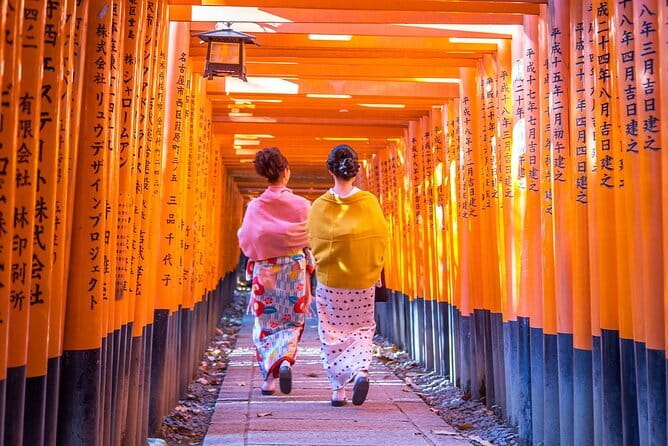
If you’re staying in Osaka, this is one of the more efficient ways to hit Kyoto and Nara without losing half your day to trains and transfers. The route is built around the big-name UNESCO-area sites you want to check off, then connects them with the neighborhoods that make Kyoto feel like Kyoto.
The value is not just the sights. It’s the choreography. You start with a clear morning plan, then you get set down, timed for prime moments, and guided with multilingual explanations, including English, Mandarin, and Japanese.
The tradeoff is that you won’t linger like you would on an all-day Kyoto wander. If you love slow photo sessions and long museum stops, you may find this schedule a bit tight. If you like momentum, this works well.
A few more Osaka days to weigh up
- Osaka Go Karting Tour with Funny Costume
★ 5.0 · 2,658 reviews - Osaka Castle: Museum and Tower Entry Ticket
★ 4.5 · 2,380 reviews - Osaka: Shinsekai Food Tour with 13-15 Dishes at 5 Eateries
★ 4.8 · 2,204 reviews
Morning Logistics: Nipponbashi Pickup and the Fast Route to Kyoto
Your day begins in Osaka with a morning pickup at 8:40am near Nipponbashi Exit 2. There’s also a later Kyoto pickup option at 9:50am at Kyoto-Hachijoguchi Bus Loading Area, depending on how you booked. The tour moves you toward Kyoto early enough to get started before the crowds fully thicken.
Plan to arrive early. The guide holds a yellow flag with the Gogoday logo, and you’re asked to be there about 15 minutes ahead. If you show up late, you risk missing the group, since late arrivals and no-shows are not refunded.
Also note the practical detail: the bus parking lot can be a bit far from the scenic stop, and you should expect some walking to the entrance areas. That’s normal in Japan’s older sightseeing zones, and it matters because this tour already includes stairs and uphill sections later.
Kiyomizu-dera on a Hillside: Views, Steps, and the Autumn-Walk Feel
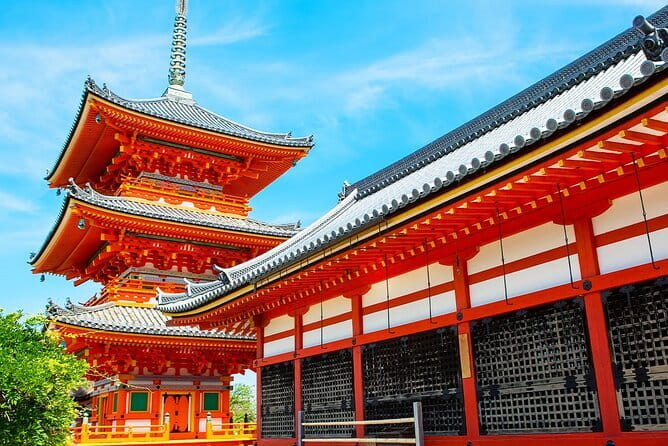
Kiyomizu-dera is your first major stop, with about 2 hours 30 minutes on-site. The temple sits on a hillside, and that setting is part of the experience. Even if you are not chasing autumn colors specifically, the sloped approach and the layered viewpoints help you understand why this place keeps drawing people back.
There’s also a strong “Kyoto streets” component right after. You’ll move through classic old-street areas such as Ninenzaka and Sannenzaka, then into calmer lanes like Ishibe Alley lined with traditional wooden houses. That sequence is a big part of why this tour feels more complete than a temple-only checklist.
What to watch for: Kiyomizu-dera involves stairs and uneven walking surfaces. If you’re traveling with mobility limits or you hate uphill, this may be the toughest part of the day. If you’re up for it, the payoff is real, because you get both temple moments and the atmospheric streets around them.
Gion and Hanamikoji Streets: Where Your Kyoto Walking Time Really Lands
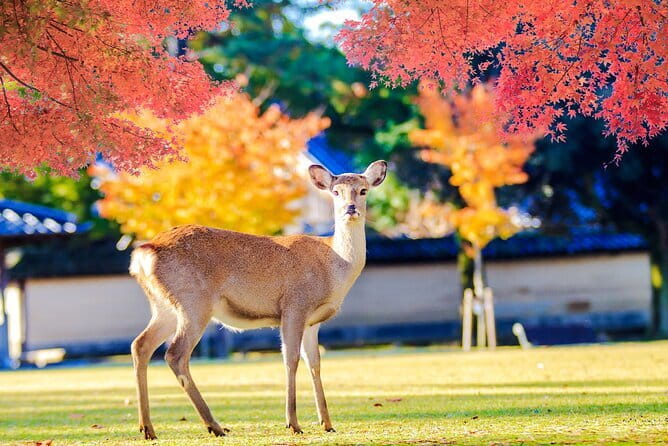
Between the temple highlights, you get time in Kyoto’s iconic neighborhood atmosphere, including Gion and Hanamikoji Street. This is one of those sections where a guide explanation helps, even if you mainly want photos and strolling.
I like that this part of the schedule is built in rather than left to you as an optional add-on. Kyoto’s streets can be confusing when you’re hopping between tram, subway, and bus stops, so having a plan reduces stress. You can use your eyes instead of your phone map.
It’s also a good time to take breaks. You’ll still be walking, but the pace feels more like neighborhood exploration than nonstop temples. If you get tired, this is often where you can slow down without feeling like you’re missing a timed ticket line.
A different sort of day in Japan:
- Osaka Food Tour: 13 Dishes at 5 Local Eateries
★ 5.0 · 2,149 reviews - Hungry Osaka Street Food Tour:15 Tastings & 3 Drinks with a Local
★ 5.0 · 1,727 reviews - Osaka: teamLab Botanical Garden Entry Ticket
★ 4.5 · 1,710 reviews - Osaka: Tea Ceremony Experience
★ 4.9 · 1,426 reviews
Fushimi Inari’s Senbon Torii: Plan Your Tempo for the 70 Minutes
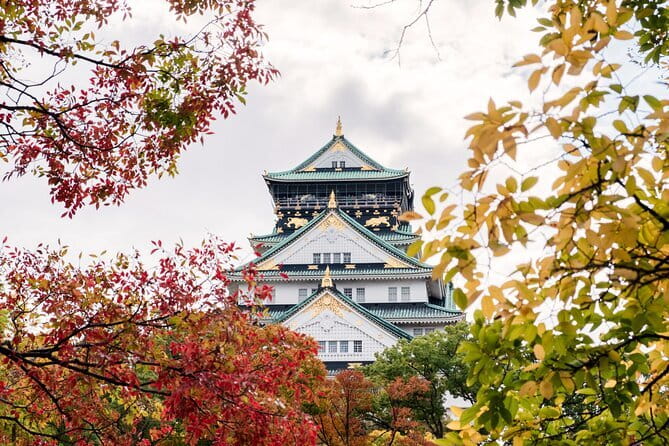
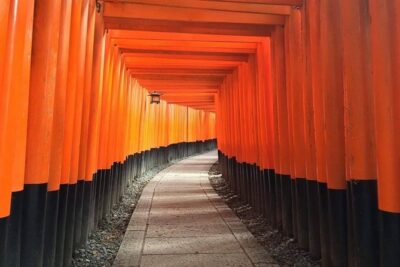
Next comes Fushimi Inari Taisha and its famous Senbon Torii, the thousands of torii gates that form the walking paths. You get about 70 minutes and free time, which is a realistic window for enjoying the main torii corridors and getting a few different angles.
This is not the kind of place where you want to rush. The entrances are busy, and it can take a bit to find your rhythm. But you also don’t want to overcommit if you know your schedule is still moving you toward Nara later.
Here’s the smart way to use your time: pick one primary loop through the torii, then spend the rest time deciding whether you want deeper up the path or closer, more photogenic viewpoints near the lower sections. With only an hour-ish, you’ll get better results by choosing a tempo instead of trying to do everything.
Admission at Fushimi Inari is free, so your budget is more predictable here than at the paid UNESCO temples later in the day.
Nara Park Deer Time and Todaiji’s Huge Bronze Buddha
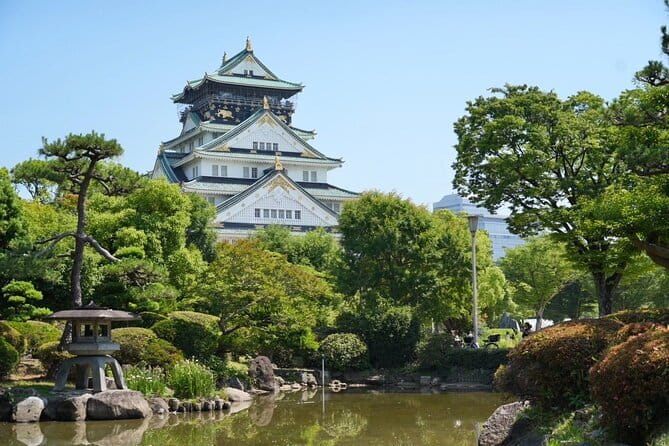
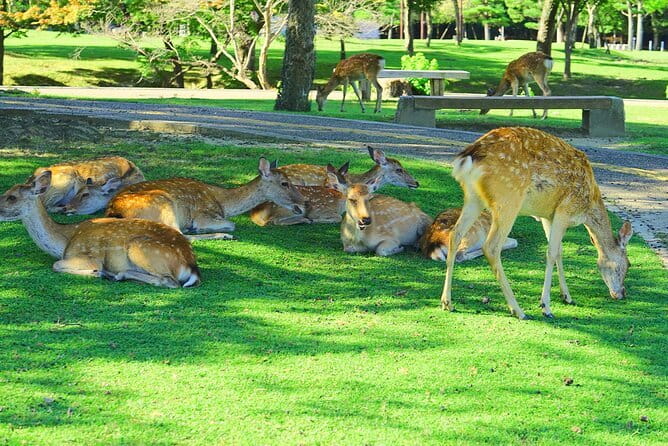
Your Nara stop is scheduled around 4:00pm, with about 1.5 hours of free time. The star here is Nara Park, including the famous deer interactions. This is one of those experiences that feels simple, but it can be surprisingly fun, because it’s more than watching scenery. You’re in the middle of it, and the deer are a big part of why people come.
Within this Nara window, the tour also includes Todaiji Temple, home to the world’s largest bronze Buddha. Todaiji has an entrance fee, listed at $7.00 per person, so it’s worth planning a little cash in advance.
A consideration for timing: if you arrive toward late afternoon, the light can change quickly and you may feel rushed if you’re trying to cover every viewpoint. Still, this late-day slot can be a pleasant balance, since you’re not starting the temple circuit at sunrise.
Also, wear shoes you trust. Nara Park areas include flat zones, but moving around deer areas and temple approaches still adds up in a single day.
Price and Value: What $62.75 Really Buys You
At $62.75 per person, this tour prices itself as a budget-friendly “big hits with a guide” day. What you’re paying for is not just transport, it’s the time savings and the reduced planning headache.
Here’s what’s included: pick-up and drop-off from designated areas, air-conditioned bus transportation, and a multilingual guide (English, Mandarin, Japanese). There’s also a mobile ticket, which tends to reduce stress on travel day.
What’s not included is important for true cost. Kiyomizu-dera has an entrance fee of $5.00 per person, and Todaiji has $7.00 per person. Add those in and your total for major paid sites becomes about $12.00 extra, assuming you go to both.
That still keeps the overall day in a reasonable range, especially because you’re seeing far more than one temple. You’re also walking multiple Kyoto old-street areas plus Fushimi Inari and Nara Park, with guided explanations that help you understand what you’re looking at.
How the Guides Make or Break This Day
This tour’s quality often comes down to the guide’s style and how well they manage the group. The good news is that the tour has a track record of guides who are punctual and proactive with communication.
You might be with guides such as Leo, Lu (郑璐), Jason, Yujun, or Zhao. Common themes in their feedback include helpful humor, clear explanations, and quick guidance on what to do next. Some guides also supported the group with fast check-ins using platforms like WhatsApp, which can be a lifesaver when you are trying to find the group after a photo stop.
Your best move is to treat the guide like a GPS with a personality. When you hear the next meeting time, write it in your phone, then use your free time intentionally. If the guide suggests a pace or photo spot, it’s usually because it works with crowd flow and walking distance.
Comfort, Crowds, and the One Real “Watch Out” Moment
This day is walking-heavy. Even when you have free time, you’re still moving between neighborhoods and climbing temple stairs. If you’re thinking about comfort, prioritize shoes with grip and a plan for heat.
One review mentioned that the bus felt hot when AC was not kept running while the bus was parked in a residential area. That’s exactly the kind of real-world issue that can happen, even when a tour is advertised as air-conditioned. If you’re traveling in warmer months, I’d assume you may spend some time in heat and plan accordingly.
Also, the bus parking lot can be far from the sights, which means a walking stretch before you get your first big photo moment. This matters because it adds up with Kiyomizu-dera stairs and the torii path at Fushimi Inari.
Who This Tour Fits Best (and Who Might Want a Different Plan)
This tour fits best if you:
- want a one-day hit list of Kyoto and Nara highlights from Osaka
- like guided explanations but still want time to roam
- are okay with a long day and lots of walking
It may not be ideal if you:
- want a slow, unhurried Kyoto day with plenty of downtime
- have limited mobility or find stairs and uphill walking difficult
- need very flexible timing, since the tour is designed around set stop windows
If you’re visiting for the first time and want to see the “greatest hits” without getting lost, this is a strong starting point.
Should You Book This Kyoto and Nara UNESCO Highlights Tour From Osaka?
I’d book it if your priority is seeing Kiyomizu-dera, Fushimi Inari, Nara Park, and Todaiji in one coordinated day, with a guide to keep things moving and understandable. The price makes sense once you account for transport and a multilingual guide, and the main extra costs are straightforward entrance fees at Kiyomizu-dera and Todaiji.
I would hesitate only if you already know you hate stairs, don’t handle heat well, or you want a more flexible day where you can linger forever. If that sounds like you, consider splitting Kyoto and Nara into separate days.
If you do book, go in with the right expectations: wear comfortable shoes, plan your photo tempo at Fushimi Inari, and use your free time blocks like they’re mini itineraries of their own.
FAQ
Where are the pickup points for this tour?
Pickup can be from designated areas in Osaka or Kyoto. The Osaka pickup listed is 8:40am at Nipponbashi Exit 2, and the Kyoto pickup listed is 9:50am at the Kyoto-Hachijoguchi Bus Loading Area.
Where do you drop off at the end of the tour?
The only drop-off location for this trip is back in Osaka at the same Nipponbashi address listed as the end point.
What entrance fees should I expect to pay?
Entrance fees are not included for Kiyomizu-dera Temple ($5.00 per person) and Todaiji Temple ($7.00 per person). Fushimi Inari Taisha is listed as free.
Is lunch included in the price?
No. Lunch is not included.
How long is the tour?
The duration is about 9 hours 20 minutes.
Is the bus air-conditioned?
The tour includes air-conditioned bus transportation. One review noted discomfort when the bus AC was not kept running during a stop, so the experience can vary with real-world conditions.
What group size should I expect?
This shared group tour has a maximum of 40 travelers.
FAQ
Where do I need to pay with cash?
You’re advised to bring some cash because certain locations may not accept credit cards.
Can I cancel for a full refund?
Yes. Free cancellation is available up to 24 hours in advance of the experience start time for a full refund.
Newly listed around Osaka
- 2 Hours of Bar Hopping in Osaka Style★ 5.0 · 22 reviews
- Osaka Authentic Local Izakaya Hopping Experience: Food & Drinks★ 5.0 · 99 reviews
- Same-Day Osaka Food Crawl with local food and Hidden gems★ 5.0 · 114 reviews
- Well-balanced BENTO (lunch box) Cooking Class★ 5.0 · 35 reviews
- Anime Cosplay Photshoot-50 Digital Photos Provided★ 5.0 · 8 reviews
- OSAKA:Feel the Power! Learn Taiko Drum from Professionals★ 5.0 · 28 reviews
- Three Types of Ramen Cooking Class in Osaka★ 5.0 · 119 reviews
- Urban Canvas: Osaka Street Art Bike Tour★ 5.0 · 47 reviews
Full-Day, compared.

Mount Fuji Full-Day Private Tour from Tokyo (Customizable)
Read our review →
Hiroshima / Miyajima Full-day Private Tour with Government Licensed Guide
Read our review →
Full-Day Guided Bus Tour to Top Highlights & Tickets
Read our review →