
Review · COOKING CLASSES
Miyazaki’s local cuisine experience Let’s make cold soup and chicken Nanban! Super Local Food Cooking!
Cold soup lessons land fast.
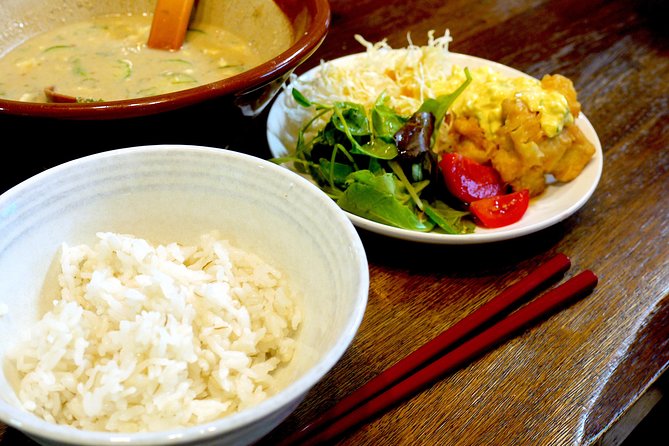
This hands-on Miyazaki local cuisine experience turns two home-style foods into something you can actually make, in about 2.5 hours, right near Miyazaki Station. You’ll learn why cold miso soup matters in summer, and you’ll craft chicken nanban, a Miyazaki soul food with roots in Nobeoka City, with just enough local storytelling to make the food feel personal.
I especially love the tactile part, grinding sesame seeds for the chilled miso soup base, and how the guide explains that home recipes vary by area and even by household. I also love that chicken nanban isn’t treated like a museum dish, it’s framed as something you can make yourself, and you get that Miyazaki version after hearing how it can differ outside the prefecture.
One possible drawback to consider: the confirmation email system can be annoying, with messages not always showing clearly, so I recommend checking your booking details carefully when you get that email.
In This Review
- Key highlights you should care about
- Why chilled miso soup is the perfect Miyazaki summer answer
- Chicken nanban, and why Nobeoka gets the credit
- From Miyazaki Station pickup to food you actually finish
- Hands-on chilled miso soup: sesame texture and the cold bowl moment
- Making chicken nanban in a Miyazaki way, not a generic copy
- The pacing: why 2.5 hours hits the sweet spot
- Value check: is $163 worth it for Miyazaki cooking?
- Who this cooking class fits best
- Small practical notes before you go
- Should you book this Miyazaki cold soup and chicken nanban class?
- FAQ
- What is the duration of the Miyazaki local cuisine cooking experience?
- How much does the tour cost?
- Where does the experience start and end?
- Is pickup available?
- What dishes will I make?
- Is this a private tour?
- What is the cancellation policy?
Key highlights you should care about
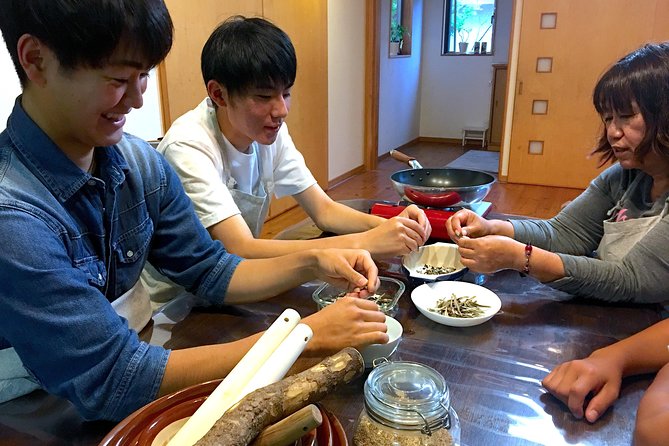
- Chilled miso soup with sesame, made from scratch and served cold like it’s supposed to be
- Chicken nanban in a Miyazaki style, including guidance on how it differs by place
- Private class setup, only your group, with pickup offered
- Strong local context on where the dishes come from, Miyazaki City for the soup, Nobeoka for chicken nanban
- Optional “imadoki style” arrangement, if you want a more modern twist while staying local
Why chilled miso soup is the perfect Miyazaki summer answer
Chilled miso soup sounds like a weird idea until you remember what summer feels like in southern Japan. In Miyazaki, this dish shows up as a practical home meal, especially when you have no appetite and you still need something satisfying. The core idea is simple: miso soup becomes a cool, comforting bowl instead of a hot one.
What makes this experience worth your time is that you’re not just copying a single recipe. You learn that there are different ways to make it depending on the home and the area, and that the sesame-based method is a basic version you can get right without being a cooking expert. The result is a cold, flavorful soup that tastes like it belongs to daily life, not a food trend.
There’s also an important real-world angle. Cold miso soup exists beyond home kitchens, showing up in packed products you might see in shops. When you make it yourself, though, you feel why people still cook it at home when they can, because texture and freshness matter in a dish you eat cold.
A few more Japan days to weigh up
- Tokyo: Shinjuku Food Tour (13 Dishes at 4 Local Eateries)
★ 5.0 · 6,603 reviews - Tokyo Tsukiji Fish Market Food and Culture Walking Tour
★ 5.0 · 3,184 reviews - Osaka: Shinsekai Food Tour with 13-15 Dishes at 5 Eateries
★ 4.8 · 2,204 reviews
Chicken nanban, and why Nobeoka gets the credit
Chicken nanban has a reputation as comfort food across Miyazaki, but it has a specific origin story. It’s described as a relatively new dish that was born in Nobeoka City, and it later grew into soul food for Miyazaki Prefecture as a whole.
In this class, you’ll make a chicken nanban-style dish that fits Miyazaki, and you’ll learn why it can surprise people who only know it from elsewhere. The key point is regional identity. Even when a dish has the same name, the way it’s served and the details around it can shift depending on where you are.
Another plus: chicken nanban is widely available at restaurants, so you’ll probably have an easy time comparing what you cook to what you eat during the rest of your trip. That comparison becomes part of the fun, because you’ll know what to look for instead of just chasing the next plate.
You can also arrange your dish in an “imadoki style” variation if you want. That gives you a way to keep the dish local while putting your own spin on how it lands on the table.
From Miyazaki Station pickup to food you actually finish
The experience starts at Miyazaki Station 1 Nishikimachi, and you end back at the same meeting point. It runs about 2 hours 30 minutes, which is a great length for a vacation cooking class, long enough to learn and eat, without swallowing half a day.
Pickup is offered, so if you’re arriving by train or staying nearby, you won’t have to fight with directions right before you cook. You also get a mobile ticket, and the tour is set up as a private activity, meaning your group is the only group participating.
This matters more than it sounds. A private setup tends to give you time to ask questions when you get stuck, like how to handle the cold soup texture or how a local-style chicken nanban should look when it’s done. And it keeps the experience calm, which helps when you’re working with hands-on steps that are easier when you’re not rushed.
Hands-on chilled miso soup: sesame texture and the cold bowl moment
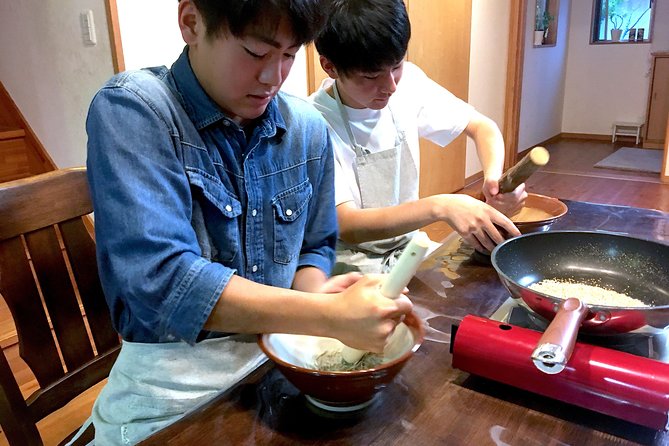
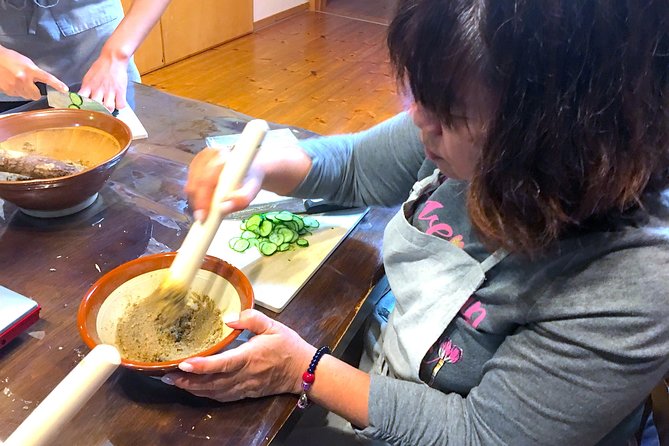
This is the part you’ll remember on the ride back to your hotel, because you’ll spend real time on the technique. Chilled miso soup here is built around sesame, and you’ll use a mortar to rub and work the sesame seeds until you get a thick, creamy base.
That mortar-and-pestle step is more than theatrics. Cold miso soup depends on texture. If the sesame stays too coarse, the soup can feel thin or uneven. If the base comes together right, you get that smooth, spoonable quality that makes a cold bowl feel satisfying rather than watery.
You also learn something useful about how Miyazaki cooking thinks. The dish is traditionally home-cooked, so the point is not perfection down to a lab standard. The point is making something that fits how people eat it at home during summer, when cool flavors and easy comfort win.
Since there are multiple home and area variations, your guide can help you understand why different versions exist. That context can make a huge difference later, when you taste packed or restaurant versions and realize why they don’t match your bowl exactly.
A different sort of day in Japan:
- Mt Fuji and Hakone 1-Day Bus Tour Return by Bullet Train
★ 5.0 · 26,383 reviews - 1-Day Tokyo Bus Tour
★ 5.0 · 14,250 reviews - PERFECT KYOTO 1-Day Bus Tour
★ 5.0 · 13,518 reviews - Tokyo: TOKYO SKYTREE® Admission ticket
★ 4.5 · 11,192 reviews
Making chicken nanban in a Miyazaki way, not a generic copy
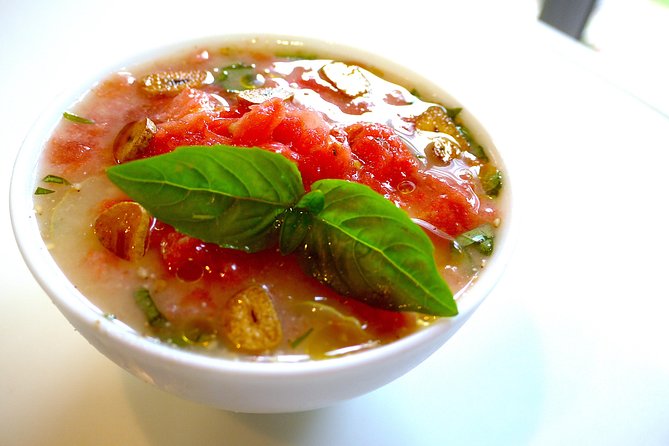
Chicken nanban is often described in a way that makes it sound like it should be cooked the same everywhere. In this class, the framing is different. You’re taught to make a chicken nanban in the Miyazaki style, and you get the idea that local food identity is real, even when the name stays the same.
You’ll make your chicken nanban during the class, and you’ll leave with a clearer sense of what makes the Miyazaki version feel like Miyazaki. That includes the story behind the dish’s roots in Nobeoka, plus the practical idea that restaurants in Miyazaki serve it, which means there’s a shared local standard you can learn by eating after the class.
One more detail that’s worth your attention: there’s an option to arrange it in an “imadoki style.” Even if you don’t know what that means yet, the fact that the class offers variations signals that you’re not trapped in one rigid presentation. You can tailor how it lands on the plate while staying true to the local dish.
The pacing: why 2.5 hours hits the sweet spot
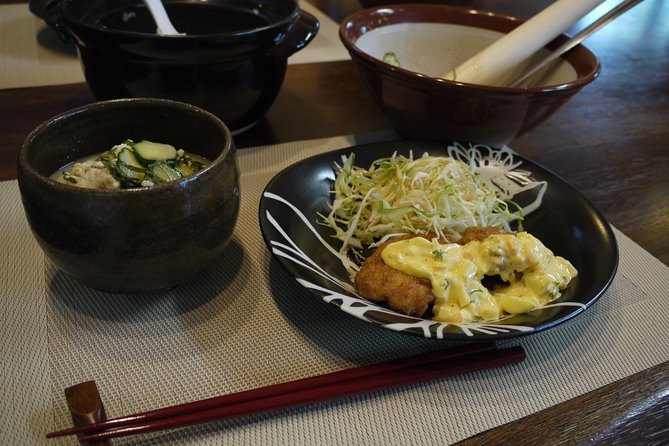
A cooking class can be two extremes. It can be too short to finish anything meaningful, or too long where you’re tired and just want it to end. This one lands in a sweet spot, because you’re making two dishes in about 2 hours, with the overall session around 2.5 hours.
That pacing helps you avoid the common “I’m hungry and confused” feeling. You spend time on technique for the chilled miso soup, then you shift into chicken nanban, so your brain stays engaged. It also gives you time for questions, especially if you’re curious about how regional recipes differ.
Because it’s private, your group’s questions can shape the pace. If you want to focus on the soup technique, you can. If you’d rather understand the origin and meaning of chicken nanban, you can ask for that too.
Value check: is $163 worth it for Miyazaki cooking?
For $163, you’re paying for more than a meal. You’re paying for instruction, the hands-on process, and the fact that the class is private, with pickup offered and a total time of about 2.5 hours.
Is it budget travel? Not really. But it is good value if you want experiences you can’t replicate at home from a single recipe card. Here, you’re learning regional technique, plus the reasons behind it, like why chilled miso soup is tied to summer appetite and why chicken nanban traces back to Nobeoka.
There’s also a comparison that often helps. Buying a pack of souvenir food is easy, but it stays as product. Cooking it makes it a story you can taste. You’ll still be able to buy packaged or restaurant versions later, but now you’ll understand what to compare.
This class also tends to work well for first-time Miyazaki visitors. One review highlights that the guide was friendly and helped make Miyazaki feel like more than a stop on the map, not just a place to eat. That kind of context is hard to quantify, but it’s usually the difference between a photo memory and a real one.
Who this cooking class fits best
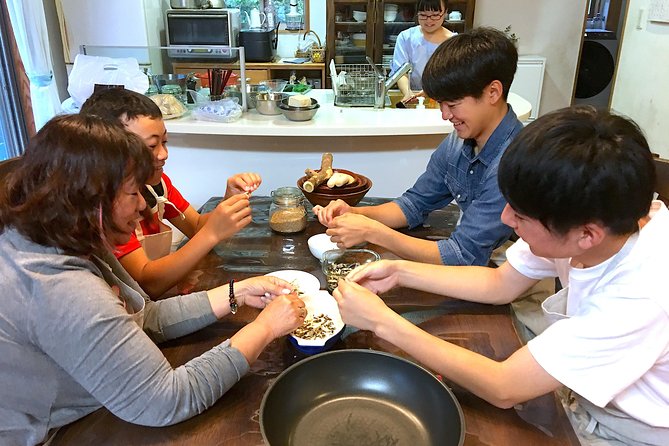
I think this is a strong choice if you:
- Want hands-on local cuisine, not just tasting
- Like learning how regional dishes differ by place and household
- Are visiting Miyazaki for the first time and want an easy way to connect with the food culture
- Prefer a private class format where your questions get real answers
It’s also a good fit if you like variety. Cold miso soup gives you something light and cooling. Chicken nanban brings the soul food comfort side. Together, they cover two different moods that still feel like Miyazaki.
If you’re traveling with anyone who gets bored in long food lines, this format helps. You’re working, tasting, and moving through the experience rather than waiting for the next table.
Small practical notes before you go
A few things can make your class smoother:
- Arrive at Miyazaki Station, 1 Nishikimachi, a little early so pickup timing feels stress-free
- Wear comfortable clothing, because you’ll be leaning in and using your hands
- Bring a curious mindset, because the dish stories and home recipe differences are part of what you came for
And do pay attention to your booking communication. One minor snag that came up is that messages in the confirmation email can be hard to see. So when you get the email, quickly confirm your key details and take a screenshot if you like.
Should you book this Miyazaki cold soup and chicken nanban class?
Yes, if you want a practical way to learn real Miyazaki local cuisine in a short window. The biggest reason I’d recommend it is the combination: chilled miso soup tied to Miyazaki summer home cooking, plus chicken nanban with a specific origin in Nobeoka City, both made by your own hands.
Book it if you enjoy cooking, asking questions, and eating what you make. Skip it only if you want a high-energy sightseeing tour packed with landmarks, because this is a food-centered experience. Also consider the $163 price if you’re trying to keep things ultra-budget, though the private format and pickup can make that cost feel more reasonable.
If your goal is to leave Miyazaki with skills, not just snacks, this class is a very solid bet.
FAQ
What is the duration of the Miyazaki local cuisine cooking experience?
The experience lasts about 2 hours 30 minutes.
How much does the tour cost?
The price is $163.
Where does the experience start and end?
It starts at Miyazaki Station 1 Nishikimachi in Miyazaki and ends back at the same meeting point.
Is pickup available?
Yes, pickup is offered.
What dishes will I make?
You will make chilled miso soup and chicken nanban.
Is this a private tour?
Yes, it is private, so only your group participates.
What is the cancellation policy?
Free cancellation is available. You can cancel up to 24 hours in advance of the experience start time for a full refund.
Newly listed around Japan
- 1-Day Togakushi Tour: Soba making, Ninja Town, and Hidden Shrines★ 5.0 · 18 reviews
- Matsumoto Private One Day Tour from Nagano★ 5.0 · 6 reviews
- Half-Day Zenkoji Tour with Tea Experience★ 5.0 · 14 reviews
- 1-Day Snow Monkeys & Snow Fun in Shiga Kogen Tour★ 5.0 · 94 reviews
- 1-Day Winter Tour From Nozawa Onsen: Snow Monkeys, Zenko-ji Temple & Sake★ 5.0 · 32 reviews
- 1 Day Tour From Nagano to Matsumoto Castle and Narai-Juku★ 5.0 · 37 reviews
- (Spring Only) 1-Day Snow Walls of Tateyama-Kurobe Alpine Route Tour★ 5.0 · 75 reviews
- Explore Jigokudani Snow Monkey Park with a Local Guide★ 4.5 · 30 reviews
Cooking Classes, compared.
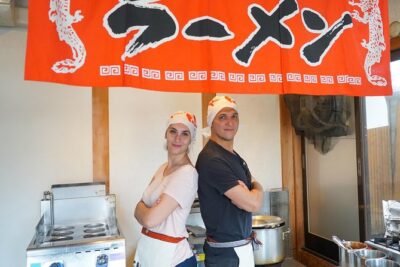
Ramen Cooking Class at Ramen Factory in Kyoto
Read our review →
Ramen & Gyoza Cooking Class in Tokyo with Local Supermarket Visit
Read our review →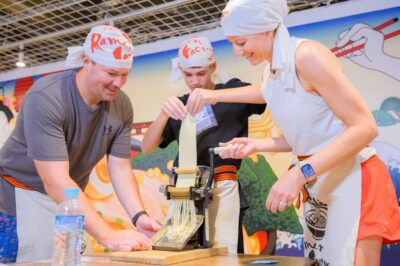
Ramen Cooking Class at a Ramen Factory with Souvenir
Read our review →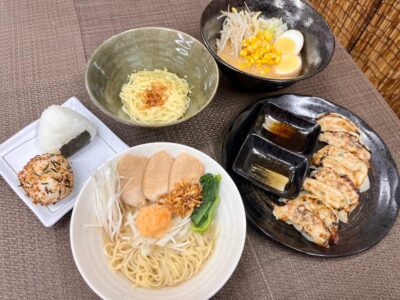
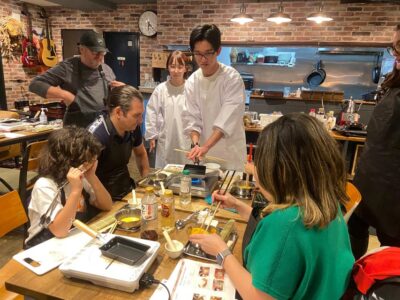
Japanese Washoku Bento Small Group Cooking Class
Read our review →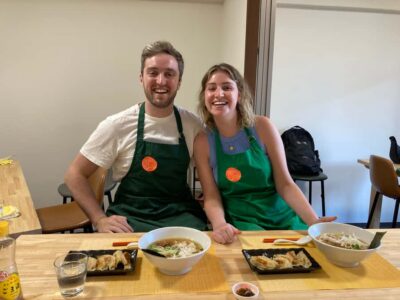
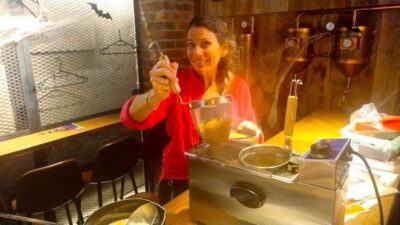
Easy Ramen Cooking Experience in Kabukicho, Shinjuku
Read our review →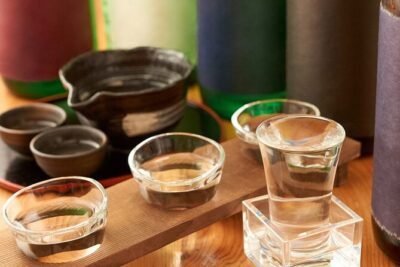
Ramen and Sushi Cooking Class with Sake Pairing Set in Tokyo
Read our review →Browse the lists this tour appears in