Review · JAPANESE COOKING WORKSHOPS
Kyoto: Ramen, Gyoza, and Onigiri Cooking Class
Ramen gets way better once you learn the broth. In Kyoto, this hands-on class teaches you miso and shoyu ramen broth plus how to wrap gyoza and shape onigiri, with English-speaking instructors like Nori and Kairi guiding you step by step. It is a quick, very practical way to take home skills you will actually use.
I especially like that you focus on what most people skip at home, the soup base, not just toppings. You also leave with techniques you can repeat, from a balanced gyoza filling to onigiri that looks right when you plate it. One real drawback to plan around: they cannot accommodate vegan, pescatarian, gluten-free, or any other special diets, with only a vegetarian menu that swaps pork for tofu.
In This Review
- Key takeaways before you go
- Ramen broth, gyoza wrapping, and onigiri shaping, all in 90 minutes
- What you really learn: broth base, gyoza seal, onigiri look
- In the kitchen: how the ramen part works (miso and shoyu, no noodle making)
- Gyoza practice that goes past folding: filling balance and sealing
- Onigiri technique for fast, good-looking rice balls
- Food limits and who this class fits best
- Price and value: what $90 really buys you
- Getting to the classroom in central Kyoto without stress
- Should you book this Kyoto ramen, gyoza, and onigiri class?
- FAQ
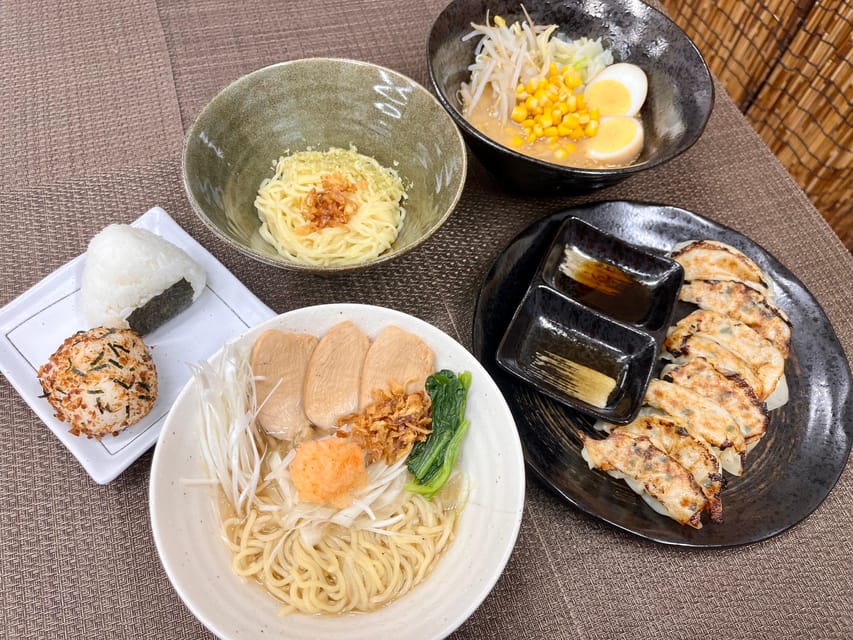
- What dishes are included in this cooking class?
- Do you make the ramen noodles in the class?
- Is there a vegetarian option?
- Can the class accommodate vegan, pescatarian, gluten-free, or other special diets?
- What is the minimum age requirement?
- Where is the meeting point?
- What do I get included with the class?
Key takeaways before you go
- Broth-focused ramen lesson: you learn ramen soup without making the noodles
- Gyoza mastery, not just assembly: sealing and shaping are the main event
- Onigiri technique: learn how to form rice balls that look like the real thing
- Small group support: limited to 8, with multiple instructors and helpers in the room
- Clear food limits: no vegan or gluten-free options, vegetarian is tofu-only for the meat swap
Ramen broth, gyoza wrapping, and onigiri shaping, all in 90 minutes
This is the kind of cooking class that makes sense for Kyoto. You get three iconic Japanese foods in one compact session, and the skills are teachable, repeatable, and very different from each other.
The whole experience runs 90 minutes and is built around cooking while you learn. That matters, because ramen broth is all about timing and seasoning, gyoza is a technique game, and onigiri depends on how you handle the rice.
Because the group is small, you are not stuck watching from the sidelines. In reviews, I saw repeated praise for instructors and helpers moving around stations, including teaching teams such as Nori and Kairi, plus support from people like Aoi, Ayuna, Riho, Mia, Kiara, and Minori.
More Cooking Classes in Kyoto
- Ramen Cooking Class at Ramen Factory in Kyoto
★ 5.0 · 1,937 reviews - Kyoto: Ramen Cooking Class at a Ramen Factory with Souvenir
★ 4.9 · 532 reviews - Kyoto: Japanese Washoku Bento Small Group Cooking Class
★ 5.0 · 380 reviews
What you really learn: broth base, gyoza seal, onigiri look
The biggest value here is that the class targets the parts people struggle to recreate. Most restaurants hand you finished ramen, finished gyoza, and shaped onigiri. This class gives you the missing “how.”
For ramen, the emphasis is on broth. You will learn how to build a flavorful base using ingredients you can find at home, then how to balance simple toppings so the soup stays the star.
For gyoza, the emphasis is on wrapping and sealing. You will learn how to portion the filling, then wrap with the right folds so the dumplings hold together and cook up neatly.
For onigiri, the goal is shape and consistency. Rice balls can turn sticky and awkward if you rush, but you practice enough to leave with a method that looks good on a plate.
In the kitchen: how the ramen part works (miso and shoyu, no noodle making)
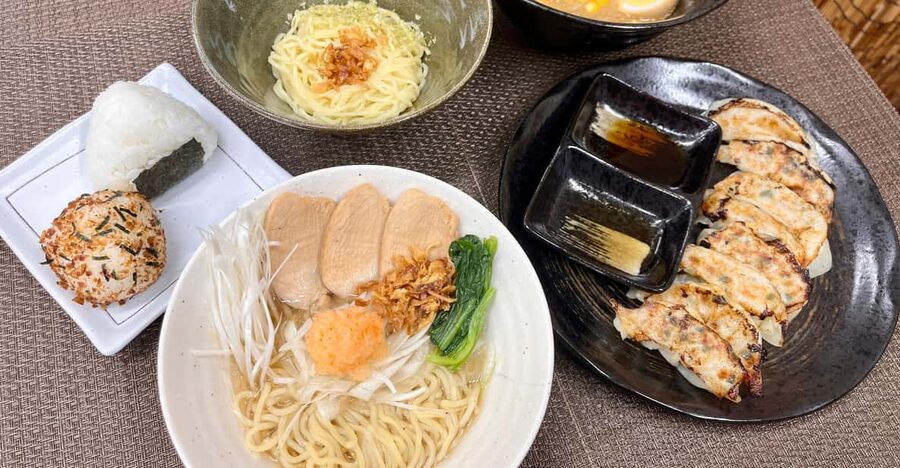
The ramen portion is broth-first. You will not make the noodles here, but you will learn how to create the soup you would pour over them at home.
You start with a rich ramen broth approach using simple building blocks. The ingredients list includes items like chicken stock powder, soy sauce, miso, garlic, ginger, mirin, sesame oil, and lard, plus seasoning boosters such as fish powder, oyster sauce, and chili oil. The class also calls for butter, ground pork, onion, cooking sake, salt and pepper, and chives, with cabbage as part of the flavor layer.
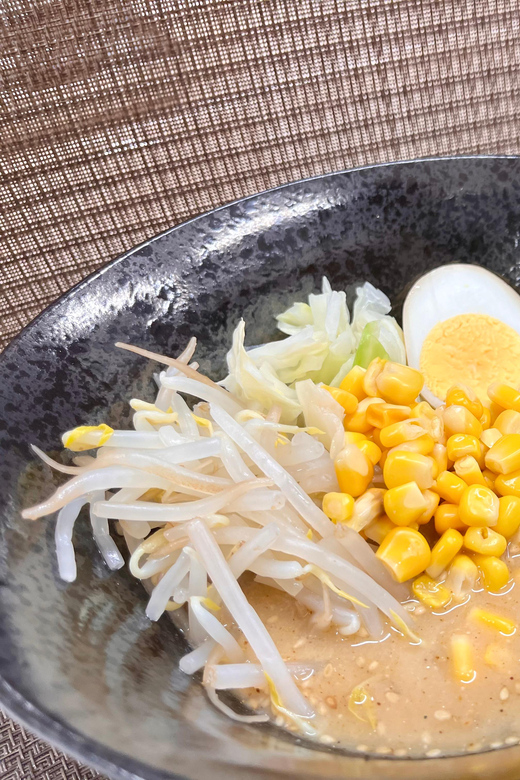
Then you cook two styles of ramen broth: miso and shoyu. For miso ramen, the typical toppings are boiled egg, bean sprouts, green onions, and sweet corn. For shoyu ramen, the typical toppings include chicken, bamboo shoots, and green vegetables.
The subtle but important lesson is toppings balance. The class framework is that toppings should not fight the broth. So you focus on simple toppings and let the soup carry the flavor.
If you are already thinking about buying ramen noodles later, this is a smart class. You will know what to aim for in the soup even when you are using store-bought noodles at home.
Gyoza practice that goes past folding: filling balance and sealing
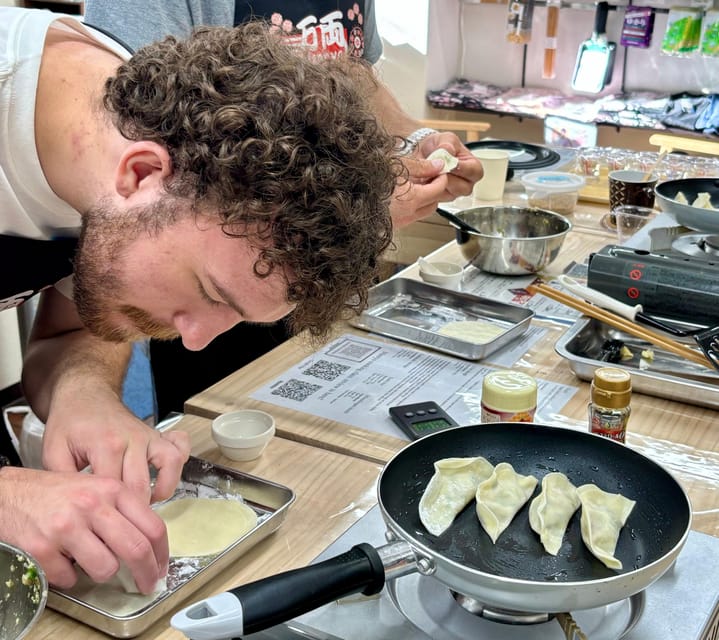
Gyoza is where this class gets very skill-based. The lesson is not just, “fill and fold.” The goal is to make you fully comfortable wrapping gyoza into an attractive shape and getting the seal right.
You learn the filling approach first: how the meat component works with vegetables and seasonings, and how to keep the flavors balanced instead of heavy. The class uses a practical set of ingredients such as ground pork, onion, cabbage, chives, garlic, ginger, soy sauce, and seasonings like pepper and cooking sake. You also get guidance on using sauces and seasonings to bring the filling together before you wrap.
Then you practice wrapping. You get instruction on how to form the dumpling and close it so it stays intact during cooking. In the reviews, people repeatedly highlight that the instructors are patient and that the instructions are clear enough to turn out gyoza that look well-made, not just edible.
A small-group setup helps here. With up to 8 participants, instructors can correct your hand position, folding rhythm, and how you handle the edges.
When you finish, you get to eat what you make. That is not just a nice perk. Eating your own gyoza helps you connect the technique to the result, so you remember how it should feel and look next time.
More Cooking Workshops in Kyoto
- Kyoto: Afternoon Japanese Izakaya Cooking Class
★ 4.9 · 241 reviews - Izakaya Style Cooking Class
★ 5.0 · 219 reviews - Kyoto: Morning Japanese Bento Cooking Class
★ 5.0 · 149 reviews - Sushi – Authentic Japanese Cooking Class – the best souvenir from Kyoto!
★ 5.0 · 93 reviews
Onigiri technique for fast, good-looking rice balls
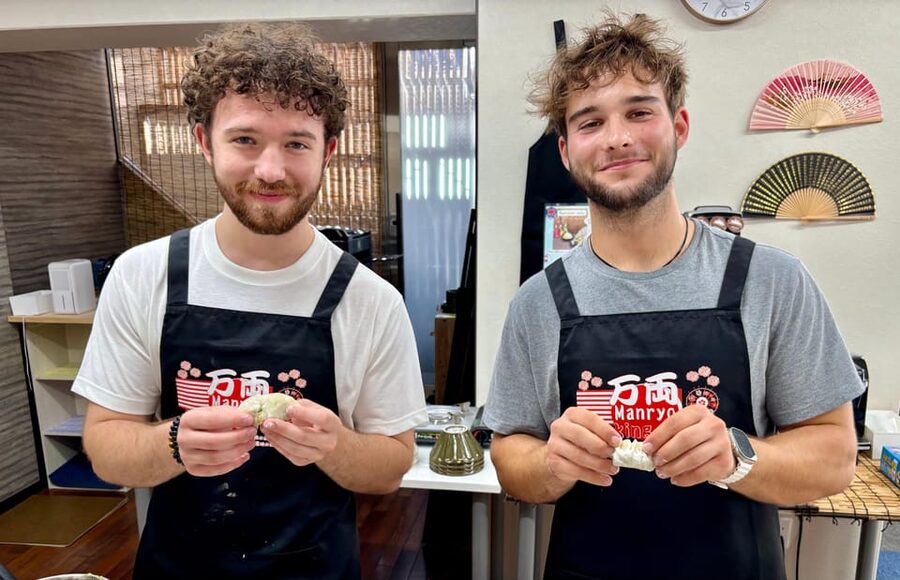
Onigiri sounds simple until you try it. The rice is sticky, the shape is easy to mess up, and too much handling makes it worse.
This class teaches how to make perfectly shaped rice balls. You practice the handling and shaping so the onigiri comes out neat instead of lumpy. Since onigiri is usually an everyday snack in Japan, that matters. You are not just learning a craft, you are learning something people actually do for quick lunches.
You also get context for onigiri as a grab-and-go alternative. In practical terms, it is a smart thing to know for travel days when you want something portable.
Even with the class moving fast, the onigiri part is designed to land. It ends up being a satisfying finish after broth and dumplings, because rice balls feel lighter and more snack-like than ramen.
Food limits and who this class fits best
This class has clear boundaries. It is best for people who are comfortable with the core ingredient profile, especially pork and fish-based seasoning components that appear in the broth ingredient list.
There is a vegetarian menu, but it is limited. The vegetarian option replaces pork with tofu, while other ingredients remain the same. So if you are vegetarian but still fine with everything else, that is the option. If you need vegan, pescatarian, gluten-free, or other special diets, you are out of luck here.
Age and participation level also matter. The class requires participants to be 13 and able to cook by themselves without extra help. Kids under 12 are not suitable, and wheelchair users are not suitable either.
Where it shines is for adults and older teens who want hands-on cooking without a language barrier. English-speaking instructors make a difference, especially for learning why certain steps matter, like seasoning control for broth and sealing technique for dumplings.
It also works well for couples and small friend groups. Multiple reviews mention the small group size as a major reason people felt confident and could ask questions.
Price and value: what $90 really buys you
Ninety dollars sounds like a lot until you look at what you take home in 90 minutes.
You get ingredients and equipment, and you cook the food you will eat. That is one of the most important value points, because you are not paying just for instruction. You are paying for an entire working meal and the technique lessons that produce it.
You also get recipe materials for ramen and gyoza. That is huge if your goal is to cook again later, not just taste something memorable while you are in Kyoto.
Free coffee and tea are included too. It is a small thing, but it keeps the experience feeling complete.
The group limit of 8 is part of the value. In classes that get overcrowded, you lose attention. Here, multiple instructors and helpers can keep the stations moving and help with technique.
If you are a home cook, this class is a good trade. You walk out with practical skills that turn into dinner plans at home, not just photos.
Getting to the classroom in central Kyoto without stress
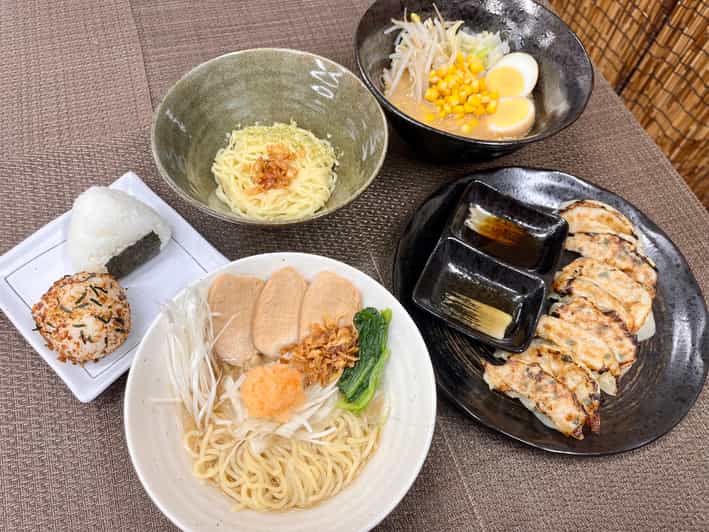
The meeting point is inside B1 of Life Building. The classroom is not on the main street, it is one street down, so plan a little extra time for a quick map check.
If you arrive by cab, ask to be dropped in front of Family Mart at Sanjo Keihan. From there, it is a short walk, about 2 minutes.
On Google Maps, search for Manryo cooking class so you can find the side-street location fast. Reviews also mention that arriving a bit early helps, because the address is tucked away.
Wear comfortable shoes and clothes. This is a working kitchen, not a sit-and-watch demo.
Should you book this Kyoto ramen, gyoza, and onigiri class?
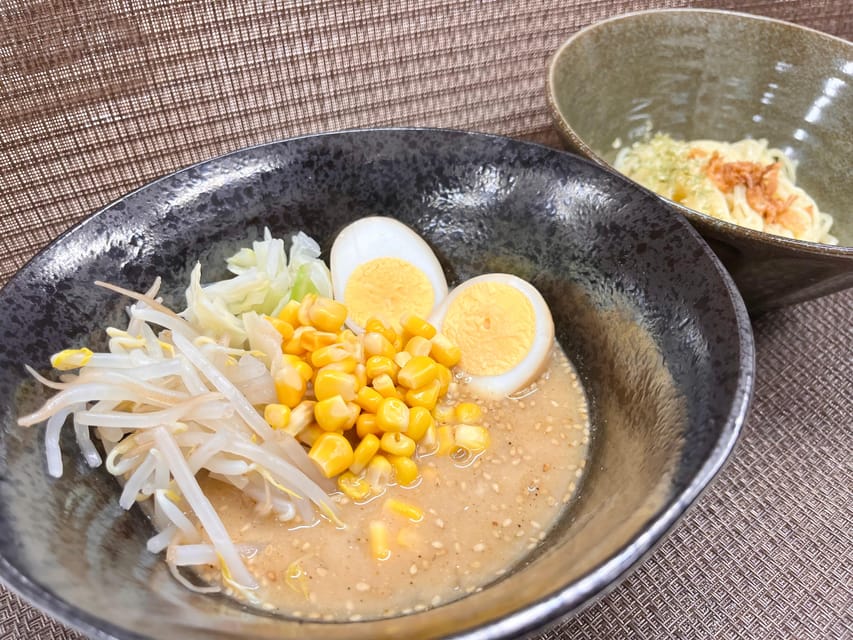
Book it if you want to learn the “make it at home” version of Japanese comfort food. I think this class is especially worth it if you care about ramen broth flavor, gyoza technique, and rice-ball shaping, because that is exactly what the class is built around.
Skip it if dietary restrictions are a deal breaker for you. The fact pattern is simple: no vegan, no pescatarian, no gluten-free, and only one vegetarian modification that swaps pork for tofu.
Also skip it if your group needs full accessibility support. Wheelchair users are not suitable for this class, and children under 12 are not suitable.
If you are 13 or older, comfortable cooking independently, and ready to eat what you make, this is one of those Kyoto activities that pays off long after you leave. You will not just leave with full bellies, you will leave with tools to cook ramen broth, wrap gyoza, and shape onigiri on your own.
FAQ
What dishes are included in this cooking class?
You will make ramen broth, gyoza, and onigiri. The ramen portion focuses on broth, not making the noodles.
Do you make the ramen noodles in the class?
No. The class teaches you how to prepare the ramen broth, and you will not make the noodles.
Is there a vegetarian option?
Yes. The vegetarian menu replaces pork with tofu, while other ingredients remain the same.
Can the class accommodate vegan, pescatarian, gluten-free, or other special diets?
No. The class cannot accommodate vegan, pescatarian, gluten-free, or any other special diets.
What is the minimum age requirement?
Participants must be 13 and able to cook by themselves without extra help. The class is not suitable for children under 12.
Where is the meeting point?
The classroom is located at B1 of Life Building. It is one street down from the main street. If taking a cab, get off in front of Family Mart at Sanjo Keihan and walk about 2 minutes. Search for Manryo cooking class on Google Maps.
What do I get included with the class?
You get English-speaking instructors, all cooking ingredients and equipment, the food you make, recipes for ramen and gyoza, and free coffee and tea.
More Ramen Trips in Kyoto
- Home style Ramen and Homemade Gyoza in Kyoto
★ 5.0 · 152 reviews - Kyoto Michelin Ramen Workshop or Painting Ramen Essentials
★ 4.9 · 100 reviews - Kyoto Ramen Noodle Making Class
★ 5.0 · 58 reviews - Insider Kyoto Ramen Tour
★ 5.0 · 7 reviews
Newly listed around Kyoto
- Taste of Nishiki Market Walking Food Tour with Local guide★ 5.0 · 17 reviews
- Kyoto: Sushi Making Class with Sushi Chef★ 4.8 · 64 reviews
- Simple Plan with Maiko★ 4.4 · 10 reviews
- Shibori Furoshiki Course at Kyoto Shibori Museum★ 5.0 · 21 reviews
- Kyoto: City Secrets eBike Tour★ 4.9 · 196 reviews
- Sacred Pathways: Discover the Philosopher’s Path of Kyoto★ 4.9 · 20 reviews
- Private Tour to Monkey Park and Arashiyama Highlights★ 5.0 · 22 reviews
- Private Nara Tour from Osaka – Meet at Your Hotel★ 5.0 · 22 reviews
Japanese Cooking Workshops, compared.
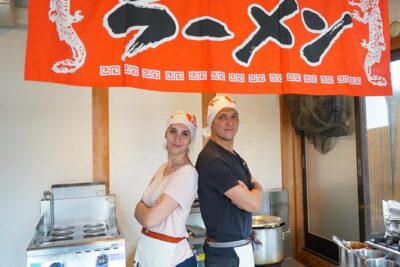
Ramen Cooking Class at Ramen Factory in Kyoto
Read our review →
Ramen & Gyoza Cooking Class in Tokyo with Local Supermarket Visit
Read our review →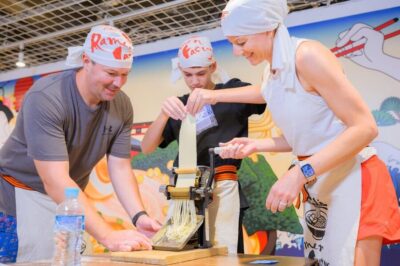
Ramen Cooking Class at a Ramen Factory with Souvenir
Read our review →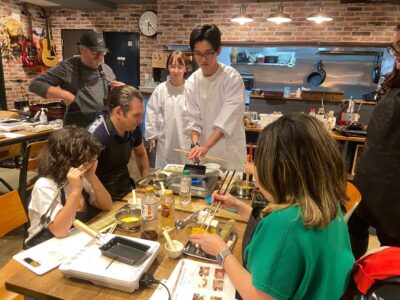
Japanese Washoku Bento Small Group Cooking Class
Read our review →
Sumo Stage Show with Bento or Snack + Fight & Photo
Read our review →
Ramen and Sushi Cooking Class with Sake Pairing Set in Tokyo
Read our review →