
Review · LICENSED GUIDES & PRIVATE DRIVERS
Mt. Koya Sacred Full-Day Private Tour (Osaka departure) with Licensed Guide
Mt. Koya is quiet power in stone. A full-day private tour from Osaka takes you into Shingon Buddhism’s most sacred zone, with a licensed English guide handling the trains and the temple context. Kongobu-ji and Okunoin are the day’s core, but what really makes it work is how the guide shapes the walking flow to your interests.
I like that this is truly private, so you are not rushed between photo stops. I also love the chance to pick 3 to 4 sites from the Koyasan highlights, including major hubs like Danjo Garan, Reihokan, and Daishi Kyokai. That customization can turn a long travel day into something that feels personal, not generic.
The main drawback is simple: it’s a walking day in the mountain air, and some key entrances are not included. Plan for stairs, slopes, and the fact that a full round trip from Osaka takes real time.
In This Review
- Quick hits before you go
- Price and logistics, without the pain math
- From Osaka to Koyasan, this is the real part of the trip
- Kongobu-ji Temple: Shingon headquarters in a human-scale setting
- Okunoin, the long quiet of Kobo Daishi’s world
- Danjo Garan: sacred groundwork and the main complex focus
- Reihokan Museum and Daishi Kyokai: why the art matters
- Tokugawa Mausoleum: power placed close to the holy center
- The day ends at Koyasan Station, then back to Osaka
- What makes the private guide really valuable here
- Walking, weather, and the one thing you should plan around
- Lunch and entrance fees: what you should budget
- Should you book this Mount Koya private tour from Osaka?
Quick hits before you go
- Licensed English guide who meets you from your Osaka-area hotel area (on foot within a designated zone)
- Private party tour that keeps the pacing focused on your interests
- Custom site selection using 3 to 4 picks from the Koyasan sacred list
- Okunoin and Tokugawa Mausoleum have admissions marked not included
- Good variety of sacred stops, from temple halls to museums and mausoleums
- A long but workable day length at about 9 hours, including the Osaka to Koyasan transit
Price and logistics, without the pain math
At $224.02 per person, this is not a cheap Osaka day trip. But value comes from what you actually get: a licensed local English-speaking guide, a private experience for your group, and a walking route built around the sacred geography of Koyasan. You are also getting help with transit navigation and temple understanding, not just “go here, take a picture.”
The trade-off is that the tour price does not cover everything you will spend during the day. Transportation fees are not included, and lunch is not included. Some entrances are marked as free, while others are not. If you like a stress-free day where someone else solves the route problem, the guide cost makes sense. If you are the type who enjoys figuring train connections alone and you do not care about temple context, you might feel the price is heavy.
Plan to devote most of the day to travel and walking. Expect a full round trip rhythm: train time from Osaka to Koyasan, then getting around the temple area on foot and by local connections.
More Private Guides in Japan:
- Tokyo 6hr Private Tour with Government-Licensed Guide
★ 5.0 · 3,902 reviews - Kyoto Early Morning Tour with English-Speaking Guide
★ 5.0 · 1,427 reviews - Tokyo 4hr Private Tour with Government-Licensed Guide
★ 5.0 · 1,394 reviews
From Osaka to Koyasan, this is the real part of the trip
The day starts with departure from Osaka by train to Koyasan with your guide, about 1 hour 30 minutes. That rail time matters because it sets up your mindset. Koyasan is not a “quick hit” temple district. It is a mountain settlement with a spiritual pace, and you will feel that once you’re moving away from city noise.
Even before you reach the temple core, this tour helps you avoid the usual first-timer traps: where to stand, which direction to follow, and how to keep your timeline. Many guides on this route are especially good at making transit feel manageable, including the mountain-sector connection that can involve a cable car step from Koyasan Station up toward the main religious zones.
A practical tip: if you can, keep your travel day kit simple. Light layers help because conditions can swing quickly in the mountain area, and the day includes both walking and waiting.
Kongobu-ji Temple: Shingon headquarters in a human-scale setting
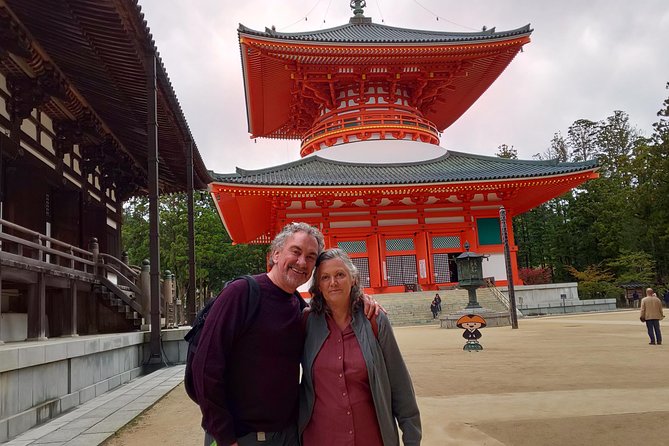
Kongobu-ji is the big Shingon hub, where you are seeing the administrative and spiritual center that links Koyasan’s thousands-of-temples network across Japan and beyond. The feeling here is less about “one spectacular monument” and more about structure, tradition, and the sense that this is a living religious campus.
You’ll spend about 1 hour here, and it is marked as free admission. That matters because it lets your guide spend time on what people often miss: why this temple complex is set up the way it is, and how Shingon Buddhism frames practice around icons, ritual spaces, and sacred objects.
What to look for on your walk through Kongobu-ji:
- Temple interiors and preserved spaces, where you can see how worship is organized
- Art details such as fusuma sliding-door paintings, which add movement to the sacred layout
- The way your guide connects the place to Shingon’s broader temple world
Drawback to consider: this is a major site, so you may see crowds, especially if you are visiting during peak seasonal tourism.
Okunoin, the long quiet of Kobo Daishi’s world
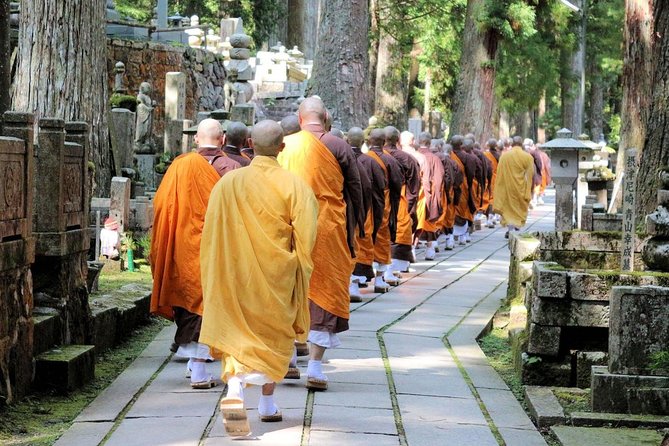
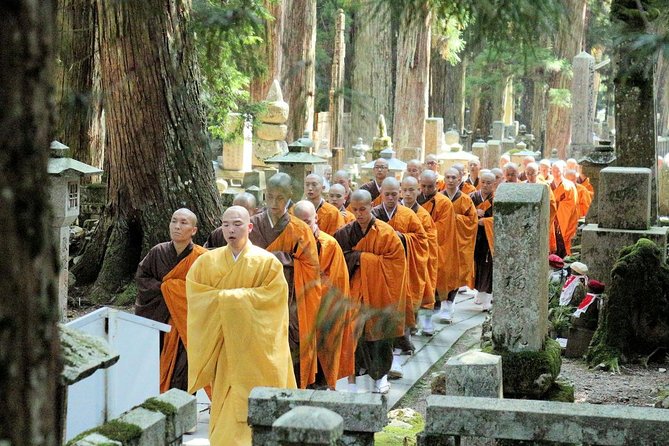
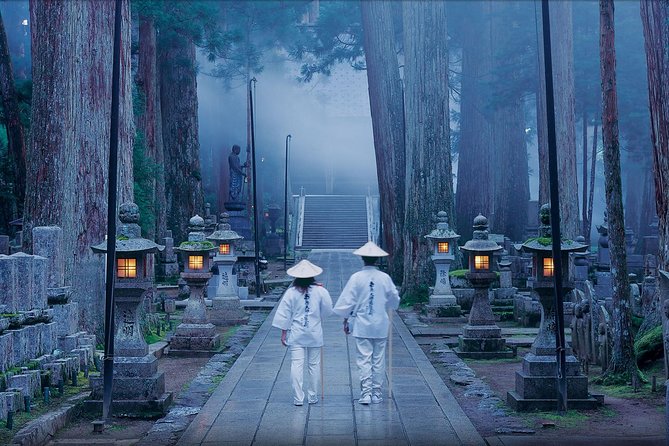
If Koyasan has a heartbeat, it is Okunoin. The stop here is about 1 hour 30 minutes, and it is marked as admission not included. Okunoin is the heart of the mountain, tied to Kobo Daishi (Kukai), one of the most revered religious figures in Japan. His resting place draws pilgrims, and the atmosphere reflects that.
Okunoin’s cemetery walk is not about fast sightseeing. It is about time. You move through a sacred passage lined with graves of prominent people, and the longer you go, the more the whole place shifts from tourist mindset to contemplative one.
Practical reality: this part of the day can feel physically intense. You are on uneven ground, with stairs and slopes. If you have mobility limits, this is the section where you should think hardest about pacing and breaks. The good news is that a private guide can help you manage your effort without losing the meaning of the walk.
Unique thing I’d plan for: Okunoin is where many visitors feel the biggest “Koyasan away-from-crowds” effect. In past experiences with this tour style, people highlighted how weather can actually add to the peace, whether it’s crisp autumn air or a calmer rainy day.
A few more Japan days to weigh up
- Private Tour to Mt. Fuji and Hakone (Fully Licenced Operator)
★ 5.0 · 1,910 reviews - Fushimi Inari Hidden Hiking Tour (Private Option Available)
★ 5.0 · 1,750 reviews - Private Kyoto Tour with a Local, Highlights & Hidden Gems, Personalised
★ 5.0 · 1,543 reviews - Tokyo Customized Private Tour (Must See Places in 1 Day)
★ 5.0 · 1,499 reviews
Danjo Garan: sacred groundwork and the main complex focus
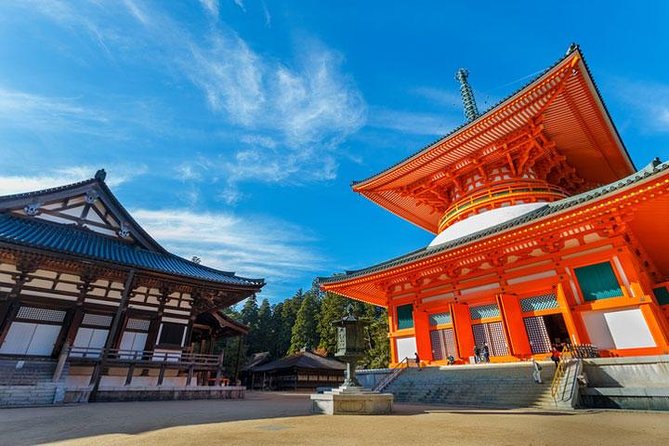
Next is Danjo Garan, about 1 hour, with admission marked free. This is one of the two most sacred sites in Koyasan. Historically, it is tied to Koyasan’s founding on this ground in the 9th century, when Kobo Daishi held a major ceremony and dedicated his life to building this sacred center.
Danjo Garan is a “core complex” stop. It helps you understand that Koyasan is not one temple, but a network of sacred nodes built to support a religious world view. Your guide can connect what you see in front of you to why the complex was laid out here in the first place.
What you’ll likely appreciate most:
- A clearer “map in your head” of Koyasan’s sacred layout
- Temple halls and iconic structures that explain the spirituality without needing a long lecture
If you’re short on energy, Danjo Garan is a good place to match your pace. The stop is substantial, but it is not the longest physical grind like Okunoin can be.
Reihokan Museum and Daishi Kyokai: why the art matters
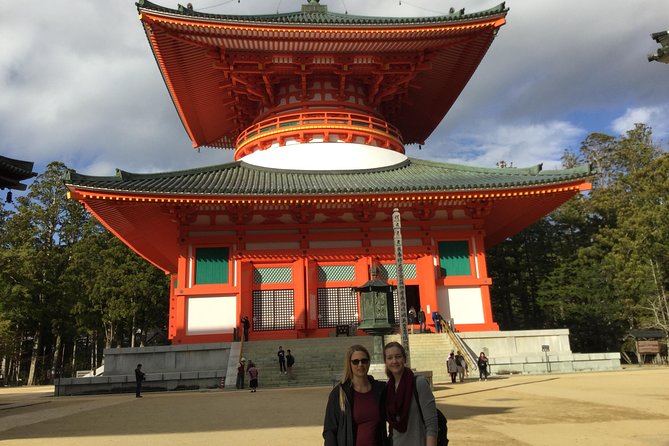
Reihokan Museum is about 30 minutes and marked free admission. Museums at sacred sites can feel like an extra detour. Here, it can be the opposite. Reihokan exists to house and preserve religious and cultural treasures of Koyasan, so you are not just looking at objects, you are learning why they are here.
The entrance hall is styled after Byodoin Temple in Uji, which gives you an easy mental bridge to other famous temple forms in Japan. If you are the kind of person who likes to understand the “why” behind what you are seeing, the museum stop helps you turn pretty visuals into meaningful context.
Then you have Daishi Kyokai, about 1 hour, also marked free. This is the administrative center of Shingon Buddhism, tied directly to spreading the teachings of Kobo Daishi. The complex consists of two buildings, and your guide can explain the function and spiritual role behind that structure.
In plain terms: these two stops help you connect the dots between ritual spaces and the systems that keep the tradition moving forward.
Tokugawa Mausoleum: power placed close to the holy center
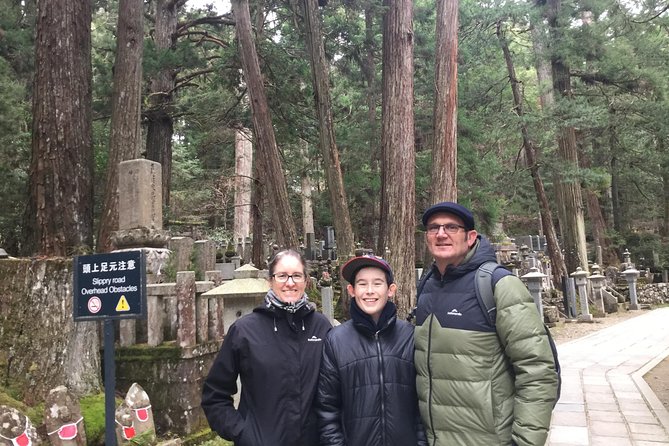
Tokugawa’s Mausoleum is about 1 hour, with admission marked not included. It was built in 1643 by the third Tokugawa shogun, Iemitsu, with the idea of placing the family mausoleum near Kobo Daishi’s. This is where Koyasan shows a fascinating intersection of faith and political power.
Even if you are not a history fanatic, you will likely appreciate this stop because it adds scale. Koyasan was sacred from the religious side, but it also mattered to leaders. That proximity explains why certain families invested in the mountain’s sacred geography.
What to watch for: because the entrance fee is not included, you need to budget for this stop if your guide selection includes it. If you are careful with costs, you can ask your guide to align your site picks with which entrances are free and which are not included.
The day ends at Koyasan Station, then back to Osaka
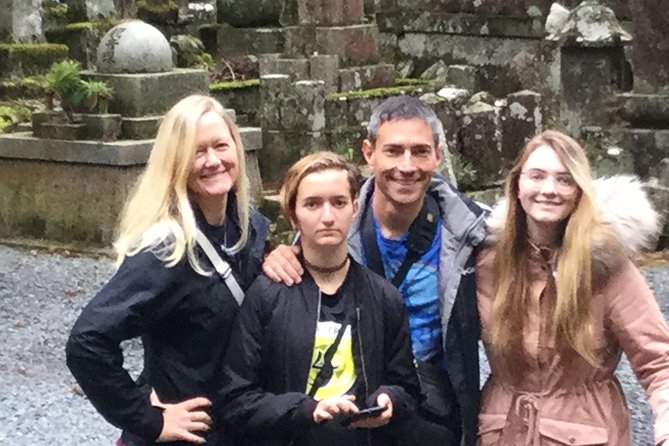
After the temple core stops, the tour returns to Koyasan Station, about 1 hour 30 minutes by train back toward Osaka. On a full day like this, the return segment is when your brain finally catches up. You might find yourself re-remembering small details, not just big sights.
One smart move: keep your notes mental. This is the kind of day where you forget facts, but you remember feelings and specific scenes, especially from Okunoin. The private guide approach makes that easier because you get explanations at the exact moment you are standing where the story happened.
What makes the private guide really valuable here
A guide can be a walking encyclopedia, or a problem solver. On this tour, you want both, especially because Koyasan’s layout is not obvious for first-timers.
In particular, past experiences with this tour style repeatedly praised guides for being:
- Fluent in English, with explanations that match the site you’re standing in
- Friendly and patient, especially while navigating train stations
- Flexible in pacing, tailoring the day based on your interests
If you happen to book with a guide like Naka, Hiro, Yuki, Emi, Yuka, or Miyuki, you are likely to find strong communication and careful routing through the multi-step transit day. Because this is a private tour, whoever you get, you can ask direct questions as you go, instead of waiting for a group explanation at the back of a crowd.
Also, your guide meeting you near your Osaka hotel area (on foot within a designated zone) is a small detail with big payoff. It reduces the “where do I find you” friction that ruins early morning tours.
Walking, weather, and the one thing you should plan around
This is a walking tour. That sounds obvious until you realize how that plays out across temples with stairs and hills. Okunoin and the sacred approaches can be especially demanding.
Bring:
- Comfortable shoes you trust for uneven stone
- Layers for cool or rainy conditions
- A small plan for energy breaks, not just a “push through” mentality
Weather can change the vibe fast. Some past tours happened on snowy or rainy days, and guides adapted the flow while keeping the sacred feel. Even when conditions are rough, Koyasan has a way of quieting the mind. You just need to dress for the day you get.
Lunch and entrance fees: what you should budget
Lunch is not included. Your guide can still help by coordinating timing so you can eat without feeling rushed, and in the past, guides have helped point people toward satisfying meal options during the day.
For entrance fees, the pattern matters:
- Many stops are marked free admission such as Kongobu-ji, Danjo Garan, Reihokan Museum, and Daishi Kyokai
- Some major sacred entrances are marked not included such as Okunoin and Tokugawa Mausoleum
So, the cleanest budgeting move is to think of your tour price as guide and coordination, then add a realistic amount for transportation and the paid admissions among your selected sites.
Should you book this Mount Koya private tour from Osaka?
Book it if you want a day where someone handles the route and you get meaning, not just movement. A private licensed guide, the ability to choose 3 to 4 sites, and the focus on major Koyasan anchors make this a strong fit if you care about Shingon Buddhism, Kobo Daishi, or Japan’s sacred temple culture.
Skip or reconsider if you:
- Hate walking and stairs and do not want to manage a physically demanding cemetery walk
- Are comfortable navigating trains and station transfers on your own
- Want a low-cost day trip where entrance fees do not add up
If you’re arriving in Osaka and want your Koyasan day to feel organized, respectful, and paced like a pilgrimage rather than a checklist, this is a solid choice.
Newly listed around Japan
- Private Tokyo Tour with Licensed Guide & Vehicle (Max 15 persons)★ 5.0 · 107 reviews
- Private Tokyo Food Tour – A Journey Through Time Through Food★ 5.0 · 36 reviews
- Private Tokyo Custom Full-Day Tour by Chartered Vehicle★ 5.0 · 16 reviews
- Private Tokyo Custom Half-Day Tour by Chartered Vehicle★ 4.5 · 13 reviews
- Private Outstanding Nikko Tour with English Speaking Driver★ 4.0 · 11 reviews
- Private Sightseeing to Mt Fuji and Hakone with English Driver★ 5.0 · 51 reviews
- Private Snow Monkeys park Day Trip From Tokyo or Nagano★ 4.5 · 26 reviews
- 4 Day Tour – Mount. Fuji, Tokyo, Hakone, Kamakura and Yokohama★ 5.0 · 19 reviews
Licensed Guides & Private Drivers, compared.
Tokyo 6hr Private Tour with Government-Licensed Guide
Read our review →
Kyoto Early Morning Tour with English-Speaking Guide
Read our review →
Tokyo 4hr Private Tour with Government-Licensed Guide
Read our review →
Kyoto 6hr Private Tour with Government-Licensed Guide
Read our review →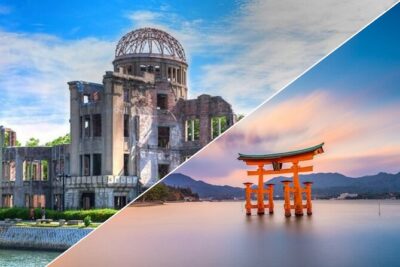
Hiroshima / Miyajima Full-day Private Tour with Government Licensed Guide
Read our review →Early Morning Tour with English-Speaking Guide
Read our review →
Tokyo Private Sightseeing Tour by Car- English speaking chauffeur
Read our review →
Mt Fuji Private Tour with English Speaking Driver
Read our review →Browse the lists this tour appears in