
Review · NARA DEER PARK TRIPS
Nara Todaiji Lazy Bird Walking Tour
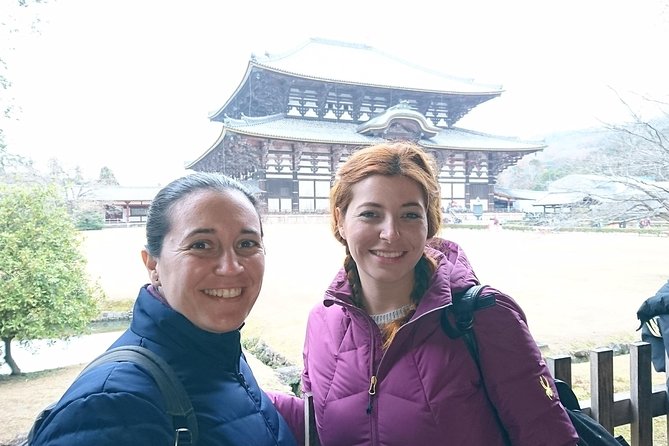
Deer, temples, and zero stress in Nara. I love the chance to hand-feed semi-tame deer with deer crackers, and I love having a guide handle route and temple context so you are not lost mid-walk. One consideration: temple admissions are not included, so your final cost will be higher than the base price.
This is a smart way to see Nara’s big highlights in about 4 hours, starting at 2:00 pm from Nara Station and ending back where you began. It is also a convenient stop if you are doing the Kyoto-to-Nara run, since the train ride is commonly quick, and you can still make plans for the evening.
You will walk between multiple temples and through areas where deer roam. Wear comfortable shoes, and keep a moderate pace in mind, especially around busy approaches and stairs.
In This Review
- Key things that make this tour worth your time
- Why Nara feels different on a guided afternoon walk
- Getting there: starting from Nara Station at 2:00 pm
- Price and value: tour fee plus temple admissions
- Stop 1, Nara Park: deer crackers and photo-ready moments
- Stop 2, Nigatsu-do: lanterns and a quieter viewpoint
- Stop 3, Hokke-do: stepping into older Buddhist artistry
- Stop 4, Daibutsuden: the Great Buddha Hall in all its scale
- Stop 5, Kasuga Grand Shrine: the forest walk and lantern atmosphere
- Stop 6, Kofuku-ji: the five-storied pagoda quick stop
- How the guide shapes the whole experience
- Walking pace, shoes, and who should book
- Photo and deer feeding tips that actually help
- Should you book this Nara Todaiji Lazy Bird Walking Tour?
- FAQ
- What is the meeting point and start time for the tour?
- How long does the tour last?
- Is this a private tour?
- What is included in the tour price?
- Are temple admission fees included?
- Can I buy deer crackers during the tour?
- Is public transportation included?
Key things that make this tour worth your time
- Multi-temple focus in half a day, including Todai-ji plus Kasuga Grand Shrine and Kofuku-ji
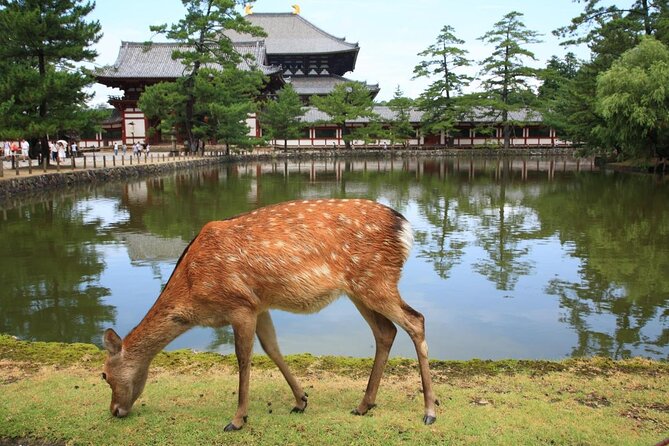
- Optional deer crackers so you can interact with the famous Nara Park deer
- A guide-led route that reduces backtracking and helps you find photo spots faster
- Small-group feel with private tour structure for your group
- Clear timeboxing at each stop, so you see more without feeling rushed
- You will likely pay extra for temple admissions, since entry fees are not part of the tour price
Why Nara feels different on a guided afternoon walk
Nara is one of those places where the “main sights” are close enough to connect, but only if you know where you are going. On your own, it is easy to burn time: you stop for one thing, detour for another, then realize the big temple is taking longer than planned.
This tour is built for a time crunch. You get a sequence of major stops that covers the temple highlights people actually come for, plus one or two spots that feel calmer once you are there. The pacing works especially well if your day is already scheduled around Kyoto trains or another activity.
And the best part is the balance. You still get the magic of walking through deer-filled lanes and sacred grounds, but you are not doing the logistics homework. A good guide keeps the flow moving, while adding just enough background to turn buildings into meaningful places.
A few more Nara Deer Park trips around Nara:
- Kyoto/Osaka: Kinkakuji, Bamboo Forest, and Nara Deer Park
★ 4.4 · 265 reviews - E-Bike Nara Highlights – Todaiji, Knives, Deer, Shrine
★ 4.8 · 186 reviews - All must-sees in 3 hours – Nara Park Classic Tour! From JR Nara!
★ 5.0 · 108 reviews
Getting there: starting from Nara Station at 2:00 pm
The meeting point is Nara Station (1 Sanjohonmachi, Nara), with a 2:00 pm start. The tour ends back at the same spot, which is a small detail but a big stress reducer, especially when you are trying to catch a later train or return to your hotel.
This timing also helps you experience Nara without feeling like you need an entire day. If you are traveling from Kyoto, the ride is quick enough that you can often treat this as a standalone outing rather than a full travel day.
Practical tip: since this is a walking tour with multiple temple buildings, plan to arrive a bit early so you can settle your map app, use the restroom, and start at an easy pace.
Price and value: tour fee plus temple admissions
The tour is listed at $86.49 per person, and what you are paying for includes the guide fee. That matters because many of the temples you visit do require on-site entry.
Here is what you should budget beyond the tour price:
- Admission fees: ¥800 per person (not included)
- Public transportation fare: ¥460 per person (not included)
- Drink and food (not included)
Some stops also specifically note admissions as not included, including Hokke-do and Daibutsuden. So, when you compare price, treat the $86.49 as your guided portion, then add the on-the-ground temple costs.
Is it still good value? For most people, yes, because you are buying three things: a guided route across a dense area, time-saving skip-the-planning benefits, and context that makes the temples easier to appreciate in a short window.
Stop 1, Nara Park: deer crackers and photo-ready moments
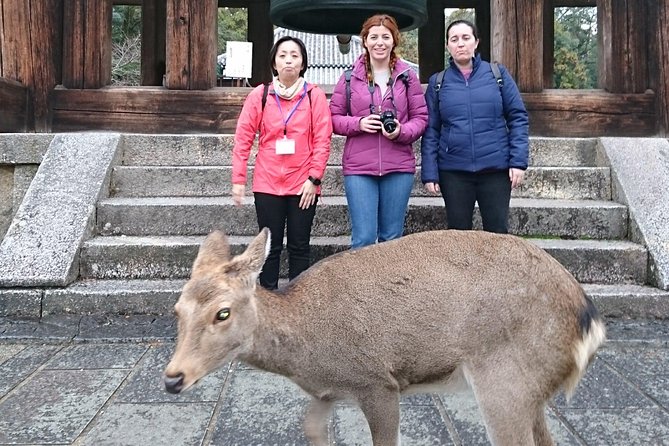
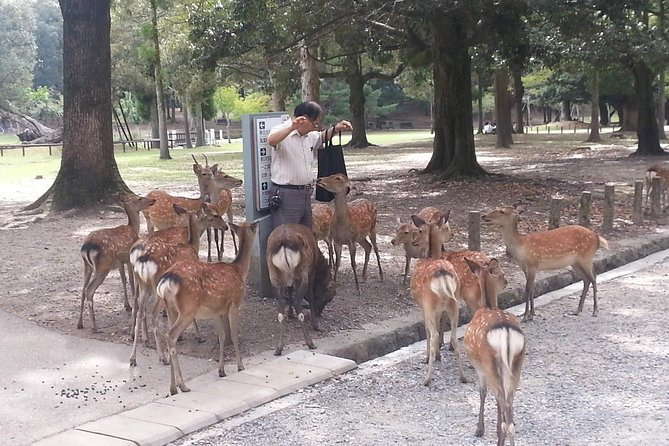
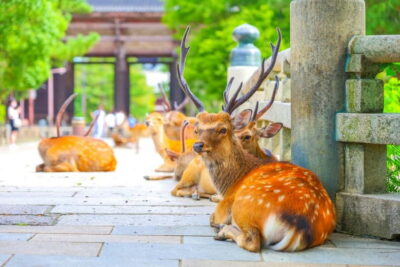
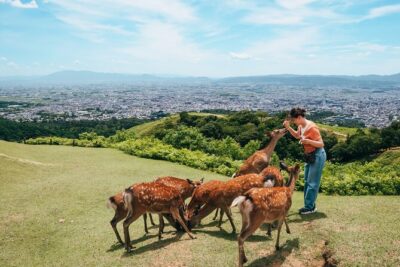
Nara Park is where the whole story begins. You step into a landscape of hundreds of deer roaming freely, and they genuinely behave like they recognize that tourists often come prepared.
You have time to interact and take pictures, and the tour includes an option to buy deer crackers so you can hand-feed the semi-tame deer. It is hard not to smile here, especially because the deer react right at your level, not from behind rails.
What I like about a guided approach at this stop is simple: guides often know where the less chaotic interactions happen and how to introduce you to the deer most likely to stay calm. In past experiences with guides for this tour style, names like Masa and Noriko have been praised for being communicative and for helping visitors get the nicer deer experience without feeling flustered.
A realistic consideration: deer areas can get crowded, and the walk-in approach can be slower than you expect. If you want great photos, give yourself a bit of patience and let your guide position you.
A few more Nara days to weigh up
- Nara Half Day Trip Walking Tour (Private Option Available)
★ 5.0 · 937 reviews - Nara: Half-Day UNESCO Heritage & Local Culture Walking Tour
★ 4.8 · 250 reviews - Nara – Craft Beer, Sake, and Food Walking Tour
★ 3.5 · 9 reviews - Nara – Craft Beer, Sake & Food Walking Tour
★ 4.0 · 7 reviews
Stop 2, Nigatsu-do: lanterns and a quieter viewpoint
Next up is Nigatsu-do, often remembered for its wooden terrace and hanging lanterns. Even with only about 20 minutes here, the setup works for photos and for getting a sense of Nara from a slightly elevated perspective.
The highlight is that the spot offers a view over the city, which helps you mentally connect the dots. That matters because once you see the city layout, Todai-ji and the surrounding temple areas start to feel less random and more like an intentional sacred district.
Admission at this stop is listed as free, so you can enjoy it without worrying about timing for ticket purchases. Still, treat the 20-minute window as part of a flow, not a long hangout, because the whole tour is designed to keep momentum.
Stop 3, Hokke-do: stepping into older Buddhist artistry
On Hokke-do, you are looking at one of the older structures on the Todai-ji grounds, and the focus shifts from views to Buddhist art. The hall is said to be the oldest building on the Todaiji Temple grounds, and it houses older Buddhist statue works from the 8th century, described as uniquely created.
This is where a guide makes a noticeable difference. Even if you can read the basics on a plaque, it helps to have someone explain why certain statue styles matter and what you are looking at when you turn your head inside a hall.
Time here is about 30 minutes, and admission is not included for this stop. So, once you reach this area, keep your focus on the art details rather than on logistics.
If you are traveling with kids, this kind of stop often works well because it feels like a “quiet museum moment” in the middle of deer and outdoor walking.
Stop 4, Daibutsuden: the Great Buddha Hall in all its scale
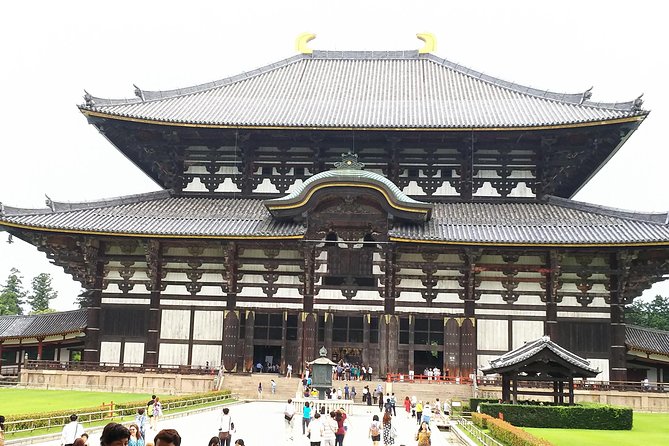
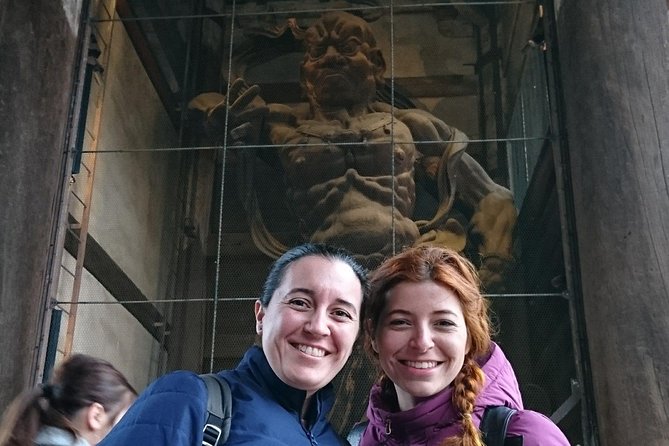
Now you arrive at the big one: Daibutsuden, the Great Buddha Hall. You will walk through the approach where deer are roaming, and then the hall itself lands with impact.
The sheer size is the headline. It is described as the world’s largest wooden building, and it is the home of the Great Buddha. This is also a stop where your expectations matter. If you come ready to stand back, look upward, and take it in slowly, you will enjoy the scale far more than if you try to treat it like a quick checklist item.
Your time here is about 45 minutes, and admission is not included. That means you will likely want to time your photo stops, look once from a distance, then come back for closer detail.
From guide feedback patterns you will often see, many visitors remember the tone of their guide here, especially guides like Emi and Shigeyuki, who have been described as kind, patient, and able to explain what you are seeing without rushing.
Stop 5, Kasuga Grand Shrine: the forest walk and lantern atmosphere
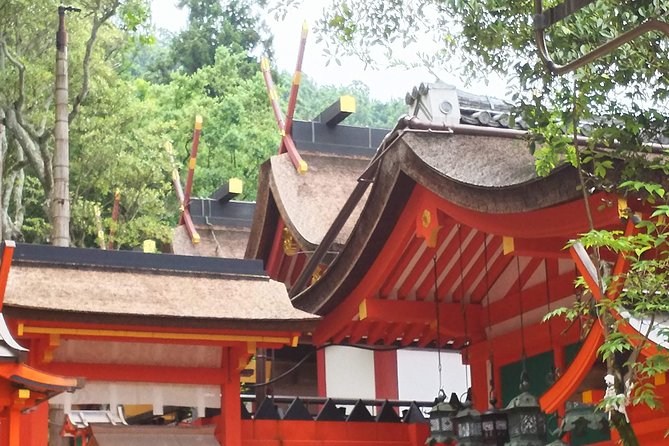
Kasuga Grand Shrine brings you into a different mood. Instead of a grand hall inside, you get a stroll through a peaceful forest setting surrounded by shrine elements.
The color palette and lighting feel very specific: bright vermillion buildings, old stone lanterns, and hanging lanterns. Even if you are not a photography person, this stop gives your brain a reset. It is calmer than the deer area, and it feels like Nara’s sacred atmosphere is more than just one famous structure.
Time here is about 30 minutes, and admission is listed as free. That combination is a nice value, because you are getting a full atmosphere experience without added ticket friction.
Practical tip: for pictures, try to pause where you can see multiple lantern types in the same frame. And give yourself a few quiet steps so the forest imagery does not become just background noise.
Stop 6, Kofuku-ji: the five-storied pagoda quick stop
The final temple stop is Kofuku-ji, with a focus on its five-storied pagoda. The tour notes the pagoda was built about 600 years ago and constructed out of thick logs joined together in a way that feels dynamic.
This stop is short, about 10 minutes, and admission is listed as free. So treat it like a payoff chapter, not a deep study time. If you want more detail, you would need extra time beyond this half-day schedule, but for a guided loop, it gives you closure with a memorable structure.
The value of ending with Kofuku-ji is that the pagoda silhouette and the log construction style often become the kind of mental image you carry after you leave.
How the guide shapes the whole experience
This tour’s strongest advantage is not just the sites, it is the human glue between them. Guides on this tour style are praised for being communicative and friendly, and for making the route feel calm instead of chaotic.
Names that come up include Masa, Yuka, Emi, Noriko, and Shigeyuki. The recurring theme: English communication that works, a pace that does not feel rushed, and explanations that connect Shinto and Buddhism to what you are seeing.
One reason this matters: Nara can feel overwhelming fast. You get deer, crowds, gates, halls, and signs. A good guide turns that pile of visuals into something you can actually remember. They also tend to handle the small decisions that waste time, like where to stand for photos or which deer are most responsive.
If you are traveling with kids, you will likely appreciate this most. At least one guided experience here was praised specifically for patience and accommodating a 10-year-old, which is a good sign that the guide can adapt on the fly.
Walking pace, shoes, and who should book
This is a walking tour with multiple temples in about 4 hours. The tour notes moderate physical fitness and recommends comfortable shoes, which tells you this is not a sit-and-watch experience.
You should be especially mindful if you have mobility limits. One review notes it is probably not suited to people with mobility issues, though they also said the guide would do his utmost to adjust it to any ability level. So if you have concerns, it is worth contacting the operator before you book.
Who this fits best:
- You want the major Nara temples without the research stress
- You are visiting from Kyoto and need a half-day plan
- You like a guided explanation that makes sacred sites easier to understand
- You want deer feeding time without guessing your way through crowds
If you want a slow, long temple deep dive, you might feel this is too tight. But if your goal is a high-impact Nara afternoon, it is well matched.
Photo and deer feeding tips that actually help
The deer part is fun, but it can also become a messy scramble if you treat it like a free-for-all. Here is how to make it easier on yourself.
- Bring a calm mindset. Deer follow movement and attention, so sudden changes in direction can stir things up.
- Plan your hand-feeding time. You are given enough time to interact, but you do not need to repeat it endlessly to get great photos.
- Use your guide’s positioning. When guides introduce visitors to deer that are more relaxed, it usually means you spend less time chasing the moment.
- Keep an eye on where you step. The approach paths around major halls can be uneven, and you will be sharing space with other visitors and deer.
For the temples, do at least one slow look before snapping. Daibutsuden in particular feels better when you first absorb the scale, then you move closer for details.
Should you book this Nara Todaiji Lazy Bird Walking Tour?
I think this is a strong book if you fall into the time-crunched category. If you have only a half-day in Nara, or you want to fit Nara neatly between Kyoto plans and evening timing, this tour gives you a tight route with the right mix: deer energy, temple awe, and a forest shrine mood.
It is also a good fit for families and for anyone who wants clarity fast. Having guides like Masa, Yuka, Emi, Noriko, and Shigeyuki (as named by visitors) is part of the appeal because they tend to be patient and organized, and that reduces the mental load of figuring things out in a new place.
The main reason not to book is cost creep. Because temple admissions and some other expenses are not included, your total will be higher once you add the on-site fees. If that matters to you, check your budget before you commit.
If you want an easy, guided Nara afternoon that feels organized rather than rushed, go for it. If you want a slow, independent day with lots of extra wandering time, you may prefer a self-guided plan.
FAQ
What is the meeting point and start time for the tour?
The tour meets at Nara Station (1 Sanjohonmachi, Nara, 630-8122, Japan) and starts at 2:00 pm.
How long does the tour last?
The tour lasts about 4 hours.
Is this a private tour?
Yes. It is described as a private tour/activity, and only your group will participate.
What is included in the tour price?
The tour includes the guide fee.
Are temple admission fees included?
No. Admission fees are listed as ¥800 per person, and some stops also note admissions as not included.
Can I buy deer crackers during the tour?
Yes. The tour offers the option to buy deer crackers to hand-feed semi-tame deer at Nara Park.
Is public transportation included?
No. Public transportation fare is listed as ¥460 per person, and drink and food are not included.
Newly listed around Nara
- Relax in Nara: Deer Park, Todai-ji Temple and Merchants’ Town★ 5.0 · 6 reviews
- All must-sees in 3 hours – Nara Park Classic Tour! From JR Nara!★ 5.0 · 108 reviews
- Hammer a Pattern on Your Ring Workshop★ 5.0 · 57 reviews
- Nara Private Tour: Flexible Pickup from Kyoto, Osaka, or Nara★ 5.0 · 17 reviews
- Nara Sake Tasting Tour at Local Brewerie(tasting fee included)★ 5.0 · 12 reviews
- Nara World Heritage PRIVATE TOUR★ 4.5 · 15 reviews
- Nara – Heart of Nature Cross Bike Tour★ 5.0 · 19 reviews
- Nara – Craft Beer, Sake & Food Walking Tour★ 4.0 · 7 reviews
Nara Deer Park Trips, compared.
Kyoto/Osaka: Kinkakuji, Bamboo Forest, and Nara Deer Park
Read our review →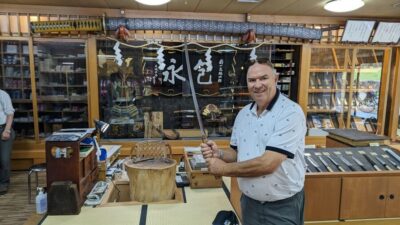
E-Bike Nara Highlights – Todaiji, Knives, Deer, Shrine
Read our review →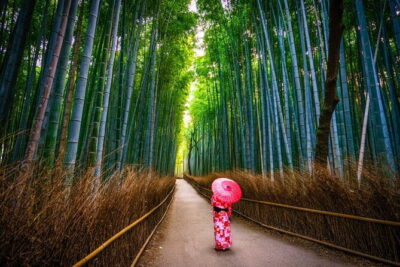
From Kyoto / Osaka: Kyoto Must-see Spots & Nara Park One Day Tour
Read our review →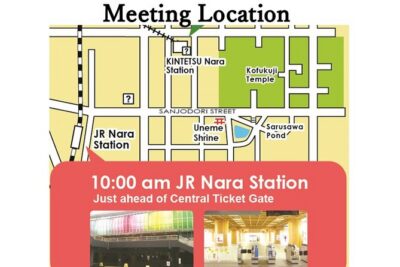
All must-sees in 3 hours – Nara Park Classic Tour! From JR Nara!
Read our review →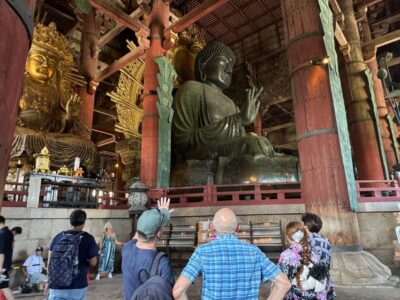
Perfect Nara Park Half-Day Bus Tour with English Speaking Guide
Read our review →
Katsuo-ji Temple, Arashiyama Forest, & Nara Park
Read our review →
E-Bike Nara Highlights – Todaiji, Knives, Deer, Shrine, and Gems
Read our review →Browse the lists this tour appears in