
Review · WALKING TOURS
Nostalgic Osaka walk, totally different from Dotonbori
Osaka can whisper, if you walk. This 2-hour, small-group tour trades the loud energy of Dotonbori for a calmer look at Karahori, led by local guide Chieko-san.
I really like two parts: the hands-on craft stop at Inoue Seijosho, where you see how tatami mats are made, and the shop-to-shop pacing that includes iconic local producers like a centuries-old bonito shop and a well-regarded chocolatier.
One thing to plan for, though: you walk a lot for a short time, with some slight uphill or downhill. Also, you’re moving through lanes where residents still live, so you need to stay respectful and arrive on time, since being more than 15 minutes late means you can’t join.
In This Review
- Key highlights to look for
- Why Karahori feels like old Osaka, not Dotonbori
- Two hours, six people, and a guide who keeps you moving
- Start near Tanimachi, then step into quieter streets
- Stop 1: Inoue Seijosho and the practical world of tatami
- Stop 2: Karahori Shopping Street and machiya that survived time
- Stop 3: Кーデリーカフェ in a renovated old house
- Stop 4: Maruyo-shoten, the bonito shop established in 1765
- Stop 5 and 6: Ek Chuah Kura chocolate, then Len-Karahori Residence
- The alley cafe moment and the Osaka Castle moat wall
- What the guide actually adds, especially with Chieko-san
- Walking etiquette in places where people still live
- Price and value: what $36.13 buys you
- Who should book this nostalgic Osaka walk
- FAQ
- FAQ
- What time length is this tour?
- Is there a choice of morning or afternoon?
- How much does it cost per person?
- How big is the group?
- What is included in the price?
- Are meals included?
- Do I need to bring ticket details, or is there a mobile ticket?
- What if I arrive late?
- Is the tour dependent on weather?
- Where does the tour start?
- Should you book this nostalgic Osaka walk?
Key highlights to look for
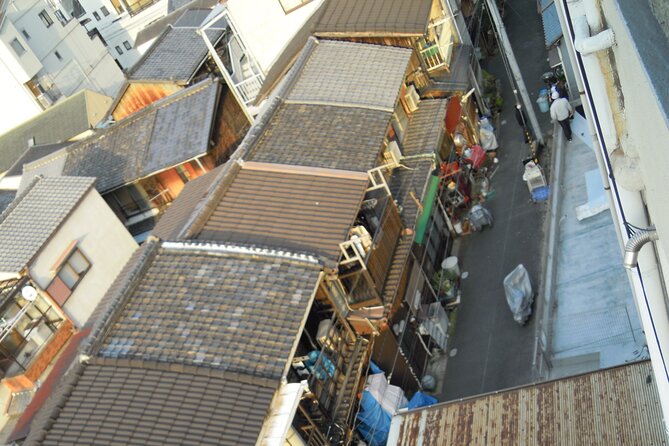
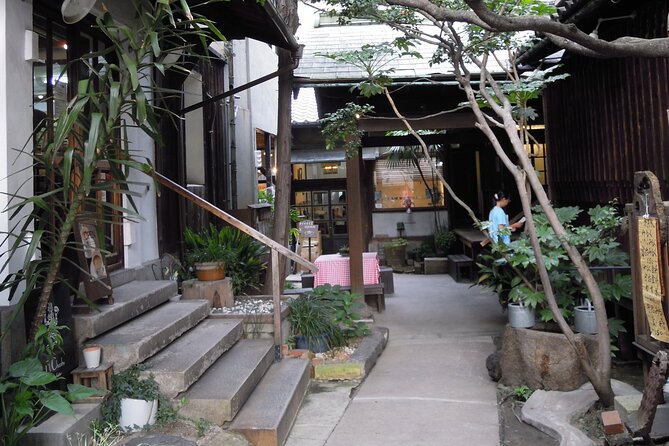
- Karahori, a quieter pocket of old Osaka that feels worlds away from Dotonbori
- Tatami-making at Inoue Seijosho, with a live look at materials and machinery
- A real daily-life shopping street at Karahori Shopping Street, with machiya houses over 100 years old
- Old-house cafes and back-alley shopping, including a renovated-house stop at クーデリーカフェ
- Long-running local food makers, like Maruyo-shoten (established 1765) and Ek Chuah Kura chocolate
- A view of Osaka Castle’s original moat wall, said to remain since the 15th century
Why Karahori feels like old Osaka, not Dotonbori
Dotonbori is the part of Osaka most people photograph. Karahori is the part of Osaka you can actually feel. Instead of big crowds and neon, you get narrow lanes, older wooden houses (machiya), and small streets that still look like someone lives there. And they do.
This tour is built around that difference. You choose a morning or afternoon start, then spend about 2 hours walking through a neighborhood that stays out of the tourist spotlight. I like that the goal is not to sprint through landmarks, but to understand how local life works when the day is going on around you.
You also travel with a guide. That matters here, because the route includes tighter paths and small shops that are easy to miss when you’re on your own.
More Walking Tours in Osaka
- Osaka: Hotspots & Hidden Gems Walking Tour Private or Group
★ 4.9 · 1,300 reviews - Osaka Backstreet Nightlife & Street Food Walking Tour
★ 5.0 · 1,011 reviews - Osaka Local Foodie Walking Tour in Dotonbori and Shinsekai
★ 5.0 · 985 reviews
Two hours, six people, and a guide who keeps you moving
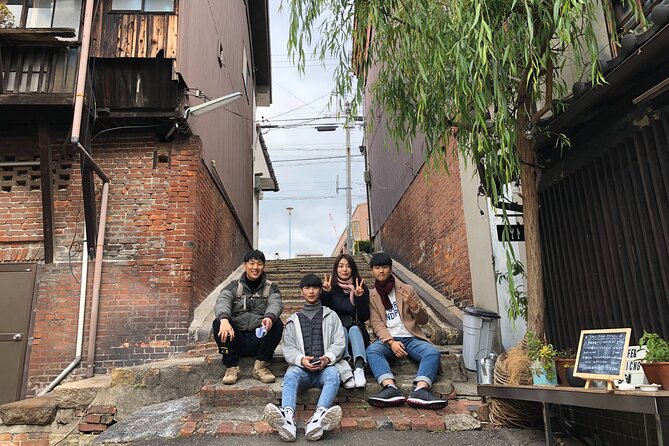
The group is capped at 6 travelers, so you’re not stuck in a noisy cluster. In practice, that usually means better pacing and more chances to ask questions while you’re walking.
The tour also runs on a mobile ticket, and bottled water is included. Meals and coffee or tea are not included, so you’ll have that normal Japan travel rhythm of stopping in when you want something instead of having it forced on you.
Time-wise, think of it as a morning coffee walk that got a history degree. Some stop times are brief, but the total experience feels full because the guide connects the dots for you as you move.
Start near Tanimachi, then step into quieter streets
The meeting point is at 6-chōme-2-24 Tanimachi, Chuo Ward. The tour ends back there, so you’re not constantly changing neighborhoods without knowing where you are headed.
You’ll be walking close to the city center, and it’s near public transportation. That’s good because it lets you attach the tour to your broader Osaka plan without turning the day into a travel maze.
Once you start, the tour’s tone changes quickly. You go from main-road movement to side streets and shopfronts, including alleys. This is where the guide’s local knowledge becomes practical, not just “nice to have.”
Stop 1: Inoue Seijosho and the practical world of tatami
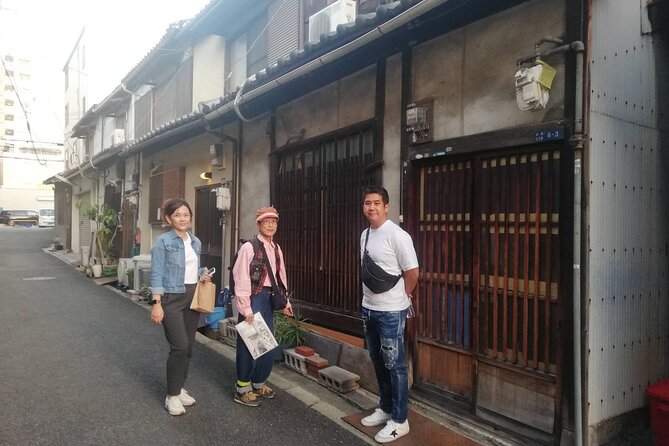
The tour opens at Inoue Seijosho, where you can see how tatami mats are made. Tatami isn’t just flooring in Japan. It’s craft, materials, and a whole set of household traditions.
At this stop, you get a master showing the tatami material and the tatami making machine. Admission is free here, and the stop is short (about 10 minutes). That works well as an opener because it gives you a visual reference early on.
The nice part is how this stop teaches you to look at details. When you later see older homes and traditional architecture, you’ll likely notice how the everyday spaces were designed for how people lived.
A few more Osaka days to weigh up
- Osaka Bar Hopping Night Walking Tour in Namba (3 bars, 6 tastes)
★ 5.0 · 958 reviews - Osaka: Deep Backstreets Walking Tour with Dinner Option
★ 4.9 · 902 reviews - Ultimate Osaka Walking Tour: Castle, Dotonbori & Hidden Gems
★ 5.0 · 862 reviews - Osaka: Main Sights and Hidden Spots Guided Walking Tour
★ 4.9 · 702 reviews
Stop 2: Karahori Shopping Street and machiya that survived time
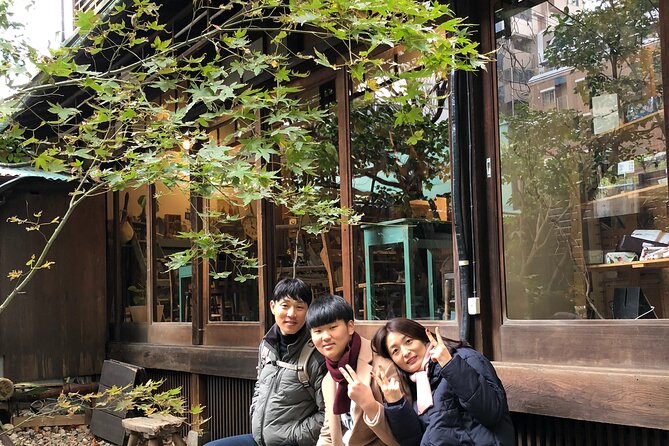
Karahori Shopping Street is the heart of the “everyday Osaka” feeling. This is where you slow down and watch daily-life shopping unfold in a way bigger tourist areas usually can’t replicate.
You spend about 1 hour here. Admission is free, and the focus is local streets, old houses, and machiya that are over 100 years old. You also see how the neighborhood holds on to its character even as shops adapt.
A big value of this stop is the guide’s commentary about what you’re seeing in the terrain and architecture. You get context that helps you understand why the neighborhood feels the way it does, instead of just snapping photos and moving on.
Practical note: there’s some walking and lane navigation, so wear shoes that can handle a bit of uneven ground.
Stop 3: Кーデリーカフェ in a renovated old house
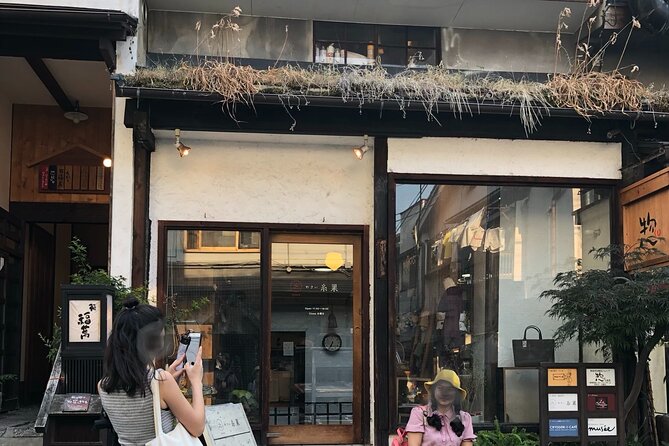
Next comes a tucked-away café stop, クーデリーカフェ. The idea here is simple: you get a breather in a place that still feels tied to the neighborhood rather than copied into a generic “tourist café” template.
It’s in a renovated old house. The stop is about 15 minutes, and admission is free.
What you’ll likely enjoy is the shopping angle. This stop is described as a hidden café where you can shop for items that don’t feel like they were designed for airport shelves. If you like gifts that look like they came from real streets, this is the moment to pay attention.
If you want coffee or tea, you should plan to purchase it yourself. The tour includes bottled water, not café spend.
Stop 4: Maruyo-shoten, the bonito shop established in 1765
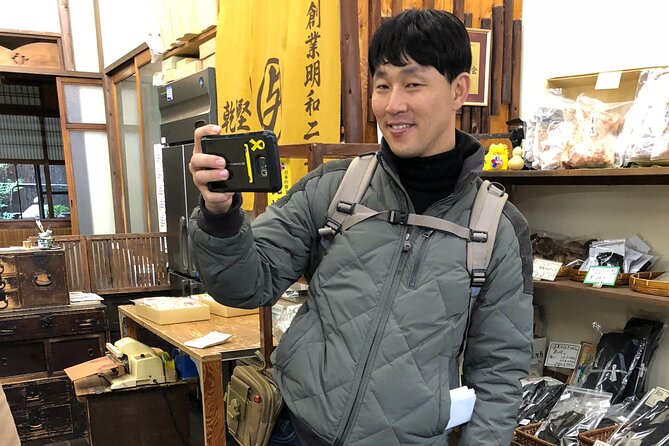
This is one of those stops that makes Osaka food culture feel real. Maruyo-shoten is a bonito shop established in 1765, which is basically “serious long-running” territory.
The stop is short, about 5 minutes, but it’s designed to show what authentic bonito is in the local sense. You’re not just tasting flavors. You’re seeing why certain food traditions last.
Because this is a brief stop, it’s best as a “learn first, taste if you can” moment. Even if you don’t buy anything, you come away with a better mental model of why Japanese kitchens build around ingredients like this.
Stop 5 and 6: Ek Chuah Kura chocolate, then Len-Karahori Residence
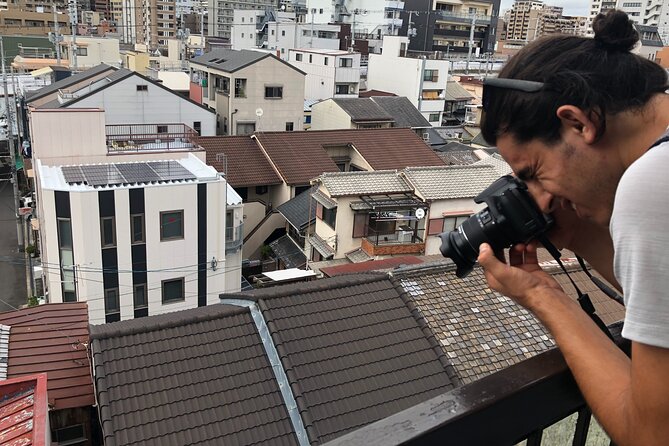
Chocolate stops in Osaka can be either flashy or thoughtful. Ek Chuah, specifically the Karahori Kura main shop, is presented as a top choice in the neighborhood, and this stop is also about 5 minutes.
Then you move to Len – Karahori Residence, a refurbished commercial complex. The concept is that traditional houses get renovated into shop spaces. You can find unique souvenirs here, which is handy if you’re trying to bring back something that doesn’t look mass-produced.
What I like about stacking these stops is the contrast: traditional craft and food producers first, then a more modern, design-aware shopping space that still keeps the neighborhood’s shape.
The alley cafe moment and the Osaka Castle moat wall
The last part of the walking route includes a hidden café in an alley. Next to it, you can see Osaka Castle’s original moat wall, said to remain since the 15th century.
This is the kind of detail that changes how you understand the city. Osaka isn’t only the modern skyline and street food queues. It also has leftovers of older systems, where walls and boundaries shaped whole neighborhoods.
The tour doesn’t linger too long here, but it’s memorable because it’s both quiet and historical. If you’re someone who likes “small things that explain big things,” this is the stop that tends to stick with people.
What the guide actually adds, especially with Chieko-san
The guide can make or break a neighborhood walk. Here, the standout is Chieko-san, who focuses on local life, neighborhood history, and practical shopping advice.
From the way the tour is described, you’re not just following a checklist. You’re walking with someone who can point out why a street layout matters, where the old moat likely influenced the terrain, and what to look for in machiya buildings.
I also like that you’re encouraged to ask for extra recommendations. That turns the tour into more than a guided route. It becomes a personalized tip list you can use right after you finish.
And because the vibe is friendly and conversational, if you want to practice Japanese or learn how locals talk about everyday things, this is the kind of tour where that can happen naturally.
Walking etiquette in places where people still live
This tour includes hidden paths, and this is not a theme-park maze. You’re walking in residential areas where people live.
You’re asked not to disturb inhabitants during hidden-path walking, and the note specifically says that grandparents still live in the area. So keep voices down in narrow lanes, don’t block doorways, and don’t treat every doorway like a photo prop.
Also, be on time. If you arrive more than 15 minutes late, you can’t join the trip, to respect other guests’ time. That rule is rare and strict enough that it’s worth planning for, especially if you’re juggling trains.
Price and value: what $36.13 buys you
At $36.13 per person for about 2 hours, this isn’t a cheap “wander around” activity. But it’s also not a high-priced museum tour. The value comes from what’s included and what’s gained.
What you get:
- A guided route through Karahori, designed to be walkable from the city center
- Free access at multiple stops (tatami maker, shopping street, and several shops or cafés)
- Bottled water included
- Small group size (max 6), which generally makes questions easier
What you don’t get:
- Meals
- Coffee and tea (you buy yourself when you want)
- Anything guaranteed on a specific purchase list
I think the best way to judge the price is this: if you were to do Karahori on your own, you’d still enjoy the streets, but you’d miss the craft explanations, the food context, and the “why this place and why now” insights. For me, that’s what justifies a paid guide in a neighborhood walk.
Who should book this nostalgic Osaka walk
This is a strong match if you:
- Want Osaka beyond Dotonbori and the usual major sights
- Like neighborhood history and everyday shopping streets
- Enjoy craft-focused stops like tatami production
- Prefer small-group experiences where you can ask questions
It might be less ideal if you:
- Hate walking for 2 hours, especially with some uphill or downhill
- Need a totally quiet, low-mobility route, since narrow lanes and stairs or uneven ground can be part of “old neighborhoods”
- Are likely to run late, since missing the 15-minute window means you can’t join
FAQ
FAQ
What time length is this tour?
It runs for about 2 hours.
Is there a choice of morning or afternoon?
Yes, you can choose either a morning or afternoon tour to fit your schedule.
How much does it cost per person?
The price is $36.13 per person.
How big is the group?
The tour has a maximum of 6 travelers.
What is included in the price?
Bottled water is included.
Are meals included?
No. If you want to eat, you’ll buy food yourself at local shops or cafés.
Do I need to bring ticket details, or is there a mobile ticket?
It uses a mobile ticket.
What if I arrive late?
If you are late by more than 15 minutes, you cannot join the trip to respect other guests’ time.
Is the tour dependent on weather?
Yes. It requires good weather. If canceled due to poor weather, you’ll be offered a different date or a full refund.
Where does the tour start?
It starts at 6-chōme-2-24 Tanimachi, Chuo Ward, Osaka 542-0012, Japan, and ends back at the meeting point.
Should you book this nostalgic Osaka walk?
If you want Osaka that feels lived-in, book it. This tour gives you a calmer side of the city, plus real stops tied to craft and old local food shops, not just storefront photos. The small group and Chieko-san’s neighborhood storytelling are the main reason it’s worth paying for, especially if you’re trying to understand Karahori instead of just passing through it.
Just be honest about your walking comfort and your punctuality. If you can handle a couple hours on your feet and you like slow streets, you’ll likely find this is one of the more memorable Osaka experiences you can fit into a tight schedule.
Newly listed around Osaka
- Osaka Cooking Class and Sake Tasting with Local Supermarket Visit★ 5.0 · 79 reviews
- Allure of Osaka Walking Day Tour with a local guide★ 5.0 · 11 reviews
- Osaka Castle Walking Tour★ 5.0 · 29 reviews
- Cooking Ramen&Gyoza/KatsuCurry/Bento/Okonomiyaki+Store Tour@Osaka★ 5.0 · 138 reviews
- Half day Osaka Bay Area Cycling with E-Assist Bicycle Tour★ 5.0 · 15 reviews
- Osaka Castle & Dotonbori Lively One-Day Walking Tour★ 5.0 · 18 reviews
- Osaka Castle and a visit to the longest shopping street in Japan★ 5.0 · 12 reviews
- Osaka Afternoon Walking Tour with Osaka River Cruise★ 3.5 · 42 reviews
Walking Tours, compared.
Kyoto Geisha Walking Tour: Gion District & Hidden Gems
Read our review →
Tokyo Tsukiji Fish Market Food and Culture Walking Tour
Read our review →
Gion Geisha District Walking Tour – Stories of Geisha
Read our review →
Shinjuku Local Bar and Izakaya Guided Walking Tour
Read our review →

Asakusa Walking Tour with Sensoji Temple Visit
Read our review →
Kyoto Gion Geisha District Walking Tour – The Stories of Geisha
Read our review →Browse the lists this tour appears in