
Review · LICENSED GUIDES & PRIVATE DRIVERS
Osaka & Kyoto & Nara Top Hightlights English Speaking Tour
A day trip that feels like a highlight reel. You’ll hit Kyoto’s old streets and the Senbon Torii in one go, then finish in Nara for deer time and Todai-ji. It’s designed for people who want big landmarks without spending the whole day building logistics.
What I like most is the English-speaking local guide/driver setup plus the way the day balances set stops with real free time to explore on your own. If you end up with a guide like Lou, Anna, Yang, or Amy Ono, the day tends to flow smoothly with clear direction and helpful context.
One consideration: the tour ends in Osaka, not Kyoto. You’ll also be walking through busy, hilly areas, and on tight days your time at each sight can feel shorter than you hoped.
In This Review
- Key highlights to know before you go
- From Nipponbashi in Osaka to a Kyoto-and-Nara day that actually moves
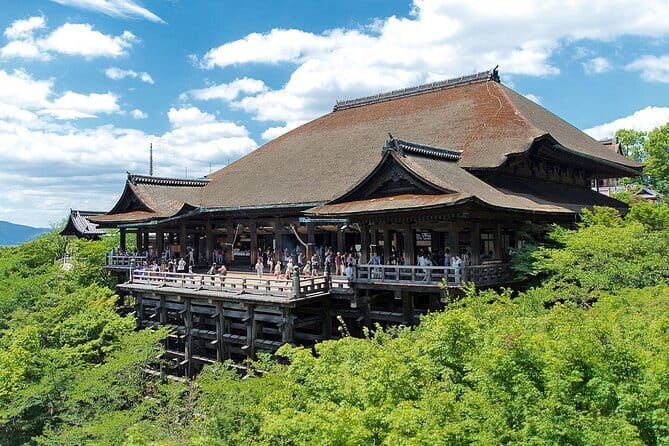
- Kiyomizu-dera and the temple-street route that makes Kyoto feel real
- Fushimi Inari’s Senbon Torii: ticket-included, time-limited, still unforgettable
- Nara Park deer time plus a quick Todai-ji look at the Great Buddha
- Shinsaibashi and the Osaka ending that changes your day
- What the $54 price buys, and where you’ll spend extra
- Timing tips for a day that can feel full, not relaxed
- Who should book this tour, and who should skip it
- Should you book the Osaka to Kyoto and Nara highlights tour?
- FAQ
- How long is the Osaka & Kyoto & Nara Top Highlights English Speaking Tour?
- Where do we meet, and does the tour return to Kyoto?
- What’s included in the ticket price?
- Are temple entrance tickets included?
- Is food or drinks included?
- Is there an optional kimono experience?
- How big is the group?
- Can I bring luggage?
- Are foldable strollers allowed?
- Can I cancel and get a full refund?
- Can the itinerary change?
Key highlights to know before you go
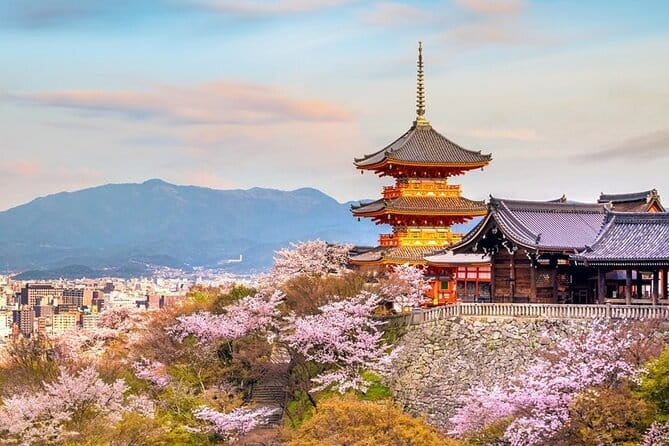
- Kiyomizu-dera plus the classic temple-walk route through Nineizaka, Sannenzaka, Ishibei-koji, and Hanamikoji
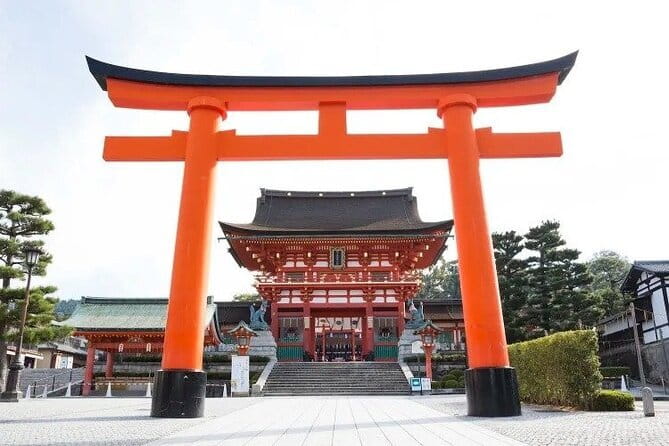
- Fushimi Inari Senbon Torii with ticket included, plus about 70 minutes to explore at your pace
- Nara Park free time to enjoy the deer up close
- Todai-ji in a short visit window, with admission not included
- Shinsaibashi stop and Osaka ending, convenient if you’re staying in Namba, less so if you need to return to Kyoto
From Nipponbashi in Osaka to a Kyoto-and-Nara day that actually moves
This tour starts at 1-chōme-3-6 Nipponbashi, Chuo Ward, Osaka. The day-of plan is supported by a local professional driver and a tour guide, and you also get a departure reminder email the night before with your pick-up time and contact details. You’ll use a mobile ticket, so it’s one less thing to track.
The route is basically a practical loop: Kyoto highlights in the morning, then Nara, then back to Osaka for a final neighborhood stop. Expect a full day of transit plus walking, because the remaining time is built for travel and lunch. The tour runs on daily departures, and you’re guaranteed to depart as long as you book for your chosen day with at least one traveler.
Group size is capped at 45 travelers, which matters. Too-big groups often turn into a shuffle line. Here, you’re more likely to get simple, workable guidance such as where to meet again, when to return to the bus, and what to focus on first at each site.
One smart habit for this kind of day trip: treat the tour as your backbone, not your whole day. If you want the most out of each place, decide ahead of time what you absolutely want to see at Kiyomizu-dera, how far up you want to go at Fushimi Inari, and whether you care more about photos or the main Buddha at Todai-ji.
More Private Guides in Osaka
- Osaka 4hr Private Tour with Government-Licensed Guide
★ 5.0 · 314 reviews - Osaka Early Morning Tour with English-Speaking Guide Dotonbori
★ 5.0 · 110 reviews - Kyoto & Nara Private customized tour with English speaking Guide
★ 4.5 · 99 reviews
Kiyomizu-dera and the temple-street route that makes Kyoto feel real
Kiyomizu-dera is the big anchor stop, and you get about 2.5 hours total including lunchtime. Admission is not included, so plan on buying your temple entry ticket separately if required.
What makes this stop more than a quick temple photo is the built-in walking route through Kyoto’s famous lanes, including Nineizaka and Sannenzaka, Ishibei-koji Alley, Hanamikoji Street, and a stop at Yasaka Shrine. This is where Kyoto starts to feel like a place, not a checklist. The narrow streets, the old-street vibe, and the temple views are the payoff.
A practical tip: wear shoes you can walk in for 45 to 60 minutes at a time. The streets around Kiyomizu-dera are not designed for lazy strolls. You’ll likely deal with steps, crowds, and uneven footpaths, especially if you’re there on a busy day.
Why the route is worth it: you’re not only visiting the famous temple. You’re also moving through the surrounding old-town areas that give context to why Kiyomizu-dera is such a draw. And if your guide is a strong communicator, you may get helpful pointers on where the best angles usually are and how to avoid wasting time circling back.
Potential snag: this first stop sets the tone for your whole day. If you spend too long hunting photos early, the later parts can feel rushed. I’d suggest picking one or two photo targets on this portion and then leaving the rest to wandering.
Fushimi Inari’s Senbon Torii: ticket-included, time-limited, still unforgettable
Next up is Fushimi Inari-taisha Shrine, with about 70 minutes of free time plus tour time around it. The admission ticket is included here, which is a relief because you’ll already be paying for other temple entries later in the day.
Fushimi Inari is famous for the Senbon Torii, those thousands of torii gates that form a tunnel of orange. Even if you’ve seen photos before, the scale hits differently in person. You’re walking through a corridor of gates, and the best part is that it feels like you’re moving deeper into a story the whole time.
Here’s how to make your limited time count:
- Decide how far you want to hike before you start. The “main” experience is the tunnel approach. If you want a viewpoint-style payoff, go a bit farther, but don’t burn all your time trying to reach every side spur.
- Bring a small water bottle if it’s warm. It’s not stated in the tour details, but the walking is real and you’ll appreciate having a drink available.
- If it’s crowded, keep moving. Stop only when you get a gap in the crowd, not when you feel stuck.
A useful expectation: because this is a top hit, it gets busy. That doesn’t ruin it, but it changes the vibe from quiet shrine walk to shared photo moment. If you’re flexible and want the tunnel effect, you’ll still be happy with your time here.
Nara Park deer time plus a quick Todai-ji look at the Great Buddha
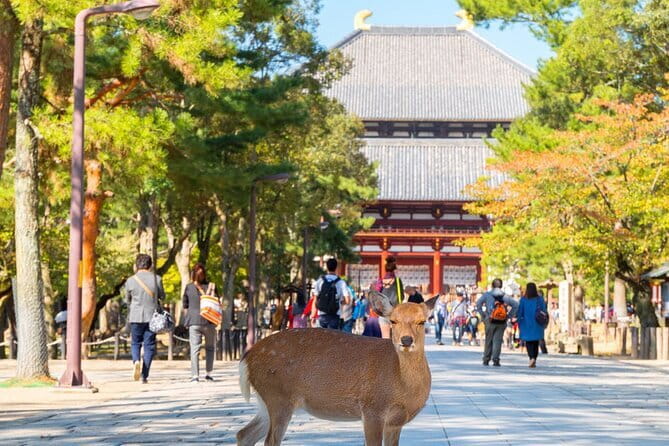
Nara Park is your mid-day reset, and you get about 1.5 hours of free time. The highlight is the deer, the friendly chaos, and the fact that Nara feels different from Kyoto. It’s more open and spacious, with the park setting giving you a break from the dense street crowds.
A key practical point: deer interaction is fun, but don’t assume everything is handled for you. One guide experience in the provided information showed a situation where deer food guidance wasn’t clear, so I strongly recommend you plan to buy deer crackers or feed items nearby if you want to participate. That keeps you from losing time at the wrong counter or asking people with no help.
Then you move to Todai-ji Temple for a short visit window of about 20 minutes, and admission is not included. Todai-ji is where you’ll see the Great Buddha housed there, and it’s a “wow, that’s huge” moment in any lighting. But 20 minutes is tight. You’ll want to go straight to what you came for.
Potential timing issue to be aware of: there may be some walking between where the bus parks and the entrance areas. In hot weather, that walk can feel longer than expected. If you’re visiting during summer or a very busy season, treat this portion as a sprint, not a lingering museum-style visit.
A different sort of day in Japan:
- Osaka Go Karting Tour with Funny Costume
★ 5.0 · 2,658 reviews - Osaka Castle: Museum and Tower Entry Ticket
★ 4.5 · 2,380 reviews - Osaka: Shinsekai Food Tour with 13-15 Dishes at 5 Eateries
★ 4.8 · 2,204 reviews - Osaka Food Tour: 13 Dishes at 5 Local Eateries
★ 5.0 · 2,149 reviews
Shinsaibashi and the Osaka ending that changes your day

The final stop is Shinsaibashi, with about 1 hour to explore. This is a practical landing pad. You’ll get a taste of Osaka street life at the end of a long day without needing to plan dinner from scratch.
But here’s the big logistics detail that can affect your whole trip planning: the tour ends in Osaka and does not return to Kyoto. The tour group ends at the Osaka meeting point area, and there’s specific guidance that if you boarded from the Kyoto meeting point, you’ll be dropped at Osaka Nihonbashi Exit 2 in the Shinsaibashi (Namba) area. So if Kyoto is where you’re staying, you’ll likely need to take public transit back on your own.
If you love convenience and you’re already in the Namba/Osaka Bay side of Osaka, this ending is a plus. If you’re based in Kyoto and want one less train ride, this tour might feel like a trade-off. In that case, you’ll enjoy the sights more if you plan your night in Osaka or at least keep your Kyoto return plan simple.
What the $54 price buys, and where you’ll spend extra

At $54 per person, this tour is positioned as a value move for first-timers. The cost covers vehicle service charges, fuel and highway tolls, and the driver and guide services, and it uses a local English-speaking tour guide model. For a day that touches multiple iconic sites across Kyoto and Nara, transportation and timing are the real expensive part of a self-planned itinerary.
What’s not included is equally important:
- Food and drinks are on you.
- Temple admissions are not included for Kiyomizu-dera and Todai-ji.
- Fushimi Inari is an exception, since the ticket is included.
So the true cost depends on what you pay for entry fees at Kiyomizu-dera and Todai-ji, plus how you handle lunch. The good news is you’re getting structured time for lunchtime already, so you’re not guessing your schedule.
Optional add-on: there’s an optional kimono experience you can reserve in advance. The tour details say it’s available, but it does not say it’s included in the base price, so treat it as an extra you control.
Value check in plain terms: you’re paying to offload the hard parts, transit between cities, and the “how do I get there fast” headache. If you’re happy to walk and follow a set schedule, the price is hard to beat.
Timing tips for a day that can feel full, not relaxed
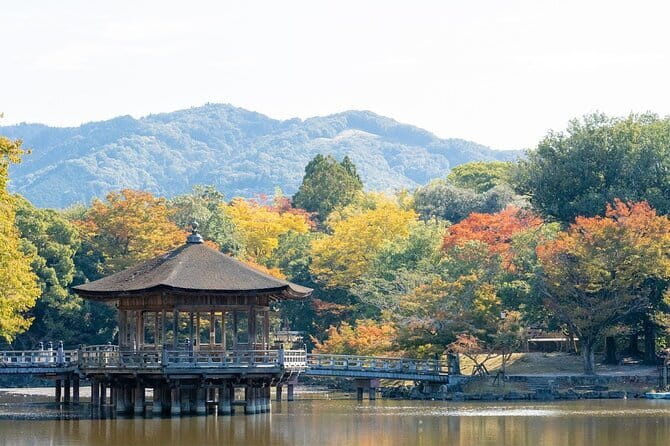
This trip is about 9 hours 20 minutes. That sounds long, and it is. The difference is that you’re spending time on both transit and on-site visits, and it’s built so you can still leave with photos and a sense of where everything fits.
Your best timing strategy:
- Start strong at Kiyomizu-dera. That stop includes lunch time, so decide early how you want to handle food.
- At Fushimi Inari, decide how far you’ll go before you get swept into the “just one more gate” mood. Your time there is limited.
- At Nara, use your free time actively. Deer time is best when you’re moving and watching, not when you’re late to the best moments.
- At Todai-ji, treat it as the main-event quick stop. Don’t plan for slow exploration.
One more detail: the tour notes that the schedule may be adjusted for weather, road conditions, and other reasons. Also, bus regulations can limit how long the bus can be on the road, which can shorten scenic time on certain days. That’s not something you can control, so the best counter is to stay flexible and prioritize the one or two experiences you care about most.
Temperature matters, too. If you’re going in summer, plan for heat and crowded buses. If you’re going in winter, layers help because temple areas can feel colder once you’re walking longer.
Who should book this tour, and who should skip it
You’ll probably love this tour if you:
- Want Kyoto and Nara highlights in one day without planning transit and timing yourself
- Prefer having a guide and driver handle the between-city movement
- Enjoy walking old streets, stepping into shrine settings, and switching between cultural sites and park time
You might want to skip or choose carefully if you:
- Are sensitive to walking time and hills around Kiyomizu-dera
- Need the day to end back in Kyoto with no extra train ride
- Expect deep guided storytelling at every stop. Some guide styles focus more on logistics and direction than long commentary.
For solo travelers, it’s also a good match because you don’t have to coordinate meeting points across multiple bus rides. For families, it can work too, as long as everyone can handle a long day and stair-heavy walking.
Should you book the Osaka to Kyoto and Nara highlights tour?
If you’re prioritizing iconic sights and want your day built for convenience, I’d book it. Kiyomizu-dera’s old-street approach, Fushimi Inari’s torii tunnel, and Nara deer time are exactly the kind of “I’m glad I did that” experiences that are hard to string together efficiently on your own.
Book it with two clear expectations: admission for some temples is on your own, and the tour ends in Osaka, not back in Kyoto. If you plan around that, you’ll likely feel like you got solid value for your time.
If you want the biggest win, do a quick bit of prep at home. Know what you want at Kiyomizu-dera, how high you want to hike at Fushimi Inari, and whether your Todai-ji must-see is the main Buddha area. With that done, the rest of the day feels like a smooth, practical route through Japan’s classics.
FAQ
How long is the Osaka & Kyoto & Nara Top Highlights English Speaking Tour?
The tour lasts about 9 hours 20 minutes.
Where do we meet, and does the tour return to Kyoto?
You meet at 1-chōme-3-6 Nipponbashi, Chuo Ward, Osaka. The tour ends in Osaka and does not return to Kyoto. If you boarded from Kyoto, you will be dropped at Osaka Nihonbashi Exit 2 in the Shinsaibashi area.
What’s included in the ticket price?
The price includes vehicle service charges, fuel and highway tolls, driver and guide service fees, and the tour guide. Fushimi Inari admission is included, but food and other temple admissions are not.
Are temple entrance tickets included?
Fushimi-Inari Taisha Shrine admission is included. Kiyomizu-dera and Todai-ji admissions are listed as not included.
Is food or drinks included?
No. Food and drinks are not included.
Is there an optional kimono experience?
Yes. An optional kimono experience is available if you reserve in advance.
How big is the group?
The tour has a maximum of 45 travelers.
Can I bring luggage?
It is not recommended to carry luggage, but 1 luggage per person is allowed. If you did not note your luggage when booking or you bring more than 1 piece per guest, an extra fee may apply.
Are foldable strollers allowed?
A foldable stroller can be carried, but you need to inform customer service when ordering. If you do not inform them in advance, the driver may refuse boarding.
Can I cancel and get a full refund?
Yes. You can cancel up to 24 hours in advance for a full refund.
Can the itinerary change?
Yes. The schedule may be adjusted due to weather, road conditions, and other reasons.
Newly listed around Osaka
- (Ticket Included) Explore Osaka Castle & Museum of History★ 4.8 · 21 reviews
- Hidden Osaka – Yukaku Red Light Tour & Culinary Adventure★ 4.8 · 96 reviews
- Osaka: Walking Tour and Top Highlights★ 4.8 · 104 reviews
- Same Day OK! Osaka: Local Food, Izakaya & Local Bites Tour!★ 4.8 · 17 reviews
- Osaka: Private Ceramic Painting Workshop★ 5.0 · 13 reviews
- Eat Like a Local in Osaka – Private Custom Street Food Tour★ 4.3 · 33 reviews
- Pickleball in Osaka & Kyoto with Locals!★ 4.6 · 64 reviews
- Osaka:SUMO BEATS SHOWCASE: Taiko Drum and Wagyu burger!★ 4.2 · 37 reviews
Licensed Guides & Private Drivers, compared.
Tokyo 6hr Private Tour with Government-Licensed Guide
Read our review →
Kyoto Early Morning Tour with English-Speaking Guide
Read our review →
Tokyo 4hr Private Tour with Government-Licensed Guide
Read our review →
Kyoto 6hr Private Tour with Government-Licensed Guide
Read our review →
Hiroshima / Miyajima Full-day Private Tour with Government Licensed Guide
Read our review →Early Morning Tour with English-Speaking Guide
Read our review →
Tokyo Private Sightseeing Tour by Car- English speaking chauffeur
Read our review →
Mt Fuji Private Tour with English Speaking Driver
Read our review →Browse the lists this tour appears in