
Review · SAMURAI SWORD & NINJA TRAINING
Samurai experience: art and soul of the sword
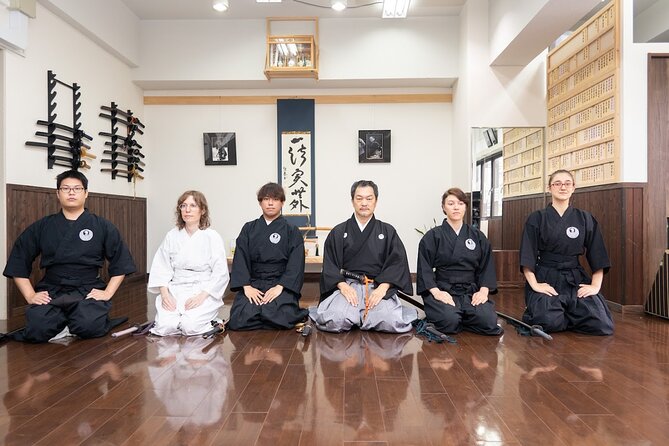
Samurai aren’t taught to fight first. This 90-minute Tokyo dojo session focuses on bushido and proper sword etiquette, then you get hands-on with Iaido.
I especially love how the lesson starts with manners and discipline, not gear tricks. I also like that you can watch a close-up solo demonstration by the master, then practice your own movements on targets.
The one consideration is the real sword option: you must be 18 or older, sign a waiver, and follow the dojo master’s instructions carefully.
In This Review
- Key highlights you will care about
- What you’re really doing in this Tokyo Iaido session
- Arriving at Kuramae Station and getting into samurai mode
- Etiquette and bushido basics, the part most people skip
- The Iaido flow: learning the sequence before you cut
- Cutting targets: cardboard first, optional rolled tatami later
- Watching the master close up: what to pay attention to
- Group size, instruction quality, and value for the price
- Who should book this (and who might not love it)
- FAQ
- FAQ
- Where does the Samurai experience start?
- What time does the experience begin?
- How long is the experience?
- Is this a small group activity?
- What do you learn during the class?
- Do you cut something during the activity?
- Can you cut rolled tatami with a real sword?
- What are the age requirements for the real sword option?
- If you skip the real sword option, what is the minimum age?
- Do you receive anything at the end?
- Is free cancellation available?
- Should you book Samurai experience: art and soul of the sword?
Key highlights you will care about
- Values first, fighting never first: bushido etiquette comes before any cutting
- Hands-on Iaido practice: you learn the flow of the experience and cut a man-shaped cardboard target
- Optional rolled tatami cut with a real sword: extra intensity for eligible participants
- Close-up solo demonstration: you see how the master’s control looks in real time
- Small group size: up to 10 people, so the instruction stays personal
- Certificate at the end: a simple keepsake to mark what you learned
What you’re really doing in this Tokyo Iaido session
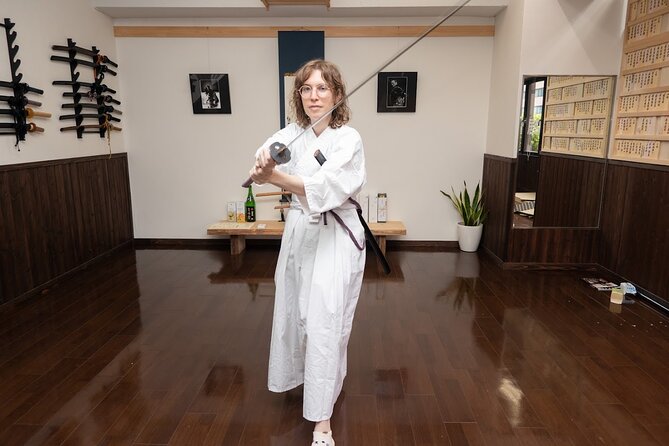
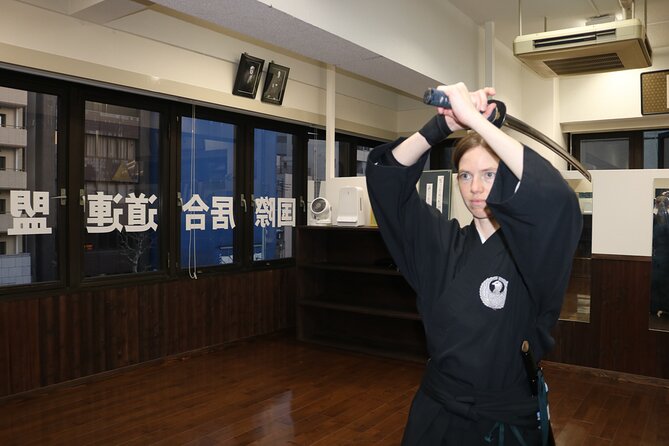
This is a samurai experience with a clear agenda: understand the art and soul behind the sword, not just cosplay with weapon props. You will learn Iaido, a sword discipline practiced by samurai, where precision, calm, and etiquette matter as much as the cut.
The biggest shift for me is how the class challenges the common image of samurai as always ready to brawl. In this dojo style, sword use is framed as a last resort, not a reflex. You practice the mindset that a truly strong fighter resolves issues through discussion, and only turns to violence when absolutely necessary.
If you want a hands-on class that explains the values underneath the technique, you are in the right place.
More Samurai & Ninja Sessions in Tokyo
- Tokyo: Samurai Restaurant Show Ticket with 2 Drinks
★ 4.5 · 1,307 reviews - Tokyo: Samurai Ninja Museum Guided tour and Experience
★ 4.6 · 1,010 reviews - Tokyo: Samurai Sword & Archery Class from Samurai Descendant
★ 5.0 · 603 reviews
Arriving at Kuramae Station and getting into samurai mode
The meeting point is right by public transportation: Kuramae Station, at 2-chōme-3-1 Kuramae, Taito City, Tokyo 111-0051. The activity starts at 9:00 am and runs about 1 hour 30 minutes, ending back at the meeting point.
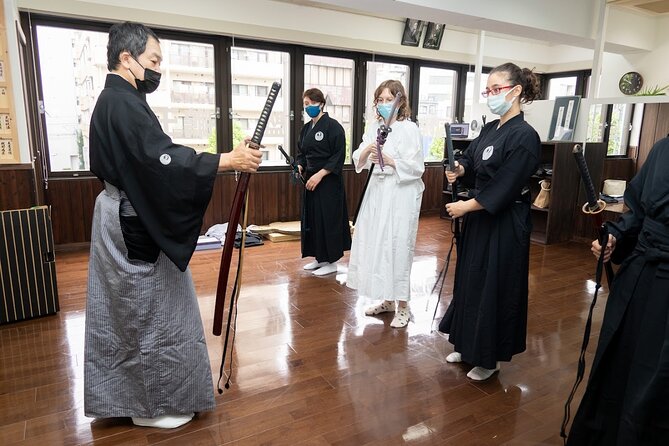
Once you arrive, you change into samurai attire and you are set up for the training. That matters more than it sounds. When you move into the role, the etiquette piece lands faster, because you are not just hearing about discipline, you are wearing it.
The session assumes moderate physical fitness. You do not need to be an athlete, but you should be comfortable following movements and staying focused for the full time.
Etiquette and bushido basics, the part most people skip
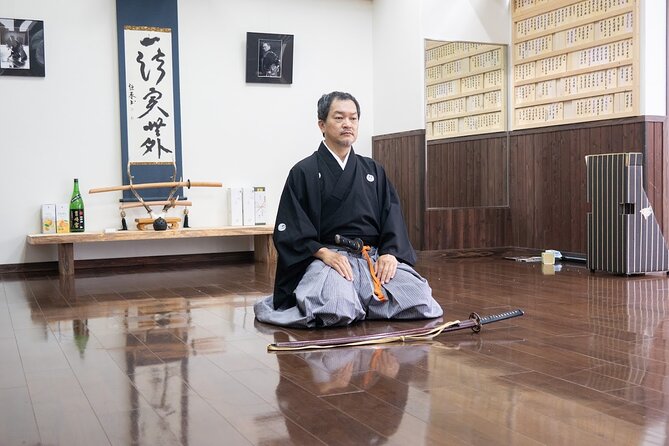
Here is the heart of the experience: you start by learning proper etiquette toward the sword, plus the fundamentals of bushido. That is not a small add-on. It is the framework the master uses to explain why the technique looks the way it does.
In plain terms, this lesson trains restraint. You learn that drawing a sword or going on the attack is not something a disciplined person does lightly. The dojo emphasizes courtesy, composure, and the idea that true strength includes self-control.
This is also where your expectations get corrected. If you arrive thinking you will immediately learn how to swing or fight, you will be surprised that the first meaningful lessons are about behavior and respect. That is exactly why the class has a reputation for being memorable.
The Iaido flow: learning the sequence before you cut
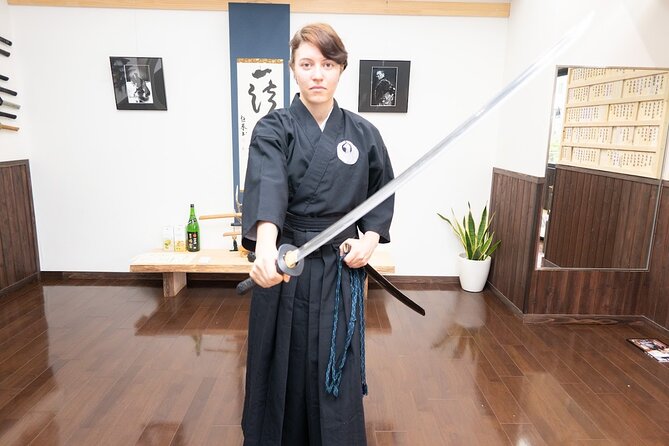
After you are in attire and understand the basic mindset, the master teaches the flow of the Iaido experience. The class is structured so you grasp what you are doing before you do it hard.
You practice with guidance, then move to the training targets. One of your early milestones is cutting a man-shaped cardboard target. It is simple, direct, and it lets you focus on form and control without the chaos of a moving opponent.
If you choose the enhanced option, you will take it further with a rolled tatami mat cut using a real sword. That is the moment where the lesson shifts from technique training to a more intense, high-concentration practice.
Either way, you are learning a skill set built around precision, not aggression.
More Samurai and Ninja sessions in Tokyo:
- Ninja+Kabuki Tokyo
★ 4.5 · 512 reviews - Skip the lines Basic Ticket at SAMURAI NINJA MUSEUM TOKYO
★ 5.0 · 470 reviews - Best Samurai Experience in Tokyo
★ 5.0 · 458 reviews - Tokyo: Legend Samurai Entertainment Night in Kanda Shrine
★ 4.6 · 367 reviews
Cutting targets: cardboard first, optional rolled tatami later
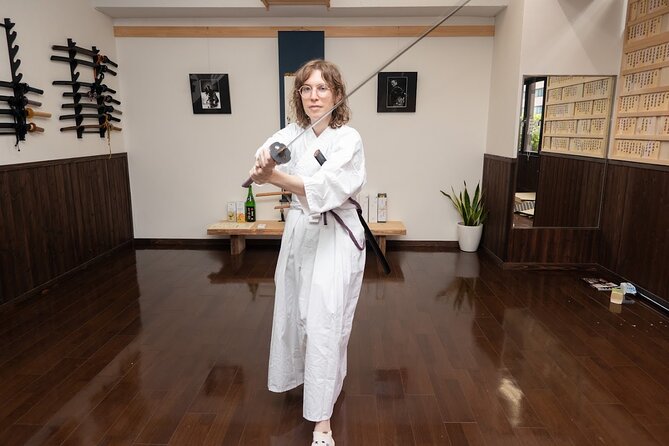
You begin with the man-shaped cardboard target. This is a smart step, because it gives you immediate feedback. You can see what went right and what needs adjusting, and the master can correct your approach while the movements are still fresh in your mind.
Then there is the optional real-sword experience, which you should consider if you want a stronger “this is the real deal” feeling. The real-sword option includes trying your hand at cutting a rolled tatami mat.
Important limitations apply:
- You must be 18 or older for the real sword option
- You need to sign a waiver
- You must follow the master’s instructions
If you do not take the real sword option, the minimum age to participate is 5. That makes it a possible fit for families who want the philosophy and basic Iaido practice without handling the real-sword component.
Watching the master close up: what to pay attention to
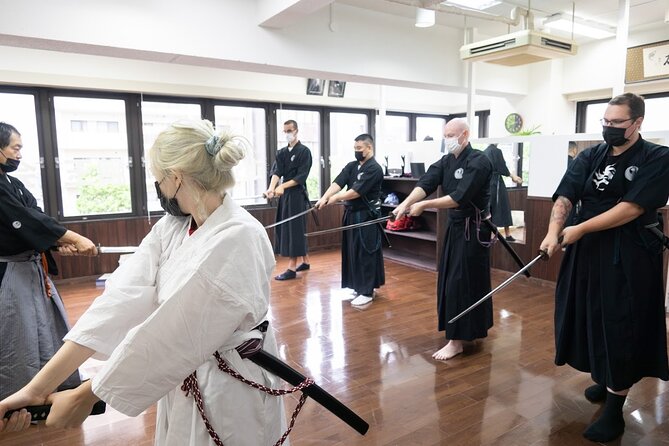
Before you fully practice on your own, you observe the master’s solo demonstration up close. That close distance changes everything. You are not just watching a performance, you are studying control.
The most useful thing I would suggest you do during the solo demo is watch the transitions. In Iaido, the details between actions are often what create the final effectiveness and safety. You might notice the calm pace, the discipline in posture, and how the movements look intentional rather than rushed.
Also watch the relationship between etiquette and technique. When the master is strict about respect, it affects everything: timing, spacing, and focus. After you try your own practice, these observations suddenly make sense.
Then, you get a completion certificate at the end. It is not a big flashy souvenir, but it is a satisfying mark of what you accomplished in such a short time.
Group size, instruction quality, and value for the price
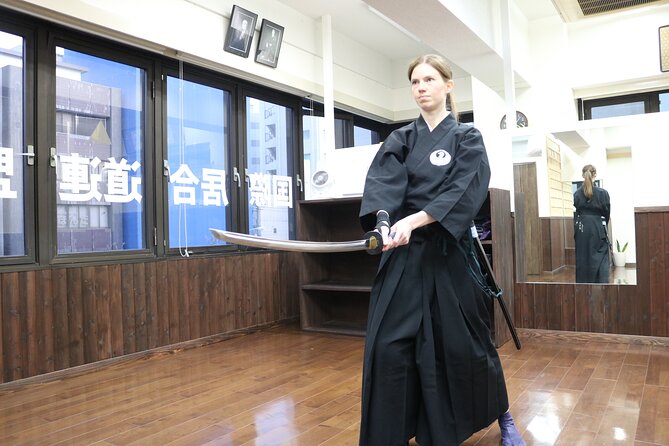
This class is capped at 10 travelers. For a hands-on activity that includes sword training elements, small group size is a big deal. You get more chances to get feedback, and the master can keep a close eye on technique and behavior.
Now let’s talk value, because $216.86 per person is not a token workshop. The value here is in the blend:
- Philosophy first (bushido, etiquette, discipline)
- Technique practice (Iaido flow and a cardboard cut)
- Optional escalation (real-sword tatami cut if eligible)
- Close-up master demonstration
- Certificate to wrap it up
If you are the type of traveler who thinks most “culture experiences” are mostly photos and vague explanations, this is a better match. You leave with a clearer idea of how samurai values shape action, not just a few facts about famous names.
If, on the other hand, you want a long multi-session sword school, this may feel short. But for many visitors to Tokyo, the strength is that it compresses the essence into 90 minutes without wasting time.
Who should book this (and who might not love it)
You will probably love this if you:
- Want an authentic Tokyo experience that centers discipline and etiquette
- Like hands-on activities with real instruction
- Are curious about how bushido frames restraint and responsibility
- Prefer small groups and direct teaching
You might think twice if you:
- Are uncomfortable with any waiver-based, real-weapon option requirements (even if you choose not to take them)
- Expect a heavy action-focused sword fight
- Need a very chill, minimal-movement experience
One more note: the experience starts early at 9:00 am. If you are planning a packed day after, schedule wisely so you do not feel rushed.
FAQ
FAQ
Where does the Samurai experience start?
It starts at Kuramae Station, 2-chōme-3-1 Kuramae, Taito City, Tokyo 111-0051, Japan, and ends back at the same meeting point.
What time does the experience begin?
The start time is 9:00 am.
How long is the experience?
It lasts about 1 hour 30 minutes.
Is this a small group activity?
Yes. The maximum group size is 10 travelers.
What do you learn during the class?
You learn Iaido and the fundamentals of bushido, including proper etiquette toward the sword, and you practice the flow of the experience.
Do you cut something during the activity?
Yes. You slash a man-shaped cardboard with a sword.
Can you cut rolled tatami with a real sword?
There is an optional real-sword cut with a rolled tatami mat, but restrictions apply.
What are the age requirements for the real sword option?
You must be 18 or older for the real sword option, and you must sign a waiver and follow the master’s instructions.
If you skip the real sword option, what is the minimum age?
The minimum age for participation without the real sword option is 5.
Do you receive anything at the end?
Yes, you receive a certificate of completion.
Is free cancellation available?
Free cancellation is available. You can cancel up to 24 hours in advance for a full refund.
Should you book Samurai experience: art and soul of the sword?
Yes, if you want a Tokyo activity that treats the sword as a discipline, not a toy. The best part is the ordering of the lesson: etiquette and bushido first, then practice, then a close-up master demonstration that helps you see what control really looks like.
Book it especially if you like experiences that explain the why, not just the how. And if you are eligible and comfortable following instructions, the optional rolled tatami cut can make the session feel even more real.
Newly listed around Tokyo
- Shibuya Hidden Flavors A Family Friendly Foodie Tour With Guide★ 5.0 · 11 reviews
- 4Hour Shibuya Unlimited Eat KobeBeef & Wagyu Food&Culture Tour ex★ 5.0 · 21 reviews
- Tokyo: Shibuya Highlights Walking Tour★ 5.0 · 29 reviews
- Shibuya Go Karting Tour with Funny Costume★ 5.0 · 73 reviews
- Shibuya food tour led by popular YouTuber guide★ 5.0 · 11 reviews
- Shibuya Bar Hopping Adventure Unique and Drank Experience★ 5.0 · 16 reviews
- Shared Departure Transfer : Central Tokyo Hotel to Haneda Airport★ 4.5 · 15 reviews
- [1 Group Only] Tokyo Shibuya Food Tour for Family★ 5.0 · 16 reviews
Samurai Sword & Ninja Training, compared.

Samurai Ninja Museum Guided tour and Experience
Read our review →
Kendo and Samurai Experience with Uniform and Gear
Read our review →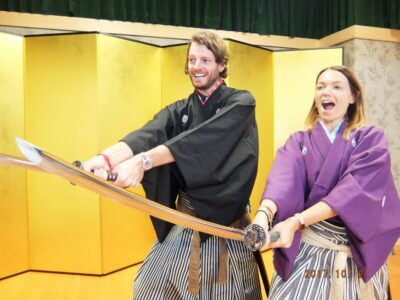
Samurai Sword Class by Experts in Traditional Arts
Read our review →
Skip the lines Basic Ticket at SAMURAI NINJA MUSEUM KYOTO
Read our review →
Samurai Sword & Archery Class from Samurai Descendant
Read our review →
Browse the lists this tour appears in