
Review · SAMURAI SWORD & NINJA TRAINING
Best Samurai Experience in Tokyo
A samurai fantasy, with safety lessons. You start by picking your own kimono and hakama, then you’re taught basic katana moves in an Edo-style setting full of armor and weapons. What I like most is the hands-on flow, you are doing real sword choreography (safely) instead of just watching, plus the staff work hard to make it fun, organized, and beginner-friendly.
My second favorite part is the photo-and-video friendly atmosphere, with lots of chances to record, pose, and walk away with vivid memories. One possible drawback: it’s about basic sword training and a short, lively performance, so if you want deep, advanced martial-arts instruction, this one-hour format may feel brief.
In This Review
- Key Highlights You’ll Actually Feel During the Hour
- Entering The Edo-Style Dojo at Samurai Theater Tokyo
- What Happens After You Choose Your Kimono and Hakama
- The Katana Lesson: Draw, Hold, Swing, and Retract
- Chambara Sword-Fight Practice (Your First Real “Show” Moment)
- The Music Finale: Exterminating Bad Guys and Posing for Photos
- Who This Samurai Experience Fits Best in Tokyo
- Price and Value: Is $65 Worth One Hour?
- Timing, Location, and How to Plan Your Arrival
- Should You Book This Best Samurai Experience in Tokyo?
- FAQ
- How long is the Samurai Theater Tokyo experience?
- What’s included in the ticket price?
- Can I take photos or record video during the session?
- Do I need to bring my own kimono or costume?
- Is this activity good for children?
- How big is the group?
- Where do I meet for the tour?
- Is it near public transportation?
- What is the cancellation policy?
Key Highlights You’ll Actually Feel During the Hour
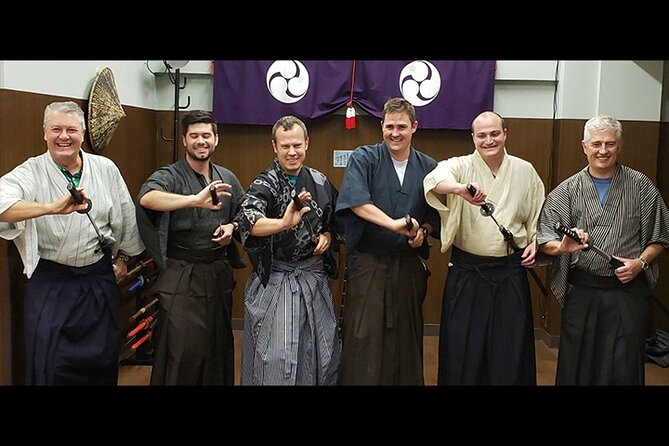
- Pick-your-own costume: choose your kimono and hakama before you change into full samurai gear
- Real katana basics: learn how to draw, hold, swing, and retract (with clear guidance)
- Chambara practice: you don’t just learn moves, you practice a simple sword-fight format
- Music-powered action: the session ends with an energetic bad-guys battle to sound and music
- Dojo that feels time-warped: Edo-era look, lots of armor, swords, and even spears on display
- Small group energy: max 10 people, so the instructors can stay patient and hands-on
Entering The Edo-Style Dojo at Samurai Theater Tokyo
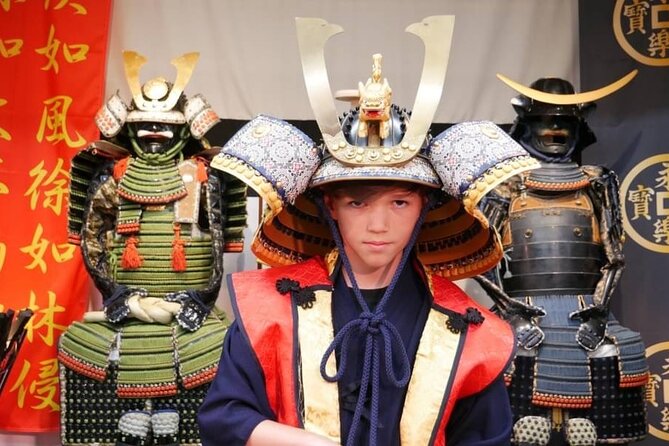
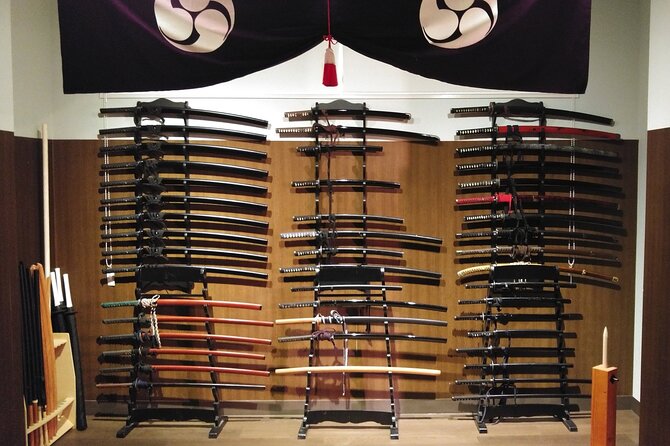
The first thing you notice is that this doesn’t feel like a modern classroom. Samurai Theater Tokyo is set up to look like a proper Edo-era dojo, with armor and weapons on display all around you, including swords and spears. It’s the kind of place where you instantly get why samurai culture still grabs people’s attention.
The vibe is museum-like, but you’re not standing there politely. You’re there to dress up, learn motion, and try a short sequence that builds from basics into a fun, dramatic finale. And since the group is kept to a maximum of 10, it stays more personal than the big-show chaos you may expect from tourist activities.
Practical note: the meeting point is Samurai Theater Tokyo, 40 Yokoteramachi, Shinjuku City (near public transportation). Reviews also suggest the venue sits along side roads, so give yourself a few extra minutes to locate the flag and entrance.
More Samurai & Ninja Sessions in Tokyo
- Tokyo: Samurai Restaurant Show Ticket with 2 Drinks
★ 4.5 · 1,307 reviews - Tokyo: Samurai Ninja Museum Guided tour and Experience
★ 4.6 · 1,010 reviews - Tokyo: Samurai Sword & Archery Class from Samurai Descendant
★ 5.0 · 603 reviews
What Happens After You Choose Your Kimono and Hakama
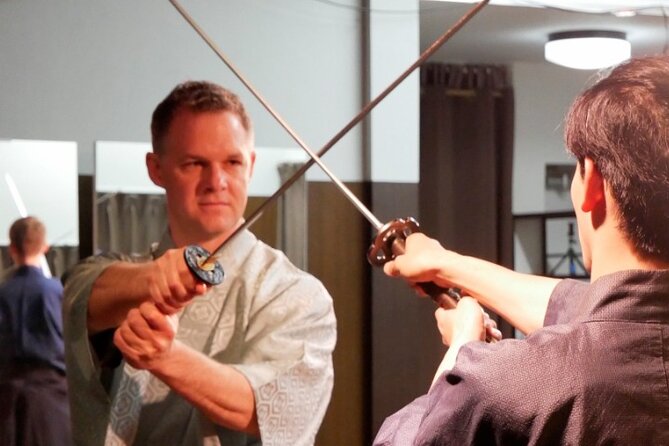
Before any sword business, you’ll get into costume. You choose your favorite kimono and hakama, and then you change into a samurai outfit for the session. This is one of the most praised parts of the experience, mainly because it feels special, and because the clothing is surprisingly comfortable once you’re in it.
This stage matters more than it sounds. In a lot of cultural experiences, the “costume moment” is just a quick photo op. Here, the dressing happens early and becomes part of the learning atmosphere, so you feel like you’re stepping into character before the instructor cues your movements.
If you’re traveling with kids, this costume step tends to be a magnet. Many families highlight that children get excited fast because they’re not just being entertained, they’re participating. And if you’re going solo, you still get full attention from the instructors and staff, including help with filming and snapping photos during the session.
The Katana Lesson: Draw, Hold, Swing, and Retract
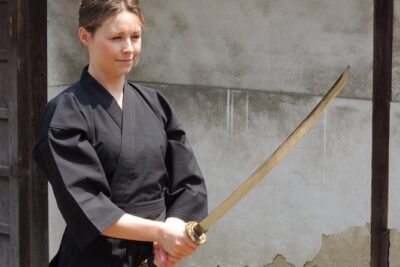
Now comes the main event: katana basics, taught with safety in mind. You’ll learn how to handle a Japanese sword in a structured sequence. The key skills covered include drawing the sword, holding it properly, swinging it, and retracting it back in a controlled way.
The value here is in the order. You’re not thrown into frantic fighting. You build movement step-by-step, so beginners can keep up without guessing what to do. That’s especially important if you’re not familiar with Japanese sword terminology or posture, because the session is designed around clarity and repetition.
From the reviews, the instructors are consistently described as patient and talented, especially with younger participants. That patience shows up in how they manage pace and help people correct small things without turning it into a stress test. If you’ve ever tried a hands-on class in another country and felt lost, you’ll probably appreciate how guided this one is.
Chambara Sword-Fight Practice (Your First Real “Show” Moment)
After you learn the basics, you practice a simple chambara sword-fight. Chambara is basically the action-focused sword-fighting style used in stories and stage performances, and in this experience it’s kept manageable for beginners. You’re not being asked to spar like a professional martial artist, but you are doing the fun part where the moves start to look like what you’ve seen in Japanese movies.
This is where the experience shifts from training to performance energy. You’re likely to feel the clock speed up a bit, because you’re building toward choreography. But it still runs on instruction, not chaos, and the small group size helps everyone stay on rhythm.
One subtle bonus: practicing together makes it easier to forget you’re a beginner. Once the sequence clicks, it turns into a satisfying “I can do this” moment, even if your sword-hand skills are brand new. That’s also why families and multi-age groups often enjoy it so much.
More Samurai and Ninja sessions in Tokyo:
- Ninja+Kabuki Tokyo
★ 4.5 · 512 reviews - Skip the lines Basic Ticket at SAMURAI NINJA MUSEUM TOKYO
★ 5.0 · 470 reviews - Tokyo: Legend Samurai Entertainment Night in Kanda Shrine
★ 4.6 · 367 reviews - Tokyo: Ninja Kabuki Performance
★ 4.2 · 330 reviews
The Music Finale: Exterminating Bad Guys and Posing for Photos
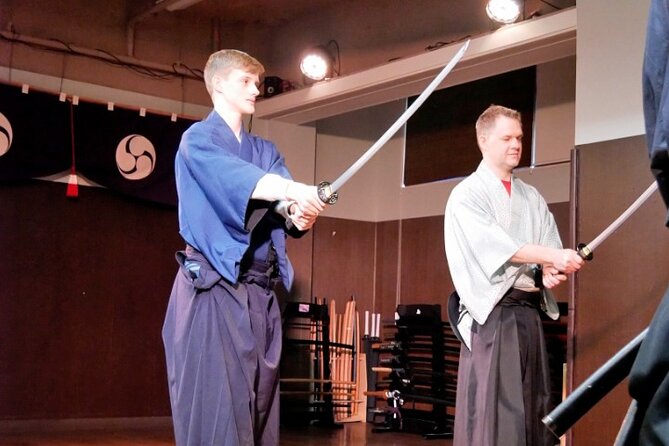
The session doesn’t end with a polite bow and a handshake. After the training, you’ll do a final battle moment to music, with a fun bad-guys theme. It’s theatrical, high energy, and designed so you leave with stories you can tell immediately, not just a memory of an instructional slideshow.
Photography and video recording are allowed inside, including with your smartphone. Reviews specifically mention instructors taking plenty of photos, and staff stepping in to help with solo travelers so you still get proper pictures. So if you’re thinking, Will I look ridiculous on video? you can relax. The staff know what they’re doing, and they help you get usable shots without turning the whole hour into “hold still” time.
If you love action movie vibes, the combination of dojo atmosphere, sword choreography, and sound cues is exactly what you’re here for.
Who This Samurai Experience Fits Best in Tokyo
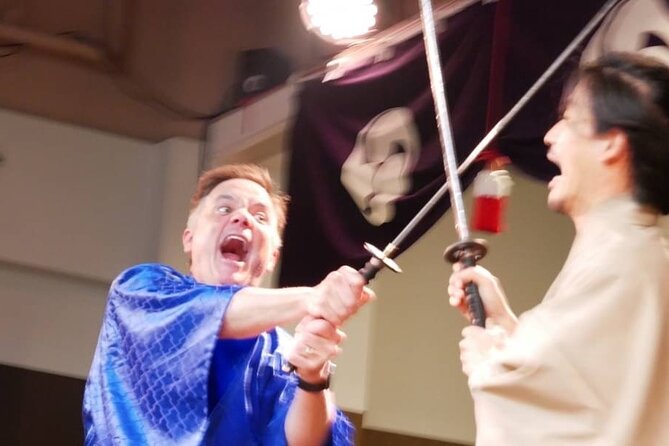
This is one of those Tokyo activities that works in more than one travel style.
You’ll probably love it if:
- You want a hands-on cultural activity, not just museum walking
- You’re curious about samurai sword basics and how they’re taught safely
- You’re traveling with kids, because the format is interactive and energetic
- You’re a beginner who wants clear instruction and a chance to perform a short sequence
It’s also a solid option for solo travelers. The experience is set up so one person can join, and the staff support includes filming and photo help during the action.
What might not fit as well:
- If you want advanced sword instruction, long training time, or intense sparring, this is designed for a short, beginner-friendly session.
- If you’re extremely sensitive to dressing up, you might want to consider that the costume portion is a real part of the experience, not optional.
Price and Value: Is $65 Worth One Hour?
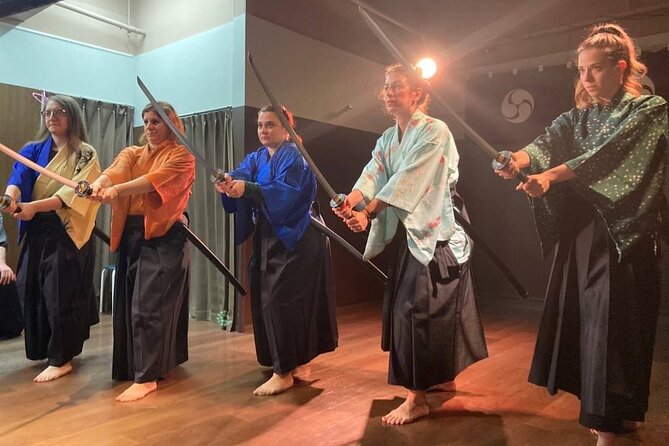
At $65 per person for about one hour, you’re paying for more than “watching samurai stuff.” You’re paying for a guided lesson, professional instruction, and the included samurai costumes.
Here’s how that value works in practice:
- The cost includes the instructor-led sword training, meaning you’re not left to figure it out on your own.
- Costume is included, which is often the biggest hidden expense in other cultural “dress up” activities.
- The small group size, hands-on structure, and photo-friendly setup add extra value, because you’re getting memories plus skills, not only a single posed photo.
If your Tokyo plan has only room for one memorable hands-on activity, this is the kind that can feel like the highlight because you leave with both the costume experience and the action moment.
Timing, Location, and How to Plan Your Arrival
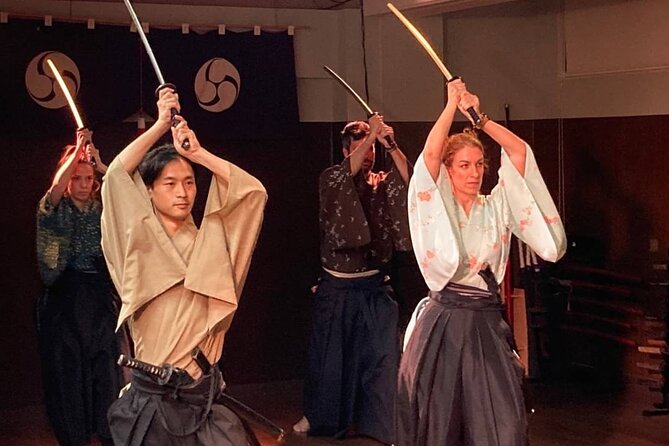
You’ll spend about an hour in total, and the activity ends back at the meeting point. That makes it easier to plug into your day without turning your schedule upside down.
Timing-wise, plan to arrive a few minutes early. Reviews indicate the venue can feel like it’s up some side roads, so it’s smart to walk in with calm energy and look for the flag.
Also, this experience is designed for a range of ages and most travelers can participate. If you’re traveling with a wide age span, you’ll likely appreciate that the instructors keep the pace welcoming while still keeping everyone involved.
Should You Book This Best Samurai Experience in Tokyo?
If you want a one-hour Tokyo activity that mixes dressing up, real instruction, and a fun finale, this is a strong yes. I like it because it gives you clear steps, it stays beginner-friendly, and it’s set in an Edo-style space that makes the experience feel like more than just a class.
Book it if you’re excited by the idea of wearing kimono and hakama, learning katana basics safely, and getting action photos and video. Skip it only if you’re looking for advanced training depth or a long, serious martial-arts camp.
Overall, this is the kind of Tokyo experience where you’ll feel like you did something, not just saw something.
FAQ
How long is the Samurai Theater Tokyo experience?
The experience runs for about 1 hour.
What’s included in the ticket price?
The ticket includes all fees and taxes, a professional guide or instructor, and samurai costumes.
Can I take photos or record video during the session?
Yes. Photography and video recording are allowed inside, and you can use your smartphone.
Do I need to bring my own kimono or costume?
No. Samurai costumes are included, and you’ll select your kimono and hakama as part of the experience.
Is this activity good for children?
It appears family-friendly. The experience involves dressing up and learning moves, and reviews mention kids enjoying it.
How big is the group?
The maximum group size is 10 travelers.
Where do I meet for the tour?
Meet at Samurai Theater Tokyo, 40 Yokoteramachi, Shinjuku City, Tokyo 162-0831, Japan. It ends back at the meeting point.
Is it near public transportation?
Yes, it is near public transportation.
What is the cancellation policy?
You can cancel for a full refund if you cancel at least 24 hours in advance of the experience start time. If you cancel less than 24 hours before, the amount paid is not refunded.
Newly listed around Tokyo
- Tokyo private transfer for Yokohama Port★ 4.5 · 63 reviews
- Luxury Kimono Photoshoot at Ginza Tokyo★ 5.0 · 7 reviews
- Tokyo Allstar Food Tour★ 4.5 · 206 reviews
- Tokyo Art Aquarium Museum E-Ticket with optional Tokyo Metro Pass★ 5.0 · 17 reviews
- Tokyo: Best Ginza Food Tour at 3 Local Eateries★ 5.0 · 83 reviews
- Private One Day Nikko Tour with Bilingual driver★ 3.5 · 11 reviews
- Kabuki Talk★ 5.0 · 10 reviews
- Japanese Whisky Tasting Experience at Local Bar in Tokyo★ 5.0 · 59 reviews
Samurai Sword & Ninja Training, compared.
Samurai Ninja Museum Guided tour and Experience
Read our review →
Kendo and Samurai Experience with Uniform and Gear
Read our review →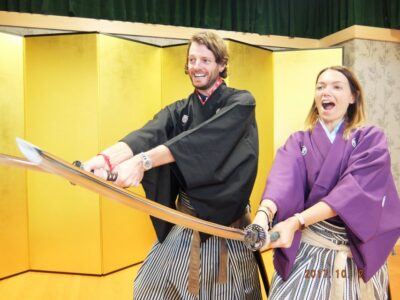
Samurai Sword Class by Experts in Traditional Arts
Read our review →
Skip the lines Basic Ticket at SAMURAI NINJA MUSEUM KYOTO
Read our review →
Samurai Sword & Archery Class from Samurai Descendant
Read our review →
Browse the lists this tour appears in