
Review · SAMURAI SWORD & NINJA TRAINING
Kyoto: Samurai Sword Class by Experts in Traditional Arts
Kyoto turns sword basics into theater. I love the bowing and controlled katana draw-and-sheath steps, and I love the photo session plus completion certificate. The only real drawback is that it is not observation-only, so you will need clothes that let you move and change comfortably.
This is run as a small group class (limited to 10), led by an English-speaking instructor, and it happens at Samurai Kembu Theater in Higashiyama. There is no waiting room, so show up on time, and go ready to follow safety instructions the whole way.
In This Review
- Quick Takeaways
- What Kenbu Teaches You Beyond Sword Moves
- Finding Samurai Kembu Theater in Higashiyama (Meeting Point Facts)
- The 90-Minute to 2-Hour Flow: Film, Suit Up, Bow, Practice
- The setup: a short film and safety basics
- Costume first, then sword practice
- Respectful partner moments and instructor guidance
- Photo session included, not an afterthought
- Costumes, Tenugui, and the Photo Shoot You’ll Actually Want
- The Training Style: Hands-On, Not Observation-Only
- The Optional 10-Minute or 30-Minute Kenbu Performance
- Price and Value: Why $64 Can Be a Solid Kyoto Activity
- Who This Fits Best (And Who Might Want Something Else)
- Should You Book the Samurai Sword Class in Kyoto?
- FAQ
- How long is the Kyoto Samurai Sword Class?
- What is included in the price?
- Do I need to speak Japanese?
- Is there an observation-only option?
- What should I wear?
- Is food included?
Quick Takeaways
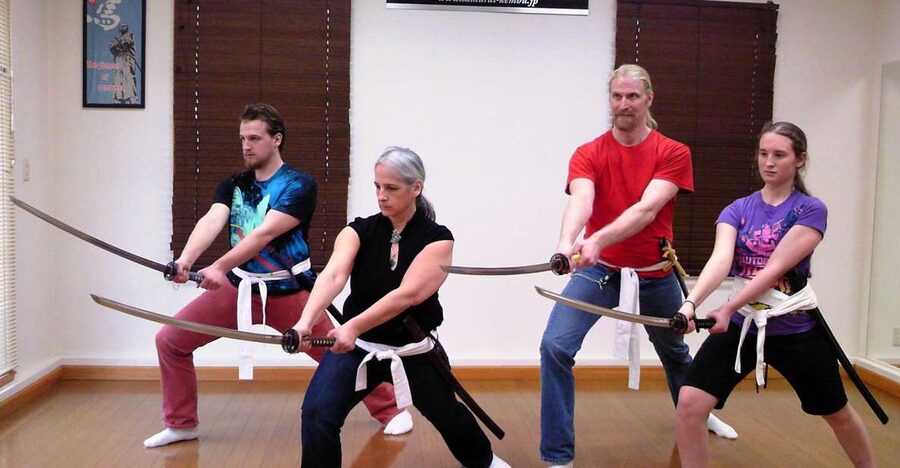
- Kenbu focus: stylized sword-dance movements, not random sword swinging
- Respect training: you learn bowing and how to show respect to an opponent
- Costume plus photos: you suit up, then do a short photo shoot and get a certificate
- Clear coaching: English (and Japanese) instruction, with hands-on practice
- Optional performance: choose a 10-minute or 30-minute sword-dance style show with commentary
What Kenbu Teaches You Beyond Sword Moves
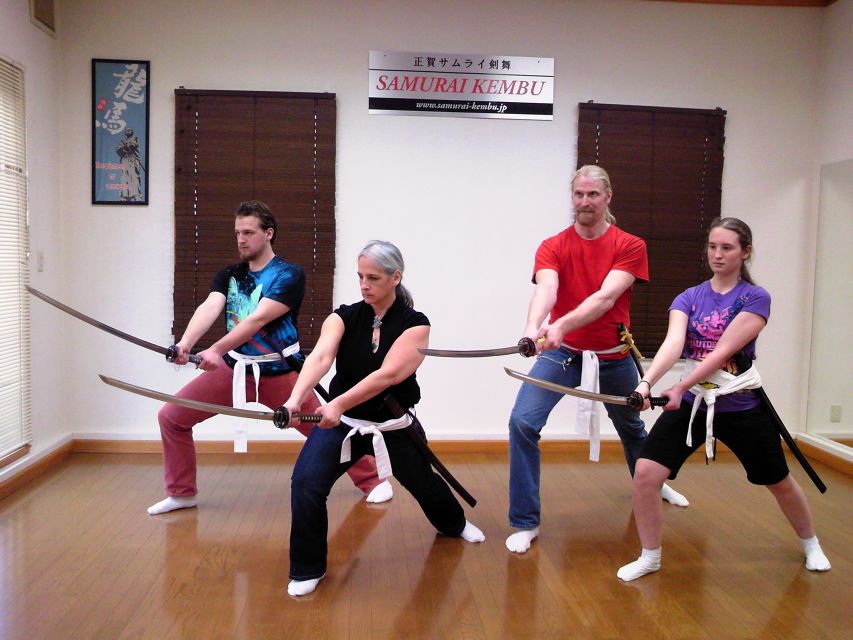
Most people picture samurai training as pure combat. This class frames samurai technique as kenbu: disciplined, stylized movement with a strong emphasis on control and respect.
That changes how you experience it. Instead of chasing speed, you learn what good posture feels like, how to move the sword safely, and how to treat the space around you like part of the choreography.
You also get a short historical and technique primer through a brief film (about 4 minutes). It is enough to give your body a framework before you start holding the sword for real.
More Samurai & Ninja Sessions in Kyoto
- Kyoto Samurai Experience
★ 5.0 · 1,294 reviews - Kyoto: Kendo and Samurai Experience with Uniform and Gear
★ 4.9 · 815 reviews - Skip the lines Basic Ticket at SAMURAI NINJA MUSEUM KYOTO
★ 4.5 · 632 reviews
Finding Samurai Kembu Theater in Higashiyama (Meeting Point Facts)
You meet at Samurai Kembu Theater (Kyoto dojo), inside the Gozan Building at 35-7 Sanchome, Higashi-iru, Sanjo-hanamikoji, Higashiyama-ku, B1F. That address matters because there is no waiting room, and you cannot just hang out nearby if you arrive early.
The practical takeaway: plan to get there with a buffer, because the training starts with the group. If you are coming from central Kyoto, give yourself time to navigate the lanes around Sanjo-hanamikoji and get down to the basement dojo.
The 90-Minute to 2-Hour Flow: Film, Suit Up, Bow, Practice
The schedule is structured to keep you moving, but not overwhelmed. Expect about 90 minutes to 2 hours, depending on the option you choose for the end performance and the session timing.
The setup: a short film and safety basics
You start with a short film about the basics of samurai technique. Then you get instruction on what is expected and how to hold and handle equipment safely, with directions you must follow for safety reasons.
This part is not just “lecture time.” It prepares you so that when you pick up the sword, your movements make sense instead of feeling like memorized poses.
More Samurai and Ninja sessions in Kyoto:
- Ninja 1-hour Hands-on Lesson by Japanese master in Kyoto -Entry
★ 5.0 · 489 reviews - Kyoto: Ninja Weapon Forging Experience
★ 4.8 · 478 reviews - Kyoto: Samurai Kenbu Traditional Sword Dancing Show
★ 4.5 · 426 reviews - Samurai Training with Modern day Musashi in Kyoto
★ 5.0 · 256 reviews
Costume first, then sword practice
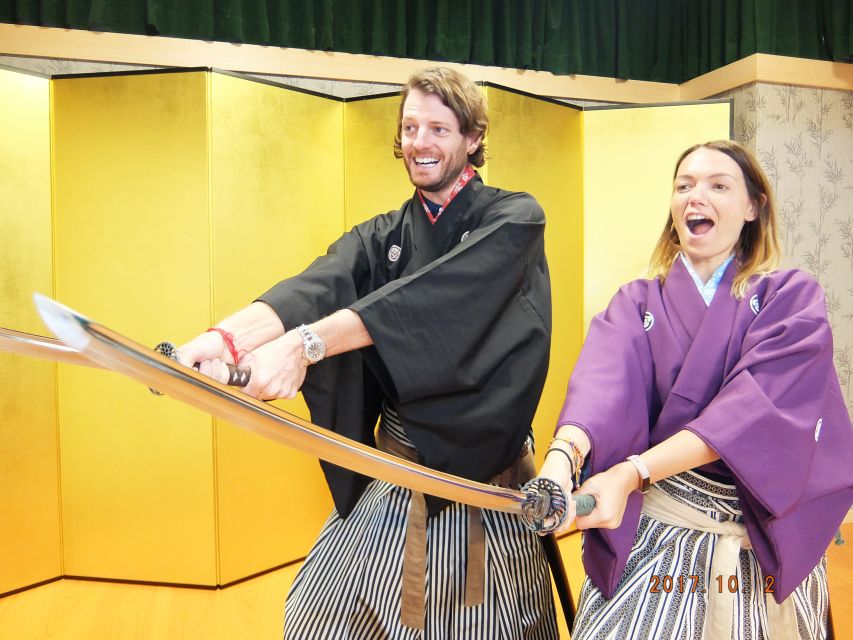
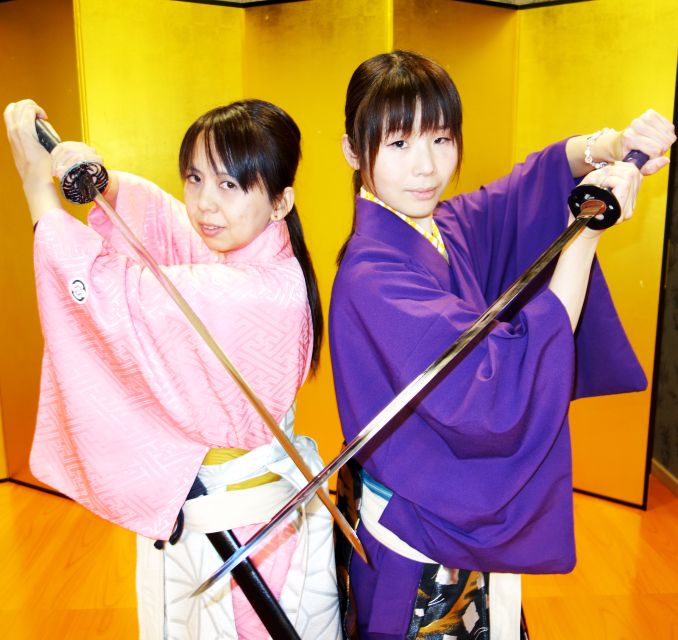
You suit up in traditional samurai costume before the swordwork portion. That costume change is part of the experience value, because it turns the training into something you can feel, not just watch.
Next comes the core technique sequence. You practice:
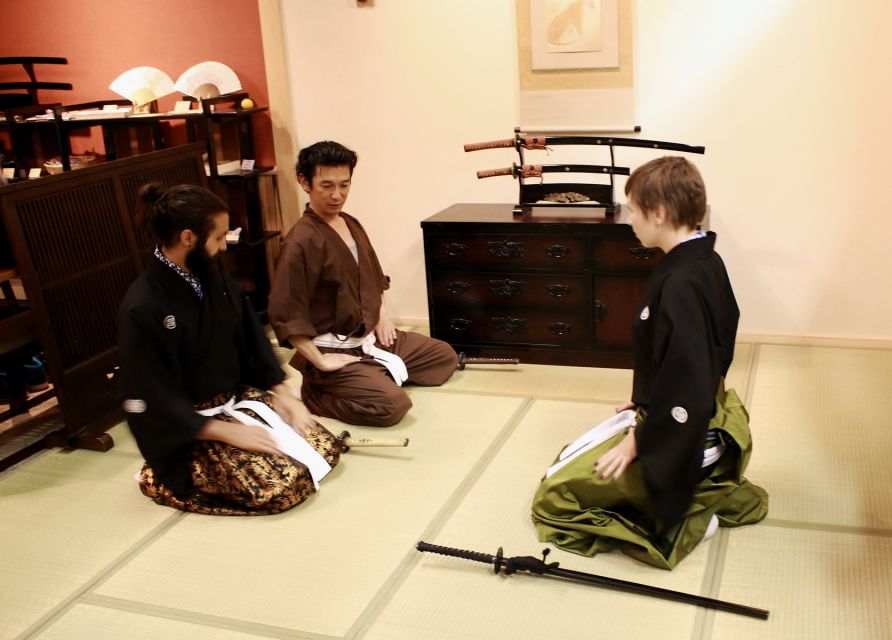
- how to bow before training begins
- how to draw the sword
- how to return it to its scabbard
- how to execute stylized movements and strikes with control
The class is designed for beginners. You are still learning real technique, so you will work through the steps deliberately.
Respectful partner moments and instructor guidance
After the draw and strike fundamentals, you learn how to show respect to an opponent with the sword. You then bow to your instructor, and you receive a completion certificate.
If you have any martial arts background, you will probably recognize the mindset. If you do not, you will still get the point: samurai training here is about form, distance, and manners as much as motion.
Photo session included, not an afterthought
You also get a short photo shoot while you are in your costume. You are not left scrambling to get photos on your own, which is a common pain point with hands-on cultural activities.
The class also includes a tenugui towel (a traditional Japanese cloth), plus the certificate, so you leave with tangible souvenirs, not just pictures on your phone.
Costumes, Tenugui, and the Photo Shoot You’ll Actually Want
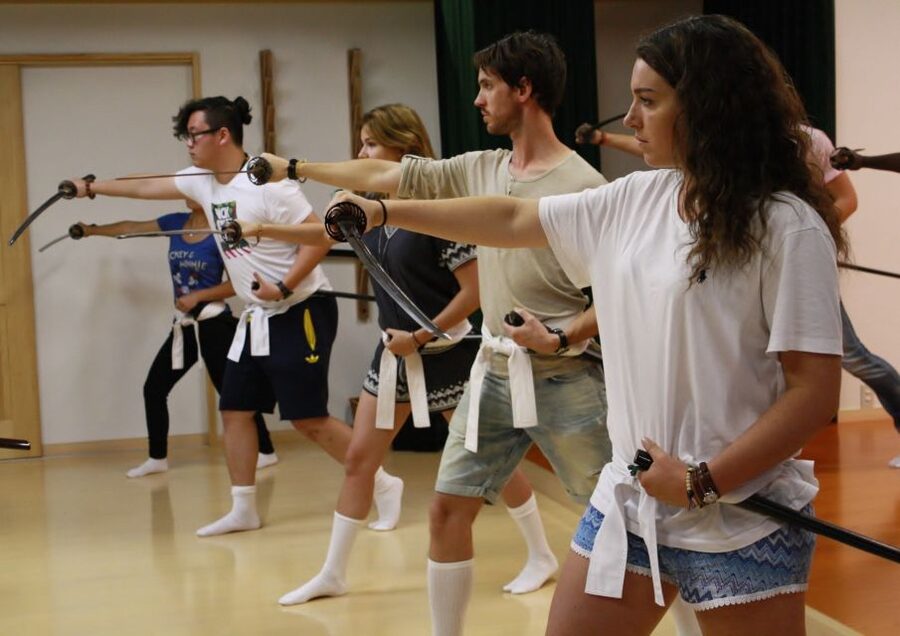
The costume portion is one of the biggest reasons this feels like more than a quick demo. You do not just wear a costume briefly to pose. You wear it during the training flow, which helps you understand how the look connects to the discipline and presentation of the art.
You will also get a completion certificate, and you receive the included tenugui towel. Based on how the program is described, the goal is simple: you come in to learn, and you leave with proof and keepsakes.
One practical note from the guidelines: wear clothes suited for exercise and moving around. A single hoodie or tights outfit is not suitable for costume changes, so plan what you wear underneath to make switching easier.
The Training Style: Hands-On, Not Observation-Only
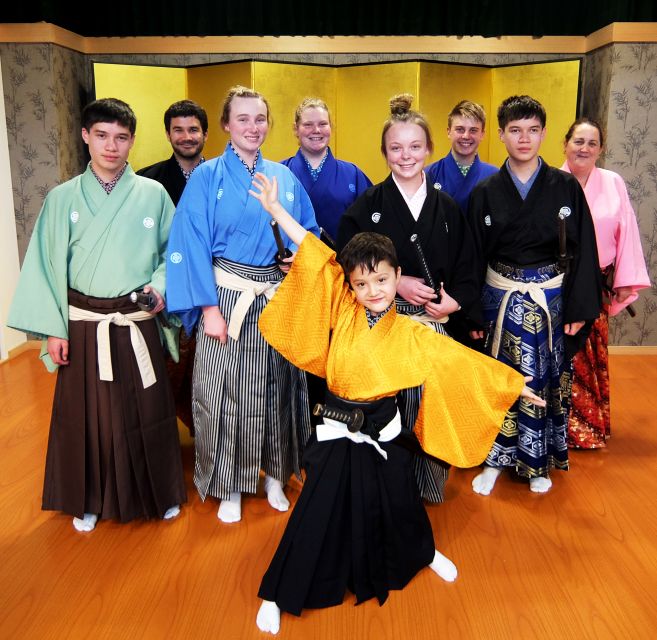
This is where you need to be honest with yourself. There is no observation only option. If you want to sit and watch, this setup will not work for you.
Also, it is a small group, limited to 10 participants, so the instructor can give closer guidance. In past sessions, people have mentioned standout coaches by name, including instructors such as Hoga, Kazu/Kazu Sensei, Kasu, Rui, Kashin, and Hisyo. You cannot count on a specific instructor in advance, but it does suggest you are likely to get a consistent, teacher-led experience rather than a quick script.
Because the class is hands-on, it is also naturally physical. You will be using your body in new ways while holding a sword, even if the techniques are beginner-friendly.
The Optional 10-Minute or 30-Minute Kenbu Performance
At the beginning or before leaving (depending on your session), you can watch a sword dance performance with commentary. You choose either a 10-minute or 30-minute option.
This end segment is valuable because it connects the choreography you practiced to what it looks like at performance speed, with a trained team. It also gives meaning to the steps, since you get commentary from a sword dance instructor about a technique passed down through generations.
If you are short on time, the 10-minute show still gives you the payoff moment. If you love performance arts and want more context, the 30-minute option is the better choice.
Price and Value: Why $64 Can Be a Solid Kyoto Activity
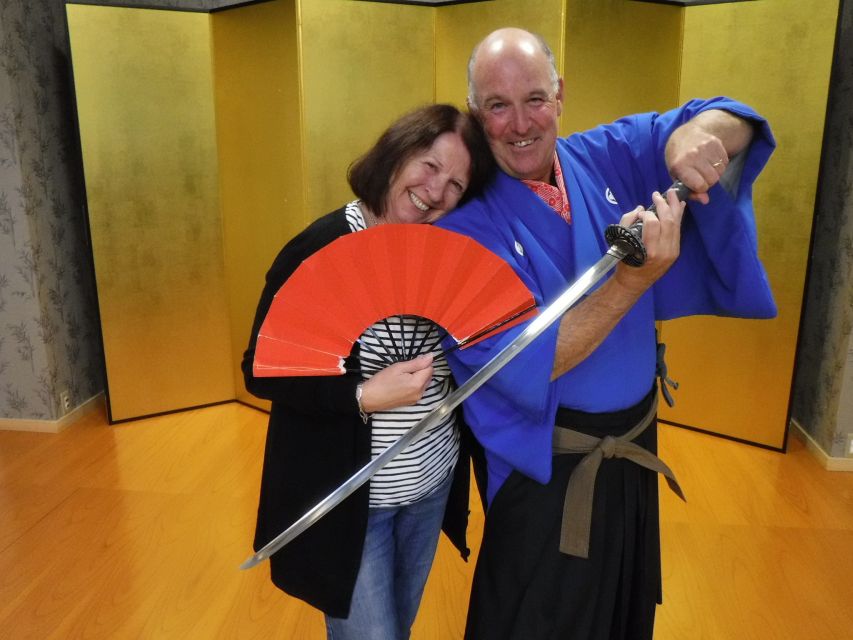
At $64 per person for 90 minutes to 2 hours, the price is competitive for a Kyoto activity that includes:
- an English-speaking instructor
- small group coaching (limited to 10)
- hands-on kenbu practice with sword movements
- costume dress-up
- photo shoot
- tenugui towel
- completion certificate
- and an optional performance (10 or 30 minutes)
The main cost you do not pay is effort. You do not need to bring your own gear, and the class provides the structured steps so you are not guessing what to do.
What is not included: hotel pickup/drop off, and food and drinks. So budget for a snack plan before or after. If you are also doing other Kyoto sights that day, build in time to eat on your own schedule.
Who This Fits Best (And Who Might Want Something Else)
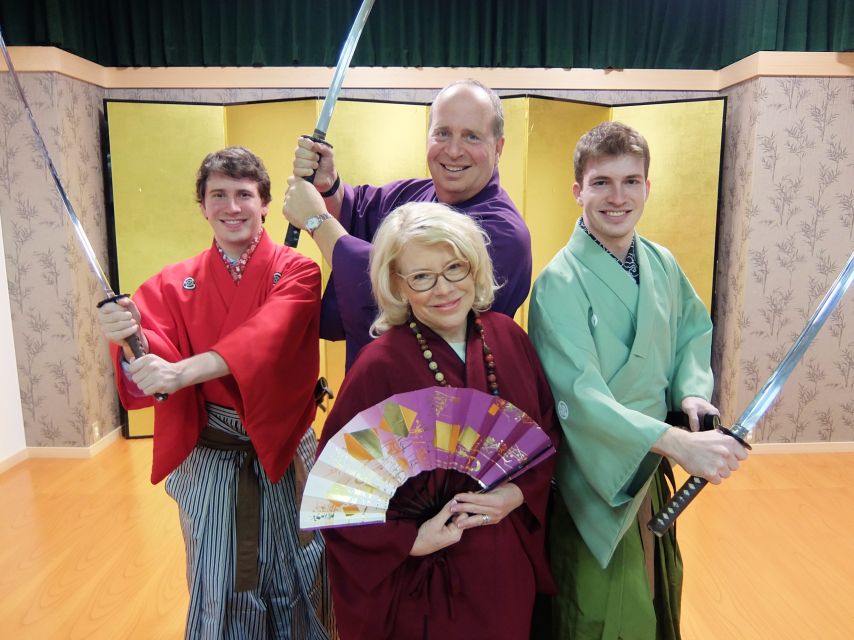
This is a great fit if you want a structured, beginner-friendly way to experience samurai technique with real coaching and a creative payoff.
It also works for families, with one caveat. Children under 4 years are not suitable. For kids aged 5 to 10, it is desirable that the child attends a martial arts class or has learning experience, because lessons are conducted with adult participants.
So, if you are traveling with a child who can focus through a short class and follow safety directions, this can be a fun cultural day. If you are bringing a very young child or someone who only wants to watch, you should skip this one and pick a museum or general cultural show instead.
Finally, remember the rules: no weapons or sharp objects, no pets, no smoking, and no large bags or luggage. It is a dojo experience, so you should travel light.
Should You Book the Samurai Sword Class in Kyoto?
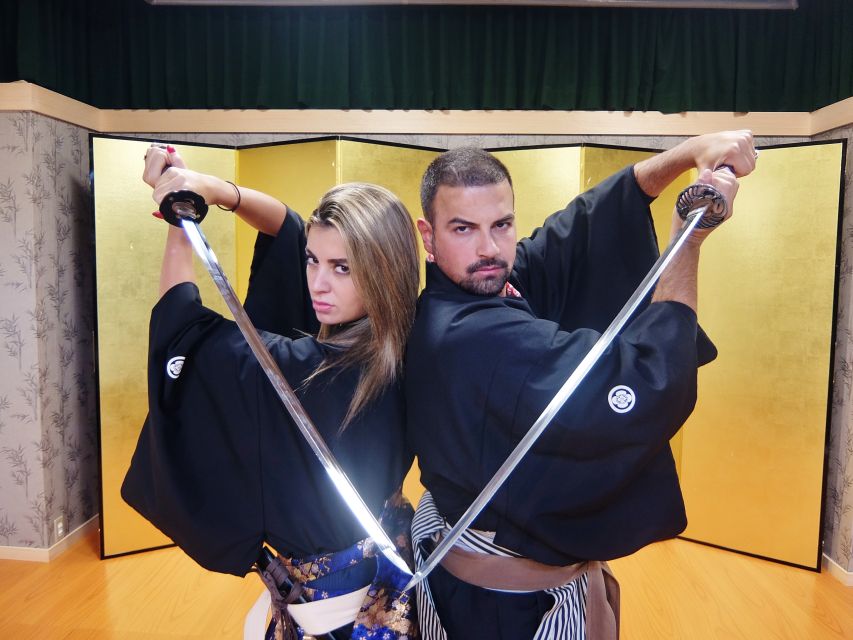
Book it if you want hands-on cultural learning with a clear structure. This is not a long, complicated class, but it gives you enough time to practice core movements like bowing and the draw-and-sheath sequence, then see the art in performance with commentary.
Skip it if you want passive sightseeing, because it is not observation-only, and you will be expected to participate and move. Also skip it if you have trouble changing clothes or if you cannot comfortably wear exercise-friendly layers.
If you get the timing right and dress for movement, this is one of those Kyoto experiences that feels genuinely fun and surprisingly meaningful. You leave with photos, a certificate, and a new understanding of kenbu as disciplined art, not just sword action.
FAQ
How long is the Kyoto Samurai Sword Class?
The class runs about 90 minutes to 2 hours. You can check available starting times for the exact schedule.
What is included in the price?
You get an English-speaking instructor, a photo shoot, a tenugui towel, and a completion certificate.
Do I need to speak Japanese?
No. The instructor is listed as English, with Japanese also available. The class includes an English-speaking instructor.
Is there an observation-only option?
No. There is no observation-only access. You must participate in the class.
What should I wear?
Wear clothes suited for exercise and moving around. A single hoodie or tights outfit is not suitable for costume changes, so plan clothing that makes changing easier.
Is food included?
Food and drinks are not included. You’ll want to plan a meal before or after the class.
Newly listed around Kyoto
- Taste of Nishiki Market Walking Food Tour with Local guide★ 5.0 · 17 reviews
- Kyoto: Sushi Making Class with Sushi Chef★ 4.8 · 64 reviews
- Simple Plan with Maiko★ 4.4 · 10 reviews
- Shibori Furoshiki Course at Kyoto Shibori Museum★ 5.0 · 21 reviews
- Kyoto: City Secrets eBike Tour★ 4.9 · 196 reviews
- Sacred Pathways: Discover the Philosopher’s Path of Kyoto★ 4.9 · 20 reviews
- Private Tour to Monkey Park and Arashiyama Highlights★ 5.0 · 22 reviews
- Private Nara Tour from Osaka – Meet at Your Hotel★ 5.0 · 22 reviews
Samurai Sword & Ninja Training, compared.
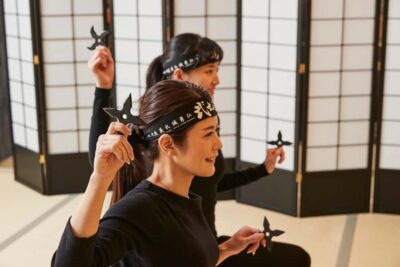
Samurai Ninja Museum Guided tour and Experience
Read our review →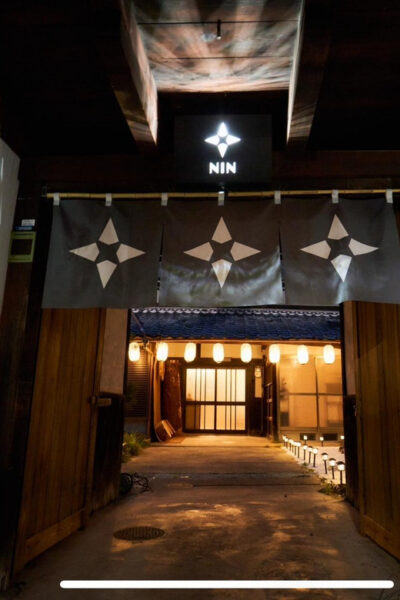
Kendo and Samurai Experience with Uniform and Gear
Read our review →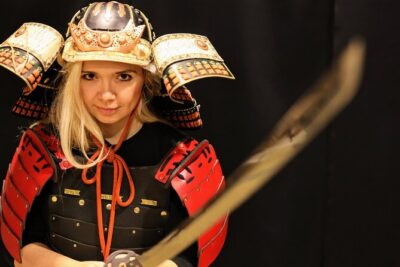
Skip the lines Basic Ticket at SAMURAI NINJA MUSEUM KYOTO
Read our review →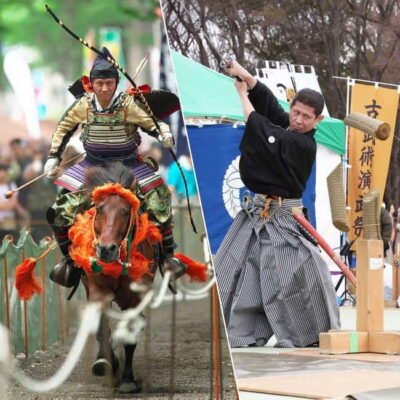
Samurai Sword & Archery Class from Samurai Descendant
Read our review →

Browse the lists this tour appears in