
Review · SAMURAI SWORD & NINJA TRAINING
Samurai Sword Training and Katazome Dyeing Experience in Tokyo
Sword training and dyeing, in one morning
I love that this experience pairs Edo Komon stencil-dyeing with real dojo practice, so you understand samurai culture in two different ways. I also love that it stays small-group sized, which means you get time with the artisans and instructors instead of rushing through photo stops. One thing to consider is that the hands-on sessions are time-boxed, so you’ll learn the basics, not master either craft the way a longer class would.
You start at 染の里おちあい in Shinjuku, make something you can actually wear, then step into 武蔵国無外会 for sword fundamentals. Expect shoes off at the dojo, plus some dye mess on your tenugui work (that’s normal, just plan to be okay with it). With a price of about $97.73 per person for roughly 2 hours, it’s a strong value if you want both culture and a practical skill in one go.
In This Review
- Key highlights you will care about
- Two workshops in Shinjuku, designed to fit 2 hours
- 染の里おちあい: Edo Komon katazome with samurai clothing context
- Tenugui dyeing and your samurai headband keepsake
- The quick walk to the dojo, and the shoes-off moment
- Samurai sword training at 武蔵国無外会: demo, defensive actions, then you train
- Price and value: about $97.73 for two guided skills
- Who should book, and who might want a different plan
- Should you book Samurai Sword Training and Katazome Dyeing in Tokyo?
- FAQ
- What is the duration of the experience?
- Where do I meet for this tour?
- Where does the experience end?
- What time does it start?
- How big is the group?
- What do you make during the katazome part?
- Is there a sword demonstration before training?
- Do I need to wear shoes in the dojo?
- What is the cancellation window?
Key highlights you will care about
- Edo Komon pattern context tied to samurai clothing, including camishimo references
- Hands-on tenugui dyeing with instruction from workshop artisans
- A wearable souvenir: you wrap your dyed tenugui into a headband
- Dojo time right after craft with a short sword demonstration
- Toy-sword defensive basics taught clearly before you start training
- Max 8 participants, so questions are actually welcome
Two workshops in Shinjuku, designed to fit 2 hours
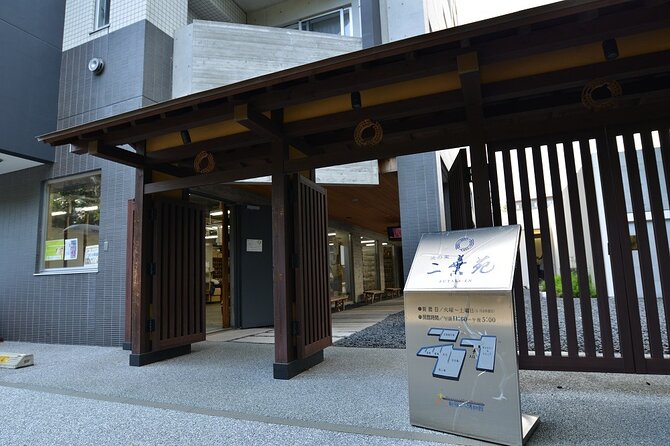
This is a 2-hour small-group experience that runs in Shinjuku, starting at 10:00 am. You’ll meet at 染の里おちあい (Kamiochiai, Shinjuku City), then finish at 武蔵国無外会. It uses a mobile ticket, which is convenient, and the group cap is 8, which keeps the pace from turning into a conveyor belt.
The timing is smart: you get a focused katazome session, then a brief walk to the dojo, then you jump into training. Because it’s not a full-day plan, it works well if you want something meaningful without sacrificing your afternoon for Tokyo wandering.
More Samurai & Ninja Sessions in Tokyo
- Tokyo: Samurai Restaurant Show Ticket with 2 Drinks
★ 4.5 · 1,307 reviews - Tokyo: Samurai Ninja Museum Guided tour and Experience
★ 4.6 · 1,010 reviews - Tokyo: Samurai Sword & Archery Class from Samurai Descendant
★ 5.0 · 603 reviews
染の里おちあい: Edo Komon katazome with samurai clothing context
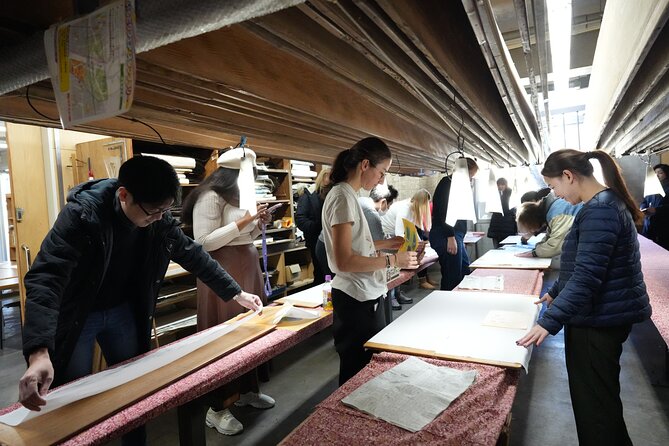
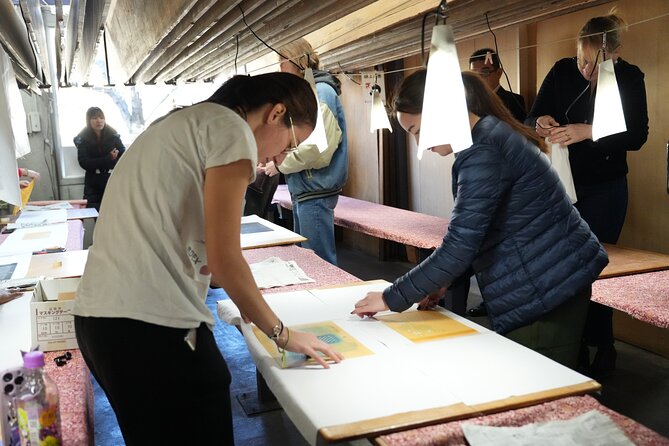
Katazome is stencil-resist dyeing, and this workshop gives you the “why” before the “how.” You begin with an introduction and explanation of Edo Komon patterns used in samurai kamishimo, which helps you see the designs as more than decoration. That matters because many visitors only look at the finished look, not the cultural logic behind it.
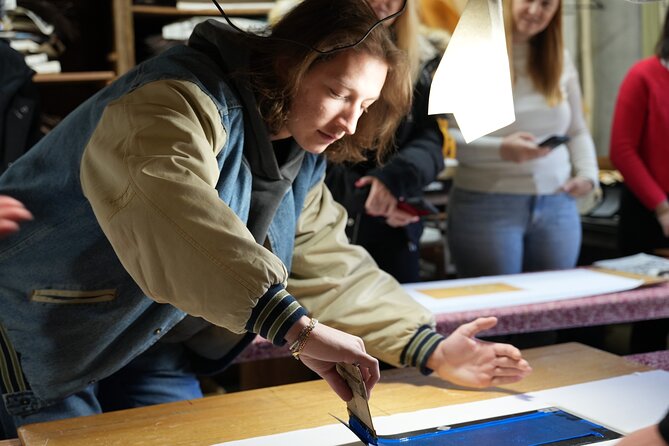
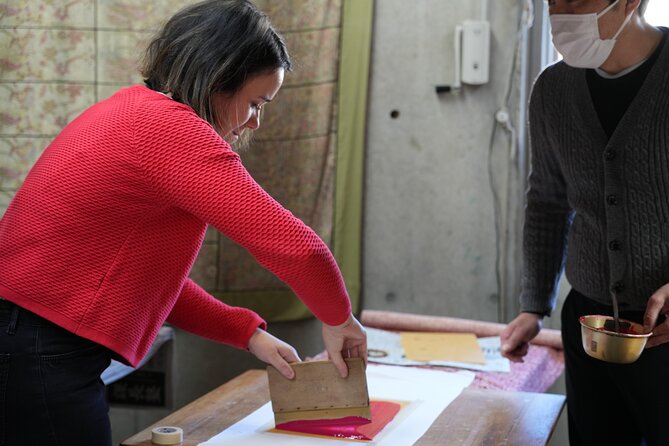
Then you get to the hands-on part: you do tenugui dyeing with artisan instruction for about 40 minutes. The workshop focuses on Komon pattern dyeing, so you’re not just coloring fabric, you’re learning the controlled stencil method and how it translates into crisp pattern edges. If you like crafts that connect to real daily life and identity, this section is the heart of the experience.
What to expect here:
- You’ll follow step-by-step guidance while working the dye process
- The artisans teach the technique, not just the final result
- The focus is on doing the work yourself, not watching from behind glass
Tenugui dyeing and your samurai headband keepsake
After you dye your tenugui, you wrap it as a headband. That’s a small detail, but it changes the whole experience. Instead of leaving with a flat souvenir, you leave with something wearable that carries the connection to samurai patterns you just learned about.
The workshop gives you time to transition out of the dyeing area and wrap up, then you head out for the short walk to the dojo. The process is practical: you’re working with fabric and dyes, so you’ll want to plan for a little staining risk on sleeves or cuffs. Wear clothes you don’t mind getting dye on, and keep your bag close so you can manage anything damp or freshly handled.
This is also where the small-group size pays off. When you’re working in a hands-on craft space, you’ll learn faster if you can ask quick questions and get corrections right away. That’s exactly the kind of attention this format is set up to provide.
The quick walk to the dojo, and the shoes-off moment
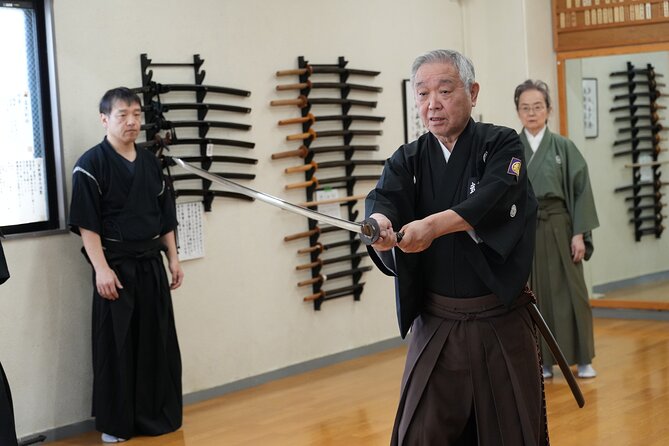
Right after the katazome portion, you take about a one-minute walk and enter the dojo, with the expected shoes-off setup. It’s a simple transition, but it’s also part of the culture of the training space. You shift from craft studio energy to martial-arts discipline mode, and that contrast is part of what makes this combination feel coherent.
The total flow is efficient. You’re not waiting around for long explanations or extra demos, and you’re not switching locations far from each other. That means your momentum stays high, which makes it easier to stay engaged through both halves.
More Samurai and Ninja sessions in Tokyo:
- Ninja+Kabuki Tokyo
★ 4.5 · 512 reviews - Skip the lines Basic Ticket at SAMURAI NINJA MUSEUM TOKYO
★ 5.0 · 470 reviews - Best Samurai Experience in Tokyo
★ 5.0 · 458 reviews - Tokyo: Legend Samurai Entertainment Night in Kanda Shrine
★ 4.6 · 367 reviews
Samurai sword training at 武蔵国無外会: demo, defensive actions, then you train
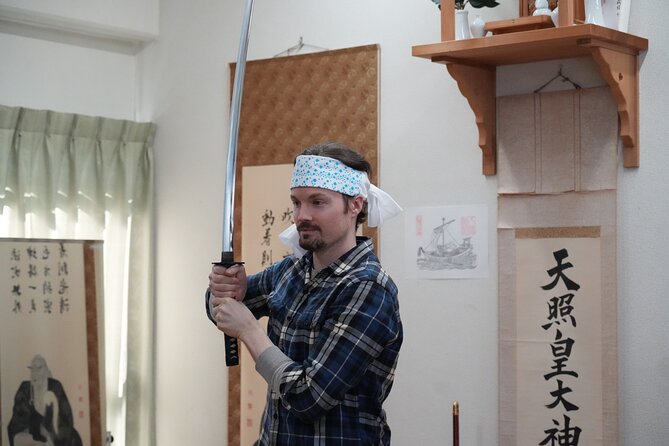
At 武蔵国無外会, you start with a real sword demonstration (about 15 minutes). The demonstration is short, but it sets the standard for what the techniques are aiming for. After that, the instructor explains defensive actions using toy swords, about 15 minutes.
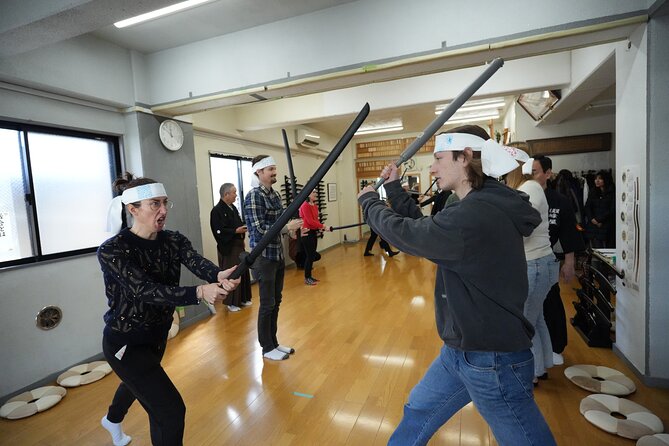
This is important for two reasons. First, you learn the concept of defense before you start moving, so you’re not just swinging randomly. Second, using toy swords is a great way for beginners to understand spacing and reactions safely, without the stress of handling something dangerous.
Then you start sword training for about 30 minutes. This is the part where you’ll likely feel the most difference from passive activities. You’re practicing movements, getting feedback, and learning how defensive actions connect to real body positioning.
What you can realistically expect to gain:
- Basic understanding of how defensive actions are taught
- Confidence with the training rhythm and partner or instructor cues
- A sense of how a dojo environment supports focus and correctness
The main limitation is also clear: this is an introductory training window. It gives you fundamentals and guided practice, not long-term conditioning. If you’re hoping for a serious martial-arts progression, you’ll still enjoy it, but you may want additional classes later.
Price and value: about $97.73 for two guided skills
For around $97.73 per person, you’re paying for two instructor-led components in one tight schedule. You get a katazome lesson with artisans, plus a sword session with a dojo demonstration and hands-on defensive practice. In Tokyo, where many “craft experiences” are short and heavily guided but don’t include the full learning arc, this combo gives you two different kinds of cultural literacy.
Here’s how the value tends to work for you:
- You create an item you can take with you (your dyed tenugui and the wrapped headband)
- You practice, rather than only observe
- Small-group size usually means more instruction per person
- The schedule is efficient, so you get more total learning per hour
Is it expensive? Compared to single-activity workshops, it’s not the cheapest. Compared to paying for two separate experiences on different days, it often feels like a good deal, because the time cost is lower and the flow is built in.
Who should book, and who might want a different plan
This works best if you like hands-on learning and you want more than surface-level photos. If you’re curious about how samurai aesthetics connect to clothing patterns and also want to try the training side, this format makes the connection feel real.
You might prefer another option if:
- You want deep mastery of katazome or sword skills in one sitting
- You dislike messy or textile-based craft activities
- You don’t like shoes-off indoor settings
For most people, though, it’s designed to be broadly approachable, and the sessions are paced for beginners. The toy-sword approach helps you jump in without feeling overwhelmed.
Should you book Samurai Sword Training and Katazome Dyeing in Tokyo?
Book it if you want a smart, compact Tokyo experience that mixes art and martial culture with real instruction. It’s especially good for first-timers who want a meaningful cultural activity that doesn’t steal an entire day.
Skip it if you’re purely after a longer, more immersive martial-arts practice session or a multi-day craft deep course. This one is built to give you the essentials, a finished wearable souvenir, and a dojo taste test that makes you want to learn more.
In your Tokyo planning, I’d treat this as a high-value morning activity in Shinjuku. It’s practical, hands-on, and the two halves actually relate to each other, which is rare in busy city itineraries.
FAQ
What is the duration of the experience?
It runs for about 2 hours.
Where do I meet for this tour?
You start at 染の里おちあい (2-chōme-3-6 Kamiochiai, Shinjuku City, Tokyo 161-0034, Japan).
Where does the experience end?
It ends at 武蔵国無外会 (2-chōme-4-6 Kamiochiai, Shinjuku City, Tokyo 161-0034, Japan). The tour disbands at the dojo.
What time does it start?
The start time is 10:00 am.
How big is the group?
The experience has a maximum of 8 travelers.
What do you make during the katazome part?
You do a tenugui dyeing experience and then wrap the dyed tenugui as a headband.
Is there a sword demonstration before training?
Yes. There is a real sword demonstration, followed by defensive actions explained with toy swords, then you begin sword training.
Do I need to wear shoes in the dojo?
You will take off your shoes when you enter the dojo.
What is the cancellation window?
Free cancellation is available up to 24 hours in advance for a full refund. Changes made less than 24 hours before the start time are not accepted.
Newly listed around Tokyo
- Shibuya Hidden Flavors A Family Friendly Foodie Tour With Guide★ 5.0 · 11 reviews
- 4Hour Shibuya Unlimited Eat KobeBeef & Wagyu Food&Culture Tour ex★ 5.0 · 21 reviews
- Tokyo: Shibuya Highlights Walking Tour★ 5.0 · 29 reviews
- Shibuya Go Karting Tour with Funny Costume★ 5.0 · 73 reviews
- Shibuya food tour led by popular YouTuber guide★ 5.0 · 11 reviews
- Shibuya Bar Hopping Adventure Unique and Drank Experience★ 5.0 · 16 reviews
- Shared Departure Transfer : Central Tokyo Hotel to Haneda Airport★ 4.5 · 15 reviews
- [1 Group Only] Tokyo Shibuya Food Tour for Family★ 5.0 · 16 reviews
Samurai Sword & Ninja Training, compared.

Samurai Ninja Museum Guided tour and Experience
Read our review →
Kendo and Samurai Experience with Uniform and Gear
Read our review →
Samurai Sword Class by Experts in Traditional Arts
Read our review →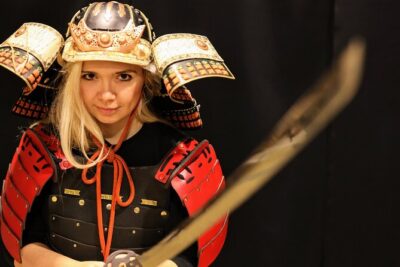
Skip the lines Basic Ticket at SAMURAI NINJA MUSEUM KYOTO
Read our review →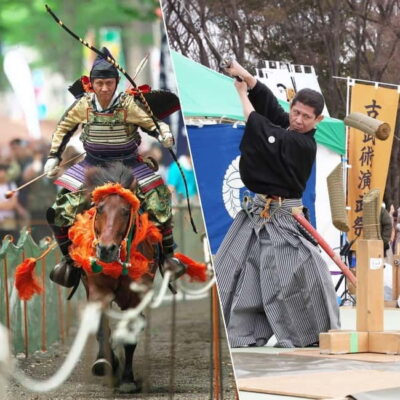
Samurai Sword & Archery Class from Samurai Descendant
Read our review →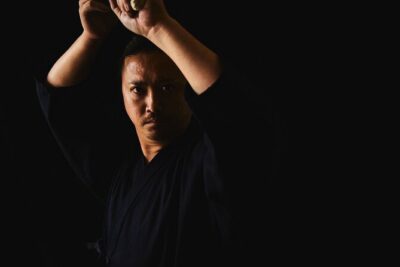
Browse the lists this tour appears in