
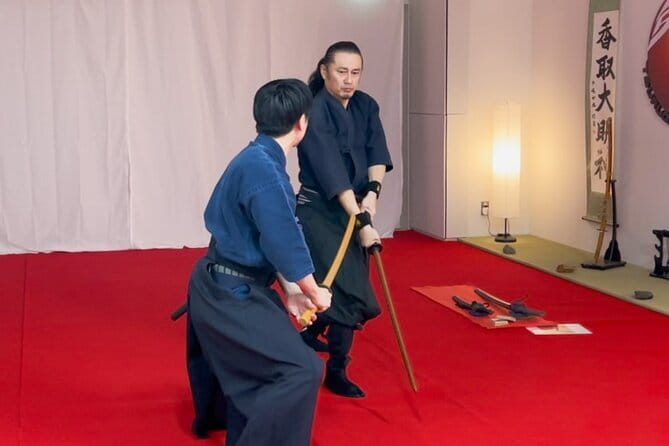
Review · SAMURAI SWORD & NINJA TRAINING
Samurai Training in Tokyo: Swords, Bushido & Mental Discipline
Wooden swords meet quiet discipline in Tokyo. This private samurai training in Kojimachi goes beyond sightseeing by teaching Bushido etiquette, breathing, meditation, and hands-on sword kata practice in a real dojo setting. I love that you can ask your instructor anything as you go, and I love the extra care in the experience, like the matcha break, the traditional outfit, and the personalized scroll certificate at the end.
The main thing to consider is that this is a focused training session, not a walk-around photo tour. If you want lots of free time for wandering Tokyo, you might find the 2 hours goes by quickly and feels more work than sightseeing.
In This Review
- Key highlights to look forward to
- Samurai training in Kojimachi, not a generic history lecture
- Bushido in real life: etiquette, meditation, and breathing
- Wooden sword drills, plus strength work with a heavy stick
- Silent walking drills for posture and focus
- One authentic combat kata, then 1-on-1 sparring
- The matcha break is part of the culture, not a filler
- Traditional dress, photo moment, and the scroll certificate
- Price and value in Tokyo: $85.66 for a real dojo lesson
- Logistics that matter: location, meeting point, and how to arrive
- Who this is for, and who should skip it
- Should you book Samurai Training in Tokyo?
- FAQ
- How long is the Samurai training experience in Tokyo?
- Is this experience private?
- What is the minimum number of participants?
- Is the training offered in English?
- What do I practice during the class?
- Does the instructor provide demonstrations?
- What is included for the break?
- Do I receive a souvenir certificate?
- Are traditional samurai clothes and a photo included?
- Is transportation included from your hotel?
- What if I need to cancel?
Key highlights to look forward to
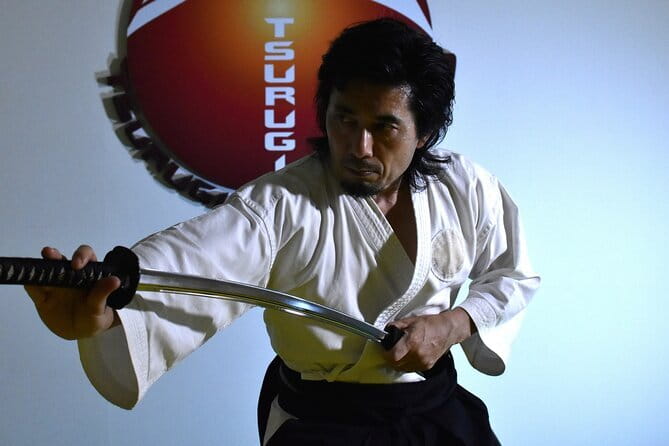
- Kojimachi dojo setting in Tokyo’s Chiyoda area, tied to where samurai trained on Edo Castle grounds
- Private Q and A format so you are not stuck with a lecture you cannot ask about
- English instruction for beginners with a live guide focused on sword skills and the spirit of Bushido
- Full sequence of practice from etiquette and breathing to wooden sword drills, heavy stick strength work, and silent walking
- Authentic kata and 1-on-1 application using an instructor-guided combat kata and sparring
- Matcha break plus a personalized souvenir with sweets, a certificate scroll with your name, and a photo in traditional dress
Samurai training in Kojimachi, not a generic history lecture
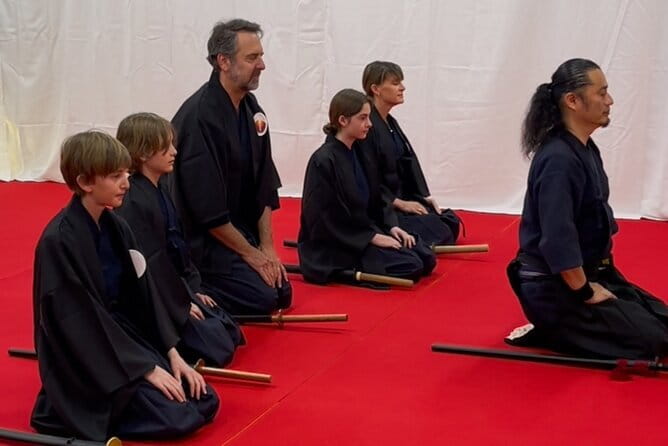
If you are craving something more hands-on than a typical museum stop, this class hits the spot. It takes place at a dojo in the Kojimachi district of Tokyo, in an area associated with the inner grounds of Edo Castle where samurai honed their skills. You still get the philosophy side, but the pacing stays practical, with you doing the work, not just watching from the back.
One of the best parts is how personal it feels for a small group. You are in a private experience, and the instructor actively invites questions, so you can clear up confusion on the spot. And you start with the mindset first, not straight to sword swings, which makes the later drills feel more purposeful than theatrical.
More Samurai & Ninja Sessions in Tokyo
- Tokyo: Samurai Restaurant Show Ticket with 2 Drinks
★ 4.5 · 1,307 reviews - Tokyo: Samurai Ninja Museum Guided tour and Experience
★ 4.6 · 1,010 reviews - Tokyo: Samurai Sword & Archery Class from Samurai Descendant
★ 5.0 · 603 reviews
Bushido in real life: etiquette, meditation, and breathing
This session begins with samurai etiquette and the spirit of Bushido. Instead of treating Bushido like a list of words, the class uses it as a framework for behavior and attention during training. That matters, because sword practice is not just technique, it is control, restraint, and awareness.
You then move into breathing techniques and meditation exercises designed to calm the mind. The goal here is simple: reduce tension so you can move with steadier focus when you pick up the wooden sword. For many beginners, this “reset” is the difference between feeling clumsy and feeling coordinated.
The experience is also built to be approachable. The training runs in English and is described as beginner-friendly, so you are not expected to already know the customs or vocabulary.
Wooden sword drills, plus strength work with a heavy stick
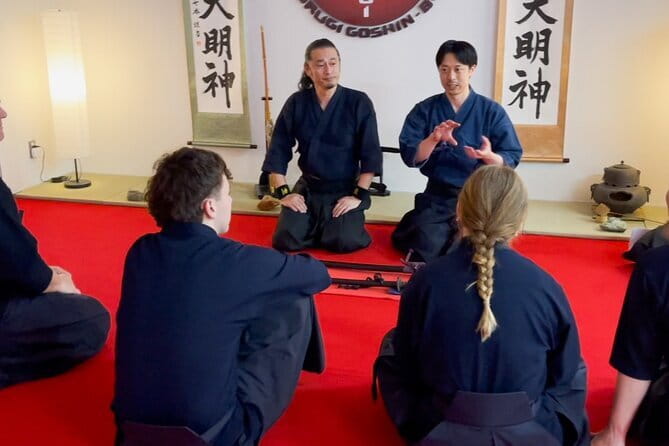
Next comes the stage where most people expect the class to start, but here it is woven into the discipline you learned first. You practice sword movements using a wooden sword, and the instructor includes a live demonstration as part of the lesson. That helps you see how the techniques look before you try them.
After that, you do strength training with a heavy stick. This part is easy to underestimate until you feel it. It is not just about “getting toned,” it is about building the kind of stable body control you need for controlled movement, especially in sequences that require repeated form.
A practical note: you should wear clothing that lets you move. The class is 2 hours long, and you will be doing enough standing and controlled motion that restrictive outfits can make everything feel harder.
Silent walking drills for posture and focus
One of the more surprising sections is the silent walking exercises. You are essentially testing posture, balance, and focus without the distraction of conversation or big movement changes. It is a reminder that training is not only about dramatic sword actions. Even in a modern dojo, the “small” discipline can be the hardest part.
In a practical sense, this segment teaches you to slow down and notice your body. If you tend to tense up while concentrating, you will likely feel that tension right away. And if you take the breathing and meditation seriously at the beginning, this part tends to feel easier.
For some people, silent walking can feel awkward at first. Give yourself permission to be new at it. The instructor’s job is to guide you through the form, not judge you for not being perfect from minute one.
More Samurai and Ninja sessions in Tokyo:
- Ninja+Kabuki Tokyo
★ 4.5 · 512 reviews - Skip the lines Basic Ticket at SAMURAI NINJA MUSEUM TOKYO
★ 5.0 · 470 reviews - Best Samurai Experience in Tokyo
★ 5.0 · 458 reviews - Tokyo: Legend Samurai Entertainment Night in Kanda Shrine
★ 4.6 · 367 reviews
One authentic combat kata, then 1-on-1 sparring
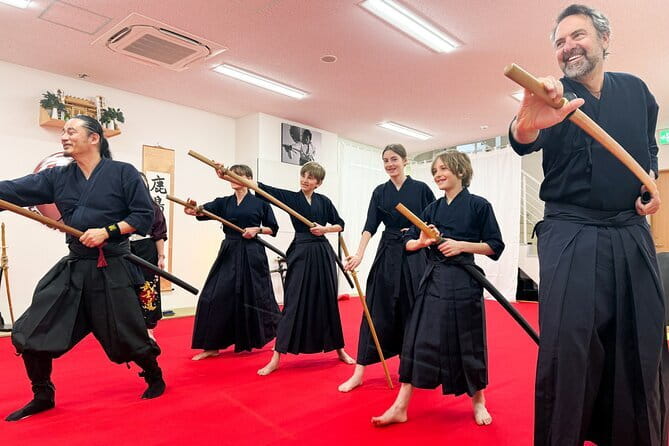
After the groundwork, you move into real combat sword techniques and you master one authentic samurai combat kata. The emphasis is on learning an actual sequence and practicing it with guidance. Kata training is valuable because it gives you structure: you learn timing and coordination as a connected series, not random moves you forget the moment you stop swinging.
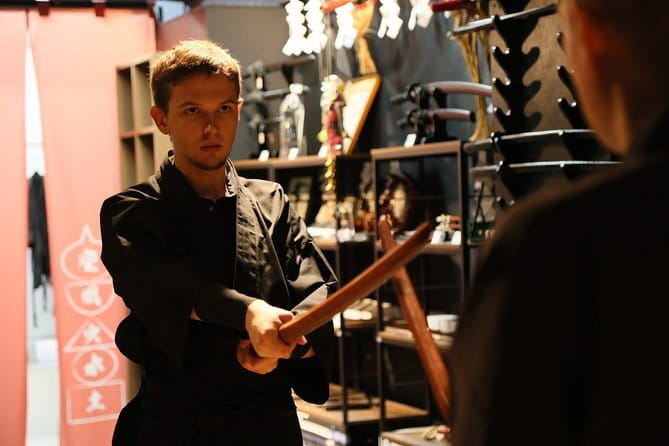
Then the class applies it in one-on-one sparring with the instructor. This is where the discipline shows up in your partner interaction: controlled intent, careful distance, and staying aware instead of rushing. Since this is beginner-friendly and coached, the sparring experience is less about proving toughness and more about feedback.
If you are nervous about safety, the setup is designed for training use. You use wooden equipment during the learning phases, and the instructor leads the progression. Still, treat it like a real practice, meaning you listen closely and follow instructions the first time.
The matcha break is part of the culture, not a filler
Training can work up a serious appetite, so the break is well timed. You get matcha green tea and traditional Japanese sweets in a quiet, cultural setting. This is not just a snack stop. It is a controlled pause that matches the lesson theme: calm attention, then a return to training.
This break also gives you a chance to take in what you just learned while it is still fresh. In a class like this, the mental shift is real. You start the session thinking about swords, etiquette, and kata, but by the end, you are thinking about pacing, focus, and restraint.
Also, it is a nice touch that toilets are available in the building. That might sound basic, but for a 2-hour hands-on class, it saves you from stress and lets you stay comfortable.
Traditional dress, photo moment, and the scroll certificate
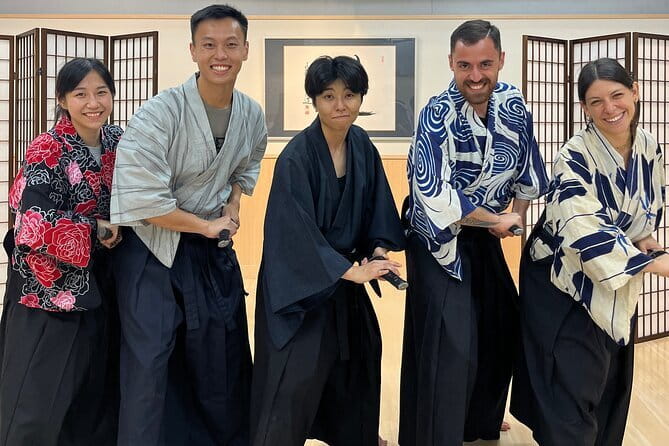
At the end, you receive a personalized scroll-style certificate detailing the techniques you learned, including your name. That is a genuinely useful souvenir because it is not just a proof you attended. It reflects what you practiced, so it has meaning later when you remember the sequence.
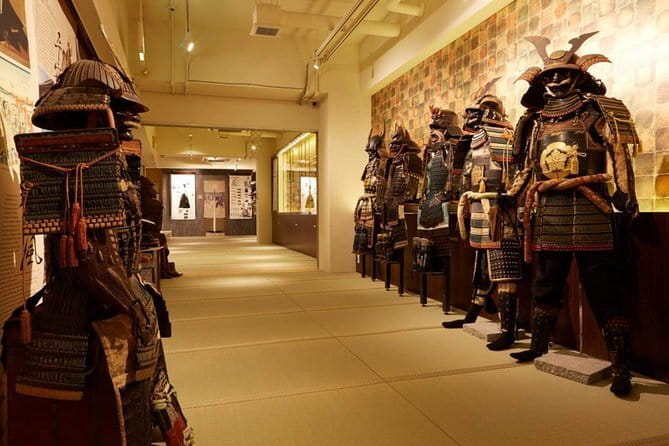
You also wear traditional samurai attire and take a commemorative photo. This is a small but satisfying payoff. The experience balances action and reflection, and this ending helps you remember that you were doing a structured cultural practice, not just trying out a prop.
If you like collecting memorable travel keepsakes, this is one of the few activities where the souvenir is tied to your actual training steps.
Price and value in Tokyo: $85.66 for a real dojo lesson
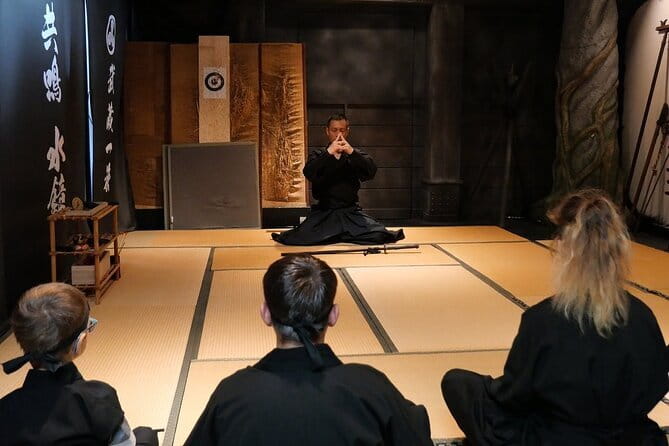
At about $85.66 per person for roughly 2 hours, the value depends on what you want from Japan. If your priority is just general samurai stories, you could probably spend less with sightseeing-focused tours. But if you want to actually practice etiquette, meditation, and sword kata in a coached setting, you are paying for time with an instructor and hands-on training materials.
The cost also makes more sense because it is a private experience. Private instruction plus a longer, structured practice sequence is harder to replicate on your own, especially if you do not speak Japanese well enough to navigate a dojo environment.
One more point: there is a minimum of 2 participants required. That means solo travelers might need to coordinate dates, or the experience might not run if you cannot find another person to join. On the plus side, a minimum of 2 usually keeps the session from feeling like a crowd.
Logistics that matter: location, meeting point, and how to arrive
The meeting point is Samurai Sword Tokyo, at 4-chome-2-1 Kōjimachi, Chiyoda City, Tokyo 102-0083, Japan. It is near public transportation, so you should be able to reach it without booking a car.
The experience does not include an air-conditioned vehicle or private transportation. If you are planning your day around this, give yourself extra time to get to the dojo calmly, especially if your train connections involve walking. You will be more relaxed for the meditation and etiquette portion if you arrive without rushing.
You’ll receive a mobile ticket, and confirmation happens at booking. So once you lock in your time, you can focus on showing up ready to move.
Who this is for, and who should skip it
This class is ideal if you want a break from standard sightseeing and you like structured activities with clear instruction. It is also a great pick if you want to understand Bushido as practice, not just as a concept. And the English instruction makes it accessible if you are not comfortable with Japanese.
You might not love it if you dislike repetitive drills or you are looking for a light, casual experience. This is training. Even the silent walking segment is part of the discipline. If you want to spend every hour outside photographing city streets, plan for this to be the event of the block, not a side quest.
Should you book Samurai Training in Tokyo?
Yes, if you want something real you can take home: a sense of posture, a learned kata sequence, and a souvenir that connects to what you practiced. The session is well shaped from mindset to movement, and the private Q and A makes it feel less like a performance and more like instruction.
I would book it sooner rather than later if your dates are tight. The experience is commonly booked in advance, and you do not want to lose your spot. Just confirm the training fits your energy level, since you will be doing physical drills for the full 2 hours.
If you are on the fence, think of it this way: this is one of the few Tokyo experiences where you trade cameras for a dojo mindset, and you leave with a certificate that reflects what you actually learned.
FAQ
How long is the Samurai training experience in Tokyo?
It runs for about 2 hours.
Is this experience private?
Yes. It is a private experience for your group.
What is the minimum number of participants?
A minimum of 2 participants is required.
Is the training offered in English?
Yes. The experience is conducted in English and is beginner-friendly.
What do I practice during the class?
You learn samurai etiquette and Bushido spirit, do breathing and meditation exercises, practice sword movements with a wooden sword, do strength training with a heavy stick, practice silent walking exercises, learn a combat kata, and then do 1-on-1 sparring.
Does the instructor provide demonstrations?
Yes. A live sword demonstration by the instructor is included.
What is included for the break?
You get authentic matcha green tea and traditional Japanese sweets during a break.
Do I receive a souvenir certificate?
Yes. You receive a personalized scroll-style certificate with your name and the techniques you learned.
Are traditional samurai clothes and a photo included?
Yes. Samurai uniform rental is included, and you take a commemorative photo while wearing traditional attire.
Is transportation included from your hotel?
No. Air-conditioned vehicle and private transportation are not included. The meeting point is near public transportation.
What if I need to cancel?
You can cancel for free up to 24 hours in advance for a full refund. If you cancel less than 24 hours before the start time, the amount paid will not be refunded.
Newly listed around Tokyo
- Costume Rental Studios in Emotion Liberation Zone★ 5.0 · 26 reviews
- Private 2 Hours Matcha Masterclass with Tea and Guide★ 5.0 · 28 reviews
- Tokyo Ueno Food & Nature & Localtown Tour: 10Dishes+ Drinks★ 5.0 · 34 reviews
- Wonderful Peaks & Peace: Mt. Fuji, Fuji Stupa & Hakone Tour★ 5.0 · 7 reviews
- Membership Car Club GTR35 LibertyWalk Daikoku car meet photoshoot★ 4.0 · 44 reviews
- Licensed Guide Tokyo Meguro Cherry Blossom Walking Tour★ 4.5 · 13 reviews
- Low-cost local pub & bar crawling★ 5.0 · 7 reviews
- Discover Tokyo’s Hidden Food & Drink Neighborhoods★ 4.5 · 11 reviews
Samurai Sword & Ninja Training, compared.

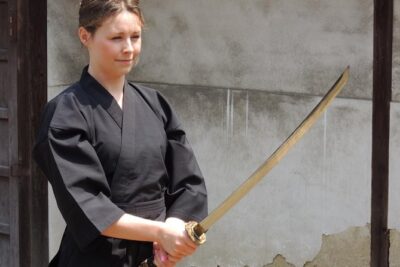
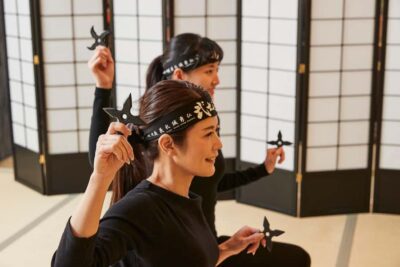
Samurai Ninja Museum Guided tour and Experience
Read our review →
Kendo and Samurai Experience with Uniform and Gear
Read our review →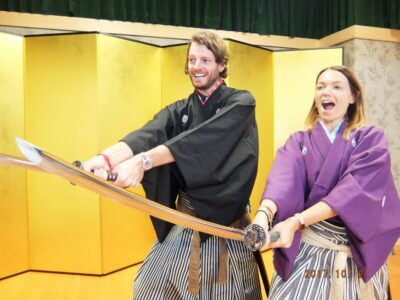
Samurai Sword Class by Experts in Traditional Arts
Read our review →
Skip the lines Basic Ticket at SAMURAI NINJA MUSEUM KYOTO
Read our review →
Samurai Sword & Archery Class from Samurai Descendant
Read our review →
Browse the lists this tour appears in