
Review · SAKE BREWERY VISITS
Tasting All Types of Sake with Sommelier
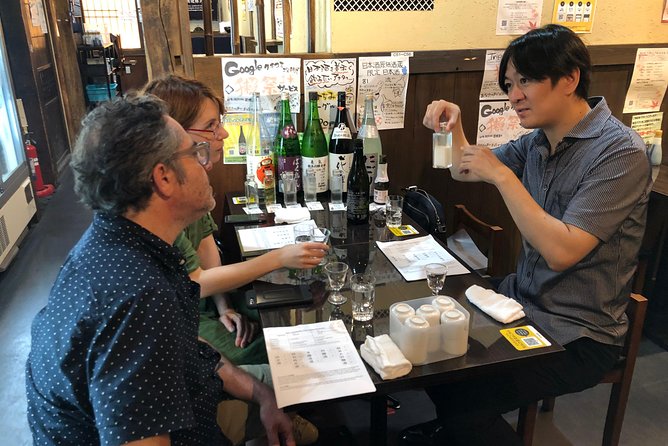
Sake can feel like a puzzle. This Shinjuku tasting turns it into a fun read. You start in the Shinjuku area, meet the sommelier, and then taste a lineup of styles explained in plain English, with guidance on how to drink each one and what to look for on a bottle. Sake label reading is a big part of the point, not just sampling.
I really like two things about this experience. First, you try 6 to 7 types of sake (including options you are unlikely to find in the US), and the sommelier explains how each style should be served and enjoyed. Second, the guide, often mentioned as Aki or Akira, makes it interactive, including Q and A and a take-home leaflet or pamphlet so you can order with confidence after the tour.
One drawback to consider: Shinjuku is busy, and your meeting spot is right in the middle of it. If you are late or arrive in a hurry, you may need a moment to find the group near the bar area by Louis Vuitton Shinjuku.
In This Review
- Key things to know
- Shinjuku at 4:00 pm, and why the meeting spot matters
- The sake bar next to Louis Vuitton Shinjuku: what you’re walking into
- 1-hour-and-change tasting plan: what happens in each phase
- How to decode a sake label, without memorizing kanji
- Six to seven sips, and how to taste like you mean it
- Pasteurized vs unpasteurized: the comparison that sticks
- Sparkling sake in Shinjuku: the surprise that makes you pay attention
- Food pairing tips that help you order after the tour
- Kabukicho and Golden Gai, explained like you can use it later
- Price and value check for $62.76 per person
- Who this Shinjuku sake tasting is perfect for
- Should you book this tasting in Shinjuku?
- FAQ
- Where does this tour take place?
- What is the price per person?
- How long is the experience?
- What time does the tour start?
- How many sake types do you taste?
- Who guides the tasting?
- Is there a mobile ticket?
- How big is the group?
- What stops are included during the tour?
- What is the cancellation policy?
Key things to know
- Small group size with a maximum of 12 travelers, so questions do not get lost in the shuffle.
- Meet in Shinjuku at 4:00 pm, with short orientation stops around Shinjuku and Shinjuku 3 Chome.
- Tasting happens at a sake bar next to Louis Vuitton Shinjuku, where the sommelier serves all the styles.
- You sample 6 to 7 types of sake, including hot options and special styles like sparkling sake, plus pasteurized and unpasteurized comparisons.
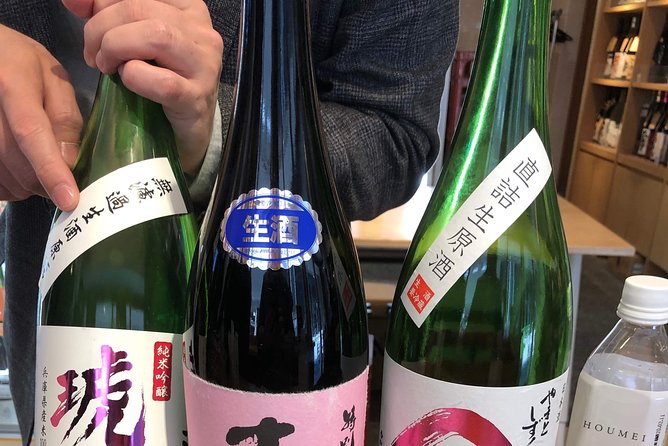
- You learn how to decode a sake label, using a guide and a leaflet/pamphlet you can keep.
- You also get Tokyo nightlife context, with talk about Kabukicho and Golden Gai.
Shinjuku at 4:00 pm, and why the meeting spot matters
This tour is timed for late afternoon, starting at 4:00 pm in the Shinjuku area. That is helpful because you get a tasting done before the evening turns fully chaotic. It also means the neighborhood is already alive, which makes the Shinjuku background bits feel less like a lecture and more like orientation.
Your start point is near Frente Shinjuku San-chōme (3-chōme-4-8), and the route includes quick stop-and-talk segments around Shinjuku and Shinjuku 3 Chome. Those short pauses are more useful than they sound. They help you get oriented in a place that can otherwise feel like one giant maze.
The practical bit: arrive a few minutes early. The bar itself is described as being right next to Louis Vuitton Shinjuku, and Shinjuku meeting spots can get crowded fast. Think of this as a tasting class plus a mini wayfinding lesson, so give yourself some slack.
More Drinking Tours in Tokyo
- Tokyo Bar Hopping Tour in Shinjuku (All-You-Can-Drink + Dinner)
★ 5.0 · 3,587 reviews - Tokyo: Shinjuku Local Bar and Izakaya Guided Walking Tour
★ 4.9 · 1,794 reviews - Shibuya Meltdown Nightlife Tour: All-You-Can-Drink Bar Hopping
★ 5.0 · 1,058 reviews
The sake bar next to Louis Vuitton Shinjuku: what you’re walking into
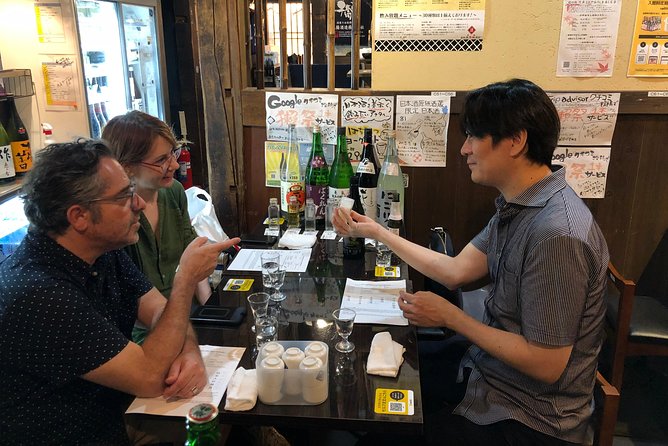
The main tasting stop is at a sake bar right next to Louis Vuitton Shinjuku. That matters because you are not wandering from place to place. Instead, you settle in, and the sommelier serves you multiple styles back to back.
From the reviews, the vibe is friendly and close-up. You are with a small group, and the tasting is structured like a guided session: the sommelier explains what you are drinking, then you taste, then you talk about it. That rhythm is what makes this work for both first-timers and people who already like sake.
Also note the format length. The tour runs about 1 hour 30 minutes (with about 1 hour 20 minutes referenced for the tasting segment). That is long enough to cover several styles, but short enough that you can still enjoy Shinjuku afterward.
A couple practical tips based on the tone of the experience:
- Have lunch first. One review specifically calls out not getting too wild if you have lunch beforehand.
- Pace yourself. You will likely be sipping a range of styles, including hot and cold options.
1-hour-and-change tasting plan: what happens in each phase
The experience has a simple flow, and understanding it helps you enjoy it instead of rushing.
Phase 1: Shinjuku warm-up (about 5 minutes each at the early stops).
You get basic context about the Shinjuku area and Shinjuku 3 Chome. It is not a long history lesson. It is more like, here is how the neighborhood is laid out, and here is how locals use it, which makes what comes next feel grounded.
Phase 2: Go to the sake bar and start the pours.
Once you arrive at the bar by Louis Vuitton Shinjuku, the sommelier serves the different types of sake. This is where the tasting becomes the star. The guide also shares what they feel from each sake, which is a clever teaching tool: it shows you how to describe taste without needing fancy vocab.
Phase 3: Learn by comparing styles.
You do not just drink. You compare. From the provided description and reviews, the lineup includes variations like hot sake, sweet profiles, dry profiles, and sparkling options. The guide also covers production basics and how style choices affect flavor.
Phase 4: Tokyo nightlife context.
Along the way, the tour includes talk about Kabukicho in Shinjuku and Golden Gai. You get enough detail to understand what you are seeing later, without turning the tasting into a full nightlife bus ride. The overall feel is part lesson, part orientation.
How to decode a sake label, without memorizing kanji
The biggest value-add here is not that you try sake. It is that you learn how to read what you are buying. The tour explicitly focuses on tips to decode a sake label, plus explanations of sake production and how to choose based on taste.
Even if you do not read Japanese, you can learn a system. The guide provides a leaflet or pamphlet that outlines aspects of sake and how it is made, and then you use those ideas while you taste. That feedback loop is key. You are not learning in theory and hoping it transfers. You taste, then you map the taste back to what the label is saying.
What you should look for while you listen:
- Why the sommelier suggests certain serving styles for each type.
- How different categories feel in your mouth, even when they look similar in the glass.
- The reasoning behind the guide’s recommendations on how to order later.
By the end, you should feel more confident walking into a shop or ordering at a restaurant and not relying only on English words on the menu.
More Food Tours in Tokyo
- Tokyo: Shinjuku Food Tour (13 Dishes at 4 Local Eateries)
★ 5.0 · 6,603 reviews - Tokyo Tsukiji Fish Market Food and Culture Walking Tour
★ 5.0 · 3,184 reviews - Tokyo: Shinjuku Food Tour (15 Dishes and 4 Eateries)
★ 4.9 · 2,033 reviews - Tokyo: Tsukiji Fish Market Food and Walking tour
★ 5.0 · 1,724 reviews
Six to seven sips, and how to taste like you mean it
This is a tasting of 6 to 7 types of sake, plus a welcome sake in at least one review. That is a lot of comparison time for 1 hour 30 minutes, so you will cover a wide range of styles and flavor directions.
Here is what that means for your palate:
- You get both hot and likely chilled pours, so you can feel how temperature changes aroma and softness.
- You try styles that lean sweet versus dry, so you learn how people describe finish and balance.
- You include special formats like sparkling sake, which changes the whole drinking experience.
- You get at least one session that contrasts pasteurized and unpasteurized sake, which is important for people who want a deeper understanding beyond sweetness and dryness.
A practical way to enjoy this: take smaller sips than you think you need. When you are sampling multiple styles, the goal is clarity, not volume. The sommelier’s explanations will make more sense once you taste in detail.
Also, because the guide is answering questions throughout, you can use the time to calibrate your preferences. If you realize you do not like a style, you can ask what to try next so you still leave with favorites.
Pasteurized vs unpasteurized: the comparison that sticks
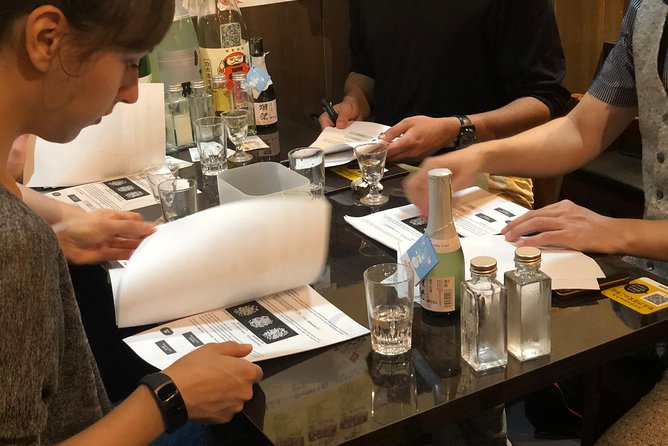
Several reviews highlight that the session includes both pasteurized and unpasteurized sake. That is a huge deal because it changes how sake behaves in the glass and, importantly, explains why some sakes are hard to ship.
One review specifically notes that unpasteurized varieties are not available in the US due to shipping difficulty. That context helps you understand why a tasting in Japan can show you options you cannot easily recreate at home.
In practice, the guide turns this into something you can taste, not just a technical fact. You will learn the difference, then you will drink it and decide what you like.
If you already like sake, this contrast can be a quick way to sharpen your understanding. If you are new to sake, it helps you learn that sake is not one thing. It is a family of styles, and the production choices matter.
Sparkling sake in Shinjuku: the surprise that makes you pay attention
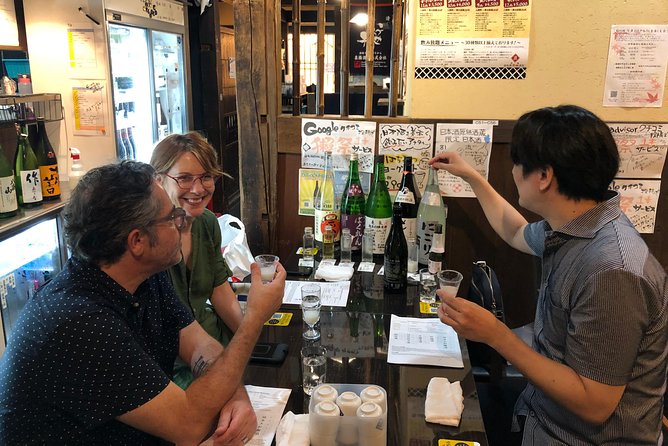
Sparkling sake pops up in the reviews as something you get to try. That is one of the reasons this tour feels more engaging than a standard tasting. Sparkling sake is different enough that it often grabs even people who think they do not like sake.
When you try sparkling sake in a guided setting, you are more likely to notice:
- how bubbles influence aroma
- how it changes perceived sweetness
- how it pairs with food in a simpler, casual way
The tour description also says you get the best way to drink each type and the best foods to go with them. With sparkling sake, those pairing tips can be especially helpful because it can feel like a bridge between wine-style and traditional sake drinking.
Food pairing tips that help you order after the tour
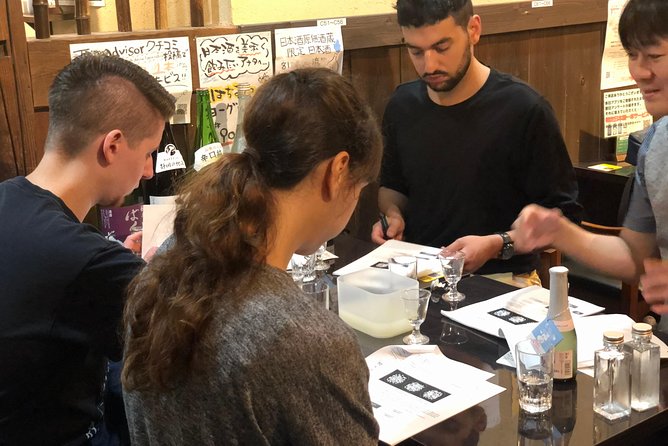
A lot of tasting tours stop at explanation. This one keeps going. The tour description says the sommelier shares the best foods to go with each sake type, and the reviews repeatedly emphasize that you get practical ordering guidance.
Think of it like this: labels help you shop. Pairing tips help you eat. If you are planning to spend the rest of your trip in izakaya and small restaurants, those suggestions can save you from ordering blindly.
When the guide tells you what to pair, listen for the logic, not just the list. Dry versus sweet, hot versus cold, and lighter versus richer styles can all change which foods make sense. If you learn that logic, you can recreate the vibe even when the menu is different.
Kabukicho and Golden Gai, explained like you can use it later
The tour does not only focus on sake. It also talks about Kabukicho and Golden Gai in Shinjuku. You get that context during the session, so by the time you are out walking in the evening, you are not staring at places you do not understand.
From the tone of the reviews, the guide gives tips about where to go and what to avoid around Japan beyond sake too. Even if you do not follow every suggestion, having a local filter helps. Shinjuku nightlife can look fun but also get confusing fast. A quick orientation can make it feel calmer.
If you want to build an evening plan, this kind of add-on is a good match. You can come to the tasting first, then decide what fits your mood afterward.
Price and value check for $62.76 per person
At $62.76 per person, you are paying for more than a few pours. You are paying for structured learning, expert guidance, and a set tasting lineup.
Here is a simple value way to think about it:
- You taste 6 to 7 types of sake.
- The tour runs about 1 hour 30 minutes and includes label-decoding tips, production explanations, and Q and A.
- The group stays small, with a maximum of 12 travelers.
Even if you roughly divide the cost by 6 to 7 types, it comes out to a relatively low cost per sampled style, especially because you also get the explanatory portion and take-home leaflet/pamphlet.
Could you drink sake on your own in Shinjuku for less? Sure, you could. But you would likely spend extra time figuring out what to order and how to interpret what you are tasting. This tour compresses that learning into one guided session.
Also, reviews mention that some sakes are difficult to ship unpasteurized, so the tasting can feel like a one-time opportunity to try types you cannot easily buy elsewhere.
Who this Shinjuku sake tasting is perfect for
This tour is best for people who want a quick path to confidence.
You will likely enjoy it if:
- you are new to sake and want clear guidance on what to order
- you like learning how drinks work, not just drinking them
- you want to impress yourself on future restaurant visits with what you learned from the label-decoding tips
- you are traveling with family or friends and want a shared activity with lots of conversation
- you want Japan-only access to certain styles and production choices like pasteurized versus unpasteurized comparisons and sparkling sake
A small-group setup also helps. Even when the group is not tiny, the maximum size keeps the experience personal enough for questions.
Should you book this tasting in Shinjuku?
I would book this tour if you want a practical sake education you can use the same week. The strongest reasons are the combination of tasting variety, guided explanations, and a focus on learning how to read a sake label. You leave with both a taste memory and a shopping or ordering framework.
Book it if:
- you plan to eat out in Japan soon and want to order with confidence
- you like tasting sessions that include Q and A
- you want a Shinjuku activity that also nudges you toward understanding places like Kabukicho and Golden Gai
Skip it if:
- you want a quiet, slow wine-style tasting with no nightlife context
- you dislike alcohol tastings or know you feel uncomfortable with multiple pours in one sitting
FAQ
Where does this tour take place?
It takes place in Tokyo, with the meeting point in the Shinjuku area. The tour ends back at the meeting point.
What is the price per person?
The price is $62.76 per person.
How long is the experience?
The duration is about 1 hour 30 minutes.
What time does the tour start?
The start time is 4:00 pm.
How many sake types do you taste?
You taste 6 to 7 types of sake, and a welcome sake may also be included.
Who guides the tasting?
You meet a sake sommelier who explains the sakes and answers questions.
Is there a mobile ticket?
Yes, the tour includes a mobile ticket.
How big is the group?
The group maximum is 12 travelers.
What stops are included during the tour?
The tour includes stops around Shinjuku and Shinjuku 3 Chome, and it arrives at a sake bar right next to Louis Vuitton Shinjuku. The tour also talks about Kabukicho and Golden Gai.
What is the cancellation policy?
Free cancellation is available up to 24 hours in advance for a full refund. If you cancel less than 24 hours before the experience start time, the amount you paid is not refunded.
More Food & Drink in Tokyo
- Shinjuku Izakaya Food Tour
★ 5.0 · 1,041 reviews - Eat and Drink Like a Local: Tokyo Ueno Food Tour-Taverns&Ramen
★ 5.0 · 957 reviews - Tokyo: Shibuya Food Tour (13 dishes and 4 Eateries)
★ 5.0 · 770 reviews - Tokyo: Tsukiji Fish Market Food and Culture Walking Tour
★ 4.7 · 757 reviews
More Sake Tastings in Tokyo
- Ramen and Sushi Cooking Class with Sake Pairing Set in Tokyo
★ 5.0 · 291 reviews - Sake Tasting Masterclass in Shinjuku (8+ Varieties with a Pro)
★ 5.0 · 271 reviews - Sake Omakase in Tokyo: Guided Tasting by Certified Sommeliers
★ 5.0 · 239 reviews - Casual Japanese SAKE tasting and snack experience in Kabukicho
★ 5.0 · 159 reviews
Newly listed around Tokyo
- Private Tokyo Food Tour – A Journey Through Time Through Food★ 5.0 · 36 reviews
- Private Tokyo Tour with Licensed Guide & Vehicle (Max 15 persons)★ 5.0 · 107 reviews
- Private Tokyo Custom Full-Day Tour by Chartered Vehicle★ 5.0 · 16 reviews
- Private Tokyo Custom Half-Day Tour by Chartered Vehicle★ 4.5 · 13 reviews
- Private Outstanding Nikko Tour with English Speaking Driver★ 4.0 · 11 reviews
- Private Sightseeing to Mt Fuji and Hakone with English Driver★ 5.0 · 51 reviews
- Private Snow Monkeys park Day Trip From Tokyo or Nagano★ 4.5 · 26 reviews
- 4 Day Tour – Mount. Fuji, Tokyo, Hakone, Kamakura and Yokohama★ 5.0 · 19 reviews
Sake Brewery Visits, compared.
Kyoto Night Foodie Tour in Gion (9+ dishes + 6 Sake tastings)
Read our review →
1-Day Snow Monkeys, Zenko-ji Temple & Sake in Nagano
Read our review →
3-Hour Kyoto Insider Sake Brewery Tour with Tastings & Pairings
Read our review →
Arashiyama Bamboo, Temple, Monkeys, or Secret Sake Brewery
Read our review →
Nagano: Snow Monkeys, Zenkoji Temple & Sake Day Trip
Read our review →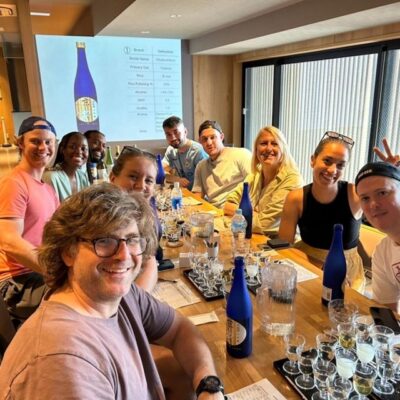
Insider Sake Brewery Tour with Sake and Food Pairing
Read our review →
1.5-Hour Kyoto Insider Sake Experience with 7 Tastings & Pairings
Read our review →Browse the lists this tour appears in