Review · SAKE BREWERY VISITS
Kyoto Sake Brewery & Tasting Walking Tour
Sake in Kyoto is a whole education. This Fushimi walk turns sake from a drink into a story, with a guided route through brewery country plus tastings that build as you go. I really liked how the small group format keeps things conversational, so you can ask questions instead of just following along.
I also liked the 18-sake tasting setup, because it is structured enough to be educational but still fun. Before you start sampling, you get oriented at the Gekkeikan Okura Sake Museum, where the brewing process and sake history make sense of what is in your glass.
One consideration: the tour is a walking experience, and Kyoto summers are hot and humid. If you have any mobility concerns, this is not the best fit without asking about a private option, and you will want water and a hat.
In This Review
- Key highlights to know before you go
- Where Fushimi makes sense for a sake tasting walk
- Gekkeikan Okura Sake Museum: the brewing process made visual
- Teradaya and the Kappa Gallery stop: culture between tastings
- The tasting bar: 18 (and sometimes more) pours you can actually learn from
- The walk, timing, and logistics that affect your day
- What you learn that sticks, even if sake is new to you
- Value for the price: what you pay for and what you get
- Who should book this Kyoto sake brewery and tasting walk
- Should you book it? My quick call
- FAQ
- Where does the Kyoto Sake Brewery & Tasting Walking Tour start and end?
- How long is the tour?
- How many people are in the group?
- What is included in the price?
- What happens if someone is under 20 years old?
- Is the tour suitable for people with mobility issues?
- Can the tour accommodate allergies or dietary restrictions?
Key highlights to know before you go
- Gekkeikan Okura Sake Museum first, then tastings, so your senses have context
- Small-group size (max 7) for calmer pacing and real Q&A time
- Multiple Kyoto-focused tasting stops, including a local bar with many pours
- Fushimi brewery district atmosphere, with cultural stop points along the way
- Photos included so you can focus on the tour, not your phone
- Age and tasting rules (under 20 get snacks instead of the tasting set)
Where Fushimi makes sense for a sake tasting walk
If you want to learn sake in Kyoto, you do not want to stay stuck at one table. This tour is built around Fushimi, one of Japan’s best-known sake regions, where breweries have long shaped the neighborhood and daily life.
You start at Chushojima Station and end at Fushimi-Momoyama Station, which is a nice flow. You are not stuck backtracking to the same point, and it is easier to keep moving once the tour ends. The route also includes a quick pass by Teradaya, a famous Fushimi spot tied to the end of the Edo period and the Teradaya Disturbance. It is short, but it gives you a historical anchor so the sake story feels local, not generic.
The group size matters here. With a maximum of 7 travelers, the guide can slow down when questions come up. That is a big deal during a tasting tour, because sake is not just one flavor. It changes based on how it is made and how it is served, so you want a guide who can answer the small stuff, like what makes one pour feel drier or sweeter.
More Drinking Tours in Kyoto
- Kyoto Night Foodie Tour in Gion (9+ dishes + 6 Sake tastings)
★ 5.0 · 1,762 reviews - 3-Hour Kyoto Insider Sake Brewery Tour with Tastings & Pairings
★ 5.0 · 917 reviews - Arashiyama Bamboo, Temple, Monkeys, or Secret Sake Brewery
★ 4.8 · 886 reviews
Gekkeikan Okura Sake Museum: the brewing process made visual
The tour kicks off at the Gekkeikan Okura Sake Museum for about 30 minutes, and this is not just a photo stop. The whole point is to learn how sake is produced by observing exhibits and learning the basics of the brewing process and sake history.
I like this museum-first approach because it changes how you taste later. When you understand what goes into sake production, you stop thinking of sake as one thing and start thinking in styles and methods. At the museum tasting and explanations, you learn how to distinguish sake styles, including comparisons like dry versus sweet. That kind of language makes the later pours far easier to sort out, even if you are a beginner.
You also get a sense of scale and heritage at a major Kyoto producer. Even if you already know some brands, the museum context helps you connect the bottles on shelves with the real process behind them. It is one of those setups where you leave with a mental map, not just a drink memory.
A small practical note: the museum and tasting rhythm can be a bit intense if you are not used to alcohol tastings. If you are the type who gets overwhelmed by menus, take it slow and listen first, then taste. The guide’s job is to make the sequence make sense.
Teradaya and the Kappa Gallery stop: culture between tastings
After the museum, you continue on foot through Fushimi. One stop is a pass by Teradaya, tied to Sakamoto Ryoma and a dramatic incident known as the Teradaya Disturbance. Even if you only catch the quick version, it adds flavor to the walk. You are not only seeing breweries, you are seeing how people and events shaped the neighborhood.
Next comes Kappa Gallery (about 30 minutes, with admission included). This is a fun pivot from strict brewing history. It connects sake culture with Japan’s pop imagination through kappa, the famous creature from folklore that shows up across art and local stories.
What I like about this kind of stop is that it gives your brain a breather. After museum learning, you need a change of pace so the next tasting does not feel like overload. You also get another short chance to connect sake to everyday Kyoto culture, not only production science.
Keep expectations realistic: Kappa Gallery is part cultural, part themed learning, and part route structure. It is not a second museum tour designed to replace the Gekkeikan stop. Think of it as a palate-clearing checkpoint that keeps the evening light and human.
The tasting bar: 18 (and sometimes more) pours you can actually learn from
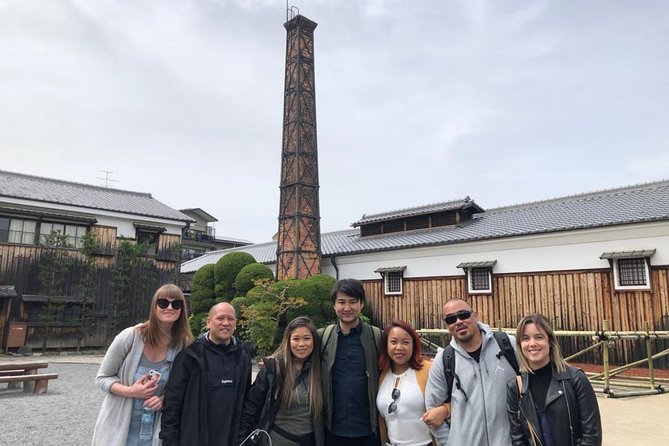
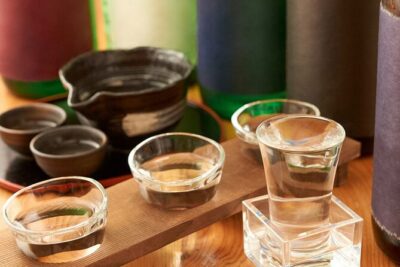
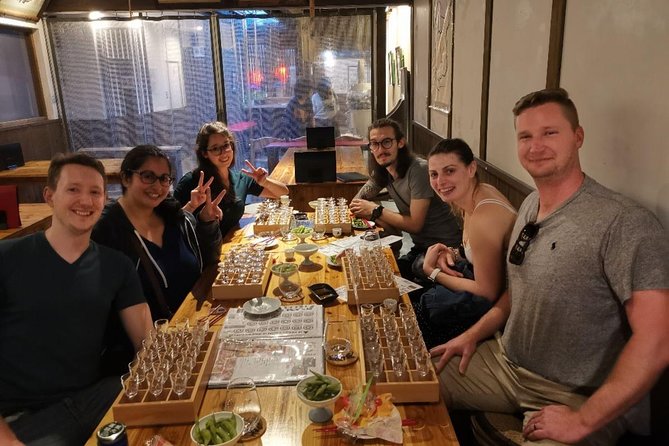
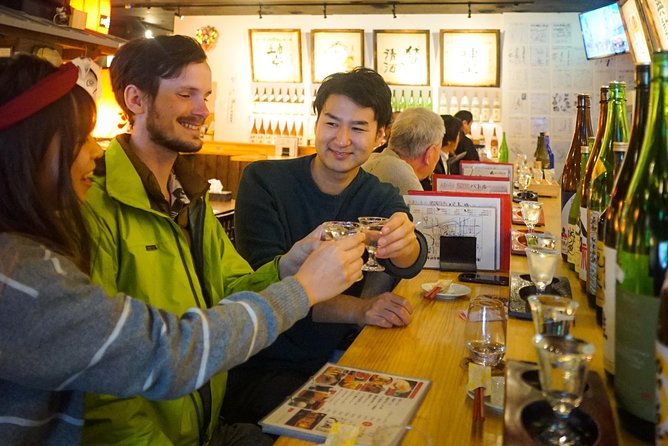
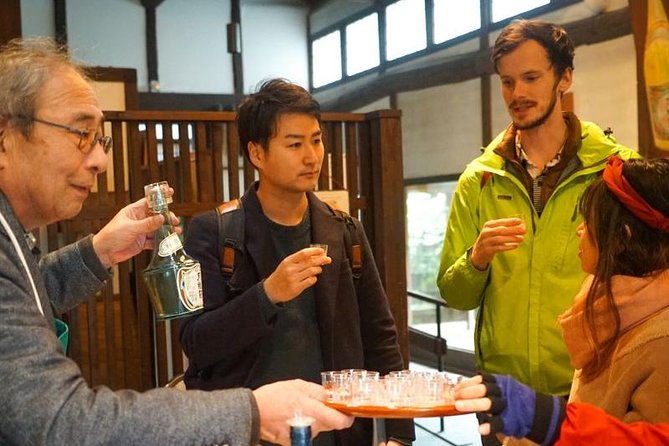
The core experience is the tasting at a local sake restaurant/bar, where you sample a range of sake varieties made in Kyoto. The tour info lists 18 kinds at the sake restaurant tasting, and many past groups report tasting 21 to 22 types depending on the exact set that day. Either way, the main idea is the same: you are not doing one or two pours. You are doing a guided sampler.
Here is what makes this part work: the tasting is not random. The guide helps you understand what you are tasting as you go, and they give you cues for how to compare. That is where the museum learning pays off.
What to expect during the tasting portion:
- You will try multiple sake styles in one sitting
- You will be able to talk through differences as the guide explains them
- You can purchase food or additional drinks on-site, since extra dining is not included
- If you find a favorite, you may be able to buy bottles at the stops during the tour, so you can bring a taste of Kyoto home
One practical caution: 18-plus pours is a lot of decision-making. If you are prone to ordering everything and then forgetting what you drank, use a simple system. Pick one pour to focus on for dryness, one for aroma, and one for how it finishes in your mouth. You do not need to be a sommelier. You just need a way to remember the differences.
Also, if you do not normally drink much, tell the guide early. They can often help pace you so the tasting stays enjoyable and not sleepy.
More Food Tours in Kyoto
- Kyoto: Insider Sake Brewery Tour with Sake and Food Pairing
★ 5.0 · 704 reviews - Kyoto Nishiki Market Food and Culture Walking Tour
★ 5.0 · 412 reviews - 1.5-Hour Kyoto Insider Sake Experience with 7 Tastings & Pairings
★ 5.0 · 297 reviews - Kyoto: Insider Sake Experience with 7 Tastings and Snacks
★ 5.0 · 266 reviews
The walk, timing, and logistics that affect your day
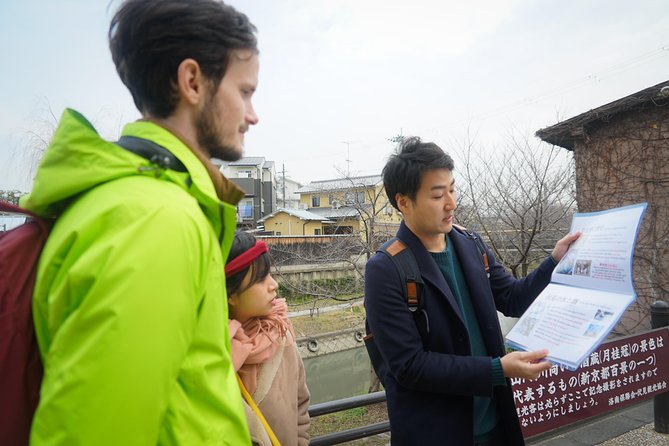
This is a 3-hour tour in total, designed as a compact walking loop around Fushimi’s sake area. You start at Chushojima Station and end at Fushimi-Momoyama Station, both near public transport.
That start and end point detail matters more than it sounds. It means you can plan the rest of your Kyoto day without adding long detours. If you are using transit between neighborhoods, you will likely find this easier than tours that end where they start.
The tour is also set up for weather and comfort. In summer, Japan is hot and humid, so plan like you are training for a short hike. Bring water and a hat, and take advantage of any brief pauses built into the route.
One more thing: the tour is described as not recommended for people with mobility issues, but it explicitly says you should contact to ask about a private option. If walking is an issue for you, do not guess. Ask.
What you learn that sticks, even if sake is new to you
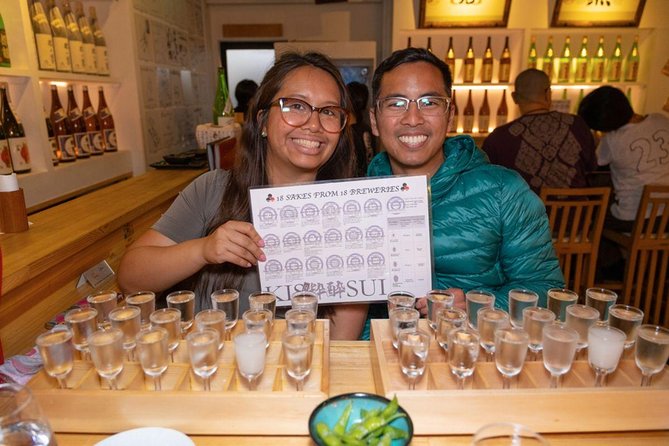
By the end, you should feel like you can name what you like and why, even if you started with zero knowledge.
Here are the specific skills this tour trains:
- Understanding sake production basics, so flavors do not feel mysterious
- Recognizing different styles, like dry versus sweet
- Learning how to compare, using a guided tasting format
- Connecting sake to Kyoto culture, through museum and local stops
One of the most praised aspects of this experience is how guides bring both technique and real enthusiasm. Past groups highlight guides such as Matt, Kumi, Linda, Yukari, Rika, and others who explained the brewing process thoroughly and helped people find personal favorites. The consistent theme is that the guide’s explanations make the tasting easier, not harder.
If you want to make the most of the tour, come with two simple questions:
- What should I taste for first to decide if I like dry styles or sweeter ones?
- What is the best way to store and serve a bottle I buy later?
You will get more out of the tasting when you treat it like learning with your mouth, not just drinking.
Value for the price: what you pay for and what you get
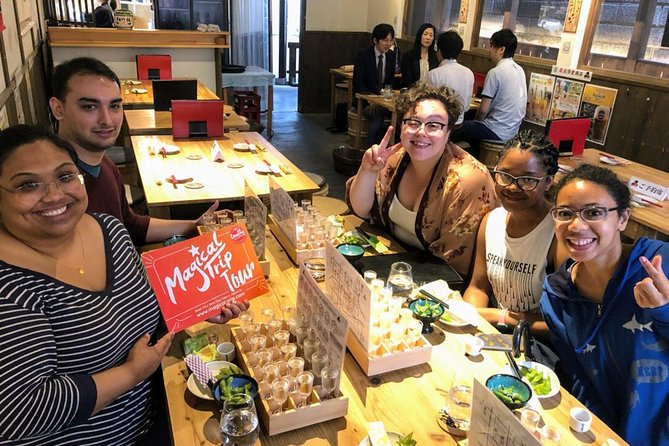
At $98.82 per person for about 3 hours, this is not a budget-only activity, but it often feels fair because you get several things bundled together.
You get:
- Admission to the Gekkeikan Okura Sake Museum
- A structured sake tasting set at the restaurant (listed as 18 types)
- Photos during the tour
- A certified guide through MagicalTrip
- Admission included for stops on the route (like Kappa Gallery)
The main “value” question is whether the tasting portion justifies the price. In this case, it usually does because you are tasting lots of styles with explanations and a guided flow. You are also paying for convenience: the tour sets up the visits and pacing, instead of you trying to piece together museum, tasting, and brewery-area navigation on your own.
There is also an option for minors. Anyone under 20 gets foods or snacks instead of the sake tasting set, which can make it easier for families with older teens.
The only real value mismatch I would watch for: if your main goal is only tiny Kyoto-only breweries that are hard to find elsewhere, this tour may include time with a major Kyoto sake producer whose brand is known internationally. That can still be interesting for the production story, but it may not feel as exclusive if exclusivity is your top priority.
Who should book this Kyoto sake brewery and tasting walk
This tour is a strong match if:
- You want a guided education of sake styles, not just a drinking stop
- You enjoy walking and want to see Fushimi’s brewery district feel
- You like structured tastings where you learn how to compare flavors
- You are traveling with someone and want shared talk time over many pours
You might skip it if:
- You have trouble with walking or heat (and you are not able to arrange a private option)
- You want only micro-brewery, super-rare access and nothing tied to major producers
- You need guaranteed allergy-free dining, because the tour notes that it cannot guarantee allergy-free accommodations and food is prepared in kitchens not belonging to MagicalTrip
Should you book it? My quick call
Yes, you should book it if you want the most efficient way to learn sake in Kyoto without turning your day into a logistics puzzle. The museum start helps you taste with context, the small-group format keeps it interactive, and the number of sake samples makes it worth the price for most people who enjoy trying different styles.
If your priorities are very specific, like only the smallest producers or strict dietary certainty, then message first and clarify what is possible. But for most first-timers and returning sake fans, this is a fun, practical way to experience Kyoto through a drink you will remember.
FAQ
Where does the Kyoto Sake Brewery & Tasting Walking Tour start and end?
The tour starts at Chushojima Station (Yoshijima Yaguracho, Fushimi Ward) and ends at Fushimi-Momoyama Station (4 Chome Ryogaemachi, Fushimi Ward).
How long is the tour?
The tour lasts about 3 hours.
How many people are in the group?
The tour has a maximum group size of 7 travelers.
What is included in the price?
Included is the sake tasting (listed as 18 kinds of sake at the sake restaurant), photos during the tour, admission to the Sake Museum, and a certified guide by MagicalTrip.
What happens if someone is under 20 years old?
The tour notes that anyone under 20 will receive some foods or snacks instead of the sake tasting set.
Is the tour suitable for people with mobility issues?
The tour is not recommended for people with mobility issues. If walking is a problem, you should contact the operator to see whether a private option is possible.
Can the tour accommodate allergies or dietary restrictions?
The tour states they cannot guarantee allergy-free meals or cater to dietary restrictions, since the food is prepared in kitchens that do not belong to MagicalTrip. Substitutions may not be possible at certain stops, though they will try to compensate at other stops.
More Walking Tours in Kyoto
- Kyoto Geisha Walking Tour: Gion District & Hidden Gems
★ 4.7 · 3,273 reviews - Kyoto: Gion Geisha District Walking Tour – Stories of Geisha
★ 4.7 · 2,187 reviews - Night Walk in Gion: Kyoto’s Geisha District
★ 4.5 · 2,003 reviews - Kyoto Gion Geisha District Walking Tour – The Stories of Geisha
★ 5.0 · 1,441 reviews
More Sake Tastings in Kyoto
- Kyoto: Sake Brewery and Tasting Tour in Fushimi
★ 4.8 · 55 reviews - Kyoto: Gion Evening Walk with Hidden Gems, Geisha & Sake
★ 5.0 · 41 reviews - Kyoto: Fushimi Sake Brewery Tour – 18 Tastings in 2.5 Hours
★ 4.7 · 36 reviews - Kyoto: Beyond the Insider Sake Tasting Experience
★ 5.0 · 30 reviews
Newly listed around Kyoto
- Taste of Nishiki Market Walking Food Tour with Local guide★ 5.0 · 17 reviews
- Kyoto: Sushi Making Class with Sushi Chef★ 4.8 · 64 reviews
- Simple Plan with Maiko★ 4.4 · 10 reviews
- Shibori Furoshiki Course at Kyoto Shibori Museum★ 5.0 · 21 reviews
- Kyoto: City Secrets eBike Tour★ 4.9 · 196 reviews
- Sacred Pathways: Discover the Philosopher’s Path of Kyoto★ 4.9 · 20 reviews
- Private Tour to Monkey Park and Arashiyama Highlights★ 5.0 · 22 reviews
- Private Nara Tour from Osaka – Meet at Your Hotel★ 5.0 · 22 reviews
Sake Brewery Visits, compared.
Kyoto Night Foodie Tour in Gion (9+ dishes + 6 Sake tastings)
Read our review →
1-Day Snow Monkeys, Zenko-ji Temple & Sake in Nagano
Read our review →
3-Hour Kyoto Insider Sake Brewery Tour with Tastings & Pairings
Read our review →
Arashiyama Bamboo, Temple, Monkeys, or Secret Sake Brewery
Read our review →
Nagano: Snow Monkeys, Zenkoji Temple & Sake Day Trip
Read our review →
Insider Sake Brewery Tour with Sake and Food Pairing
Read our review →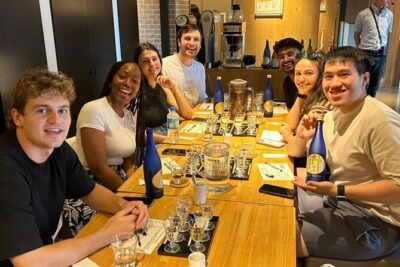
1.5-Hour Kyoto Insider Sake Experience with 7 Tastings & Pairings
Read our review →