
Review · LOCAL FOOD WALKS
Tokyo: Togoshi Ginza Street Food Tour
Tokyo has a talent for making simple snacks unforgettable. This Togoshi Ginza Street Food Tour turns a long shopping street and nearby local blocks into a tasty, story-filled walk. I especially like the mix of charcoal yakitori and award-winning karaage, plus the chance to pick onigiri fillings that go way beyond the usual. One thing to plan for: it’s about 3 km of walking, so it may feel like a lot if your fitness level is low.
Meet your guide outside Starbucks, then follow them through Musashi Koyama Palm Shopping Street and onto Togoshi Ginza, a stretch with 400 shops that locals actually use. The guides names pop up again and again in strong feedback, including Sahori, Brian, Daisy, Bunga, and Frank, and the common thread is clear, friendly guidance paired with a small-group pace. You’ll eat plenty, learn what makes each dish what it is, and finish with dessert if you still have room.
In This Review
- Key Things I’d Put On Your Radar
- Entering Tokyo’s Food Scene at Musashi Koyama Palm Street
- Yakitori First: Charcoal-Grilled Chicken Skewers Since 1929
- Togoshi Ginza’s Karaage Stop: Award-Winning Fried Chicken
- Onigiri With 40+ Fillings: Build Your Own Flavor Adventure
- Curry Bread and Savory Comfort, Then Dessert on Purpose
- What 7 Food Tastings Really Means for Your Appetite
- Walking Distance and Pacing: The 3 km Factor
- How the Guides Make It Feel Local, Not Just Delicious
- Price and Value: Is $95 Worth a 2-Hour Street Food Walk?
- Who Should Book This Tour (And Who Might Skip It)
- Should You Book This Togoshi Ginza Street Food Tour?
Key Things I’d Put On Your Radar
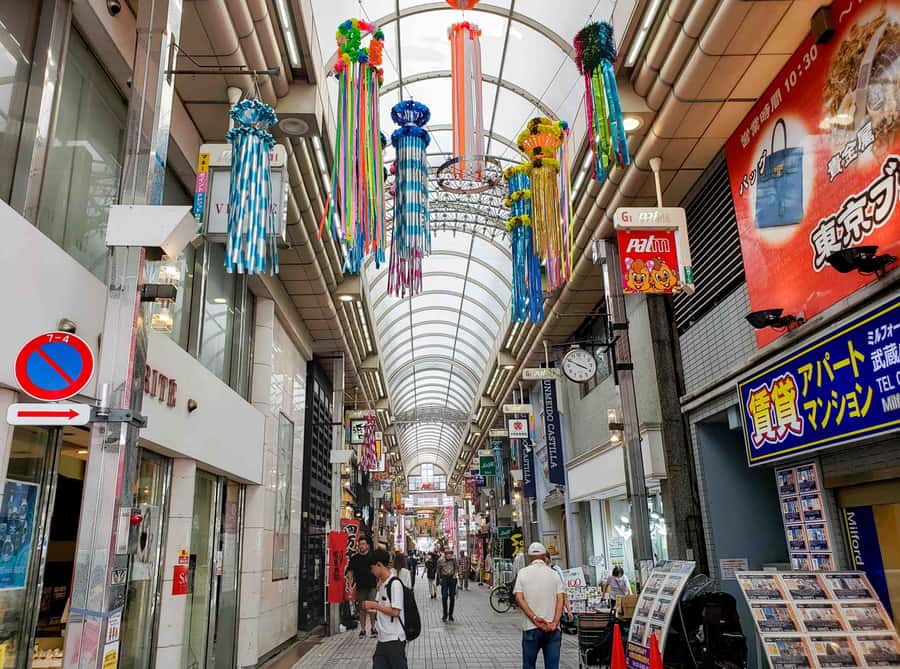
- Tokyo’s longest shopping street: Togoshi Ginza with 400 shops, plus quieter residential lanes between stops
- Yakitori from a shop dating to 1929: charcoal-grilled chicken skewers with real staying power
- Karaage focus: award-winning Japanese fried chicken as a main event
- Onigiri with 40+ fillings: you get to choose your mood, from savory to spicy options
- Sweet ending that actually satisfies: extra rich Japanese pudding and a final dessert
Entering Tokyo’s Food Scene at Musashi Koyama Palm Street
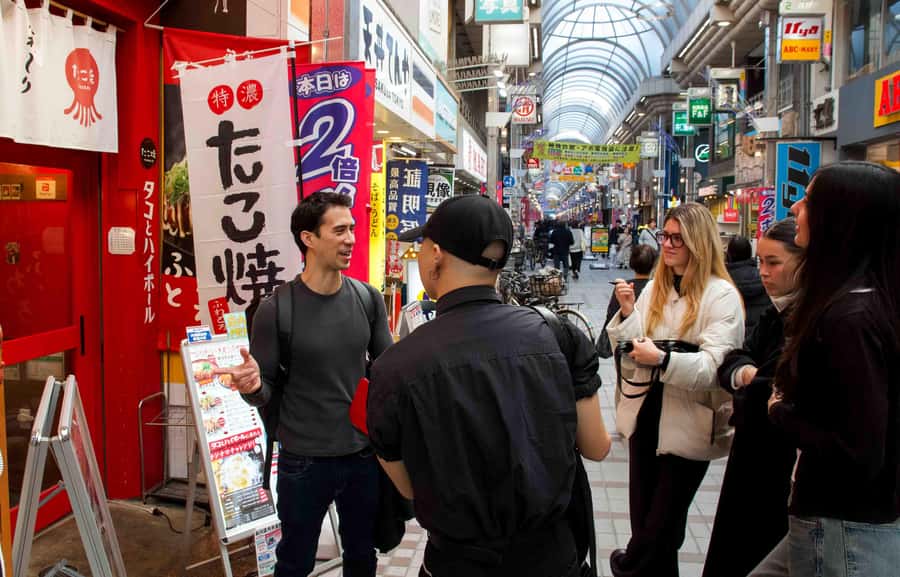
This tour starts at the entrance area of Musashi Koyama Palm Shopping Street, with your guide waiting outside Starbucks, holding a Food Tours Tokyo sign. From step one, the goal is simple: get you eating fast, but also understanding what you’re tasting.
Musashi Koyama gives you that real “locals shopping here” feeling. You’re not just wandering past storefronts, you’re moving from one food counter to the next while your guide points out the why behind each item. It’s one of the best ways to cut through the guesswork, especially in Tokyo where menus can be a language wall.
I also like that the tour stays in motion while still giving you a chance to absorb the neighborhood. You’ll see a side of Tokyo that’s lively, but not packed with tourist lines all day.
More Food Tours in Tokyo
- Tokyo: Shinjuku Food Tour (13 Dishes at 4 Local Eateries)
★ 5.0 · 6,603 reviews - Tokyo Tsukiji Fish Market Food and Culture Walking Tour
★ 5.0 · 3,184 reviews - Tokyo: Shinjuku Food Tour (15 Dishes and 4 Eateries)
★ 4.9 · 2,033 reviews
Yakitori First: Charcoal-Grilled Chicken Skewers Since 1929
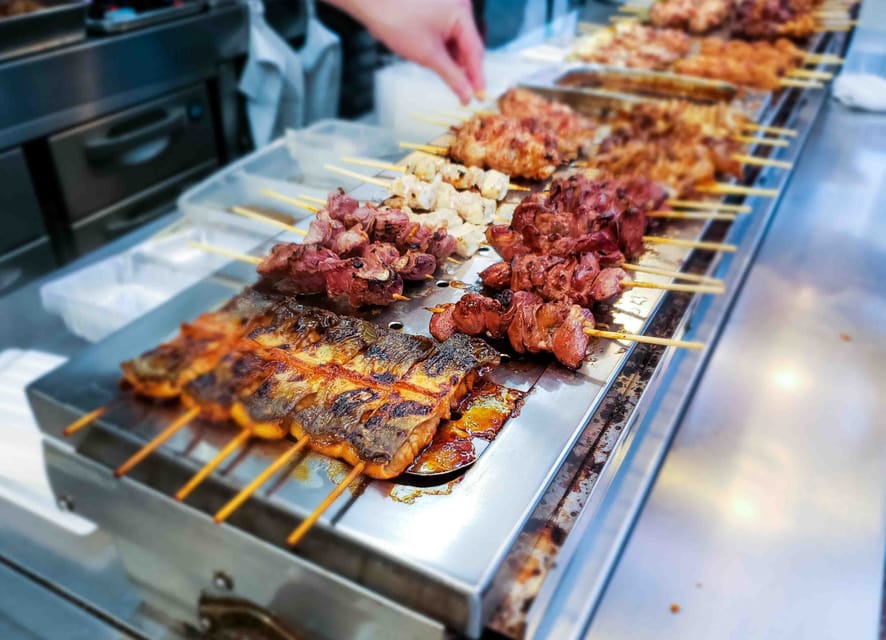
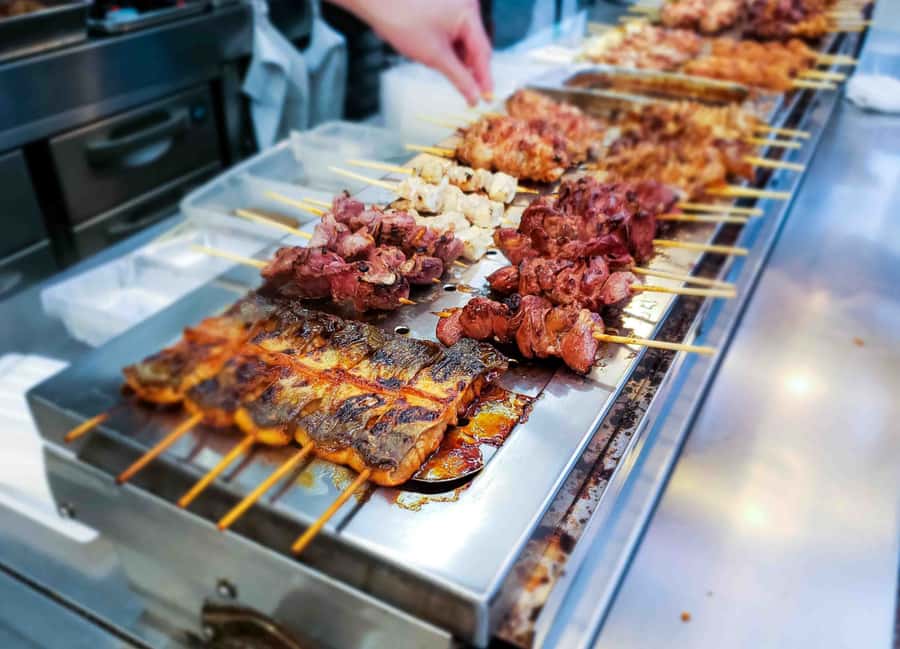
Your first proper stop is for charcoal-grilled chicken skewers (yakitori). The standout detail here is the long-running shop, established in 1929, which matters more than it sounds. In Japan, longevity often signals consistent quality, and yakitori is one of those foods where technique shows up immediately.
Expect juicy chicken with a smoky, grilled flavor. Yakitori is also a great opener because it doesn’t require you to commit to something too heavy at the start. It helps you get your bearings, both in the neighborhood and in the flavors this tour is going to keep repeating.
A practical tip: eat slowly. Yakitori is delicious hot off the grill, but you’ll be sampling multiple foods in succession. If you pace yourself early, you’ll enjoy the later fried and dessert stops instead of feeling stuffed on autopilot.
Togoshi Ginza’s Karaage Stop: Award-Winning Fried Chicken
After Musashi Koyama, you head toward Togoshi Ginza, described as Tokyo’s longest shopping street with 400 shops. This is where the tour shifts from neighborhood bustle to a longer stretch of retail energy, still very “everyday Tokyo” rather than a theme park.
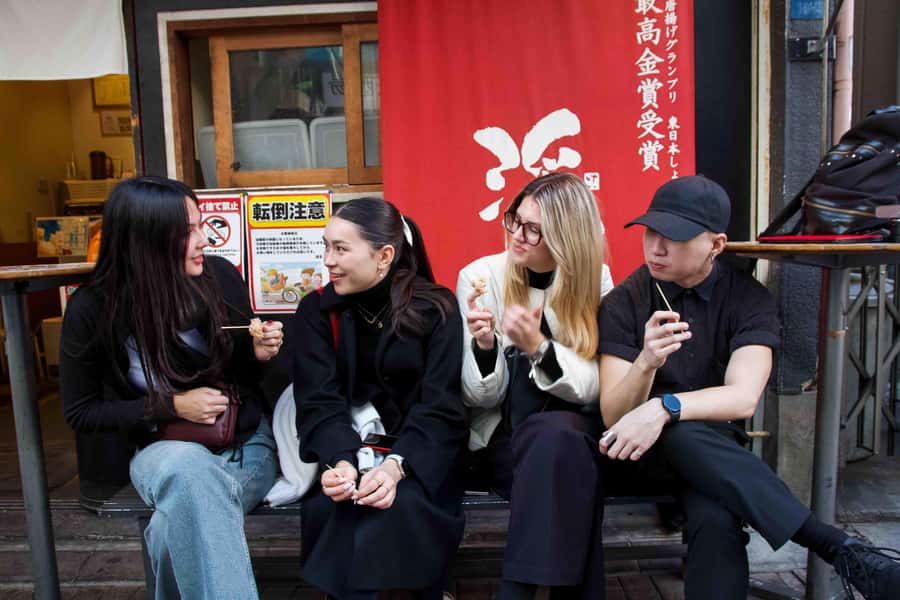
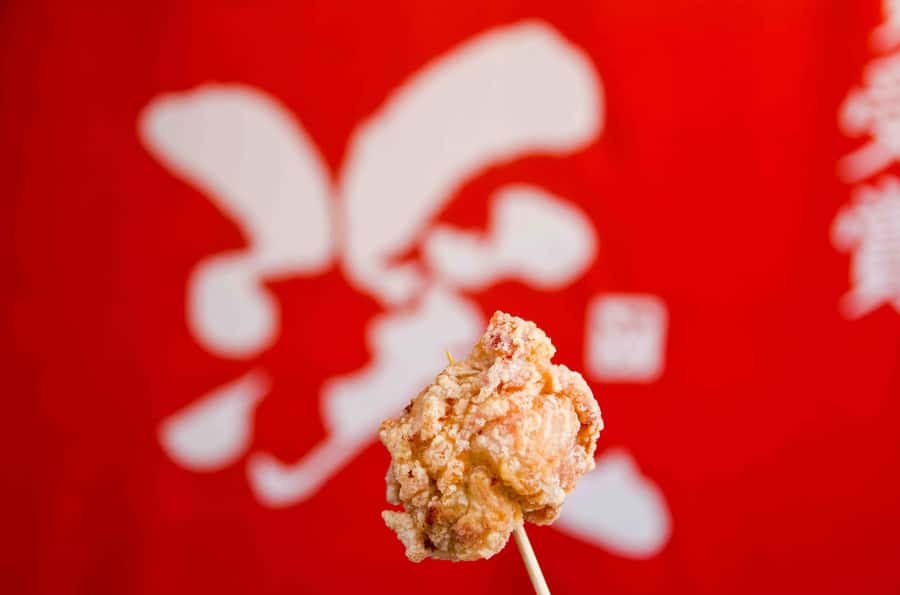
Then comes karaage, Japan’s famous Japanese fried chicken. This stop is specifically called out as award-winning, and I think that detail is your clue that this isn’t meant to be a token tasting. Karaage is one of those foods where the difference between good and great is obvious, especially with the crunch and the savory chicken inside.
On a walking food tour, fried chicken can sometimes leave people feeling tired. Here, the yakitori first step makes karaage feel like the next logical upgrade, not a random switch. You also get enough time with your guide to learn what makes the seasoning and fry style work, so it tastes more intentional than just snack food.
If you’re deciding whether you like karaage, this is the moment to say yes. The flavor is bold, but it’s also comforting, and it pairs well with the included drink.
Onigiri With 40+ Fillings: Build Your Own Flavor Adventure
Next comes onigiri, the classic Japanese rice ball. What makes this stop special is choice: you’ll pick from over 40 different fillings. That’s not just variety for variety’s sake. It lets you experience how onigiri can swing from salty and creamy to spicy and seafood-forward, all using the same familiar rice base.
You might see options like bacon or cream cheese, and also spicy tuna. The smart move is to choose one filling you recognize, then one that’s more adventurous. That way you get both the safe “I get it” bite and the “wait, Tokyo does this?” bite.
This is also a great stop for people who get overwhelmed by menus. When a vendor offers dozens of fillings, your guide becomes the decoder, helping you pick something that fits your tastes rather than just what looks easiest.
One more reason I like this part of the tour: onigiri is portable food done right. It’s filling without being messy, so you can keep walking without feeling slowed down.
More Food Walks in Tokyo
- Tokyo Night Foodie Tour in Shinjuku – Seasonal Sushi, Wagyu Beef
★ 5.0 · 1,161 reviews - Shinjuku Izakaya Food Tour
★ 5.0 · 1,041 reviews - Eat and Drink Like a Local: Tokyo Ueno Food Tour-Taverns&Ramen
★ 5.0 · 957 reviews - Tokyo: Shibuya Food Tour (13 dishes and 4 Eateries)
★ 5.0 · 770 reviews
Curry Bread and Savory Comfort, Then Dessert on Purpose
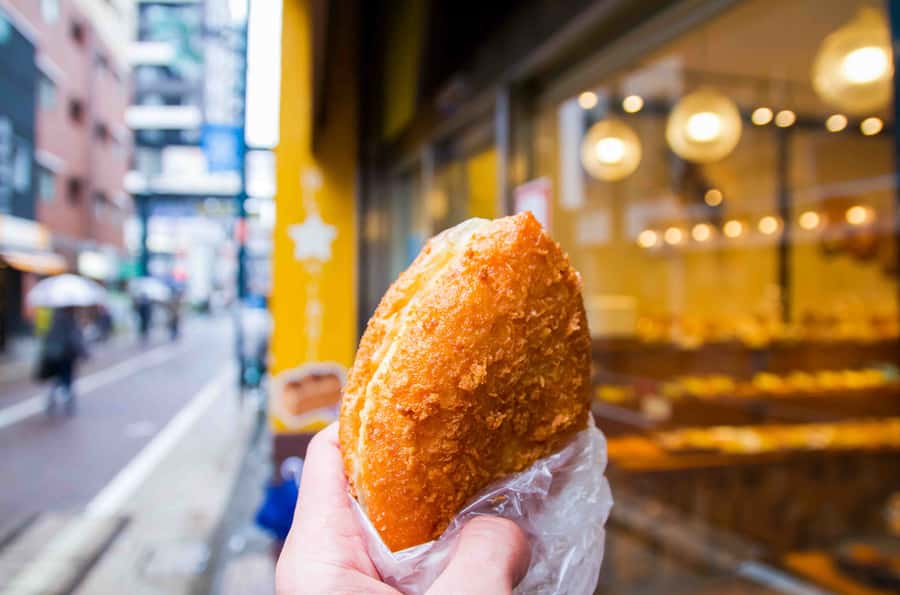
After onigiri, the tour leans into something warm and bakery-like: bread filled with beef curry. This is the comfort-food bridge between the more snacky items and the sweet finale.
Curry bread works because it combines familiar curry flavor with a crusty, handheld format. If you’ve ever eaten curry in a café or curry at a train-station counter, you’ll recognize the vibe, just in a different shape. It also tends to balance the earlier fried notes. Even if the fried chicken still lingers in your memory, curry bread can reset your palate.
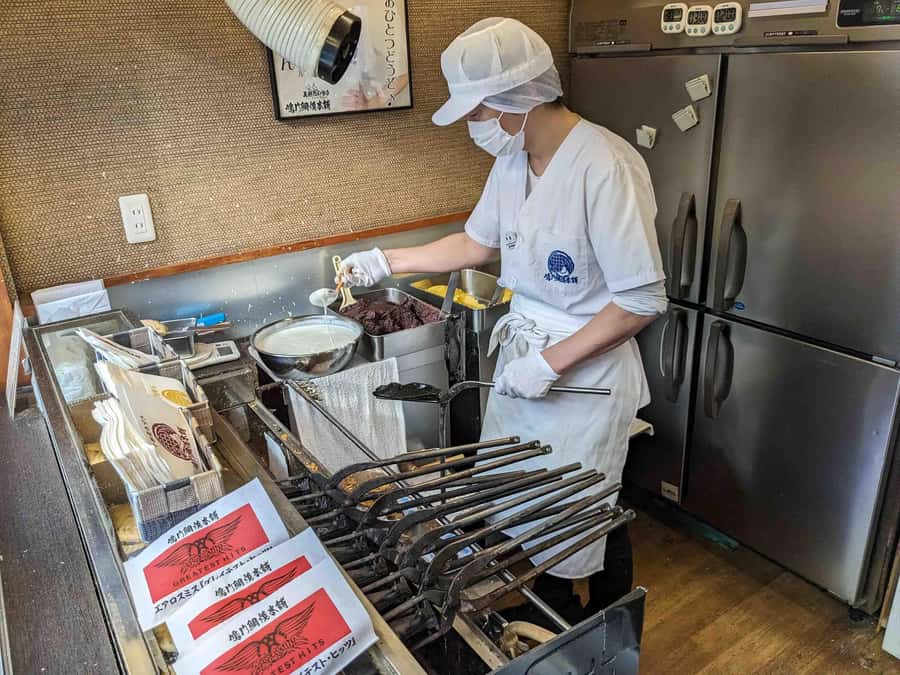
Then you finish with extra rich Japanese pudding and another dessert if you still have room. The pudding ending is a smart choice because it’s smoother and cooler than many snacks, which helps prevent that sugar crash feeling. The additional dessert is there for people who pace themselves and want the full sweet payoff.
If you’re the type who always saves dessert for later, this is where you’ll feel tempted to break your own rule. With 7 food tastings total included, you’re being fed like a full meal, just spread across different styles.
What 7 Food Tastings Really Means for Your Appetite
The tour includes 7 food tastings and 1 alcoholic or non-alcoholic drink. That’s a big deal for value, because Tokyo street food can add up fast when you’re paying solo at multiple stalls.
The headline items you’ll definitely plan around are yakitori, karaage, onigiri, curry bread, Japanese pudding, and a final dessert. Since the total tastings count is higher than those names alone, you should expect additional bite-sized stops along the way. Think of it as a guided sampling experience, not a single dish per location.
My advice: come hungry, but don’t come reckless. Eat what’s in front of you, but take a breath between stops. You’ll enjoy it more, and your photos will look better too because you won’t be racing your own appetite.
Also, since the tour is mostly outdoors, plan for weather. One practical review note was to rug up on colder days. Layers are your friend, even in Tokyo.
Walking Distance and Pacing: The 3 km Factor
The route involves about 1.86 miles (3 km) of walking. In real life, that’s not a marathon, but it’s enough to matter when you’ve got food in your system.
This is not the type of experience you want if you know you tire quickly on foot. On the other hand, if you’re comfortable walking a couple miles in short stretches, the walking works with the food schedule. You’re never stuck waiting a long time between tastings, and moving along keeps the vibe from turning into a food crawl that drags.
Pacing is also part of why small groups matter. With a maximum of 8 participants, your guide can keep everyone close and make sure the group hits each stop at a good time. You also get more chances to ask questions when the group isn’t too large.
How the Guides Make It Feel Local, Not Just Delicious
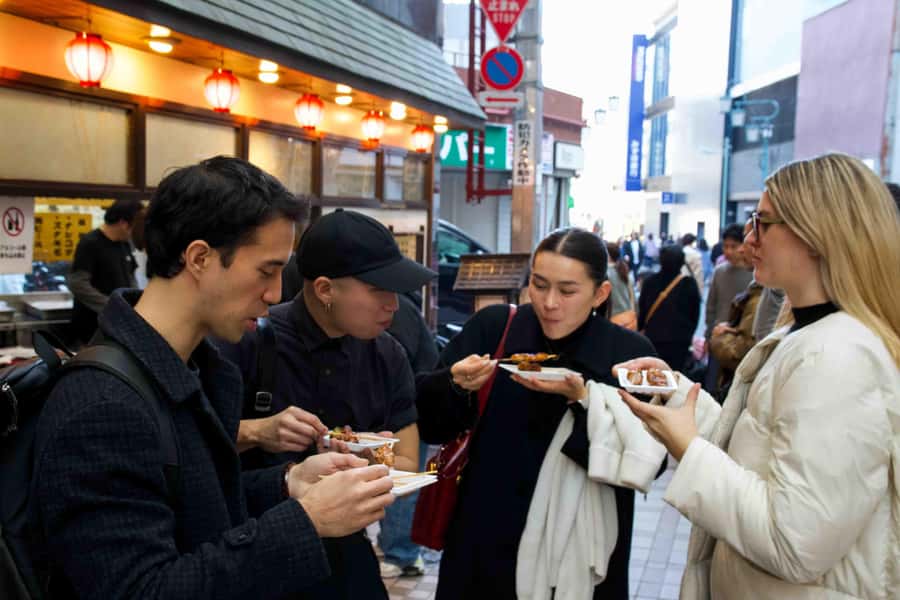
The most consistent praise across the experience is the guide factor. People highlight friendly, organized guidance, helpful cultural context, and smooth pacing, with names like Sahori, Brian, Daisy, Bunga, and Frank showing up repeatedly.
One really useful idea to take into the tour: ask your guide for help after the tour too. A review mentioned a guide stepping in to help navigate Tokyo’s train system afterward, which is exactly the kind of extra care that turns a good tour into a genuinely helpful one. When you’re moving through residential areas, having a route tip can save you stress.
You’ll also learn about the history of the dishes as you go. That’s not academic trivia. It changes how you taste, because you understand what the dish is trying to do, such as how yakitori is grilled for smoke and texture, or how karaage gets its crunch from the fry and seasoning style.
Price and Value: Is $95 Worth a 2-Hour Street Food Walk?
At $95 per person for 2 hours, this tour isn’t a budget snack. But you’re paying for the bundle: a guide, a small group, and 7 food tastings plus a drink.
Here’s how I see the value:
- You get multiple food types that are hard to choose on your own, like award-winning karaage and a big onigiri selection
- You avoid wasting time trying to read menus or guessing what’s worth ordering at each stall
- You’re not just eating, you’re getting context, which makes the experience feel intentional, not random
- The route includes Togoshi Ginza’s long shopping street plus less touristy residential neighborhoods, so you’re seeing more than a single famous food strip
In Tokyo, paying a guide often makes sense when your goal is quality and confidence. If you enjoy street food and want to minimize decision fatigue, $95 can feel fair for what you receive.
Who Should Book This Tour (And Who Might Skip It)
This tour is ideal if you:
- Want a small-group food plan with multiple tastings instead of picking places one by one
- Love the classic Tokyo comfort foods like yakitori, karaage, onigiri, curry, and pudding
- Prefer local neighborhoods over the busiest tourist corridors
- Like a guide who explains what you’re eating so it sticks in your brain
It might be less ideal if you:
- Struggle with walking and don’t enjoy a 3 km stroll
- Don’t like eating several items close together
For families, the tour may work well too, since reviews mention guides being fun and attentive with kids. If you’re traveling with children, you’ll still want to pace and plan for snacks, but the structure can reduce the usual “what do we eat?” stress.
Should You Book This Togoshi Ginza Street Food Tour?
If you want a Tokyo food experience that feels local, organized, and genuinely filling, I’d say book it. The combination of long shopping street energy with quieter residential streets is exactly the sweet spot many people hope to find but can’t easily assemble alone.
Do it if you’re excited about karaage, want onigiri with real choice, and like your dessert to be part of the plan. Skip it only if the walking distance sounds like a hassle for you, or if you prefer full sit-down meals over bite-sized tastings.
One final practical move: arrive hungry, wear comfortable shoes, and don’t be shy about asking your guide for a next-step plan for getting around afterward. When the tour ends with you feeling fed and oriented, it’s a win.
More Food & Drink in Tokyo
- Tokyo: Tsukiji Fish Market Food and Walking tour
★ 5.0 · 1,724 reviews - Tokyo: Tsukiji Fish Market Food and Culture Walking Tour
★ 4.7 · 757 reviews - Tsukiji Fish Market: Street Food & Culture Walking Tour
★ 5.0 · 669 reviews - Tsukiji Fish Market Small-Group Food Walking Tour
★ 5.0 · 621 reviews
Newly listed around Tokyo
- Tokyo private transfer for Yokohama Port★ 4.5 · 63 reviews
- Luxury Kimono Photoshoot at Ginza Tokyo★ 5.0 · 7 reviews
- Tokyo Allstar Food Tour★ 4.5 · 206 reviews
- Tokyo Art Aquarium Museum E-Ticket with optional Tokyo Metro Pass★ 5.0 · 17 reviews
- Tokyo: Best Ginza Food Tour at 3 Local Eateries★ 5.0 · 83 reviews
- Private One Day Nikko Tour with Bilingual driver★ 3.5 · 11 reviews
- PRIVATE tour in 180SX to Daikoku+++++★ 5.0 · 6 reviews
- Kabuki Talk★ 5.0 · 10 reviews
Local Food Walks, compared.
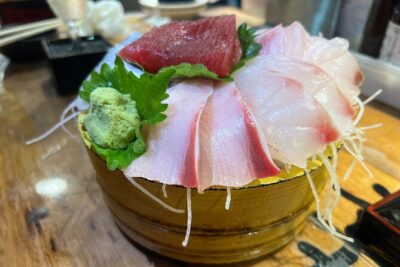
Shinjuku Food Tour (13 Dishes at 4 Local Eateries)
Read our review →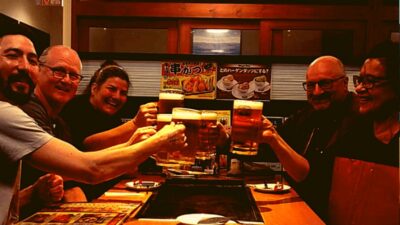
Shinsekai Food Tour with 13-15 Dishes at 5 Eateries
Read our review →
Osaka Food Tour: 13 Dishes at 5 Local Eateries
Read our review →
Shinjuku Food Tour (15 Dishes and 4 Eateries)
Read our review →
Kyoto Night Foodie Tour in Gion (9+ dishes + 6 Sake tastings)
Read our review →
Hungry Osaka Street Food Tour:15 Tastings & 3 Drinks with a Local
Read our review →
Tokyo Night Foodie Tour in Shinjuku – Seasonal Sushi, Wagyu Beef
Read our review →
Browse the lists this tour appears in