
Review · WAGYU BEEF DINNERS
Tokyo Wagyu Culinary Tour Cooking Culture and Tasting
Wagyu, taught step by step. In this Tokyo class, you learn how to spot different Wagyu cuts, understand how each one is handled, and then cook and taste what you make. I especially liked the practical focus on heat control and timing, not just theory.
Two standouts for me: I had fun doing hands-on cooking with guided help, and the food felt genuinely excellent at the tasting stage. The one thing to consider is simple, it is priced at $920 for about two hours, so it makes the most sense if you want a focused small-group cooking class, not a casual stop.
In This Review
- Key highlights
- Starting in Oshiage, then getting straight to Wagyu
- Wagyu basics: grading, origins, and what actually changes from cut to cut
- The butchery demo: seeing how cuts are prepped for the pan
- Cooking demo focus: seasoning and heat control you can use at home
- Hands-on cooking with chef help: cook, adjust, and learn by doing
- Tasting your Wagyu: what to notice and how beverages fit in
- The Tokyo culture connection: how ingredients become traditions
- Guide touch: Mike, plus Tokyo food ideas that help after class
- Value check: is $920 worth it for two hours?
- Who this tour fits best (and who might want something else)
- Should you book the Tokyo Wagyu Culinary Tour Cooking Culture and Tasting?
- FAQ
- FAQ
- How long is the Tokyo Wagyu Culinary Tour Cooking Culture and Tasting?
- Where does the tour start?
- What is the maximum group size?
- What happens during the class?
- Is this tour suitable if I have dietary restrictions?
- Do I need a mobile ticket?
- What is the cancellation policy for a full refund?
Key highlights
- Welcome drink sets a seasonal Tokyo tone before the beef lesson starts
- Wagyu grading and origins explained in clear, usable terms
- Butchery demo shows how cuts are prepared for cooking
- Hands-on cooking with instructor guidance on seasoning and heat control
- Multiple cut tasting with beverages that complement Wagyu flavors
- Small group size (max 6 participants) keeps things interactive
Starting in Oshiage, then getting straight to Wagyu
The experience starts and ends back at the meeting point in Oshiage, Sumida City: 3-chōme-25-17 Oshiage, Sumida City, Tokyo 131-0045, Japan. It is worth treating this like a real class, meaning arrive with enough time to settle in and focus, not to rush.
You begin with a welcome drink inspired by the flavors of the season in Japan. That is a small moment, but it helps set the rhythm. In Japan, food experiences often start with the taste first, then the lesson.
The group stays small, with a maximum of 6 participants. That matters because Wagyu is all about precision, and the format is built for questions and quick feedback while you cook.
More Cooking Classes in Tokyo
- Ramen & Gyoza Cooking Class in Tokyo with Local Supermarket Visit
★ 5.0 · 823 reviews - Tokyo: Easy Ramen Cooking Experience in Kabukicho, Shinjuku
★ 4.6 · 321 reviews - Ramen and Sushi Cooking Class with Sake Pairing Set in Tokyo
★ 5.0 · 291 reviews
Wagyu basics: grading, origins, and what actually changes from cut to cut
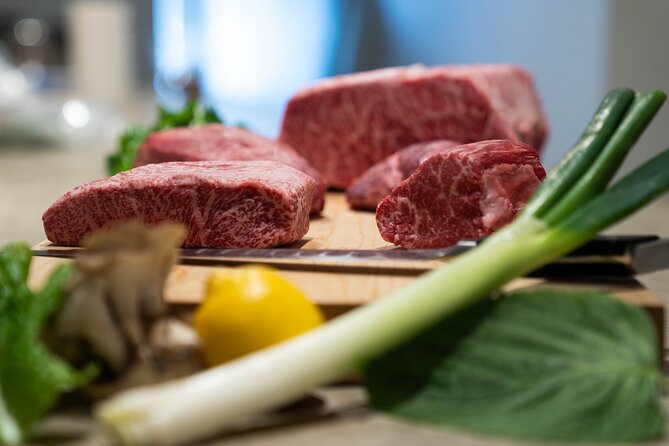
After the welcome drink, you get an introduction to Wagyu beef, including its origins and what makes it special. You also learn how Wagyu is graded. For me, the grading part is not just trivia. It helps you understand why the same label can come with different eating experiences.
Then comes the practical bit, you learn to distinguish various Wagyu cuts and what each cut is best for. The class specifically covers cuts such as sirloin and tenderloin. You are also taught how the care taken for each slice affects how it cooks and tastes.
If you like learning with your hands later, this is a good setup. You are not left guessing what you are eating. You know what you are trying to achieve, whether that is tenderness, texture, or a richer flavor profile.
The butchery demo: seeing how cuts are prepped for the pan
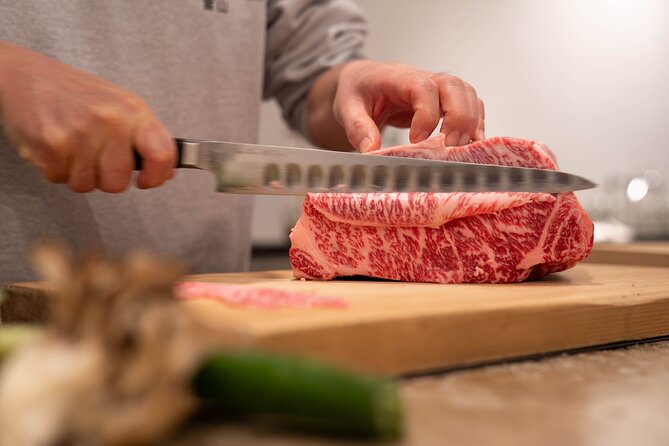
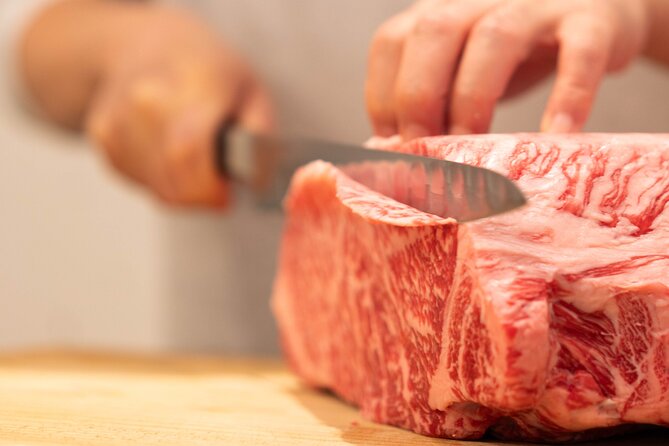
Next you watch a butchery demonstration that shows how the cuts are prepared for cooking. This is one of the most valuable segments of the whole tour because it gives you a map for what you will handle later.
When you see how each cut is set up, you start to understand why cooking instructions differ. Wagyu is not one-size-fits-all. Thickness, shape, and how the piece is handled can affect how evenly it heats, and that is where temperature control becomes more than a fancy phrase.
For home cooking, this moment helps you stop treating Wagyu like a single steak category. You start thinking in cuts and techniques. That mindset is what makes the lesson stick after you leave Tokyo.
Cooking demo focus: seasoning and heat control you can use at home
Once the cuts are explained, the experience shifts into technique: proper seasoning and heat control, plus timing. They specifically highlight temperature control, which is the key to avoiding the most common Wagyu mistake, ending up with meat that is overcooked when it could have been at its best.
You see a cooking demo that breaks the process down into clear steps. You are learning how to manage heat so the outside develops flavor without losing the tenderness you paid for.
This is also where the class becomes useful beyond just this meal. If you cook steak at home, you already know how unpredictable your pan can be. The training here is built for that reality, meaning you learn how to adjust and pay attention, not just copy one magic instruction.
More Food Tours in Tokyo
- Tokyo: Shinjuku Food Tour (13 Dishes at 4 Local Eateries)
★ 5.0 · 6,603 reviews - Tokyo Tsukiji Fish Market Food and Culture Walking Tour
★ 5.0 · 3,184 reviews - Tokyo: Shinjuku Food Tour (15 Dishes and 4 Eateries)
★ 4.9 · 2,033 reviews - Tokyo: Tsukiji Fish Market Food and Walking tour
★ 5.0 · 1,724 reviews
Hands-on cooking with chef help: cook, adjust, and learn by doing
Now it is your turn. With chefs help, you cook different cuts yourself. This is interactive, which is great because Wagyu rewards small adjustments. If one piece cooks faster than expected, you need to respond in the moment, and you get that chance here with guidance available.
Doing the cooking is where the earlier cut education pays off. When you understand what makes a sirloin different from a tenderloin, it is easier to decide what kind of attention each piece needs. You are also practicing seasoning and timing in a setting where you can correct errors right away.
In a small group of up to 6, it is easier to get direct feedback. That is a big deal for a premium ingredient. With Wagyu, one careless step can ruin the texture and flavor balance. The format helps you learn without that painful trial-and-error.
Tasting your Wagyu: what to notice and how beverages fit in
After cooking, you taste your dishes. This is not just a meal end, it is part of the learning cycle. You are tasting with beverages paired to complement Wagyu flavor.
The value here is learning what changes as you cook. You can compare how different cuts feel and taste, and you can connect that back to the heat control and timing you practiced. If one piece came out softer or more flavorful, you can usually trace the reason to what you did during cooking.
This is also where the class ties into Tokyo food culture. You are taught about Wagyu role in Japanese culture, which helps you understand why the techniques exist. The goal is not just cooking a nice steak. The goal is respecting the craft behind it.
The Tokyo culture connection: how ingredients become traditions
One line that guides the whole experience is learning culinary traditions of Tokyo by linking ingredients to culture. That shows up in the way the class is structured. You start with origins and grading, move into butchery, then technique, then tasting, then a wrap-up on cultural role.
Even if you have cooked steak before, this framing gives you a deeper reason to care about details. It explains why correct heat control and seasoning matter for Wagyu specifically. It also helps you see Wagyu as a craft, not a shortcut to luxury.
I also appreciated the practical tone. The class is not trying to overwhelm you with steak mythology. It focuses on what to do, what to watch, and what to carry home to your own kitchen.
Guide touch: Mike, plus Tokyo food ideas that help after class
The experience is led by a local, and the instruction I got from Mike stood out. I learned a lot about Wagyu and tried several cuts, and Mike also shared great recommendations for food and activities in Tokyo.
That matters because cooking classes can feel like a bubble if you only focus on the food you made. Having a guide who can point you toward other Tokyo experiences helps you make the most of the trip while you are already in a food learning mindset.
Value check: is $920 worth it for two hours?
At $920 for about 2 hours, this is not a budget activity. The question is whether you are getting something you cannot get from buying steak and watching a YouTube video.
Here is what you are paying for, and why it can be fair value:
- A small group format, up to 6 participants, which supports real interaction
- A structured teaching flow, from Wagyu basics and grading to butchery and hands-on cooking
- Cooking guidance on heat control, seasoning, and timing, which are the core skills for cooking Wagyu well
- A tasting that includes beverages paired to complement the Wagyu flavors
- A cultural wrap-up that turns technique into understanding
If you want a simple food tasting, you might find other options with a lower price. But if you want skills you can repeat, this class is designed to teach technique in a controlled setting.
Also, the mobile ticket format and the quick duration help you fit it into a Tokyo itinerary without turning your day into a marathon.
Who this tour fits best (and who might want something else)
This is a great fit if you:
- Want a hands-on cooking experience and not just watching
- Care about doing steak technique correctly at home, especially with premium ingredients
- Enjoy learning about food culture, but still want it grounded in practical steps
- Like small-group settings where you can ask questions and get feedback
It might be less ideal if you:
- Want only a casual taste with minimal instruction
- Are strictly budget-focused and do not plan to cook Wagyu again later
- Prefer longer experiences where you can slow down and explore beyond the class structure
Should you book the Tokyo Wagyu Culinary Tour Cooking Culture and Tasting?
I would book it if you are the kind of person who wants to leave with repeatable skills, not just a full stomach. The combination of Wagyu cut education, a butchery demo, cooking guidance on temperature control, and a tasting experience that reinforces what you practiced makes the price feel more understandable.
Do it especially if Mike style of guidance and Tokyo food recommendations are the kind of extras you value. For me, that human touch adds real trip value.
FAQ
FAQ
How long is the Tokyo Wagyu Culinary Tour Cooking Culture and Tasting?
The experience lasts approximately 2 hours.
Where does the tour start?
The meeting point is 3-chōme-25-17 Oshiage, Sumida City, Tokyo 131-0045, Japan. The tour ends back at the meeting point.
What is the maximum group size?
The tour has a maximum of 6 participants.
What happens during the class?
You start with a welcome drink, then get an introduction to Wagyu including origins and grading. You learn about different cuts, watch a butchery demonstration, receive cooking and technique guidance (seasoning, timing, temperature control), and then cook and taste different cuts with beverages.
Is this tour suitable if I have dietary restrictions?
Yes. You should let the team know about dietary restrictions, and they will accommodate.
Do I need a mobile ticket?
Yes, the tour includes a mobile ticket.
What is the cancellation policy for a full refund?
You can cancel for free up to 24 hours before the experience start time for a full refund. If you cancel less than 24 hours before, the amount paid is not refunded.
More Food & Drink in Tokyo
- Shinjuku Izakaya Food Tour
★ 5.0 · 1,041 reviews - Eat and Drink Like a Local: Tokyo Ueno Food Tour-Taverns&Ramen
★ 5.0 · 957 reviews - Tokyo: Shibuya Food Tour (13 dishes and 4 Eateries)
★ 5.0 · 770 reviews - Tokyo: Tsukiji Fish Market Food and Culture Walking Tour
★ 4.7 · 757 reviews
More Wagyu Beef Dinners in Tokyo
- Tokyo Night Foodie Tour in Shinjuku – Seasonal Sushi, Wagyu Beef
★ 5.0 · 1,161 reviews - Tokyo: Wagyu and 7 Japanese Dishes Cooking Class
★ 4.9 · 273 reviews - Small-Group Wagyu Beef and 7 Japanese Dishes Tokyo Cooking Class
★ 5.0 · 190 reviews - Wagyu & Sake Pairing in Shinjuku – Steak, Shabu-Shabu & More
★ 5.0 · 112 reviews
Newly listed around Tokyo
- Mount Fuji One Day Private Customizable Tour With English Driver★ 5.0 · 8 reviews
- Tokyo by Night Photography Tour (Private Option Available)★ 5.0 · 151 reviews
- Unlimited Local Night《ALL-YOU-CAN-DRINK》Find Sinjuku Hidden Gems!★ 5.0 · 119 reviews
- Tokyo Zen Meditation at Private Temple with Monk★ 5.0 · 178 reviews
- Tokyo West-Side Cycling & Food Tour★ 5.0 · 214 reviews
- Tokyo WB. Studio Tour Harry Potter’s Creation E-Ticket Optional★ 4.0 · 22 reviews
- Tokyo Private dinner with Geisha★ 5.0 · 10 reviews
- Tokyo Food and Culture tour (Shibuya and Harajyuku)★ 5.0 · 15 reviews
Wagyu Beef Dinners, compared.
Tokyo Night Foodie Tour in Shinjuku – Seasonal Sushi, Wagyu Beef
Read our review →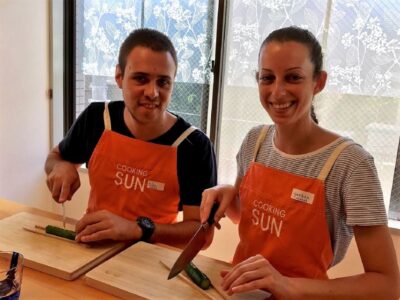
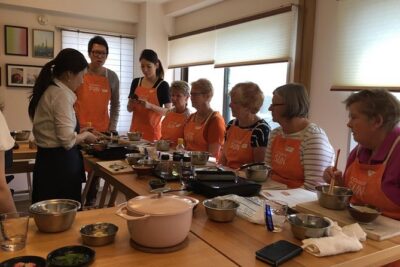
Small-Group Wagyu Beef and 7 Japanese Dishes Tokyo Cooking Class
Read our review →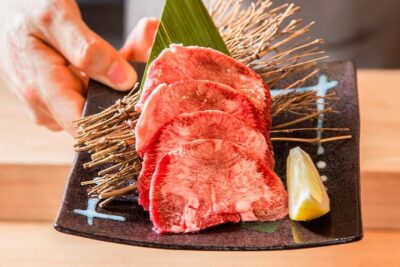
Wagyu & Sake Pairing in Shinjuku – Steak, Shabu-Shabu & More
Read our review →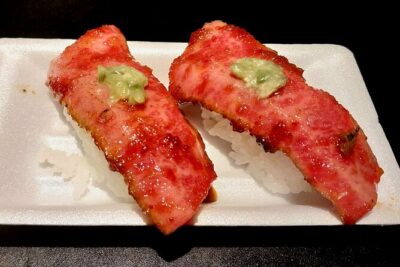
Kyoto Food Tour of 10 Tastings with Wagyu, Mochi & More Surprises
Read our review →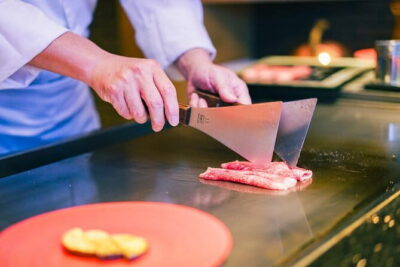
Wagyu Beef and Sake Pairing Foodie Tour in Tokyo
Read our review →
SUMO BEATS SHOWCASE: Taiko Drum and Wagyu burger!
Read our review →
Okinawa: Scuba Diving Tour with Wagyu Lunch and English guide
Read our review →Browse the lists this tour appears in