
Review · JAPANESE COOKING WORKSHOPS
Small-Group Wagyu Beef and 7 Japanese Dishes Tokyo Cooking Class
A full Japanese lunch in three hours, in Tokyo. This small-group Wagyu cooking class in Shinjuku teaches you how to build flavor the Japanese way, starting with dashi and ending with a multi-course feast.
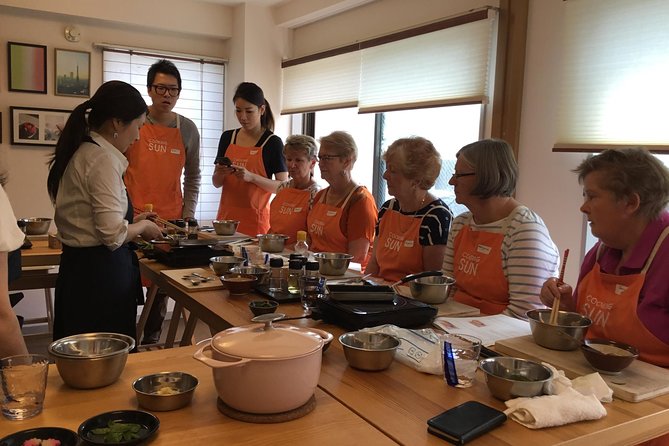
I love that it is truly hands-on. With a maximum of 8 people, you are not standing around, you are chopping, mixing, shaping, and cooking while your English-speaking instructor stays close to help.
One thing to plan for: the meeting building can be a little tricky to locate. You will likely want to rely on your maps app when you arrive.
In This Review
- Why This Tokyo Wagyu Cooking Class Feels Worth Your Time
- Key Highlights at a Glance
- Cooking Sun Tokyo: The Setup for a Real Cooking Class
- Starting With Dashi: The Japanese Flavor Shortcut You Can Actually Reuse
- Your Wagyu Main Dish: Su kiyaki and the Tender-Beef Payoff
- The 7 Japanese Dishes You Cook, Plus the Course-Meal Feeling
- Hands-On Workflow: Chopping, Mixing, and Cooking Without Feeling Lost
- Eating Your Own Lunch: Sake, Green Tea, and the Itadakimasu Moment
- Location in Shinanomachi, Shinjuku: How to Arrive Calm and On Time
- What You Get to Take Home: Recipes and Staple Ingredient Confidence
- Vegetarian Options and Dietary Needs: Tell Them Before You Go
- Value Check: Is $72.96 a Good Deal for a Tokyo Wagyu Cooking Class?
- Who This Cooking Class Is Perfect For
- Who Might Want to Choose a Different Activity
- Final Call: Should You Book This Tokyo Wagyu Cooking Class?
- FAQ
- How long is the Tokyo cooking class?
- Where is the meeting point?
- What time does the class start?
- How big is the group?
- What is included in the price?
- Is hotel pickup included?
- Is there a vegetarian option?
- What language is the instruction in?
- Can I cancel and get a refund?
Why This Tokyo Wagyu Cooking Class Feels Worth Your Time
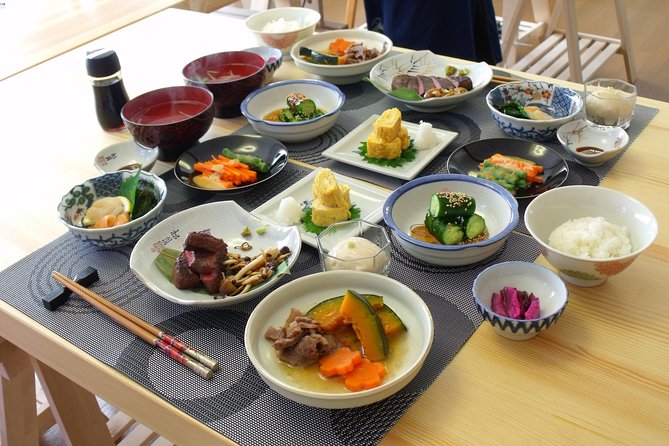
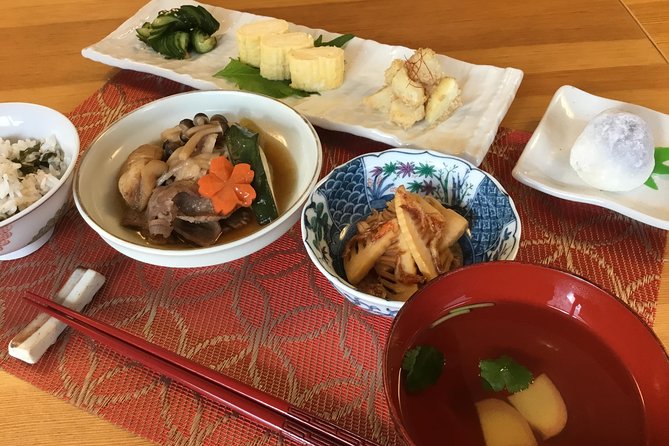
If you want more than a food tour, this works because it is a full cooking session, not just watching. You learn the structure of a Japanese meal, including dashi, and then you cook your way through a kaiseki-style lunch format with Wagyu at the center.
The vibe is homey and relaxed. It is not stiff, and it is not one of those classes where you do one tiny task and call it participation. In the studio, you get feedback as you cook, and the instructors are friendly English-speaking locals like Aya and Hidemi, plus others such as Kaori and Yoko who show up as instructors depending on the class.
The biggest payoff is that you do not just eat delicious food, you learn why it tastes the way it does. Dashi is the key, and you see how often it comes back across the meal.
Key Highlights at a Glance
- Small group of up to 8, so you get real attention and feedback while cooking
- Dashi first, then it keeps showing up in other dishes
- Wagyu as the main dish, including sukiyaki with tender beef
- A full-course lunch format, from appetizer feel to a dessert-style finish
- Instructors share practical tips, plus stories and cooking techniques
- You eat what you cook, with sake and green tea at the end
More Cooking Classes in Tokyo
- Ramen & Gyoza Cooking Class in Tokyo with Local Supermarket Visit
★ 5.0 · 823 reviews - Tokyo: Easy Ramen Cooking Experience in Kabukicho, Shinjuku
★ 4.6 · 321 reviews - Ramen and Sushi Cooking Class with Sake Pairing Set in Tokyo
★ 5.0 · 291 reviews
Cooking Sun Tokyo: The Setup for a Real Cooking Class
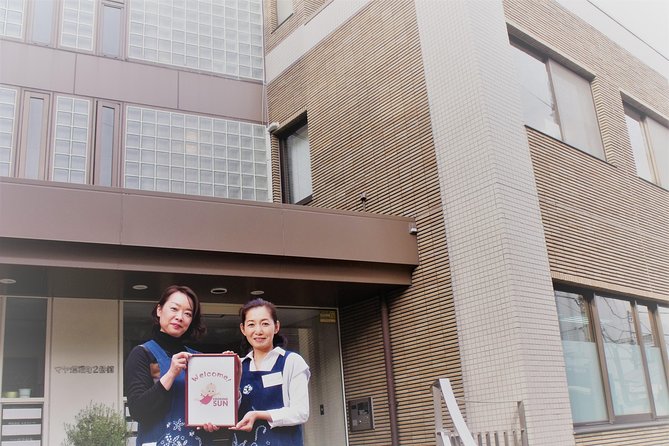
You meet at Cooking Sun Tokyo in Shinanomachi, Shinjuku City. The start time is 9:30 am, and the class runs about 3 hours. No hotel pickup is included, so you will want to handle your own arrival, using nearby public transportation and then a short walk.
Inside, the class is organized for small groups. All ingredients and cooking supplies are provided, and you get an apron plus a towel rental. That matters more than it sounds. When the tools and ingredients are ready, you can focus on technique instead of scrambling for substitutions or missing items.
The mobile ticket is a straightforward touch. You just need it on your phone for entry, and you will receive confirmation at booking time.
Starting With Dashi: The Japanese Flavor Shortcut You Can Actually Reuse
In Japanese cooking, dashi is the backbone. This class starts there, with dashi-making as your first step. That is huge for value, because dashi is not a one-off trick. It is a flavor system you can carry into your own home cooking.
You learn how instructors build dashi and what role it plays. Then, you get the kind of practical reinforcement that sticks: dashi is used again across multiple dishes. In other words, it is not just stock for one soup course, it becomes part of how the meal tastes connected.
This is also where instructors explain staple Japanese seasonings that you will run into later. If you have ever tried to cook Japanese food at home and found it close but not right, the seasoning logic is often the missing piece. Here, you get it in context.
Your Wagyu Main Dish: Su kiyaki and the Tender-Beef Payoff
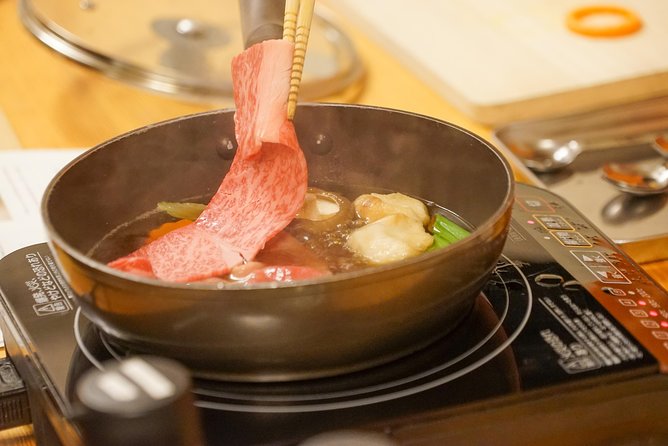
Wagyu is a buzzword for a reason. In this class, it is not just a fancy ingredient you see at the end. It is part of your main-course cooking, with a Wagyu beef dish in the center of the lunch.
Sukiyaki is highlighted as a favorite dish during the experience, and it makes sense. Sukiyaki is built for flavor layers, using seasonings that dissolve into the beef and vegetables. When you cook it yourself, you stop treating it like a restaurant mystery and start understanding the balance.
If you are thinking about what to order in Tokyo, this lesson helps you with that too. You start recognizing what gives the dish its sweetness, savoriness, and depth. Then you can look at menus and feel less lost.
One small practical note: a few dishes may involve chopping and mixing while instructors or staff handle components that require timing and precision. That is normal in cooking classes built for a short duration. Even so, your hands still stay busy.
More Cooking Workshops in Tokyo
- Tokyo: Wagyu and 7 Japanese Dishes Cooking Class
★ 4.9 · 273 reviews - Tokyo Washoku 4-hour Cooking Class: From Market to Table
★ 5.0 · 253 reviews - Tokyo Cute Bento Cooking Class – Make a Kawaii Character Lunchbox
★ 5.0 · 126 reviews - Tokyo: Tsukiji Market Walking Tour & Sushi Cooking Class
★ 4.6 · 122 reviews
The 7 Japanese Dishes You Cook, Plus the Course-Meal Feeling
You will prepare 7 dishes, and the overall experience is described as creating up to 8 different dishes in total across the session. That can sound like a lot, but it matches how the class is structured. Some items are quicker, some are prep-heavy, and a few steps may be handled by staff so the meal can land on time.
What you can expect is a classic home-meal logic, but styled like a kaiseki ryouri experience. You are learning:
- how Japanese seasonings work across dishes
- how to use presentation techniques, not just taste
- how cuttings and ingredient choices change the final bite
A detail I appreciate is the focus on vegetables and traditional seasonings alongside the beef. Japanese cuisine can feel overly meat-centric when people only chase yakiniku and ramen. Here, the vegetables and sauces matter just as much.
From what you will make, you are also likely to see items like cucumber salad and miso soup style components as part of the broader meal flow. Depending on the exact class version, some elements may be prepped ahead, but the main learning goals remain the same.
Hands-On Workflow: Chopping, Mixing, and Cooking Without Feeling Lost
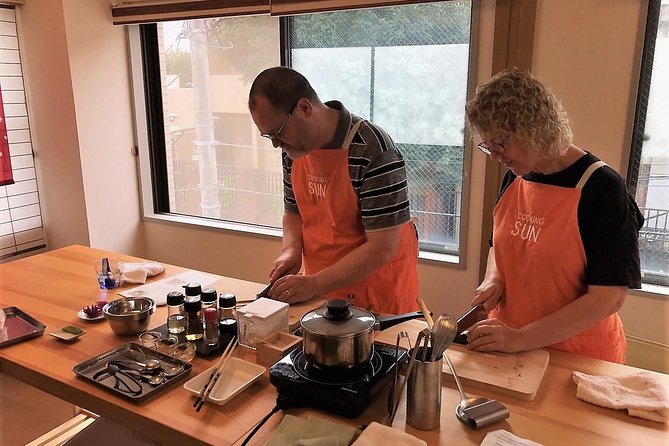
One of the most common reasons cooking classes disappoint is pacing. Too slow and you get bored, too fast and you forget what you did. This class avoids that by keeping the group size small and the instruction clear.
You cook in a way that fits most skill levels. You do not need to be a home chef. The instructors explain steps in English, and they tend to break tasks down. That matters because Japanese cooking techniques can be precise, but the class makes them approachable.
A pattern you may notice once you start:
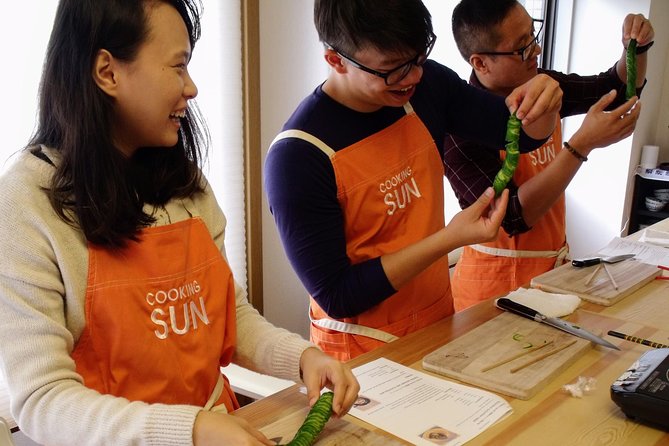
- you do a lot of prep, like chopping and mixing dressings
- instructors guide key cooking steps so things do not fall behind
- then you move on to the next dish, building a full menu through the morning
This also explains why you end up learning so much in a short session. You are not just making one item, you are moving through the workflow of a Japanese meal.
Eating Your Own Lunch: Sake, Green Tea, and the Itadakimasu Moment
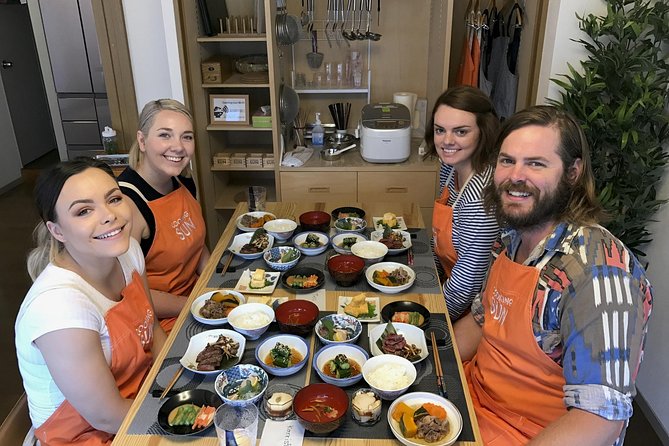
After the cooking, you sit down and eat the fruits of your labor. The meal is accompanied by sake and green tea, so you get a more complete sense of the dining culture, not just a bowl of food.
That is why the class feels like a travel experience, not a workshop. You are not guessing whether your dashi worked or whether your seasoning balance landed. You eat it while it is fresh, and you can adjust your future home cooking based on what you taste.
If you are the kind of traveler who loves getting “one perfect souvenir,” this is it. It is recipes in your bag and flavor memory in your head, and you get to compare both during the meal.
Location in Shinanomachi, Shinjuku: How to Arrive Calm and On Time
The meeting point is Cooking Sun Tokyo, 18-39 Shinanomachi, Shinjuku City, Tokyo 160-0016, Japan. It is near public transportation, but the building can be hard to spot at first.
Here is my practical advice: arrive early, open your maps app, and follow walking directions carefully. Since the area is residential with trees and a quieter feel, you can miss the exact entrance if you assume it will look obvious from the street.
If you are getting there by taxi, you might find it simpler than figuring out a last-minute shortcut on foot. Either way, give yourself buffer time so you start the class relaxed.
What You Get to Take Home: Recipes and Staple Ingredient Confidence
You receive recipes as part of the experience. That turns the class into something you can repeat, not just something you remember.
More importantly, you leave with confidence about staples:
- what dashi is and how it functions
- which Japanese seasonings you will use across multiple dishes
- how vegetables and beef pair in balanced flavor systems
Even if you never cook every dish exactly the same way, you can still reproduce the core flavor logic. That is the long-term value of this kind of class.
One more plus: the instructors share tips and sometimes secret techniques. Those details often matter at home, like how to manage seasoning strength or when a dish needs slight adjustment.
Vegetarian Options and Dietary Needs: Tell Them Before You Go
There is a vegetarian option available. You should advise at booking time if you need it. The class also asks you to provide any specific dietary requirements during booking, so you can plan ahead.
This is one of the better setups for dietary planning because you are not arriving and hoping something works out. You communicate early, and the class can prepare your menu accordingly.
If you have allergies, it is especially smart to mention them clearly at booking so the instructor can accommodate you.
Value Check: Is $72.96 a Good Deal for a Tokyo Wagyu Cooking Class?
At $72.96 per person, you are paying for three things:
- a small-group format with up to 8 people
- ingredients, supplies, apron and towel rental
- instruction plus a multi-dish lunch with sake and green tea
For Tokyo, ingredient-backed cooking classes that result in a full meal are often priced higher, especially when Wagyu is included. Here, the value comes from what you actually do: multiple dishes, dashi from scratch, and a Wagyu main dish.
Also, recipes included mean you are not just buying the meal. You are buying skills you can use later, which stretches the value beyond the dining moment.
If you only want one dish or one tasting, this might be more than you need. But if you want a hands-on Japanese cooking lesson with a kaiseki-style lunch format, the price feels fair.
Who This Cooking Class Is Perfect For
This is a great fit if you:
- want hands-on cooking instruction rather than a food walk
- love the idea of Wagyu but also want the Japanese flavor system behind it
- like learning how Japanese seasonings and dashi connect across dishes
- want an intimate group experience where you get feedback
It is also a solid choice for mixed skill groups. The class is set up so beginners can follow along while more experienced cooks can still learn techniques and presentation ideas.
Who Might Want to Choose a Different Activity
If you hate structured schedules, this may feel like a sprint. It is a packed 3-hour session with lots of dishes. If you want a long, slow cooking day with deep theory and extended cooking, another type of workshop might suit you better.
Also, if the idea of walking to a non-hotel meeting point sounds stressful, plan ahead. The class does not include hotel pickup.
Final Call: Should You Book This Tokyo Wagyu Cooking Class?
Yes, book it if you want a practical Japanese cooking experience with a small group, a real dashi start, and a Wagyu main dish that you cook yourself. The strongest selling points are the hands-on pace, the dashi technique that gets reused across dishes, and the fact that you sit down to eat a complete lunch with sake and green tea.
If you are worried about finding the building, fix that with timing. Arrive a bit early and use your maps app. Once you are inside, the class is set up to make you feel involved from start to Itadakimasu.
FAQ
How long is the Tokyo cooking class?
The class is about 3 hours.
Where is the meeting point?
You meet at Cooking Sun Tokyo, 18-39 Shinanomachi, Shinjuku City, Tokyo 160-0016, Japan.
What time does the class start?
The start time is 9:30 am.
How big is the group?
The class is limited to a maximum of 8 people.
What is included in the price?
Local cooking instructor, recipes, ingredients, and apron and towel rental are included.
Is hotel pickup included?
No, hotel pickup and drop-off are not included.
Is there a vegetarian option?
Yes, a vegetarian option is available. You should advise at booking time if you need it.
What language is the instruction in?
Instructions are in English.
Can I cancel and get a refund?
Yes. You can cancel up to 24 hours in advance for a full refund. If you cancel less than 24 hours before the start time, the amount paid is not refunded.
More Wagyu Beef Dinners in Tokyo
- Tokyo Night Foodie Tour in Shinjuku – Seasonal Sushi, Wagyu Beef
★ 5.0 · 1,161 reviews - Wagyu & Sake Pairing in Shinjuku – Steak, Shabu-Shabu & More
★ 5.0 · 112 reviews - Wagyu Beef and Sake Pairing Foodie Tour in Tokyo
★ 5.0 · 71 reviews - Tokyo: Wagyu and Sushi Gastronomic Journey
★ 4.3 · 24 reviews
Newly listed around Tokyo
- Sumo Wrestlers Morning Practice Tour – Tokyo Sumida District★ 5.0 · 54 reviews
- 【Contemporary Culture】Bar Hopping I Always Visit in Shinjuku!★ 5.0 · 29 reviews
- Sumo Wrestling Tournament A-Class Seats & ExpertGuide | Tokyo MAY★ 5.0 · 14 reviews
- Sumi-e Ink Painting Suiboku-Ga Workshop in a Japanese Teahouse★ 5.0 · 20 reviews
- Snow Experience at Mt.Fuji, Hakone Pirate Ship & Gotemba Premium Outlet★ 4.0 · 32 reviews
- Tokyo Sumo Morning Practice: Viewing & Exclusive Interaction★ 4.5 · 59 reviews
- Asakusa’s Historic Treasures★ 5.0 · 30 reviews
- Flavours of Tokyo: A Journey Through Time – Small Group Food Tour★ 5.0 · 149 reviews
Japanese Cooking Workshops, compared.
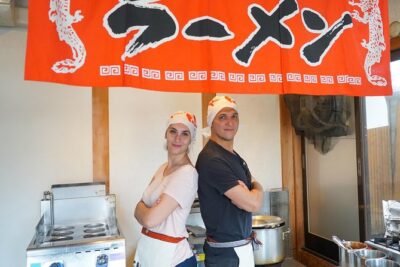
Ramen Cooking Class at Ramen Factory in Kyoto
Read our review →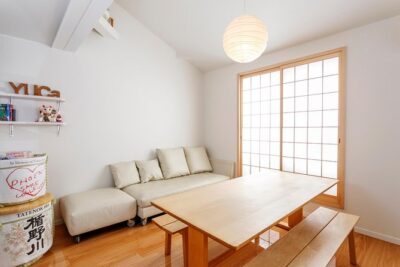
Ramen & Gyoza Cooking Class in Tokyo with Local Supermarket Visit
Read our review →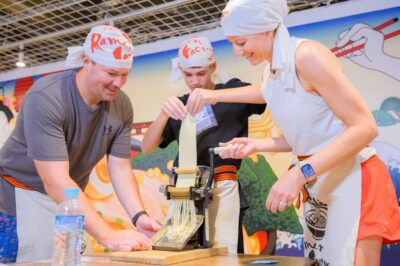
Ramen Cooking Class at a Ramen Factory with Souvenir
Read our review →
Japanese Washoku Bento Small Group Cooking Class
Read our review →
Sumo Stage Show with Bento or Snack + Fight & Photo
Read our review →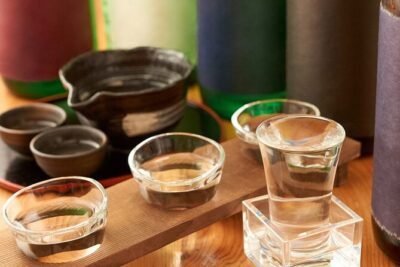
Ramen and Sushi Cooking Class with Sake Pairing Set in Tokyo
Read our review →Browse the lists this tour appears in