
Review · SUMO STABLE VISITS
Chair Seat Guaranteed SUMO Practice +Photo +Culture Option
Sumo practice is up close and personal. This Tokyo morning visit gives you a guaranteed chair seat plus a local guide to explain what you’re seeing. You’ll watch the wrestlers warm up and train, then you get a wrestler Q&A and a group photo you can take home.
I especially like the way this tour solves the big Tokyo sumo problem: where to sit. Instead of spending the morning on the floor, you’re positioned to watch comfortably and for a long enough stretch to actually follow the flow of practice.
One thing to think about: you must follow stable rules during the session. No talking, no eating or drinking, and you may be asked to keep recording to a minimum, so bring patience if you want to be fully interactive.
In This Review
- Key highlights I’d plan around
- Why a guaranteed chair seat matters for Tokyo sumo
- Finding Kiyosumi Shirakawa at 8:00 am (Exit B1, FamilyMart)
- The stable session: close watching with clear rules
- Wrestler Q&A and the post-practice photo moment
- The local guide talk that turns moves into meaning
- Timing and pacing: a 3-hour experience that stays realistic
- Price and value: what $102.47 is really paying for
- Who this seated sumo practice is best for
- A balanced heads-up before you book
- Should you book this Tokyo sumo practice + culture seat option?
- FAQ
- What time does the tour start?
- Where do I meet the group?
- How long is the experience?
- What is included in the ticket?
- Is the seating on the floor or in a chair?
- Are photos allowed during the practice?
- What are the basic rules during the practice?
Key highlights I’d plan around
- Guaranteed chair seating so you can focus on the action, not your knees
- Small groups (max 10) for a calmer, more controllable experience at the stable
- A guide-led history and customs talk that turns random moves into meaning
- Wrestler time after practice, including a Q&A and a group photo
- Clear meeting point by Exit B1 at Kiyosumi Shirakawa Station near FamilyMart
Why a guaranteed chair seat matters for Tokyo sumo
If you’ve ever sat on a hard floor in Japan for a while, you already know why this matters. A sumo stable practice can be long enough that comfort affects how much you enjoy it. With this option, you skip the floor sit and get a proper chair seat, which is a big deal for first-time visitors and anyone who doesn’t love kneeling.
The chair also helps you do something simple but important: watch with your head up. When you’re stable-side, the best view is usually the one you can hold without adjusting your body every 30 seconds. In practice, that means you’re more likely to notice small details, like how wrestlers reset their stance, how they move in and out of training circles, and how the coaches guide with quick cues.
And yes, sumo is physical in a way that pictures don’t fully capture. The slaps, the footwork, the rhythm of warmups, it all lands harder when you’re close enough to feel like you could step into the ring.
Compare these Sumo Stable visits in Tokyo:
- Tokyo: Sumo Show Experience with Chicken Hot Pot and a Photo
★ 4.8 · 6,678 reviews - Tokyo: Sumo Show and Dining Experience
★ 4.8 · 2,742 reviews - the SUMO show
★ 5.0 · 1,960 reviews
Finding Kiyosumi Shirakawa at 8:00 am (Exit B1, FamilyMart)
The tour starts in Koto City, at Kiyosumi Shirakawa Station. It’s a crossing station for the Oedo Line and the Hanzomon Line, so you can reach it in more than one way depending on where you’re staying.
Here’s the practical part: the meetup is at Exit B1, and the group meets at ground level. There’s a FamilyMart nearby, which gives you a visible landmark to orient fast. The tour’s meeting point is described as straightforward, with only a few exits in play, so if you arrive late or wander exits, it’s easy to miss the group.
Start time is 8:00 am, and it’s a morning activity. Plan to be early enough to find your spot without stress. For Tokyo, that means giving yourself buffer time from your hotel train walk and one extra check for the exit number.
Good news: it’s near public transportation, and the group size stays small, capped at 10 travelers. That combination usually makes the meetup less chaotic than bigger tours.
The stable session: close watching with clear rules
Once you’re seated, the practice phase is all about focused observation. The session runs about 1 hour 40 minutes watching the morning practice. You’ll be watching from very near proximity, which is what you’re paying for.
During this main training time, the rules are simple and strict:
- No talking
- No eating or drinking
- Pictures are fine
That silence is part of the experience. It might sound restrictive, but it also keeps the space respectful for the stable and helps you actually track what’s happening. In sumo practice, the pauses matter. When you’re quiet, you hear the cadence of movement and coaching cues more clearly.
One more detail to expect: you’ll likely be reminded to keep your behavior calm and controlled. In at least some cases, the rules are described as including limits on movement and recording. So treat it like a theater seat, not a sightseeing stop.
The payoff is that you’re not just watching from a distance. You can see how wrestlers warm up, how they run through technique, and how the coaching shapes the session from moment to moment.
Wrestler Q&A and the post-practice photo moment
After the main watching block, the tour includes a chance to interact. You get time to talk with active sumo wrestlers and there’s an opportunity for a photo. That part is about 20 minutes, and it’s where your experience becomes more personal than most sumo visits.
Two things to know before you go:
- This is still tied to the stable’s routine, so it won’t feel like a casual hangout.
- Your photo may be special in hindsight. The experience description notes that the photo could become valuable if the chosen wrestler moves up the ranks, which is a fun reason to take it seriously and make sure you’re ready for the moment.
Then you also have the Q&A session with a sumo wrestler included. That’s one of the most valuable add-ons here because it turns your curiosity into direct answers. You’ll walk in wondering how training works, what the customs mean, and what daily life inside a stable is like. The Q&A format gives you a way to ask the questions you actually care about, instead of relying on guesses.
If you’re going with kids, this is often the easiest part to understand. They can see the people behind the sport, ask a question, and get the photo to remember it.
A few more Tokyo days to weigh up
- Mt Fuji and Hakone 1-Day Bus Tour Return by Bullet Train
★ 5.0 · 26,383 reviews - 1-Day Tokyo Bus Tour
★ 5.0 · 14,250 reviews - Tokyo: TOKYO SKYTREE® Admission ticket
★ 4.5 · 11,192 reviews - Tokyo: teamLab Planets TOKYO Digital Art Museum Entry Ticket
★ 4.6 · 9,779 reviews
The local guide talk that turns moves into meaning
Not all sumo experiences explain what you’re looking at. This one does. After the wrestling time, there’s a guide session focused on the history and context of sumo, including what it is and how it came to be. That segment runs about 25 minutes.
This is the section that makes the morning stick with you. Without context, sumo can feel like a series of impressive bouts and training moves. With context, you start to understand why certain routines exist, what the customs are trying to preserve, and what the wrestlers’ training is designed to build.
In the experience feedback you provided, guides named Max are praised for being excellent and passionate. Another name that comes up is Masao, described as entertaining and helpful in the overall feel of the tour. I can’t promise which guide you’ll get, but the key takeaway is consistent: the guide role matters here, and it’s not just background noise.
What you should do during this talk: listen for the explanations that connect to what you just saw. If the guide mentions a custom or a training purpose, tie it back mentally to the exact moment you watched it. That’s where understanding clicks.
Timing and pacing: a 3-hour experience that stays realistic
The tour is listed as about 3 hours total. That includes the stable visit and the time it takes to move back and forth.
One part of the schedule you’ll feel in real life is the transfer time. There’s about 20 minutes set aside for getting to and from the stable. In Tokyo, that’s not trivial, especially if you’re navigating station exits and short walks with a small group.
The practical rhythm looks like this:
- Meet at Kiyosumi Shirakawa Station around 8:00 am
- Watch the practice for a long block
- Have time for conversation and photos
- Hear the guide explanation
- Return and finish back at the meeting point
Because the group is capped at 10, you’re usually not sprinting down sidewalks with a huge crowd. Still, wear shoes that work for a morning schedule and quick walking.
Also, if you get cold in the morning, consider a light layer. Early Tokyo starts can feel chilly before the day warms up.
Price and value: what $102.47 is really paying for
At $102.47 per person, this is not a budget activity. But it’s also not just a seat purchase. You’re paying for several things that are hard to stitch together on your own the first time in Tokyo.
What you get that justifies the cost:
- Entrance fees to the stable
- Guaranteed chair seat
- A local guide presentation on sumo history and context
- Q&A with a sumo wrestler
- A group photo from the session
You also get an organized, timed experience that fits into a half-morning slice without turning your day into logistics. For many visitors, that’s the true value. Sumo practice is one of those activities where the difference between a good visit and a frustrating one is often how organized your access and viewing plan is.
What you should not expect from the price:
- It does not list optional add-on tours as included.
- It’s focused on the practice and culture explanation, not a whole day of sightseeing.
If you’re the type who wants one Tokyo experience that feels authentic and structured, this price tends to make sense.
Who this seated sumo practice is best for
This is a strong choice if you’re in Tokyo for the first time and want a genuine look at training, not a themed performance. The early morning format is part of why it works. You see the wrestlers doing their normal work routine, with the stable environment preserved.
It also fits well if you have physical limitations around sitting on the floor. Multiple points in your provided info highlight the chair as a solution. Even if you’re in good shape, a chair can help you enjoy the session longer and keep your attention where it belongs.
Families can do well here too. One note in the feedback mentions a family with a 7-year-old who was able to handle the rules after a quick pre-brief. That suggests this can work when you explain expectations clearly: listen, don’t talk, and follow the stable guidance.
Where it may not fit:
- If you hate being quiet for an extended period, the no talking rule during practice is a core part of the experience.
A balanced heads-up before you book
The top praise for this option is consistent: the close-up seated view and the guide-led context make it feel more complete than a simple ticket.
That said, there are two considerations worth taking seriously:
- Meeting point clarity matters. If you show up late or pick the wrong exit, you’ll lose time and stress yourself out. Go for Exit B1 and use the FamilyMart as your anchor.
- Comfort can vary by setting. One comment in your info notes uncomfortable seating. With a chair seat guaranteed, you’re already ahead of floor seating, but comfort still depends on how chairs are arranged and how your body prefers to sit for a morning session.
If those two points don’t bother you, you’re likely to enjoy the experience a lot.
Should you book this Tokyo sumo practice + culture seat option?
Yes, I’d book it if you want the full package: a seat you can actually use, a structured viewing window at the stable, plus history context and a chance to ask questions. It’s a smart way to do sumo in Tokyo without turning your day into uncertainty.
I’d hesitate only if you strongly dislike rules like no talking during the practice, or if mornings are a problem for you. Also, arrive with a plan for the meetup, because that Exit B1 detail is the difference between smooth and annoying.
If you’re after an authentic Tokyo experience that feels hands-on and educational in the same morning, this one earns its place on your itinerary.
FAQ
What time does the tour start?
The tour starts at 8:00 am.
Where do I meet the group?
You meet at Kiyosumi Shirakawa Station, Exit B1, at ground level. A FamilyMart is nearby.
How long is the experience?
The duration is about 3 hours (approx.).
What is included in the ticket?
Included: entrance fees to the stable, a group photo, a presentation of sumo by a local guide, and a Q&A session with a sumo wrestler.
Is the seating on the floor or in a chair?
This option guarantees a chair seat, so you are not required to sit on the floor.
Are photos allowed during the practice?
The practice portion states that taking pictures is perfectly fine.
What are the basic rules during the practice?
You should follow stable rules such as no talking and no eating or drinking during the practice session.
Newly listed around Tokyo
- Private Tokyo Food Tour – A Journey Through Time Through Food★ 5.0 · 36 reviews
- Private Tokyo Tour with Licensed Guide & Vehicle (Max 15 persons)★ 5.0 · 107 reviews
- Private Tokyo Custom Full-Day Tour by Chartered Vehicle★ 5.0 · 16 reviews
- Private Tokyo Custom Half-Day Tour by Chartered Vehicle★ 4.5 · 13 reviews
- Private Outstanding Nikko Tour with English Speaking Driver★ 4.0 · 11 reviews
- Private Sightseeing to Mt Fuji and Hakone with English Driver★ 5.0 · 51 reviews
- Private Snow Monkeys park Day Trip From Tokyo or Nagano★ 4.5 · 26 reviews
- 4 Day Tour – Mount. Fuji, Tokyo, Hakone, Kamakura and Yokohama★ 5.0 · 19 reviews
Sumo Stable Visits, compared.
Sumo Show Experience with Chicken Hot Pot and a Photo
Read our review →
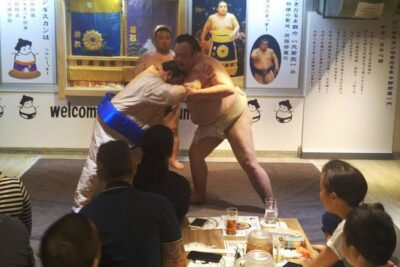
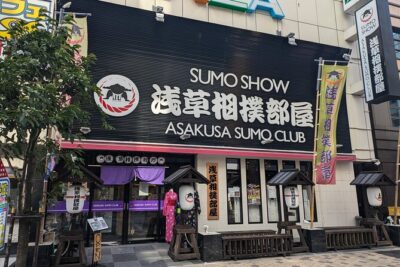
Tokyo Sumo Entertainment Show with Chicken Hot Pot and Photo
Read our review →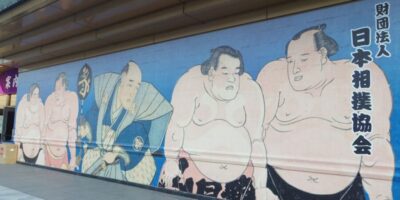
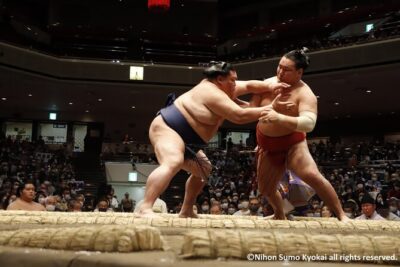
Tokyo Grand Sumo Tournament Viewing Tour with Tickets
Read our review →
Sumo Show & Experience w/ Optional Kimono & Hot Pot
Read our review →Browse the lists this tour appears in