
Review · WALKING TOURS
From Osaka: Sakai Knife Maker or Blacksmith Walking Tour
Kitchen knives have a secret workshop story. This Sakai walking tour is interesting because you get backstage access to the people who shape steel, whether you visit the Yamawaki knife maker or the blacksmith forge, plus you learn the traditional sharpening technique behind a great edge.
I love the built-in local flavor. You start at an old-school sweets shop, and many guides include famous mochi like poppyseed and cinnamon. I also like the hands-on focus, including a real window into the process, from hammer work at the forge to sharpening practice with a trained guide (I’ve heard guides like Remy, Scott, and Jean-Yves keep the stories lively and clear).
One drawback to plan around: the schedule can change. The museum may close on the 3rd Tuesday for inventory, and from March 6 to April 6 the tour runs as blacksmith only, so you should pick dates based on the experience you want.
In This Review
- Key things to know before you go
- Why Sakai makes sense for knife lovers
- From Nankai Sakai Station to a mochi welcome
- Sakai City Craft Museum and the knife shop stop
- Tuesdays and Thursdays at Yamawaki Hamono (knife maker days)
- Wednesdays at the forge, including blacksmith Eric Chevallier
- The sharpening lesson and ordering your own knife
- Price, time, and what $64 gets you
- French language note and other day-to-day realities
- Who should book this Sakai knife maker or blacksmith tour
- Should you book this tour?
- FAQ
- Where does the tour start?
- How long is the tour?
- Which days visit the knife maker versus the blacksmith?
- During March 6 to April 6, what changes?
- Is French guaranteed on the tour?
- What food is included?
- Do I get to learn sharpening?
- Can I order a customizable knife?
- What should I bring, and is the tour wheelchair accessible?
- What if I’m traveling solo?
- FAQ
- What if the museum is closed on the 3rd Tuesday?
- Can I cancel for a refund?
Key things to know before you go
- Backstage workshop access where you can watch blades turn into proper kitchen knives
- Day-of-week choice matters: Yamawaki knife maker on Tuesdays and Thursdays, blacksmith on Wednesdays
- Sakai sweets are not an afterthought you get an included snack at a traditional shop
- Sharpening is part of the deal you learn the technique you can use later at home
- Custom knife ordering is optional and you can often watch part of the process
Why Sakai makes sense for knife lovers
Sakai is one of Japan’s core places for cutlery, and you feel it fast. Instead of a generic museum stop, this tour takes you into the working world behind kitchen knives, where craft is the point, not a side display.
What makes it special is the mix of perspectives. You start with the city and its crafts, then you move into the knife-making spaces, and finally you learn a skill that connects to your daily life: sharpening. This is the rare tour that helps you understand why a knife costs what it costs, and what you need to keep it performing.
And yes, the walking part is real. But it is paced, with photo stops and short transfers on foot, so you are not rushing through cultural stops like a checklist.
More Walking Tours in Osaka
- Osaka: Hotspots & Hidden Gems Walking Tour Private or Group
★ 4.9 · 1,300 reviews - Osaka Backstreet Nightlife & Street Food Walking Tour
★ 5.0 · 1,011 reviews - Osaka Local Foodie Walking Tour in Dotonbori and Shinsekai
★ 5.0 · 985 reviews
From Nankai Sakai Station to a mochi welcome
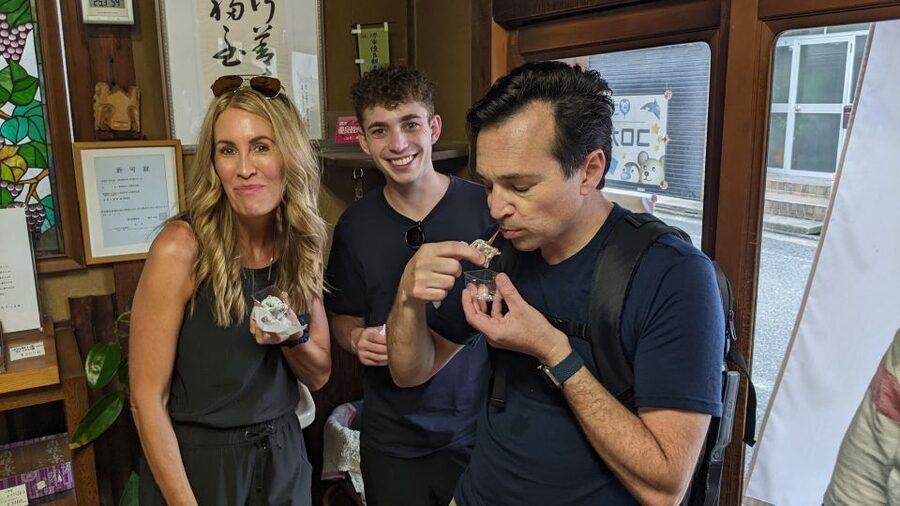
You meet at Nankai Sakai Station (south of Osaka). Then the tour begins with an old-fashioned sweets shop stop, with one sweet included. This is not a “hold your water bottle and move on” moment. It is your first taste of Sakai food culture, and it sets the tone for why craft matters there.
The included sweets can include mochi types like poppyseed and cinnamon, depending on the shop and timing. Either way, I like this start because it feels local right away, before you go into the more technical knife world.
Practical note: the tour has shopping time later too, and this early stop is a good moment to get your bearings. Your guide also helps with what to look for, especially if you want to ask about knife choices without feeling lost.
Sakai City Craft Museum and the knife shop stop
Next you head into the Sakai City Craft Museum and Knife Shop. This portion is set up more like a focused self-guided visit, so you can move at your own pace while still staying on track with the tour flow.
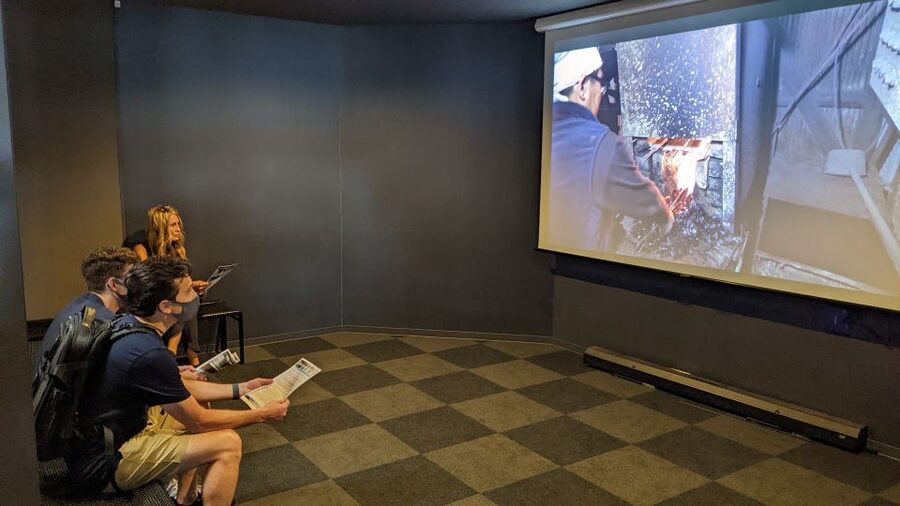
What you get here is context. Before you see any workshops, you learn what Sakai is known for, how the city’s craft culture developed, and how knives fit into that story. That background matters, because when you later see forging or blade shaping, it is easier to understand why each step exists.
There is also a “real world” benefit: this is a good place to mentally sort out what kind of knife you are shopping for later. Even if you do not buy, you leave with better questions, and better instincts.
One planning point: the museum can sometimes close on every 3rd Tuesday due to inventory. If that happens, your guide will adjust and take you directly to the knife company, still covering knife history while walking and at the office.
Tuesdays and Thursdays at Yamawaki Hamono (knife maker days)
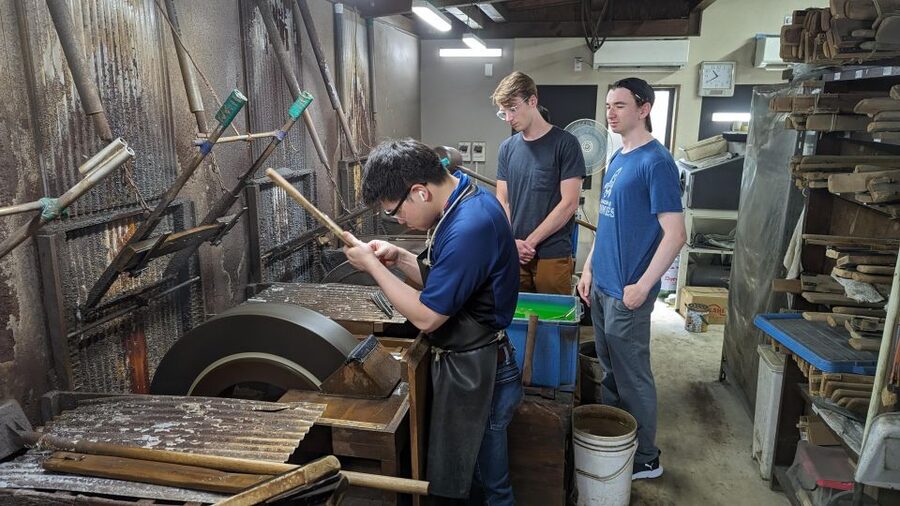
If you want the knife-making side, aim for the Tuesdays and Thursdays option. This is where you visit the Yamawaki Hamono knife-making company, a workshop with over 100 years of history.
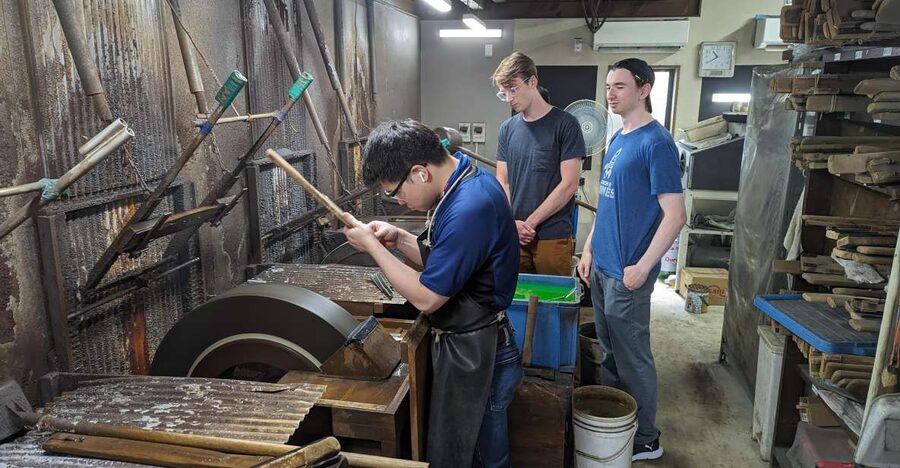
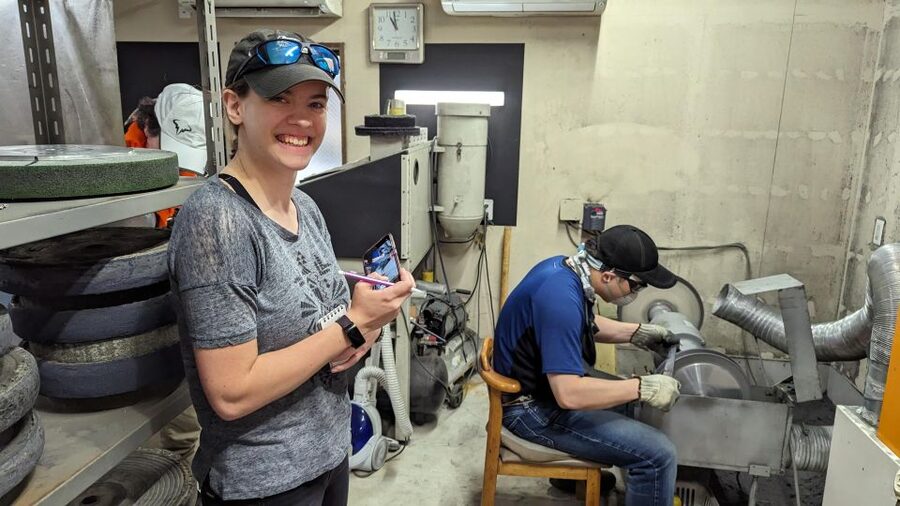
The tour structure here is very “production-focused.” You get access to areas like the sharpening station and main office, and you can see how raw blades arrive and how they are turned into proper handmade cooking knives. The effect is almost like backstage theater, except the props are steel and tools, and the show is careful handwork.
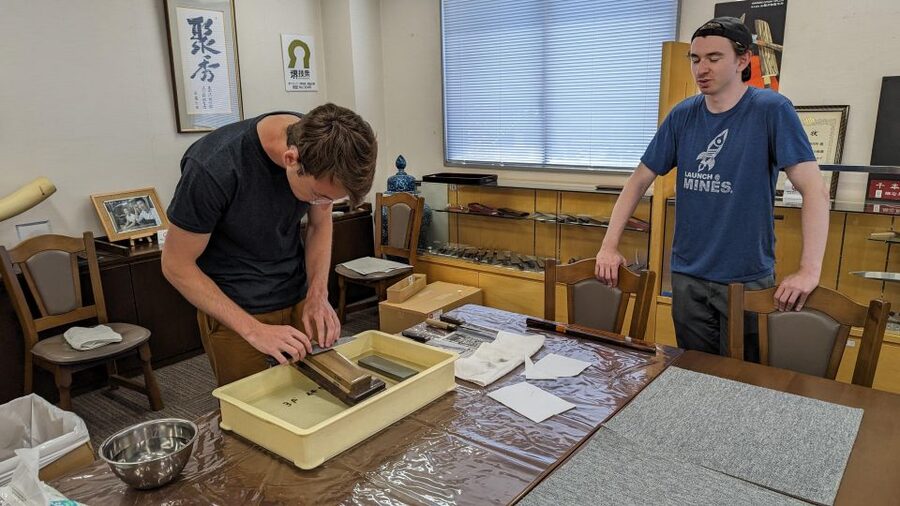
You also get sharpening training tied directly to what you are seeing. This is the part I think you should not skip, even if you already own knives at home. Good sharpening is not just about taking off metal. It is about doing it in a way that preserves the edge you paid for.
Optional highlight: you may get the chance to order a customizable knife. In the best scenario, you can watch parts of the process in front of you, then you come away knowing what choices you made and why.
If your goal is to bring home a knife that fits your habits, this knife-maker day is the best match.
A few more Osaka days to weigh up
- Osaka Bar Hopping Night Walking Tour in Namba (3 bars, 6 tastes)
★ 5.0 · 958 reviews - Osaka: Deep Backstreets Walking Tour with Dinner Option
★ 4.9 · 902 reviews - Ultimate Osaka Walking Tour: Castle, Dotonbori & Hidden Gems
★ 5.0 · 862 reviews - Osaka: Main Sights and Hidden Spots Guided Walking Tour
★ 4.9 · 702 reviews
Wednesdays at the forge, including blacksmith Eric Chevallier
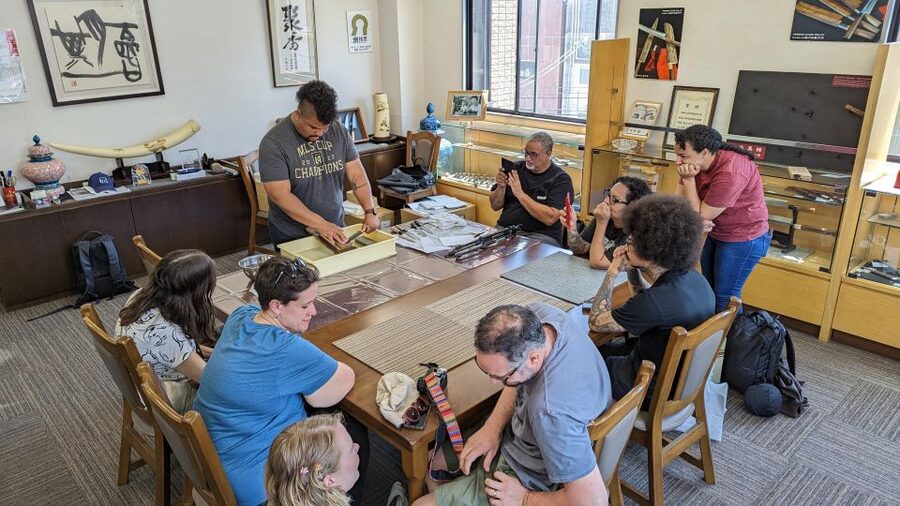
For the blacksmith version, go on Wednesdays. You get exclusive access to the blacksmith workshop, with detailed instructions in English and French, directly from the artisan.
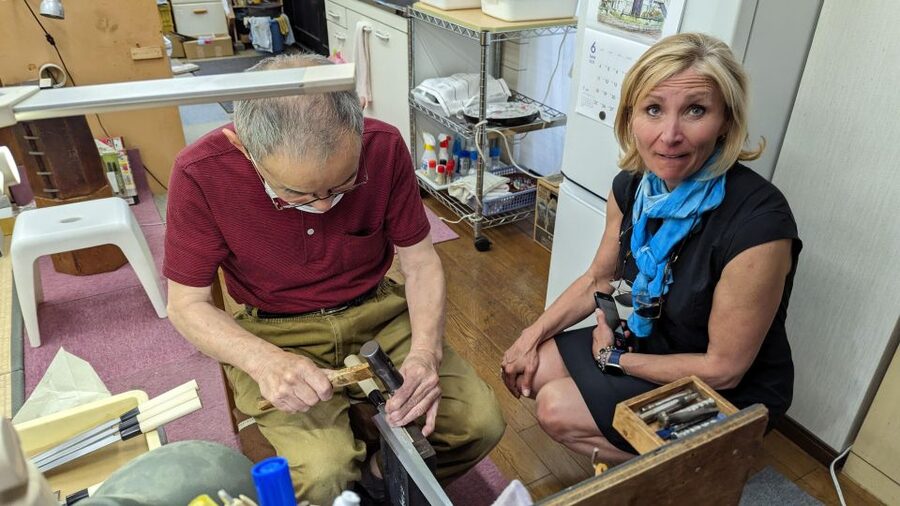
This is where you get a more physical look at craft. The forging process is not just described, you see how heat and pressure shape steel. In the hands-on spirit of the day, some visitors end up doing practical hammering themselves as the process starts, which is exactly what makes this tour feel like a workshop and not a lecture.
The blacksmith most closely associated with the Wednesday experience is Eric Chevallier. Meeting the maker like this adds weight to everything you learn afterward. It also explains why people in Sakai treat knives as serious tools, not just kitchen accessories.
You will also spend time at Forge DeSakai cutlery, including guided access and some free time for shopping and sightseeing. This is useful if you want to compare options and ask questions while the whole craft story is still fresh in your head.
One more scheduling note that matters: from March 6 to April 6, 2026, the tour runs as blacksmith only. During that window, Tuesdays and Wednesdays remain available for blacksmith, with the knife-maker rate. If you are trying to choose between the two workshops, the calendar may decide for you.
The sharpening lesson and ordering your own knife
The tour earns its keep with the sharpening part. You do not just hear about edges, you learn a traditional Japanese sharpening technique. That is the difference between a “cool factory visit” and something that changes how you care for your own tools.
Here is what to think about before the class:
- Bring your curiosity, not just your wallet. Ask what the technique is doing to the edge.
- If you plan to buy a knife, use the workshop knowledge while you are still there, while your brain is in craft mode.
Optional custom ordering is also a big deal. Being able to order a customizable knife, and potentially watch it being made in front of you, helps you connect the purchase to the work behind it. That makes you more confident at the register and less likely to regret a mismatch.
Also, sharpening lessons and factory access can be the two reasons this tour is worth the money even if you do not buy a knife. A lot of people leave with the knowledge to maintain their current knives better, which can be a real value over time.
Price, time, and what $64 gets you
At $64 per person for about 210 minutes, you are paying for access. The real cost here is not walking and sightseeing. It is the workshop permissions, the time with a guide, the sharpening instruction, and the structured access to places that most tourists cannot simply enter.
You also get:
- one included sweet at the start
- shopping time at craft locations
- access to the knife factory workshops
- a knife sharpening technique lesson
- bilingual local guidance
What you should budget for separately is also pretty clear: extra food, drinks, and purchases at the craft stops. Shopping is part of the flow, but souvenirs are not included.
I like the value for two reasons. First, you get skill training, not just photos. Second, you see the path from raw materials to the cooking knife, then you learn how to keep that edge working.
For your time, the route stays compact, and the pacing uses short walking segments between stops. Plan for a few photo stops and some standing time inside workshops.
French language note and other day-to-day realities
All guides can speak English, and some can also speak French. What you cannot assume is guaranteed French on a shared tour. If French matters to you, message the provider before booking your date and ask to confirm availability.
This matters because the tour includes technical instruction tied to sharpening and workshop steps. You want to hear those details clearly, even if you feel comfortable in English.
Another reality is that guide names can vary. Many visitors mention guides like Remy, Scott, and Jean-Yves, and they tend to connect craft to stories about Sakai and Osaka. Expect an upbeat approach, especially for the hands-on parts.
Finally, bring identification. You should bring a passport or ID card, since the tour lists this as a requirement.
Who should book this Sakai knife maker or blacksmith tour
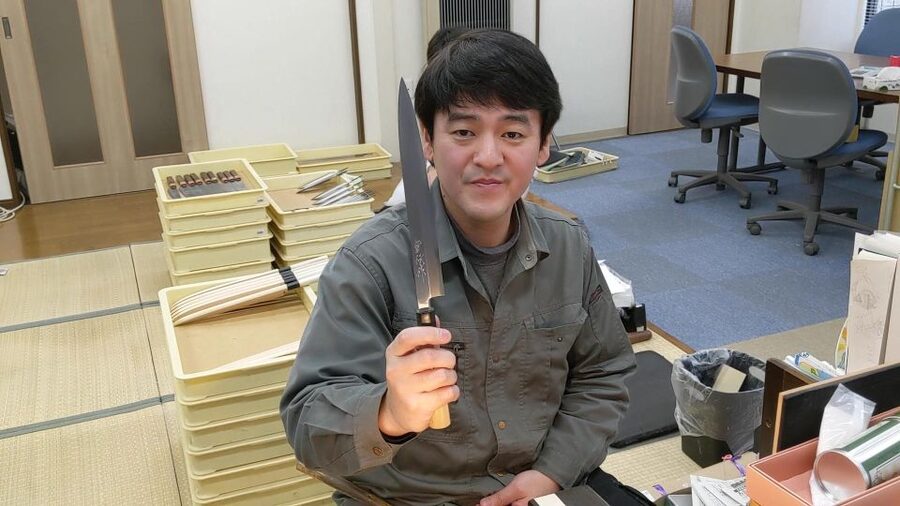
This tour is a great fit if you:
- love Japanese crafts and want to see the real workflow, not just displays
- are curious about how knives are made and why sharpening matters
- want a guided explanation before you buy a kitchen knife
- enjoy hands-on moments, especially on the Wednesday forge day
It is also a strong choice for small-group travelers who like personal attention and clear guidance during technical parts.
If you dislike workshops or hands-on learning, you might find the knife focus less appealing than a general cultural tour. But if you are here for the craft, this is one of the more direct routes I’ve seen from city history to real tools.
Should you book this tour?
I’d book it if you want to understand Sakai knives from the inside, and if you care about the practical end of the story, the sharpening. The included sweet start and museum context make it feel like a cultural tour, while the workshops and class make it feel like something you can use for years.
Choose your day based on what you want most:
- Pick Tuesdays or Thursdays if you want the knife-maker experience at Yamawaki and the chance to order a customizable knife with that maker-focused access.
- Pick Wednesdays if you want the blacksmith forge experience, especially with Eric Chevallier, and the more physical forging feel.
If French is essential for you, plan ahead and confirm the guide language for your exact date. And if you are traveling during late spring, remember March 6 to April 6, 2026 is blacksmith only, which may limit the knife-maker option.
If those factors line up, you’ll probably leave with sharper knowledge, better questions, and a new respect for what goes into an everyday kitchen tool.
FAQ
Where does the tour start?
You meet at Nankai Sakai Station, south of Osaka. The exact meeting point may vary depending on the option booked.
How long is the tour?
The duration is 210 minutes.
Which days visit the knife maker versus the blacksmith?
Tuesdays and Thursdays visit the knife maker, Yamawaki. Wednesdays visit the blacksmith workshop, with access to Forge DeSakai cutlery.
During March 6 to April 6, what changes?
During that date range in 2026, the tour is blacksmith only. Tuesdays and Wednesdays are still available for the blacksmith at the knife maker rate.
Is French guaranteed on the tour?
All guides can speak English. French may be available on some guides, but it cannot be guaranteed on shared tours. You should contact before booking to confirm for your date.
What food is included?
You get 1 sweet at the sweet shop at the beginning of the tour. Extra food is not included.
Do I get to learn sharpening?
Yes. The tour includes a knife sharpening technique lesson.
Can I order a customizable knife?
Yes, the tour includes time for a customizable knife order as an optional part of the experience, with access to the workshops where that process is shown.
What should I bring, and is the tour wheelchair accessible?
Bring a passport or ID card. The tour is listed as wheelchair accessible.
What if I’m traveling solo?
There is a 2 guests minimum rule to give the tour a go. If you book as a single guest, the session might be cancelled, with you notified and offered a reschedule or a full refund.
FAQ
What if the museum is closed on the 3rd Tuesday?
Every 3rd Tuesday, the museum has inventory and might close without notice. If it does, your guide will adjust the plan and take you directly to the knife company, still covering the history while walking and at the office.
Can I cancel for a refund?
Yes. Free cancellation is available up to 24 hours in advance for a full refund.
Newly listed around Osaka
- From Osaka/Kyoto:Private Kyoto-Nara Day Tour★ 4.3 · 6 reviews
- From Osaka/Kyoto:Mount Koya, Wakayama & Nachi Waterfall Trip★ 4.2 · 30 reviews
- From Osaka/Kyoto: Mount Koya & Wakayama Private Day Trip .★ 4.0 · 7 reviews
- From Osaka/Kyoto: Amanohashidate Day Tour【Including tickets】★ 3.7 · 20 reviews
- From Osaka: Nara Private Tour with Meet-Up at Your Hotel★ 5.0 · 49 reviews
- From Osaka: Private Customized Day Tour to Kyoto★ 4.5 · 20 reviews
- From Osaka or Kyoto: Private Shirakawa-go and Takayama Trip★ 4.7 · 15 reviews
- From Osaka: Private Customizable Day Tour to Kyoto★ 3.7 · 6 reviews
Walking Tours, compared.

Kyoto Geisha Walking Tour: Gion District & Hidden Gems
Read our review →
Tokyo Tsukiji Fish Market Food and Culture Walking Tour
Read our review →
Gion Geisha District Walking Tour – Stories of Geisha
Read our review →
Shinjuku Local Bar and Izakaya Guided Walking Tour
Read our review →

Asakusa Walking Tour with Sensoji Temple Visit
Read our review →
Kyoto Gion Geisha District Walking Tour – The Stories of Geisha
Read our review →Browse the lists this tour appears in