Review · GUIDED
Get Unique Insights into Tokyo – Private Tour with local Guide
Tokyo makes sense fast with a private guide. This tour strings together Tokyo’s biggest “oh wow” neighborhoods in a few hours, with a guide who can take photos for you and share Meiji Jingu etiquette so you know what you’re looking at. I especially like the way it pairs classic sights with side streets, plus the practical tips that make you feel confident walking and riding transit on your own later. The only drawback to keep in mind is that with a 2 to 6 hour window, your pace will be active, so build in water breaks and wear shoes that can handle lots of walking.
What makes it work well for first timers and repeat visitors is the privacy. You’re not squeezing through crowds with a big group, and guides including Jero (and sometimes Franz) get praised for adapting the route to your interests and your speed, then filling gaps with local recommendations on where to eat or shop next. You’ll also get handy photo memories, since solo pictures at stops and group pictures are part of the experience, and the guide can take photos and videos along the way.
You’ll start at Meiji Jingu Ichino Torii and end near Shinjuku Station at the Giant 3D Cat. From there, you can continue the day easily, because the tour is built around included transportation between destinations, not just pure foot power.
In This Review
- Key things I found especially useful
- A half-day Tokyo sampler that still feels like Tokyo
- Meiji Jingu and Harajuku: etiquette first, then fashion
- Shibuya Crossing to Shinjuku: from chaotic energy to skyline calm
- Odaiba: futuristic waterfront without losing the fun
- Asakusa and Akihabara: old entertainment roots and modern obsession
- Ueno Park and the Imperial Palace East Gardens reset
- Price and what $82.90 buys you in real terms
- How long should you book: 2 to 6 hours
- Who this tour fits best
- Should you book this private Tokyo intro?
- FAQ
- How long is the Tokyo private tour?
- Where does the tour start and end?
- Is pickup available?
- Is this a private tour?
- Does the tour include transportation between stops?
- What food and drinks are included?
- Will the guide take pictures of you?
- Are the guides English speaking?
- Can I choose my start time?
- Do I need a mobile ticket?
- Can I cancel for free?
Key things I found especially useful
- A private, choose-your-time Tokyo intro that fits morning or afternoon schedules
- Solo and group landmark photos so you do not have to play phone tripod gymnast
- Teas and a traditional Japanese snack included to keep you fueled between stops
- A mix of shrine calm, fashion streets, and neon viewpoints in one half-day flow
- Public transit support built in with included transport between areas
- English-speaking guides (Jero and Franz are frequently mentioned in feedback)
A half-day Tokyo sampler that still feels like Tokyo
If you want Tokyo highlights without the “checklist” vibe, this private format is the point. The itinerary is designed as a guided circuit: you hit iconic places like Meiji Jingu, Shibuya Crossing, and Shinjuku, then the route can keep moving into places that show different sides of the city, like Akihabara or Odaiba.
I like that it is not just sightseeing. You get cultural context and on-the-street guidance, which matters in Tokyo because the city has its own rhythms and rules. The best moments in tours like this tend to be the ones where you understand what you are seeing, like how to behave respectfully at a shrine, or how to navigate your way through big intersections without stress.
One more practical plus: the tour includes transportation between destinations. That means you can cover far more ground than a strict walking tour, and you are less likely to lose time figuring out transit connections in the middle of your day.
A few more Tokyo days to weigh up
- Mt Fuji and Hakone 1-Day Bus Tour Return by Bullet Train
★ 5.0 · 26,383 reviews - 1-Day Tokyo Bus Tour
★ 5.0 · 14,250 reviews - Tokyo: TOKYO SKYTREE® Admission ticket
★ 4.5 · 11,192 reviews
Meiji Jingu and Harajuku: etiquette first, then fashion
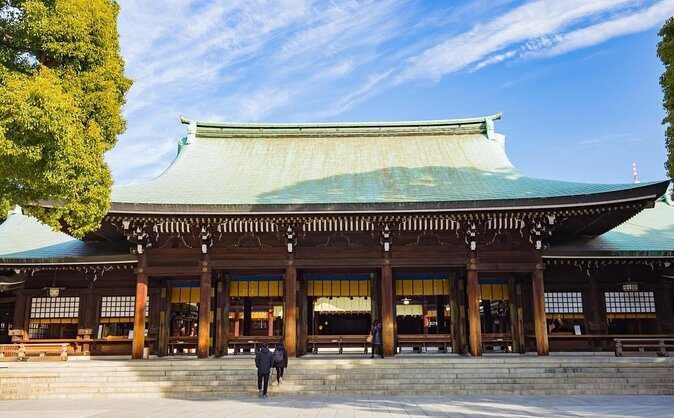
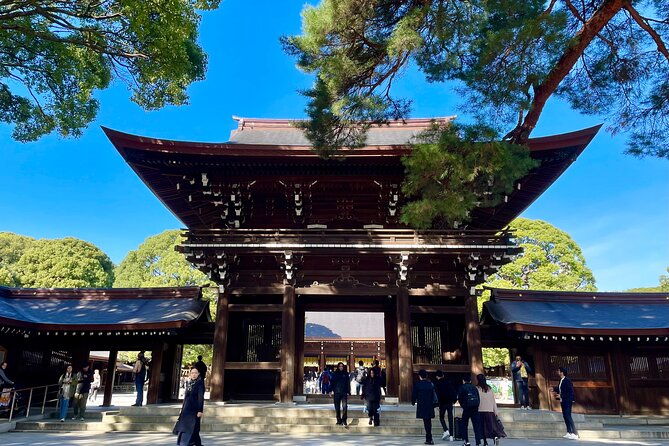
Meiji Jingu Shrine is a strong opener because it instantly sets the tone. You walk together to the main area and learn what the shrine represents, along with cultural and historical context. A recurring theme in the feedback is that the guide takes time to explain proper customs and how to be respectful. That turns the visit from quick photos into a moment where you actually understand why people slow down there.
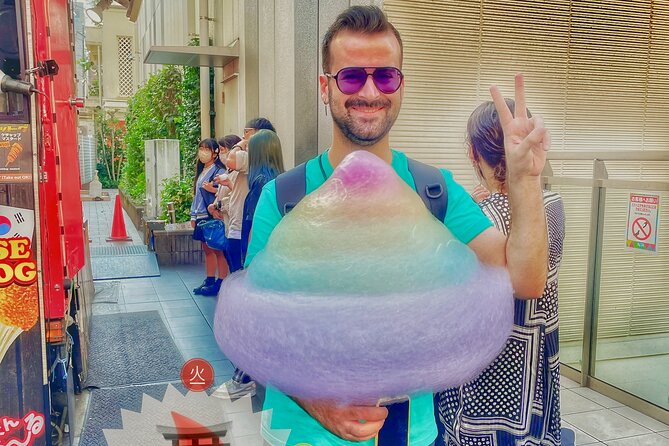
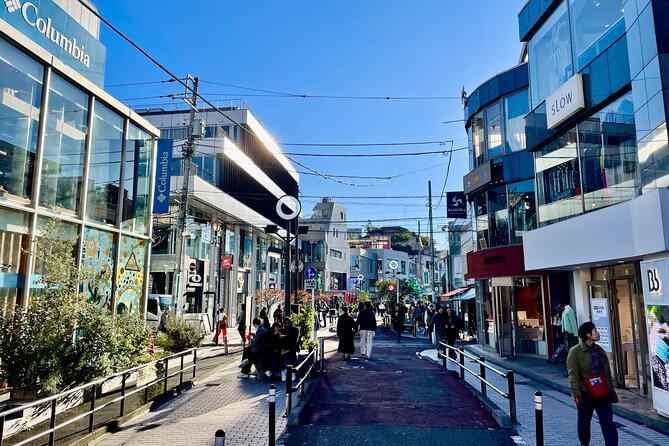
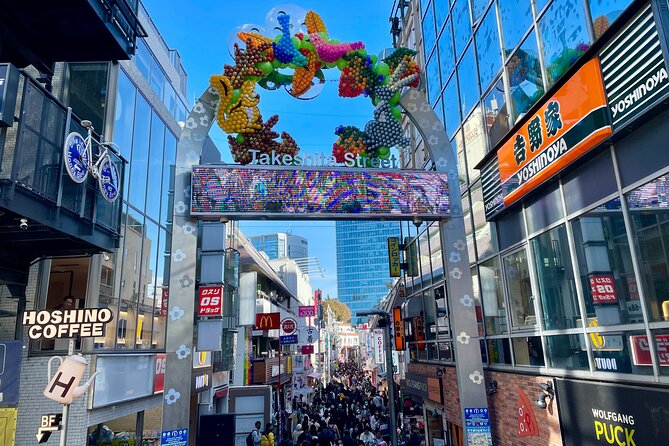
Then the tour shifts into Harajuku, where Tokyo turns visual. You’ll walk through famous Takeshita Street, a strip that throws color at you from every angle. After that, you keep going through the street-style world of Harajuku, including areas that many visitors miss if they only stay on the main shopping streets.
In practice, here is what you should pay attention to. Takeshita Street is loud and busy, but it is also a great place to see youth fashion as something people actually wear, not costumes for a photo shoot. If you have never spent time in Harajuku before, this stop helps you understand why Tokyo can feel both traditional and futuristic in the same afternoon.
A nice added bonus: some guides incorporate extra fashion lanes such as Cat Street and nearby shopping streets like Omotesando, depending on your interests. If that sounds like your thing, tell your guide you want more “side streets,” not only the headline attractions.
Shibuya Crossing to Shinjuku: from chaotic energy to skyline calm
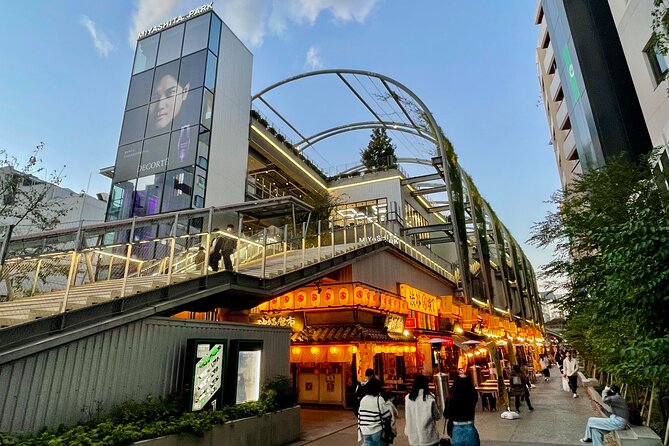
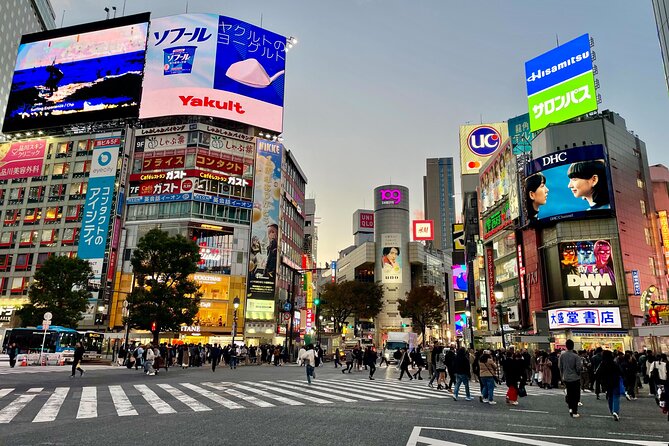
Shibuya Crossing is the moment most people remember. You will experience the intersection spectacle, then get help figuring out how to move through it. The guide can also point out photo spots and help you time the walk so you are not just standing in the crowd.
In the feedback, the Shibuya part often includes the Hachiko area, which many visitors know for its symbolism. If you like learning the story behind a statue, this stop is a good place to get that context instead of just snapping a picture.
After Shibuya, you’ll take the train to Shinjuku. This is a smart routing choice because it changes your view of Tokyo quickly. In Shinjuku you see towers, neon streets, and the kind of nightlife atmosphere Tokyo does well, even during daytime hours.
The tour then finishes with a neon look into Kabukicho and the Kabukicho Tower area. For me, the value here is that the guide does not just say take photos here. You get a sense of how Shinjuku works as a district, where the streets feel different block to block, and how locals spend time in the area.
If you are sensitive to crowds, plan to arrive with patience. Shibuya and Shinjuku are popular. A private guide helps you avoid some pressure by choosing walking paths and timing based on your pace.
Odaiba: futuristic waterfront without losing the fun
Depending on your chosen time length, Odaiba can be the “switch gears” section. You’ll head to Aqua City and DECKS Tokyo Beach, where the theme is modern Japan, games, shopping, and a seaside feel that feels a bit like a different city.
The stop list also includes Hikara Yokocho, a nostalgic alley-style area. This kind of place matters because it shows Tokyo’s ability to mix old vibes with new settings. You are not just seeing shiny buildings, you are also seeing how Tokyo recreates atmosphere in small spaces.
And yes, the Unicorn Gundam statue is part of the plan. If you are a fan of anime or just curious about why Tokyo turns pop culture into public art, this is a memorable photo moment.
Practical tip: Odaiba can involve extra walking on the waterfront and around complexes. If your legs are already tired from the shrine and fashion streets, ask your guide for a slower pace here. The private format is the flexibility.
A different sort of day in Japan:
- Tokyo: teamLab Planets TOKYO Digital Art Museum Entry Ticket
★ 4.6 · 9,779 reviews - Mt Fuji & Hakone Cruise, Drum Show Bullet Train 1 Day from Tokyo
★ 4.0 · 7,413 reviews - Tokyo: Sumo Show Experience with Chicken Hot Pot and a Photo
★ 4.8 · 6,678 reviews - Tokyo: Shinjuku Food Tour (13 Dishes at 4 Local Eateries)
★ 5.0 · 6,603 reviews
Asakusa and Akihabara: old entertainment roots and modern obsession
Asakusa is where Tokyo shows its older entertainment identity. During the Edo period, it was the main entertainment district, with kabuki theaters, geisha houses, and street performers. Even though the area looks different today, the spirit of lively activity still hangs around in how the district moves and how people gather.
This stop is valuable because it changes your mental model of Tokyo. If your early stops felt like you were in “current Japan,” Asakusa helps you connect the city’s present to its past.
Then the tour often continues toward Akihabara, affectionately called Akiba. Akihabara is known for electronics and pop culture, but the story is even more interesting: it grew from a post-war black market for radio parts. That historical angle helps you see why the area is so obsessed with tech and fandom, not just because it is trendy.
In a tour like this, the biggest win at Akihabara is direction. The shopping streets can go in every direction, and if you do not have a plan you end up drifting. With a guide, you can focus on what matches your interests, whether that means classic electronics, anime goods, or specific neighborhoods you would not find alone.
Ueno Park and the Imperial Palace East Gardens reset
If your itinerary includes Ueno Park and the Imperial Palace East Gardens, you get two good balance points.
Ueno Park is a beloved green space in northeastern Tokyo, with cultural offerings and seasonal beauty. It also connects to the area’s temple roots, since it originally belonged to Kaneiji Temple before becoming public land. Even if you only spend part of a visit here, it is a nice break from the intensity of Shibuya and Shinjuku.
The Imperial Palace East Gardens add another kind of pause. Once part of Edo Castle, the gardens include remnants like stone walls, gates, and the moat area. This stop helps you slow down and look at Tokyo with a different lens, more about space and history than shopping or nightlife.
If you are only doing a shorter 2 to 4 hour version, you might not reach all these later stops. But even one of these “breather” areas can make the whole half day feel more human.
Price and what $82.90 buys you in real terms
At $82.90 per person, the headline price is not the only question. The better question is what you get for that money, and how it saves you time and stress.
Here is what is included that usually costs extra on your own:
- Transportation between destinations
- Your private English-speaking guide
- Tea and/or coffee plus a traditional Japanese snack
- Solo photos and group photos at landmarks, taken by the guide
- A route that blends major sights with local context
- Options for start time and duration (2 to 6 hours approx.)
For many travelers, the biggest value is the ability to “compress” Tokyo into one guided circuit. You do not waste half your day figuring out transit, and you do not end up in the wrong area at the wrong time.
The main thing not included is food and drinks beyond the tea/coffee and snack. If your day overlaps with a meal time, you should plan on buying lunch or dinner separately.
How long should you book: 2 to 6 hours
This tour gives you flexible duration, and that matters because Tokyo is big. If you have just landed and you want a soft landing, a shorter option is a smart move. If you have energy and you want a bigger “greatest hits plus a few extras” feeling, choose longer.
Here is the way to decide:
- Pick 2 to 3 hours if you want a smooth sampler focused on Harajuku and Shibuya, plus a quick Shinjuku view to orient you.
- Pick 4 hours if you want enough time for shrine calm, fashion streets, crossing spectacle, and a fuller sense of neighborhoods.
- Pick 6 hours if you also want the later variety, like Odaiba, Asakusa, Akihabara, Ueno Park, or the Imperial Palace East Gardens area.
One small strategy that helps: start earlier in the day if you can. It makes it easier to move at a comfortable pace through major districts.
Who this tour fits best
This private walking tour style is a great match if:
- You want an overview of Tokyo without managing directions, ticket lines, and confusing neighborhoods
- You care about photos but do not want to spend your trip playing tripod operator
- You prefer learning cultural context, not only taking pictures
- You want a guide to adjust to your pace, your interests, and your comfort level
It is also a solid choice for families or small groups because the route can be tailored. A guide can slow down for questions, take extra care at shrines, and recommend food spots for what you actually like, not just what is popular online.
Should you book this private Tokyo intro?
Book it if you want Tokyo to feel understandable fast. The combination of major sights, respectful shrine guidance, and neighborhood-to-neighborhood routing, plus included transit and photos, is a practical way to start your trip.
Skip it if you already know Tokyo well and you want a more niche deep-dive day built around one single theme or one neighborhood. Also, if you have limited mobility, consider whether a 2 to 6 hour mix of walking and transit will work for you, and ask your guide how they can adjust pace.
If your goal is a confident first day, or a reset day when you want to see a lot without stress, this private tour is a strong bet.
FAQ
How long is the Tokyo private tour?
The duration is listed as 2 to 6 hours (approx.), depending on the option you choose.
Where does the tour start and end?
The tour starts at Meiji Jingu Ichino Torii (1-chōme-18-20 Jingūmae, Shibuya, Tokyo). It ends near the Giant 3D Cat in Shinjuku, close to Shinjuku Station.
Is pickup available?
Pickup is offered, based on the tour features.
Is this a private tour?
Yes. It is a private tour/activity, and only your group participates.
Does the tour include transportation between stops?
Yes. Transportation between tour destinations is included.
What food and drinks are included?
Tea and/or coffee are included, and you also receive a traditional Japanese snack. Food and drinks beyond that are not included.
Will the guide take pictures of you?
Yes. The guide can take solo pictures of you with famous landmarks, and there are also group pictures included.
Are the guides English speaking?
English-speaking guides are available.
Can I choose my start time?
Yes. You can choose from morning and afternoon tour times, and you can also pick your preferred duration during booking.
Do I need a mobile ticket?
Yes, a mobile ticket is listed as a feature.
Can I cancel for free?
Free cancellation is available. You can cancel up to 24 hours in advance for a full refund.
Newly listed around Tokyo
- Real-Life Anime Pilgrimage Tour Shibuya Incident★ 5.0 · 7 reviews
- Ramen and Gyoza Cooking Class in Tokyo★ 5.0 · 21 reviews
- Ramen Tasting – Mini Bowl Ramen Tour★ 5.0 · 127 reviews
- Cozy Tokyo Class: Ramen, Sushi, Sake Pairing & Cultural Exchange★ 5.0 · 74 reviews
- Private Tokyo City tour With English Speaking guide★ 4.5 · 26 reviews
- REAL, All-Inclusive Tokyo Food and Drink Adventure (leave the tourists behind)★ 5.0 · 25 reviews
- Private tour Tokyo – The Harmony of Modernity and Tradition★ 5.0 · 24 reviews
- Full Day Private Tour to Mount Fuji and Hakone★ 4.5 · 58 reviews
Guided, compared.
Tokyo 6hr Private Tour with Government-Licensed Guide
Read our review →
Shinjuku Local Bar and Izakaya Guided Walking Tour
Read our review →
Private City Highlights Tour with Local Guide
Read our review →
Kyoto Early Morning Tour with English-Speaking Guide
Read our review →
Tokyo 4hr Private Tour with Government-Licensed Guide
Read our review →
Kyoto 6hr Private Tour with Government-Licensed Guide
Read our review →