

Review · WALKING TOURS
Gyoda Tabi Shoes Cultural Walking Tour
Tabi socks, then a real factory walk. Gyoda, in Saitama (about an hour from central Tokyo), is a Japan Heritage town built around tabi footwear, and this walking tour lets you see that culture up close while you wander between warehouse buildings and working makers. You’ll pick your own Gyoda tabi and Yukitadas, then follow the story with an in-person guide, plus a stop at the famous flower viewing site, Hanahancozu.
Two things I like right away: the way you get fitted with tabi socks and zori sandals so you can actually walk in the footwear tradition, and the factory time where the craft is shown as a real, ongoing process. If you care about hands-on details, the highlight is watching craftsmen at work, and if you care about food, you’ll also sample local treats like jelly fries and manju.
One consideration: this is about 3 hours with multiple stops, so it moves at a steady pace, and the tour uses an in-person guide who is not licensed or certified. If you want super slow sightseeing with lots of free time at every location, this might feel a bit tight.
In This Review
- Key highlights you will notice right away
- Why Gyoda’s tabi culture feels real, not staged
- Getting fitted in Buratto Gyoda, the start that sets the tone
- Chasing flavor in historic warehouses: Chujirou and Jumangoku
- Hanahancozu at Gyodahachiman Shrine, when sightseeing turns personal
- Two layers of factory viewing, the craft lesson you came for
- The walking route and pace: 15 people, about 3 hours
- Price and value: why $45.61 can feel fair here
- Who should book this Gyoda tabi walk, and who might not
- Practical tips so the tabi walk feels comfortable
- Should you book this Gyoda Tabi Shoes Cultural Walking Tour?
- FAQ
- How long is the Gyoda Tabi Shoes Cultural Walking Tour?
- Where does the tour start and end?
- What is included in the tour price?
- What snacks will I try during the tour?
- Is there a limit on group size?
- Is the guide licensed or certified?
Key highlights you will notice right away
- Pick your tabi socks and try zori sandals, then walk through the warehouse streets like locals do
- Chujirou warehouse stop ties the town’s footwear culture to protected historic architecture
- Taste local snacks including jelly fries and Jumangoku manju
- See Hanahancozu at Hachiman Shrine while learning why people travel there
- Factory viewing is the centerpiece, including a guided look at the manufacturing process
Why Gyoda’s tabi culture feels real, not staged

Gyoda is known as Japan’s major producer of tabi shoes, and the tour leans into that heritage in a practical way. Instead of talking about tabi like a product you buy and forget, you follow it through the town’s warehouse buildings and manufacturing areas. That matters because tabi culture is not just fashion. It is a craft with specific shapes, specific materials, and a long local workflow.
The other thing I like is the “town walk” angle. You’re not stuck inside a museum hall. You’re moving through the streets where the warehouses live, where the craft history is part of everyday geography, and where the food stops feel connected rather than random. It is a good reminder that you can do culture in a way that still feels like travel, not homework.
More Walking Tours in Tokyo
- Tokyo Tsukiji Fish Market Food and Culture Walking Tour
★ 5.0 · 3,184 reviews - Tokyo: Shinjuku Local Bar and Izakaya Guided Walking Tour
★ 4.9 · 1,794 reviews - Tokyo: Tsukiji Fish Market Food and Walking tour
★ 5.0 · 1,724 reviews
Getting fitted in Buratto Gyoda, the start that sets the tone
The tour begins at 観光物産館ぶらっとぎょうだ2-chōme-1-8 Oshi, Gyoda, Saitama 361-0077. From there, you head into Kanko Bussankan Buratto Gyoda, where you choose the Gyoda tabi socks you will wear during the tour. Then the tour supplies zori sandals, which is a big deal because you are not just observing tradition, you’re trying it.
This first stop is also a quick orientation. You get free Gyoda City sightseeing maps, and there are souvenir stores nearby so you can get your bearings fast. The time here is about 30 minutes, which is enough to pick what you want and get comfortable before you start walking the warehouse streets.
Practical note: split-toe footwear can feel unfamiliar at first, even with provided sandals. Give yourself a few minutes to stand, take a slow first step, and let your feet adjust before the group starts moving.
Chasing flavor in historic warehouses: Chujirou and Jumangoku
A big reason this tour works is that it pairs history with taste, not in a gimmicky way, but as part of how small communities keep tradition alive. You start with 忠次郎蔵, where you eat jelly fries, a local snack. This Chujirou warehouse is described as a historical building designated as a Japan Heritage component cultural property, and it is also a nationally registered tangible cultural property. In other words, this is not just a backdrop. It is a protected historic structure that happens to be connected to how the town developed and preserved its identity.
Next comes Jumangokufukusaya Gyoda Honten for a look at another set of historic buildings, plus tasting. The storehouse is built in 1836 and is designated as a national tangible cultural property. You get manju here, and the stop runs about 15 minutes, so it stays focused: walk in, see the architecture, sample the sweet, then move on.
If you like cultural travel that rewards your attention, these short stops are a win. You get to sample local food while you’re still fresh on the story of why warehouses matter in Gyoda.
Hanahancozu at Gyodahachiman Shrine, when sightseeing turns personal

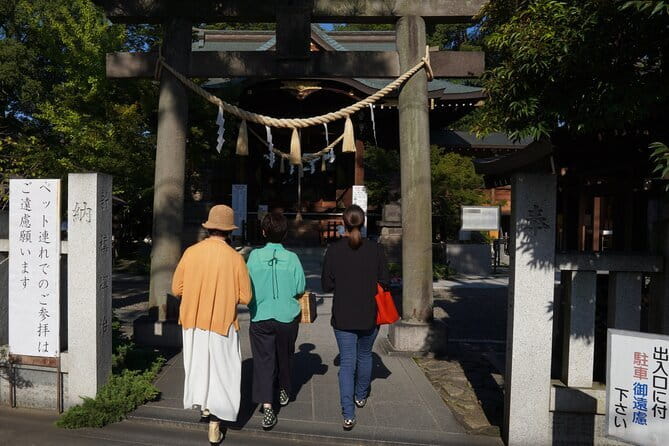
At Gyodahachiman Shrine, you get two experiences in one: a shrine visit and a viewing of the hanahancozu flower display. The tour describes Hachiman Shrine as famous for blessings for cancer, and it notes that locals and visitors come from across the country. That detail changes how you see the space. You’re not just looking at flowers for photos. You’re in a place with a real spiritual purpose and a steady stream of people.
The time here is about 25 minutes, and you may visit the shrine on your own. That is actually helpful. A guided explanation is great, but a shrine visit benefits from a little quiet. You can also take your time around the flower viewing area without feeling rushed by the group pacing.
What to watch for: since you can move independently here, plan to regroup in the area where the guide expects you. This is the kind of stop where being a minute late matters more than at other segments.
A few more Tokyo days to weigh up
- Tokyo: Asakusa Walking Tour with Sensoji Temple Visit
★ 4.8 · 1,583 reviews - Tokyo: Tsukiji Fish Market Guided Walking Tour
★ 4.9 · 1,397 reviews - Tokyo Castle & Imperial PalaceーShogun Walking Tour
★ 4.7 · 1,068 reviews - Tokyo: Imperial Palace Japanese History Walking Tour
★ 4.9 · 987 reviews
Two layers of factory viewing, the craft lesson you came for
If you only care about one part, make it the factory segment. This is the piece most tied to the tour’s title, and it is where the craft goes from story to reality.
First, you visit Isami Corporation School Factory. This building dates to 1917 and is Gyoda’s largest saw-toothed-roof tabi shoes factory. Your time here is only about 5 minutes, and the tour focuses on the exterior. It is a quick moment to connect the location to the craft history. You get the feel of the architecture, then you move to the deeper part.
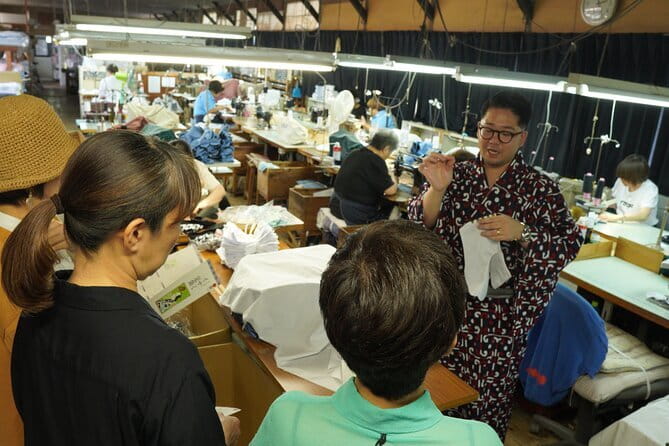
Then comes the main event at (株)イサミコーポレーション 本社. This segment runs about 45 minutes and is a guided tour of the manufacturing factory. You’re taken through the production process, guided step by step, and it is framed as a Japanese technique connected to tabi-making.
This is where the tour really delivers value. Watching how a product is made helps you understand why the town developed the way it did, why warehouses mattered for storage and trade, and why tabi is still produced with care instead of disappearing into mass manufacturing.
The walking route and pace: 15 people, about 3 hours
The group size is capped at a maximum of 15 travelers, which keeps the tour from turning into a jam. Small groups also make it easier to hear explanations and to slow down when questions pop up. You’re walking through a town layout where warehouses and historic buildings are close enough to cover in a single afternoon.
The total duration is about 3 hours, starting at 1:00 pm. Since there are multiple stops, the pace stays steady. You are not at each location for long, but each one has a purpose: a footwear fitting, a couple of historic building experiences paired with food, a shrine and flowers, and then the factory.
You’ll also end back at the meeting point, so you’re not forced into a long commute or a complicated finish. And because the tour uses a mobile ticket and is near public transportation, it is pretty easy to plug into a day in the Tokyo area without turning the logistics into your whole trip.
Price and value: why $45.61 can feel fair here
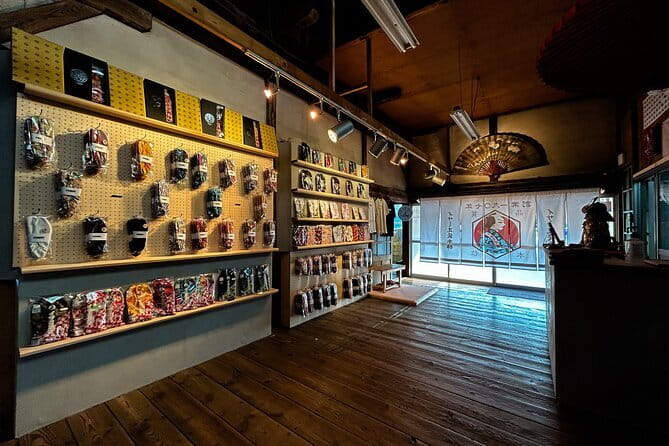
At $45.61 per person, this tour is priced like a half-day cultural experience that includes more than a lecture. Here’s what you get that directly affects value.
Included items cover the essentials that make tabi culture tangible: tabi socks with a split toe, and zori sandals to wear during the walk. You also get snacks: jelly fries and Jumangoku manju. That’s not just “a little taste.” It’s a chance to try local specialties in the middle of the story, not as an afterthought.
Then there’s the guided factory component, which is often the hardest thing to access when you are just visiting on your own. Factory time gives you insight into how production continues as a working craft, not just as a souvenir display.
The only listed extra is a guide tip, meaning the tour price already covers the core experience. If you’re deciding between a general Tokyo cultural tour and this one-day trip into Saitama industry culture, this option is often better value if you care about craft and you like mixing food with real places.
Who should book this Gyoda tabi walk, and who might not

I think this tour suits you best if you like three things: traditional Japanese craft, hands-on feel (walking in tabi and sandals), and local food snacks that fit the place. It is also a smart choice if you want a break from the usual Tokyo highlights. Gyoda is only about an hour from central Tokyo, but it offers a different kind of Japan, one tied to production and everyday heritage.
It may be less ideal if you dislike structured itineraries. The schedule moves through several stops in about three hours, and there is limited time to linger at any one site. Also, the guide is described as in-person but not licensed or certified, so if you are strongly focused on credentialing, you may want to set your expectations accordingly.
If you love taking photos, you will likely enjoy the shrine flower area, and you’ll get plenty of architectural moments at the warehouses and storehouse buildings too.
Practical tips so the tabi walk feels comfortable
A few things make this tour easier.
First, since you will be wearing tabi socks and zori sandals provided by the tour, plan to dress for walking. You are still touring on foot through town.
Second, listen for what the guide suggests about timing. The itinerary covers several short stops like the snack and historic warehouse segments, then longer time at the factory. Being ready to move on time keeps the day smooth.
Third, check the meeting point address ahead of time: 観光物産館ぶらっとぎょうだ (Oshi, Gyoda). The tour starts at 1:00 pm and ends back there, so your day is simpler if you arrive a few minutes early and you know where you will finish.
Finally, the tour allows service animals, and it is near public transportation. So if you are planning around transit schedules, you should be able to fit it into your Saitama or Tokyo-to-Saitama day without major headaches.
Should you book this Gyoda Tabi Shoes Cultural Walking Tour?
Book it if you want a Japan Heritage style experience with substance: you’ll walk through tabi warehouses, taste local snacks, and spend real time inside a tabi manufacturing setting. The price feels reasonable when you factor in socks, sandals, food, and the guided craft viewing.
Skip it if you want long, slow hangs at a single spot or if you are mainly looking for famous landmarks. This is a craft-and-town tour, not a “big sight” checklist.
If your travel sweet spot is practical culture, made tangible through footwear and manufacturing, this one is a strong choice for an afternoon in Saitama.
FAQ
How long is the Gyoda Tabi Shoes Cultural Walking Tour?
It runs about 3 hours.
Where does the tour start and end?
It starts at 観光物産館ぶらっとぎょうだ2-chōme-1-8 Oshi, Gyoda, Saitama 361-0077, Japan, and it ends back at the same meeting point.
What is included in the tour price?
The tour includes tabi (Japanese split-toe socks), zori sandals, snacks (jelly fries and Jumangoku manju), and an in-person guide.
What snacks will I try during the tour?
You’ll have jelly fries and Jumangoku manju as local food/snack tastings.
Is there a limit on group size?
Yes, the maximum group size is 15 travelers.
Is the guide licensed or certified?
The information provided says the in-person guide is not licensed or certified.
Newly listed around Tokyo
- Chichibu’s Weaving Story: A Journey of Tradition and Festival★ 5.0 · 6 reviews
- The 4 Best Japanese whiskies tasting/HIBIKI 21year, YAMAZAKI, etc★ 5.0 · 6 reviews
- Mt. Fuji and Hakone Private Tour with English Speaking Driver★ 5.0 · 22 reviews
- Private Custom Tokyo Tour VIP★ 5.0 · 50 reviews
- 2-Hour Karaoke at Roppongi 7557 in Tokyo★ 5.0 · 12 reviews
- Tantra Tokyo Burlesque Show Club★ 4.5 · 26 reviews
- International DJ Event in Roppongi★ 5.0 · 10 reviews
- Mt. Fuji or Hakone Private Sightseeing Day Trip From Tokyo★ 4.5 · 17 reviews
Walking Tours, compared.

Kyoto Geisha Walking Tour: Gion District & Hidden Gems
Read our review →
Tokyo Tsukiji Fish Market Food and Culture Walking Tour
Read our review →
Gion Geisha District Walking Tour – Stories of Geisha
Read our review →

Shinjuku Local Bar and Izakaya Guided Walking Tour
Read our review →

Asakusa Walking Tour with Sensoji Temple Visit
Read our review →
Kyoto Gion Geisha District Walking Tour – The Stories of Geisha
Read our review →Browse the lists this tour appears in