
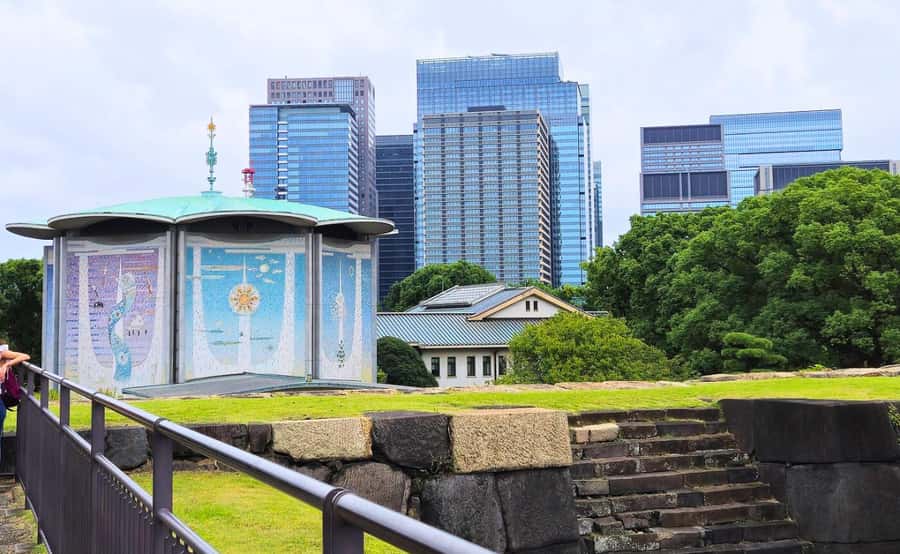
Review · HISTORICAL TOURS
Tokyo: Imperial Palace Japanese History Walking Tour
Shogun-era Tokyo shows up in surprises. This Imperial Palace history walking tour takes you through the Eastern Gardens and helps you connect how Edo Castle shaped Japan, even though the original buildings are long gone. You meet at Starbucks near the Wadakuramon fountain and then follow your guide through the grounds with real context, not just dates.
I especially like two things. First, the guidework feels personal and interactive, and you’ll hear lively storytelling from guides such as Mika, Natsumi, Laki, and Alexandre as they answer questions and keep everyone oriented. Second, the tour hits the visual highlights with purpose, from the bamboo forest atmosphere to the Japanese garden area where you can see the special koi and snap photos in good spots.
One consideration up front: you do not get access to the Inner Palace, so if you were hoping to go deeper into the most restricted areas, this tour will not cover that.
In This Review
- Key Highlights to Know Before You Go
- Tokyo Imperial Palace Eastern Gardens, Not the Usual Photo-Stop Tour
- Meeting Up at Starbucks by Wadakuramon Fountain
- Walking Toward Otemon Gate, Where the Story Gets Its Shape
- Edo Castle Once Sat Here, and the Grounds Explain Why
- Old Samurai House Details, Plus the Power-Structure Lesson
- Bamboo Forest Atmosphere and Royal Koi Fish Photos
- Trees Gifted From Across Japan, and Why That Matters
- The Guides Make the Difference, Names You Might Meet
- What You Will Not See, Inner Palace Access Included
- Price and Value: Why $32 Can Make Sense
- Weather, Comfort, and Simple Rules That Keep It Smooth
- Who This Tour Fits Best, and Who Might Want a Different Option
- Should You Book This Tokyo Imperial Palace History Walking Tour?
Key Highlights to Know Before You Go
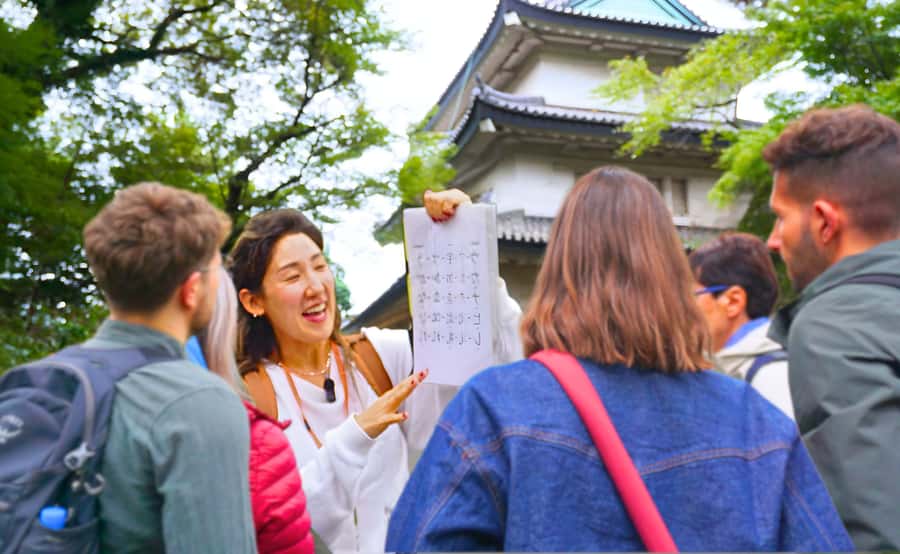
- Start at Wadakuramon fountain Starbucks for an easy handoff to your guide holding the Sunrise Adventure sign
- Otemon Gate orientation to understand where the old castle world fits today
- Shogun to Emperor theme explained through the palace grounds and what replaced what
- Ranking system lessons (Farmer, Samurai, Daimyo, Shogun) that make power structures make sense
- Bamboo forest and royal koi fish as calm, photogenic breaks in a history-heavy route
- Guides who support your day with photo help, extra tips, and even mosquito spray in some conditions
Tokyo Imperial Palace Eastern Gardens, Not the Usual Photo-Stop Tour
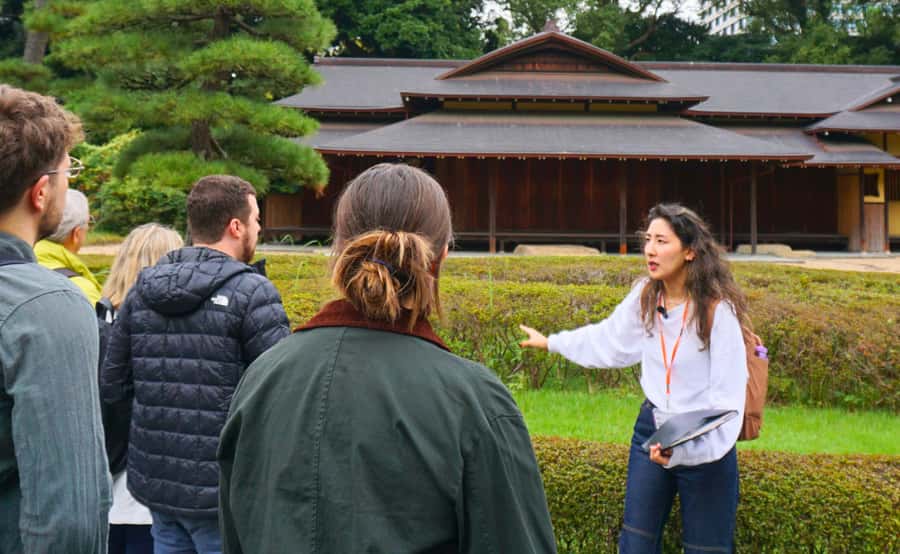
The Imperial Palace grounds are one of those places where you can walk for an hour and still feel like you need a map for meaning. This tour helps you read what you’re looking at, especially the big story line: how Japan’s shogun era shaped the country, then how the site’s role changed when it became an imperial residence. It is not just sightseeing, it is a guided explanation you can carry with you as you keep exploring Tokyo.
I like that the tour keeps the pace realistic. You get stops that let you look, listen, and then look again, which is important in a place that can feel deceptively “quiet” at first glance. Even better, the guide style shows up in the reviews again and again, with people calling out clear explanations, good humor, and a voice loud enough for the group.
And yes, it is still a walk. Comfortable shoes and weather-ready clothing matter, since the tour runs rain or shine. If you want the story but also need your body to cooperate, this is where you should judge your own stamina honestly.
More History Tours in Tokyo
- Yanaka Walking Tour: Historic and Traditional District of Tokyo
★ 5.0 · 530 reviews - Tokyo: Shinjuku Historical Walking Tour & Secret Backstreets
★ 5.0 · 530 reviews - Mt. Fuji Heritage Tour: Traditional Villages, Lakes & Shrine
★ 4.5 · 509 reviews
Meeting Up at Starbucks by Wadakuramon Fountain
This tour uses a very straightforward meeting point. You head to either Tokyo Station or Otemachi Station by train, then walk about 5 to 10 minutes to Wadakuramon fountain park. Inside the park, you go to the Starbucks, and your guide waits there holding a sign for Sunrise Adventure.
That sounds small, but it matters more than you think. Tokyo stations can be confusing if you arrive stressed, and a clear “go here, find the sign” plan reduces the risk of missing the start. Plan to arrive a little early so you can settle in, use the restroom if you need it, and get your bearings fast.
When the tour ends, it returns you back to the meeting point. So you are not left with an awkward “now what” at the end of a guided walk, which is a simple quality-of-life win in a city full of subway stairs.
Walking Toward Otemon Gate, Where the Story Gets Its Shape
After you meet, you walk toward the grand Otemon Gate of the Imperial Palace. This is the moment where the tour starts turning a modern landmark into a historical stage set. Your guide explains what used to be here, what replaced it, and why that replacement changed the power story in Japan.
The original castle is not still standing. That could be disappointing if you expected old walls everywhere, but the tour handles it well by giving you the missing pieces. You see a miniature model that illustrates how the area looked in the past, so you can mentally rebuild the space instead of just staring at an empty patch.
From there, you move through palace grounds where the vibe is calm, shaded in places, and very walkable. The benefit is that you get time to absorb details like architecture cues, the layout logic of a formal complex, and the way nature blends into the compound. The drawback is that you’re on your feet the whole time, so bring your “walk shoes” mindset.
Edo Castle Once Sat Here, and the Grounds Explain Why

One of the most interesting threads is the site connection to Edo Castle, which stood here over 350 years ago. The guide frames the Imperial Palace grounds as the next chapter of a much older power center. Even without the original structures, the tour helps you understand what made Edo Castle important, and how the shift to an imperial palace changed the meaning of the space.
This matters because Tokyo’s modern identity is built on those old layers. You might walk past skyscrapers later and feel like nothing connects, but the tour stitches that connection together using the physical layout and the historical timeline your guide shares.
You also get context for the broader political world, not just the palace itself. The tour includes the old ranking system concept, Farmer, Samurai, Daimyo, Shogun, and it helps you see how social roles were tied to power. It is one of those explanations that makes conversations about samurai and daimyo stop being abstract.
More Walking Tours in Tokyo
- Tokyo Tsukiji Fish Market Food and Culture Walking Tour
★ 5.0 · 3,184 reviews - Tokyo: Shinjuku Local Bar and Izakaya Guided Walking Tour
★ 4.9 · 1,794 reviews - Tokyo: Tsukiji Fish Market Food and Walking tour
★ 5.0 · 1,724 reviews - Tokyo: Asakusa Walking Tour with Sensoji Temple Visit
★ 4.8 · 1,583 reviews
Old Samurai House Details, Plus the Power-Structure Lesson
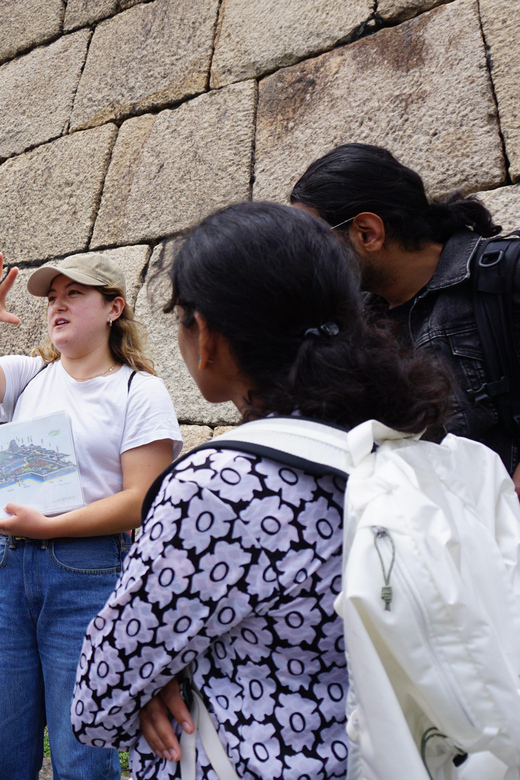
As you move along, you explore an old samurai house area. This is a useful stop because it gives your brain a “scale reference.” Instead of only hearing big-picture facts about rulers, you can connect those facts to domestic or semi-domestic spaces tied to the samurai class.
Then the guide layers in that ranking system. When you learn Farmer, Samurai, Daimyo, Shogun as a sequence, it becomes easier to understand why certain characters mattered in the stories of Japan. Your guide also links that structure to how the shogun shaped foundations of modern Japan and how the site evolved once emperors became the center of authority.
One practical note: this kind of historical explanation works best when you ask questions. The tour reviews repeatedly mention guides who answer politely and clearly, and one person even highlighted guides providing extra time beyond the scheduled tour. If you like to learn by talking, this tour rewards that instinct.
Bamboo Forest Atmosphere and Royal Koi Fish Photos
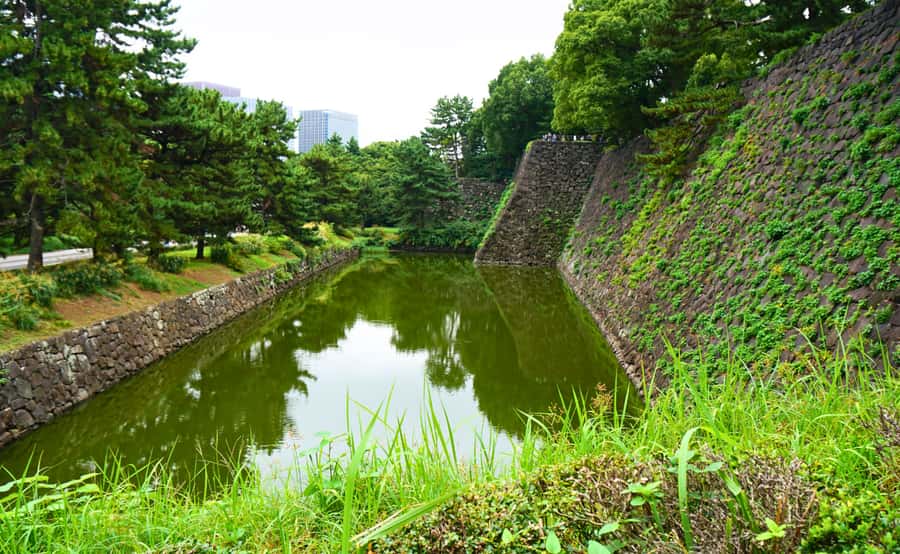
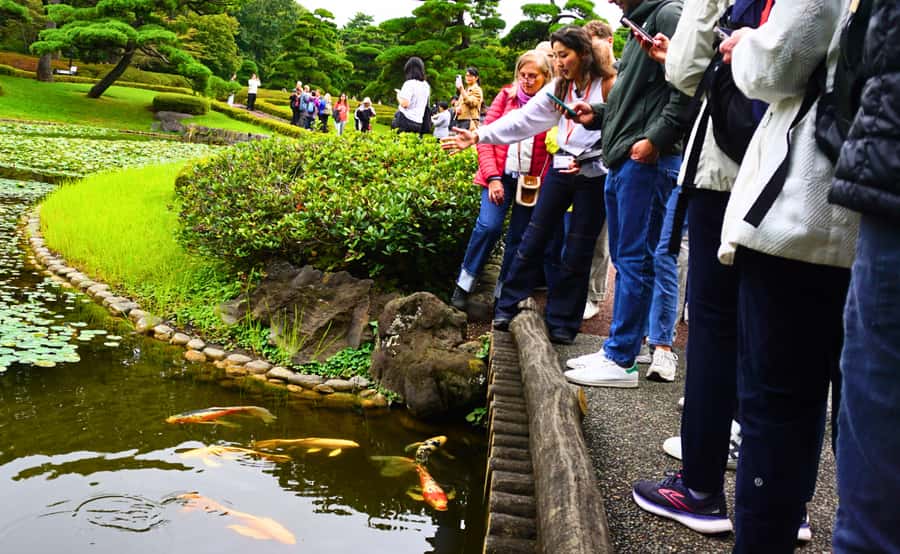
Included with the tour are stops that are visually memorable, not just educational. People specifically praise the garden scenery, and the route includes a bamboo forest segment as well as the Japanese garden area with royal koi fish.
The bamboo forest is one of those “sound and light” places. Even if you only spend a short time there, the texture and quiet rhythm make it a mental reset from palace politics. In Tokyo, where it can feel like you’re always moving, that kind of pocket helps your brain hold onto the history you just heard.
Then you reach the koi area, which is a highlight for a very simple reason: it gives you a “stop and look” moment where you can slow down. Koi are also great for photos, but more importantly, they help break up a history-heavy walking route. It’s the kind of contrast Tokyo does well, peaceful nature inside a world-famous power complex.
If you’re sensitive to insects, plan ahead. Some guides have provided mosquito spray in the palace grounds where nature is everywhere, and that detail tells you the area can be mosquito-friendly in warm months. Even if you do not need it, having your own repellent can save your comfort.
Trees Gifted From Across Japan, and Why That Matters
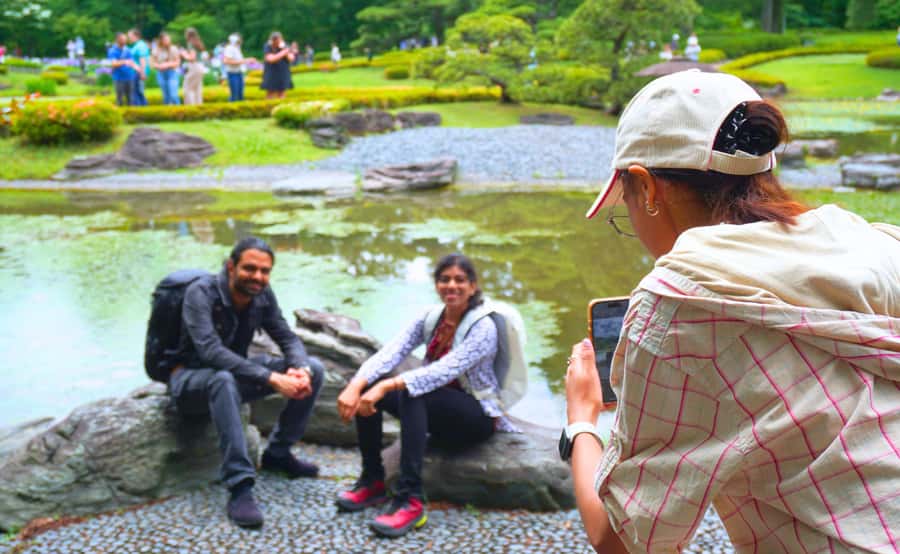
A very Tokyo detail is the presence of trees gifted from all over Japan. The tour points them out and ties them to the emperor, which turns a scenic element into a cultural clue. You start to see the gardens as more than decoration, as a system of meaning.
This stop also connects to a wider theme: how Japan expresses power through formality. In many countries, political power shows up in monuments, parades, or courts. Here, it shows up in controlled landscapes, careful placement, and symbolic plantings.
If you enjoy details like that, you will likely love how the tour points out what to notice instead of assuming you already know. Guides like Mika and Natsumi are praised for making the palace feel like a real place with real explanations, not a locked museum wall.
The Guides Make the Difference, Names You Might Meet
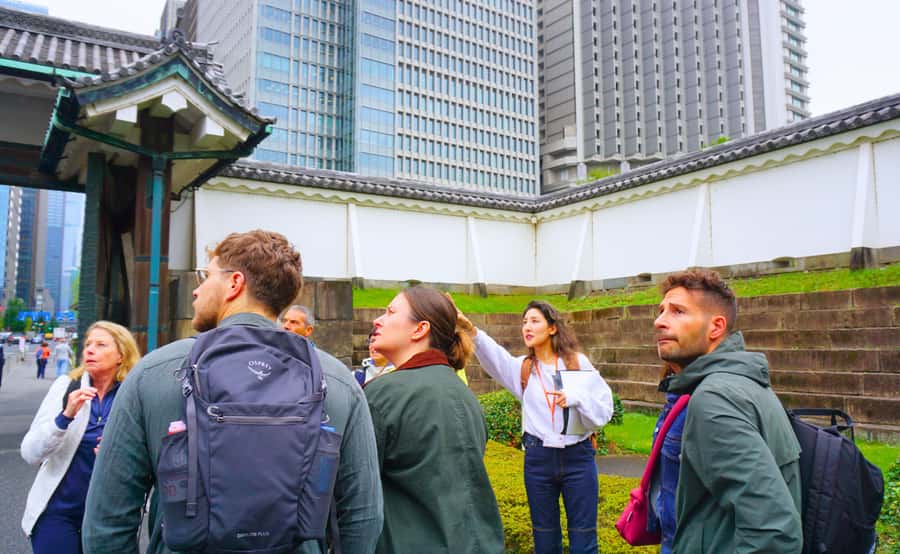
Sunrise Adventure runs the tour with English and French options, and the guide quality is repeatedly the biggest reason people rank the experience so high. You will see names like Mika, Natsumi, Laki, Alexandre, Nico, and others pop up across the feedback, and the recurring pattern is clear: people remember the guide’s clarity, humor, and responsiveness.
In practical terms, that means you’re not stuck listening to a monologue. Several reviews mention guides taking time to answer questions, keeping a good pace, and helping with photos. One person even mentioned shade planning during hot weather, which is a real factor in Tokyo summers.
If you want a more interactive style, this tour has that built in. You’ll hear explanations, but it is also a conversation-ready format. Ask your guide what you should look for next, or what symbols in the architecture mean. That small shift turns a “walk around” day into a “now I get it” day.
What You Will Not See, Inner Palace Access Included

Here is the honest limit: the tour does not include access to the Inner Palace. That area is not open to the public, and the tour is designed around what you can legally and practically visit.
So you should not treat this as a full Imperial Palace circuit. Instead, think of it as a guided reading of the Eastern Gardens and surrounding grounds, with the story built around what the site used to be and what it became. The tour focuses on the Otemon Gate area, garden zones, and key historical reference points like Edo Castle’s former location.
If your dream is to walk inside the most restricted imperial spaces, you will need a different plan. But if your goal is to understand how Japan’s power system evolved and to experience the grounds with an expert guide, this route is still a strong match.
Price and Value: Why $32 Can Make Sense
At $32 per person, this tour sits in the “cheap for what you learn” category, especially in Tokyo where guided experiences can climb fast. What you get is not just entry to a site. You get an English-speaking guide, a structured explanation, and help turning the palace grounds into a coherent story.
You also get included elements that make the visit more satisfying. Photo spots are part of it, and the route includes the bamboo forest and royal koi fish areas, which are genuinely scenic. A guide who can also help with other travel tips is a small bonus, but in a city like Tokyo it can save you time later.
Is it worth it? For the right traveler, yes, because the value is in interpretation. If you simply want to walk around and read signs, you could do that alone. But if you want the cultural logic behind what you see, a guided walk at $32 is hard to beat.
Weather, Comfort, and Simple Rules That Keep It Smooth
This tour runs rain or shine. That means you should dress for the day you get, not the day you hoped for. Wear clothes that fit the weather and bring layers if the forecast swings. If you handle heat poorly, it is smart to plan your hydration and pacing with care, since you’re walking outdoors.
The grounds can also be buggy, so mosquito repellent is a practical idea. Some guides have even provided mosquito spray, but do not count on that every day. Insects are part of the environment when you’re near trees, gardens, and water features.
There are also clear behavior rules: no smoking, no alcohol or drugs, no drones, no skateboards, and no making fire. You also cannot bring weapons or sharp objects. It’s a normal set of restrictions for a historical public space, but it is good to know so you can pack accordingly.
Who This Tour Fits Best, and Who Might Want a Different Option
This experience is not for everyone. It is not suitable for pregnant women, people with back problems, people with mobility impairments, people with heart problems, wheelchair users, people with recent surgeries, or people with low level of fitness.
So if you have any of those concerns, it’s worth choosing a different style of activity, maybe something with more sitting breaks or a route that can be shortened. The tour is described as a walking tour around palace grounds, and that usually means sustained time on your feet.
On the other hand, if you enjoy history, garden scenery, and clear storytelling, it is a great match. It also works well as a first Tokyo day activity because it gives you a framework for how modern Japan developed and how power structures changed over time.
Should You Book This Tokyo Imperial Palace History Walking Tour?
Book it if you want a guided, English-speaking way to understand the Imperial Palace grounds as part of Japan’s shogun era story. I think it is a smart pick for first-time visitors who feel lost when they stand in front of big landmarks without context. The combination of Eastern Gardens, the Edo Castle link, and the bamboo and koi photo stops makes it feel complete.
Skip it if you specifically need Inner Palace access, since it is not included and the Inner Palace is not open to the public. Also skip it if walking for your health is a concern, since the tour is not suitable for wheelchair users or several other mobility and medical situations.
If your goal is to walk in the shogun’s footsteps, learn how rank shaped society, and end the experience with calmer garden moments, this $32 guided tour is an easy yes.
More Historical Tours in Tokyo
- From Tokyo: Nikko World Heritage Site Private Full-Day Trip
★ 4.9 · 243 reviews - Tokyo: The Best of Izakaya in Shinjuku Food & Cultural Tour
★ 4.9 · 221 reviews - Tokyo: Nikko World Heritage Private Day Trip Hotel Pick-up
★ 4.8 · 145 reviews - Tokyo: Imperial Palace, the history of Japan (ENGLISH GUIDE)
★ 5.0 · 77 reviews
Newly listed around Tokyo
- Tokyo private transfer for Yokohama Port★ 4.5 · 63 reviews
- Luxury Kimono Photoshoot at Ginza Tokyo★ 5.0 · 7 reviews
- Tokyo Allstar Food Tour★ 4.5 · 206 reviews
- Tokyo Art Aquarium Museum E-Ticket with optional Tokyo Metro Pass★ 5.0 · 17 reviews
- Tokyo: Best Ginza Food Tour at 3 Local Eateries★ 5.0 · 83 reviews
- Private One Day Nikko Tour with Bilingual driver★ 3.5 · 11 reviews
- PRIVATE tour in 180SX to Daikoku+++++★ 5.0 · 6 reviews
- Kabuki Talk★ 5.0 · 10 reviews
Historical Tours, compared.
World Heritage Shirakawa-go and Experience Tours from Kanazawa
Read our review →
World Heritage Kyoto & Nara Uji Authentic Matcha Experience
Read our review →
World Heritage Shirakawa-go Morning Guided Tour
Read our review →
Hiroshima Historical Walking Tour – Why A-Bomb was Dropped
Read our review →
Hiroshima Peace (Heiwa) Walking Tour at World Heritage Sites
Read our review →
Yanaka Walking Tour: Historic and Traditional District of Tokyo
Read our review →
Shinjuku Historical Walking Tour & Secret Backstreets
Read our review →
Mt. Fuji Heritage Tour: Traditional Villages, Lakes & Shrine
Read our review →Browse the lists this tour appears in